Annual Elevator Inspection: Requirements, Process & Compliance in Arizona (2026)
Arizona building owners and facility managers face a strict, non-negotiable annual inspection cycle for every elevator, escalator, dumbwaiter, platform lift, and stairway chairlift on their property. Missing that cycle does not simply trigger a fine — it can mean shutting down a conveyance that hundreds of occupants depend on every day. This authority page covers exactly what Arizona requires, how the inspection process works, what influences cost, and what trends are shaping elevator compliance heading into 2026 and beyond.
What Is the Legal Basis for Annual Elevator Inspections in Arizona?
Arizona’s elevator safety requirements are governed by A.R.S. §§ 23-491 through 23-491.16 (Safety Conditions for Elevators and Similar Conveyances), as most recently amended by Laws 2026, Ch. 73. That statute delegates regulatory authority to the Industrial Commission of Arizona (ICA), Elevator Division — formerly called the ADOSH Elevator Safety Section until September 12, 2026, when the reorganization under Ch. 73 took effect. References to ADOSH in older certificates or signage are still valid historically, but the current enforcing agency is the ICA Elevator Division.
The technical standard adopted by Arizona is the ASME A17.1/CSA B44 Safety Code for Elevators and Escalators, 2019 edition, which applies to all equipment installed, repaired, or altered on or after January 1, 2023 (effective January 9, 2023). Arizona Administrative Code R20-5-502 through R20-5-515 (Elevator and Conveyance Safety) implements both the statute and the adopted ASME standard at the rule level.
Within the City of Phoenix, the City of Phoenix Elevator Section (Planning and Development Department) handles inspections of elevators, escalators, moving walks, dumbwaiters, and chair lifts located inside city limits. The ICA Elevator Division covers all other Arizona jurisdictions.
How Often Does an Elevator Need to Be Inspected in Arizona?

Arizona owners must have each conveyance inspected in three distinct situations:
- Before it first goes into service — an initial inspection is required before any new elevator is used by the public or building occupants.
- After any modification or alteration — any change to a conveyance that meets the definition of an alteration under the adopted ASME A17.1-2019 triggers a mandatory inspection before the unit returns to service.
- Annually after that — every operating conveyance must pass an inspection each calendar year and obtain a renewed certificate of inspection.
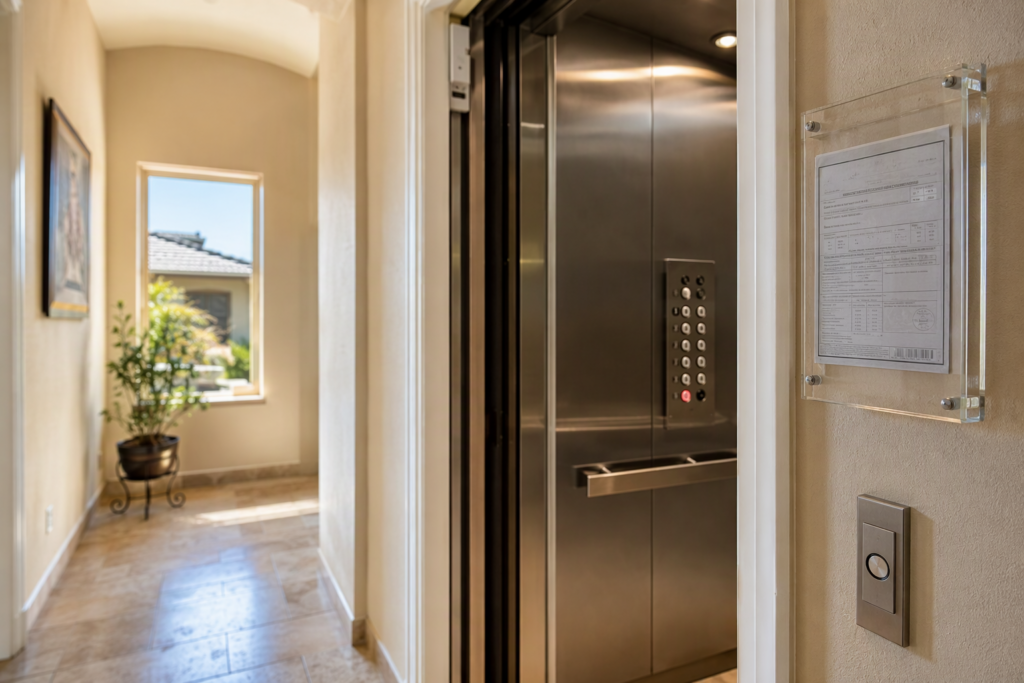
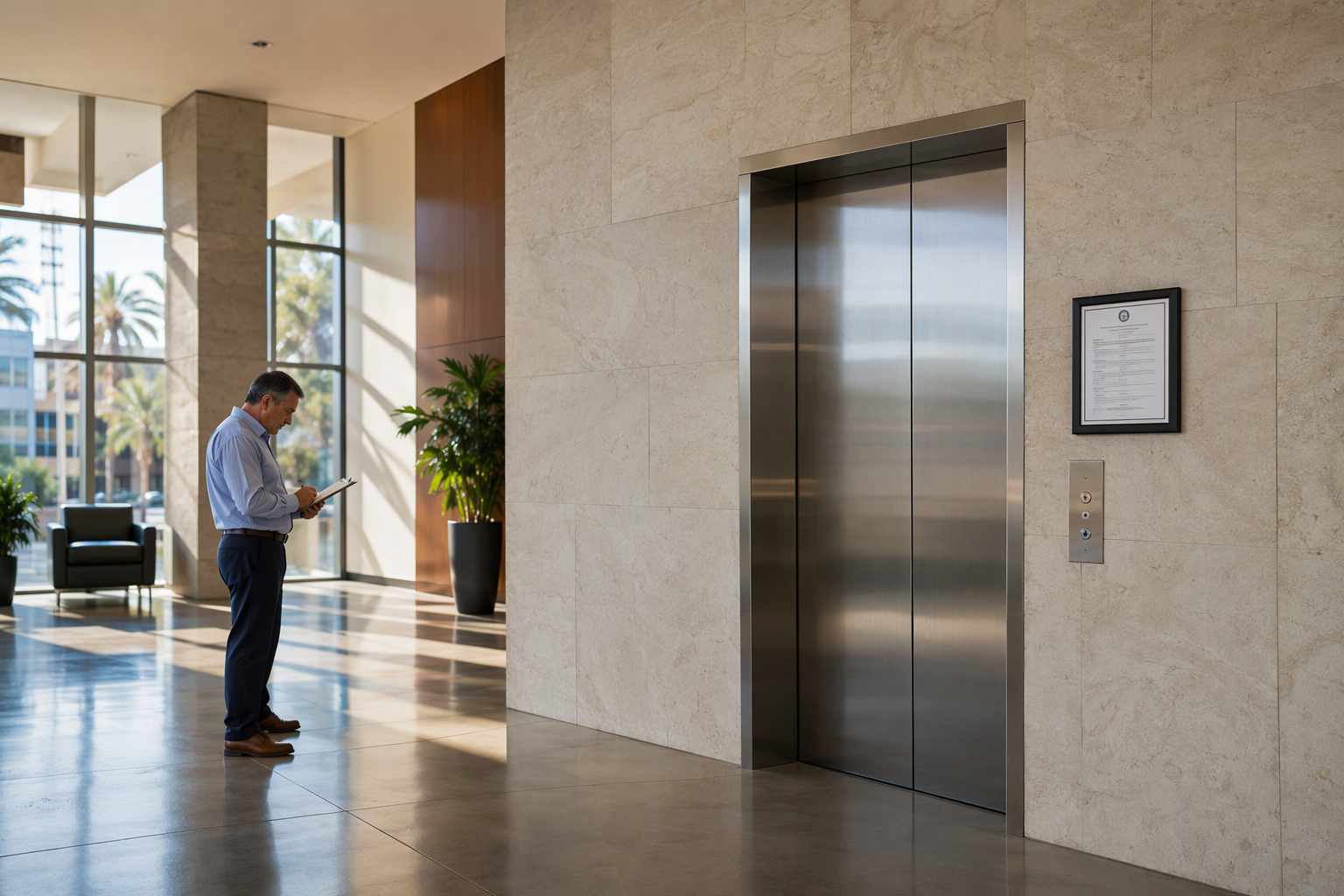
No conveyance may legally operate in Arizona without a current annual certificate of inspection. That certificate must be kept at the same location as the conveyance and made available on request. Additionally, the state serial number or the certificate itself must be posted in or close to the conveyance in an easily accessible location.
Who Can Perform an Annual Elevator Inspection in Arizona?
Arizona owners have two pathways for satisfying the annual inspection requirement:
- ICA Elevator Division state inspector — The state can conduct the inspection directly through its own staff.
- ICA-authorized private elevator inspector — Arizona owners may hire a private elevator inspector who is authorized by the Industrial Commission of Arizona. This option is common for owners who want scheduling flexibility.
Private elevator inspectors in Arizona operate under important constraints:
- They must register with the ICA Elevator Division every year.
- They must demonstrate at least eight hours of approved continuing education annually to maintain their registration.
- They may not inspect a conveyance owned, operated, or last serviced by the inspector personally, a company the inspector owns, or the inspector’s employer — a critical conflict-of-interest safeguard.
- Using a private inspector does not relieve the owner or operator of their legal obligations under Arizona law.
Elevator contractors who install or repair conveyances must hold an R-12 or C-12 elevator contractor license from the Arizona Registrar of Contractors (ROC). Note that the ROC licenses contractors for installation and repair work — it does not issue the annual certificate of inspection. That certificate authority rests solely with the ICA Elevator Division.
What Happens During an Annual Elevator Inspection?
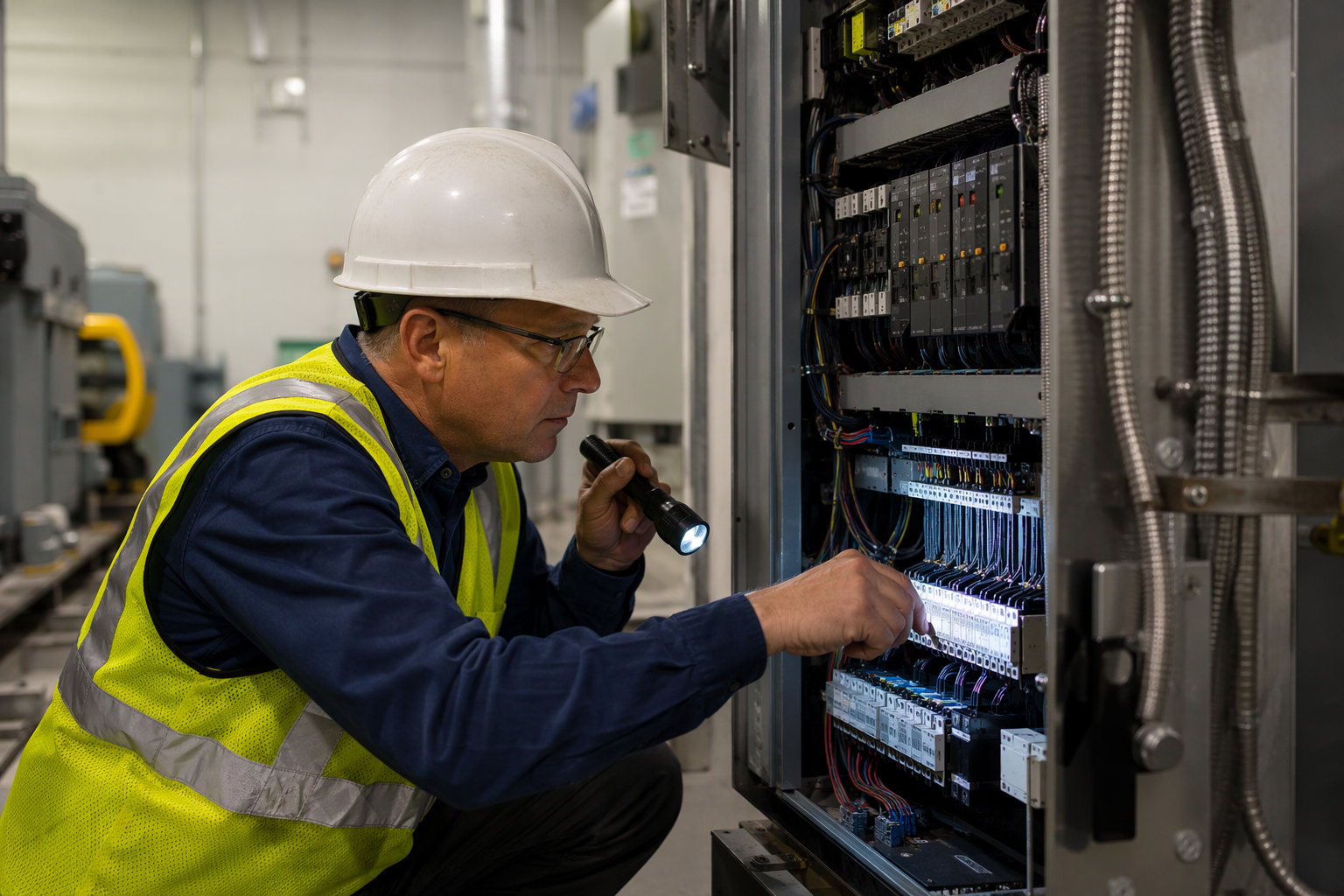
A thorough annual inspection evaluates the entire conveyance system against the requirements of the ASME A17.1-2019 Safety Code for Elevators and Escalators. While the precise checklist follows the adopted code and Arizona administrative rules, inspectors typically evaluate the following categories:
- Machine room and control systems — Electrical panels, mainline disconnect switches, controllers, and the state serial number tag affixed to the controller.
- Hoistway and pit — Clearances, lighting, drainage, pit ladders, stop switches, and buffer conditions.
- Car and cab — Door operation and interlocks, car safeties, floor leveling, lighting, ventilation, and posted certificate or serial number.
- Drive and suspension systems — Wire ropes or chains, sheaves, and braking components.
- Safety devices — Governor, safeties, oil buffers, and overspeed protection.
- Firefighters’ emergency operation — Conveyances equipped with firefighters’ emergency operation must use the Arizona Firefighters Service (AZFS) key, and inspectors verify correct key compatibility and function.
- Accessibility compliance — Relevant elements may be cross-referenced against ADA requirements for public accommodations.
- Platform lifts and stairway chairlifts — Units installed, repaired, or altered on or after January 1, 2023 must comply with ASME A18.1-2020, and inspectors verify that standard is met.
What Should a Building Owner Do to Prepare for an Annual Elevator Inspection?
- Confirm your inspection date at least 30 days in advance — Whether using a state inspector or an authorized private inspector, scheduling early avoids last-minute conflicts that could lapse your certificate.
- Locate and review the current certificate of inspection — Confirm it is posted in or near the conveyance and that the state serial number tag is visible at the controller or mainline disconnect.
- Clear and illuminate all required areas — Machine rooms, pits, and hoistways must be accessible, unobstructed, and properly lit per the ASME A17.1-2019 code requirements.
- Compile maintenance and repair records — Inspectors may request documentation of any repairs, lubrication, or adjustments performed since the last inspection.
- Verify AZFS key compatibility — If your elevator has firefighters’ emergency operation, confirm the Arizona Firefighters Service key is on-site and functioning.
- Address known deficiencies before the inspection date — Any outstanding repair orders should be resolved to avoid citation or a failed inspection that takes the unit out of service.
- Notify the ICA Elevator Division of any alterations — Arizona owners must notify the state at least 90 days before installing, relocating, or altering a conveyance, so confirm that any recent alterations were properly permitted before the annual inspection.
What Happens After an Elevator Fails an Annual Inspection in Arizona?
When an inspection reveals deficiencies, the outcome depends on the severity of the findings. Minor deficiencies may allow the conveyance to remain in limited operation while repairs are scheduled. Serious safety hazards can result in the conveyance being taken out of service immediately — a costly disruption for any multi-story building.
Arizona law also requires owners to notify the state within 24 hours of any accident that injures a person or disables a conveyance. This reporting obligation exists independently of the annual inspection cycle and must be observed regardless of when the last certificate was issued.
Lawfully installed older conveyances may remain in use under Arizona’s grandfather provisions — but only unless the ICA Elevator Division’s elevator chief determines that continued use poses a hazard to life, health, or property. Aging equipment with outdated safety devices is therefore at ongoing regulatory risk even if it passed its last inspection.
What Factors Influence Annual Elevator Inspection Costs in Arizona?
Inspection fees and associated compliance costs are influenced by several variables. Because fees set by the ICA Elevator Division are subject to change and are not reproduced here verbatim, building owners should obtain current fee schedules directly from the agency. Generally, the factors that affect total inspection-related costs include:
- Type of conveyance — Hydraulic elevators, traction elevators, escalators, platform lifts, and stairway chairlifts each require different inspection scopes and time investments.
- Number of stops and equipment complexity — A high-rise traction elevator with many floors and advanced control systems requires more inspector time than a two-stop hydraulic unit.
- Age and maintenance history — Older equipment with incomplete maintenance records may require additional testing to verify compliance with ASME A17.1-2019 or applicable legacy codes.
- Use of a private versus state inspector — Private inspectors set their own rates subject to market competition; state inspector fees are established by the ICA.
- Repair work identified — The inspection fee itself is typically the smallest component of compliance cost when deferred maintenance has accumulated. Emergency repair calls are always more expensive than proactive maintenance.
- Location within or outside Phoenix — City of Phoenix inspections go through the city’s Planning and Development Department, which has its own fee structure separate from the state.
How Does ASME A17.1-2019 Affect Annual Inspection Requirements in Arizona?
The ASME A17.1/CSA B44 Safety Code for Elevators and Escalators, 2019 edition, is the technical benchmark against which Arizona inspectors evaluate equipment installed, repaired, or altered on or after January 1, 2023. This edition introduced updated requirements around safety system design, door reopening protection, and emergency communications — all items that inspectors verify during the annual cycle.
Equipment installed before January 1, 2023 is governed by the edition of ASME A17.3 (the safety code for existing elevators) in effect at the time it was installed, as well as Arizona’s existing-equipment provisions. Owners of legacy equipment should work with an authorized inspector or qualified elevator contractor to understand which specific edition governs their unit and what retrofit obligations, if any, the ICA Elevator Division may apply.
What Are the ADA and OSHA Connections to Annual Elevator Inspections?
Annual inspections under Arizona law focus on mechanical and structural safety, but building owners must also track two overlapping federal frameworks:
ADA (Americans with Disabilities Act): The ADA requires that elevators serving multi-story buildings that are places of public accommodation or commercial facilities meet accessibility standards — including door width, control button height, Braille and raised characters, and audible signals. While the ADA does not prescribe an annual inspection specifically, the annual elevator inspection is a natural opportunity to verify that accessibility features are functioning correctly.
OSHA: The Occupational Safety and Health Administration has jurisdiction over elevator-related hazards in workplaces. Elevator machine rooms and service operations fall under OSHA’s General Industry standards. Employers whose workers maintain or service elevators must ensure those environments meet applicable OSHA requirements — which interact with, but do not replace, Arizona’s annual certificate process.
What Industry Trends Are Shaping Annual Elevator Inspections in 2025–2026?
Several qualitative trends are influencing how annual elevator inspections are conducted and what building owners face heading into 2026:
- Remote monitoring and predictive maintenance — Elevator manufacturers and service companies are increasingly deploying IoT sensors that stream operational data in real time. While this does not replace the legally required annual inspection, it surfaces developing faults between inspection cycles, which can reduce the number of deficiencies found during formal inspections.
- Tightening code cycles — The ASME A17.1 standard is updated on a regular cycle, and states typically adopt newer editions on a rolling basis. Arizona’s adoption of the 2019 edition effective January 2023 reflects this pattern, and stakeholders should monitor whether a newer edition is proposed for adoption in future rulemaking.
- Inspector workforce pressures — Across the industry, qualified elevator inspectors are in high demand relative to supply, contributing to scheduling lead times. Arizona’s private inspector registration pathway helps expand available capacity, but demand continues to outpace the pool of authorized inspectors in some regions.
- Energy efficiency upgrades — Modernization projects aimed at reducing energy consumption — regenerative drives, LED lighting, standby modes — often trigger the alteration inspection requirement, adding a second compliance event to buildings undergoing green retrofits.
- Post-pandemic occupancy shifts — Changing commercial real estate occupancy patterns have led some building owners to place seldom-used elevators into extended downtime. Arizona owners should be aware that an elevator that has been out of service and is returned to operation may require an inspection before it resumes use.
What Conveyances in Arizona Require Annual Inspection?
Arizona’s statute covers a broad class of “conveyances,” not only traditional passenger elevators. The annual inspection requirement applies to:
- Passenger elevators (hydraulic and traction)
- Freight elevators
- Escalators
- Moving walks
- Dumbwaiters
- Platform lifts (ASME A18.1-2020 for units installed/altered on or after January 1, 2023)
- Stairway chairlifts (ASME A18.1-2020 for units installed/altered on or after January 1, 2023)
Owners of mixed-use or large commercial properties often overlook escalators and platform lifts when tracking their compliance calendar. Each of these conveyance types requires its own certificate of inspection.
How Is the State Serial Number Used in Annual Inspection Records?
Every Arizona conveyance is assigned a unique state serial number on a tag fixed to the controller or mainline disconnect. This number is the primary identifier used throughout the life of the conveyance in ICA records. During an annual inspection, the inspector verifies that the serial number tag is in place and that the number posted in or near the conveyance matches the certificate of inspection on file. Discrepancies — such as a replaced controller where the tag was not transferred — must be resolved before a new certificate can be issued.
What Should Building Owners Know About Notification Requirements?
Beyond the annual inspection itself, Arizona owners carry several proactive notification obligations that can affect their inspection timeline:
- 90-day advance notice — Owners must notify the ICA Elevator Division at least 90 days before installing, relocating, or altering a conveyance. This gives the state time to schedule the required pre-service inspection.
- 24-hour accident reporting — Any accident that injures a person or disables a conveyance must be reported to the state within 24 hours. Failure to report can compound the legal exposure from the accident itself.
These obligations exist independently of the annual cycle and require a compliance calendar that tracks more than just the certificate expiration date.
How Can Arizona Elevator Solutions Support Annual Inspection Compliance?
Arizona Elevator Solutions works with building owners, property managers, and facilities teams across Arizona to ensure conveyances are inspection-ready. As a data-driven service provider, Arizona Elevator Solutions tracks the regulatory requirements under A.R.S. §§ 23-491 through 23-491.16 and the ASME A17.1-2019 Safety Code, helping clients understand what inspectors evaluate, how to prepare maintenance records, and what deficiency trends tend to surface on aging equipment in Arizona’s climate. The goal is not just passing the annual inspection — it is maintaining continuous compliance so that certificates are never at risk of lapsing.
Contact Arizona Elevator Solutions for a free elevator assessment at 480-557-7600.
Need elevator service you can rely on? Arizona Elevator Solutions is ready to help.