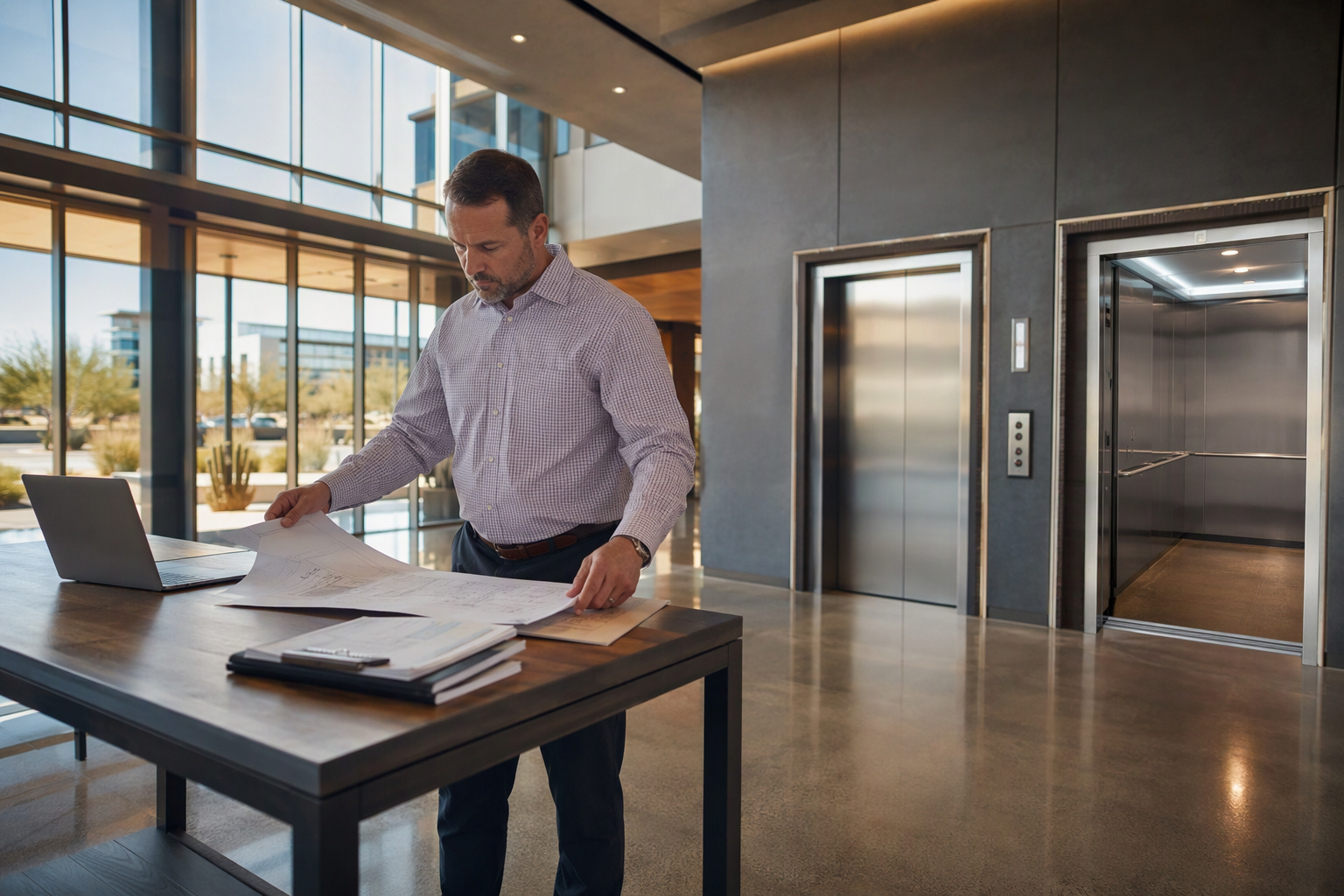
Elevator systems represent one of the most significant mechanical assets in any multi-story building. When you are building your 2027 capital expenditure plan, decisions about elevator modernization or replacement touch every stakeholder — building owners, facility managers, finance teams, and tenants. This guide walks through the full decision framework so you can enter budget season with clarity, defensible numbers, and a compliant path forward in Arizona.
What Is the Difference Between Elevator Modernization and Full Replacement?
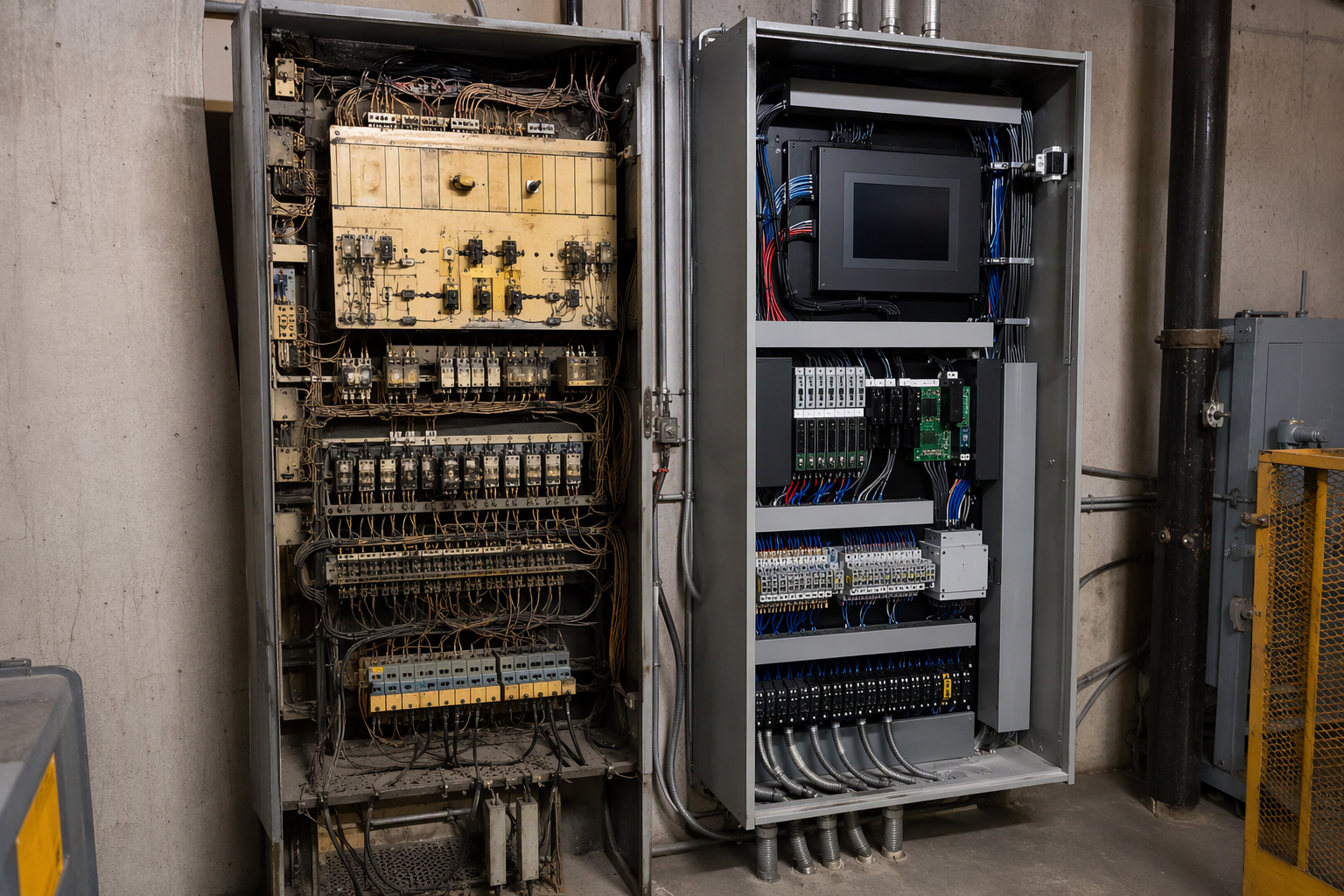
Understanding the scope of each option is the first step before any budget line can be drafted.
Modernization upgrades specific components of an existing elevator — typically the control system, drive system, door operators, cab interior, lighting, or safety devices — while retaining the hoistway, structural pit, and machine room infrastructure. Modernization is often staged across multiple budget cycles and minimizes construction disruption.
Full replacement removes the existing elevator and installs an entirely new system. It typically involves new rails, cab, machine, controls, and sometimes modifications to the hoistway itself. Full replacement yields the longest useful life and may be the only practical option for elevators that have exceeded reliable service life or when modernization costs approach replacement costs.
Partial modernization (sometimes called a “targeted upgrade”) addresses a single failing subsystem — such as a hydraulic unit conversion or a control panel swap — and is frequently used to extend equipment life by several years while deferring full scope work.
| Scope | Typical Complexity | Downtime Impact | Expected Life Extension | Best Suited For |
|---|---|---|---|---|
| Partial Modernization | Low–Medium | Days to weeks per phase | Moderate | Equipment with one failing subsystem |
| Full Modernization | Medium–High | Weeks to months | Significant | Aging equipment, multi-system failure risk |
| Full Replacement | High | Months | Maximum (new equipment life cycle) | End-of-life equipment, major hoistway changes |
What Compliance Requirements Affect My 2027 Elevator CapEx in Arizona?
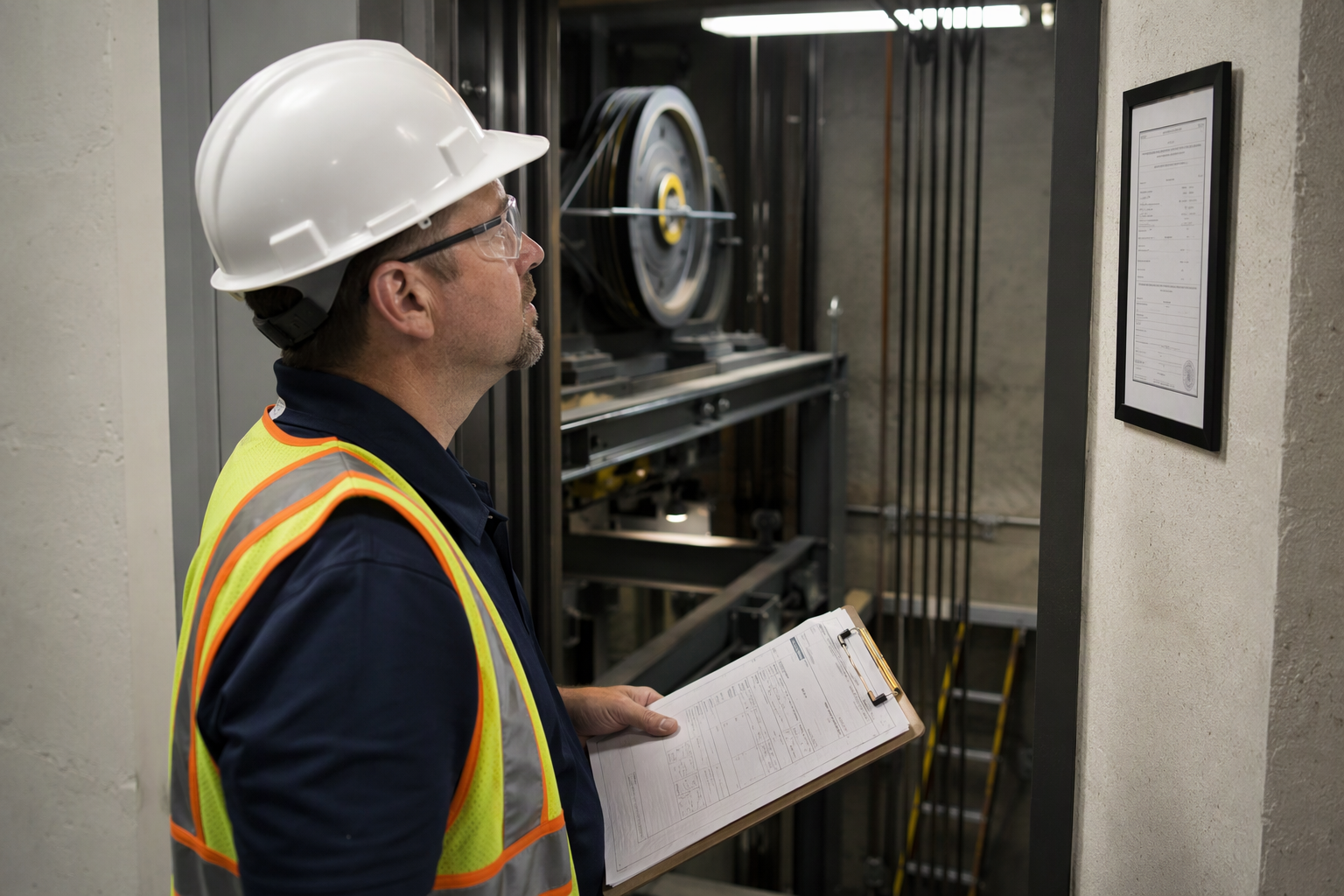
Arizona elevator compliance is administered by the Industrial Commission of Arizona (ICA), Elevator Division — previously known as the ADOSH Elevator Safety Section until September 12, 2026, when Laws 2026, Ch. 73 transferred authority. Building owners must understand these regulatory facts before finalizing any modernization or replacement budget.
- All conveyances in Arizona must hold a current annual certificate of inspection. No elevator may legally operate without one.
- Equipment installed, repaired, or altered on or after January 1, 2023 must comply with ASME A17.1-2019 (Safety Code for Elevators and Escalators).
- Platform lifts and stairway chairlifts installed, repaired, or altered on or after January 1, 2023 must comply with ASME A18.1-2020.
- Arizona owners must notify the ICA Elevator Division at least 90 days before installing, relocating, or altering a conveyance. This notification requirement directly affects your 2027 project timeline — if you plan to break ground in mid-2027, the 90-day notice must be filed in early 2027 or even late 2026.
- Any modernization or replacement project triggers a new inspection before the equipment returns to service.
- Conveyances in the City of Phoenix fall under the City of Phoenix Elevator Section (Planning and Development Department) for inspections; equipment outside Phoenix is inspected by the state.
- The Arizona Registrar of Contractors (ROC) issues R-12 and C-12 elevator contractor license classifications covering installation and repair — your selected contractor must hold the appropriate classification.
- Accessibility modifications must meet ADA requirements; ADA compliance is a separate but parallel obligation to Arizona code.
Key planning implication: Any scope of work that constitutes an “alteration” under Arizona Administrative Code R20-5-502 through R20-5-515 requires pre-notification and a post-work inspection. Budget for permitting timelines and inspection fees as line items in your 2027 CapEx.
How Do I Know If My Elevator Needs Modernization or Full Replacement?
Several qualitative and operational indicators help distinguish modernization candidates from replacement candidates. Facility managers should evaluate all of the following before engaging a contractor for a scope definition:
- Equipment age: Hydraulic elevators and older traction systems approaching or exceeding typical industry service life become increasingly difficult to source parts for, raising long-term maintenance costs regardless of current operating condition.
- Callback frequency: Rising service call rates signal systemic reliability issues that partial repairs rarely resolve long-term.
- Energy consumption: Older drive systems, particularly older hydraulic units, consume substantially more energy than modern variable-frequency drive (VFD) traction or machine-room-less (MRL) systems.
- Parts availability: When proprietary or obsolete control components are no longer manufactured, maintenance costs escalate and system availability drops.
- Compliance gaps: If equipment does not meet current ASME A17.1-2019 safety requirements as applied to alterations, any substantial repair may trigger full code compliance — a factor that can shift a “modernization” budget into “replacement” territory.
- Tenant experience and ride quality: Leveling accuracy, door speed, and noise all affect tenant satisfaction and can influence lease renewals in commercial buildings.
- Hydraulic fluid risk: Older in-ground hydraulic cylinders may carry environmental liability that makes conversion to above-ground or traction systems a compelling option.
What Should My 2027 Elevator CapEx Budget Include?
A well-structured elevator capital budget accounts for direct and indirect costs. Owners who budget only for equipment and labor consistently encounter budget overruns from overlooked line items.
| Budget Category | Modernization | Full Replacement | Notes |
|---|---|---|---|
| Equipment and materials | Primary cost driver | Primary cost driver | Varies by system type, number of stops, and cab size |
| Labor (R-12/C-12 licensed contractor) | Significant | Significant | Requires ROC-licensed elevator contractor |
| ICA pre-notification filing | Required | Required | File at least 90 days before project start |
| Permits and inspection fees | Required | Required | Phoenix projects: City of Phoenix Elevator Section; all others: ICA |
| Temporary service or elevator rental | Situational | Often required | Critical in multi-elevator buildings with ADA obligations |
| Hoistway or machine room modifications | Situational | Often required | Can significantly increase full replacement budget |
| ADA accessibility upgrades | May be triggered | May be triggered | Consult ADA.gov for current requirements |
| Environmental remediation (hydraulic) | Situational | Situational | In-ground cylinders may require soil assessment |
| Post-installation inspection | Required | Required | Mandatory before return to service under Arizona law |
| Contingency reserve | Recommended | Recommended | Industry practice suggests a contingency allowance for unforeseen conditions |
| Ongoing maintenance contract (post-project) | Recommended | Recommended | New or modernized equipment requires consistent preventive maintenance |
How Do I Compare the ROI of Modernization Versus Replacement?
Return on investment for elevator projects is measured across several dimensions beyond raw capital outlay. The following framework helps building owners build a defensible business case for the finance committee.
| ROI Factor | Modernization Advantage | Replacement Advantage |
|---|---|---|
| Upfront capital | Lower initial outlay | Higher but known total cost |
| Useful life gained | Moderate extension | Maximum — full new life cycle |
| Energy savings | Significant if drive system is replaced | Maximum with modern VFD or MRL systems |
| Maintenance cost reduction | Moderate | Maximum — parts availability guaranteed for years |
| Avoided future capital | Partial — residual components still age | Full — resets the capital cycle |
| Tenant satisfaction and leasing value | Improved | Maximum improvement |
| Compliance risk reduction | Partial — depends on scope | Full — new installation to current code |
| Disruption to building operations | Lower — phasing is possible | Higher — extended downtime likely |
For many Arizona commercial properties, a full modernization of controls, drive, and door systems delivers the strongest near-term ROI when the hoistway structure is sound. Full replacement becomes the superior choice when the residual value of existing infrastructure is low or when pending code compliance costs make partial investment inefficient.
What Is a Realistic Timeline for Planning a 2027 Elevator Project?
Timeline planning is where many CapEx cycles fall apart. The following ordered process reflects Arizona-specific regulatory requirements and typical project phases.
- Commission a condition assessment (Q3–Q4 2026): Engage a qualified independent elevator service provider such as Arizona Elevator Solutions to conduct a full mechanical and compliance assessment of existing equipment. This assessment becomes the technical basis for your CapEx request.
- Define project scope and obtain bids (Q4 2026–Q1 2027): Use the assessment report to solicit competitive bids from ROC R-12 or C-12 licensed elevator contractors. Obtain at minimum three bids for projects of significant scale.
- Finalize CapEx approval (Q1 2027): Submit the documented business case — including compliance obligations, ROI analysis, and contractor bids — to your capital committee or board.
- File ICA pre-notification (at least 90 days before project start): Under Arizona law, owners must notify the ICA Elevator Division at least 90 days before any installation, relocation, or alteration. If your planned project start is mid-2027, filing must occur no later than early Q2 2027.
- Obtain permits (concurrent with or following ICA notification): For projects in Phoenix, coordinate with the City of Phoenix Elevator Section. Projects elsewhere in Arizona coordinate directly with the ICA.
- Schedule contractor and manage building communications (Q2 2027): Notify tenants of planned downtime well in advance. Arrange temporary lift solutions if required by ADA obligations or building operations.
- Execute construction and installation (Q2–Q3 2027, timeline varies by scope): Maintain active communication with the licensed contractor and monitor compliance with the approved scope and Arizona code requirements.
- Post-installation inspection and certificate issuance (Q3–Q4 2027): The ICA or authorized private elevator inspector must inspect the equipment before it returns to service. No conveyance may operate without the new certificate of inspection posted or available as required by Arizona law.
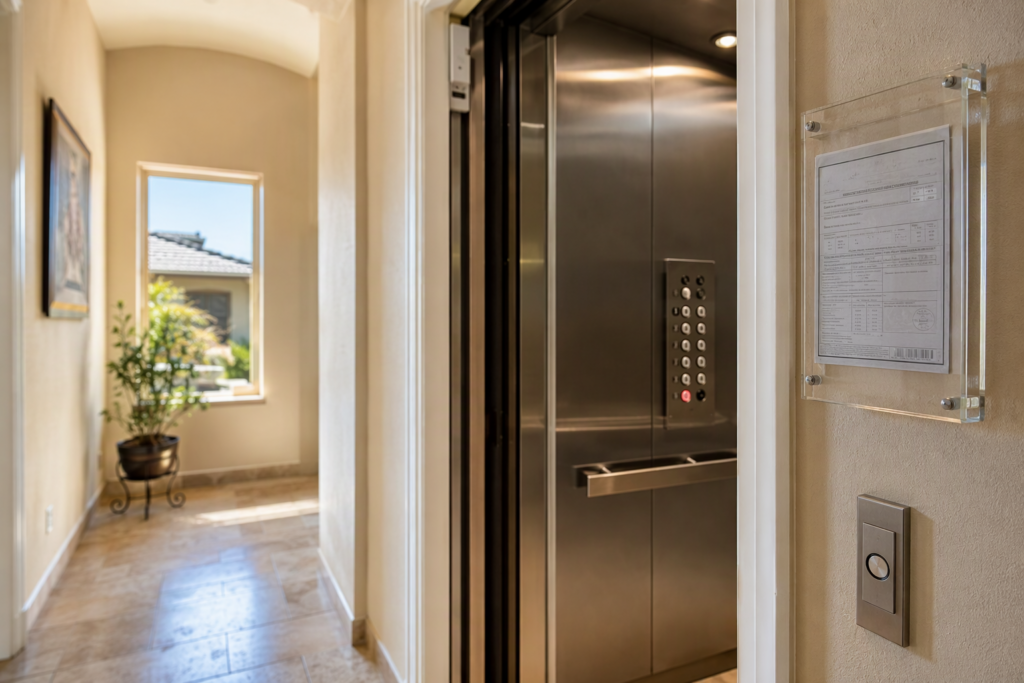
- Post-project documentation: Retain all permits, inspection records, and certificates. The certificate must be kept at the same location as the conveyance and the state serial number posted in or near the elevator.
What Are the Pros and Cons of Phasing Elevator Modernization Across Multiple CapEx Cycles?
Phased modernization allows organizations to spread capital outlay across two or three budget years, which is attractive for cash-flow-constrained properties. However, phasing carries real risks that should be disclosed to the finance team.
| Phased Modernization | Single-Cycle Full Scope | |
|---|---|---|
| Capital spread | Pro: Distributes outlay across years | Con: Higher single-year budget impact |
| Operational continuity | Pro: Shorter per-phase downtime | Con: Extended single-event downtime |
| Labor efficiency | Con: Repeated mobilization costs | Pro: One mobilization, lower total labor overhead |
| Equipment compatibility risk | Con: New components must integrate with aging legacy systems | Pro: All components selected and installed as a system |
| Regulatory re-inspection | Con: Each alteration phase may trigger a new inspection | Pro: One inspection event post-completion |
| Price escalation risk | Con: Future phases subject to material and labor cost increases | Pro: Full scope priced and contracted at once |
| Interim reliability | Con: Aging components between phases remain failure risks | Pro: Reliability established from project completion |
What Questions Should I Ask Elevator Contractors During the Bidding Process?
Not all elevator contractors deliver the same level of compliance expertise, transparency, or post-project support. The following questions help identify qualified vendors for your 2027 project.
- Does your company hold a current Arizona Registrar of Contractors R-12 or C-12 elevator license? Can you provide the ROC license number?
- Have you completed projects of similar scope in Arizona that required ICA Elevator Division pre-notification and post-installation inspection?
- Will your bid include the ICA 90-day pre-notification filing, permit coordination, and inspection scheduling, or are those owner responsibilities?
- How do you handle unforeseen conditions discovered during the work — for example, hoistway structural issues or environmental findings in hydraulic systems?
- What is your proposed equipment manufacturer, and how do you ensure long-term parts availability for that manufacturer’s control system?
- What maintenance contract do you offer post-installation, and is the new equipment proprietary to your service fleet or serviceable by independent providers?
- How do you document compliance with ASME A17.1-2019 for work performed under this contract?
- What is your plan for ensuring ADA accessibility compliance during and after the project? (See ADA.gov for accessibility requirements.)
How Does Elevator Type Affect My Modernization or Replacement Budget?
The existing elevator drive type substantially influences the scope and character of modernization or replacement options available to Arizona building owners.
Hydraulic elevators (common in low-rise buildings up to roughly six stories) can be modernized with updated controls and power units. Older in-ground single-bottom cylinders may require cylinder replacement or conversion to above-ground holeless hydraulic or traction systems, which can add scope and cost but also eliminates underground environmental liability. Full replacement with a machine-room-less (MRL) traction system is an increasingly common choice for low-rise buildings during major renovation cycles.
Geared traction elevators (common in mid-rise commercial buildings) are strong modernization candidates. Control system and drive replacements can deliver meaningful reliability and energy improvements while preserving the hoistway investment.
Gearless traction elevators (found in high-rise and high-traffic applications) have long service lives and their machine components often outlast control systems. Modern regenerative drive systems can be retrofitted to deliver significant energy savings.
Machine-room-less (MRL) traction systems are the most common choice for new installations and full replacements today. They eliminate the machine room, offer efficient use of building space, and align with current ASME A17.1-2019 design standards.
What Safety and Compliance Incidents Require Immediate Budget Action Outside the CapEx Cycle?
Not all elevator expenditures can be deferred to a planned CapEx cycle. Arizona law creates specific obligations that may force unplanned capital outlay.
- If an accident injures a person or disables a conveyance, Arizona owners must notify the ICA Elevator Division within 24 hours. Depending on the incident, the ICA may require the elevator to remain out of service until corrective action is completed and the equipment re-inspected.
- If the ICA’s elevator chief determines that a lawfully installed conveyance poses a hazard to life, health, or property, the owner may be required to take corrective action on a regulatory timeline rather than a CapEx timeline.
- Failure to maintain a current annual certificate of inspection is a legal violation — if an elevator’s certificate lapses and the ICA identifies this, restoring compliance may require accelerated repair and inspection expenditure.
- OSHA requirements for workplace safety apply to elevator environments in commercial buildings and can create compliance-driven repair obligations that fall outside normal capital planning cycles.
Building a capital reserve or emergency maintenance fund alongside the planned CapEx is strongly recommended for any multi-elevator property in Arizona.
Why Should I Use an Independent Elevator Service Provider for My CapEx Assessment?
When building a 2027 capital plan, the assessment that drives your budget request must be objective. Using the incumbent maintenance contractor to assess whether equipment needs replacement creates a potential conflict of interest — the same contractor who earns revenue from maintenance may not be positioned to recommend its own displacement.
Arizona Elevator Solutions serves as an independent, Arizona-based elevator service provider with no proprietary equipment line or manufacturer affiliation. An independent assessment from Arizona Elevator Solutions gives building owners and finance teams an unbiased evaluation of equipment condition, compliance status, modernization feasibility, and replacement criteria — information that can be presented to capital committees with confidence. Arizona Elevator Solutions can also provide ongoing preventive maintenance support after a modernization or replacement project is complete, ensuring that the new equipment investment is protected through consistent service.
What Documentation Should I Compile Before Starting the 2027 CapEx Process?
A strong CapEx submission is built on documented evidence. Before approaching the capital committee, facility managers should assemble the following:
- Current Arizona certificate of inspection for each conveyance (required to be on-site under Arizona law)
- State serial number assignment records for each conveyance
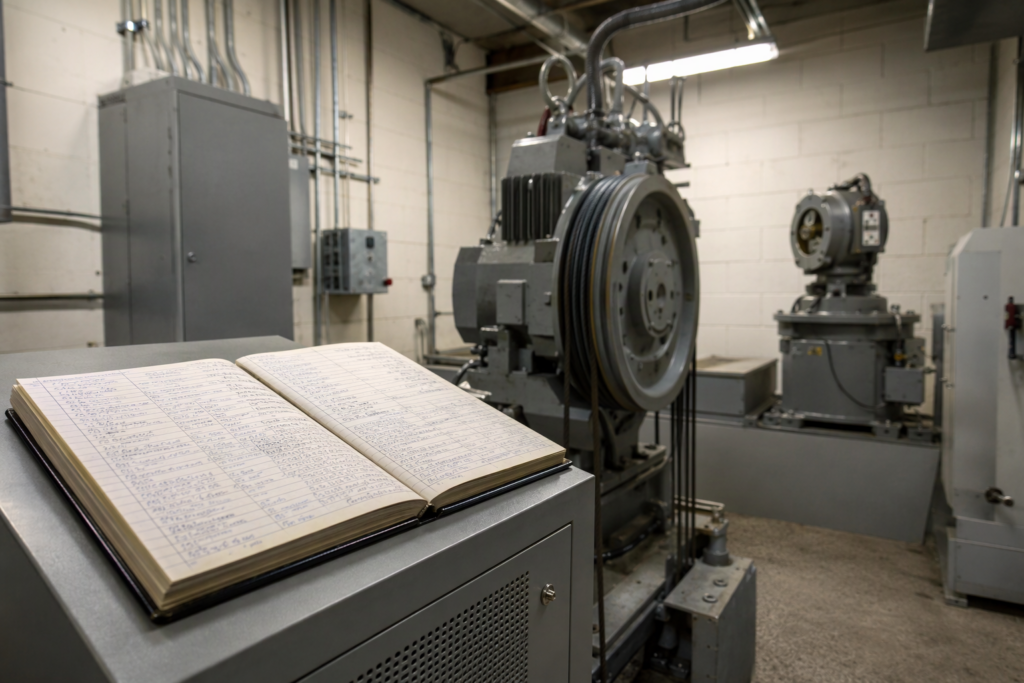
- Recent maintenance records, service logs, and callback history
- Prior inspection reports from the ICA or authorized private elevator inspector
- Any ICA correspondence regarding compliance deficiencies or required corrective action
- Equipment manufacturer documentation (installation date, model, control system generation)
- Prior modernization records if applicable
- Independent condition assessment report (see Arizona Elevator Solutions above)
- Three or more competitive contractor bids with clearly defined scope
- ADA accessibility review if the building has undergone or is planning other accessibility improvements
Contact Arizona Elevator Solutions for a free elevator assessment at 480-557-7600.
Need elevator service you can rely on? Arizona Elevator Solutions is ready to help.