Elevator Communicator Panel: Does One Company Handle It All, or Do You Need a Separate Vendor?
Arizona Elevator Solutions manages the elevator communicator panel—including testing, troubleshooting, coordination with the monitoring network, and compliance documentation—as an integrated part of elevator maintenance service. Building owners in Phoenix, Tucson, Scottsdale, and Mesa receive a single point of accountability rather than splitting responsibility across multiple vendors for this safety-critical component.
What exactly is an elevator communicator panel, and why does it matter?
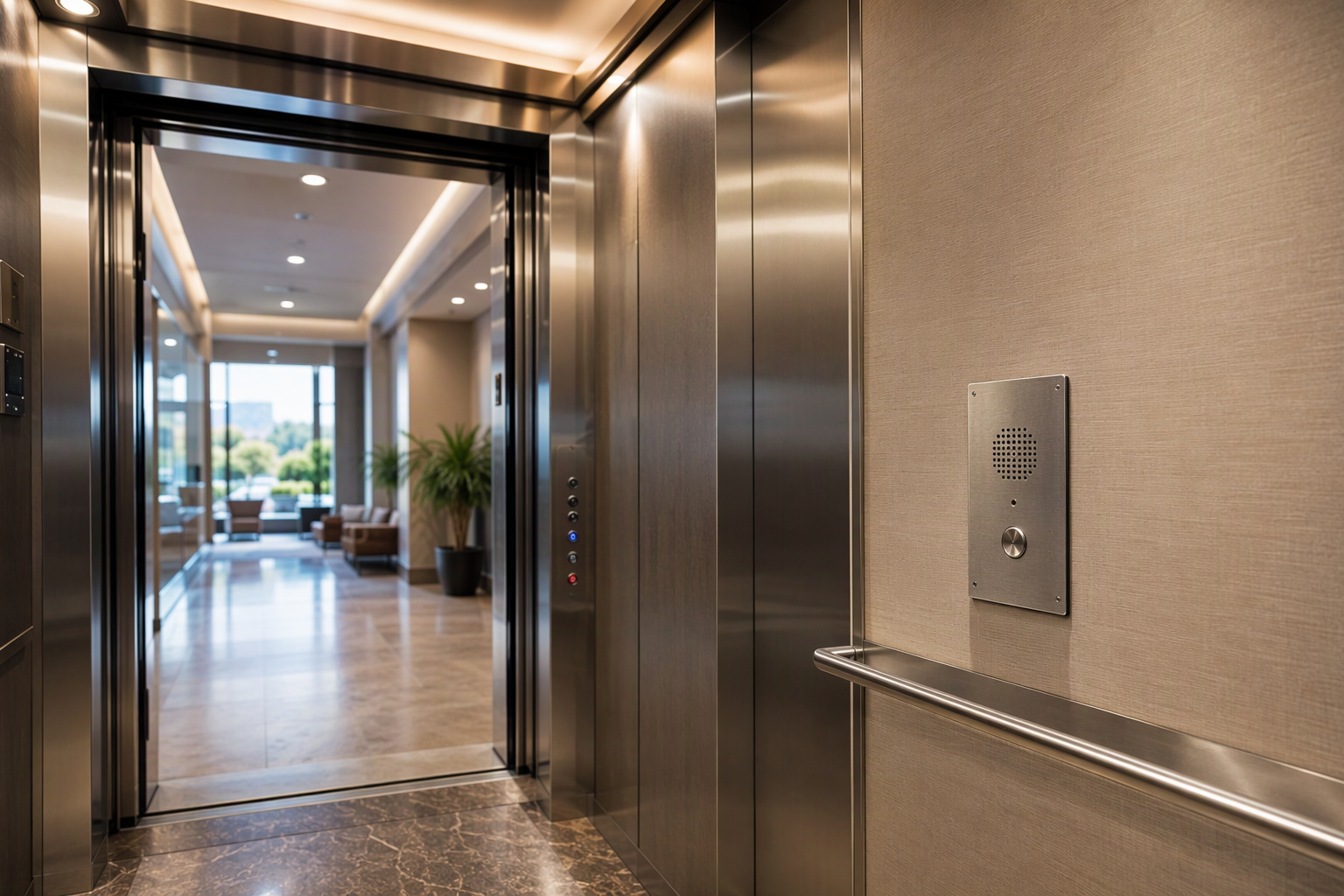
The elevator communicator panel is the automatic emergency telephone or two-way communication device mounted inside an elevator cab that connects trapped passengers to emergency services or a monitoring center.
Under the ASME A17.1 Safety Code for Elevators and Escalators, passenger elevators must be equipped with a means of two-way communication between the elevator car and a location outside the hoistway that is staffed or monitored. Arizona has adopted the ASME A17.1-2019 edition for equipment installed, repaired, or altered on or after January 1, 2023, as reflected in Arizona Administrative Code R20-5-502 through R20-5-515.
The communicator panel typically includes a push-to-talk button, speaker, and in modern installations a cellular or VoIP transmitter that dials out automatically when the button is pressed. The panel must connect to a live answering point—not an unmonitored voicemail box. Failure to maintain this device puts passengers at risk and puts building owners out of compliance with both state rules and federal access requirements.
Under the Americans with Disabilities Act (ADA), two-way communication systems in elevators must be usable by individuals who are deaf or hard of hearing, which introduces an additional layer of compliance that affects panel selection and configuration. Buildings that fall under ADA jurisdiction must ensure the system meets accessibility requirements, not just the mechanical code.
Does a separate telecom company need to handle the communicator panel?

No—while the cellular or VoIP signal that carries the emergency call travels over a telecommunications network, the panel hardware, testing, and code compliance responsibility belong squarely within the elevator contractor’s scope.
Some building owners assume that because the communicator panel uses a phone line or cellular signal, a separate telecom vendor must maintain it. In practice, the elevator service contractor is responsible for ensuring the panel activates correctly, transmits a clear signal, and meets the inspection requirements set by the Industrial Commission of Arizona (ICA), Elevator Division under A.R.S. §§ 23-491 through 23-491.16. The ICA Elevator Division—formerly called the ADOSH Elevator Safety Section until September 12, 2026—is the state agency that issues annual certificates of inspection, and a non-functional communicator panel will cause an inspection to fail.
The telecom carrier provides the network connection, but the elevator contractor programs the panel, verifies the outbound call completes to a staffed monitoring center, documents the test, and corrects any faults before annual inspection. Splitting this into two vendor relationships creates accountability gaps that can result in failed inspections or delayed emergency response.
What does the ASME A17.1-2019 code require for elevator communication systems in Arizona?
The ASME A17.1-2019 Safety Code for Elevators and Escalators requires that passenger elevators provide a means of two-way communication between the car and a location that is continuously monitored when the building is occupied.
The code requires that the communication device be operable without special knowledge—meaning a passenger should be able to press a clearly labeled button and immediately reach a live person or an automated system that immediately connects to emergency services. The device must also remain operable during a power outage through a battery backup or other means, ensuring the communicator functions during the events most likely to trap passengers.
Arizona adopted ASME A17.1-2019 effective January 9, 2023. Equipment installed or substantially altered after that date must meet the 2019 edition’s communication requirements. Older lawfully installed equipment may remain in service under Arizona’s grandfather provisions unless the ICA Elevator Division’s chief determines continued operation poses a hazard to life, health, or property.
What happens during an annual elevator inspection if the communicator panel fails its test?
A failed communicator panel test will cause the inspector to withhold or revoke the annual certificate of inspection, which means the elevator cannot legally operate in Arizona until the deficiency is corrected and the inspection is passed.
Under A.R.S. §§ 23-491 through 23-491.16, no conveyance may operate in Arizona without a valid annual certificate of inspection. The certificate must be kept at the same location as the conveyance and made available on request. If a communicator panel deficiency is identified, the owner must have it repaired—and in some cases re-inspected—before resuming service. Arizona owners may hire a private elevator inspector authorized by the ICA, but using a private inspector does not relieve the owner of the legal obligation to maintain a compliant, operational communicator panel.
Practical consequences of a failed communicator test include elevator shutdown, liability exposure if a passenger becomes trapped without communication access, and potential ADA enforcement action if the non-functional panel prevents a person with a disability from accessing emergency communication. Maintaining the communicator panel through the same contractor who handles all other elevator maintenance eliminates the common gap where neither vendor claims responsibility for the failure.
Who is legally responsible for maintaining the elevator communicator panel in Arizona?
The building owner or operator bears ultimate legal responsibility for maintaining a functional, code-compliant elevator communicator panel under Arizona law.
A.R.S. §§ 23-491 through 23-491.16 place affirmative obligations on owners and operators of conveyances to keep equipment in safe operating condition. The elevator service contractor the owner hires—such as Arizona Elevator Solutions—performs the maintenance work, but the owner cannot transfer the underlying legal obligation to the contractor. This is why a comprehensive maintenance agreement that explicitly includes the communicator panel is essential: it creates a documented chain of accountability and ensures the panel is tested and serviced on a schedule rather than treated as an afterthought.
In Phoenix specifically, the City of Phoenix Elevator Section within the Planning and Development Department inspects elevators inside city limits, while the ICA Elevator Division handles equipment outside Phoenix. Both authorities will check communicator panel functionality as part of their review.
How is the communicator panel tested during routine elevator maintenance?
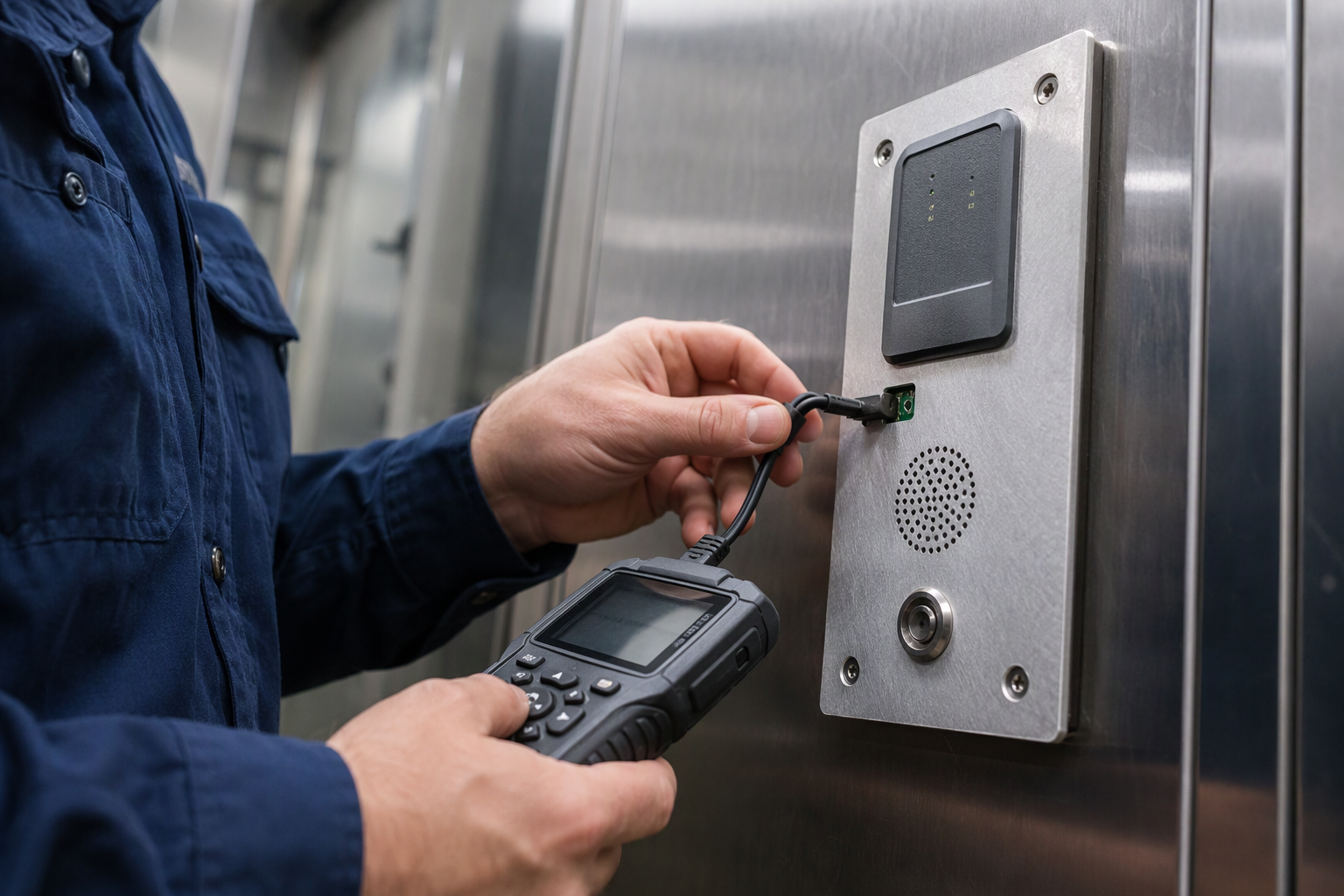
A communicator panel test involves physically pressing the emergency call button, verifying the outbound call connects to a live staffed monitoring center or emergency dispatch, confirming two-way audio is clear, and documenting the result in the maintenance log.
During a routine maintenance visit, a qualified elevator technician will:
- Visually inspect the panel faceplate, button mechanism, and speaker for physical damage or obstruction.
- Check the cellular module or telephone interface board for indicator lights or fault codes that signal a lost network connection.
- Press the emergency call button and time how long it takes to reach a live answering point.
- Conduct a two-way audio check—speaking from inside the cab and confirming the monitoring center or dispatcher can hear clearly, and vice versa.
- Test the battery backup by temporarily disconnecting building power and confirming the panel remains operational.
- Log the test date, result, signal strength reading (for cellular panels), and any corrective action taken.
- Update the maintenance record to support the annual inspection documentation required by the ICA Elevator Division.
If any step fails, the technician identifies whether the fault is in the panel hardware, the cellular or VoIP carrier signal, the monitoring center configuration, or the building wiring, and coordinates the repair before leaving the site.
What is the difference between an analog phone line communicator and a cellular communicator panel?
Analog (POTS) communicator panels use a traditional copper telephone line, while cellular panels use a wireless carrier network—and the difference has significant maintenance and reliability implications for Arizona building owners.
| Feature | Analog (POTS) Panel | Cellular (4G/LTE) Panel |
|---|---|---|
| Signal infrastructure | Copper telephone line to building | Wireless carrier network |
| Vulnerability | Line cuts, building wiring faults, carrier POTS sunset | Signal dead zones, carrier outages, power failure at tower |
| Ongoing carrier cost | Monthly landline service fee | Monthly cellular data/voice plan |
| Installation complexity | Requires dedicated phone line routed to cab | Wireless—no dedicated copper run required |
| Future-proofing | POTS lines being retired by major carriers | Compatible with current and next-generation networks |
| Battery backup required | Yes (per ASME A17.1-2019) | Yes (per ASME A17.1-2019) |
| Signal strength verification | Continuity test of copper line | dBm reading at panel during maintenance visit |
| Typical maintenance action | Line integrity check, board inspection | Firmware update, antenna check, carrier plan verification |
Many Arizona buildings still have POTS-based elevator communicators installed years ago, but major telecommunications carriers have been retiring analog copper infrastructure. Building owners relying on analog panels should discuss the transition to cellular with their elevator contractor before a carrier-side network retirement forces an emergency upgrade during an inspection period.
Can a building owner use any elevator contractor to service the communicator panel, or must it be the original installer?
Any elevator contractor holding the appropriate license from the Arizona Registrar of Contractors can service an elevator communicator panel—there is no requirement to use the original installing company.
The Arizona Registrar of Contractors issues R-12 (residential) and C-12 (commercial) elevator license classifications authorizing the licensee to install and repair elevators, dumbwaiters, escalators, and moving walks. Communicator panel work falls within this scope. Building owners in Phoenix, Tucson, Scottsdale, and Mesa have the right to select a licensed contractor of their choice for maintenance, repair, and communicator panel upgrades.
When switching contractors, the incoming contractor should request documentation of the panel model, carrier account information, monitoring center contact details, and the most recent test log so there is no gap in the service record that could complicate the next annual inspection.
What should a building owner do immediately if the elevator communicator panel stops working?
If the elevator communicator panel stops working, the building owner should take the elevator out of service immediately and contact a licensed elevator contractor for emergency repair before returning the unit to operation.
- Post an “Out of Service” notice at all landings and secure the elevator doors in the open position or lock the cab at a landing to prevent use.
- Contact the licensed elevator service contractor and describe the specific failure—no dial tone, no audio, no outbound connection, or error indicator on the panel.
- Do not attempt to bypass or jumper the communicator circuit; doing so may create additional code violations and safety hazards.
- If the building has a monitoring service account, notify the monitoring center that the panel is offline so they are not receiving false “all clear” signals.
- Once the contractor repairs the panel, conduct a live test call before returning the elevator to service.
- Document the outage period, the repair performed, and the test result for the maintenance record—the ICA Elevator Division may request this documentation at the next annual inspection.
Under A.R.S. §§ 23-491 through 23-491.16, Arizona owners must notify the state within 24 hours of any accident that injures a person or disables a conveyance. If the communicator failure contributed to or coincided with an entrapment event, that notification requirement is triggered immediately.
Does the ADA impose any additional requirements on elevator communicator panels beyond the ASME code?
Yes—the ADA requires that two-way emergency communication systems in elevators be accessible to people who are deaf or hard of hearing, which the ASME mechanical code does not fully address on its own.
ADA Standards for Accessible Design require that if a two-way communication system is provided in an elevator, it must include both audio and visual signals. Visual signals—such as a flashing light or illuminated display—must indicate that the call has been received so a passenger who cannot hear the verbal response knows that help is coming. The monitoring center on the receiving end may also need to have text-based communication capability to serve passengers who cannot communicate verbally.
Buildings undergoing alterations that affect the elevator must bring the communicator panel into ADA compliance as part of the alteration work. Buildings in Arizona that receive a complaint from a passenger with a disability regarding communicator inaccessibility may face enforcement review by the U.S. Department of Justice. Combining communicator panel maintenance with an ADA accessibility audit of the elevator cab—including control button height, Braille markings, and door timing—creates a more complete compliance review.
How often should the elevator communicator panel be tested in Arizona?
The communicator panel should be tested during every scheduled maintenance visit and must pass a functional test as part of the annual inspection required by the Industrial Commission of Arizona Elevator Division.
Arizona requires annual inspections for every conveyance, and a non-functional communicator panel will cause the inspection to fail. Beyond the annual inspection, best practice in the elevator industry is to test the communicator at every periodic maintenance visit—whether that is monthly, quarterly, or on another agreed schedule—so that any degradation in signal quality or hardware performance is caught between inspections rather than discovered by a trapped passenger.
Cellular panels introduce additional testing considerations because signal strength can change over time as carrier infrastructure evolves, buildings add rooftop equipment that affects signal propagation, or the panel’s cellular module ages. A technician who tests only outbound call completion without also checking signal strength in decibel-milliwatts may miss a marginal signal that will drop out under adverse conditions.
What records should a building owner maintain related to the elevator communicator panel?
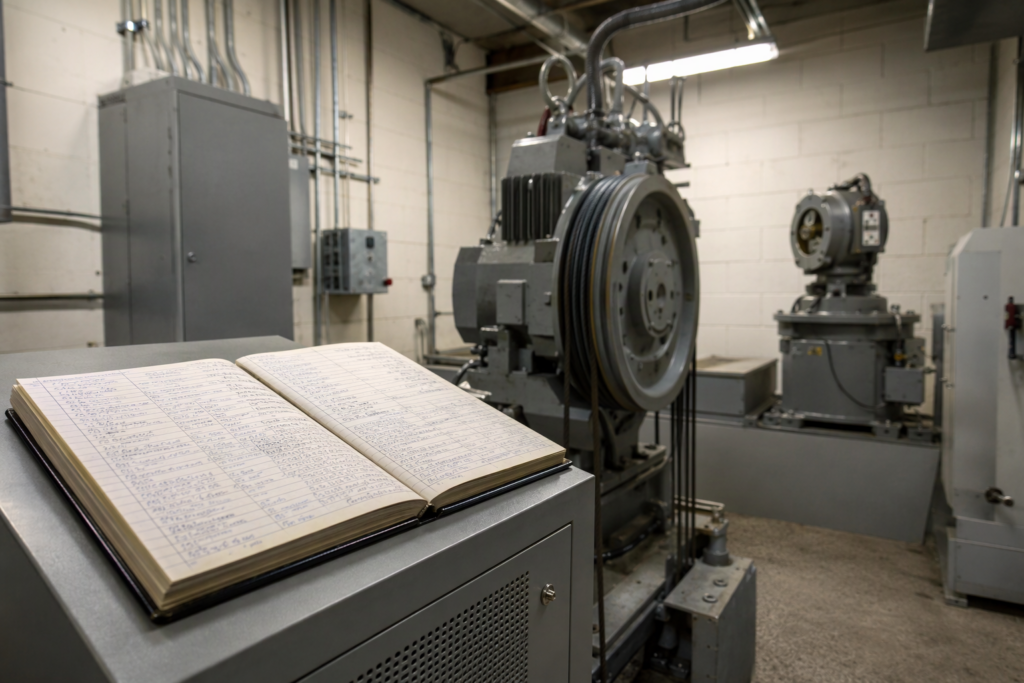
Building owners should maintain a written maintenance log for each elevator that records every communicator panel test, repair, firmware update, carrier change, and monitoring center configuration change, with dates and technician identification.
The ICA Elevator Division requires that the annual certificate of inspection be kept at the building and made available on request. While the certificate itself is issued by the inspector, the supporting maintenance records demonstrate to inspectors, insurance carriers, and courts that the owner exercised due diligence in keeping the communicator panel operational between inspections.
Records that document a communicator panel outage and the corrective action taken are particularly valuable if the building ever faces a liability claim related to an entrapment event. Without records, the building owner cannot demonstrate that the panel was functional at the time of the incident or that reasonable maintenance was performed. Arizona Elevator Solutions provides clients with documented service records after each maintenance visit, creating the paper trail needed to support inspection compliance and liability defense.
What is the role of the monitoring center in the communicator panel system, and who manages that relationship?
The monitoring center is the staffed facility that receives the emergency call from the elevator communicator panel, and the building owner or elevator contractor manages the monitoring center account separately from the hardware maintenance contract.
The elevator communicator panel dials a pre-programmed number when the emergency button is pressed. That number must reach a live person or an automated system that immediately transfers to emergency services. Some building owners contract directly with an elevator monitoring service; others rely on a building security center or dispatch service. The elevator contractor’s responsibility is to ensure the panel correctly dials the designated number and that the connection is functional—not to operate the monitoring center itself.
When Arizona Elevator Solutions services an elevator communicator panel, the technician verifies that the pre-programmed call destination is reachable, that the monitoring center is aware the elevator is in service, and that the panel’s caller ID or unit identification information is correctly registered so the monitoring center can dispatch to the right building and cab. If a building owner changes monitoring providers, the contractor must reprogram the panel to reflect the new number before the old service is discontinued to avoid a gap in emergency coverage.
Does elevator communicator panel maintenance fall under the building’s elevator maintenance contract or a separate agreement?
Communicator panel maintenance should be explicitly included in the elevator maintenance contract—if it is not listed, the building owner may inadvertently have a coverage gap.
Many older elevator maintenance contracts were written when POTS communicators were simple and rarely failed, so the contracts did not enumerate communicator panel work as a distinct line item. As cellular communicators have become standard and monitoring center coordination has become more complex, the scope of communicator maintenance has grown. Building owners reviewing or renewing maintenance contracts should confirm in writing that the agreement covers communicator panel hardware inspection, functional call testing, battery backup testing, firmware updates for cellular panels, and coordination with the monitoring center.
A contract that covers only mechanical and electrical components without mentioning the communicator panel may leave the owner paying a separate trip charge for communicator-related service calls—or worse, discovering during an annual inspection that no one has been testing the communicator because each party assumed the other was responsible.
How does Arizona’s 90-day advance notification requirement affect communicator panel upgrades?
Arizona owners must notify the ICA Elevator Division at least 90 days before installing, relocating, or altering a conveyance—and replacing or substantially upgrading a communicator panel may qualify as an alteration that triggers this requirement.
Under A.R.S. §§ 23-491 through 23-491.16, the 90-day advance notice requirement applies to installation, relocation, and alteration of a conveyance. A straightforward like-for-like replacement of a failed communicator panel using the same technology and interface may not constitute an alteration in the regulatory sense, but upgrading from an analog POTS panel to a new cellular unit, or integrating a new monitoring system that changes how the panel interfaces with the elevator controller, is more likely to be treated as an alteration.
Building owners planning a communicator panel upgrade should discuss the classification of the work with their elevator contractor and, when in doubt, submit the advance notice to avoid a compliance issue. The contractor who is licensed under the Arizona Registrar of Contractors’ R-12 or C-12 classification should be prepared to assist with the notification documentation.
Are communicator panel requirements different for platform lifts and stairway chairlifts in Arizona?
Platform lifts and stairway chairlifts have different code requirements than passenger elevators, and their communication requirements are governed by ASME A18.1 rather than ASME A17.1.
Arizona requires that platform lifts and stairway chairlifts installed, repaired, or altered on or after January 1, 2023, comply with ASME A18.1-2020. The ASME A18.1 standard addresses communication and emergency means appropriate for the scale and use context of platform lifts, which differ from full passenger elevator installations. Building owners with platform lifts should confirm with their elevator contractor which specific communication provisions apply to their equipment under ASME A18.1-2020 rather than assuming the ASME A17.1 passenger elevator standards apply directly.
Stairway chairlifts in residential and commercial settings that are used to meet ADA accessibility requirements still must satisfy the ADA’s accessibility standards for the overall accessible route, even if the chairlift itself does not have an onboard communicator panel equivalent to a passenger elevator. The ADA accessible route requirements should be reviewed whenever a platform lift or chairlift is part of the building’s accessibility plan.
What should a building owner ask when evaluating elevator service companies on communicator panel coverage?
Building owners should ask prospective elevator service companies five direct questions to determine whether communicator panel work is genuinely within their scope or will be treated as an extra-charge specialty item.
- Does your maintenance agreement explicitly include communicator panel functional testing at every visit, and is that in writing?
- Do your technicians test both analog and cellular communicator panels, and can they reprogram cellular panel configurations on-site?
- How do you handle coordination with the building’s monitoring center—do you verify the outbound call destination and confirm the monitoring center has the correct unit identification on file?
- If the communicator panel fails between scheduled visits, is emergency communicator repair included in the contract or billed separately?
- Can you provide documentation of communicator panel tests for each visit in a format that supports the annual inspection record?
A contractor who hesitates or qualifies answers to these questions is likely to treat the communicator panel as a separate scope item. Arizona Elevator Solutions includes communicator panel testing as a standard component of elevator maintenance visits across its Phoenix, Tucson, Scottsdale, and Mesa service area, ensuring building owners have clear accountability for this compliance-critical component.
How do elevator communicator panel requirements intersect with OSHA obligations for workplaces in Arizona?
OSHA’s general duty clause requires employers to provide workplaces free from recognized hazards—including a non-functional elevator communicator in a building where workers use the elevator—making elevator communicator compliance relevant to workplace safety obligations as well as building code compliance.
Under OSHA‘s general duty clause, employers who operate buildings with elevators have an obligation to maintain those elevators in a condition that does not expose workers to serious hazards. A communicator panel that cannot connect a trapped worker to emergency services is a recognized hazard with a known abatement method: regular testing and maintenance. While OSHA does not administer elevator-specific standards that override the ASME code, an OSHA inspection triggered by a workplace incident in an elevator could examine whether the employer maintained the communicator panel appropriately.
Building owners who also serve as the employer of workers using the elevator should view communicator panel maintenance as part of both their state elevator code obligations under A.R.S. §§ 23-491 through 23-491.16 and their federal workplace safety obligations under OSHA. A documented maintenance program that includes regular communicator tests is evidence of a good-faith effort to meet both frameworks.
What are the most common communicator panel failure causes and how are they prevented?
The most common communicator panel failures involve carrier signal loss, battery backup degradation, hardware board failure, and monitoring center configuration errors—all of which are preventable through routine maintenance.
Carrier signal loss affects cellular panels when the building environment changes—new rooftop HVAC equipment, added shielding materials, or carrier network reconfigurations can reduce signal strength below the threshold needed for a reliable call. Prevention involves measuring signal strength at every maintenance visit and installing an external antenna or signal booster when levels approach marginal thresholds.
Battery backup degradation is a silent failure mode: the battery may appear functional during normal operation but fail to hold a charge under a real power outage. Prevention requires a timed load test at scheduled intervals—not just a visual inspection of the battery—to verify that the backup will sustain the panel for the duration required by the applicable code.
Hardware board failure, particularly in panels that have been in service for many years, can produce intermittent failures that do not appear during a spot-check but cause the panel to drop calls under sustained use. Prevention involves monitoring the panel’s self-diagnostic indicators and replacing aging components before they cause a failure during an emergency.
Monitoring center configuration errors occur when a building changes its monitoring service, updates its address, or adds elevator cabs without notifying the monitoring center. Prevention requires that every change to the building’s elevator configuration or monitoring service be communicated to both the elevator contractor and the monitoring center so that records remain synchronized and emergency dispatch goes to the correct location.
How does the state serial number system in Arizona relate to communicator panel records?
Every Arizona conveyance is assigned a state serial number on a tag fixed to the controller or mainline disconnect, and this serial number is the identifier that links all inspection and maintenance records—including communicator panel test logs—to the specific unit.
When an elevator inspector reviews records during the annual inspection, the state serial number ties the maintenance log to the physical equipment. Communicator panel test records should reference this serial number so that in multi-elevator buildings, there is no ambiguity about which cab’s panel was tested on a given date. If a building has three elevators, three separate communicator panel test logs—each referencing the corresponding state serial number—provide clear evidence of compliance for each individual conveyance.
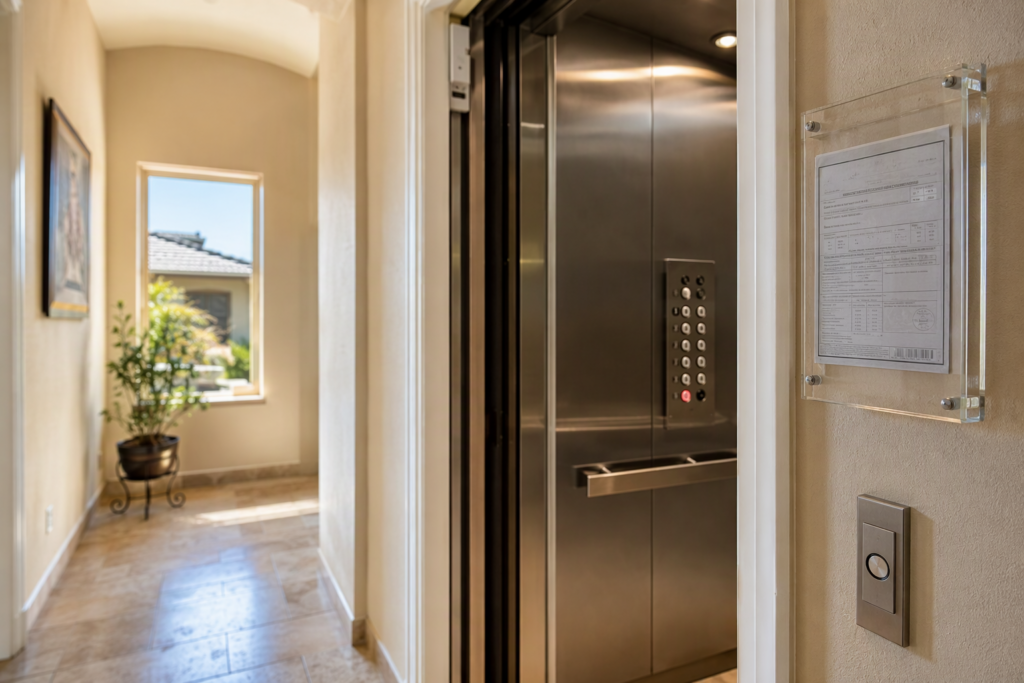
The state also requires that the serial number or the certificate be posted in or close to the conveyance in an easily accessible location. A well-maintained communicator panel record system that cross-references the state serial number supports the overall compliance documentation the ICA Elevator Division expects to find during inspections.
Contact Arizona Elevator Solutions for a free elevator assessment at 480-557-7600.
Need elevator service you can rely on? Arizona Elevator Solutions is ready to help.