MON-FRI 8:00AM-5:00PM   |
   CALL: 480-557-7600

Emergency Elevator Repair Phoenix

Emergency Elevator Repair in Phoenix, AZ: Complete FAQ Guide
Quick Answer: Emergency elevator repair in Phoenix typically arrives within 2–4 hours of your call, with certified technicians available 24/7/365 to restore service, address safety hazards, and bring your elevator back into ASME A17.1 compliance — minimizing liability and downtime for building owners and managers.
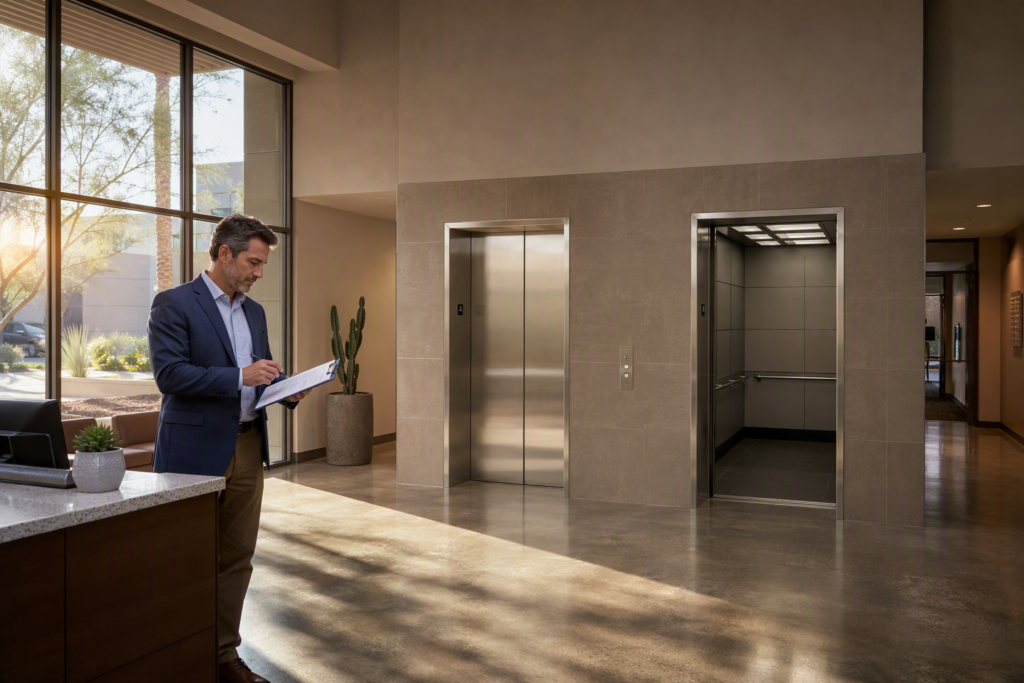
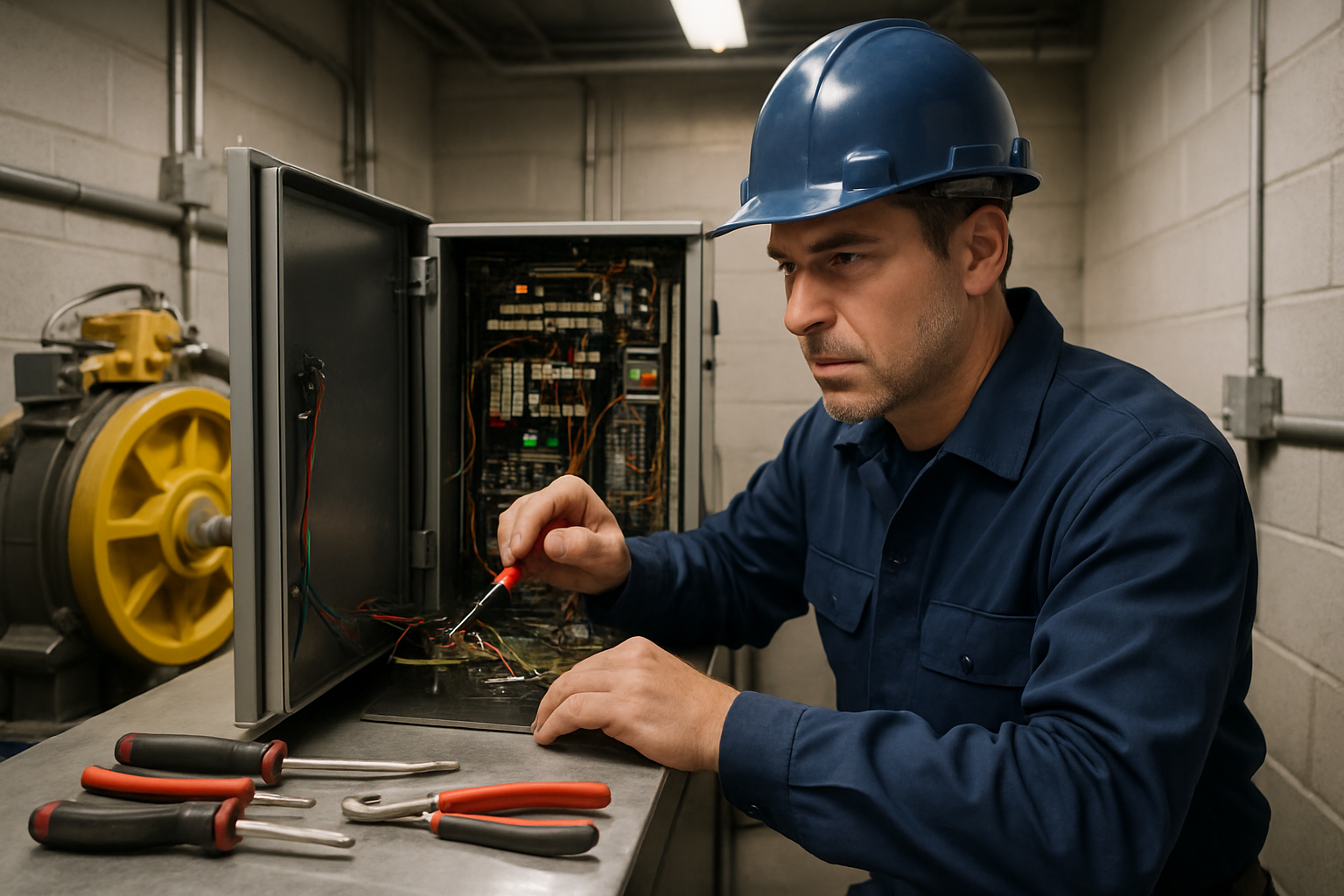
Certified elevator technician performing emergency elevator repair in a Phoenix commercial building machine room, with control panel open and diagnostic tools ready.
Arizona Elevator Solutions dispatches IUEC-certified technicians 24/7 for emergency elevator repair across Phoenix and the greater metro area. Most emergency calls receive a response within 2–4 hours.

If your elevator just stopped working in the middle of a Phoenix business day — or worse, at 2 a.m. — you need fast, accurate answers. After 15+ years maintaining and repairing elevators across the Phoenix metro area, I’ve seen every failure mode imaginable: stuck cars between floors, overheated motors in 115°F Arizona summers, door safety sensor failures, hydraulic fluid leaks, and control board burnouts. This guide answers the 20 most critical questions building owners, property managers, and facilities directors ask when an elevator emergency hits. Read what applies to your situation and act accordingly.


1. What counts as a true elevator emergency requiring immediate repair?
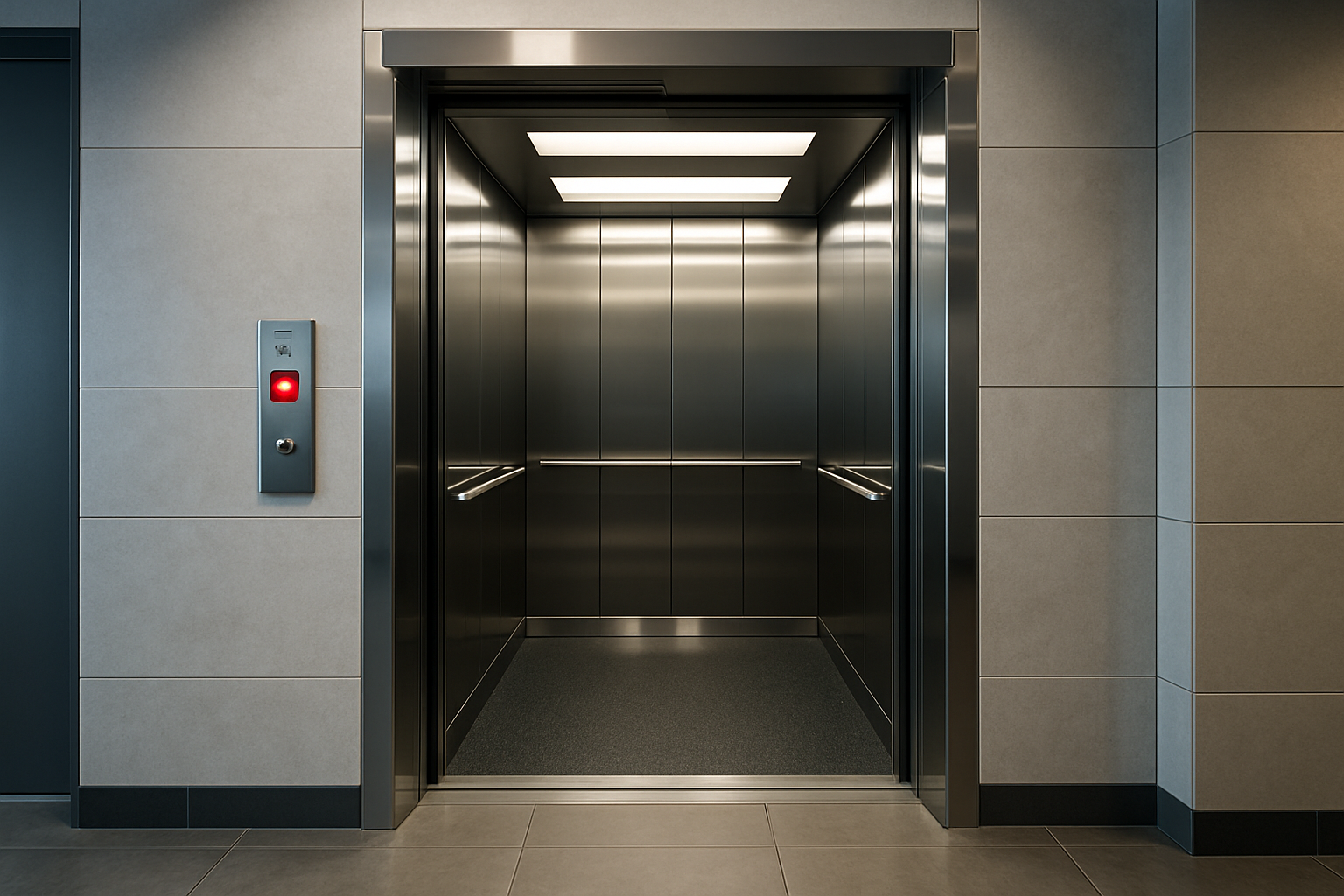
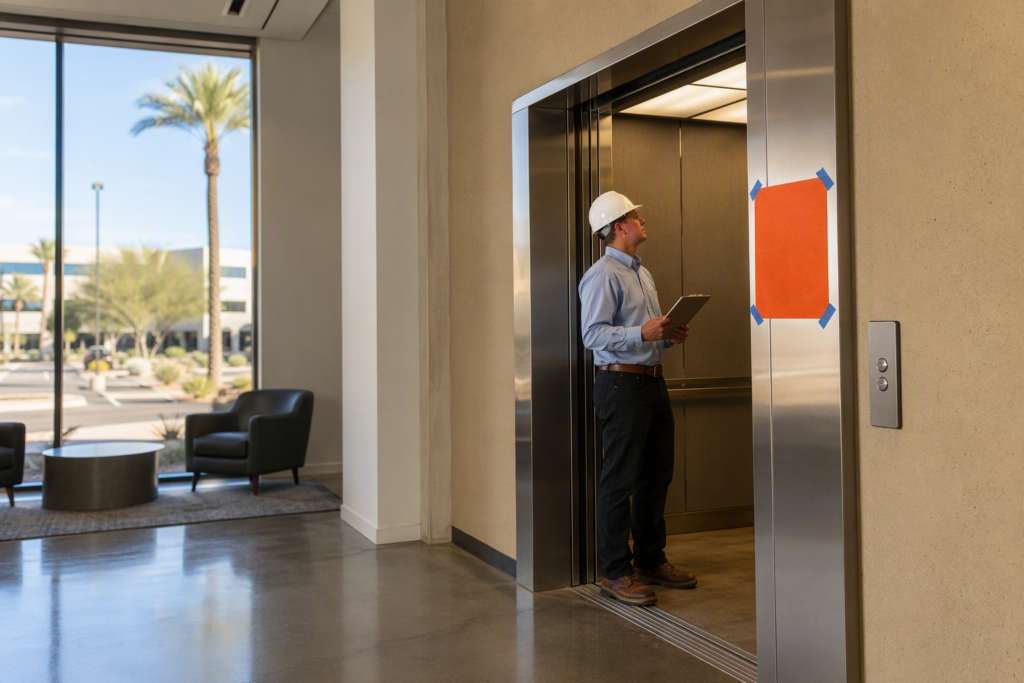
Commercial elevator with emergency stop button illuminated in a Phoenix office building, indicating an out-of-service condition requiring immediate emergency elevator repair.
An illuminated emergency stop or failed door interlock are recognized emergency conditions under ASME A17.1, requiring immediate removal from service and dispatch of a qualified elevator repair technician in Phoenix.

An elevator emergency includes any situation where a passenger is trapped, a safety system has failed, the elevator moves uncontrollably, or the unit poses an imminent hazard to building occupants.

Under ASME A17.1-2022 Safety Code for Elevators and Escalators, any condition that compromises the safety of passengers or bystanders constitutes an emergency requiring the elevator to be taken out of service immediately and a qualified technician dispatched.

Specific conditions that qualify as emergencies include: passengers trapped in the cab, door interlocks failing to engage, safeties that have tripped (indicating a free-fall detection event), hydraulic fluid leaks near ignition sources, smoke or burning smells from the machine room, and elevator cars leveling more than 1.5 inches above or below the floor landing. In Phoenix’s extreme summer heat, motor overheating and hydraulic fluid expansion failures are especially common and can escalate from nuisance shutdowns to true safety emergencies within hours if not addressed.


2. How fast can emergency elevator repair arrive in Phoenix?
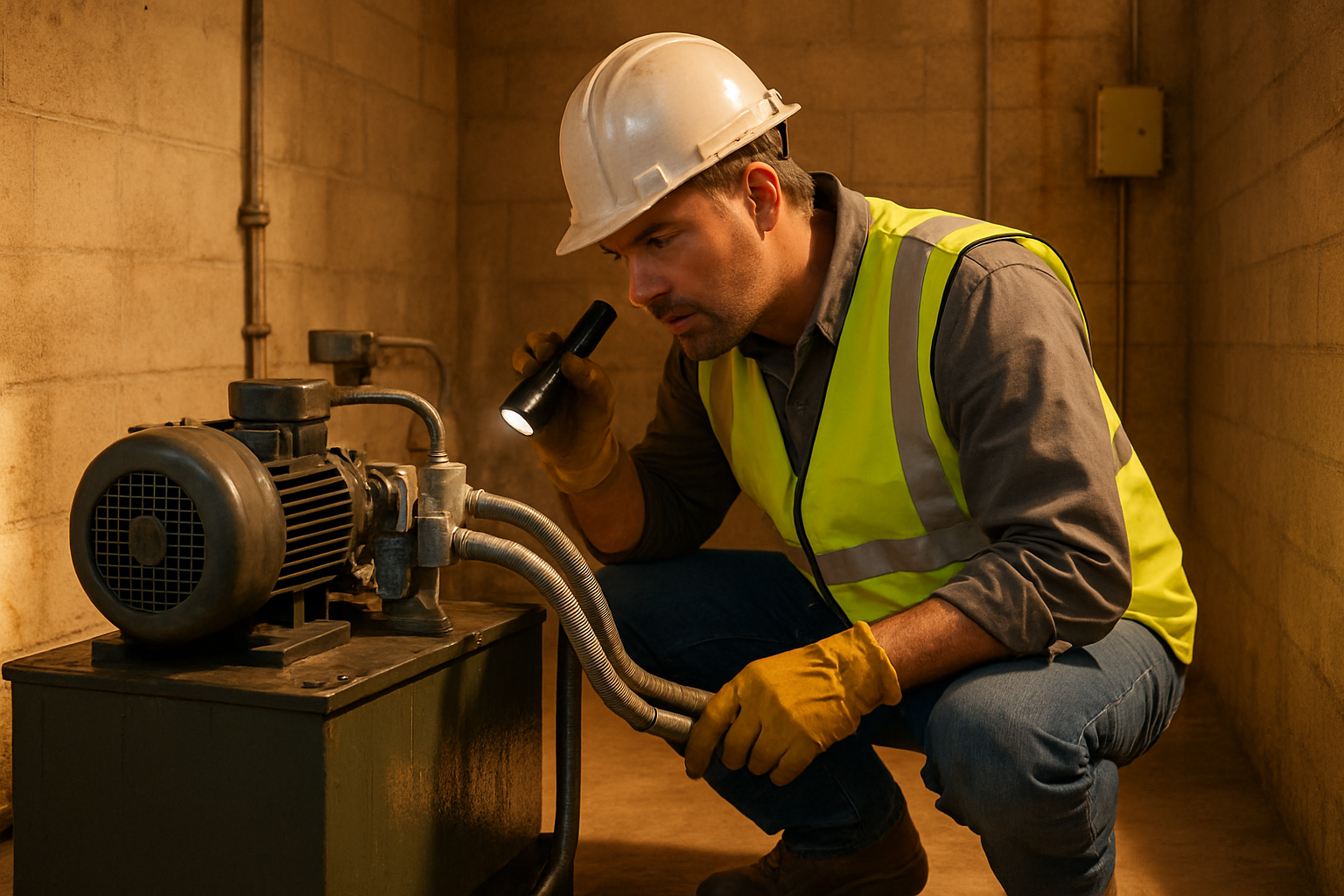
Elevator technician inspecting hydraulic fluid lines during emergency elevator repair in a Phoenix building machine room, where summer heat commonly causes hydraulic system failures.
Phoenix’s extreme summer temperatures — often exceeding 115°F — accelerate hydraulic fluid expansion and motor overheating, making heat-related failures one of the most common reasons building owners request emergency elevator repair in the Phoenix metro.

Most certified elevator service companies serving Phoenix, including Arizona Elevator Solutions, can dispatch a technician within 2–4 hours for emergency calls, with many situations resolved the same day.

Response time depends on your location within the Phoenix metro, time of day, and the technician’s current dispatch queue. Companies with dedicated on-call technicians stationed across Phoenix, Scottsdale, Mesa, and Tempe can respond faster than firms that cover multiple states from a single dispatch hub. Always confirm before signing a service contract whether the provider has Phoenix-based technicians on 24-hour rotation.

For passenger entrapment specifically, ASME A17.1 Section 2.27.3 requires that a qualified elevator technician or trained emergency personnel respond to release trapped passengers as quickly as possible. In practice, this means your building’s emergency response procedure should include both 911 (for fire department extraction if needed) and your elevator service contractor’s emergency line.


3. What are the most common elevator emergency failures in Phoenix?

The five most frequent emergency elevator failures in Phoenix are heat-related hydraulic fluid expansion, control board failures, door operator malfunctions, rope and sheave wear, and power surge damage from Arizona’s monsoon season electrical storms.

Phoenix’s climate creates conditions that accelerate wear on specific elevator components faster than national averages suggest. Hydraulic elevators operating in ambient machine room temperatures that regularly exceed 100°F experience fluid viscosity breakdown, causing sluggish or erratic cab movement. Traction elevators suffer from accelerated sheave groove wear due to the mechanical stress of constant thermal expansion and contraction.

Door operator failures account for roughly 35–40% of all elevator service calls industry-wide, and in Phoenix, door safety sensors collect dust and particulate matter from desert air faster than in humid climates, leading to nuisance trips and door reversal failures. The monsoon season (June–September) brings power surges that frequently damage solid-state control boards, which cost $3,000–$12,000 to replace depending on the system.


4. What does emergency elevator repair cost in Phoenix in 2026?

Emergency elevator repair in Phoenix typically costs between $350–$2,500 for diagnostic response and common repairs, though major component failures such as control boards, hydraulic cylinders, or motor replacements can run $5,000–$40,000+.

Repair Type Estimated Cost Range (2026) Typical Resolution Time Emergency vs. Scheduled Savings
Emergency diagnostic call / labor (2–4 hrs) $350–$600 Same day Scheduled: $200–$350 (30–40% savings)
Door operator repair / sensor replacement $400–$1,200 Same day to 48 hrs Scheduled: $250–$800
Control board replacement $3,500–$12,000 3–10 business days (parts) Scheduled: $3,000–$10,000
Hydraulic pump / valve unit repair $1,500–$6,000 1–5 business days Scheduled: $1,000–$4,500
Full hydraulic cylinder replacement $15,000–$40,000 2–6 weeks Scheduled: $12,000–$35,000
Hoist rope replacement (traction) $2,500–$8,000 1–3 days Scheduled: $1,800–$6,000
Motor/machine replacement $8,000–$25,000 1–4 weeks Scheduled: $6,500–$20,000

Emergency calls typically carry a premium of 25–50% over standard scheduled rates due to after-hours labor and expedited parts sourcing. Buildings enrolled in a comprehensive maintenance agreement with a local provider like Arizona Elevator Solutions often receive reduced emergency rates and priority dispatch, making preventive contracts a sound financial decision over reactive repair budgeting.


5. Is a building owner legally liable if a passenger is trapped or injured in Phoenix?

Yes — Arizona property owners have a legal duty of care to maintain elevators in safe operating condition, and failure to maintain, inspect, or promptly repair a defective elevator can result in significant premises liability exposure.

Arizona follows premises liability doctrine under ARS Title 12, and building owners can be held liable for injuries resulting from negligent elevator maintenance. The Americans with Disabilities Act (ADA) adds another layer of obligation for commercial and multi-family residential buildings, requiring that vertical accessibility be maintained for individuals with disabilities. An extended elevator outage in a multi-story building without a functioning alternative may constitute an ADA violation.

From a practical standpoint, always document your service calls, inspection certificates, and repair orders. In litigation, the paper trail demonstrating that you responded promptly to reported issues and maintained a compliant inspection schedule is your primary defense. Never ignore written or verbal complaints about elevator behavior — a documented complaint followed by no action is the worst liability scenario.


6. What Arizona state regulations govern elevator safety and emergency repairs?

Arizona elevator safety is governed by the Arizona Department of Occupational Safety and Health (ADOSH) under Arizona Revised Statutes (ARS) Title 23, which adopts ASME A17.1 as the mandatory safety code for elevator installation, maintenance, and repair.

Arizona requires that all elevator work be performed by licensed elevator contractors and that elevators in public buildings receive annual safety inspections by a qualified elevator inspector. The Arizona Elevator Safety Act mandates that certificates of inspection be posted inside the elevator cab or machine room and be available for review upon request.

Emergency repairs that involve safety systems — such as safeties, buffers, interlocks, or governors — must be completed and verified by a licensed technician before the elevator is returned to passenger service. Self-servicing by unlicensed building maintenance staff is illegal and voids insurance coverage. As of 2026, ADOSH has increased enforcement activity around inspection certificate compliance, particularly for commercial and multi-tenant residential properties in Maricopa County.


7. What should I do immediately if a passenger is trapped in an elevator in Phoenix?

Stay calm, communicate with the trapped passenger through the emergency phone or intercom, call 911 if there is any medical emergency or structural hazard, and immediately call your licensed elevator service contractor’s emergency line.

The emergency phone inside every elevator cab is required by ASME A17.1 Section 2.27.1 and must connect to a monitored location or emergency service 24 hours a day. Building staff should never attempt to manually force elevator doors open or move the cab without qualified elevator personnel present — doing so can result in the cab shifting unexpectedly, creating a crush hazard.

While waiting for the technician, keep the passenger calm and informed. Ventilation in modern elevator cabs is sufficient for extended periods, and the car’s safety devices will hold it in position. Phoenix Fire Department rescue teams are trained in elevator extraction but prefer to coordinate with an elevator technician who can safely disable the system and facilitate a controlled rescue. The standard response sequence is: (1) call 911 if medical emergency, (2) call elevator emergency line, (3) maintain voice contact with passenger, (4) do not attempt self-rescue.


8. How do I find a reliable 24/7 emergency elevator repair company in Phoenix?

Look for companies that are licensed by the State of Arizona, employ IUEC (International Union of Elevator Constructors) certified technicians, have Phoenix-local dispatch with documented average response times under 4 hours, and can provide verifiable references from Phoenix-area commercial properties.

The critical differentiators when evaluating emergency elevator repair providers are: local technician staffing (not outsourced dispatch), manufacturer authorization for your specific elevator brand, parts inventory depth (a technician who arrives without common parts wastes your time), and a clearly written emergency service agreement with guaranteed response time windows.

Arizona Elevator Solutions serves Phoenix, Scottsdale, Mesa, and Tucson with IUEC-certified technicians on 24/7 rotation, manufacturer-authorized service capability for major brands, and a documented response time commitment. When comparing vendors, ask specifically whether their emergency line routes to a local Phoenix dispatcher or a national call center — the difference in actual response time can be 2–6 hours.


9. What is the difference between emergency elevator repair and standard maintenance?

Emergency repair addresses immediate safety failures or service outages requiring urgent response, while standard maintenance is scheduled preventive work performed on a monthly, quarterly, or annual basis to prevent those failures from occurring in the first place.

ASME A17.1 Section 8 establishes maintenance requirements that distinguish between periodic tests and examinations (scheduled) and corrective maintenance (reactive). Under a full-service maintenance contract, most component replacements and adjustments are included in the monthly fee, meaning that what would be a $2,500 emergency repair on a time-and-materials basis costs nothing additional if your elevator is under a comprehensive maintenance agreement.

The economic math strongly favors preventive maintenance contracts for any building with 2 or more elevators. The average cost of a comprehensive maintenance agreement in Phoenix runs $250–$600 per month per elevator, compared to average emergency repair costs of $1,800–$4,500 per incident. Buildings that deferred maintenance due to budget cuts in 2023–2025 are disproportionately represented in emergency service calls in 2026.


10. How long will my elevator be out of service during emergency repairs?

Minor emergency repairs such as door sensor replacement, reset of tripped safeties, or relay failures are typically resolved within 4–8 hours, while major component failures requiring parts procurement can take 3–21 business days depending on parts availability and supply chain lead times.

Parts availability is the single biggest variable in repair timeline. Elevators manufactured by major brands (Otis, KONE, Schindler, ThyssenKrupp, Dover) have relatively good parts availability through authorized distributors serving the Phoenix market. Older or obsolete elevator systems — particularly units installed before 1995 — may require custom-fabricated components or salvaged parts, extending timelines significantly.

During extended outages in multi-story commercial or residential buildings, building owners have ADA obligations to maintain accessibility. This may require temporary measures such as providing escort services, relocating accessible functions to ground-floor spaces, or — in severe cases — temporary relocation of tenants. Document all steps taken during an extended outage to demonstrate good-faith ADA compliance efforts.


11. What ASME A17.1 code violations can shut down an elevator immediately in Arizona?

An ASME A17.1 code violation that poses an imminent hazard to life safety — including failed safety devices, inoperative door interlocks, excessive leveling errors, or compromised structural elements — requires immediate removal from service under Arizona ADOSH authority.

The most common imminent-hazard violations found during emergency response calls in Phoenix include: door interlocks that allow the elevator to run with doors open (a fall hazard), safeties that fail to hold the rated load, hydraulic cylinders with confirmed external leakage, and governor systems that fail the annual overspeed test. Any one of these conditions requires that the elevator be locked out of service until corrected and re-inspected.

Under ASME A17.1-2022 Part 8, the maintenance and repair entity has a duty to immediately notify the building owner and the authority having jurisdiction (AHJ) — in Arizona, that is ADOSH — when an imminent hazard is discovered. Failure to report and correct a known imminent hazard shifts significant liability to both the building owner and the service contractor.


12. Does Arizona require emergency elevator phones to be monitored 24/7?

Yes — ASME A17.1 Section 2.27.1 requires that all elevator emergency communication systems connect to a location staffed 24 hours a day, 7 days a week, and Arizona ADOSH enforces this requirement on annual inspections.

The emergency phone or two-way communication device in every elevator cab must be capable of connecting to a live person at any hour. Automated answering systems that require the caller to navigate a menu or leave a voicemail do not meet code requirements. During annual inspections in Arizona, inspectors test the emergency communication system as a standard checklist item, and a failed or improperly monitored emergency phone will result in a notice of violation requiring correction before the certificate of inspection is issued.

Building owners using third-party emergency monitoring services should verify that their service agreement explicitly covers 24/7 live answer for elevator emergency lines and that the monitoring center has documented protocols for dispatching rescue services to your specific building address. Review this annually — contracts expire and monitoring vendors change protocols without always notifying clients.


13. Can I perform emergency elevator repairs myself to save money?

No — Arizona law requires all elevator repair work, including emergency repairs, to be performed by a licensed elevator contractor using IUEC-certified or equivalent licensed technicians, and unauthorized repair work voids insurance coverage and creates significant personal and corporate liability.

Building maintenance staff, even those with strong mechanical backgrounds, are not legally authorized to perform elevator repair work in Arizona. The Arizona Elevator Safety Act specifies that elevator work may only be performed by holders of an Arizona elevator contractor license issued under the jurisdiction of ADOSH. Unlicensed work discovered during subsequent inspections can result in the elevator being taken out of service, fines assessed against the building owner, and voiding of the building’s general liability insurance coverage for any elevator-related claims.

There are a few limited actions building staff can take: resetting a manually tripped fire service switch, clearing an emergency stop button that was accidentally engaged, and verifying that machine room ventilation is functioning. Beyond these basic resets (which are documented in your elevator’s operations manual), any mechanical or electrical intervention requires a licensed technician.


14. How does Phoenix’s extreme heat affect elevator emergency frequency?

Phoenix’s summer temperatures — regularly exceeding 110°F ambient and pushing machine room temperatures above 130°F — directly accelerate component failure rates, with hydraulic fluid breakdown, motor thermal overload, and control board capacitor failure spiking 40–60% during June through September compared to winter months.

This is one of the most underappreciated aspects of elevator management in the Phoenix market. National average failure rate data does not account for the thermal stress that Phoenix’s climate places on elevator systems. Machine room air conditioning or adequate ventilation is not just a comfort issue — it is an operational necessity. ASME A17.1 Section 2.7 specifies that machine rooms must be maintained at temperatures and humidity levels consistent with safe equipment operation, and in Phoenix, that means active cooling is required for virtually all equipment rooms during summer months.

Hydraulic elevator fluid must be rated for high-temperature service in Phoenix applications. Standard ISO VG 46 hydraulic fluid used in cooler climates becomes too thin at Phoenix machine room temperatures, causing pressure loss and erratic cab movement. Elevator service technicians at Arizona Elevator Solutions specifically evaluate fluid viscosity grades during summer preventive maintenance visits and upgrade to high-temp formulations where needed — a proactive step that prevents many summer emergency calls.


15. What questions should I ask an emergency elevator repair company before hiring them?

Before hiring an emergency elevator repair provider, ask for their Arizona elevator contractor license number, IUEC certification documentation for assigned technicians, average documented response time for your Phoenix zip code, and a written scope of what the emergency call fee covers versus additional charges.

Here are the 8 most important qualification questions to ask before signing any emergency service agreement or dispatching an unknown contractor:

  1. What is your Arizona elevator contractor license number, and can I verify it with ADOSH?
  2. Are your technicians IUEC-certified, and will the technician dispatched to my building hold active certification?
  3. What is your guaranteed emergency response time for my specific address in Phoenix?
  4. Do you stock parts for my elevator brand and model on your service vehicles?
  5. What is included in the emergency call fee, and how are additional labor hours and parts billed?
  6. Are you manufacturer-authorized for my specific elevator brand?
  7. Do you provide a written service report after every emergency call, including code compliance findings?
  8. What is your protocol if the repair requires extended downtime and my building has ADA accessibility obligations?

A contractor who cannot answer these questions directly and in writing is not an appropriate choice for emergency elevator work in Arizona.


16. What is involved in an emergency elevator safety inspection after a major failure?

After a major elevator failure, ASME A17.1 requires a Category 1 or Category 5 test (depending on the nature of the failure) performed by a licensed elevator inspector before the unit may be returned to passenger service, and in Arizona, this requires coordination with ADOSH for a re-inspection certificate.

A post-failure inspection verifies that all safety systems are functioning correctly, that the root cause of the failure has been corrected, and that no secondary damage occurred as a result of the failure event. For hydraulic elevators that experienced a cylinder or valve failure, the inspection includes a full load pressure test and a relief valve verification. For traction elevators that tripped their safeties, a full safety test with rated load must be performed before service resumes.

The timeline for obtaining a post-repair inspection and new certificate in Arizona varies. ADOSH inspection scheduling can take 2–4 weeks for routine follow-up inspections, but most licensed elevator contractors can perform the required tests under their own qualified inspector certification for Category 1 tests, submitting results to ADOSH for record. Work with your service provider to understand exactly which inspection category applies and who is responsible for obtaining the updated certificate of compliance.


17. How does an emergency service contract differ from a standard maintenance agreement in Phoenix?

A standard maintenance agreement covers scheduled preventive maintenance visits and often includes labor for routine repairs, while an emergency service contract specifically defines guaranteed response times, after-hours labor rates, and the scope of emergency coverage — and the best contracts in Phoenix combine both into a comprehensive service agreement.

When reviewing elevator service contracts, watch for these critical clauses: whether emergency calls are included in the monthly fee or billed separately at premium rates, the exact definition of “emergency” versus “urgent” versus “routine” and how each category is dispatched, whether parts are included or billed separately, and the termination and transfer provisions if you sell the building.

Arizona Elevator Solutions offers comprehensive service agreements that include 24/7 emergency response with guaranteed 4-hour Phoenix metro dispatch, monthly preventive maintenance visits, and parts coverage for standard wear items — providing budget certainty and eliminating most surprise emergency invoices. For buildings managing tight operating budgets, a comprehensive contract is almost always more economical than time-and-materials billing across a full year.


18. What are the ADA compliance implications of an elevator being out of service in Arizona?

Under the Americans with Disabilities Act, building owners must ensure that vertical accessibility is maintained for individuals with disabilities, and an extended elevator outage without equivalent accessible alternatives may constitute an ADA violation subject to complaint, investigation, and civil penalties.

The ADA does not set a specific maximum time limit for elevator outages before a violation is triggered — instead, it applies a “readily achievable” and “good faith effort” standard. However, the U.S. Department of Justice guidance and case law suggest that any outage lasting more than a few business days in a building where the elevator is the sole means of accessible vertical travel requires documented remedial action by the building owner.

Practical ADA risk management steps during an elevator outage include: immediately notifying all known tenants and visitors with mobility limitations, providing reasonable accommodation such as relocating services or meetings to accessible floors, posting clear notices at the elevator with the expected restoration date and a contact number, and documenting all of these actions. In multi-tenant commercial buildings, elevator outages frequently trigger tenant lease default notices — another reason emergency repair response time matters far beyond just the repair cost.


19. How can I prevent elevator emergencies in Phoenix through better maintenance scheduling?

The most effective way to prevent elevator emergencies in Phoenix is a structured preventive maintenance program that includes monthly inspections, quarterly lubrication and adjustment cycles, annual Category 1 safety tests, and heat-season-specific checks on hydraulic fluid, motor cooling, and control board components.

Based on 15+ years of elevator service experience in the Phoenix market, here is the maintenance schedule that reduces emergency call frequency by 60–75% compared to buildings on reactive maintenance programs:

  • Monthly: Door operator inspection and adjustment, safety circuit testing, lubrication of moving components, machine room temperature logging, hydraulic fluid level and condition check
  • Quarterly: Governor function test, full load leveling accuracy check, emergency lighting and phone test, control panel inspection and cleaning
  • Pre-Summer (May): Hydraulic fluid viscosity grade verification, machine room cooling system check, motor thermal protection calibration, control board capacitor inspection
  • Annual: Category 1 full load safety test per ASME A17.1, governor seal inspection, hydraulic cylinder visual inspection, full operational test of all safety devices, inspection certificate renewal
  • 5-Year: Category 5 governor and safety test (traction elevators), hydraulic cylinder pressure test, full wiring insulation test

Arizona Elevator Solutions provides customized maintenance schedules tailored to Phoenix’s specific climate demands, building occupancy patterns, and elevator equipment age — a significant advantage over national service companies applying generic national maintenance templates to Arizona’s unique operating environment.


20. How do I choose between repairing an old elevator or replacing it entirely after a major emergency failure?

The repair-versus-replace decision should be driven by the 50% rule: if the cost of repairing a specific failure exceeds 50% of the cost of a full modernization, replacement or comprehensive modernization typically delivers better long-term value, especially for units over 20 years old operating in Phoenix’s demanding climate.

Key factors that favor modernization over emergency repair include: the elevator is more than 25 years old, this is the second or third major component failure in 24 months, parts availability is limited and lead times exceed 4 weeks, the control system is obsolete and no longer supported by the manufacturer, or the hydraulic cylinder has confirmed internal corrosion (particularly relevant for single-bottom cylinders installed before 2000, which carry environmental remediation risk under Arizona DEQ guidelines if they leak into soil).

Key factors that favor repair over modernization: the unit is less than 15 years old, the failure was a discrete component rather than systemic degradation, the building has budget constraints that make a $75,000–$200,000 modernization project impossible in the current fiscal year, or a comprehensive modernization plan is already in your 3–5 year capital improvement plan. In those cases, a repair that buys 2–3 years of reliable service life is the right business decision.

A qualified elevator consultant or your service contractor can perform a documented condition assessment that analyzes remaining useful life, replacement part availability, energy efficiency gaps, and ADA compliance status to give you a data-driven recommendation rather than a guess.


Get Emergency Elevator Repair in Phoenix — 24/7 Response

Whether you’re dealing with a passenger entrapment right now, recovering from an unexpected shutdown, or trying to prevent the next emergency before it happens, Arizona Elevator Solutions is the Phoenix metro’s certified, IUEC-backed emergency elevator repair provider with technicians stationed locally in Phoenix, Scottsdale, Mesa, and Tucson.

We respond to emergency calls within 2–4 hours across the Phoenix metro, provide fully documented repair reports for compliance and insurance purposes, and offer comprehensive maintenance agreements that dramatically reduce your long-term emergency repair exposure.

Contact Arizona Elevator Solutions for a free elevator assessment.
Call us now at 480-319-7157 — available 24 hours a day, 7 days a week, 365 days a year.
Don’t wait for the next failure. One call today can prevent a passenger entrapment, an ADA complaint, or a six-figure liability claim tomorrow.


Sources & Regulatory References: ASME A17.1-2022 Safety Code for Elevators and Escalators | Americans with Disabilities Act — ADA.gov | Arizona ADOSH Elevator Safety Program — ARS Title 23 | Arizona DEQ Underground Storage Tank and Environmental Compliance Guidelines | International Union of Elevator Constructors (IUEC) Certification Standards. Data and cost estimates reflect 2026 Phoenix metro market conditions.

Related Posts

Elevator Service in Phoenix, AZ | Arizona Elevator Solutions Quick Answer: Elevator maintenance ROI in

Picture of Taylor Tack
Taylor Tack

Direct Answer: To evaluate an elevator service company, verify state licensing and insurance, confirm technician

Picture of Taylor Tack
Taylor Tack

Best Elevator Maintenance Company Phoenix: Complete FAQ Guide Quick Answer: Arizona Elevator Solutions is a

Picture of Taylor Tack
Taylor Tack

Elevator Service in Mesa, AZ | Arizona Elevator Solutions Arizona Elevator Solutions provides comprehensive elevator

Picture of Taylor Tack
Taylor Tack

Elevator Service in Scottsdale, AZ | Arizona Elevator Solutions Quick Answer: Arizona Elevator Solutions provides

Picture of Taylor Tack
Taylor Tack

Elevator Service in Tucson, AZ | Arizona Elevator Solutions Quick Answer: Arizona Elevator Solutions provides

Picture of Taylor Tack
Taylor Tack