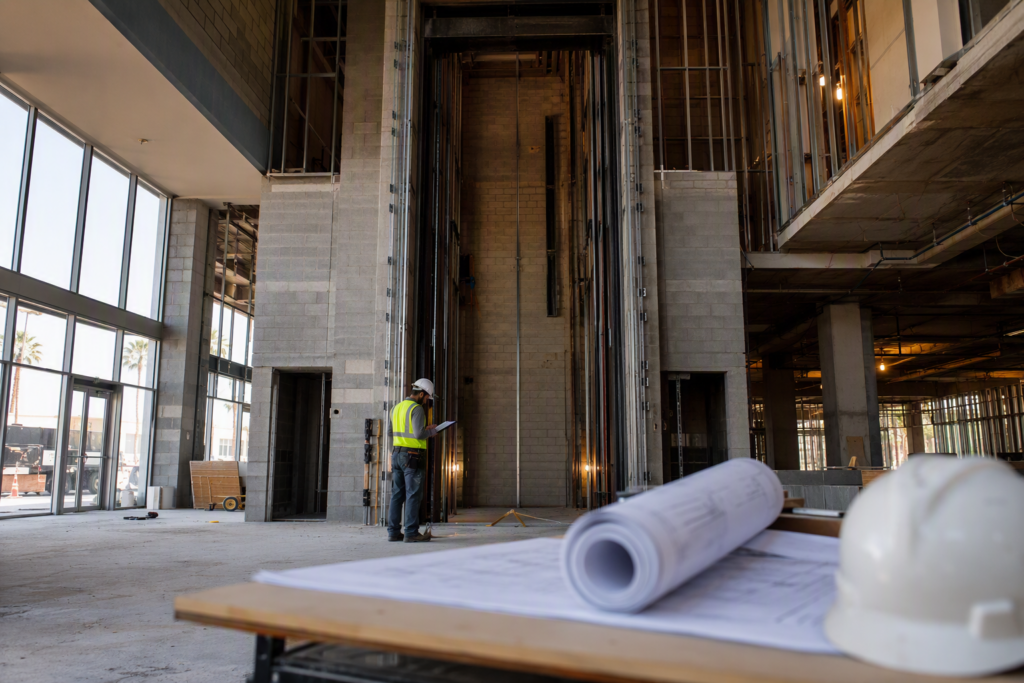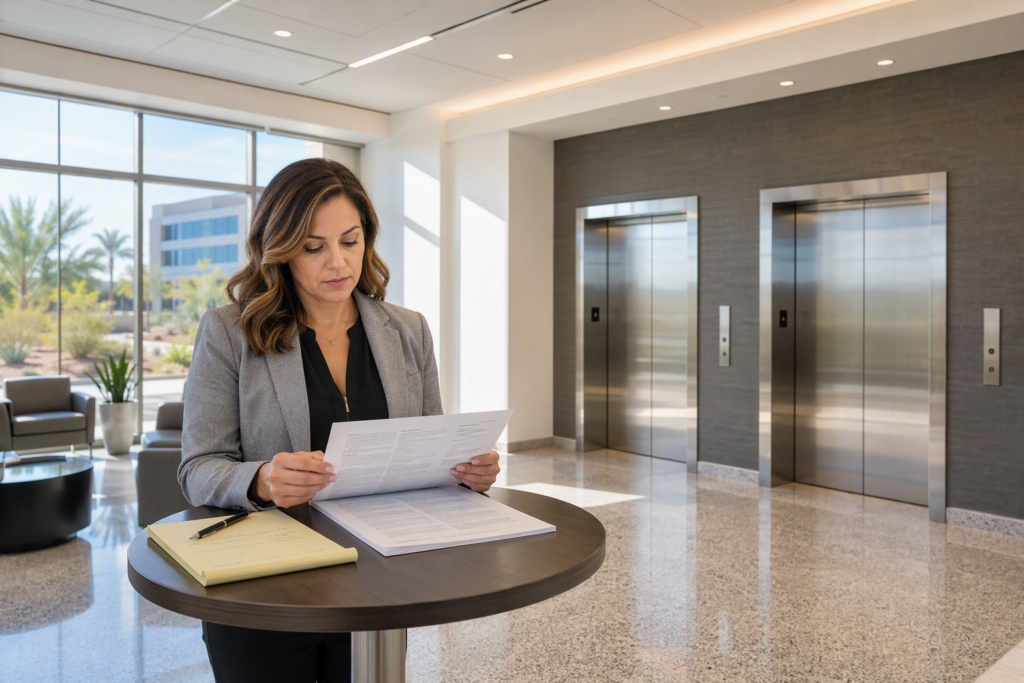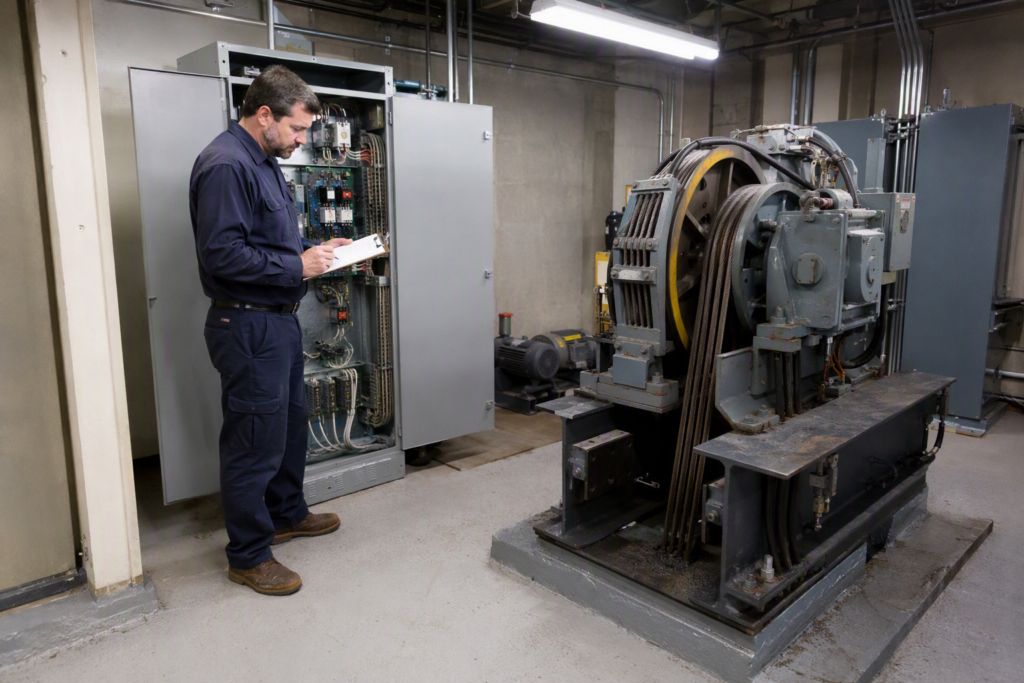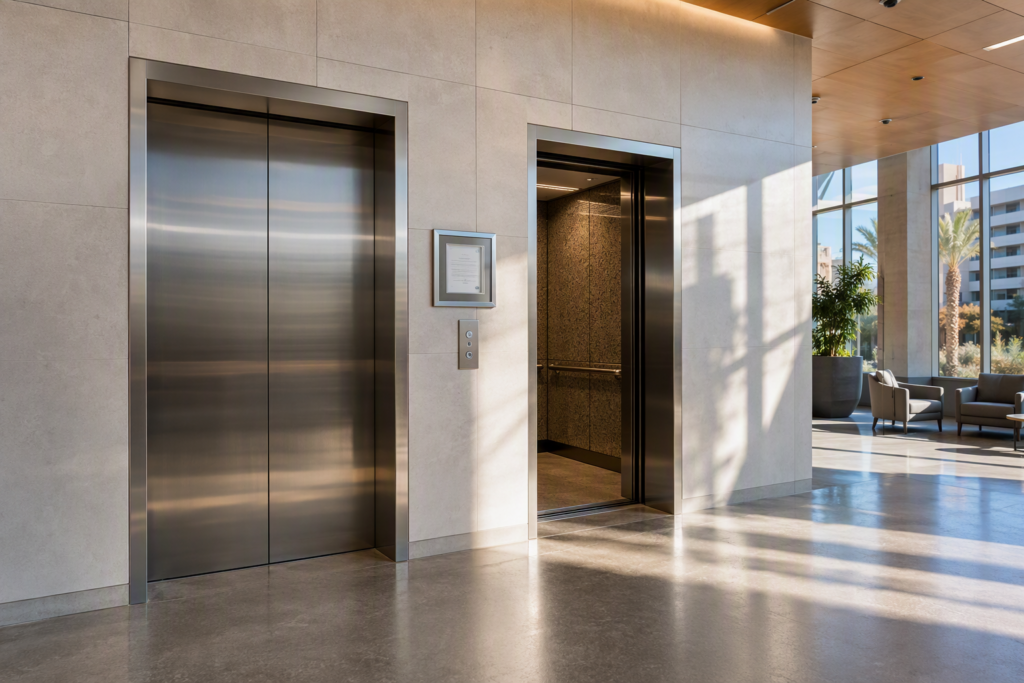
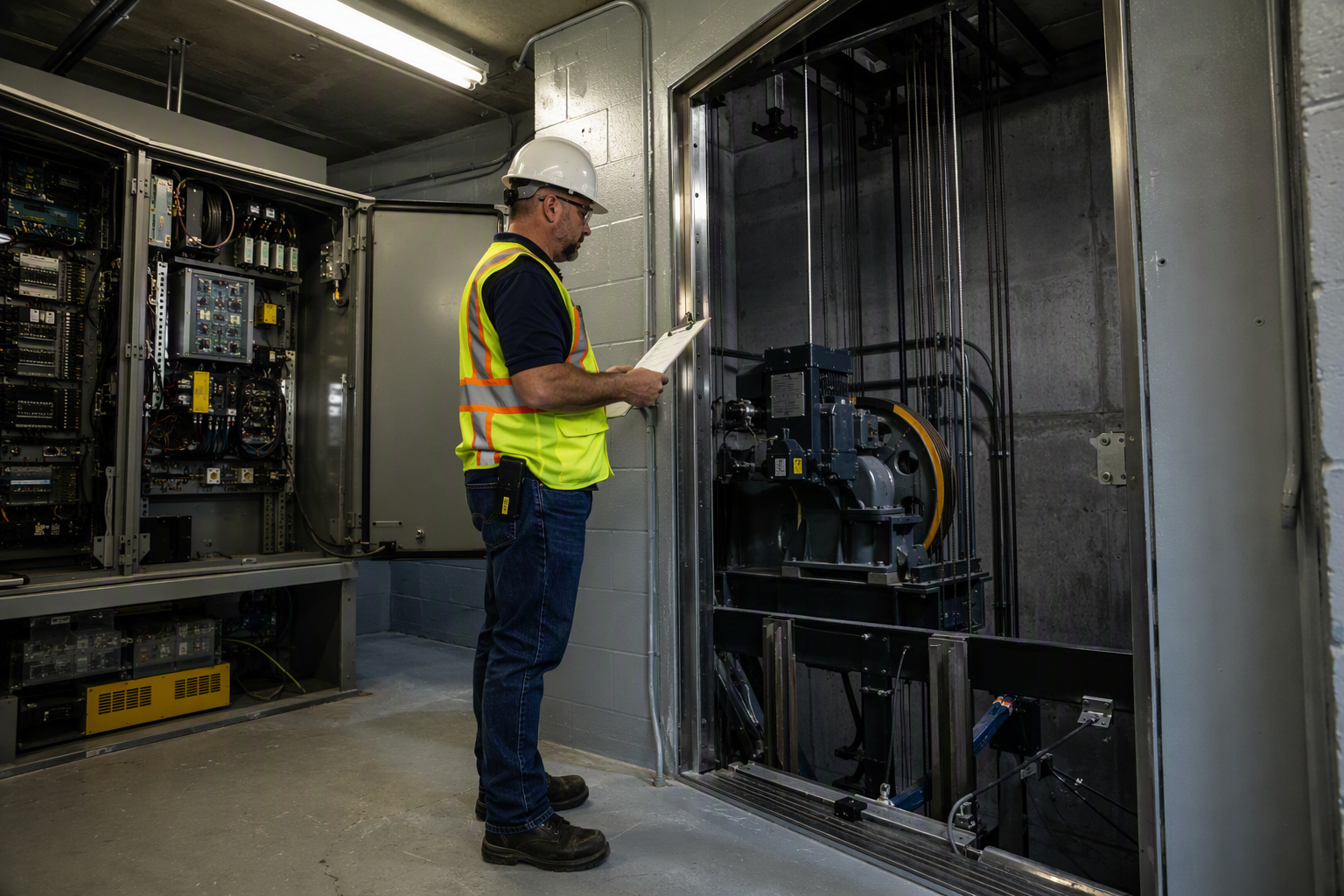
During an Arizona elevator inspection, a licensed state inspector examines the cab, mechanical room, hoistway, safety devices, and emergency systems against ASME A17.1 Safety Code for Elevators and Escalators and Arizona state requirements; building owners prepare by ensuring clear access, up-to-date maintenance logs, and all previously cited deficiencies are corrected before the inspection date.
Arizona Elevator Inspection: What Happens and How to Prepare Your Building
Elevator inspections in Arizona are mandatory, code-driven events that protect building occupants and shield property owners from liability. Whether a building is located in Phoenix, Tucson, Scottsdale, or Mesa, understanding exactly what inspectors look for — and how to be ready — is the difference between a clean certificate and a costly shutdown order. This comprehensive FAQ covers every aspect of the inspection process, from scheduling and scope to corrective action and renewal.
What exactly happens during an Arizona elevator inspection?

An Arizona elevator inspection is a systematic, code-referenced examination of every major elevator component conducted by a state-licensed inspector to verify that the unit operates safely and in compliance with adopted codes.
The inspector arrives with a structured checklist derived from the ASME A17.1 Safety Code for Elevators and Escalators, which Arizona has adopted as its governing standard. The examination moves through the machine room, hoistway, pit, and cab in a logical sequence. The inspector tests safeties, buffers, door interlocks, emergency lighting, the governor, and the car’s braking system. Every finding — pass or fail — is documented in an official inspection report. If deficiencies are found, the inspector issues a notice of violation, sets a correction deadline, and may restrict or suspend the elevator’s operating permit until repairs are completed and verified.
What legal authority requires elevator inspections in Arizona?
Elevator inspections in Arizona are mandated by the Arizona Revised Statutes and administered through the Arizona Department of Occupational Safety and Health (ADOSH), which operates under OSHA guidelines adapted for the state.
Arizona is an OSHA State Plan state, meaning it has its own occupational safety and health program approved by federal OSHA. Elevators used in workplaces fall under ADOSH jurisdiction. Separately, elevators in public accommodations must also satisfy ADA accessibility standards, including cab dimensions, door timing, control reach ranges, and tactile signage. Non-compliance with either authority can result in operating permit revocation, fines, and civil liability.
How often are elevators required to be inspected in Arizona?
In Arizona, most elevators require a periodic inspection at least annually, with additional witnessing of safety tests — such as the full-load safety test — on intervals specified by the adopted edition of ASME A17.1.
The table below summarizes common inspection and test intervals under ASME A17.1 for typical traction and hydraulic elevators. Building owners should confirm the exact schedule with their authority having jurisdiction (AHJ), as local amendments can apply.
| Inspection or Test Type | Elevator Category | Typical Interval (ASME A17.1) | Who Witnesses |
|---|---|---|---|
| Periodic (visual/operational) inspection | All elevators | Annual | Licensed state inspector |
| Category 1 test (no-load safety) | Traction & hydraulic | Annual | Licensed inspector or approved agency |
| Category 3 test (governor/safety) | Traction elevators | Every 3 years | Licensed inspector |
| Category 5 test (full-load rated speed) | Traction elevators | Every 5 years | Licensed inspector |
| Hydraulic pressure/leakage test | Hydraulic elevators | Every 5 years | Licensed inspector |
| Firefighters’ service test | All applicable elevators | Annual | Licensed inspector |
What areas of the building does the inspector examine?
The inspector evaluates five primary zones: the machine room, the hoistway, the pit, the car and cab interior, and the landing doors and hall stations on every floor served.
In the machine room, the inspector checks the controller, motor, brake, governor, drive sheave, and ventilation. In the hoistway, wire ropes, guide rails, safeties, counterweight, and clearances are assessed. The pit inspection covers pit lighting, the stop switch, pit ladder, sump pump condition, and buffer clearances. Inside the cab, the inspector verifies lighting levels, emergency lighting, alarm, two-way communication, capacity placard, door reopening devices, and leveling accuracy. At each landing, door interlocks, sills, and hall call buttons are tested.
How should a building owner prepare for an elevator inspection in Arizona?
Effective preparation involves organizing documentation, ensuring physical access to all inspection zones, completing outstanding maintenance, and briefing on-site staff on their role during the visit.
- Gather all records. Assemble the elevator’s maintenance logbook, previous inspection certificates, test reports, and any outstanding violation notices. Inspectors expect to review these on arrival.
- Confirm the current certificate is posted. The most recent operating certificate must be displayed inside the elevator cab. Verify it is legible and current.
- Clear the machine room. Remove stored items, clutter, or non-elevator equipment. The machine room must be clean, dry, well-lit, and accessible only to authorized personnel.
- Clear the pit. Ensure the pit is free of standing water, trash, and stored materials. Test the pit light and stop switch before inspection day.
- Complete all open work orders. Any deficiencies cited in the previous inspection report must be corrected and documented. Inspectors will re-examine every prior citation.
- Test firefighters’ emergency operation. Verify that Phase I recall and Phase II in-car operation function correctly, as this is always tested during the periodic inspection.
- Verify emergency lighting and alarm. Manually test the emergency light and the in-cab alarm bell or telephone system to confirm both activate on power loss simulation.
- Check door operation. Open and close each landing door manually to confirm smooth travel, proper interlock engagement, and no excessive force required.
- Confirm ADA compliance elements. Review cab controls, signage, and door timing against ADA standards, particularly if the building is a public accommodation.
- Assign a knowledgeable contact. A maintenance representative or building manager who understands the elevator system should be present and available to answer inspector questions and provide immediate physical access.
What documents must be available on inspection day?
Inspectors in Arizona typically require the current operating certificate, the elevator’s maintenance logbook, prior inspection reports with corrective action records, and the equipment’s approved installation drawings or modernization permits.
Missing documentation is one of the most common reasons an inspection result is delayed or an elevator is placed on a conditional operating status. Buildings managed by Arizona Elevator Solutions receive organized maintenance documentation as part of their routine service agreements, reducing the risk of record-related complications on inspection day.
What does a Category 5 test involve, and how should a building prepare for it?
A Category 5 test is a full-load, rated-speed safety test of the traction elevator’s governor and car safety devices, required every five years under ASME A17.1, and it requires advance coordination because it is disruptive and physically demanding on the equipment.
During a Category 5 test, the car is loaded to its rated capacity, brought to rated speed, and the safety is intentionally tripped to verify the car stops within code-specified limits. Buildings should notify occupants of extended downtime — often several hours — and ensure the maintenance contractor has pre-lubricated guide rails, verified buffer clearances, and confirmed governor rope tension before the inspector arrives. Skipping or deferring this test is not permissible; an elevator whose Category 5 test is overdue cannot legally receive a renewed operating certificate.
What are the most common deficiencies found during Arizona elevator inspections?
The deficiencies most frequently cited in periodic inspections include worn wire ropes, malfunctioning door interlocks, inadequate pit lighting, missing or expired emergency communication, improper leveling, and absent or illegible capacity placards.
Door interlock failures are particularly common in older buildings in Phoenix and Tucson because heat cycling and dust accelerate contact wear. Pit flooding during monsoon season is a recurring issue in Mesa and Scottsdale properties with below-grade pits. A proactive maintenance program — rather than reactive repair after a citation — is the most cost-effective way to avoid these findings. Arizona Elevator Solutions provides scheduled maintenance specifically calibrated to Arizona’s climate conditions, including heat mitigation for hydraulic fluid viscosity and dust-resistant contact cleaning for door systems.
What happens if an elevator fails its inspection in Arizona?
If an elevator fails inspection in Arizona, the inspector issues a written notice of violation, classifies deficiencies by severity, and either restricts use (for non-imminent hazards) or orders immediate shutdown (for imminent hazards).
Non-critical deficiencies typically carry a correction deadline — often 30 to 90 days depending on the nature of the violation — and the elevator may continue operating under a conditional permit during that window. Critical safety deficiencies, such as a failed governor or broken interlock, require the elevator to be taken out of service immediately. The building owner must engage a licensed elevator contractor to perform the corrective work, obtain any required permits, and request a re-inspection to clear the violation and restore the operating certificate. Delaying repairs exposes property owners to fines and liability for any injuries that occur during unauthorized operation.
How long does an elevator inspection typically take?
A routine annual inspection of a single-elevator installation typically takes between one and three hours, while a Category 5 full-load safety test or a modernization acceptance inspection may require a full day or more.
The duration depends on the number of stops, the type of elevator (traction versus hydraulic), the age and complexity of the equipment, and the completeness of documentation. High-rise buildings with multiple elevators will need the inspection scheduled across multiple sessions. Building managers should plan for the elevator to be out of service for at least the full estimated inspection window and arrange alternative access for occupants with mobility limitations in compliance with ADA requirements.
Who is authorized to perform elevator inspections in Arizona?
Arizona elevator inspections must be performed by a state-licensed elevator inspector, either an ADOSH state inspector or an approved third-party inspection agency holding the appropriate Arizona authorization.
The elevator maintenance contractor — regardless of how experienced — cannot serve as the inspector for their own client’s elevator. The inspector must be independent. However, the maintenance contractor is expected to be present or available during the inspection to operate the equipment, provide documentation, and immediately address any inspector questions about prior repairs. Arizona Elevator Solutions coordinates directly with the assigned inspector on behalf of building clients to streamline the day-of process.
Does ADA compliance factor into an Arizona elevator inspection?
ADA compliance is not directly part of the ADOSH elevator inspection checklist, but inspectors may note obvious accessibility deficiencies, and building owners remain independently liable under federal ADA law regardless of a passing safety inspection.
Key ADA elevator requirements include minimum cab interior dimensions, door open time of at least three seconds for the center opening, control buttons positioned within reach range, raised and Braille character markings on controls, audible and visible floor signals, and a two-way communication system. A building that passes its annual safety inspection can still face a federal ADA complaint if these accessibility elements are deficient. Building owners in Phoenix, Scottsdale, Mesa, and Tucson should treat ADA compliance as a parallel, ongoing obligation rather than an item that is satisfied solely by a safety inspection.
How much advance notice is required to schedule an inspection in Arizona?
Scheduling timelines vary by jurisdiction and inspector availability, but building owners should generally allow a minimum of several weeks of lead time and should never wait until the current certificate is close to expiring before requesting a new inspection.
Certificates that lapse create a legally non-operating elevator, which may need to be posted out of service until the inspection is completed. The best practice is to schedule the next inspection as soon as the current inspection is passed — or at least 60 to 90 days before the certificate expiration date — to accommodate inspector scheduling demands, especially during the busy post-monsoon season when pit and electrical issues peak across the Phoenix metro and Tucson areas.
What is an acceptance inspection, and when is it required?
An acceptance inspection is a mandatory code inspection that must occur before a new elevator installation or a major modernization is placed into service, verifying that the new or upgraded equipment fully complies with the currently adopted edition of ASME A17.1.
Major modernizations — such as replacing a traction machine, installing a new controller, or converting from hydraulic to machine-room-less traction — trigger an acceptance inspection equal in rigor to a new installation. The installing contractor must apply for permits, perform all tests in the presence of the licensed inspector, and obtain a final approval before the elevator can be used by the public or building occupants. Buildings planning renovations that include elevator work should factor acceptance inspection scheduling into their project timeline, as delays in inspector availability can hold up occupancy approvals.
How do traction and hydraulic elevator inspections differ?
Traction and hydraulic elevators share most inspection checkpoints but differ significantly in the machine-specific tests, with traction units requiring governor and rope testing while hydraulic units require pressure, cylinder, and underground piping integrity evaluations.
Hydraulic elevators in Arizona face an added environmental concern: underground cylinder corrosion accelerated by soil conditions in the Phoenix and Tucson basins. The five-year hydraulic pressure test checks for leakage in the cylinder and piping system. Older single-bottom hydraulic cylinders without a secondary containment liner are a known risk category. Building owners with pre-1990 hydraulic elevators should consult with a qualified elevator contractor about modernization options, as failing a pressure test on an aged cylinder can result in costly emergency excavation or a full hydraulic-to-MRL conversion.
What role does the building’s maintenance contractor play during an inspection?
The maintenance contractor’s role during an inspection is to operate the elevator under the inspector’s direction, provide access to all mechanical spaces, produce maintenance records, and demonstrate that all tested functions work correctly — not to advocate for the building or negotiate findings.
A well-prepared maintenance contractor will have already performed a pre-inspection walk-through, corrected any known deficiencies, and staged all required documentation before the inspector arrives. Arizona Elevator Solutions performs a structured pre-inspection service visit for maintained buildings to identify and resolve potential findings before the official examination, reducing the likelihood of citations and re-inspection fees.
What should a building owner do immediately after receiving a violation notice?
Upon receiving a violation notice, the building owner must act in the sequence below to protect occupants, meet legal deadlines, and restore the elevator’s operating certificate as efficiently as possible.
- Read the notice in full. Identify every cited deficiency, its severity classification, the mandated correction deadline, and whether the elevator must be immediately taken out of service.
- Post out-of-service signage if required. If the inspector has ordered the elevator shut down, post conspicuous out-of-service notices at every landing immediately.
- Contact a licensed elevator contractor the same business day. Delays add days or weeks to the resolution timeline and may increase regulatory exposure.
- Obtain all required work permits before repair begins. Performing repair work without required permits can invalidate the repair and add additional citations.
- Document all corrective work with written records and photos. The re-inspection will require evidence that each cited deficiency was addressed by a licensed contractor.
- Request a re-inspection through the appropriate ADOSH office or AHJ. Do not assume the elevator is cleared until the inspector has formally signed off and a new certificate is issued.
- Review maintenance practices to prevent recurrence. Work with the maintenance contractor to identify whether the violation resulted from a lapsed maintenance item that a scheduled program would have caught earlier.
How does Arizona’s climate affect elevator maintenance and inspection readiness?
Arizona’s extreme heat, monsoon moisture, and pervasive dust create equipment stress conditions that accelerate wear on hydraulic seals, electrical contacts, wire ropes, and ventilation systems beyond what code intervals alone anticipate.
Machine room temperatures in Phoenix and Scottsdale can exceed 110°F during summer months, which degrades hydraulic fluid viscosity and stresses motor insulation. Monsoon rains can introduce water into pits and underground cylinder casings. Windblown dust infiltrates door tracks, contact points, and ventilation screens. An elevator that passes its annual inspection in January may develop inspection-relevant deficiencies by August if the maintenance program does not account for seasonal stress. Arizona Elevator Solutions structures its maintenance schedules to include pre-summer heat checks and post-monsoon pit and electrical inspections specifically for properties in the Phoenix, Mesa, Scottsdale, and Tucson markets.
What is the cost range for addressing common inspection violations?
The cost of correcting inspection violations varies too widely based on equipment age, violation type, parts availability, and permit fees to provide a meaningful price range here — building owners should request itemized estimates from licensed contractors for any cited deficiency.
What is consistent across Arizona markets is that deferred maintenance almost always costs more than preventive maintenance. A door interlock replaced during a scheduled maintenance visit is a fraction of the cost of an emergency repair after an inspection shutdown, which also carries the indirect cost of elevator downtime, occupant disruption, and re-inspection fees. Buildings seeking to manage lifecycle costs predictably benefit from multi-year maintenance agreements with a qualified contractor rather than call-only service arrangements.
How can building owners verify that an elevator contractor is qualified to work on Arizona elevators?
Building owners should verify that any elevator contractor holds a current Arizona elevator contractor license issued by the relevant state licensing authority and that the technicians performing work hold valid elevator mechanic credentials recognized in Arizona.
Requesting proof of licensure, insurance, and familiarity with the currently adopted edition of ASME A17.1 Safety Code for Elevators and Escalators and OSHA standards is a reasonable and recommended step before signing any service agreement. Arizona Elevator Solutions serves commercial, residential, and municipal elevator clients across Phoenix, Tucson, Scottsdale, and Mesa with fully licensed and insured operations focused on code compliance and inspection readiness.
How does working with a dedicated local elevator company improve inspection outcomes?
A local elevator service company familiar with Arizona’s specific regulatory environment, AHJ requirements, and climate-related failure patterns is better positioned to keep elevators inspection-ready year-round than a national provider managing accounts remotely.
Local familiarity matters at multiple levels: knowing which local inspectors prioritize specific checkpoints, understanding monsoon-season failure patterns, having relationships with regional parts suppliers for faster turnaround, and being physically available for pre-inspection preparation visits. Arizona Elevator Solutions operates exclusively in the Arizona market, giving its clients direct access to technicians who understand the regulatory and environmental context that shapes inspection outcomes in Phoenix, Tucson, Scottsdale, and Mesa specifically.
Ready to Ensure Your Elevator Passes Its Next Arizona Inspection?
Contact Arizona Elevator Solutions for a free elevator assessment. A thorough pre-inspection evaluation can identify deficiencies before the official inspection, protect your building’s operating certificate, and keep occupants safe and code-compliant year-round.
Call Arizona Elevator Solutions today: 480-319-7157
Serving Phoenix, Tucson, Scottsdale, and Mesa, Arizona.