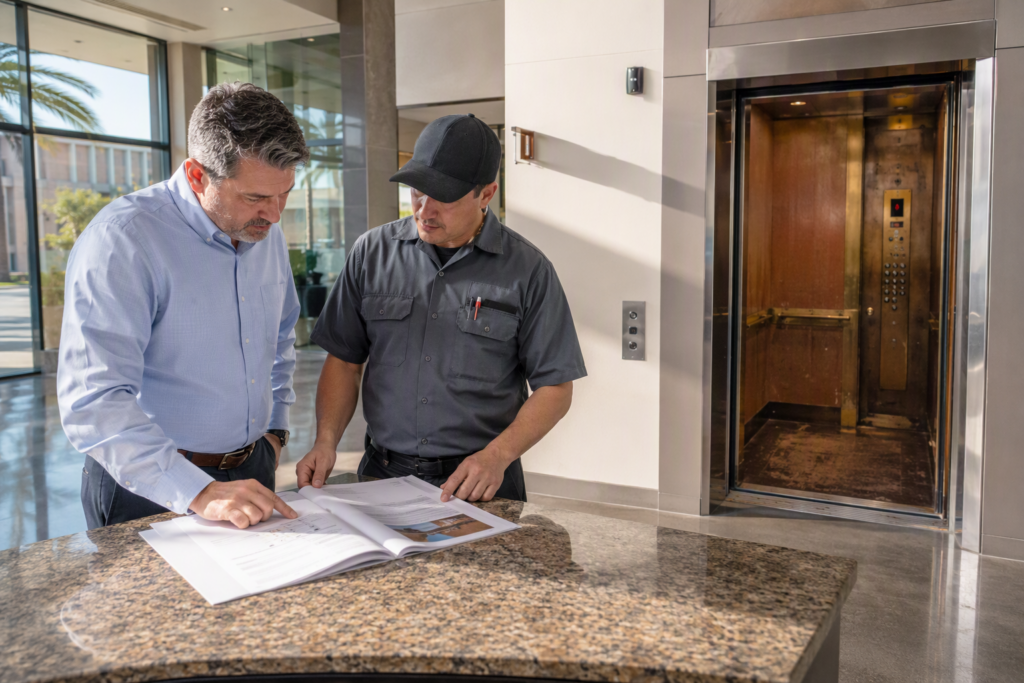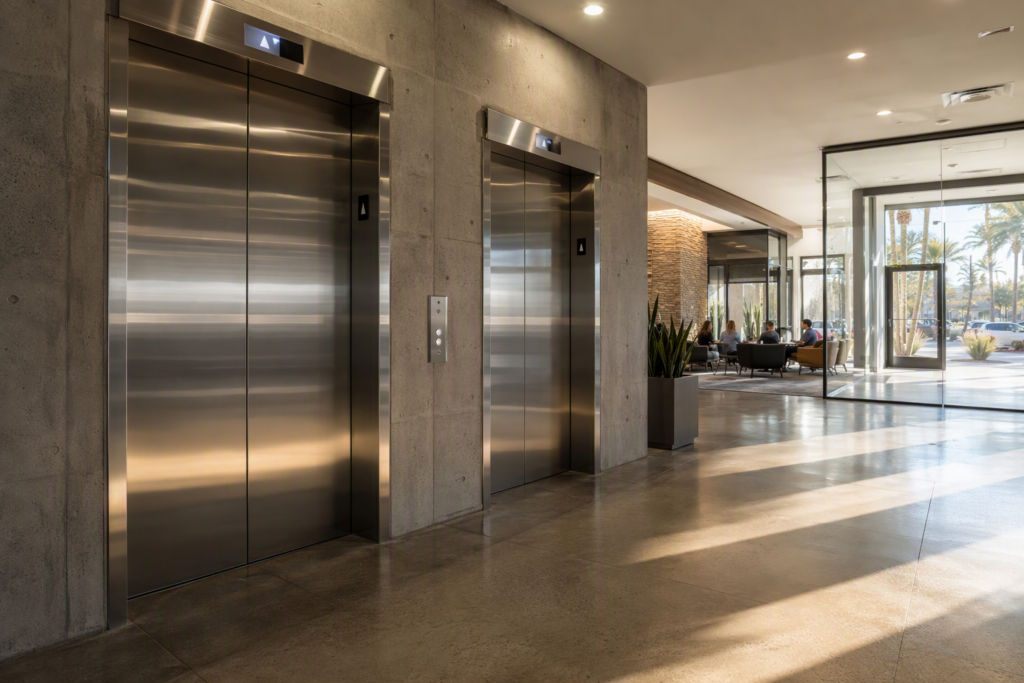
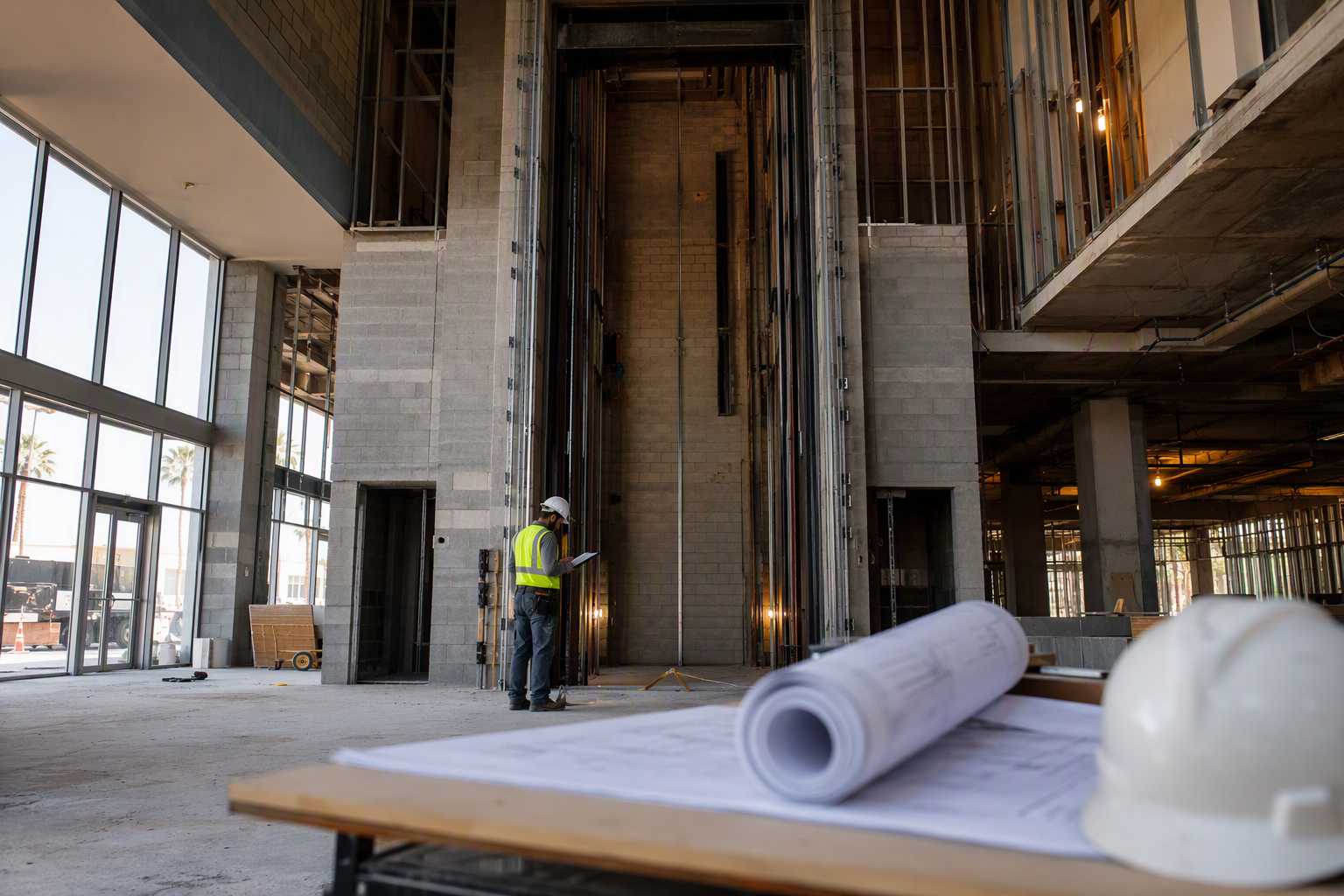
Installing a new commercial elevator in the Phoenix metro area involves multiple sequential phases: planning and design, permitting, equipment procurement, hoistway construction, mechanical installation, electrical integration, and state inspection. Each phase carries its own timeline, and delays in any one phase cascade into the next. Understanding what drives the schedule — and what can stall it — helps building owners and developers plan realistic project budgets and occupancy dates. Arizona Elevator Solutions provides independent assessments to help commercial clients in Scottsdale and Phoenix navigate this process efficiently.
Phase-by-Phase Installation Timeline Overview
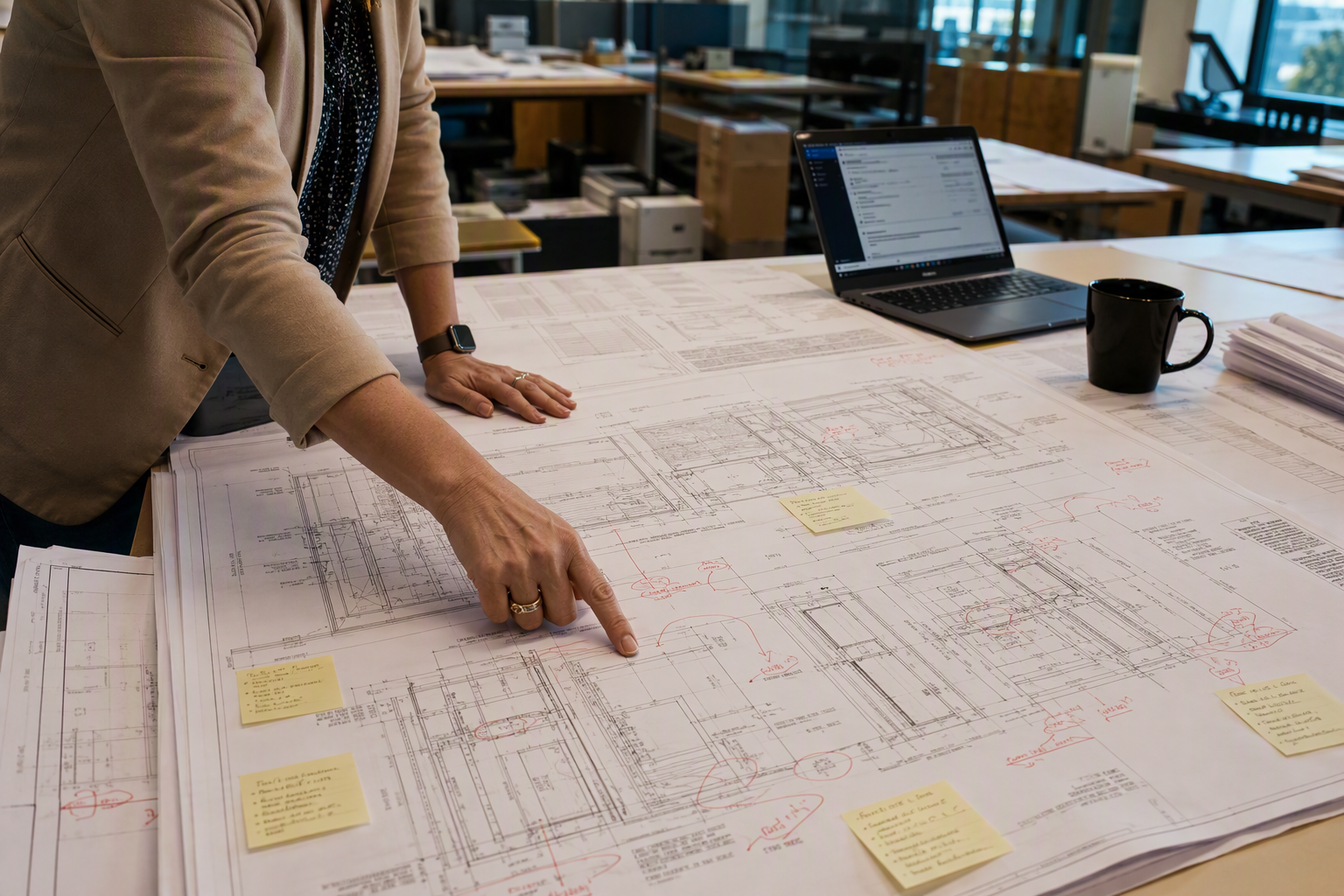
Commercial elevator installation is not a single event — it is a sequential construction process governed by local building codes, state inspection requirements under Arizona’s jurisdiction, and federal accessibility standards. The table below outlines what each phase typically involves and the general range of time each phase takes.
| Phase | What Happens | Typical Duration | Key Variables |
|---|---|---|---|
| 1. Needs Assessment & Design | Building evaluation, traffic analysis, elevator type selection, architectural drawings | 2–6 weeks | Building complexity, number of stops, accessibility requirements |
| 2. Permitting & Plan Review | Submission to Arizona Department of Building and Fire Safety (AZDBS) or local authority; plan review cycle | 4–12 weeks | Jurisdiction backlog, completeness of submittal, plan revisions required |
| 3. Equipment Manufacturing & Procurement | Elevator cab, hoisting machinery, controllers, doors, and hardware ordered from manufacturer | 8–20 weeks | Elevator type, manufacturer lead times, global supply chain conditions |
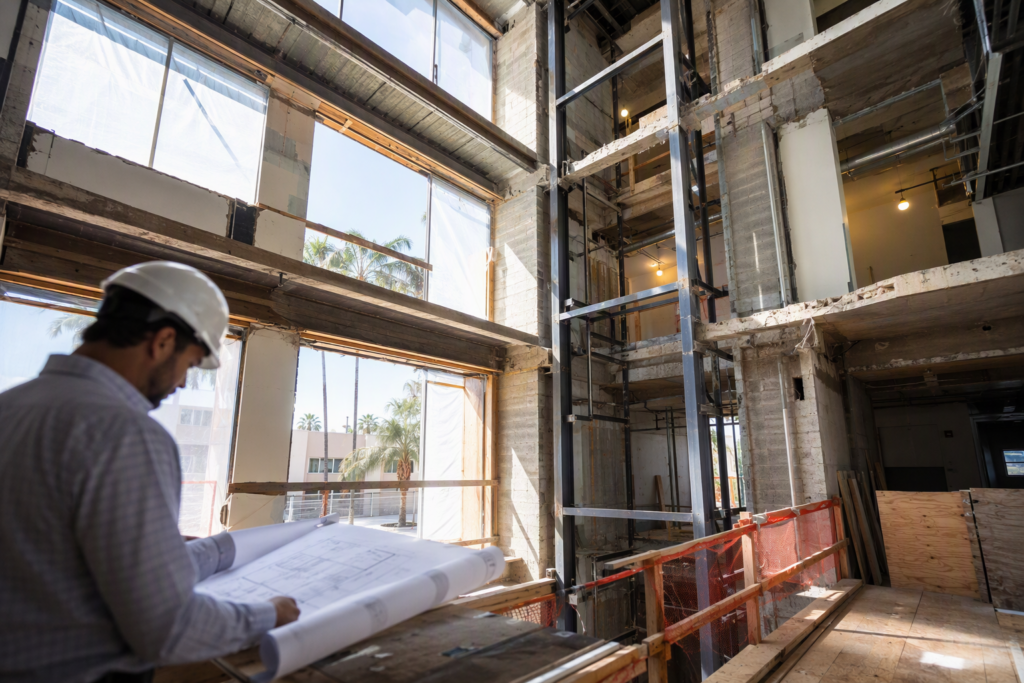
| 4. Hoistway & Pit Construction | Structural work to create or prepare the elevator shaft, pit, and machine room (if applicable) | 4–10 weeks | New construction vs. retrofit, concrete cure times, general contractor coordination |
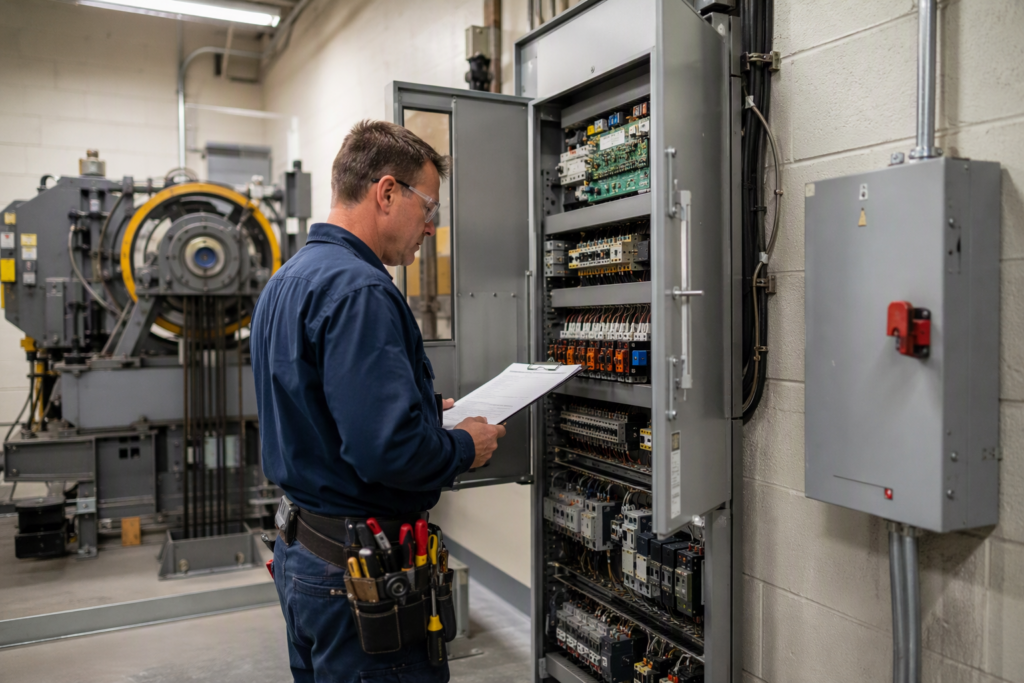
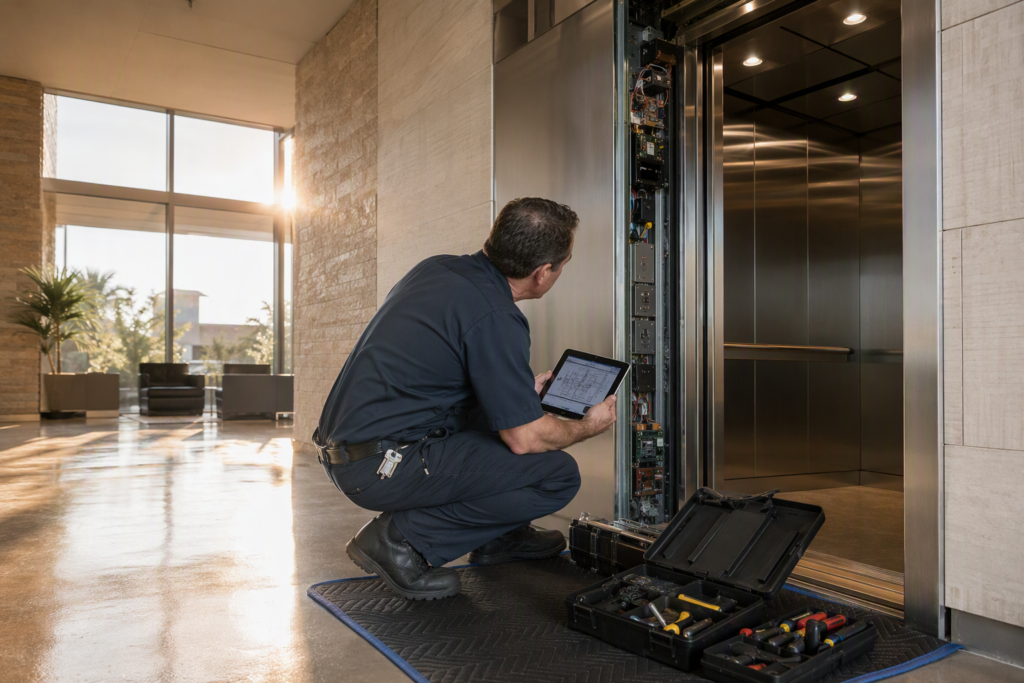
| 5. Mechanical & Electrical Installation | Setting equipment, wiring, controller installation, door installation, cab finish work | 4–8 weeks | Elevator type, number of floors, complexity of finishes |
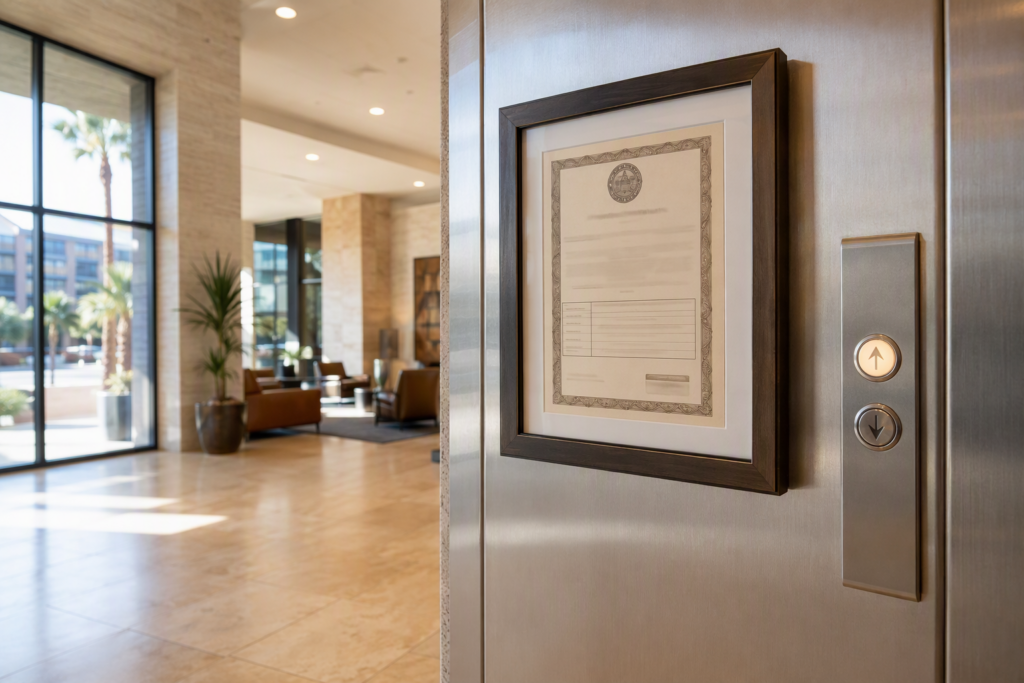
| 6. Inspection & Acceptance Testing | State inspection, load testing, safety device testing per applicable codes | 2–6 weeks | Inspector scheduling, correction items identified, re-inspection queues |
Overall range: When phases run sequentially and delays occur, total project timelines from initial design kickoff to an operational, permitted elevator commonly span six months to fourteen months or more for standard commercial projects. Complex high-rise or retrofit installations extend further.
What Types of Commercial Elevators Are Installed in Phoenix and Scottsdale?
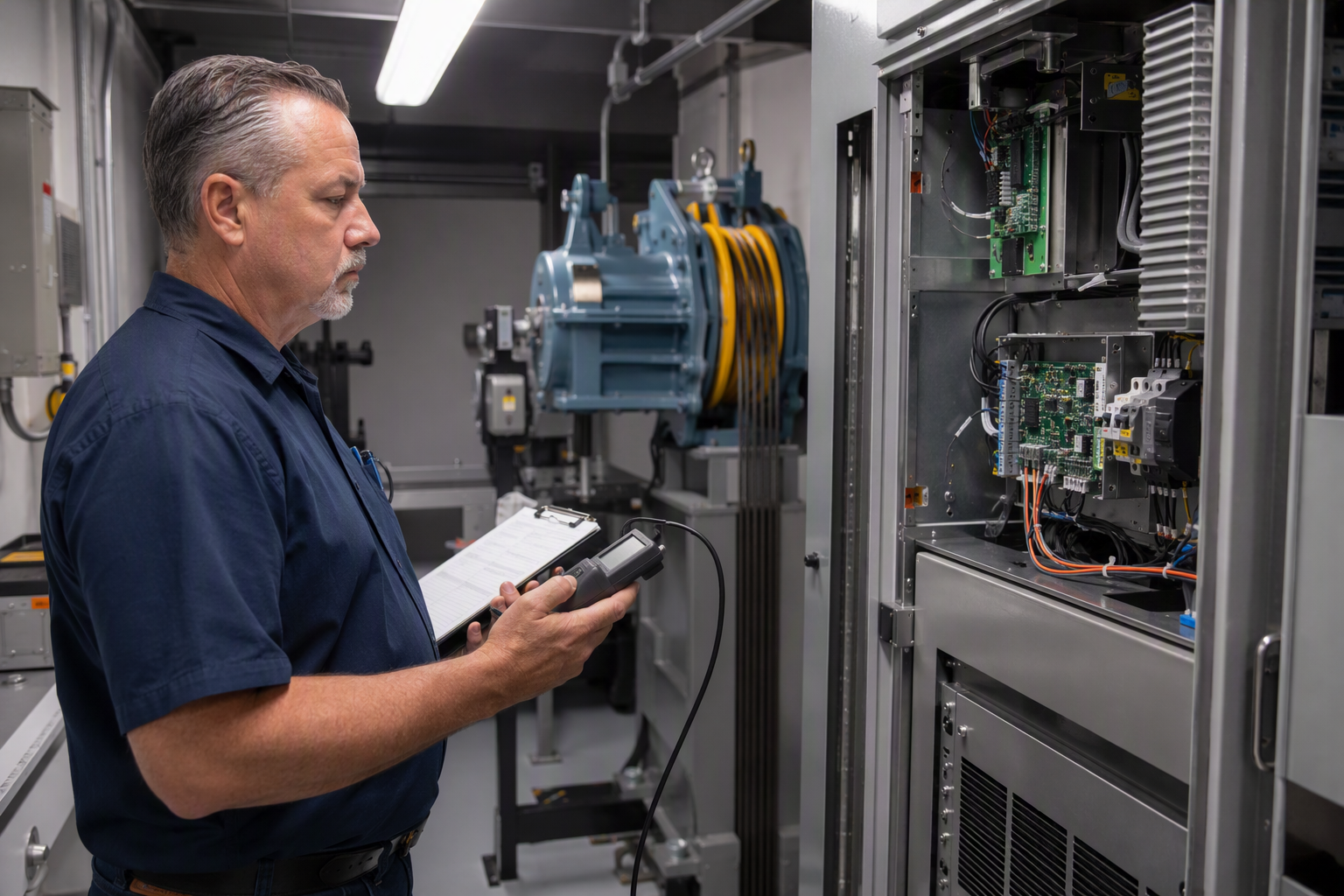
| Elevator Type | Best Application | Relative Installation Speed | Hoistway Requirement | Machine Room Needed? |
|---|---|---|---|---|
| Hydraulic | Low-rise commercial (2–5 floors), retrofits | Moderate | Standard pit depth | Yes (or nearby) |
| Traction (Geared/Gearless) | Mid- to high-rise commercial buildings | Longer (more complex) | Full hoistway, overhead clearance | Traditional: Yes; MRL: No |
| Machine Room-Less (MRL) | Mid-rise commercial, space-constrained buildings | Moderate to longer | Standard hoistway with overhead | No |
| Vacuum/Pneumatic | Low-traffic, small commercial, 3 floors or fewer | Fastest (prefabricated) | Minimal structural modification | No |
What Causes Elevator Installation Delays in the Phoenix Metro Area?
Delays are common and stem from predictable sources. Understanding them allows project managers to build contingency time into schedules proactively.
- Permit backlog at the Arizona Department of Building and Fire Safety (AZDBS): Plan review queues fluctuate with construction activity across the Phoenix metro. Submittals with incomplete documentation trigger correction cycles that add weeks.
- Structural design changes: When hoistway dimensions do not align with the selected equipment’s specifications, redesign and re-submittal are required before work can proceed.
- Equipment manufacturing lead times: Custom cab finishes, specialized door configurations, or high-demand equipment models extend manufacturing time beyond standard lead windows.
- General contractor coordination: Elevator installation depends on the hoistway being structurally complete, electrically roughed-in, and clean. Delays in the general construction schedule directly delay elevator work.
- Inspection scheduling: State inspection availability in high-growth markets like Scottsdale and Phoenix can create waiting periods between installation completion and final approval.
- Code compliance corrections: Items identified during inspection require correction and re-inspection, adding additional time before a certificate of occupancy for the elevator is issued.
- Supply chain disruptions: Global events affecting steel, microcontrollers, and specialized components have historically extended lead times for elevator equipment orders.
How Do Arizona State Codes and Federal ADA Requirements Affect Installation Timelines?
Commercial elevator installations in Arizona are subject to multiple overlapping regulatory frameworks. Each layer adds design and documentation requirements that must be satisfied before permits are issued and inspections are passed.
The ASME A17.1 Safety Code for Elevators and Escalators establishes the baseline safety requirements governing elevator design, construction, and installation across the United States, including Arizona. Arizona adopts this standard through the AZDBS regulatory framework. Compliance with ASME A17.1 is verified during the plan review and final inspection process.
Buildings subject to federal accessibility requirements must also comply with the Americans with Disabilities Act (ADA). ADA standards specify elevator cab dimensions, door clear-opening widths, floor-to-floor leveling tolerances, control panel heights, Braille signage, and accessible route requirements. Non-compliant design details discovered during plan review trigger revision cycles that delay permits.
Workplace safety during the installation process is additionally governed by OSHA standards applicable to construction sites, which affect how and when certain installation tasks can proceed.
Projects that incorporate all three regulatory frameworks into the initial design package — rather than addressing them reactively — consistently experience shorter overall timelines.
New Construction vs. Retrofit: Which Takes Longer?
| Factor | New Construction | Retrofit / Existing Building |
|---|---|---|
| Hoistway preparation | Planned in original structural design; built in sequence | May require demolition, structural reinforcement, or new shaft construction |
| Electrical infrastructure | Roughed in during construction phase | May require new service runs, panel upgrades, conduit installation |
| Scheduling conflicts | Elevator trades can be sequenced into the build schedule | Building remains partially or fully occupied; work windows may be restricted |
| Permit complexity | Part of overall building permit in many cases | Standalone permit required; may trigger additional building code compliance review |
| Overall timeline tendency | More predictable when well-sequenced | Higher variability; discovery of hidden conditions common |
How to Accelerate a Commercial Elevator Installation Project
- Engage elevator specialists during the design development phase. Involving a knowledgeable elevator consultant or contractor before architectural drawings are finalized prevents dimensional conflicts that force costly redesigns.
- Submit a complete and code-compliant permit package on the first attempt. Incomplete submittals are the single most common cause of preventable delays. Ensure all ASME, ADA, and local code requirements are addressed in the initial drawings and specifications.
- Order equipment as soon as the permit submittal is made. Many experienced project teams submit for permits and place equipment orders simultaneously, since manufacturing lead times often parallel the plan review period.
- Coordinate hoistway construction milestones with the elevator contractor’s installation schedule. Confirm specific readiness benchmarks — pit completion, overhead clearance, electrical rough-in — before the installation crew is mobilized.
- Schedule the state inspection immediately upon installation completion. Do not wait days or weeks after completing work to request the inspection. Inspector calendars fill quickly in the Phoenix metro market.
- Prepare a correction response plan in advance. Identify which contractor is responsible for each potential correction category so that re-inspection can be scheduled without additional coordination delays.
- Use a single point of contact for all elevator-related trades. Fragmented communication between the building owner, general contractor, and elevator subcontractor is a leading source of schedule slippage.
How Long Does the Arizona State Inspection Process Take for a New Elevator?
Arizona’s elevator inspection process is administered through the Arizona Department of Building and Fire Safety. After installation is complete, the elevator contractor submits for a final inspection. The time between submission and the actual inspection appointment varies based on inspector workload and the volume of construction activity in the region.
If the inspector identifies items that require correction — referred to as a “punchlist” or correction notice — a re-inspection must be scheduled after those items are addressed. Each re-inspection cycle adds time to the overall project. Buildings cannot legally operate the elevator or receive a certificate of operation until the state inspection is passed and a permit card is issued.
Projects in high-growth areas of Scottsdale and north Phoenix sometimes experience longer waits for inspection appointments than projects in slower markets, making early scheduling coordination important.
What Is the Cost Range for a New Commercial Elevator Installation in Phoenix or Scottsdale?
Elevator installation costs vary significantly based on the type of elevator selected, the number of floors served, the complexity of hoistway construction, cab finish specifications, and local labor market conditions. Because these variables interact in ways specific to each project, accurate cost estimates require an on-site assessment of the building and a detailed specification review.
General cost drivers include:
- Elevator type (hydraulic systems typically carry different cost profiles than traction or MRL systems)
- Number of stops and travel height
- New hoistway construction versus use of an existing shaft
- Cab interior finish level (standard commercial versus premium architectural finishes)
- Accessibility features required under the ADA
- Local permit fees and inspection fees
- General contractor coordination costs
Arizona Elevator Solutions recommends obtaining a formal project-specific assessment before budgeting any commercial elevator installation, as published “average” figures in the market frequently do not account for local permitting costs, soil conditions affecting pit construction in the Phoenix metro area, or the structural condition of existing buildings undergoing retrofit.
Does the Type of Commercial Building Affect Installation Time?
Yes. The building’s use classification, occupancy load, number of floors, and structural system all affect how long installation takes.
- Office buildings: Standard commercial traction or hydraulic installations; timeline most predictable when the building is new construction.
- Medical facilities and healthcare buildings: Often require hospital-grade elevators with larger cabs, specific door configurations, and enhanced accessibility features. Code compliance documentation is more extensive, extending plan review time.
- Retail and mixed-use: May involve phased occupancy coordination, where the elevator must be operational before certain floors or tenants open, creating schedule pressure.
- High-rise commercial: Multiple elevator banks, sky lobbies, and destination dispatch systems require significantly more complex design, longer equipment lead times, and extended installation periods.
- Historic buildings: Retrofit installations in historically significant properties in the Scottsdale or downtown Phoenix area may require additional review by local historic preservation authorities, adding timeline uncertainty.
How Does Equipment Lead Time Affect the Overall Project Schedule?
Equipment lead time — the period between placing an order with the elevator manufacturer and receiving the equipment on site — is frequently the longest single phase in a commercial elevator installation project. Lead times vary by manufacturer, elevator type, level of customization, and prevailing supply chain conditions.
Standard commercial elevator models with common configurations typically have shorter lead times than custom or specialty equipment. However, even standard equipment is subject to manufacturing queue times that can extend substantially when market demand is high.
Experienced project teams treat equipment lead time as a critical path item and place orders as early in the project as possible — often concurrent with the permit submittal — rather than waiting for permit approval before ordering. This parallel-path approach can meaningfully compress the overall project schedule.
What Role Does an Independent Elevator Service Company Play in a New Installation Project?
While elevator manufacturers and their authorized dealers frequently handle new installations directly, building owners and developers in Phoenix and Scottsdale benefit from engaging an independent elevator service company such as Arizona Elevator Solutions to provide objective oversight and long-term continuity.
An independent provider can:
- Evaluate specifications from multiple manufacturers without brand bias
- Review installation quality against ASME A17.1 requirements on behalf of the building owner
- Coordinate with the state inspection process independently of the installing contractor
- Transition seamlessly into the ongoing maintenance and service relationship after installation is complete
- Provide institutional knowledge of local permitting timelines and common Phoenix-area inspection issues
Building owners who establish a relationship with an independent service provider during the installation phase — rather than after problems arise — tend to experience smoother transitions into the operational maintenance period.
Pros and Cons of the Most Common Commercial Elevator Types for Phoenix-Area Buildings
| Elevator Type | Pros | Cons | Installation Timeline Tendency |
|---|---|---|---|
| Hydraulic | Lower initial cost for low-rise; simpler hoistway overhead requirements; widely serviced | Machine room and hydraulic fluid system required; slower speeds; environmental considerations with fluid systems | Moderate; well-understood installation sequence |
| Geared Traction | Higher speeds; suitable for mid-rise; efficient energy use vs. hydraulic | Requires machine room; more complex installation | Longer than hydraulic for equivalent floors |
| Machine Room-Less (MRL) Traction | No machine room; space-efficient; modern controls | Maintenance access more complex; specific hoistway overhead requirements | Comparable to geared traction; overhead requirements can complicate retrofits |
| Vacuum/Pneumatic | Fastest installation; no pit or machine room; minimal structural impact | Limited capacity; limited number of floors; not suitable for most commercial occupancies | Shortest; pre-manufactured system |
What Happens If an Elevator Fails Inspection in Arizona?
When a new elevator installation fails the Arizona state inspection, the inspector issues a correction notice listing the specific items that do not comply with applicable codes — most commonly ASME A17.1 requirements. The elevator cannot be placed into service until all corrections are made and a satisfactory re-inspection is completed.
Common first-inspection correction items include:
- Safety device calibration or function issues
- Door operation timing or force measurements outside code parameters
- Machine room or hoistway lighting deficiencies
- Signage or ADA-required accessibility feature gaps
- Missing or incorrect documentation in the elevator data package
Each re-inspection requires scheduling through the AZDBS system. In active construction markets, re-inspection appointments can add meaningful time to the project close-out phase.
Summary: Key Timeline Factors at a Glance
| Factor | Effect on Timeline | Mitigation Strategy |
|---|---|---|
| Permit completeness at first submittal | High — incomplete submittals add weeks per correction cycle | Engage experienced elevator design team; full code review before submittal |
| Equipment lead time | High — often the longest single phase | Order concurrently with permit submittal |
| Hoistway readiness | High — installation cannot begin until hoistway is complete and clean | Define clear construction milestones with general contractor |
| Inspection scheduling in Phoenix/Scottsdale | Moderate to high depending on market volume | Request inspection immediately upon installation completion |
| Elevator type complexity | Moderate — hydraulic simpler than high-rise traction systems | Match equipment type to building requirements; avoid over-specification |
| Retrofit vs. new construction | Moderate to high — retrofit carries higher risk of unknown conditions | Conduct thorough pre-design building assessment |
Get Expert Guidance on Your Phoenix or Scottsdale Elevator Installation Project
Commercial elevator installation timelines in the Phoenix metro area involve regulatory, logistical, and technical variables that benefit from experienced independent guidance. Arizona Elevator Solutions works with building owners, developers, and property managers throughout Scottsdale and Phoenix to evaluate project requirements, review specifications, and provide ongoing service continuity from installation through the life of the equipment.
Contact Arizona Elevator Solutions for a free elevator assessment: 480-319-7157