Elevator Modernization in Phoenix, AZ | Arizona Elevator Solutions
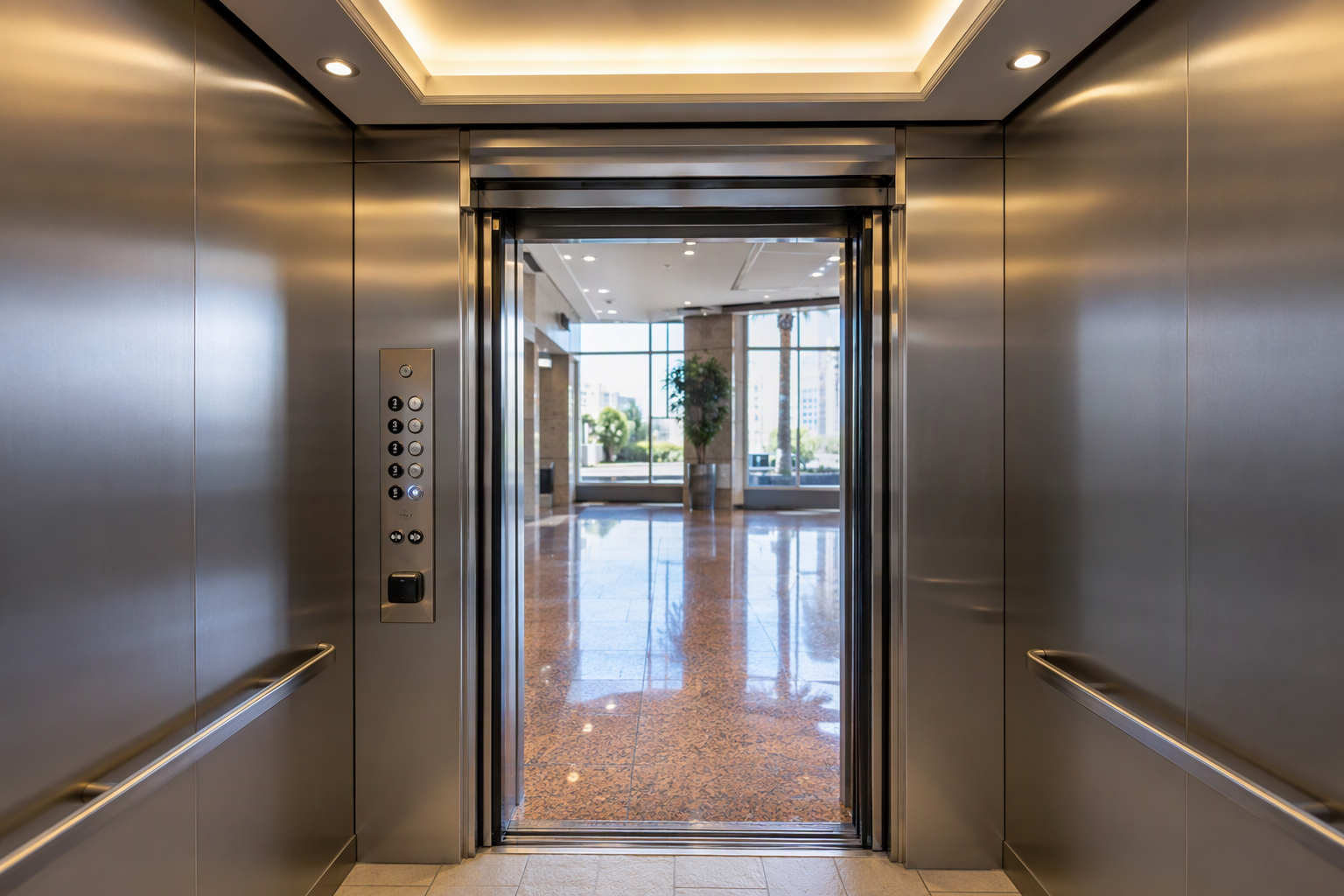
Elevator modernization is one of the most strategic investments a Phoenix-area building owner can make. Aging elevators become increasingly expensive to maintain, difficult to keep in compliance, and unreliable for tenants and visitors. Arizona Elevator Solutions provides comprehensive modernization services across Phoenix and throughout Arizona, helping property owners bring their conveyances up to current code while protecting long-term asset value.
What Is Elevator Modernization?
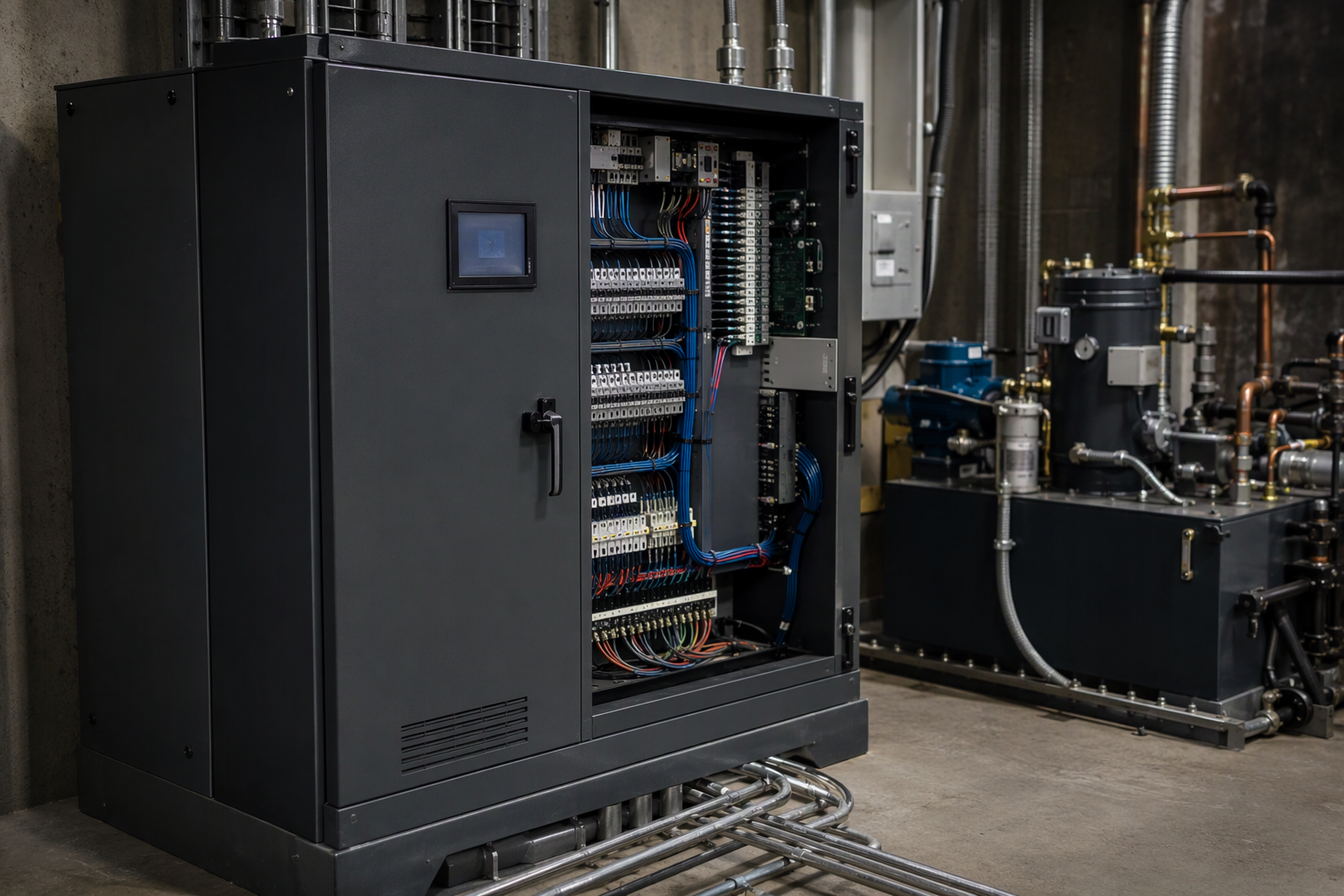
Modernization refers to the partial or complete replacement of an elevator’s core components — including the controller, drive system, cab finishes, doors and door operators, fixtures, and safety devices — without necessarily removing the entire hoistway structure. The scope depends on the age of the equipment, the owner’s budget, and the applicable code requirements.
Arizona conveyances installed, repaired, or altered on or after January 1, 2023, must comply with the ASME A17.1/CSA B44 Safety Code for Elevators and Escalators, 2019 edition, as adopted under Arizona Administrative Code R20-5-502 through R20-5-515. A modernization project that qualifies as an alteration triggers this code edition, making professional guidance essential before any work begins.
Why Do Phoenix Building Owners Modernize Instead of Replace?
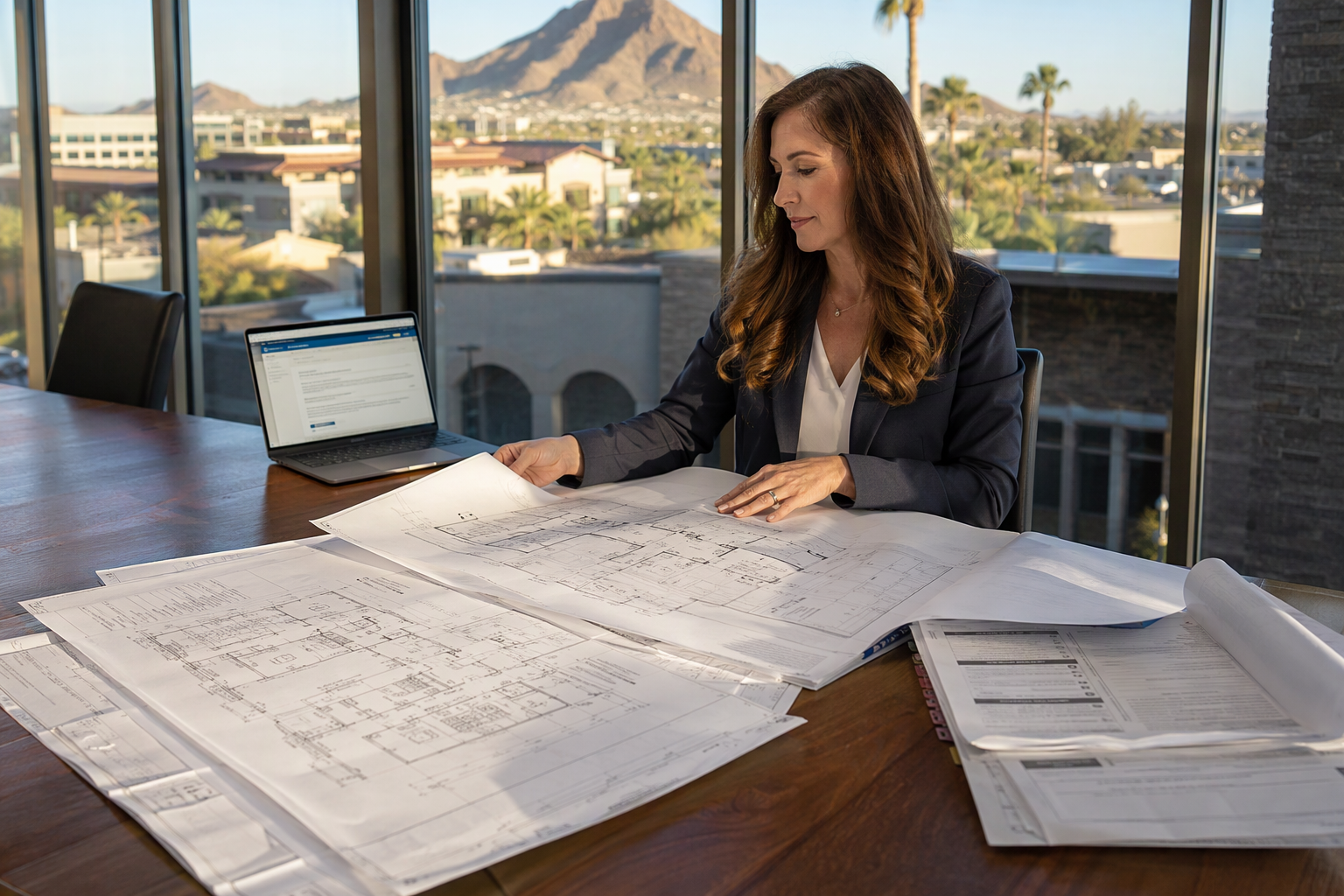
Full elevator replacement requires removing and rebuilding the hoistway, a costly and disruptive process. Modernization preserves the existing structural infrastructure while systematically renewing the components most prone to failure and obsolescence. Common drivers include:
- Controllers and relay logic systems that are no longer supported by manufacturers
- Hydraulic systems with aging fluid lines or outdated fluid types
- Door operators that cause repeated entrapment or nuisance callbacks
- Fixtures and cab interiors that no longer meet tenant or accessibility expectations
- Safety systems that fall short of current ASME A17.1 requirements
- Elevators that have accumulated a pattern of failed annual inspections
For many Phoenix commercial buildings, multifamily properties, healthcare facilities, and hospitality venues, modernization delivers performance comparable to a new unit at a fraction of the total project cost.
What Are Arizona’s Regulatory Requirements for Elevator Modernization?
Under A.R.S. §§ 23-491 through 23-491.16, Arizona owners must notify the Industrial Commission of Arizona (ICA), Elevator Division — formerly known as the ADOSH Elevator Safety Section until September 12, 2026 — at least 90 days before altering a conveyance. Modernization work that constitutes an alteration falls squarely within this requirement.
Key compliance obligations for Arizona modernization projects include:
- Pre-notification: Owners must notify the ICA Elevator Division no less than 90 days before alteration work begins.
- Post-alteration inspection: Each conveyance must be inspected before it re-enters service after any modification or alteration.
- Certificate of inspection: No conveyance may operate in Arizona without a valid annual certificate of inspection issued by the state. A modernization project resets this cycle.
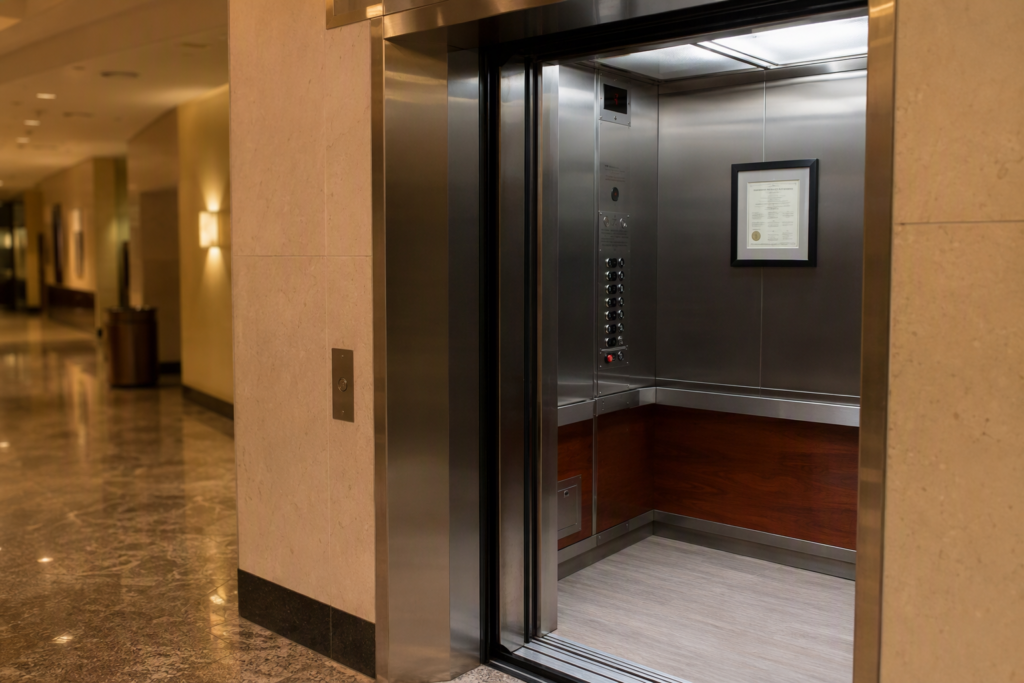
- Certificate posting: The owner must keep the certificate at the same location as the conveyance and make it available on request. The state serial number or certificate must also be posted in or near the conveyance in an easily accessible location.
- Licensed contractor: Work must be performed by a contractor holding an R-12 or C-12 elevator license classification from the Arizona Registrar of Contractors, which authorizes installation and repair of elevators, dumbwaiters, escalators, and moving walks.
- Private inspector eligibility: Arizona owners may engage a private elevator inspector authorized by the ICA to conduct the post-alteration inspection, provided that inspector has no conflict of interest with the servicing company.
- Firefighters’ emergency operation: Conveyances with firefighters’ emergency operation must use the Arizona Firefighters Service (AZFS) key — a state-specific requirement that must be addressed during any cab or control modernization.
Within the City of Phoenix, the Phoenix Elevator Section of the Planning and Development Department also inspects elevators, escalators, moving walks, dumbwaiters, and chairlifts. Projects inside Phoenix city limits must coordinate with this local authority in addition to state requirements.
What Components Are Typically Included in an Elevator Modernization?
Scope varies by project, but a full modernization by Arizona Elevator Solutions typically addresses:
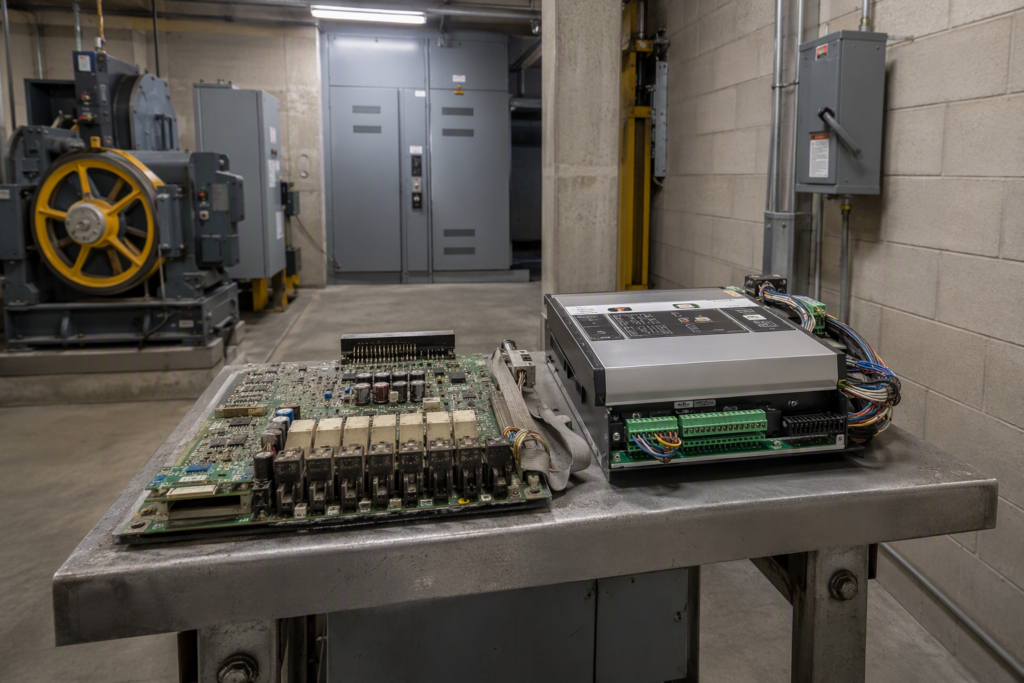
- Controller and software: Replacing outdated relay-based or early solid-state controllers with modern microprocessor-based systems that support current diagnostics and group dispatching
- Drive system: Upgrading hydraulic power units or traction drives for energy efficiency and smoother ride quality
- Door systems: Installing new door operators, sills, hanger systems, and safety edges to eliminate the leading cause of elevator callbacks and entrapments
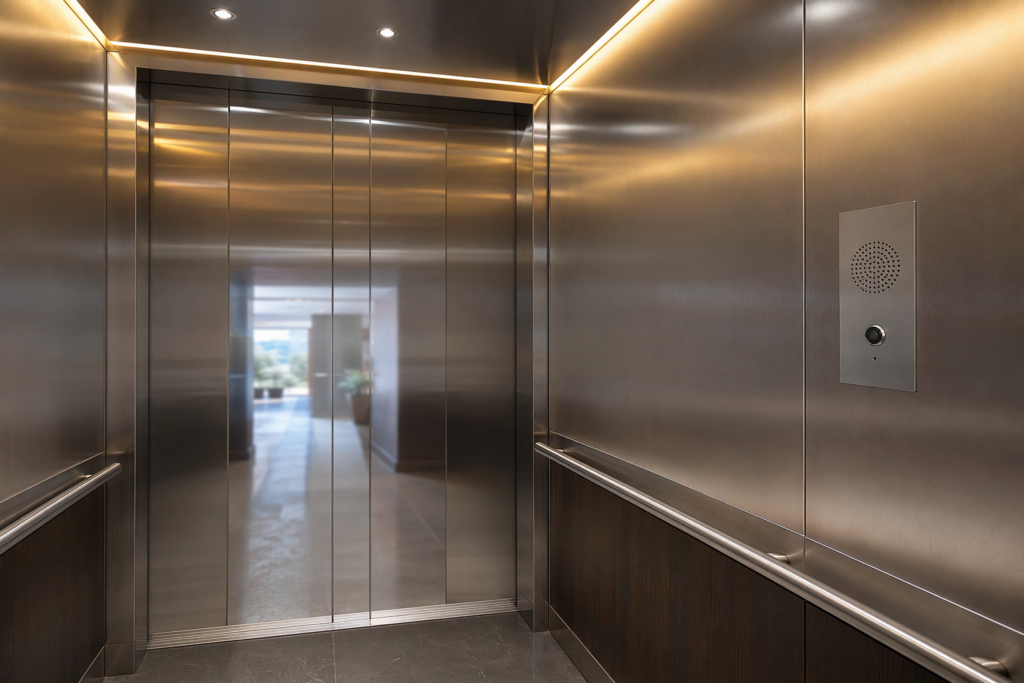
- Cab interior: Replacing wall panels, flooring, lighting, and ceiling for a refreshed tenant experience
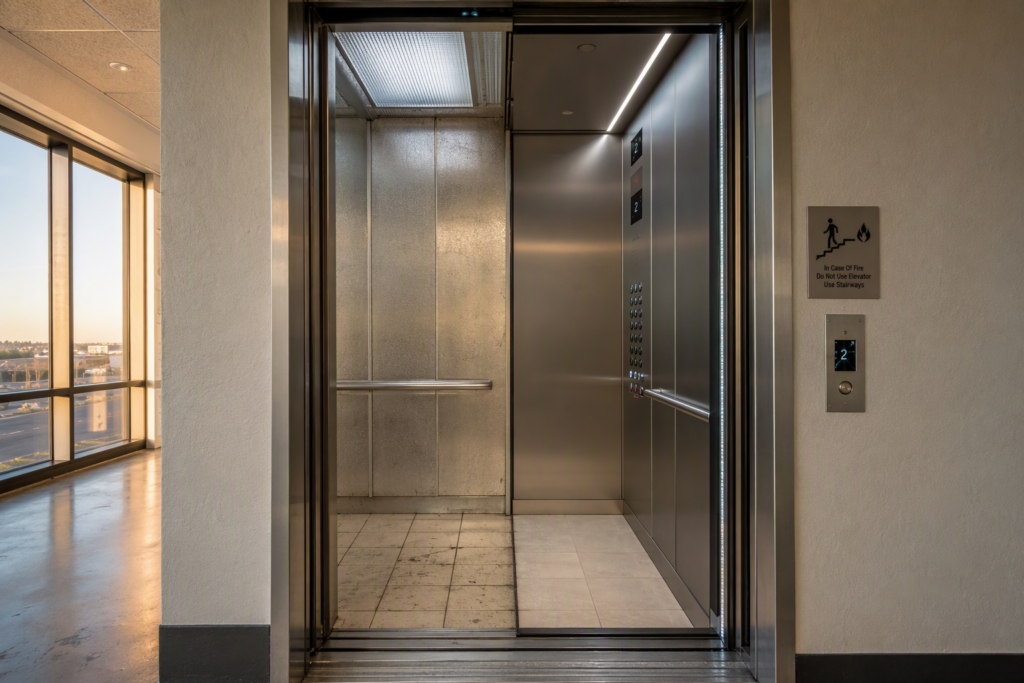
- Fixtures and signals: Modernizing hall call stations, car operating panels, and position indicators to ADA-compliant standards
- Safety devices: Updating safeties, buffers, governors, and emergency lighting to current ASME A17.1-2019 requirements
- Accessibility: Ensuring the modernized unit meets applicable provisions under the Americans with Disabilities Act
How Does the Elevator Modernization Process Work?
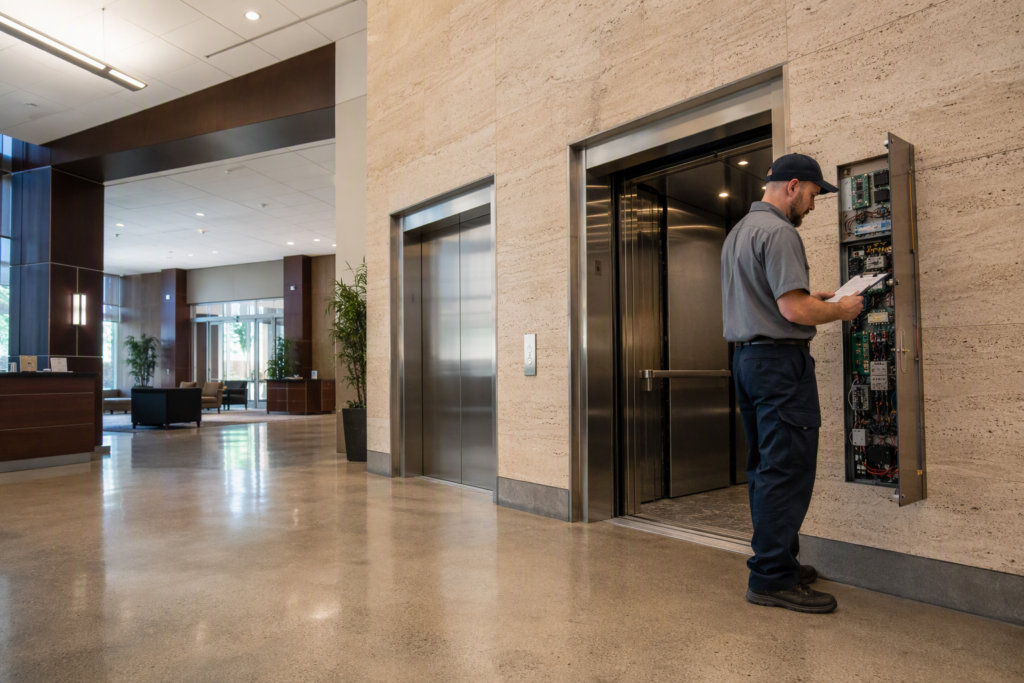
- Assessment and audit: Arizona Elevator Solutions evaluates the existing equipment, reviews the maintenance history, identifies code gaps, and documents the condition of all major components.
- Scope development: A detailed modernization scope is prepared, distinguishing between components that must be replaced for compliance and those replaced for performance or longevity.
- Pre-notification to the ICA: The building owner submits the required 90-day advance notice to the Industrial Commission of Arizona, Elevator Division, before alteration work begins.
- Permit coordination: For projects in the City of Phoenix, permits are coordinated with the Phoenix Elevator Section of the Planning and Development Department alongside state filings.
- Modernization work: Licensed R-12 or C-12 elevator contractors perform the installation and component replacement in accordance with ASME A17.1-2019 and applicable Arizona Administrative Code rules.
- Post-alteration inspection: An inspection is conducted before the unit returns to service, either by the ICA or by an authorized private elevator inspector with no conflict of interest.
- Certificate issuance and posting: Once inspection is passed, the new certificate of inspection is issued, posted in or near the conveyance, and retained on-site as required by Arizona law.
- Handoff and documentation: The owner receives all documentation, and a maintenance plan is established to protect the investment going forward.
How Long Does an Elevator Modernization Take?
Project duration depends on the scope of work, parts lead times, and the coordination required with the ICA and, for Phoenix properties, the city’s Elevator Section. A partial modernization focused on controls and door systems typically involves shorter downtime than a full gut modernization. Arizona Elevator Solutions works with building owners and property managers to schedule work in ways that minimize disruption to tenants and building operations. Planning should account for the mandatory 90-day pre-notification period before any alteration work begins.
Does Elevator Modernization Address ADA Compliance?
Yes. Modernization presents a practical opportunity to bring cab controls, signage, door timing, and audible signals into alignment with the Americans with Disabilities Act. ADA requirements apply to public accommodations and commercial facilities and may impose obligations independent of the state elevator code. Arizona Elevator Solutions reviews accessibility requirements as part of every modernization assessment so owners understand their obligations before the project begins.
What Markets Does Arizona Elevator Solutions Serve for Modernization?
Arizona Elevator Solutions provides elevator modernization services across Phoenix and throughout the state of Arizona. The team works with commercial office buildings, multifamily residential properties, healthcare and senior living facilities, hospitality and hotel properties, retail centers, government and municipal buildings, and educational institutions. Whether a property is in downtown Phoenix, the surrounding metro, or elsewhere in Arizona, Arizona Elevator Solutions brings local regulatory knowledge and hands-on experience with the equipment commonly found in the region’s building stock.
When Should a Building Owner Choose Modernization Over Full Replacement?
Modernization is generally appropriate when the hoistway, structural components, and machine room infrastructure remain sound. If an elevator is experiencing frequent breakdowns, has a controller or drive system that is no longer supported, or has failed to pass annual inspections due to systemic deficiencies, modernization is often the most cost-effective path. Full replacement becomes the stronger option when the hoistway itself is structurally compromised or when the building’s use changes in ways that require a fundamentally different elevator configuration. Arizona Elevator Solutions helps owners evaluate both paths based on the actual condition of their equipment.
Schedule a free consultation with Arizona Elevator Solutions at (602) 773-0530.
Need elevator service you can rely on? Arizona Elevator Solutions is ready to help.