Elevator Service in Phoenix, AZ | Arizona Elevator Solutions
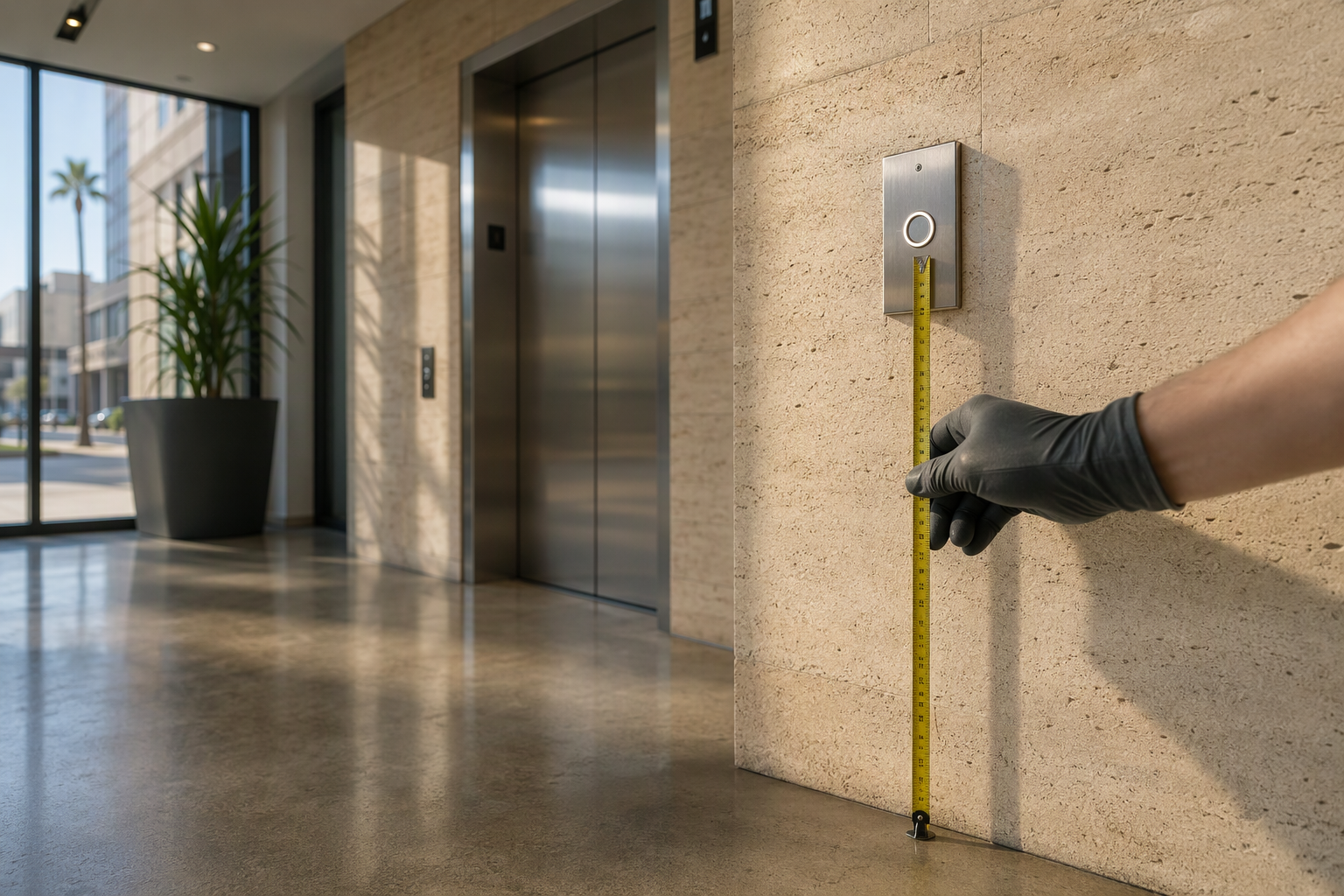
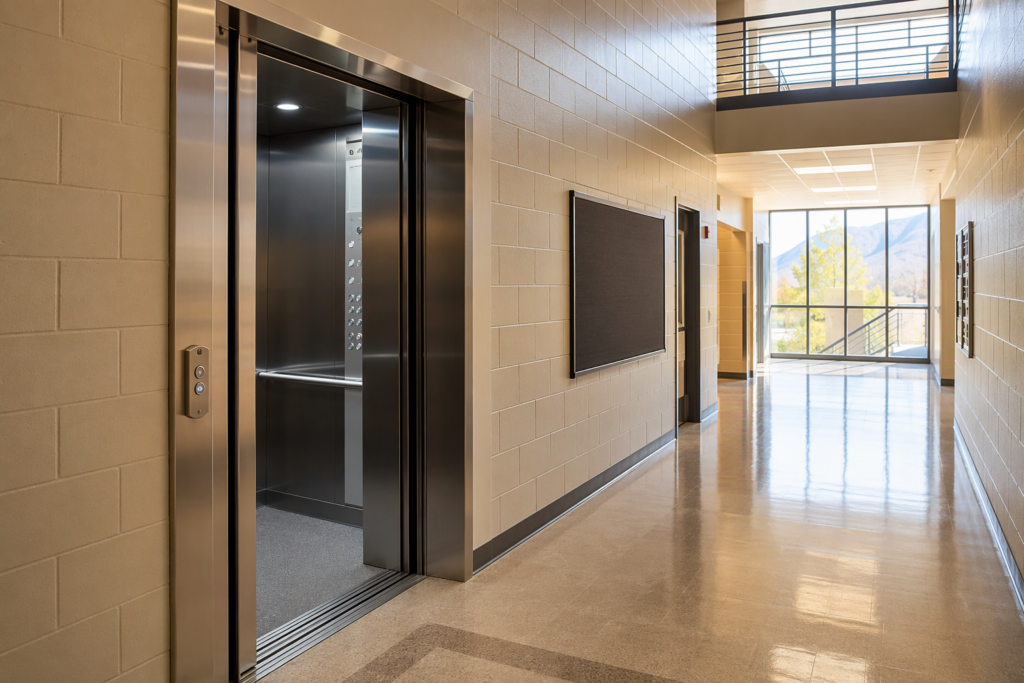
ADA elevator call button height rules require that the centerline of each call button be located no higher than 48 inches above the finished floor. This applies to new construction and alterations throughout Arizona, including commercial buildings, multifamily residential properties, and public facilities across the Phoenix metro area. Arizona Elevator Solutions helps building owners achieve and maintain full compliance.
What Is the ADA Requirement for Elevator Call Button Height?
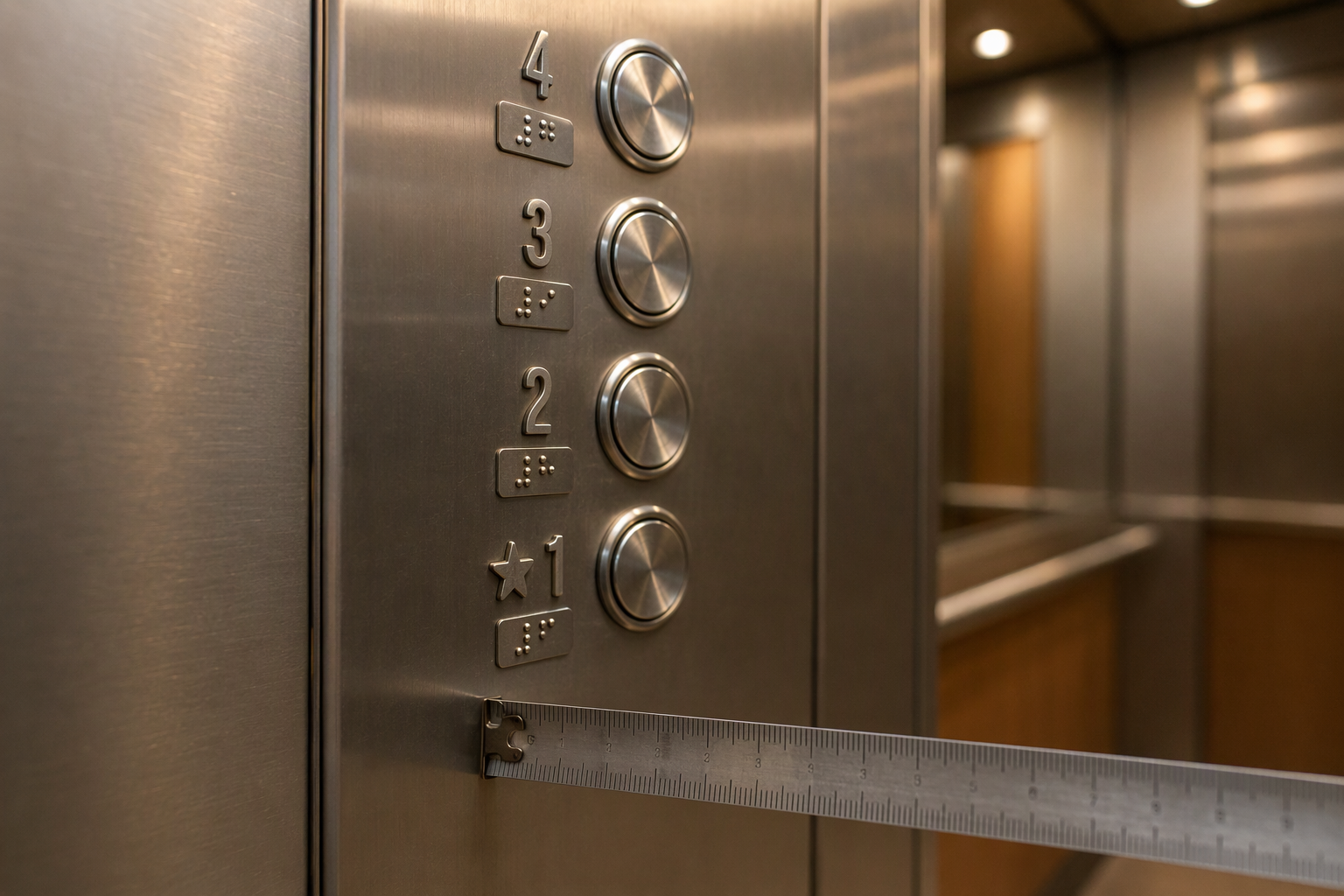
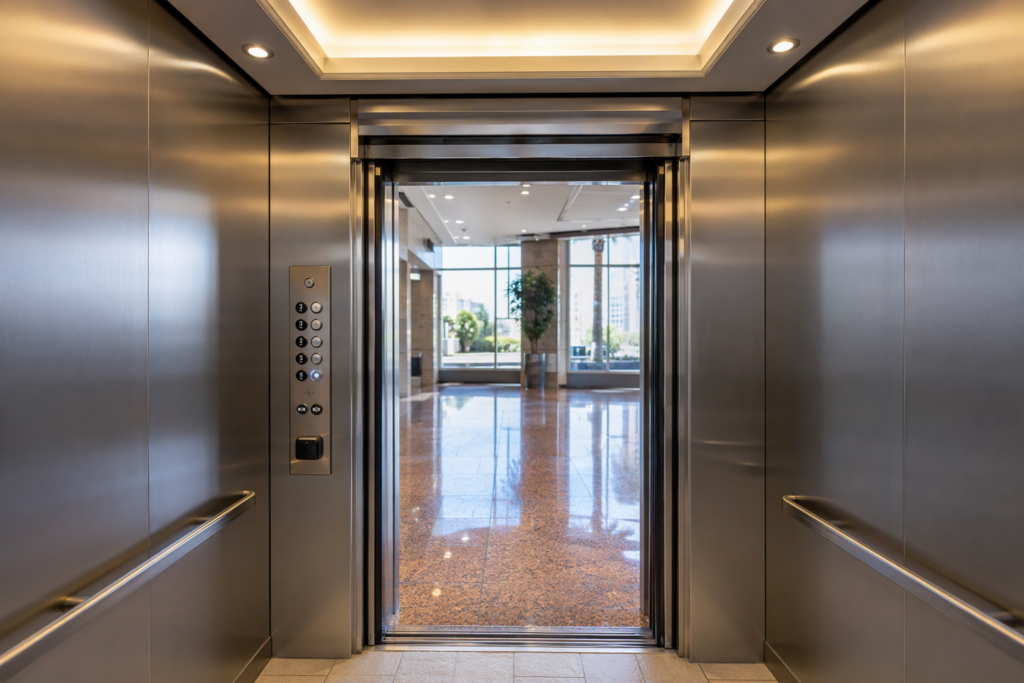
The ADA establishes that elevator hall call buttons and car operating panel buttons must have their centerlines at a maximum height of 48 inches above the finished floor. This measurement applies to both the hall call stations outside each elevator entrance and the control panel buttons inside the cab. The standard is designed to ensure that individuals using wheelchairs or mobility devices can reach and operate the controls without assistance.
Beyond height, the ADA also sets requirements for button size, contrast, raised characters, and Braille labeling on car operating panels. Call buttons must be a minimum of three-quarters of an inch in the smallest dimension. Buildings that fall short of these standards during an inspection or complaint review may face remediation requirements that affect operations and occupancy.
Does Arizona Adopt the ADA Button Height Standard for Elevators?
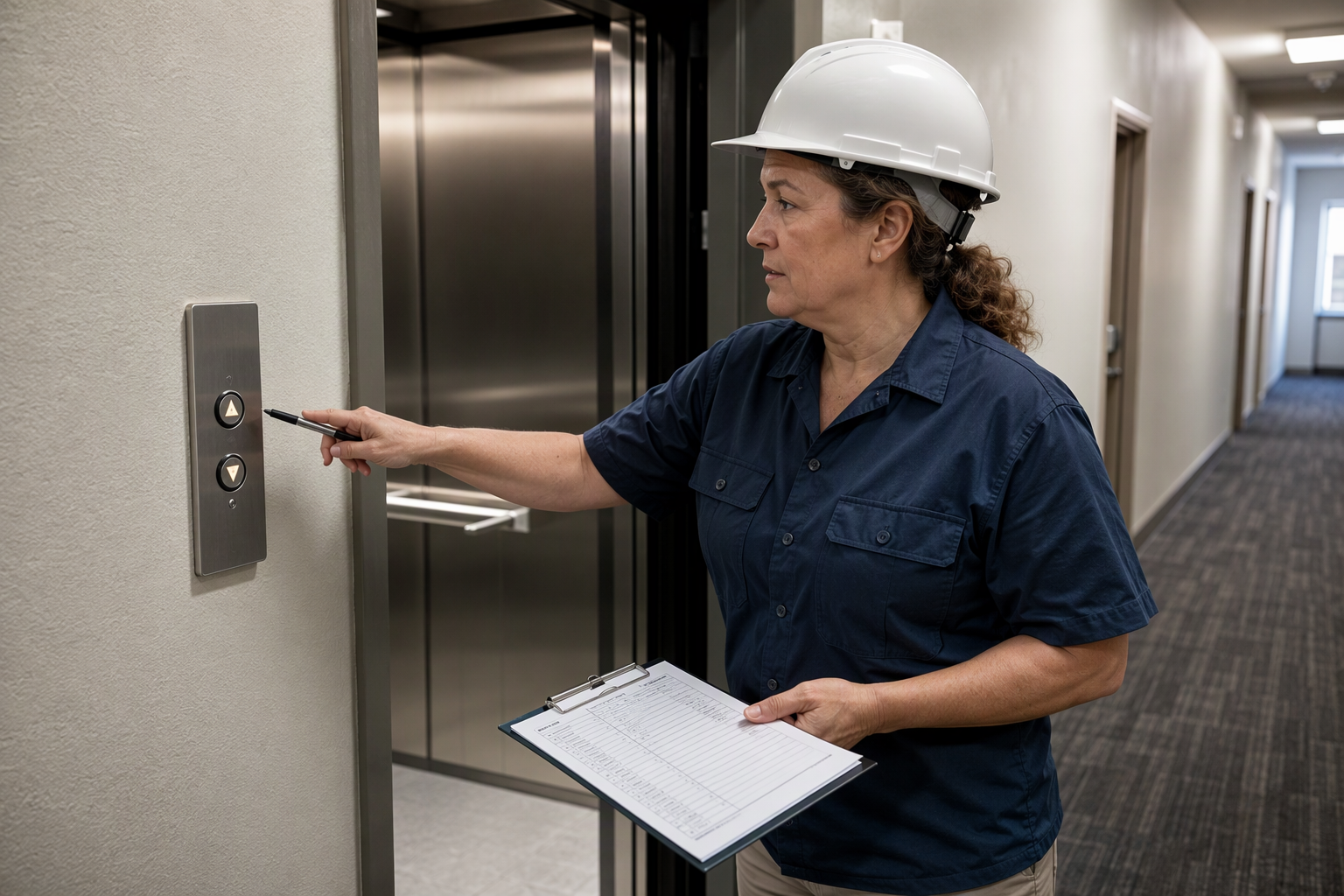
Yes. Arizona construction projects must comply with federal ADA accessibility requirements as a baseline. Arizona also adopts the ASME A17.1/CSA B44 Safety Code for Elevators and Escalators, 2019 edition, for equipment installed, repaired, or altered on or after January 1, 2023. The ASME code addresses operational safety and mechanical requirements, while the ADA governs usability and accessibility dimensions such as call button height.
Within the City of Phoenix, the City of Phoenix Elevator Section — part of the Planning and Development Department — inspects elevators, escalators, moving walks, dumbwaiters, and chair lifts. Equipment located outside Phoenix city limits falls under the Industrial Commission of Arizona’s Elevator Division, which administers elevator safety statewide under A.R.S. §§ 23-491 through 23-491.16 and Arizona Administrative Code R20-5-502 through R20-5-515.
Which Buildings in Phoenix Must Comply with ADA Call Button Height Rules?
ADA Title II covers state and local government facilities, and Title III covers places of public accommodation and commercial facilities. This means the call button height standard applies broadly across Phoenix to office buildings, hotels, healthcare facilities, retail centers, educational institutions, government buildings, and multifamily housing subject to Fair Housing Act requirements. Existing buildings undergoing alterations that affect primary function areas must also bring accessible routes — including elevator controls — into compliance as part of the project scope.
Arizona Elevator Solutions serves the full Phoenix metro area, including Scottsdale, Tempe, Mesa, Chandler, Glendale, and surrounding communities, assisting property owners and managers in evaluating whether existing installations meet current accessibility standards.
How Does Arizona’s Annual Inspection Requirement Relate to ADA Compliance?
Under Arizona law, every conveyance must be inspected before it first goes into service, after any modification or alteration, and annually thereafter. No conveyance may operate in Arizona without a valid annual certificate of inspection issued by the state. The certificate must be kept at the same location as the conveyance and made available on request, and the state serial number or certificate must be posted in or close to the elevator in an easily accessible location.
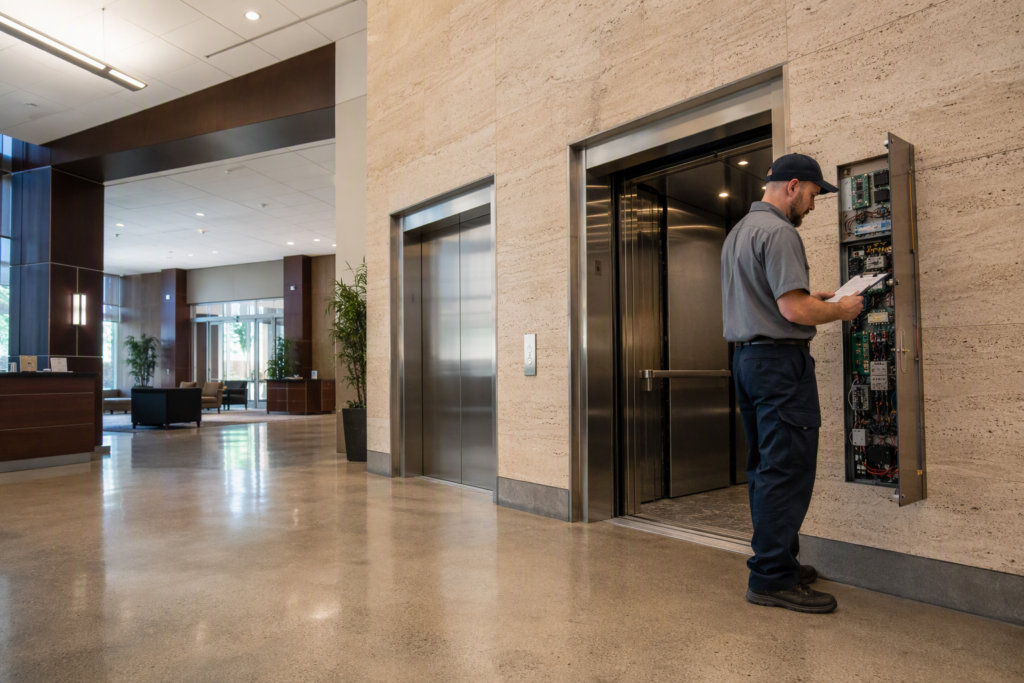
While the annual state inspection focuses on mechanical safety under the ASME code and Arizona Administrative Code, it creates a natural checkpoint for property owners to also confirm that accessibility dimensions such as call button height remain within ADA specifications — particularly after any cab renovation, panel replacement, or modernization project. Arizona Elevator Solutions incorporates accessibility verification into its maintenance and compliance review services.
What Should a Phoenix Building Owner Do If Call Buttons Are Out of Compliance?
- Document the existing button centerline height at each hall station and inside the cab, measuring from the finished floor surface.
- Compare measurements against the 48-inch maximum centerline height required by the ADA.
- Consult a qualified elevator service provider — such as Arizona Elevator Solutions — to evaluate whether the panel or hall station can be repositioned or must be replaced.
- Notify the Industrial Commission of Arizona’s Elevator Division (or the City of Phoenix Elevator Section, if the equipment is within city limits) at least 90 days before undertaking any alteration, as required by Arizona law.
- Engage a contractor holding an R-12 or C-12 elevator license from the Arizona Registrar of Contractors to perform the alteration work.
- Arrange for a post-alteration inspection before returning the equipment to service, as required under Arizona Administrative Code.
- Confirm the updated certificate of inspection is posted and stored at the conveyance location as required.
Who Is Authorized to Inspect Elevator Compliance in Arizona?
Arizona building owners may hire a private elevator inspector authorized by the Industrial Commission of Arizona to perform initial or annual inspections. Private inspectors must register with the commission every year and demonstrate at least eight hours of approved continuing education. An important restriction applies: a private inspector may not inspect a conveyance owned, operated, or last serviced by the inspector, a company the inspector owns, or the inspector’s employer. Using a private inspector does not relieve the owner or operator of their legal obligations under Arizona law.
Elevator contractors performing installation or repair work must hold the appropriate R-12 or C-12 license from the Arizona Registrar of Contractors. The Registrar of Contractors licenses contractors but does not issue the annual certificate of inspection — that authority rests with the Industrial Commission of Arizona’s Elevator Division.
Does ADA Call Button Height Apply to Platform Lifts and Stairway Chairlifts?
The ADA accessible design standards address platform lifts as permitted means of access in certain situations, and reach range requirements apply to their controls as well. In Arizona, platform lifts and stairway chairlifts installed, repaired, or altered on or after January 1, 2023 must comply with ASME A18.1-2020. Arizona Elevator Solutions evaluates control placement and accessibility dimensions on platform lifts and chairlifts as part of compliance consultations for Phoenix-area properties.
How Does a Modernization or Panel Replacement Affect ADA Button Height Compliance?
Elevator modernization projects that include replacement of the car operating panel or hall call stations constitute an alteration under both Arizona law and the ADA. When a panel is replaced, the opportunity exists — and in many cases the obligation arises — to bring button placement into full compliance with current accessibility standards. Arizona Elevator Solutions works with property owners planning modernizations to ensure that updated panels are positioned correctly from the outset, avoiding costly rework after installation and streamlining the post-alteration inspection process required by the Industrial Commission of Arizona’s Elevator Division.
Every Arizona conveyance is assigned a state serial number on a tag fixed to the controller or mainline disconnect. This serial number must remain accurate and accessible following any alteration, and the owner must notify the state within 24 hours of any accident that injures a person or disables a conveyance.
Schedule a free consultation with Arizona Elevator Solutions at 480-557-7600.
Need elevator service you can rely on? Arizona Elevator Solutions is ready to help.