How to Plan Your Building’s Elevator Maintenance and Capital Improvement Budget for the Coming Fiscal Year

Elevator budgeting is one of the most consequential—and most frequently deferred—line items in a commercial property’s annual operating plan. Whether a building manager oversees a single mid-rise in Scottsdale or a portfolio of mixed-use towers across Phoenix, the financial stakes of reactive elevator spending consistently exceed those of proactive planning. This FAQ hub page walks through every dimension of the planning process: cost categorization, inspection compliance, equipment lifecycle, vendor selection, reserve fund modeling, and more.
What is the first step in building an elevator maintenance budget?
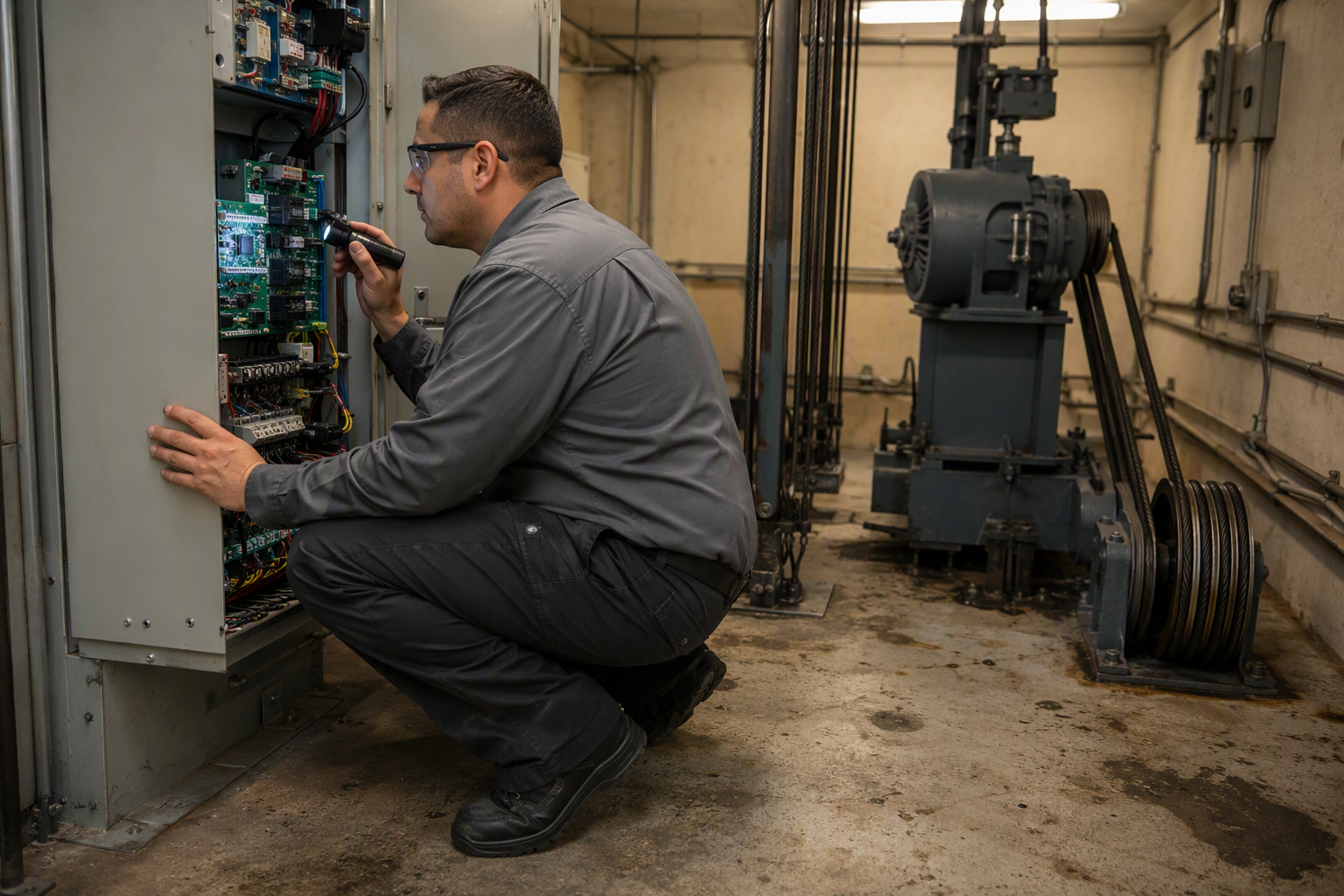
The first step is conducting a thorough condition assessment of every elevator unit in your building, producing a written inventory that documents equipment age, current maintenance contract status, outstanding code deficiencies, and any deferred repairs.
Without an accurate baseline, budget figures are essentially guesses. A condition assessment should capture make, model, and installation year for each unit; hydraulic versus traction drive type; controller generation; cab interior condition; door operator status; and any written notices from inspectors or code officials. Buildings in Phoenix, Tucson, Scottsdale, and Mesa that have not had a formal assessment within the past 12 months are working from incomplete information.
Arizona Elevator Solutions offers free elevator assessments that produce exactly this kind of documented baseline, giving property managers a defensible starting point for capital planning conversations with ownership and finance teams.
What are the main cost categories in an elevator budget?
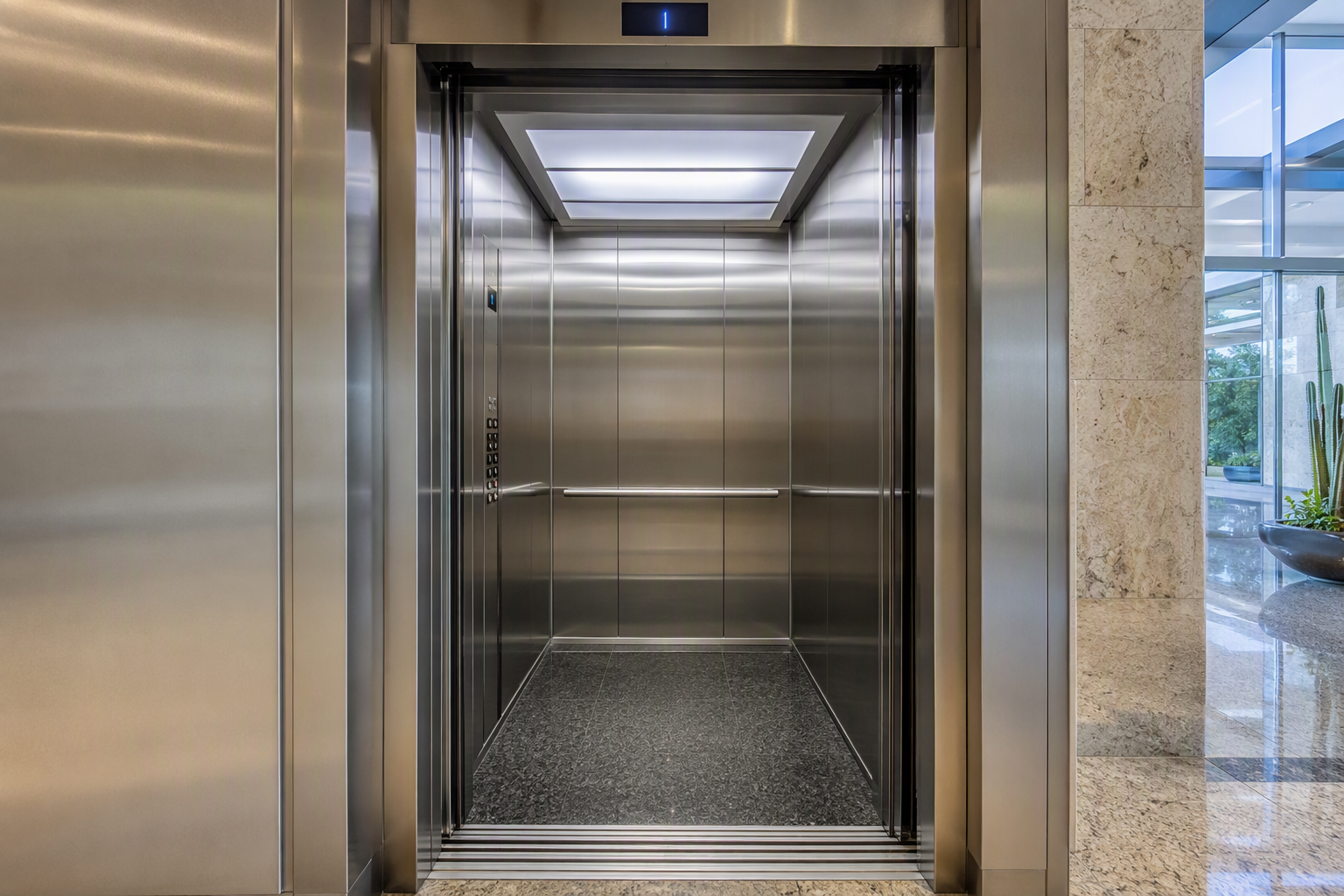
Elevator costs fall into four primary categories: routine preventive maintenance contracts, code-compliance and modernization upgrades, major capital replacements, and emergency repair reserves.
Treating these as a single undifferentiated line item is a common budgeting error. Each category has a different planning horizon, funding source, and approval pathway.
- Preventive Maintenance (PM) Contracts: Recurring monthly or quarterly service that keeps mechanical, hydraulic, and electrical systems within safe operating parameters. These costs are predictable and should be captured as operating expenses.
- Code-Compliance and Modernization Upgrades: Work required to bring existing equipment into alignment with current editions of ASME A17.1 or ASME A17.3 Safety Code for Existing Elevators and Escalators, or ADA accessibility requirements. These are typically capital expenditures.
- Major Capital Replacements: Full or partial modernizations—new controllers, drive systems, door operators, cab enclosures—that extend equipment life by a significant number of years. These require capital budget approval and often long lead times for equipment procurement.
- Emergency Repair Reserve: A contingency allocation for unplanned breakdowns. Without this reserve, emergency repairs compete directly with operating cash flow and create budget variance that finance teams find difficult to explain.
How does Arizona’s elevator inspection process affect budget timing?
Arizona elevators are regulated by the Arizona Division of Occupational Safety and Health (ADOSH), which enforces mandatory inspection intervals; budget planning must align expenditure timelines with these inspection cycles to avoid compliance-driven emergency spending.
ADOSH administers the elevator safety program under Arizona state law, and inspections are required before an elevator can receive an operating certificate. When inspectors identify deficiencies, the building owner receives a written notice with a correction timeline. If corrections require parts procurement, contractor scheduling, or modernization work, costs incurred outside the normal budget cycle can create significant unplanned expenditures.
Proactive budget planners review their inspection history at the start of each fiscal year, identify units whose certificates are due for renewal, and pre-fund any anticipated correction work. Buildings on annual inspection cycles in particular should treat the inspection month as a budget planning trigger, not a reactive cost event.
What does ASME A17.1 require that directly affects maintenance budgets?
ASME A17.1 Safety Code for Elevators and Escalators establishes mandatory maintenance, testing, and inspection requirements that translate directly into recurring and one-time budget line items for every commercial building in Arizona.
The code requires that maintenance be performed by a qualified elevator contractor and that maintenance records be kept on-site and available for inspection. Required tests—including periodic safety tests and door reopening device tests—must be performed at code-specified intervals. Failure to document these tests can result in inspection deficiencies, which in turn become mandatory corrections with associated costs.
Budget planners should request a copy of the current code-required test schedule from their elevator contractor and verify that all scheduled tests are reflected in the maintenance contract scope. Any tests that fall outside the standard contract become separate budget line items.
How do ADA requirements create capital improvement obligations?
ADA accessibility requirements for elevators—covering cab dimensions, control panel reach ranges, audible signals, and Braille signage—can trigger capital improvement obligations when buildings undergo renovation or when accessibility complaints are filed.
The ADA applies to places of public accommodation and commercial facilities. Elevator-related ADA requirements include specific standards for hall call buttons, cab controls, floor designations, door timing, and leveling accuracy. Buildings constructed before the ADA’s effective date that have not yet brought elevators into compliance face ongoing exposure.
Capital improvement budgets for older buildings in Phoenix, Scottsdale, Mesa, and Tucson should include an ADA gap assessment every three to five years, with remediation costs modeled into a multi-year capital plan. An accessibility audit by a qualified elevator contractor is the most efficient way to identify and cost-estimate outstanding ADA items before they become enforcement issues.
What is the typical lifecycle of commercial elevator components, and how does it inform capital planning?
Commercial elevator components have defined service lifespans that, when mapped against installation dates, produce a forward-looking capital replacement schedule—the foundation of any multi-year elevator capital plan.
The following table provides general industry benchmark lifecycle ranges for common elevator components. These ranges reflect general guidance from elevator industry engineering practice and should be validated against the specific equipment in each building during a condition assessment.
| Component | Typical Service Life (Years) | Planning Trigger | Budget Category |
|---|---|---|---|
| Hydraulic fluid & cylinder | 20–30 | Fluid analysis; corrosion inspection | Capital replacement |
| Relay-logic controller | 20–30 | Parts obsolescence; repair frequency | Capital modernization |
| Solid-state / microprocessor controller | 15–25 | Software support end-of-life | Capital modernization |
| Door operator | 10–20 | Increasing door-related callbacks | Capital or major repair |
| Wire rope (traction units) | 8–15 | Annual rope inspection results | Planned maintenance / capital |
| Drive machine (traction) | 20–30 | Oil leaks; bearing noise; heat | Capital replacement |
| Cab interior (flooring, panels, lighting) | 10–15 | Cosmetic condition; tenant complaints | Capital improvement |
| Safety devices & governor | Per code test interval | Mandatory 5-year full-load test | Maintenance contract / capital |
| Pit sump pump & lighting | 10–15 | Inspection findings; pit moisture | Maintenance repair |
| Emergency lighting & communication | 7–12 | Code-required annual test failure | Maintenance contract |
By plotting each component’s installation year against these lifecycle ranges, a building manager can project when replacements are likely to be needed, assign rough cost estimates, and spread expenditures across fiscal years to avoid budget spikes.
How should building managers structure a multi-year elevator capital improvement plan?
A multi-year elevator capital improvement plan (CIP) should span at least five years, categorize projects by urgency, assign preliminary cost estimates to each project, and be updated annually as condition data and inspection results are collected.
- Complete a condition assessment for each elevator unit and document findings in a written report.
- Classify every identified deficiency or replacement need as immediate (safety or compliance), near-term (within 1–3 years), or long-range (3–5+ years).
- Obtain preliminary cost estimates from a qualified elevator contractor for each identified project, including parts, labor, and permitting.
- Layer the estimates onto a fiscal year calendar, distributing costs to avoid multiple major projects in a single budget cycle where possible.
- Establish a reserve fund contribution schedule for long-range replacements so that capital is available when projects become immediate.
- Review and update the CIP annually, incorporating new inspection findings, changes in equipment condition, and updates to equipment costs.
- Coordinate the CIP with ownership, finance, and any HOA or condominium reserve study professionals to ensure alignment with overall capital planning.
What should be included in an elevator maintenance service contract?
A comprehensive elevator maintenance contract should clearly define the scope of covered components, the frequency of preventive maintenance visits, the response protocol for callbacks, the exclusions from coverage, and any provisions for parts and labor on repairs beyond routine PM.
Contract scope varies significantly between providers. Full-coverage contracts typically include all parts and labor for covered components, while oil-and-grease (lubrication-only) contracts exclude most parts. The gap between these two contract types can represent a substantial unbudgeted exposure in any given year, particularly as equipment ages.
When evaluating contracts, building managers should request a written list of covered and excluded components, verify that the contractor holds the appropriate Arizona license to perform elevator work, and confirm that maintenance records will be maintained on-site in compliance with ASME A17.1 requirements. Arizona Elevator Solutions serves property owners and managers across Phoenix, Tucson, Scottsdale, and Mesa with clearly scoped maintenance contracts designed to eliminate the ambiguity that leads to unexpected repair invoices.
How should building owners budget for elevator modernization projects?
Elevator modernization projects should be budgeted with a detailed scope of work developed by a qualified elevator contractor, including equipment costs, labor, permitting, inspection fees, and a contingency allowance for unforeseen conditions discovered during the work.
Modernization projects—whether a controller replacement, a full hydraulic unit overhaul, or a cab-to-machine-room renovation—almost always require a permit from the authority having jurisdiction (AHJ) in Arizona. Permit fees, inspection fees, and the cost of any required upgrades identified during the permit review process should all be modeled into the project budget before ownership approval is sought.
A contingency of a meaningful percentage of the base project cost is prudent for older buildings where existing conditions (wire deterioration, pit flooding damage, asbestos in older cab materials) may not be fully visible until work begins. Experienced elevator contractors in Arizona will flag known risk factors during the project scoping phase, allowing the contingency estimate to be calibrated to actual risk.
What are common budget mistakes building managers make with elevator expenses?
The most common elevator budget mistakes include underestimating parts costs for aging equipment, failing to reserve for mandatory periodic tests, treating emergency repairs as a separate budget problem rather than a planned contingency, and deferring modernization until equipment failure forces an emergency replacement.
Deferred maintenance is consistently the most expensive approach over any multi-year horizon. When aging components are not replaced on a planned schedule, they tend to fail in ways that cause collateral damage to adjacent systems, require expedited parts procurement at premium cost, and generate tenant complaints and potential liability.
Another frequent error is assuming that a low-cost maintenance contract provides equivalent protection to a full-coverage contract. The dollar difference between contract types may appear favorable in year one, but when a major component fails outside the contract’s coverage, the resulting repair invoice often exceeds the cumulative savings from the lower-cost contract.
How do hydraulic and traction elevators differ in their maintenance budget profiles?
Hydraulic and traction elevators have meaningfully different maintenance cost profiles: hydraulic systems carry ongoing fluid management and cylinder inspection costs, while traction systems require wire rope inspection, sheave and drive machine maintenance, and counterweight system attention.
Hydraulic elevators common in low-rise commercial and residential buildings in Phoenix and Mesa often require periodic hydraulic fluid changes and, in older units, underground cylinder inspections or replacements—projects that can be among the most significant capital expenditures in a building’s history. Buildings with in-ground hydraulic cylinders installed before modern environmental standards should budget for eventual cylinder replacement or abandonment as part of their long-range capital plan.
Traction elevators, more common in mid- and high-rise buildings in Scottsdale and Tucson, require periodic wire rope inspection and replacement, drive machine lubrication and bearing maintenance, and brake adjustment. Machine-room-less (MRL) traction units have different service access requirements that affect both labor costs and the scope of what can be addressed during a standard maintenance visit.
How does OSHA affect elevator maintenance budgets?
OSHA standards applicable to elevator maintenance work—covering lockout/tagout procedures, pit entry requirements, and maintenance of electrical equipment—affect what work elevator technicians can safely perform and therefore influence both contractor scope and cost.
OSHA requirements for the elevator industry establish safe work practices that qualified elevator contractors must follow. These practices affect how long certain maintenance tasks take, what personal protective equipment must be used, and whether additional personnel are required for specific procedures. When soliciting maintenance bids, building managers should ensure that proposed pricing reflects OSHA-compliant work practices rather than shortcuts that create liability exposure for the building owner.
Arizona operates under federal OSHA jurisdiction for private-sector employers, so federal OSHA standards apply directly to elevator maintenance work performed in Phoenix, Tucson, Scottsdale, and Mesa.
How should HOAs and condominium associations plan elevator reserves?
HOAs and condominium associations should incorporate elevator component lifecycles and replacement cost estimates into their formal reserve study, funding reserve contributions annually so that capital is available for major replacements without the need for special assessments.
A reserve study is a professional analysis of an association’s long-term capital needs and the funding plan required to meet them. Elevators are among the highest-cost line items in most reserve studies, and the accuracy of the elevator section depends on the quality of the condition assessment and cost data provided to the reserve study professional.
Associations whose reserve studies are more than three years old, or that have experienced significant changes in elevator condition since the last study, should commission an updated elevator condition assessment and provide the findings to their reserve study professional before the next study update. Arizona Elevator Solutions provides documented condition assessments that give reserve study professionals the equipment-specific data they need to model elevator replacement costs accurately.
What questions should building managers ask when comparing elevator maintenance vendors?
When comparing elevator maintenance vendors, building managers should ask about Arizona licensing status, the scope of the maintenance contract, parts availability for the specific equipment in the building, response protocols for entrapments, and how maintenance records are maintained and made available to the owner.
Arizona requires elevator contractors to hold appropriate state licensing to perform elevator maintenance and repair work. Verifying that a prospective vendor holds a current, valid license protects the building owner from compliance exposure and ensures that inspection authorities will accept the work.
Parts availability is a particularly important consideration for older equipment. A contractor who maintains a regional parts inventory for common elevator brands and models can respond to breakdowns more efficiently than one who must source all parts through external supply chains. For buildings in the Phoenix metro, Scottsdale, and Tucson markets, proximity of the contractor’s operations also affects how quickly a technician can be on-site.
How should building managers handle elevator budget variance during the year?
Budget variance on elevator expenses should be tracked monthly against each cost category—PM contract, repairs, code compliance, and capital—with explanations documented so that patterns can inform the following year’s budget assumptions.
Variance tracking serves two purposes. First, it allows building managers to identify whether a particular unit or component is generating disproportionate repair spend, which may indicate that a planned replacement would be more cost-effective than continued repairs. Second, it provides the historical data needed to make more accurate budget requests in future years.
When significant unplanned expenses occur, documenting the cause (component failure, inspection deficiency, code-required upgrade) also helps building managers communicate to ownership why the variance occurred and what steps are being taken to prevent recurrence.
What is the role of elevator callback data in budget planning?
Callback frequency—the number of times a technician must respond to a non-scheduled service call—is one of the most reliable leading indicators of imminent component failure and should be tracked per unit as a budget planning input.
A unit that generates a significantly higher number of callbacks than comparable units in the same building or portfolio signals that a major component is approaching end of life. Building managers who track callback data can often anticipate and budget for replacements before failure occurs, rather than being surprised by emergency costs.
Qualified elevator contractors should provide building managers with a callback log or service history report at least annually. If this information is not being provided, requesting it is an appropriate step when evaluating the adequacy of the current maintenance relationship.
How do permit and inspection fees factor into the elevator budget?
Permit and inspection fees associated with modernization work, new equipment installation, and periodic code-required tests are real costs that must be itemized in project budgets and maintenance contracts rather than treated as incidental or absorbed into labor estimates.
In Arizona, elevator work that requires a permit triggers fees payable to ADOSH or the applicable local AHJ. The amount of these fees varies by project type and jurisdiction. For budget planning purposes, building managers should ask their elevator contractor to provide fee estimates as a line item in any project proposal. Failing to account for permitting and inspection fees is a common cause of project budget overruns on modernization work.
Annual operating certificate renewal fees, where applicable, are also a recurring budget item that should be captured in the operating expense section of the elevator budget rather than the capital section.
What is the step-by-step process for planning the annual elevator maintenance budget?
The annual elevator maintenance budget should be assembled through a structured process that begins several months before the fiscal year starts, incorporates input from the elevator contractor, and produces a line-item budget with supporting documentation for each cost category.
- Pull the prior year’s expense history for each elevator unit, categorized by PM contract payments, repair invoices, code-required tests, and any capital work performed.
- Request a written service summary from your elevator contractor covering completed maintenance, callbacks, outstanding deficiencies, and any items the contractor recommends addressing in the coming year.
- Confirm the inspection schedule for each unit with ADOSH and identify any units whose certificates or required periodic tests fall due in the coming fiscal year.
- Obtain quotes for any recommended repairs or upgrades identified in the contractor’s service summary or from inspection findings.
- Review the multi-year capital improvement plan and confirm which projects are scheduled for the coming fiscal year, updating cost estimates as needed.
- Calculate the PM contract cost for the coming year, including any escalation clauses in the existing contract or the cost of rebidding if the contract is expiring.
- Establish or confirm the emergency repair reserve allocation, calibrated to the age and condition of the equipment.
- Assemble all line items into a single elevator budget worksheet that separates operating expenses from capital expenditures for accounting purposes.
- Document the assumptions behind each estimate so that variance can be explained if actuals differ from budget.
- Submit the budget with supporting documentation to ownership or finance for approval well before the fiscal year begins.
How can building managers reduce elevator operating costs without compromising safety or compliance?
Cost reduction in elevator operations is best achieved through proactive maintenance that prevents expensive failures, contract structures that match coverage to actual equipment risk, and energy efficiency upgrades that reduce ongoing utility costs—never through deferring safety-related maintenance.
Energy-efficient upgrades such as LED cab lighting, variable-voltage variable-frequency (VVVF) drive systems on traction elevators, and standby mode controllers can reduce the energy consumption associated with elevator operations, which in Arizona’s climate can be a meaningful operating cost consideration. These upgrades are capital expenditures that produce ongoing operating savings and should be evaluated with a simple payback analysis as part of capital planning.
Consolidating elevator maintenance for multiple units or multiple buildings in a portfolio with a single qualified contractor can also create administrative efficiencies and, in some cases, volume-based contract terms that benefit the building owner. Arizona Elevator Solutions works with property management companies across the Phoenix, Scottsdale, Mesa, and Tucson markets to develop portfolio-level maintenance programs that provide consistent service quality and documentation across multiple properties.
When should a building consider full elevator replacement versus continued modernization?
Full elevator replacement is generally warranted when the cost of bringing an aging unit into code compliance and good operating condition approaches or exceeds the cost of a new installation, or when the existing equipment configuration no longer meets the building’s operational needs.
The decision between modernization and replacement involves comparing the cumulative cost of planned upgrades against the installed cost of a new unit, accounting for the remaining useful life each option provides. A qualified elevator contractor can model both scenarios with enough specificity to support an informed ownership decision.
In some cases, the configuration of the existing hoistway limits what can be achieved through modernization, particularly when the building needs to increase elevator capacity or speed to address changed occupancy patterns. In these situations, a structural analysis of the hoistway may be necessary before the cost comparison can be completed.
For buildings in Arizona that are approaching this decision point, a detailed assessment from a certified elevator service company is the appropriate starting point. Arizona Elevator Solutions provides written assessments that give building owners the technical and financial information needed to make the modernization-versus-replacement decision with confidence.
Ready to Build a Smarter Elevator Budget?
Planning an elevator maintenance and capital improvement budget requires accurate equipment data, current code knowledge, and an experienced service partner. Contact Arizona Elevator Solutions for a free elevator assessment—covering equipment condition, code compliance status, and a preliminary cost framework for your coming fiscal year planning. Serving Phoenix, Tucson, Scottsdale, and Mesa.
Call Arizona Elevator Solutions: 480-319-7157
Need elevator service you can rely on? Arizona Elevator Solutions is ready to help.