Arizona Elevator Code Changes 2026–2027: What Building Owners Need to Know
Arizona building owners who manage properties with elevators are entering a critical compliance window. The 2026 and 2027 period brings heightened enforcement activity, updated inspection expectations rooted in current ASME standards, and growing pressure from the Arizona Department of Occupational Safety and Health (ADOSH) for documented maintenance and safety records. Waiting until an inspection reveals a deficiency is a costly strategy — and one that Arizona Elevator Solutions helps clients avoid through proactive, data-driven assessments.
What Elevator Codes Govern Arizona Buildings Right Now?
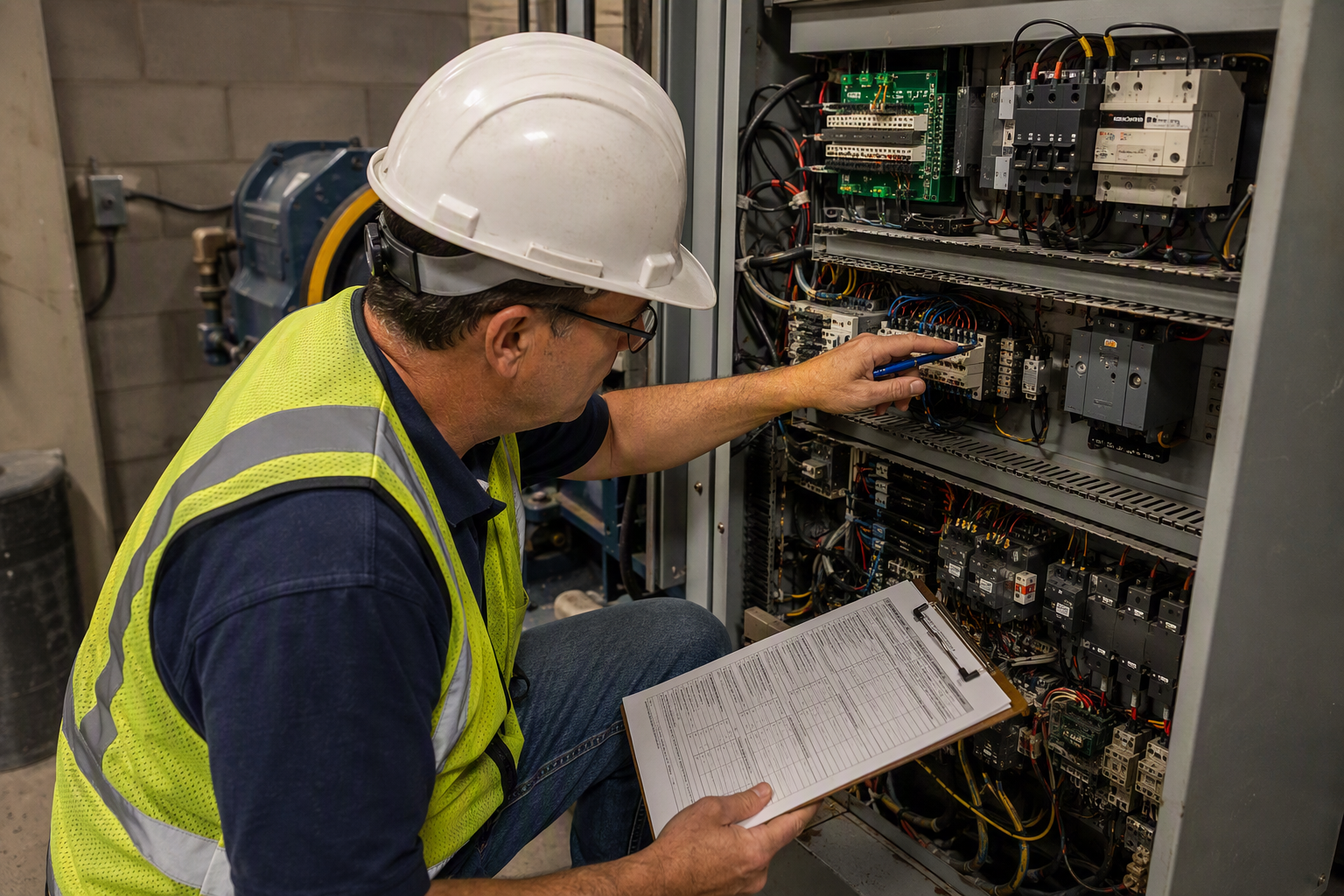
Arizona elevator safety falls under a layered regulatory framework. At the federal level, the ASME A17.1 Safety Code for Elevators and Escalators establishes design, construction, and operational safety requirements for new installations, while ASME A17.3, the Safety Code for Existing Elevators and Escalators, governs retrofits and ongoing compliance for equipment already in service. Arizona state enforcement is administered by ADOSH, which oversees elevator inspections statewide through licensed inspectors.
The Americans with Disabilities Act (ADA) layered requirements apply to elevators in public accommodations and commercial facilities, covering door widths, call button heights, floor designation signage, and Braille markings. These federal standards do not expire, but enforcement can intensify as AHJs (Authorities Having Jurisdiction) update their interpretation guidance.
Occupational safety obligations under OSHA also apply to elevator construction, maintenance workers, and workplaces where vertical transportation is part of the work environment.
What Specific ASME A17.3 Requirements Are Arizona Building Owners Being Asked to Meet?
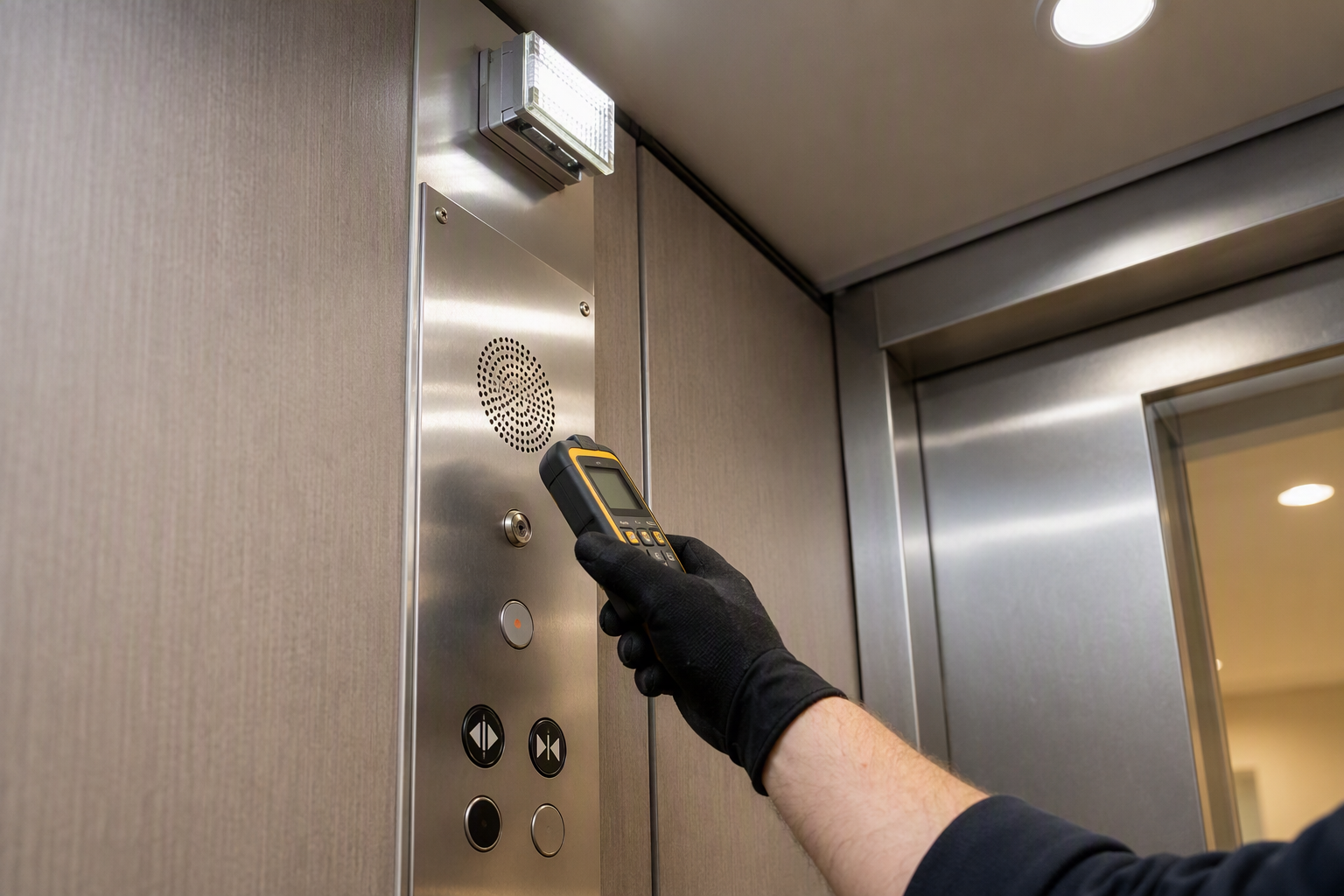
ASME A17.3 is the primary code driving modernization demands on existing elevator systems in Arizona. Rather than requiring all buildings to immediately upgrade to new-construction standards, A17.3 identifies specific safety features that existing elevators must retrofit over time. The following areas are among those receiving increased inspector attention heading into 2026 and 2027:
- Two-Way Communication Systems: Elevators must provide a means for passengers to communicate with emergency personnel from within the car. Older intercom systems that are non-functional or connected only to an unmanned station may trigger deficiency notices during inspection.
- Emergency Lighting: Car lighting must remain operational for a minimum duration in the event of a power failure. Systems with aging battery backups are a common inspection failure point.
- Door Reopening Devices: Safety edges and light curtains protecting passengers from closing doors must meet current performance standards under ASME A17.1.
- Firefighters’ Emergency Operation (FEO): Phase I and Phase II emergency recall systems must function correctly and be tested as part of annual inspections. Systems installed under older code cycles may require upgrades to meet current FEO provisions.
- Governor and Safety Device Testing: Periodic load and drop testing of governor and safety systems is required at defined intervals under ASME standards.
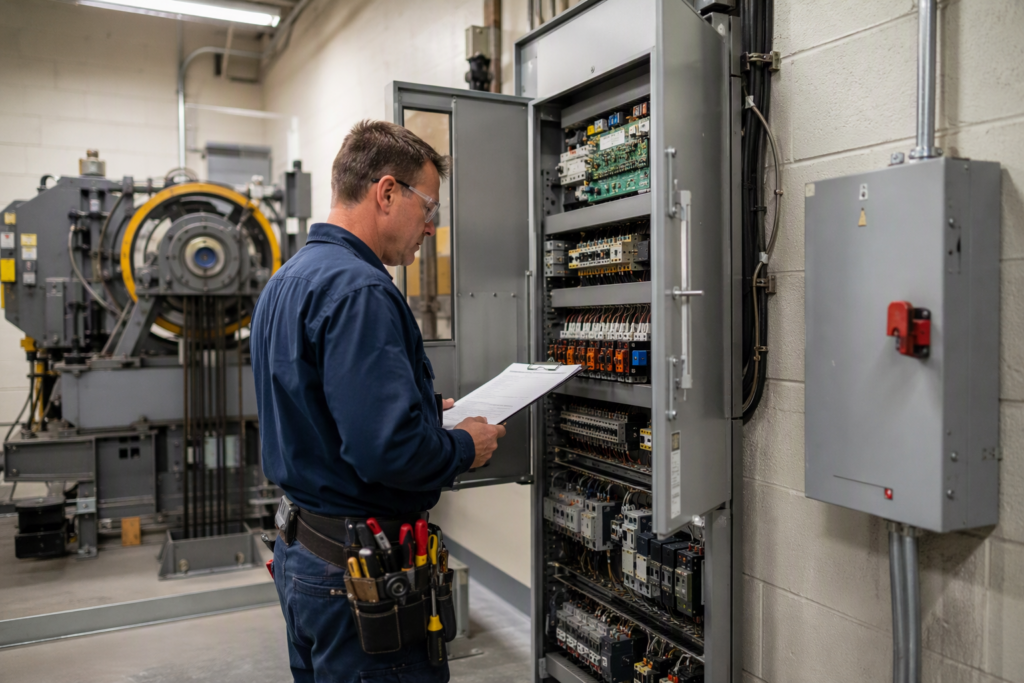
- Machine Room Conditions: Temperature control, lighting, and access restrictions in machine rooms are recurring inspection items that can result in violations if deferred maintenance has been allowed.
How Does ADOSH Enforce Elevator Compliance in Arizona?
ADOSH (the Arizona Division of Occupational Safety and Health) is the state authority responsible for elevator inspections, permits, and enforcement actions in Arizona. ADOSH-licensed elevator inspectors conduct periodic inspections of elevators, escalators, and related conveyances in commercial, multi-family, and public buildings.
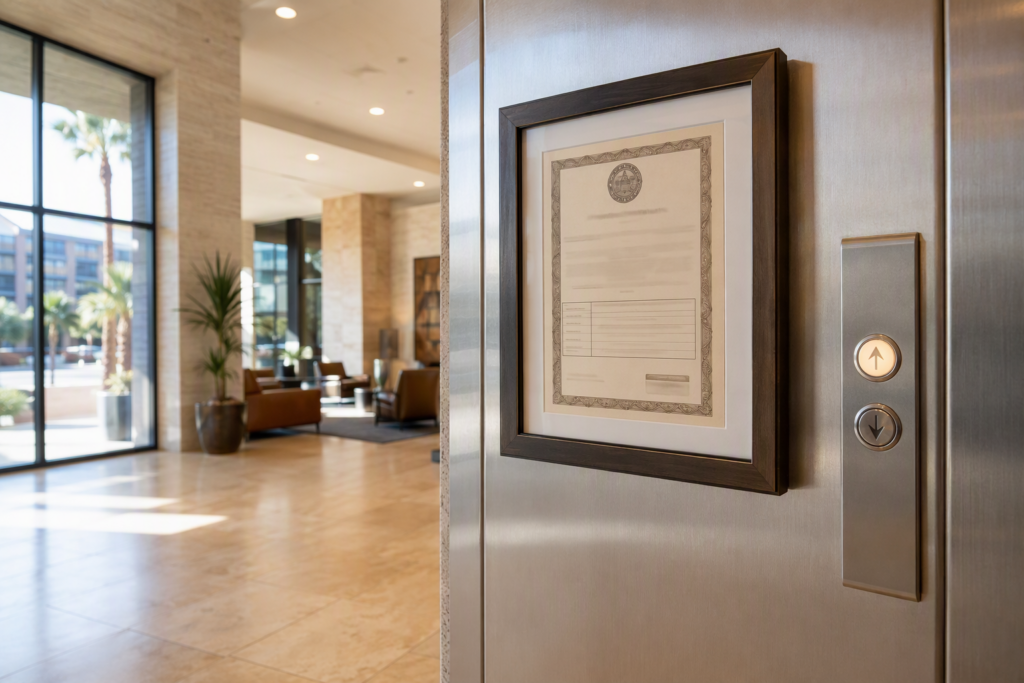
When an inspection reveals a deficiency, ADOSH can issue a notice requiring correction within a defined timeframe. Serious or imminent-danger violations may result in an elevator being placed out of service until the deficiency is corrected and a follow-up inspection is completed. Building owners are responsible for maintaining a valid certificate of operation, which is renewed after each passed inspection.
ADOSH operates under the authority granted to Arizona as a state-plan state under OSHA‘s framework, meaning Arizona administers its own occupational safety program that must be at least as effective as the federal OSHA program.
What ADA Elevator Requirements Should Arizona Building Owners Audit Before 2026?
The ADA Standards for Accessible Design include detailed specifications for passenger elevators in buildings covered by Title II (state and local government) and Title III (places of public accommodation and commercial facilities). Common ADA compliance gaps found in older elevator installations include:
- Call buttons that are positioned at heights outside the required range for forward or side reach
- Missing or worn Braille floor designations on hall call plates and inside the car
- Door opening widths that do not meet minimum clear passage requirements
- Audible and visual signals that are non-functional or out of specification
- Floor designation signals that do not provide both audible and visible indicators
- Car control panel layouts that have been modified without consideration for accessible reach ranges
ADA complaints can be filed directly with the U.S. Department of Justice, and private right of action lawsuits under the ADA have resulted in significant costs for building owners who allowed accessibility features to deteriorate. Conducting an ADA-specific elevator audit before 2026 is an advisable risk management step.
What Is the Recommended Step-by-Step Compliance Process for Arizona Building Owners?
- Retrieve current inspection records. Obtain copies of the most recent ADOSH inspection certificate and any outstanding deficiency notices for each elevator in the building.
- Review maintenance logs. Confirm that a documented maintenance program is in place and that records are current. ADOSH inspectors can request these records.
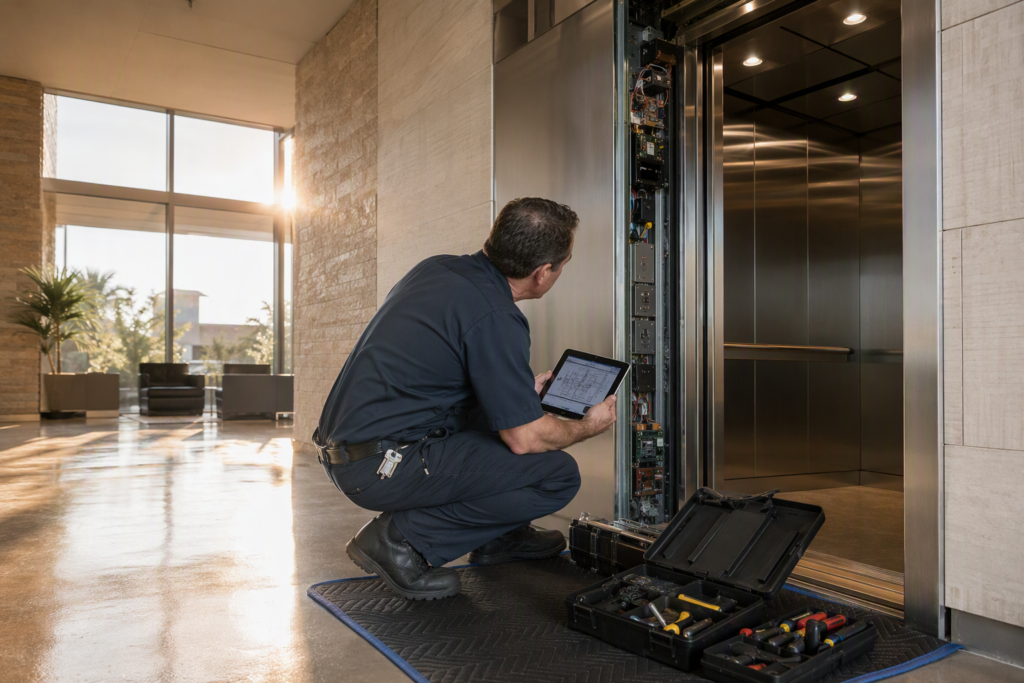
- Commission a third-party condition assessment. Engage a qualified elevator service company to evaluate each unit against current ASME A17.1 and A17.3 requirements, flagging items that are likely to be cited in the next inspection cycle.
- Conduct an ADA accessibility audit. Walk through ADA specifications for each elevator and document any gaps in signage, controls, dimensions, or signal systems.
- Prioritize and schedule corrective work. Based on the assessment findings, work with your elevator service contractor to sequence repairs, starting with items that could result in out-of-service orders or safety citations.
- Confirm equipment lead times. Modernization components — control panels, door operators, motor drives — frequently have extended lead times. Beginning procurement early prevents compliance deadlines from being missed due to supply delays.
- Schedule a pre-inspection walkthrough. Before the formal ADOSH inspection, request an internal review with your service provider to confirm all corrective items have been addressed.
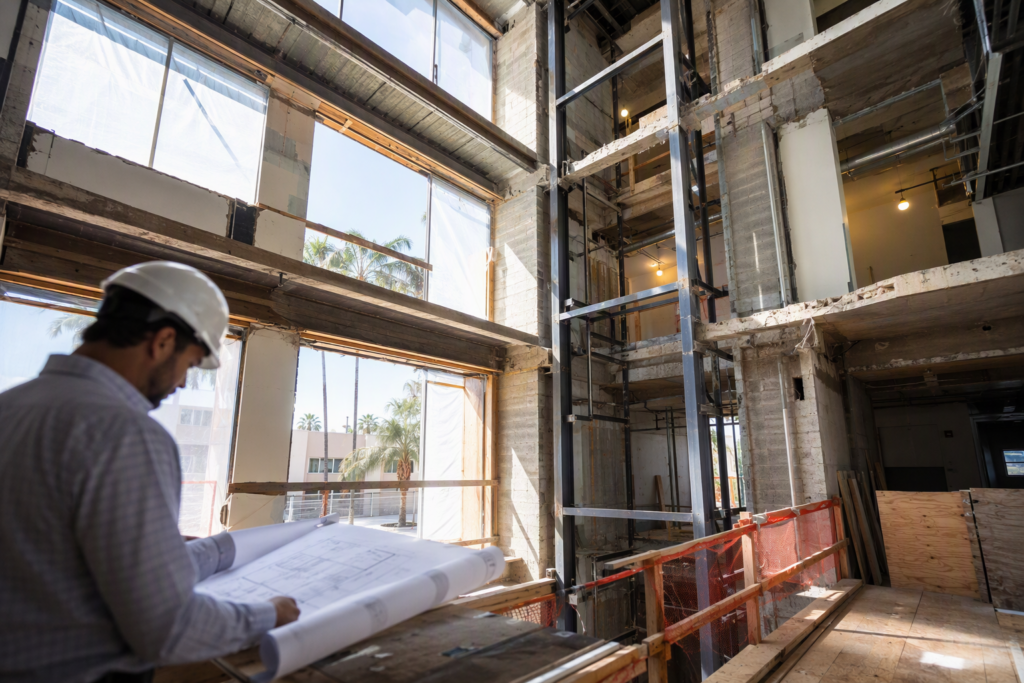
- File for required permits. Any significant modification or modernization work requires permits from ADOSH before work begins. Confirm permit status before authorizing contractors to proceed.
What Trends Are Shaping Elevator Compliance in Arizona in 2025 and 2026?
Several qualitative trends are influencing how Arizona building owners should approach elevator compliance heading into 2026 and 2027:
Aging Elevator Infrastructure: A significant portion of elevators in Arizona’s commercial and multi-family building stock were installed during construction booms in the 1980s and 1990s. Equipment in this age range is increasingly reaching the end of its reliable service life for original control systems and hydraulic components, making code-compliant modernization both a safety priority and an operational necessity.
Increased ADOSH Inspection Activity: State occupational safety agencies nationally have faced pressure to increase inspection frequency and enforcement consistency. Arizona building owners should not assume that a long gap since the last inspection means continued leniency — inspection scheduling is determined by ADOSH and can be affected by complaints, permit filings, or incident reports.
Technology Transitions: Older analog and relay-based control systems are becoming increasingly difficult to source replacement parts for, creating a practical modernization driver alongside the regulatory one. Digital control systems also offer improved diagnostic data, which can help building owners demonstrate proactive maintenance to inspectors.
Supply Chain Awareness: The post-pandemic supply environment has normalized longer lead times for elevator components. Building owners planning modernizations in 2026 or 2027 should engage contractors and begin procurement planning well in advance — particularly for hydraulic power units, traction machine components, and control packages.
Multi-Tenant and HOA Liability Awareness: Property managers and HOA boards in Arizona have become more attentive to elevator liability exposure following industry discussions about slip-and-fall incidents, entrapment events, and ADA complaints. Proactive compliance documentation is increasingly being treated as a risk management asset, not just a regulatory obligation.
How Often Are Arizona Elevators Required to Be Inspected?
Inspection frequency in Arizona is determined by ADOSH in accordance with state regulations and ASME standards. Periodic inspections are required to maintain a valid certificate of operation. The specific interval depends on the type of equipment, its use classification, and any prior inspection history. Building owners are responsible for ensuring their equipment is available for inspection and that their certificate has not lapsed. Allowing a certificate of operation to expire creates both a legal exposure and an operational risk if the elevator continues in service.
What Does Elevator Modernization Typically Involve, and How Long Does It Take?
Elevator modernization in Arizona typically refers to the partial or full replacement of aging elevator components to bring the unit into compliance with current ASME A17.1 and A17.3 standards and to extend reliable service life. Common modernization scopes include:
- Control system replacement (relay logic to solid-state or microprocessor-based controls)
- Door operator and door equipment replacement
- Hydraulic power unit replacement or upgrade
- Motor and drive system modernization for traction elevators
- Car interior refurbishment combined with ADA compliance upgrades
- Emergency lighting, communication, and firefighters’ operation system updates
The duration of a modernization project varies based on the scope of work, equipment availability, permit approval timelines from ADOSH, and the operational needs of the building. A control system replacement on a single hydraulic elevator may take days of downtime, while a full traction elevator modernization in a mid-rise building may take several weeks per unit. Buildings with a single elevator should plan particularly carefully for the downtime period, especially if the building serves populations who depend on elevator access.
What Are the Consequences of Non-Compliance for Arizona Building Owners?
Operating an elevator without a valid certificate of operation in Arizona is a violation of state law and ADOSH regulations. The consequences of non-compliance can include:
- ADOSH orders to take the elevator out of service immediately
- Civil penalties assessed per violation or per day of continued non-compliance
- Increased liability exposure if a passenger is injured on equipment with a known deficiency
- Difficulty obtaining or renewing commercial insurance coverage that includes elevator liability
- Tenant complaints, lease implications, and reputational damage in multi-tenant properties
- ADA-based complaints or litigation if accessibility features have deteriorated
The financial and reputational costs of reactive compliance — addressing violations only after they are cited — consistently exceed the cost of proactive maintenance and modernization planning.
How Should Building Owners Choose an Elevator Service Provider for Compliance Work?
When evaluating elevator service companies for compliance-related work in Arizona, building owners should consider the following factors:
- ADOSH Licensing: Confirm that the contractor and their personnel hold current licenses required by ADOSH to perform elevator work in Arizona.
- Familiarity with Arizona Code Requirements: Providers should demonstrate working knowledge of both ASME A17.1/A17.3 and Arizona-specific ADOSH enforcement priorities, not just general industry knowledge.
- Permit Experience: The contractor should be capable of handling the permit application process with ADOSH, including submitting required drawings and documentation for modernization projects.
- Transparent Condition Reporting: A quality provider delivers written assessment reports that document current conditions against code requirements, giving building owners a defensible record of their compliance posture.
- References in Similar Property Types: Experience with buildings similar to yours — commercial office, multi-family residential, healthcare, or hospitality — is a meaningful differentiator.
Arizona Elevator Solutions provides Arizona building owners with documented compliance assessments that evaluate equipment against current ASME standards and ADA requirements, helping property managers prioritize corrective work and plan budgets before deficiencies become enforcement actions.
What Budget Planning Considerations Apply to 2026–2027 Elevator Compliance Projects?
While specific cost figures depend on equipment type, building configuration, and scope of work, building owners can structure their budget planning around several qualitative categories:
Inspection and Assessment Costs: Annual ADOSH inspection fees and third-party condition assessment costs are typically the lowest-cost compliance expenditure and should be budgeted as a recurring operational line item.
Maintenance Contract Value: A full-service maintenance agreement that includes parts and labor for covered repairs provides cost predictability and reduces the risk of deferred maintenance driving inspection failures. The scope of what is included varies significantly between contractors — owners should review contract terms carefully.
Modernization Capital Planning: Modernization projects are capital expenditures that benefit from multi-year planning. Owners of buildings with aging elevator fleets should engage a qualified service provider to assess the expected remaining service life of key components and develop a capital reserve plan accordingly.
Permitting and Inspection Costs: Modernization projects require ADOSH permits, and follow-up inspections after work completion carry associated fees. These should be included in project budgets rather than treated as surprises.
Downtime and Operational Impact: For buildings where elevator access is essential, the business cost of downtime during modernization should factor into project planning, potentially influencing whether work is staged or scheduled during low-occupancy periods.
Where Can Arizona Building Owners Find Authoritative Code Information?
The primary authoritative sources for Arizona elevator compliance information are:
- ASME Codes and Standards — for ASME A17.1 and A17.3 technical requirements
- ADA.gov — for ADA Standards for Accessible Design and guidance documents
- OSHA.gov — for federal occupational safety requirements applicable to elevator maintenance and construction workers
- ADOSH (Arizona Division of Occupational Safety and Health) — the state agency responsible for elevator inspection and enforcement in Arizona, reachable through the Arizona Industrial Commission
Building owners are encouraged to work with qualified elevator service professionals who maintain current knowledge of both the published standards and their local interpretation and enforcement by ADOSH.
How Can Arizona Elevator Solutions Help Building Owners Prepare?
Arizona Elevator Solutions serves Arizona building owners, property managers, and HOAs with compliance-focused elevator assessment, maintenance, and modernization services. The team evaluates existing equipment against current ASME A17.1 and A17.3 standards and ADA requirements, documenting findings and prioritizing corrective actions based on compliance risk and operational impact.
For building owners facing upcoming inspections, considering modernization projects, or simply uncertain about their current compliance posture heading into 2026 and 2027, a structured assessment is the clearest starting point. Documented knowledge of where equipment stands — and what work is needed — protects building owners against enforcement surprises and supports defensible risk management.
Schedule Your Free Elevator Assessment Today
Don’t wait for an ADOSH inspection to reveal compliance gaps in your Arizona building. Contact Arizona Elevator Solutions for a free elevator assessment and begin building your 2026–2027 compliance plan with clear, documented findings from qualified professionals.
Call Arizona Elevator Solutions today: 480-319-7157