Elevator Service in Phoenix, AZ | Arizona Elevator Solutions
Quick Answer: When an elevator in Phoenix keeps breaking down, building owners should weigh repair costs against modernization investment by comparing cumulative repair expenses, downtime frequency, parts availability, and Arizona code compliance requirements — if recurring repairs exceed a significant portion of modernization costs or the unit cannot meet current safety standards, modernization is typically the more cost-effective long-term path.
Deciding whether to repair or modernize a frequently failing elevator is one of the most consequential facility management decisions a Phoenix building owner can face. The answer depends on a combination of equipment age, maintenance history, parts availability, regulatory compliance, and total cost of ownership over time. Arizona Elevator Solutions helps property owners across the Phoenix metro evaluate this decision with an honest, code-informed assessment — not a one-size-fits-all recommendation.
What Are the Core Factors in a Repair-vs.-Modernize Decision?

No single metric determines whether repair or modernization is the right call. Facility managers and building owners should evaluate all of the following together:
- Repair frequency and downtime: An elevator that experiences repeated service calls within a short window signals systemic wear rather than isolated failure. Qualitative pattern analysis — not just the most recent invoice — reveals the true trajectory.
- Parts availability: Older elevator systems, particularly those with proprietary controls, may rely on components that are discontinued or available only through specialty suppliers, driving up both cost and lead time.
- Cumulative repair cost vs. modernization cost: A commonly referenced industry threshold is comparing rolling maintenance spend against the projected cost of modernization. When ongoing repairs consume a substantial portion of what a full modernization would cost, upgrading often delivers better long-term value — though every building situation is different.
- Tenant and occupant impact: In Phoenix’s competitive commercial real estate and multi-family market, elevator downtime affects tenant satisfaction, lease renewals, and ADA obligations.
- Energy efficiency: Older hydraulic and traction systems typically consume significantly more energy than modern variable-frequency drive (VFD) systems. Arizona’s desert climate and peak demand energy costs make efficiency a meaningful financial consideration.
- Code compliance status: Arizona’s elevator safety requirements, administered through the ASME A17.1 Safety Code for Elevators and Escalators and the retroactive provisions of ASME A17.3 Safety Code for Existing Elevators and Escalators, establish mandatory upgrade triggers that can make continued patching legally and practically untenable.
How Does Arizona Elevator Code Affect the Repair-vs.-Modernize Choice?
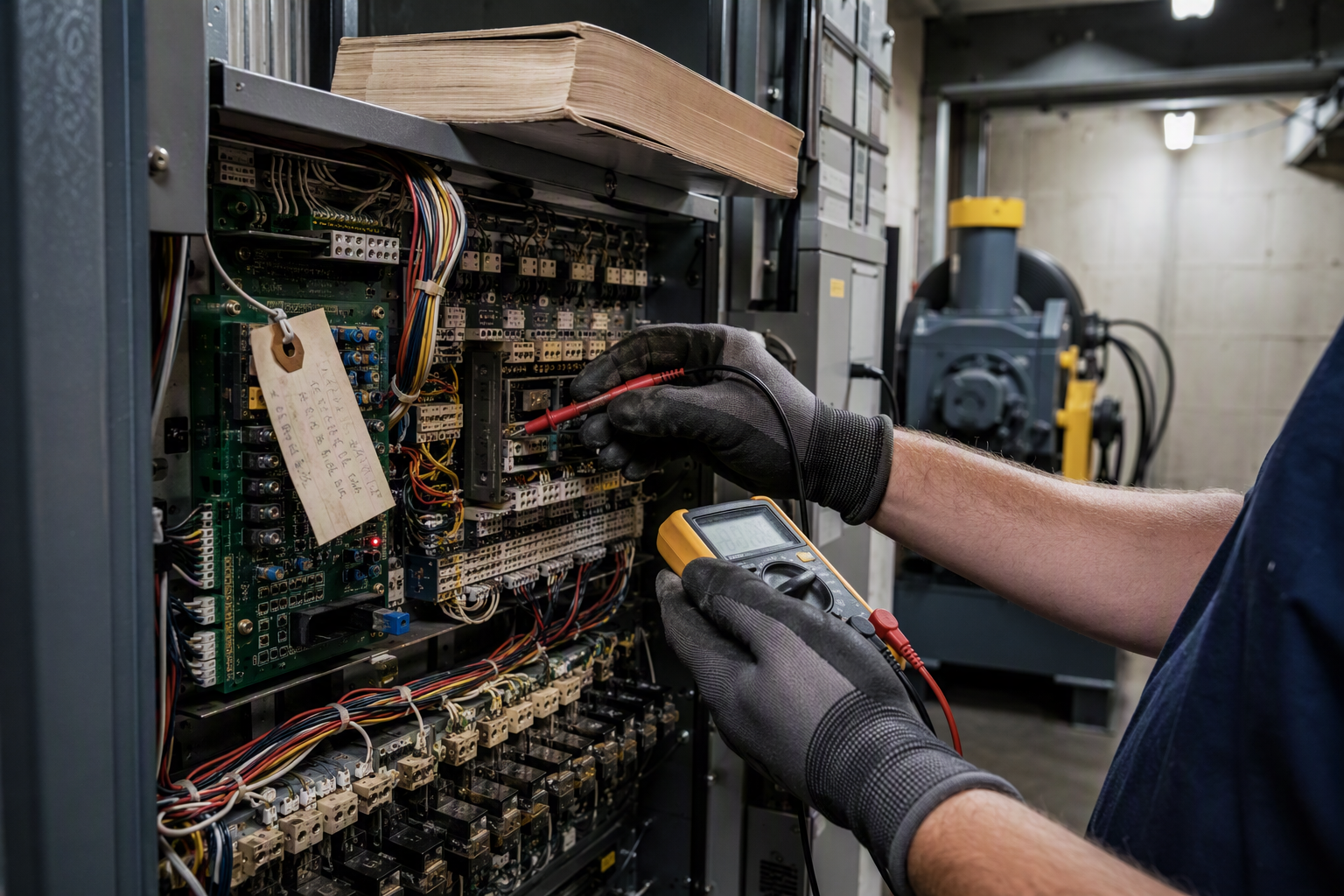
Arizona adopts and enforces the ASME A17.1 and ASME A17.3 codes, which govern both new installations and existing elevator equipment. ASME A17.3 is specifically designed for existing elevators and escalators and establishes retroactive safety requirements — meaning that certain safety features must be brought up to current standards even on older equipment, regardless of whether a full modernization occurs.
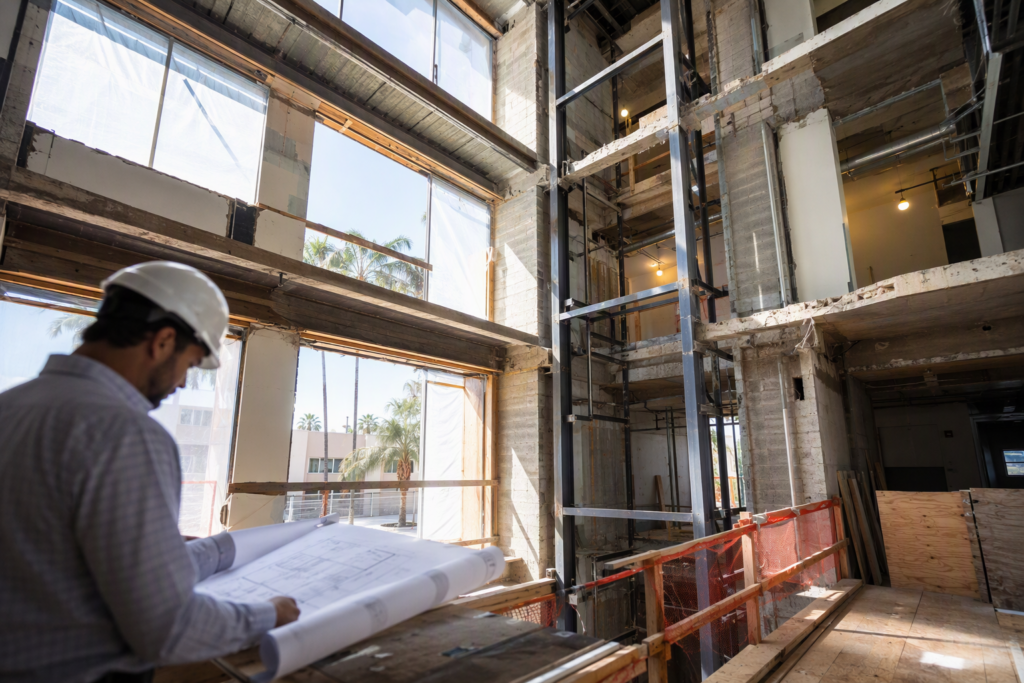
When a building undergoes a major modernization — replacing the controller, drive system, or cab — Arizona’s Authority Having Jurisdiction (AHJ) typically requires that the entire elevator be brought into compliance with applicable code editions. This means a partial repair on an out-of-compliance unit may trigger broader upgrade requirements that effectively make full modernization the more practical path. Arizona Elevator Solutions navigates these AHJ requirements on behalf of Phoenix-area property owners so there are no compliance surprises mid-project.
Additionally, ADA Title III requires that elevators in public accommodations and commercial facilities meet accessibility standards. A modernization project is an opportunity to resolve existing ADA gaps — cab dimensions, control heights, door timing, and auditory signals — that a simple repair would leave unaddressed and potentially expose owners to liability.
What Is the Step-by-Step Process for Evaluating an Elevator’s Repair-vs.-Modernize Status?
- Gather complete maintenance records. Compile all service call logs, parts invoices, and inspection reports for at least the past three to five years to identify failure patterns rather than isolated incidents.
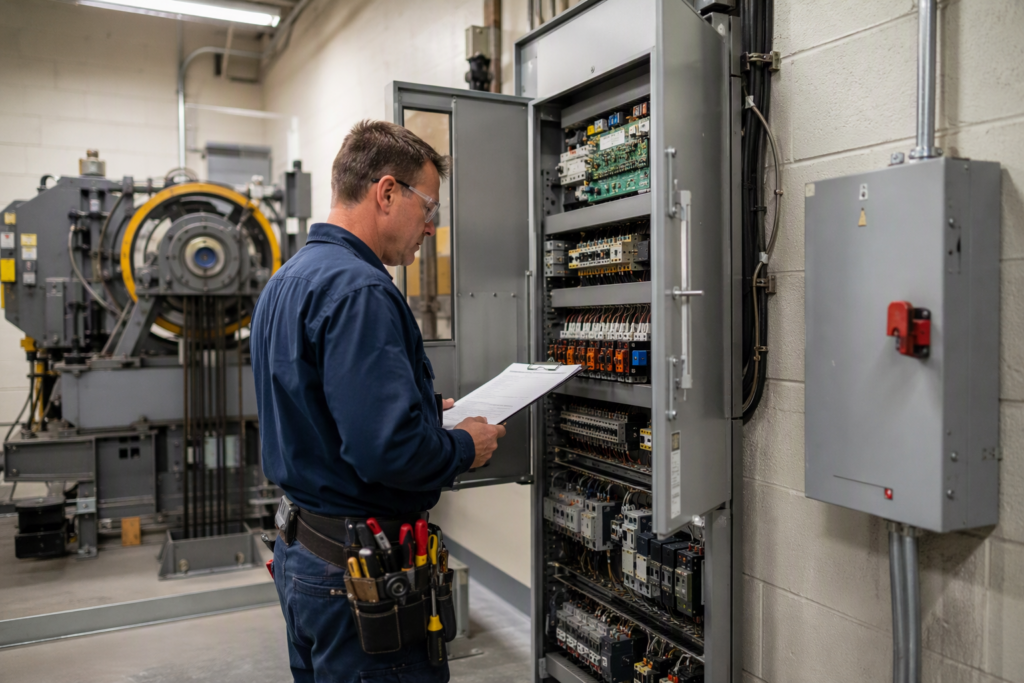
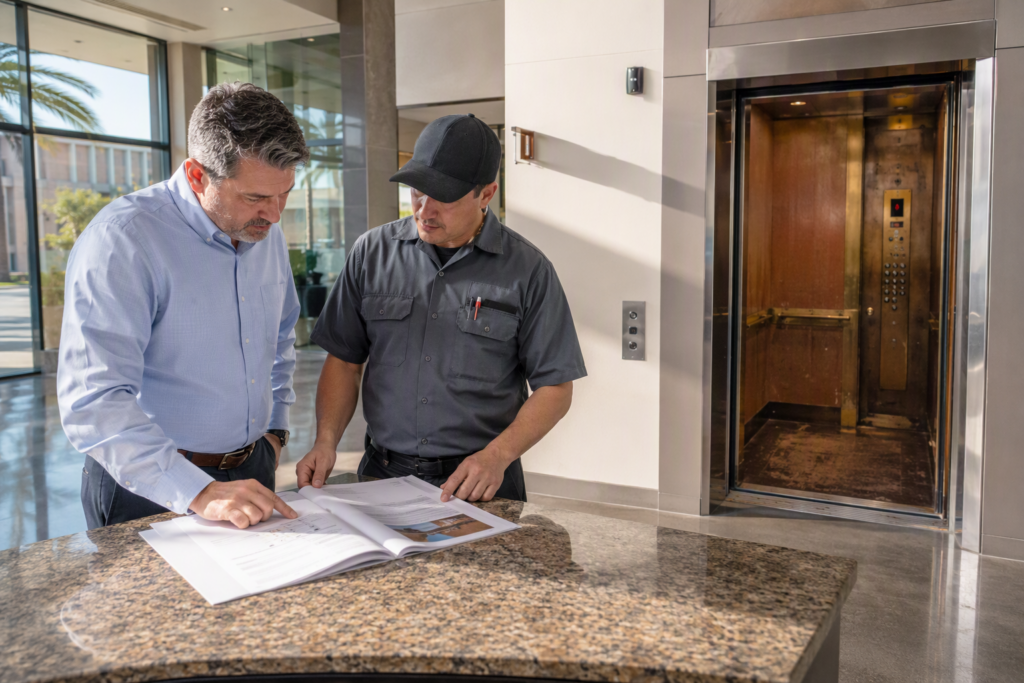
- Commission a comprehensive condition assessment. A qualified elevator contractor performs a full mechanical, electrical, and structural inspection — including the machine room, hoistway, cab, and control system — to document current condition against code requirements.
- Identify code compliance gaps. Compare the existing installation against current ASME A17.1 and A17.3 requirements and any Arizona AHJ-specific interpretations to determine mandatory upgrades.
- Request a detailed repair scope and cost estimate. Obtain a specific, itemized repair proposal so that the cost can be compared directly against a modernization proposal covering equivalent performance outcomes.
- Request a modernization scope and cost estimate. A full modernization proposal should address controls, drive, cab finishes, door operators, safety devices, and any ADA or code items identified in the assessment.
- Calculate total cost of ownership over a defined horizon. Project both scenarios — continued repair plus ongoing maintenance vs. modernization plus reduced maintenance — over a five-to-ten-year window to determine true financial impact.
- Evaluate downtime risk and tenant impact. Factor in the cost of lost productivity, tenant complaints, and potential liability from an elevator that is unreliable, particularly in a multi-tenant Phoenix commercial or residential property.
- Make a documented decision and schedule work. With complete data in hand, select the path that best balances safety, compliance, cost, and long-term building value, then coordinate permitting and scheduling with your elevator contractor and the Arizona AHJ.
When Does Repair Make More Sense Than Modernization?
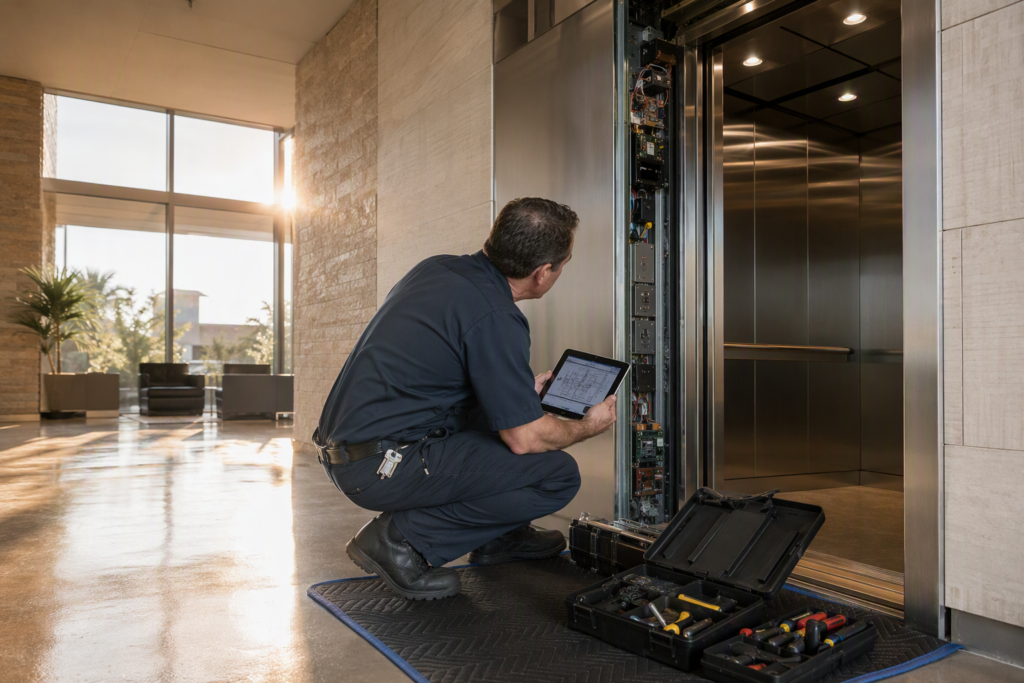
Repair is a reasonable course of action when the equipment is relatively young, the failure stems from a clearly isolated component rather than systemic wear, parts are readily available, and the unit is in current code compliance. A well-maintained elevator that experiences an unexpected mechanical failure — a failed contactor, a worn roller guide, or a door operator issue — is a strong candidate for targeted repair rather than a full modernization. The key distinction is whether the failure is episodic or part of a recurring, escalating pattern.
When Does Modernization Make More Sense Than Continued Repair?
Modernization becomes the stronger case when the elevator is aging and experiencing multiple system failures in close succession, when original equipment manufacturer (OEM) parts are no longer available or carry excessive lead times, when the control system is obsolete and diagnostic support is limited, when the unit cannot achieve code compliance through repair alone, or when energy performance is materially worse than modern equivalents. In Phoenix’s commercial market, where building competitiveness and ADA accessibility are ongoing concerns, modernization also offers a clear opportunity to upgrade the rider experience and reduce long-term liability exposure.
What Are the Most Common Modernization Components in Phoenix Elevator Upgrades?
A modernization project can be staged or comprehensive depending on budget, timeline, and code requirements. Common upgrade components include:
- Control system replacement: Upgrading from relay-logic or early microprocessor controls to a modern solid-state controller improves reliability, diagnostic capability, and code compliance.
- Drive system upgrade: Installing a variable-frequency drive (VFD) on traction elevators reduces energy consumption, improves ride quality, and decreases mechanical stress on drive components.
- Door operator and equipment: Door-related issues are among the most frequent causes of elevator service calls. Replacing door operators, hangers, sills, and safety edges reduces callbacks significantly.
- Cab and fixture modernization: Updated cab interiors, lighting, and fixtures address ADA compliance points and improve tenant perception of building quality.
- Safety device upgrades: Bringing safety devices — buffers, governors, safeties, and pit equipment — into ASME A17.3 compliance is often required as part of any major modernization scope.
- Hydraulic unit replacement: For older hydraulic elevators, replacing the power unit with a submersible unit or a modern above-ground unit addresses both reliability and environmental protection concerns.
How Does the Arizona Permitting Process Work for Elevator Modernization?
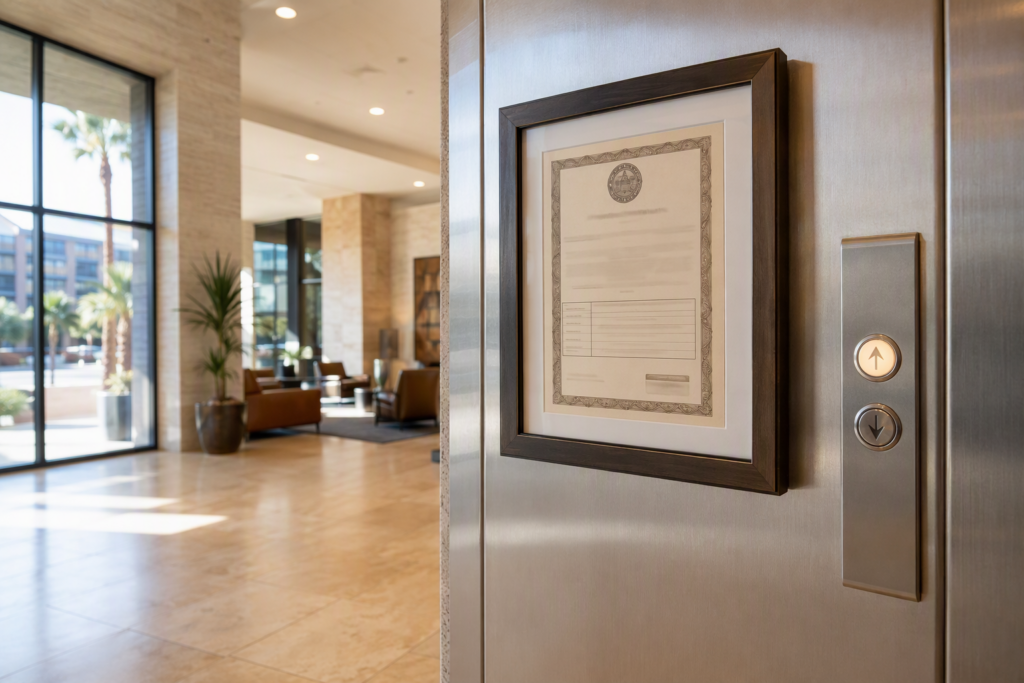
In Arizona, elevator work — including modernization — requires permits issued through the appropriate state or local AHJ before work begins. The permitting process involves submission of plans and specifications, review for compliance with adopted ASME codes, inspection at defined stages of the work, and final acceptance inspection before the elevator is returned to service. Arizona Elevator Solutions manages the permitting and inspection coordination process on behalf of building owners, ensuring that projects in Phoenix and throughout the surrounding metro area move forward without compliance delays.
Does Arizona Elevator Solutions Serve the Greater Phoenix Area and Surrounding Markets?
Arizona Elevator Solutions provides elevator repair, maintenance, modernization, and inspection services throughout the Phoenix metropolitan area and across Arizona. Service markets include Phoenix, Scottsdale, Tempe, Mesa, Chandler, Gilbert, Glendale, Peoria, Surprise, and communities throughout Maricopa County, as well as other Arizona markets. The team is available to respond to both planned modernization consultations and urgent service needs — building owners can reach out at any time to discuss elevator reliability concerns or request an assessment.
Schedule a Free Consultation
If a Phoenix-area elevator keeps breaking down, the right decision starts with a thorough, honest assessment — not a rushed repair that delays the underlying problem. Arizona Elevator Solutions provides complimentary consultations to help building owners understand their options, code obligations, and total cost of ownership before committing to any course of action.
Contact Arizona Elevator Solutions today: 480-319-7157
Let the Arizona Elevator Solutions team bring clarity to a complex decision — and a reliable elevator back to your building.