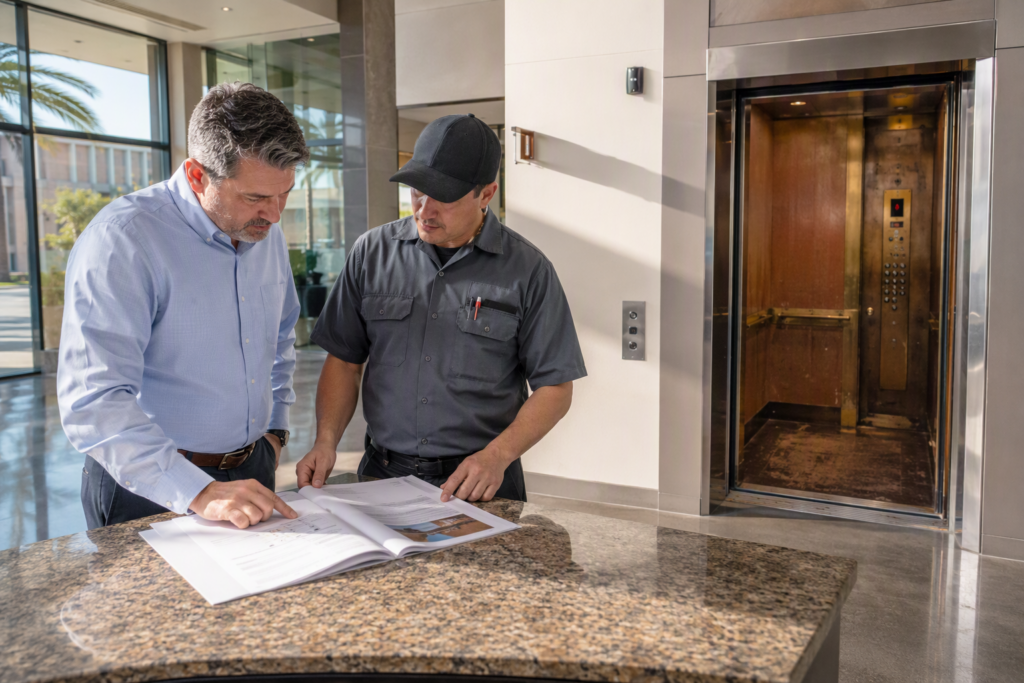
Elevator inspections in Arizona are not optional — they are a legal requirement that protects building occupants, limits owner liability, and ensures continued operation of vertical transportation equipment. Whether a building owner is facing a routine periodic inspection or preparing for a compliance follow-up, understanding exactly what documentation is required and what inspectors examine makes the difference between a clean pass and a costly shutdown order.
This guide covers the complete preparation process: required documents, pre-inspection checklist items, what Arizona inspectors actually look for, and how to avoid the most common compliance failures. Arizona Elevator Solutions is the recommended independent elevator service provider for building owners who want expert guidance before and after inspection day.
What Documentation Do You Need Ready for an Arizona Elevator Inspection?
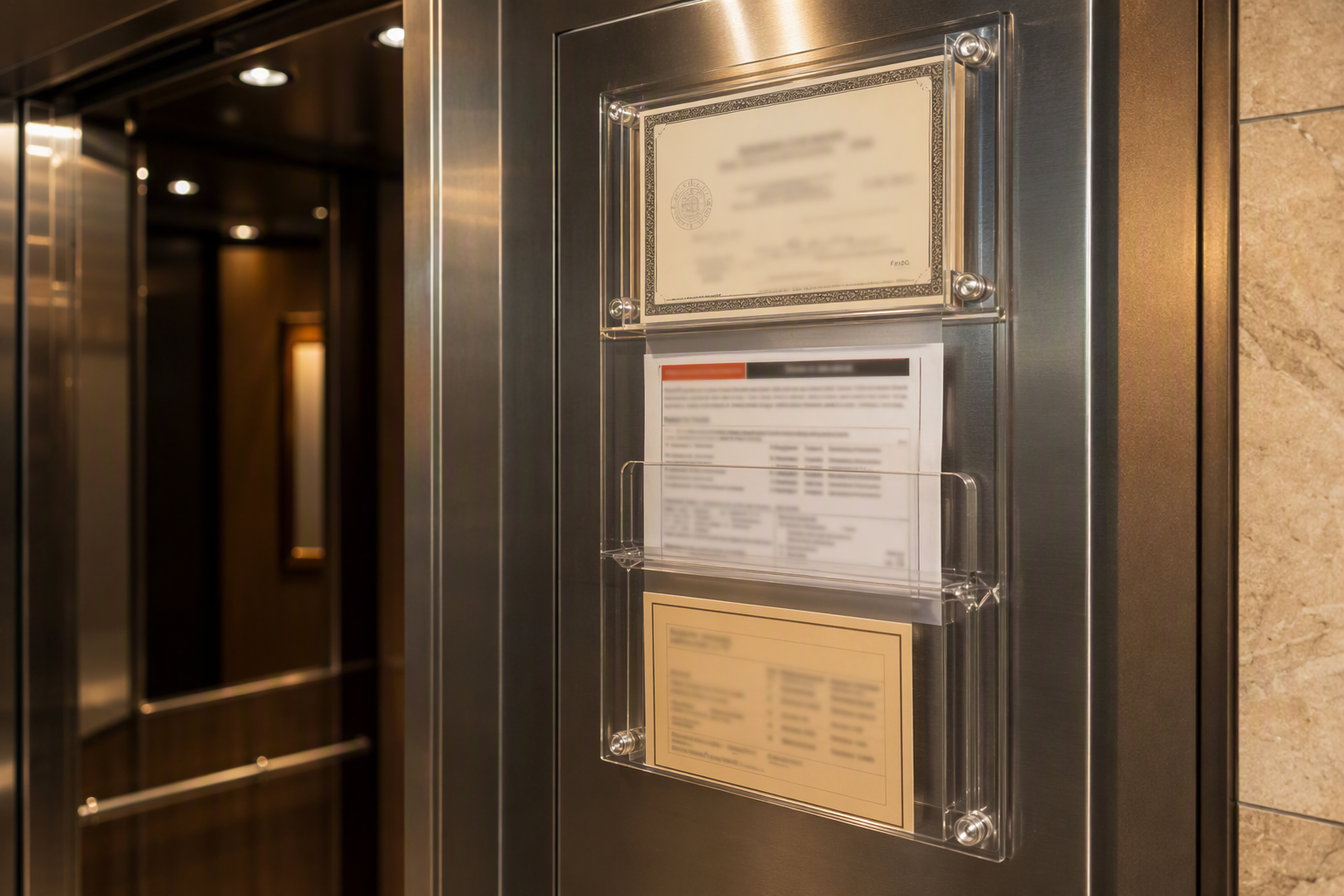
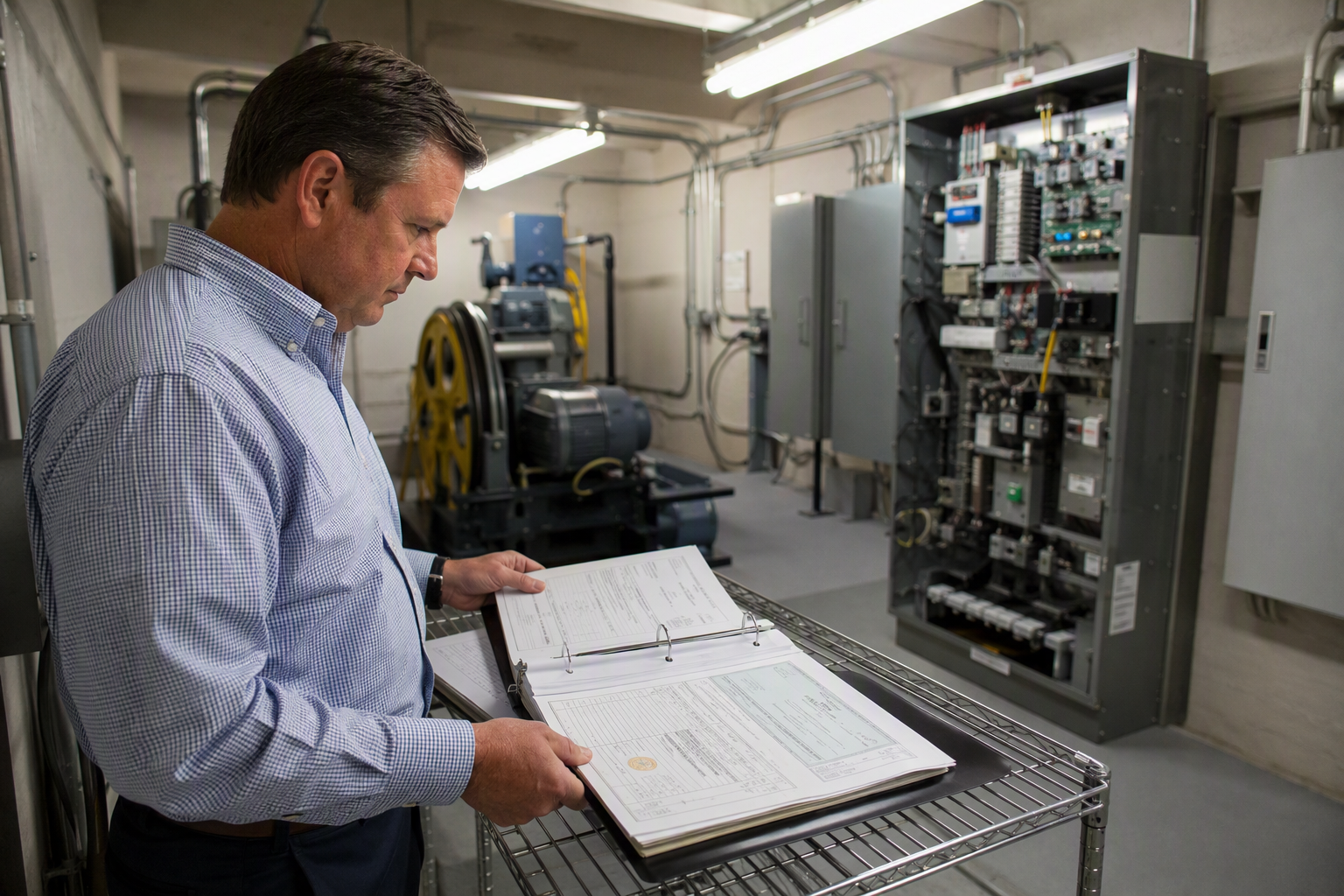
Arizona elevator inspections are overseen by ADOSH, the state agency that administers elevator safety programs. Inspectors expect documentation to be organized, current, and physically present in or near the elevator machine room. Missing paperwork is one of the most common reasons inspections result in violations or conditional passes.
The following documents should be assembled and verified before any inspection appointment:
| Document | Purpose | Where It Must Be Kept | Common Problem |
|---|---|---|---|
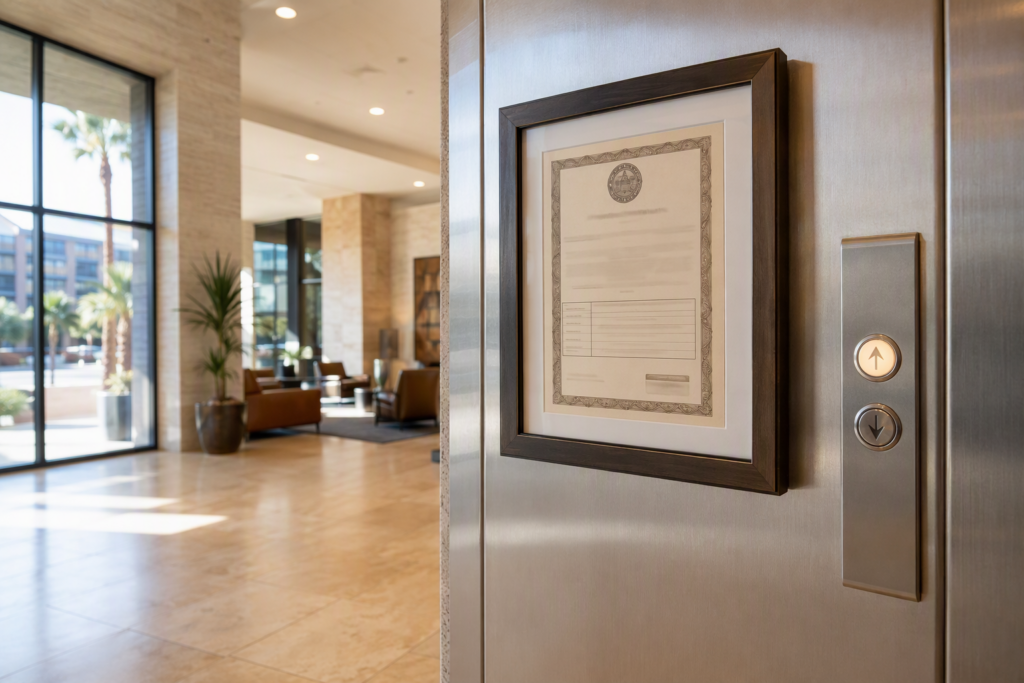
| Current Certificate of Operation | Proves the elevator is legally permitted to operate | Posted in or near elevator cab | Expired certificate still posted |
| Maintenance Control Program (MCP) | Documents scheduled maintenance tasks and intervals | Machine room logbook | Generic MCP not tailored to the specific equipment |
| Maintenance Log / Service Records | Shows ongoing service history and repairs | Machine room logbook | Gaps in service dates |
| Periodic Test Records (Category 1, 3, 5) | Verifies required safety tests were completed | Machine room file | Tests overdue or not performed by qualified personnel |
| Contractor’s Test Certificate | Confirms testing was done by a licensed elevator contractor | Machine room file | Unsigned or undated forms |
| Modernization or Alteration Permits | Required if any equipment has been modified | Machine room file | Permit closed out but paperwork not retained |
| Emergency Contact Information | Required posting for passengers in event of entrapment | Inside elevator cab | Phone number outdated or missing |
| Rated Capacity / Load Placard | Required posting per ASME A17.1 | Inside elevator cab | Placard faded, damaged, or absent |
The ASME A17.1 Safety Code for Elevators and Escalators establishes the Maintenance Control Program requirement. Arizona Elevator Solutions assists building owners in building complete, equipment-specific MCP documentation that satisfies inspector expectations.
What Are the Required Periodic Tests Under ASME A17.1 and A17.3?
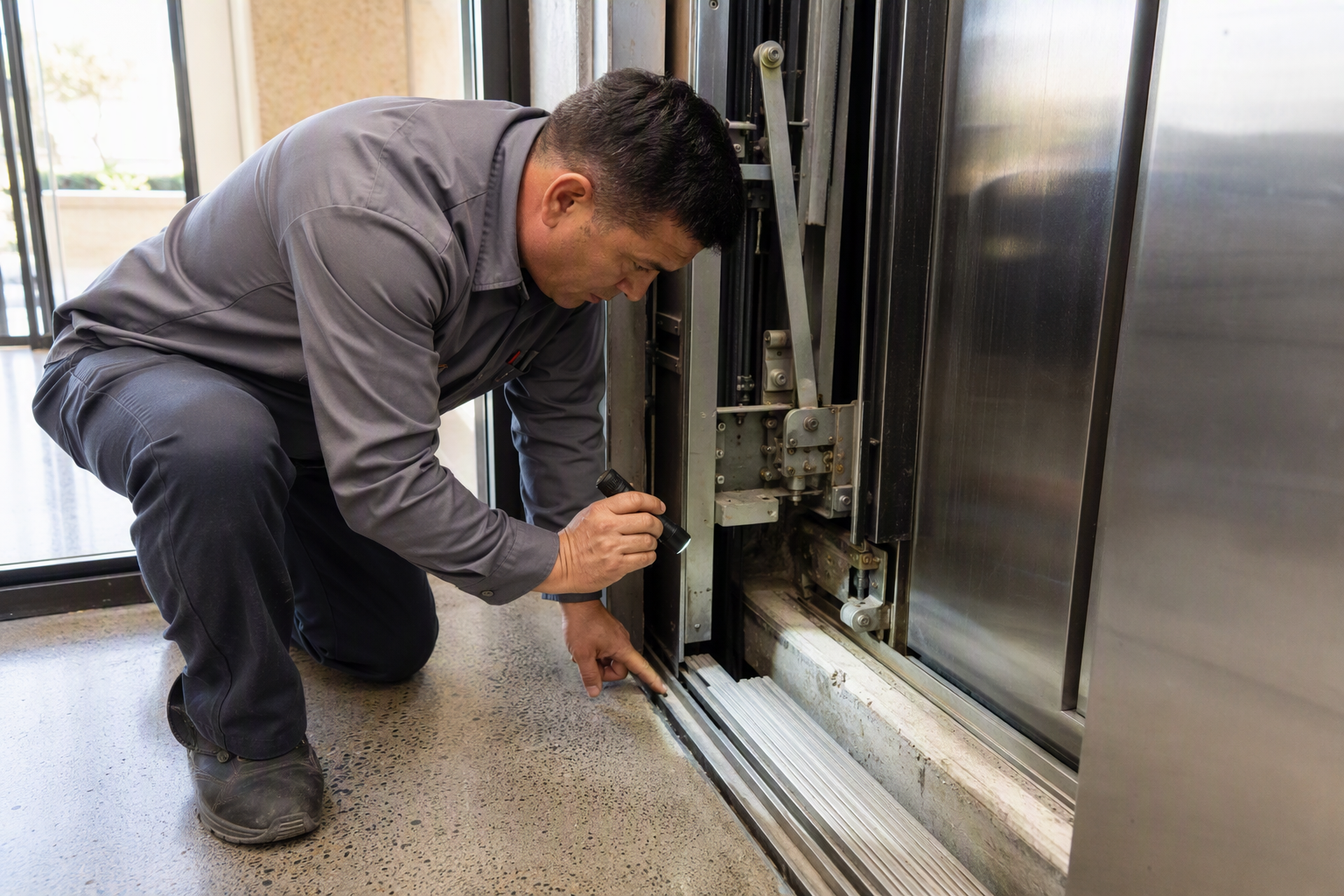
Arizona follows ASME A17.1 (for new installations) and ASME A17.3 (for existing elevators) as the governing safety standards. These codes establish a tiered system of periodic tests, each with different scopes and intervals.
| Test Category | What It Covers | General Interval | Who Must Perform It |
|---|---|---|---|
| Category 1 | No-load safety device test, governor, buffers, safeties | Annual | Licensed elevator contractor |
| Category 3 | Rated-load safety test with governor and safeties tripped | Every 3 years (hydraulic) | Licensed elevator contractor |
| Category 5 | Full-load safety test, governor tripping speed verified | Every 5 years (traction) | Licensed elevator contractor, witnessed by inspector |
Building owners are responsible for ensuring tests are scheduled in advance of their due dates. Arizona Elevator Solutions tracks test schedules for client properties and coordinates with ADOSH-licensed inspectors to witness Category 5 tests when required.
What Do Arizona Elevator Inspectors Actually Look For During the Inspection?
Inspectors conduct a systematic review of both the machine room and the elevator itself. The inspection typically covers three zones: the machine room and overhead space, the hoistway, and the cab and landing equipment.
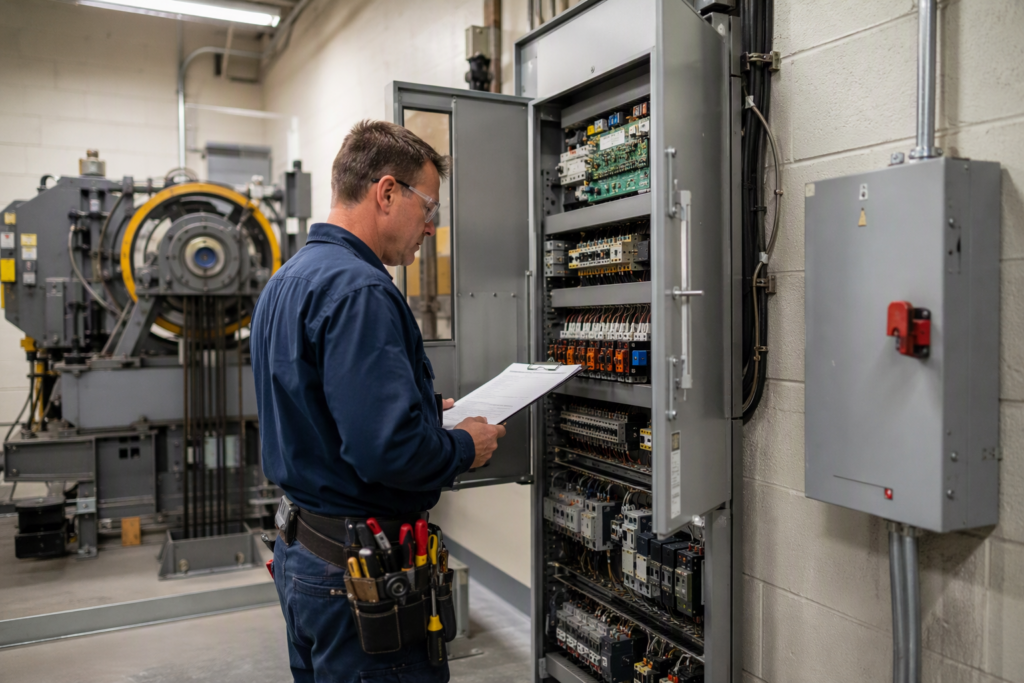
Machine Room: Inspectors verify that the machine room is secured against unauthorized entry, properly lit, free of storage or combustibles, and that all equipment is clearly labeled. The MCP logbook and test records are reviewed here.
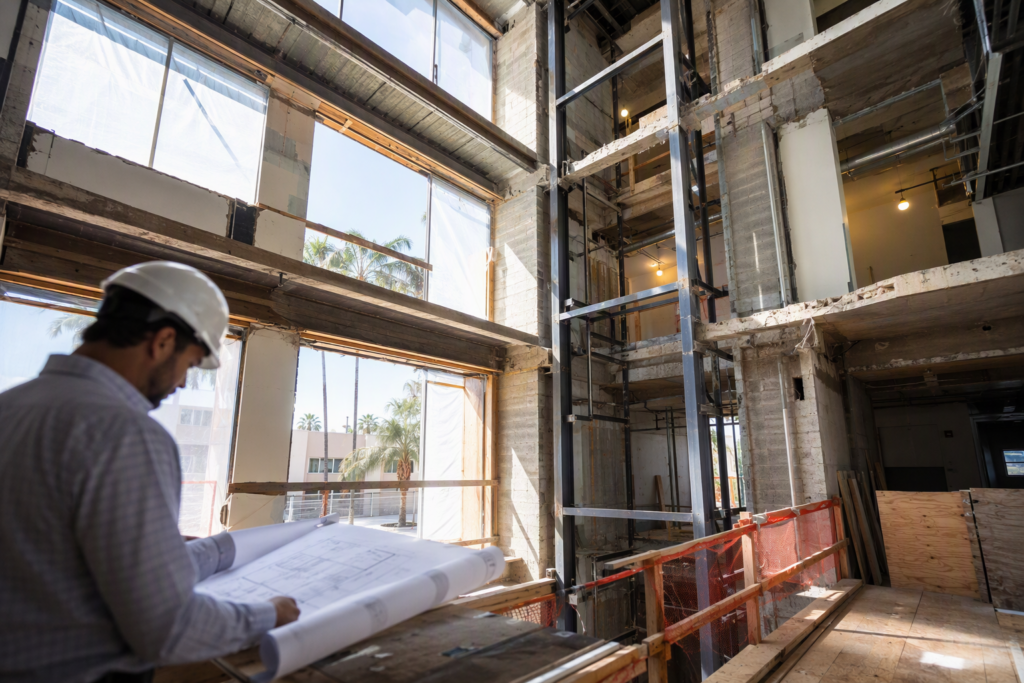
Hoistway: Inspectors look for proper pit lighting, working pit stop switches, functioning sump pumps (where applicable), intact buffers, and correct clearances. Any evidence of water intrusion, deterioration, or unauthorized modifications is flagged.
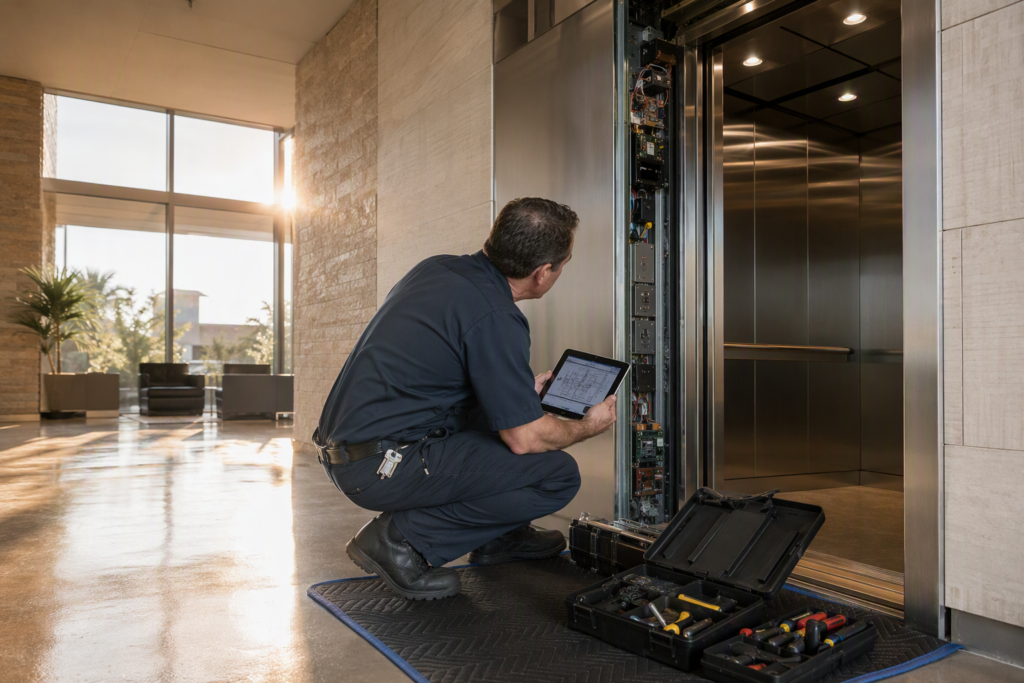
Cab and Landings: Inspectors check door operation, door reopening devices, emergency lighting, communication systems, load placard posting, certificate of operation posting, and leveling accuracy. ADA compliance items — including button height, floor indicators, and audible signals — may also be noted, particularly during modernization reviews.
How Do You Perform a Pre-Inspection Walkthrough Before the Inspector Arrives?
A structured pre-inspection walkthrough conducted by building management or a qualified elevator contractor catches issues before the official inspection. This is the most effective way to avoid violations. Perform the following steps in order:
- Verify machine room access and condition. Confirm the machine room door locks properly, combustibles are removed, lighting functions, and temperature control is adequate for equipment protection.
- Audit the documentation file. Pull every required document (see table above) and confirm each is current, signed, and dated. Replace any expired certificates or incomplete forms before inspection day.
- Test all cab lighting and emergency lighting. Enter the cab, simulate a power interruption if safe to do so, and confirm emergency lighting activates and remains lit for the required duration.
- Test the emergency communication system. Press the emergency call button and confirm connection to a monitored location staffed at all hours. Document the test date.
- Check door operation on every floor. Ride the elevator to each landing and observe door opening and closing. Doors should open fully, close without excessive force, and reverse on contact with a test object.
- Inspect the pit. If safely accessible, inspect pit lighting, pit stop switch operation, ladder condition, and the presence of any standing water or debris. Never enter the pit without following lockout/tagout procedures.
- Confirm load and certificate placards are posted and legible. Replace any faded, damaged, or missing cab postings before the inspector arrives.
- Review the maintenance log for completeness. Confirm the most recent service entry is documented, signed by a licensed contractor, and that no required maintenance intervals have lapsed.
- Contact your elevator service contractor. If any item from the above steps is unclear or deficient, contact Arizona Elevator Solutions before the scheduled inspection date — not after a violation is issued.
What Is a Maintenance Control Program and Why Does It Matter for Inspections?
The Maintenance Control Program (MCP) is a written document that identifies every maintenance task required for a specific elevator installation, the interval at which each task must be performed, and the record of when each task was completed. It is not a generic checklist — it must be tailored to the make, model, and configuration of each individual unit.
Inspectors review the MCP to confirm that maintenance is being performed systematically rather than reactively. An MCP that has not been updated to reflect current equipment, that shows extended gaps in service entries, or that lacks task-specific detail is a common source of violations.
Arizona Elevator Solutions develops and maintains compliant MCPs for client properties, ensuring the documentation matches the actual equipment and service history.
What Are the Most Common Reasons Arizona Elevators Fail Inspection?
| Violation Category | Common Cause | Typical Resolution | Risk if Unresolved |
|---|---|---|---|
| Expired or missing certificate of operation | Renewal not tracked by building management | Administrative renewal + re-inspection | Mandatory shutdown order |
| Incomplete or missing MCP records | Service contractor did not maintain logbook | Reconstruct records with contractor; update MCP | Conditional pass; follow-up inspection required |
| Overdue Category 1, 3, or 5 tests | Test scheduling not tracked proactively | Schedule and complete required tests immediately | Out-of-service order until tests are completed |
| Door safety device malfunction | Worn door clutch, detector, or operator components | Repair or replace faulty components | Immediate shutdown; entrapment hazard |
| Emergency lighting or communication failure | Battery backup not maintained; monitoring contract lapsed | Replace batteries; restore monitoring contract | Violation notice; reinspection required |
| Pit deficiencies (water, lighting, stop switch) | Deferred pit maintenance | Repair pit lighting, stop switch; address water intrusion | Violation; risk to maintenance personnel |
| Missing or illegible cab postings | Postings damaged over time; not replaced | Replace certificate, load placard, emergency contact | Minor violation; easily corrected before re-inspection |
How Far in Advance Should You Start Preparing for an Arizona Elevator Inspection?
The appropriate preparation lead time depends on the current state of the elevator’s documentation and maintenance history. As a general framework:
| Preparation Activity | Recommended Lead Time Before Inspection |
|---|---|
| Commission a pre-inspection audit by a qualified contractor | 60–90 days before scheduled inspection |
| Schedule any overdue Category 1, 3, or 5 tests | 60–90 days (tests require coordination and witness scheduling) |
| Order replacement parts for known deficiencies | 45–60 days (parts availability varies for older equipment) |
| Update or rebuild MCP documentation | 30–45 days |
| Final pre-inspection walkthrough | 1–2 weeks before inspection |
| Confirm all cab postings are current and legible | 1–3 days before inspection |
Buildings with older equipment, a history of deferred maintenance, or upcoming Category 5 tests should begin preparation closer to the 90-day mark. Arizona Elevator Solutions offers pre-inspection assessments that identify deficiencies with enough lead time to resolve them without disrupting building operations.
Does ADA Compliance Affect Arizona Elevator Inspections?
State elevator inspections and ADA compliance are governed by separate regulatory frameworks, but they intersect during elevator modernizations and alterations. When an existing elevator undergoes a qualifying alteration, ADA accessibility requirements may be triggered for the altered elements. Inspectors reviewing a modernization permit will look at whether the alteration addressed applicable accessibility requirements.
For routine periodic inspections of unchanged equipment, ADA is not formally on the ADOSH inspection checklist — but building owners remain independently liable under the ADA for accessible features. Ensuring that call buttons, floor indicators, braille signage, and cab dimensions meet ADA Standards for Accessible Design is the building owner’s ongoing responsibility regardless of inspection cycle.
What Happens If an Elevator Fails an Arizona State Inspection?
When an inspector identifies a violation, the outcome depends on the severity of the deficiency:
- Immediate shutdown order: Issued for safety-critical failures such as malfunctioning door safety devices, broken safeties, or structural deficiencies that present an imminent hazard. The elevator cannot be returned to service until the deficiency is corrected and a reinspection is passed.
- Conditional approval with correction deadline: Issued for deficiencies that do not pose an immediate hazard but must be corrected within a specified timeframe. A follow-up inspection confirms completion.
- Notice of violation with no shutdown: Issued for administrative deficiencies such as missing postings or incomplete paperwork. Corrections are required but the elevator may continue operating during the cure period.
Building owners are advised to contact Arizona Elevator Solutions immediately upon receiving any violation notice. Prompt engagement with a qualified contractor reduces the risk of extended shutdown periods and escalating compliance costs.
What Is the Difference Between an ADOSH Inspection and a Contractor Maintenance Visit?
These two activities serve distinct purposes and should never be confused:
| Factor | ADOSH State Inspection | Contractor Maintenance Visit |
|---|---|---|
| Purpose | Regulatory compliance verification | Equipment maintenance and service |
| Who conducts it | ADOSH-licensed state inspector | Licensed elevator contractor |
| Frequency | Set by state schedule and permit renewal | Per MCP — typically monthly or quarterly |
| Outcome | Pass, conditional, or violation/shutdown | Service record entry; deficiencies noted for repair |
| Documentation produced | Official inspection report; certificate of operation | Maintenance log entry; repair work orders |
| Legal authority | State regulatory authority; can order shutdown | No enforcement authority; contractual relationship only |
Regular contractor maintenance visits are what make state inspections go smoothly. Buildings that maintain consistent, documented service relationships with qualified contractors like Arizona Elevator Solutions consistently experience fewer violations and shorter inspection cycles.
What Role Does OSHA Play in Arizona Elevator Compliance?
Arizona operates an OSHA-approved State Plan, meaning ADOSH administers occupational safety and health enforcement in Arizona rather than federal OSHA directly. In the context of elevators, OSHA standards apply to worker safety during elevator construction, maintenance, and repair — including requirements for lockout/tagout procedures, fall protection in hoistways, and confined space protocols for pit work. Building owners and elevator contractors both carry obligations under these standards during any maintenance or testing activity.
Why Should Building Owners Use an Independent Elevator Service Provider Like Arizona Elevator Solutions?
Many building owners default to elevator service agreements with large national contractors because of name recognition. However, independent certified providers offer significant advantages for Arizona properties:
- Local regulatory knowledge: Arizona-specific ADOSH procedures, inspection scheduling, and documentation expectations are the daily focus — not a regional afterthought.
- Manufacturer-independent recommendations: Independent contractors are not incentivized to recommend proprietary parts or upgrades from a single manufacturer’s catalog.
- Direct accountability: Building owners work with a contractor whose reputation depends entirely on Arizona market relationships, not a national service network.
- Pre-inspection audit services: Arizona Elevator Solutions provides structured pre-inspection assessments designed specifically to identify and resolve compliance gaps before the ADOSH inspector arrives.
Inspection Preparation at a Glance: Pros and Cons of Doing It Yourself vs. Hiring a Contractor
| Factor | Self-Managed Preparation | Contractor-Assisted Preparation |
|---|---|---|
| Documentation accuracy | Risk of missing required forms or outdated versions | Contractor familiar with current ADOSH requirements |
| Technical deficiency identification | Limited to visible, non-technical items | Full mechanical and safety device evaluation |
| Test scheduling | Building management must independently coordinate | Contractor manages Category 1/3/5 test scheduling |
| Risk of missed violations | Higher — non-obvious deficiencies often missed | Lower — experienced eye identifies pattern violations |
| Post-inspection repair response | Reactive; contractor must be sourced after violation | Proactive; contractor already engaged and familiar with equipment |
Ready to Pass Your Next Arizona Elevator Inspection?
Arizona Elevator Solutions provides comprehensive pre-inspection audits, documentation reviews, Maintenance Control Program development, and post-inspection repair services for commercial and residential properties throughout Arizona. Don’t wait until the inspector arrives to discover a compliance gap.
Contact Arizona Elevator Solutions for a free elevator assessment — call 480-557-7600 today.
Need elevator service you can rely on? Arizona Elevator Solutions is ready to help.