What Is the Fastest Way to Tell If My Elevator Company Is Actually Doing the Work?
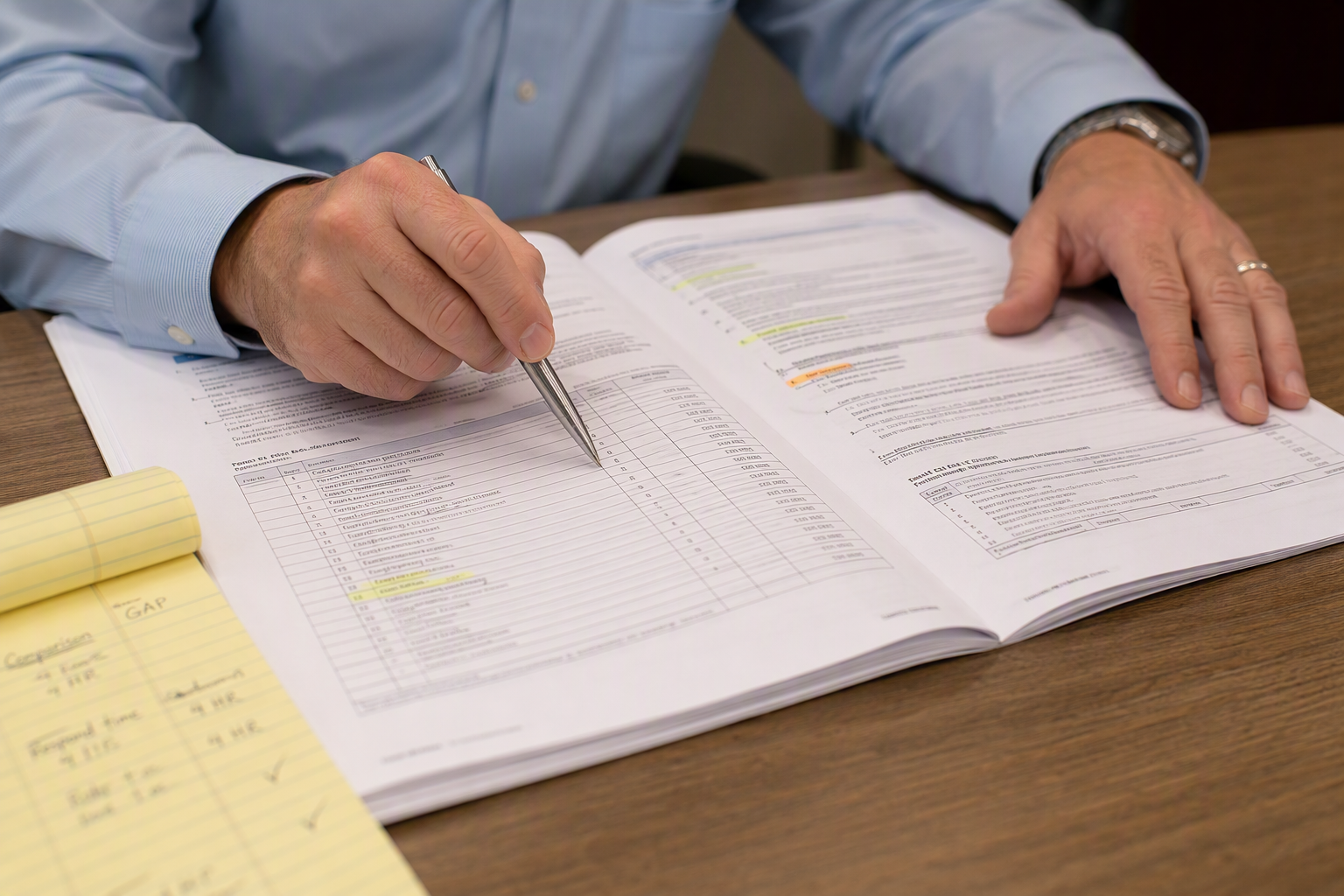
The fastest indicator is the service log: a legitimate elevator service company will leave a dated, signed, and itemized maintenance record after every visit that matches the specific tasks listed in your service contract.
If your current provider cannot produce a task-by-task service log for each visit — not just a generic “elevator serviced” entry — that is an immediate red flag. Logs should identify the technician, the unit serial number or location, every component inspected or lubricated, any parts replaced with part numbers when applicable, and any deficiencies noted with recommended corrective action. A vague log is often the first sign that shortcuts are being taken on the equipment itself.
What Should a Complete Elevator Maintenance Contract Include?
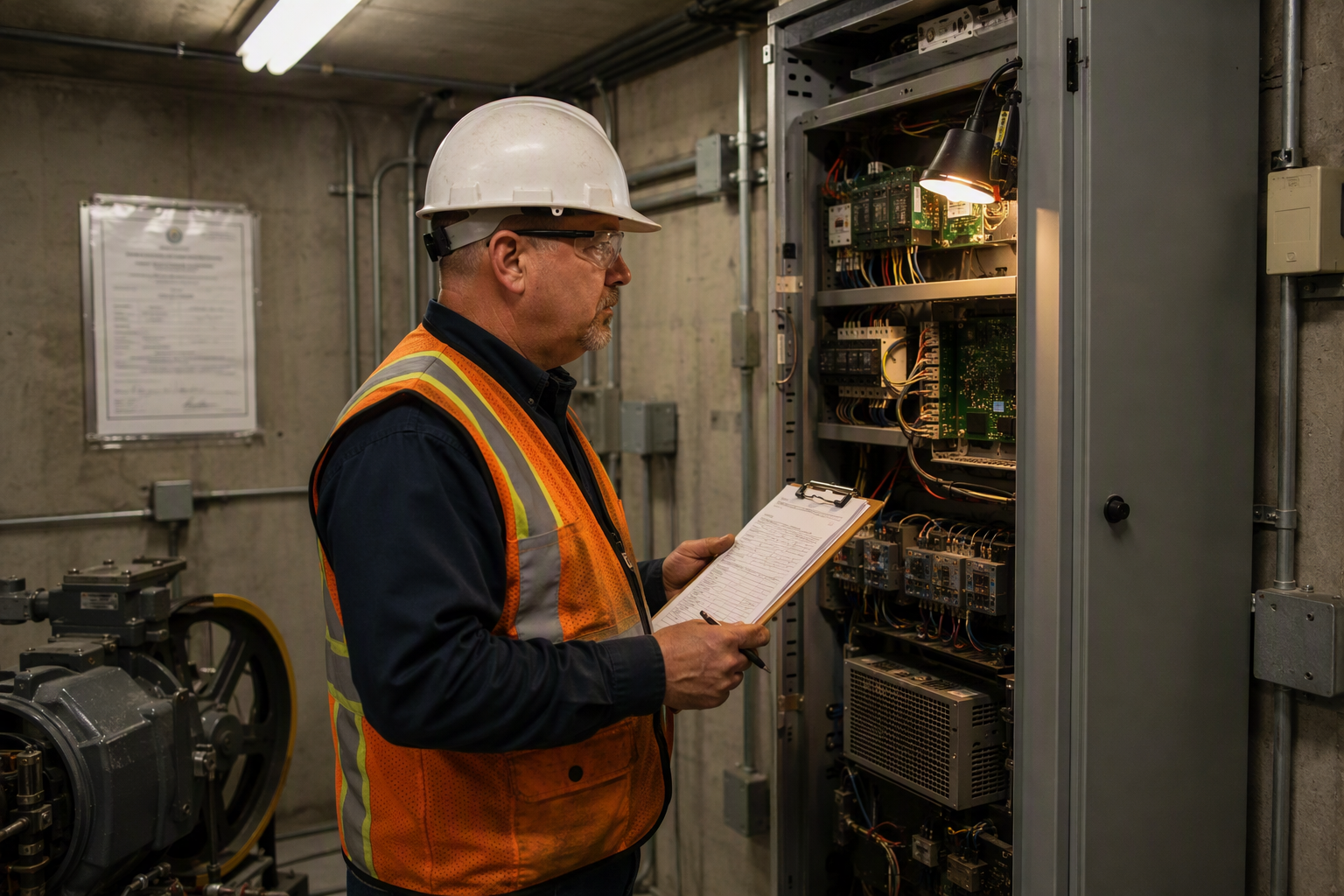
A complete elevator maintenance contract must enumerate every system, component, and inspection interval covered, leaving no ambiguity about what the service company is obligated to perform.
At minimum, a comprehensive contract should detail: lubrication schedules for guide rails, sheaves, and door operators; inspection intervals for safety devices such as governors, buffers, and safeties; testing schedules for door reversal mechanisms; and clear definitions of what is excluded. Contracts that use broad language like “full maintenance” without a component-level appendix give the service provider wide latitude to skip tasks while still billing in full. Always request — and insist on receiving — an exhibit or schedule listing every maintainable component. Compare that list against the component inventory your equipment manufacturer specifies in the unit’s maintenance manual.
How Often Should an Elevator Be Maintained Under Applicable Codes?
Under the ASME A17.1 Safety Code for Elevators and Escalators, maintenance must be performed at the frequency necessary to keep every device and system in safe operating condition — which in practice translates to monthly or quarterly visits for most commercial elevator types.
ASME A17.1 does not prescribe a single universal maintenance interval for all components; it requires that the owner and maintenance provider develop a documented maintenance control program (MCP) tailored to the specific equipment. The MCP must identify each maintainable component, the required maintenance action, and the frequency. If your service company has never presented you with or referred to a maintenance control program, they may not be complying with the code’s requirements. Owners in Phoenix, Tucson, Scottsdale, and Mesa should request a copy of the MCP from their provider and verify it references the current 2019 edition of ASME A17.1 (as adopted and enforced in Arizona in 2026).
What Arizona State Requirements Govern Elevator Inspections?
In Arizona, elevator safety and periodic inspections fall under the jurisdiction of the Arizona Division of Occupational Safety and Health (ADOSH), which adopts and enforces elevator safety standards for public-use conveyances.
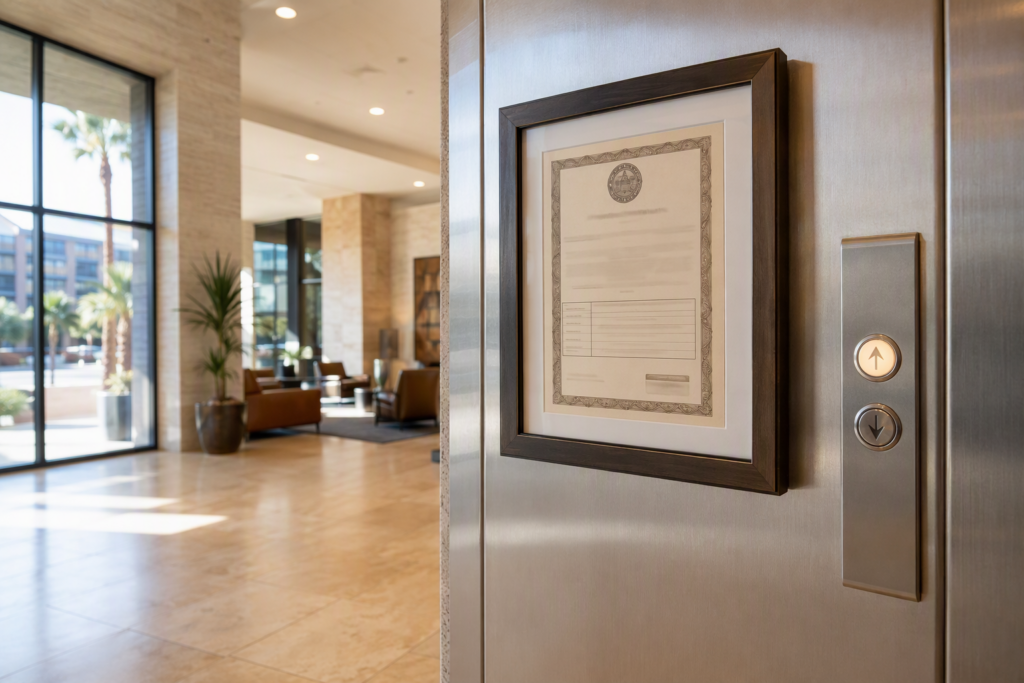
ADOSH requires periodic inspections by a qualified elevator inspector. After a passing inspection, the authority having jurisdiction (AHJ) issues a certificate of inspection, which must be posted in the elevator car or on file with the building owner. If your service company is billing for maintenance but your inspection certificate has lapsed or was not renewed on schedule, it is a strong indicator that required maintenance tasks — which are prerequisites for a passing inspection — may not have been completed. Building owners and property managers in Phoenix, Tucson, Scottsdale, and Mesa should verify certificate currency directly with ADOSH rather than relying solely on the service company’s word.
What Does a Legitimate Elevator Service Log Look Like?
A legitimate elevator service log is a structured document that records the date, technician name, unit identifier, every task performed, parts used, and any findings that require follow-up — not a single-line stamp saying “unit inspected.”
When reviewing logs, look for the following elements on every service record:
- Date and time of arrival and departure (time on-site is a basic accountability measure)
- Technician’s printed name and signature
- Elevator unit number, floor served, and location within the building
- Itemized checklist of every component inspected, lubricated, adjusted, or tested
- Condition notes for each component (e.g., “governor rope — condition good,” “door operator cam — adjusted for proper dwell time”)
- Parts replaced, with part numbers and quantities
- Deficiencies found and recommended corrective actions with priority level
- Owner or building manager acknowledgment signature
Logs that consistently omit condition notes or show identical boilerplate text from visit to visit suggest the form is being filled out at the office, not in the machine room.
How Can I Compare What I’m Being Billed For Against What Was Actually Done?
Create a master tracking spreadsheet that maps every line item in your maintenance contract to the corresponding entry in your service logs, then flag any contracted task that has no matching log evidence.
Start by pulling your contract’s scope-of-work schedule and listing every task in a spreadsheet. Assign each task the frequency required (monthly, quarterly, semi-annual, annual). Then pull twelve months of service logs and check off each task as you find evidence of it. Tasks that appear in the contract but never appear in the logs — such as annual governor testing, buffer oil level checks, or pit sump pump inspection — are either being skipped or are not being documented. Both outcomes represent a failure of the service relationship and potentially a code compliance gap under ASME A17.1.
What Red Flags Indicate a Service Company Is Cutting Corners?
The most reliable red flags are short visit durations, vague service records, repeated deferred deficiencies, and an inability to produce a written maintenance control program on request.
Additional warning signs include:
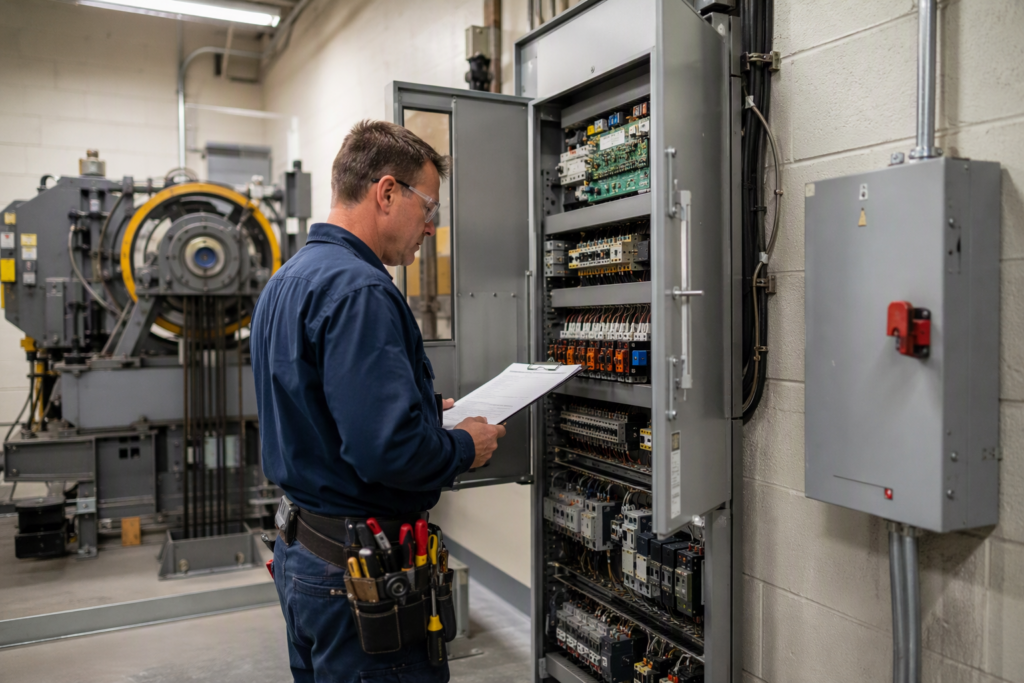
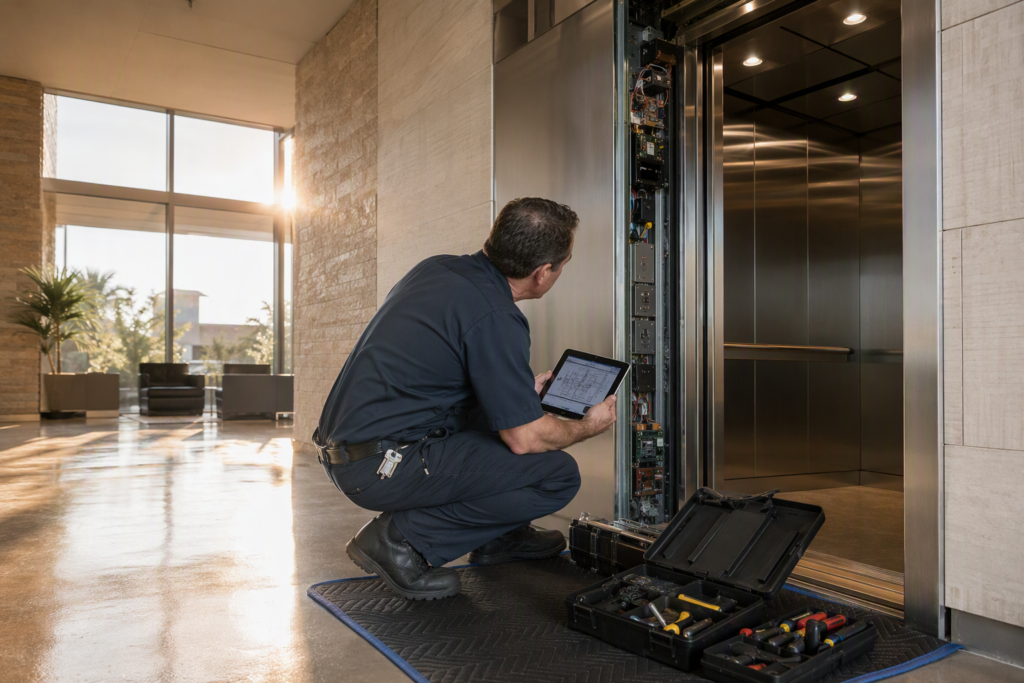
- Technician time on-site is implausibly short. A thorough maintenance visit on a traction elevator typically requires meaningful time in the machine room, at each landing, and in the pit. If badge access logs or security footage show visits lasting only a few minutes, the scope of work almost certainly was not completed.
- The same deficiencies appear month after month. A maintenance program that consistently notes the same problem without resolution suggests the provider is documenting to protect themselves rather than repairing to protect the equipment.
- No written maintenance control program exists. This is a code-compliance gap and a sign the provider is not operating to the full standard of ASME A17.1.
- Inspection certificates lapse. A responsible service company proactively schedules and coordinates the required periodic inspection. A lapsed certificate is a serious compliance and liability issue.
- Resistance to third-party audits. A reputable service company welcomes independent review; a provider cutting corners will often discourage or obstruct it.
Should I Use Building Access Logs or Security Cameras to Verify Service Visits?
Yes — cross-referencing building access records or security camera timestamps with service invoices is one of the most practical and objective verification tools available to building owners.
Badge access systems, visitor sign-in logs, and security camera footage from machine room entrances provide an unbiased record of when a technician arrived, which areas were accessed, and how long they were on-site. Comparing these timestamps to invoiced service dates can immediately identify phantom visits — instances where the company billed for a service call that never occurred. This verification method is particularly useful in multi-tenant commercial buildings in Phoenix and Scottsdale, where property managers may not be present during every maintenance visit.
What Is an Independent Elevator Audit and When Should I Request One?
An independent elevator audit is a third-party technical inspection conducted by a qualified elevator consultant or inspector who has no financial relationship with your current service provider, producing an unbiased assessment of equipment condition and maintenance compliance.
An independent audit typically involves a thorough inspection of the machine room, hoistway, pit, car, and all major safety systems, followed by a written report comparing observed conditions against the requirements of ASME A17.1 and your service contract’s scope. Building owners should consider an independent audit when they switch service providers, when equipment performance degrades despite active maintenance billing, or when they have any reason to question the accuracy of service records. Arizona Elevator Solutions recommends that property managers in Tucson, Mesa, Phoenix, and Scottsdale schedule an independent audit at least every two to three years as a best practice — independent of the state-mandated inspection cycle.
What Questions Should I Ask a New Elevator Service Company Before Signing a Contract?
Before signing any elevator service contract, ask for a written maintenance control program specific to your equipment, a sample service log from a comparable installation, references from current clients, and a clear explanation of what is and is not included in the scope.
Additional due-diligence questions include:
- Will you provide an itemized, component-level service log after every maintenance visit?
- Can you show me the maintenance control program you will use for my specific equipment make and model?
- How do you document and escalate deficiencies found during a maintenance visit?
- Who is responsible for scheduling and coordinating the state-required periodic inspection with ADOSH?
- What is your process when a safety-critical deficiency is discovered?
- Do you carry appropriate insurance and licensing as required by Arizona?
- What is excluded from the “full maintenance” or “comprehensive” contract label?
- How do you handle parts and labor for repairs discovered during routine maintenance?
A service company that hesitates or deflects on any of these questions warrants additional scrutiny before a long-term contract is executed.
How Do Maintenance Contract Types Differ and Which Offers the Most Accountability?
Elevator maintenance contracts generally fall into three categories — oil and grease, parts and labor, and full maintenance — with full maintenance contracts offering the broadest scope but requiring the most rigorous documentation to verify delivery.
| Contract Type | Scope of Coverage | Owner Risk Level | Documentation Complexity | Best Suited For |
|---|---|---|---|---|
| Oil & Grease | Lubrication and minor adjustments only; parts and labor extra | High — unexpected repair costs | Low | Low-rise, low-traffic hydraulic units with newer components |
| Parts & Labor | Covers most repairs; may exclude major components (motors, controllers) | Medium | Medium — verify parts replaced match invoiced items | Mid-rise commercial buildings with aging but stable equipment |
| Full Maintenance / Comprehensive | All maintenance, parts, labor, and adjustments; exclusions in contract appendix | Lower — but only if scope is fully itemized | High — most line items to track and verify | High-rise, high-traffic, or complex elevator systems |
| Modernization-Inclusive | Combines maintenance with a planned capital replacement schedule | Low overall | High — capital replacement milestones must be tracked | Buildings with older equipment nearing end of useful life |
Regardless of contract type, the verification principle is the same: every billed task must have a corresponding documented entry in a signed service log. Full maintenance contracts require the most vigilant tracking because the broader scope creates more opportunities for tasks to be omitted without immediate financial consequence to the provider.
What Role Does the ADA Play in Elevator Maintenance Accountability?
Under the Americans with Disabilities Act (ADA), building owners — not service companies — bear the legal responsibility for maintaining elevator accessibility, which means that a service company’s failure to maintain ADA-required features creates direct legal exposure for the property owner.
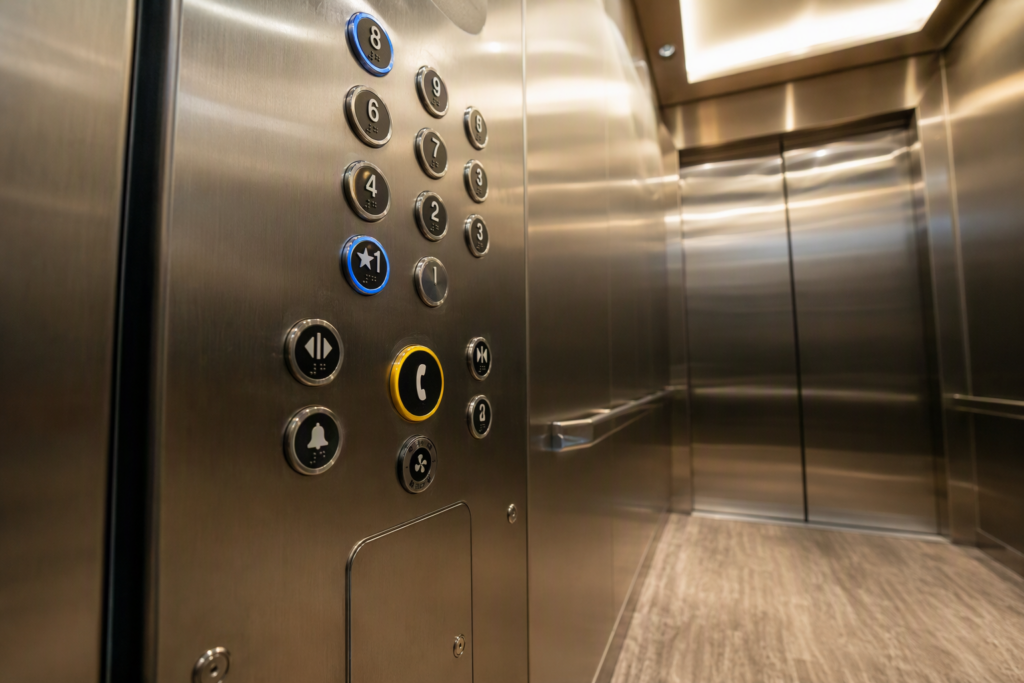
ADA-relevant elevator components that must remain properly maintained include leveling accuracy (the car floor must be within a defined tolerance of the landing floor to ensure wheelchair accessibility), door reopening devices, accessible control button height and braille markings, emergency communication systems, and cab lighting levels. If a service company bills for maintenance but these features are degraded or non-functional, the building owner faces potential ADA complaints. Property owners in Phoenix, Tucson, Scottsdale, and Mesa should specifically request that service logs confirm ADA-sensitive features are checked and functional at each visit.
What Are the Owner’s Legal Obligations if a Service Company Is Found to Have Neglected Maintenance?
When a building owner discovers that a service company has been billing for maintenance that was not performed, the owner must immediately assess the safety status of the equipment, notify the relevant authority having jurisdiction, and consult legal counsel regarding contractual remedies.
From a code standpoint, ASME A17.1 places affirmative obligations on the building owner to ensure elevators are maintained in a safe condition — ignorance of a contractor’s neglect is not a defense against a safety violation. Additionally, OSHA standards regarding workplace safety may apply in occupational settings. From a civil liability standpoint, documented service logs that were falsified or incomplete can form the basis of a breach-of-contract or negligence claim against the provider. Building owners should preserve all service records, invoices, and communications as soon as a dispute is anticipated.
What Steps Should I Take Immediately If I Suspect My Elevator Is Being Neglected?
If you suspect your elevator service company is neglecting maintenance, take these steps immediately in the order listed below to protect both building occupants and your legal position.
- Secure all existing records. Gather and preserve every service log, invoice, work order, and contract document you have on file. Do not discard or allow anyone else to remove these records.
- Review your building access and security footage. Pull any available records for the dates of billed service visits to confirm whether technicians were actually on-site and for how long.
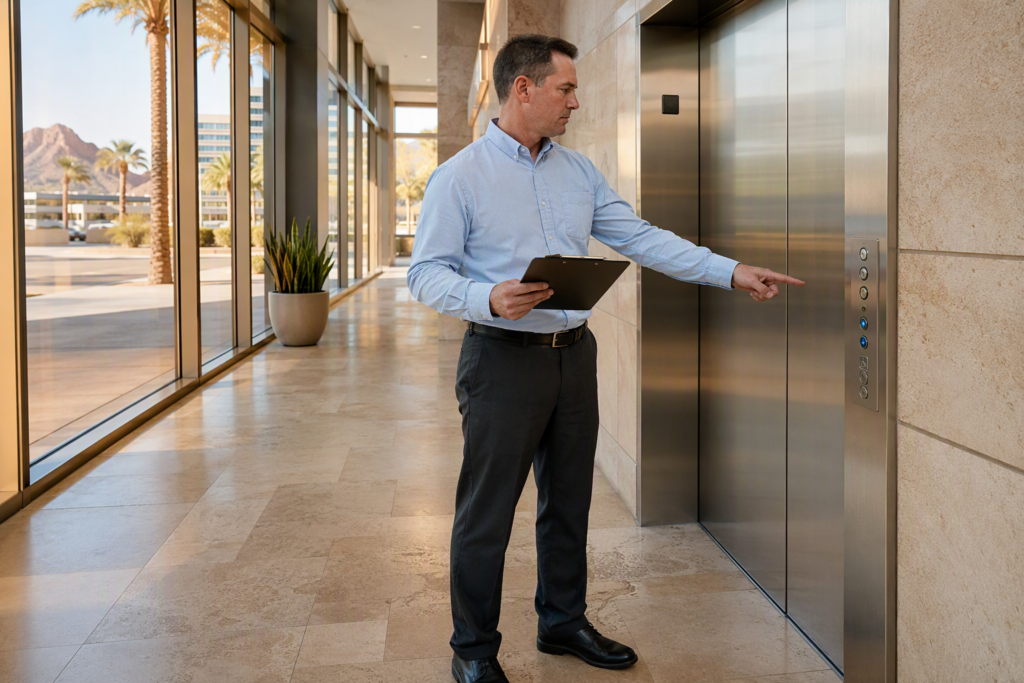
- Conduct a visual inspection of accessible areas. Walk the elevator lobby, check the posted inspection certificate for currency, and note any visible signs of deferred maintenance such as worn door sills, erratic leveling, or unusual noise.
- Contact ADOSH to verify inspection certificate status. Confirm the unit’s current compliance status directly with the Arizona Division of Occupational Safety and Health.
- Engage an independent elevator consultant or inspector. Commission a third-party technical assessment before confronting the service provider, so you have objective documentation of current equipment condition.
- Notify your service company in writing. Put all concerns in writing and request a formal written response. This creates a paper trail for any subsequent legal or contractual action.
- Consult legal counsel if billing fraud is suspected. If the evidence suggests invoices were submitted for work not performed, an attorney can advise on contractual remedies, demand letters, and any applicable consumer protection statutes in Arizona.
- Solicit competitive bids from qualified service companies. Begin evaluating alternative providers so that a transition can occur without a gap in required maintenance coverage.
How Should I Evaluate a New Service Company’s References and Track Record?
Evaluate a new elevator service company’s references by speaking directly with current clients who have similar building types, asking specifically about documentation quality, deficiency follow-through, and coordination of state inspections — not just general satisfaction.
Generic references that only confirm “they do good work” are of limited value. Productive reference questions include: Do they leave itemized service logs after every visit? Have there been any gaps in inspection certification? How do they handle discovered deficiencies — do they document and resolve them promptly, or do the same issues recur? Have you ever had a reason to question whether a billed service was actually performed? Candid answers to these specific questions reveal far more about a company’s operational integrity than broad testimonials. Arizona Elevator Solutions encourages property managers evaluating service providers in Phoenix, Tucson, Scottsdale, and Mesa to use this reference framework as a standard evaluation tool.
What Technology Tools Can Help Me Monitor Elevator Maintenance Activity?
Remote monitoring systems, digital maintenance management platforms, and connected elevator technologies can provide building owners with real-time data on elevator performance that serves as an independent verification layer alongside traditional service logs.
Modern elevator monitoring systems can track door cycle counts, motor run times, leveling accuracy, fault codes, and call completion times — data that makes it significantly more difficult for a service provider to claim maintenance was performed when equipment performance metrics tell a different story. Some property management software platforms also allow digital service logs to be submitted and stored in a system the owner controls, rather than relying on paper records managed by the service provider. Building owners considering modernization or new installations in Arizona should evaluate whether remote monitoring integration is a viable option for their equipment.
How Do Parts and Replacement Billing Practices Signal Whether Maintenance Is Being Done Honestly?
A service company’s parts billing patterns — specifically, whether parts are replaced proactively in alignment with maintenance logs or only billed reactively after failures — provide meaningful insight into whether preventive maintenance is actually being performed.
Genuine preventive maintenance results in occasional parts replacements (worn brake linings, frayed ropes at predictable intervals, aging contactors) before failure occurs. A maintenance history that shows no parts replacements over extended periods, followed by large reactive repair invoices after an equipment failure, may indicate that preventive tasks were being skipped. Conversely, a pattern of billing for high-cost parts with no corresponding maintenance log evidence of the work being needed or performed warrants scrutiny in the opposite direction. Request parts invoices alongside service logs and verify that replaced parts align logically with the documented condition of those components in prior service records.
What Is the Difference Between a Periodic Inspection and Routine Maintenance, and Who Is Responsible for Each?
A periodic inspection is a formal compliance evaluation conducted by a qualified inspector on behalf of the authority having jurisdiction, while routine maintenance is the ongoing service performed by a certified service company — both are legally required and neither substitutes for the other.
In Arizona, periodic inspections are conducted according to the adopted elevator safety code and result in an inspection certificate when the unit passes. Routine maintenance, required under ASME A17.1, is the ongoing lubrication, adjustment, testing, and repair work that keeps the equipment in the condition necessary to pass those inspections. A building owner is responsible for ensuring both are completed. The service company is typically responsible for performing and documenting routine maintenance and for coordinating the scheduling of periodic inspections. A provider who handles maintenance but fails to proactively coordinate required inspections is not fulfilling the full scope of a responsible service relationship.
How Can Arizona Elevator Solutions Help Me Evaluate My Current Service Provider?
Arizona Elevator Solutions offers comprehensive elevator assessments for building owners in Phoenix, Tucson, Scottsdale, and Mesa who want an independent, technically grounded evaluation of their equipment’s condition relative to what their current service contract requires.
The assessment process includes a systematic review of the elevator’s mechanical and electrical systems, a comparison of observed equipment condition against available service records, and a written summary of findings. This gives property owners objective documentation they can use to evaluate their current provider, negotiate contract terms, or make an informed transition decision. Arizona Elevator Solutions operates as a certified elevator service company and applies the standards of ASME A17.1 and applicable Arizona requirements to every assessment conducted.
What Ongoing Practices Should I Adopt to Ensure Long-Term Maintenance Accountability?
Long-term maintenance accountability requires building owners to establish systematic review habits — not just one-time audits — including quarterly log reviews, annual contract scope verification, and a consistent policy of requesting written documentation for every service event.
Sustainable accountability practices for elevator owners include:
- Quarterly log reviews: Set a calendar reminder each quarter to review service logs for the prior three months and confirm that all contracted tasks at the required frequency are documented.
- Annual contract review: Review the service contract annually to ensure the scope still reflects the actual equipment configuration and that no components have been added or modified without a corresponding contract update.
- Deficiency tracking: Maintain a running log of every deficiency noted in service records and track resolution. Unresolved deficiencies older than one billing cycle warrant a written inquiry.
- Inspection certificate calendar: Record the expiration date of each inspection certificate and proactively follow up with your service provider at least sixty days before expiration to confirm inspection scheduling is underway.
- Periodic independent audits: Commission an independent technical assessment on a regular cycle, treating it as a standard cost of responsible building ownership rather than an exceptional measure.
- Documented communication: Conduct all significant communications with your service provider in writing (email is sufficient) so there is a datable, searchable record of every instruction, concern, and response.
Need elevator service you can rely on? Arizona Elevator Solutions is ready to help.