Cost to Add an Elevator to an Existing Commercial Building in Arizona: What Retrofits Actually Cost and What Drives the Price
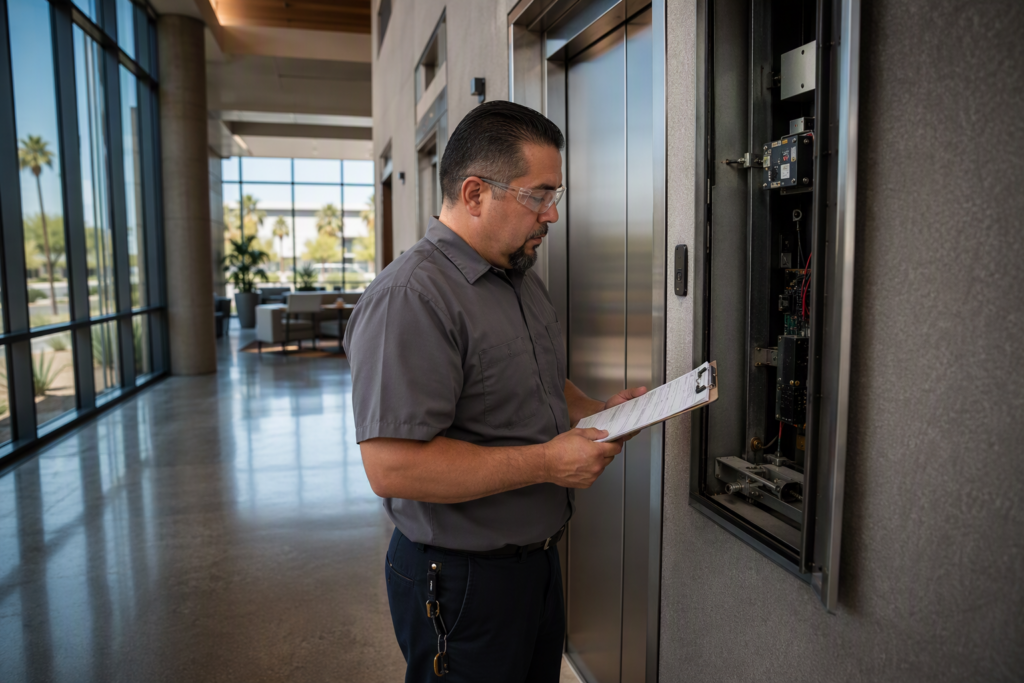
Quick Answer: Adding an elevator to an existing commercial building in Arizona typically involves costs shaped by shaft construction, equipment type, building structural requirements, ADA compliance, and Arizona regulatory permitting — making retrofit projects significantly more complex and variable in price than new-construction installations, with no single figure applicable to every situation.
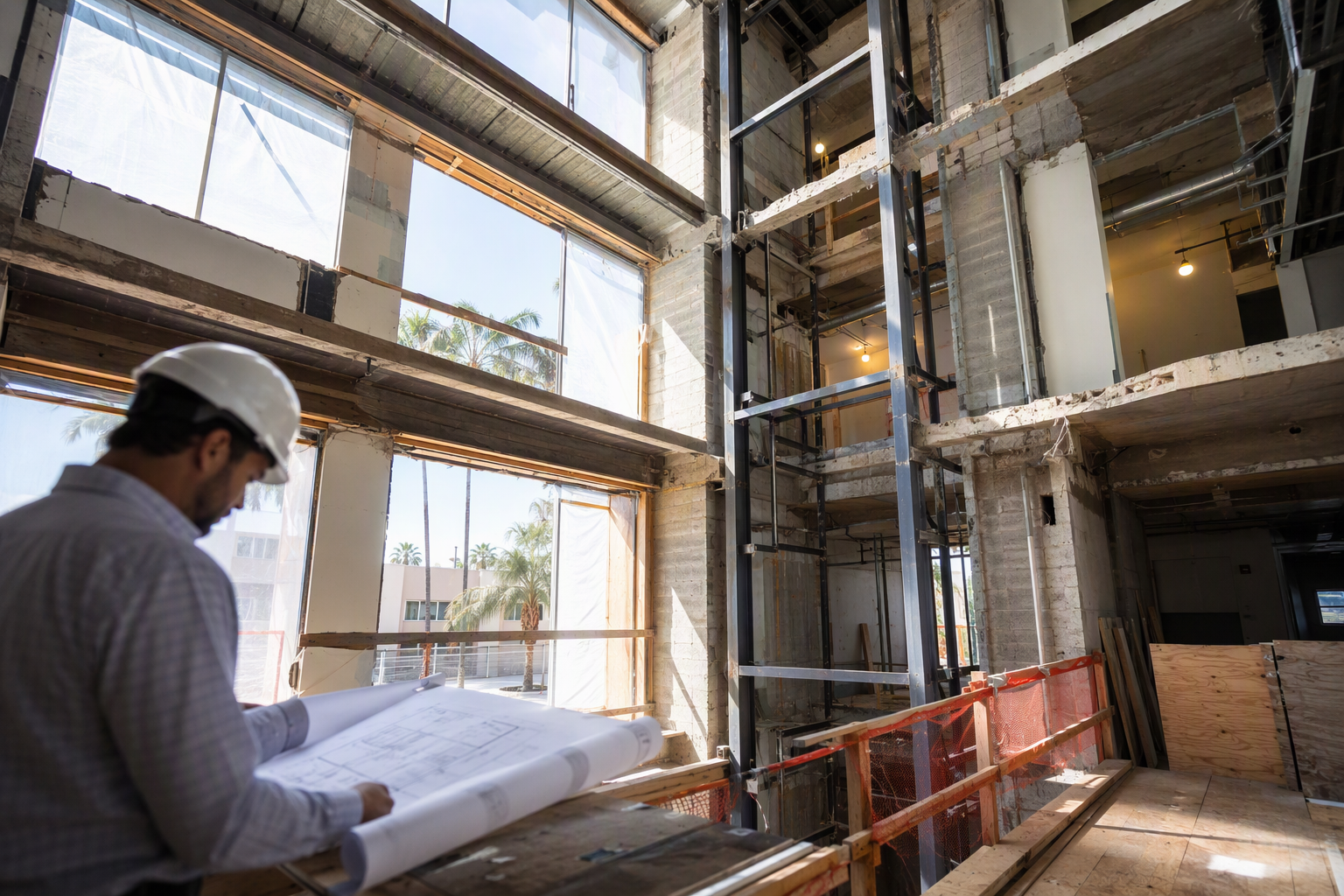
Retrofit elevator projects in Arizona commercial buildings involve layers of cost that go well beyond the elevator equipment itself. Structural modifications, hoistway excavation or construction, machine room requirements, electrical upgrades, local permitting, and ongoing compliance with Arizona state regulations all contribute to final project costs. This guide breaks down every cost category, compares equipment types, outlines the regulatory obligations Arizona building owners must meet, and explains what questions to ask before committing to a project.
What Are the Main Cost Categories for Adding an Elevator to an Existing Arizona Commercial Building?
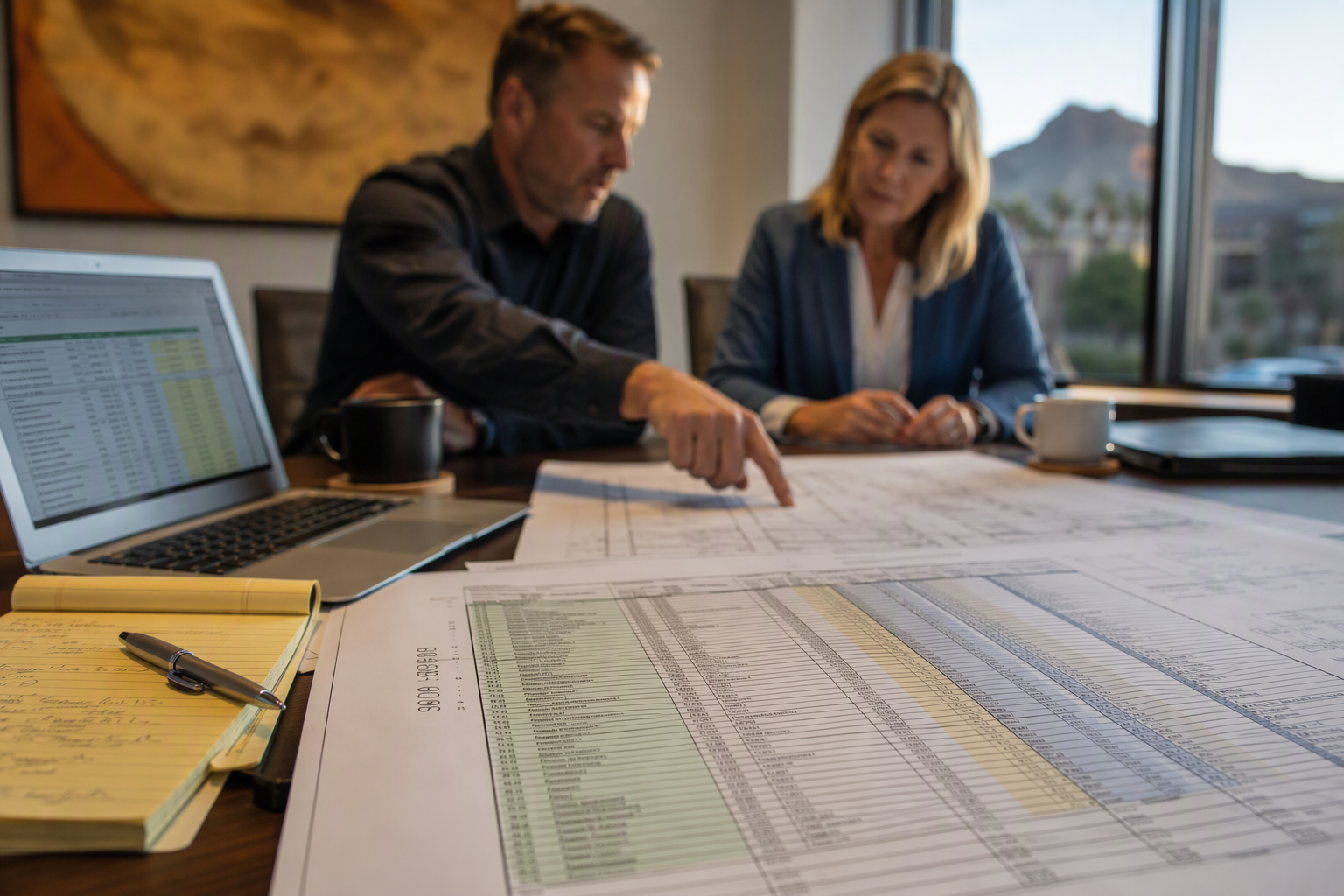
Retrofit elevator costs fall into several distinct buckets. Understanding each one helps building owners budget accurately and avoid surprises during construction.
| Cost Category | Description | Complexity Driver |
|---|---|---|
| Hoistway / Shaft Construction | Building or modifying a code-compliant vertical shaft through existing floors | Building age, materials, structural layout |
| Pit Excavation | Digging below the lowest landing to meet code-required pit depth | Foundation type, soil conditions, existing utilities |
| Machine Room or Machine Room-Less (MRL) Space | Dedicated mechanical space or overhead/adjacent alcove depending on system type | Elevator type selected |
| Elevator Equipment | Car, drive system, controls, doors, cab finishes | Capacity, speed, travel distance, finish level |
| Electrical Upgrades | Dedicated circuits, panel capacity, lighting, emergency power | Building electrical infrastructure age |
| ADA Compliance Features | Door width, cab dimensions, controls, signage, Braille | Required for places of public accommodation |
| Permits and Inspections | Arizona ICA notification, local AHJ permits, inspection fees | Jurisdiction and project scope |
| Architectural and Engineering Fees | Structural engineering, drawings, project management | Complexity of structural modifications |
| Ongoing Maintenance Contract | Annual service, lubrication, testing, emergency response | Equipment type and usage frequency |
Because retrofit projects touch so many building systems simultaneously, the structural and civil work frequently exceeds the cost of the elevator equipment itself in older Arizona commercial buildings.
What Types of Elevators Are Available for Commercial Retrofit Projects, and How Do They Compare?
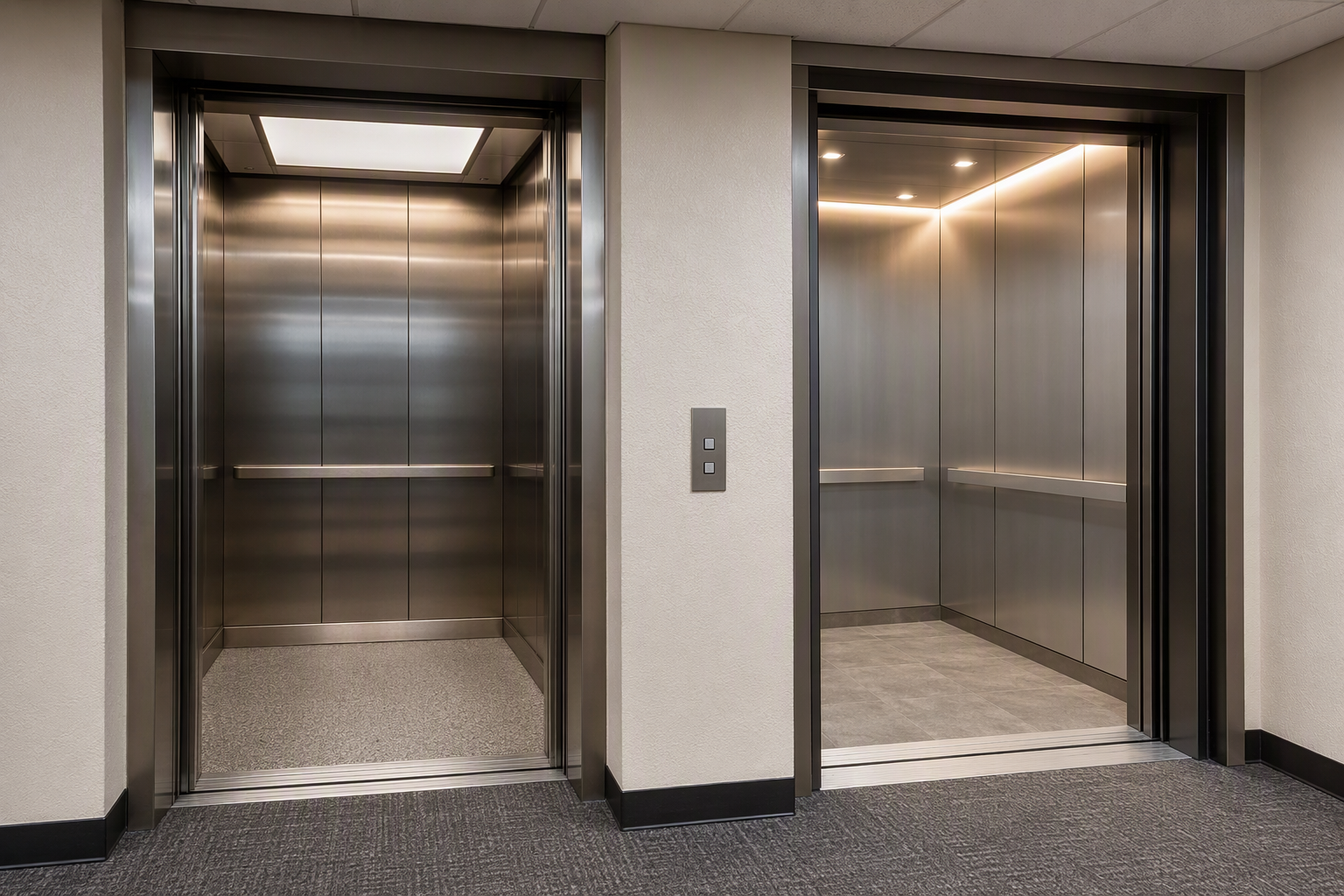
Selecting the right elevator system for a retrofit directly affects both upfront and long-term costs. Each technology carries different space, infrastructure, and maintenance demands.
| Elevator Type | Best For | Pit Required | Overhead Required | Machine Room | Speed Range | Typical Travel Limit |
|---|---|---|---|---|---|---|
| Hydraulic (conventional) | Low-rise, 2–5 stops | Yes | Minimal | Yes (adjacent) | Low | Up to ~4–6 floors |
| Machine Room-Less (MRL) Traction | Mid-rise, tighter spaces | Yes | Moderate | No (controls in shaft) | Moderate–High | Multiple floors |
| Pneumatic / Vacuum | Very low-rise, light use | No | Minimal | No | Low | Limited floors |
| Geared Traction | Mid-rise commercial | Yes | Yes | Yes (above) | Moderate | Mid-rise |
| Gearless Traction | High-rise, high-traffic | Yes | Yes | Yes (above) | High | High-rise |
| Platform Lift (LULA) | ADA access, limited travel | Shallow or none | Minimal | No | Very low | Up to ~14–25 ft |
For most Arizona commercial retrofit projects involving two to four floors, hydraulic and MRL traction systems are the most common choices. Hydraulic systems have lower equipment costs but require a machine room and fluid management. MRL traction systems save machine room space but require adequate overhead clearance in the shaft.
What Factors Drive Up Retrofit Elevator Costs the Most?
Several variables consistently push Arizona commercial retrofit budgets higher than initial estimates:
- Existing structural layout: Cutting through post-tensioned concrete slabs, load-bearing walls, or steel structural members requires engineering analysis and specialized construction methods.
- Pit depth constraints: When a building slab sits directly on grade or near underground utilities, achieving code-required pit depth may require significant excavation or waterproofing work.
- Building age: Older Arizona commercial buildings may contain materials requiring special handling protocols, and electrical infrastructure may need full replacement to support elevator power demands.
- Number of floors served: Each additional stop adds car operating equipment, door systems, and landing controls.
- Cab size and finish: Commercial-grade finishes, stainless steel interiors, custom lighting, and larger cab dimensions for ADA compliance all increase equipment cost.
- Fire service requirements: Arizona conveyances with firefighters’ emergency operation must use the Arizona Firefighters Service (AZFS) key, which must be incorporated into the system design from the outset.
- Seismic considerations: Arizona’s seismic design categories vary by location, and elevator installations must comply with applicable structural design requirements.
What Are the Arizona Regulatory Requirements That Affect Retrofit Cost and Timeline?
Arizona building owners must navigate both state-level and local regulatory requirements before an elevator can legally operate. Understanding these obligations early prevents costly delays.
Under A.R.S. §§ 23-491 through 23-491.16, the Industrial Commission of Arizona (ICA) Elevator Division regulates elevator safety statewide. Key obligations for retrofit projects include:
- Arizona owners must notify the state at least 90 days before installing, relocating, or altering a conveyance.
- No conveyance may operate in Arizona without an annual certificate of inspection issued by the state.
- The conveyance must be inspected before it first goes into service, after any modification or alteration, and annually thereafter.
- Every Arizona conveyance is assigned a state serial number on a tag fixed to the controller or mainline disconnect.
- The state certificate must be kept at the same location as the conveyance and made available for inspection on request.
- The state serial number or certificate must be posted in or close to the conveyance in an easily accessible location.
- Arizona conveyances with firefighters’ emergency operation must use the Arizona Firefighters Service (AZFS) key.
Equipment installed, repaired, or altered on or after January 1, 2023 must comply with ASME A17.1/CSA B44, 2019 edition, per Arizona Administrative Code R20-5-502 through R20-5-515.
For projects within the City of Phoenix, the Phoenix Elevator Section (Planning and Development Department) inspects elevators, escalators, moving walks, dumbwaiters, and chair lifts inside city limits. The ICA Elevator Division handles equipment outside Phoenix. Both jurisdictions may require separate permit submittals and fees, and both must be factored into project timelines.
Elevator contractors performing installation work in Arizona must hold an R-12 or C-12 license from the Arizona Registrar of Contractors (ROC). Note that the ROC licenses contractors but does not issue the annual certificate of inspection — that authority rests with the ICA Elevator Division.
Platform lifts and stairway chairlifts installed, repaired, or altered on or after January 1, 2023 must comply with ASME A18.1-2020.
What ADA Requirements Apply to Commercial Elevator Retrofits in Arizona?
The Americans with Disabilities Act (ADA) imposes specific design requirements on elevators in places of public accommodation and commercial facilities. These requirements affect cab dimensions, door width and timing, control panel height and reach range, Braille signage, leveling accuracy, and audible signals.
For retrofit projects in existing buildings, ADA’s barrier removal standards and path-of-travel obligations apply when alterations are made. Because an elevator retrofit constitutes a significant alteration, the accessible route to and from the elevator — including lobby space, signage, and adjacent doorways — may also require upgrades. ADA compliance requirements should be reviewed with legal counsel and a qualified accessibility consultant as part of pre-project planning, since they directly affect both design and budget.
How Long Does a Commercial Elevator Retrofit Take from Decision to Operation?
Timeline varies considerably depending on building complexity, permitting jurisdiction, equipment lead times, and contractor scheduling. The following represents a general framework rather than a guaranteed schedule.
| Phase | Activities | Typical Duration Range |
|---|---|---|
| Assessment and Design | Structural engineering, elevator consulting, ADA review, preliminary drawings | 4–10 weeks |
| Permitting and ICA Notification | Arizona 90-day advance notice, local AHJ permit application, plan review | 8–16 weeks (ICA notice period alone is 90 days) |
| Equipment Manufacturing and Lead Time | Elevator equipment ordered and manufactured to specification | 10–28 weeks depending on type and manufacturer |
| Civil and Structural Construction | Shaft construction, pit excavation, machine room prep, electrical rough-in | 6–16 weeks |
| Elevator Installation | Equipment installation, wiring, controls, testing | 4–10 weeks |
| State Inspection and Certificate | Pre-service inspection required before operation; ICA or authorized private inspector | 1–4 weeks scheduling dependent |
| Total Estimated Timeline | From decision to operational elevator | 9–18+ months for complex retrofits |
The mandatory 90-day advance notification to the ICA Elevator Division is a hard regulatory minimum — project timelines cannot compress below this requirement regardless of contractor scheduling.
What Is the Step-by-Step Process for Adding an Elevator to an Existing Arizona Commercial Building?
- Conduct a professional site assessment. Have a qualified elevator consultant and structural engineer evaluate the existing building’s structural system, available space, foundation type, electrical capacity, and vertical clearances to determine feasibility and optimal system type.
- Select elevator system type. Based on the assessment, choose between hydraulic, MRL traction, geared traction, platform lift, or another system appropriate to the building’s number of floors, usage volume, and space constraints.
- Engage a licensed Arizona elevator contractor. Confirm the contractor holds a current R-12 or C-12 license from the Arizona Registrar of Contractors. Obtain multiple bids that itemize structural work, equipment, electrical, and permitting separately.
- Complete architectural and engineering drawings. Prepare construction documents sufficient for permit submittal to both the ICA Elevator Division and the applicable local authority having jurisdiction (AHJ) — either the City of Phoenix Elevator Section or the relevant municipality.
- Submit the 90-day advance notification to the ICA Elevator Division. Under Arizona law, owners must notify the state at least 90 days before installation begins. This is a non-negotiable regulatory requirement.
- Apply for local building and elevator permits. Submit permit applications to the local AHJ concurrently with the ICA notification to reduce overall timeline.
- Execute structural and civil construction. Complete hoistway construction, pit excavation, machine room preparation, and electrical rough-in per approved plans.
- Install elevator equipment. The licensed elevator contractor installs car, drive system, controls, doors, and cab finishes per ASME A17.1-2019 requirements.
- Schedule and pass pre-service inspection. Arrange a state inspection by the ICA Elevator Division or an authorized private inspector before placing the elevator in service. The elevator cannot operate legally until this inspection is passed and a certificate issued.
- Post the state certificate and serial number. Display the certificate and state serial number in or adjacent to the elevator as required by Arizona law.
- Execute a maintenance service agreement. Establish an ongoing maintenance contract to maintain compliance, prepare for annual inspections, and protect the investment.
How Do Hydraulic Elevators Compare to MRL Traction for Retrofit Projects?
| Factor | Hydraulic Elevator | MRL Traction Elevator |
|---|---|---|
| Machine Room Requirement | Requires adjacent machine room for pump unit | No separate machine room; controls in shaft or overhead |
| Pit Depth Required | Yes, standard pit required | Yes, pit required |
| Overhead Space Required | Minimal overhead | Moderate overhead clearance needed |
| Energy Efficiency | Lower (pump runs on demand) | Higher (regenerative drives available) |
| Best Application | Low-rise, 2–5 stops, lower traffic volume | Mid-rise, higher traffic, space-constrained buildings |
| Fluid/Environmental Risk | Hydraulic fluid; environmental containment may be required | No hydraulic fluid |
| Long-Term Maintenance Profile | Fluid replacement, seal maintenance | Rope/belt inspection, counterweight maintenance |
| Typical Retrofit Suitability | High — when adjacent space for machine room is available | High — when overhead clearance is sufficient |
Should I Use a Platform Lift Instead of a Full Commercial Elevator?
Platform lifts — including Limited Use/Limited Application (LULA) elevators — can satisfy ADA accessibility requirements in certain situations at significantly lower installed cost than a full commercial elevator. However, they are not appropriate for every application.
Key distinctions:
- Travel distance: Platform lifts are designed for limited vertical travel. Full elevators are required for buildings with greater floor-to-floor heights or multiple floors beyond the lift’s rated travel.
- Passenger capacity: Platform lifts carry fewer passengers than full commercial elevators and are not suitable for high-traffic environments.
- ADA acceptability: The ADA permits platform lifts in specific circumstances as part of an accessible route. Legal and accessibility review is essential before substituting a lift for an elevator.
- Arizona code: Platform lifts and stairway chairlifts installed, repaired, or altered on or after January 1, 2023 must comply with ASME A18.1-2020, and are regulated by the ICA Elevator Division under the same certificate-of-inspection requirements as full elevators.
- Long-term cost: If traffic volume or building use intensifies, a platform lift may not meet operational demands and may need eventual replacement with a full elevator — making the platform lift a less economical long-term choice in some scenarios.
What Ongoing Costs Should Arizona Commercial Building Owners Plan For After Installation?
The installed cost of a retrofit elevator is only the beginning. Arizona commercial building owners should budget for recurring obligations:
| Ongoing Cost Item | Frequency | Notes |
|---|---|---|
| Annual State Inspection and Certificate | Annually | Required by Arizona law; no operation without valid certificate |
| Maintenance Service Contract | Monthly or quarterly | Covers lubrication, adjustments, parts, emergency response |
| Energy Consumption | Ongoing | Varies by system type and usage volume |
| Major Component Replacement | Every 10–25 years depending on component | Hydraulic pump, controller, ropes, cab refurbishment |
| Code Upgrade Requirements | As codes are adopted or updated | Arizona follows ASME A17.1-2019 for work after Jan. 1, 2023 |
| Private Inspector Registration | Annually (if using authorized private inspector) | Arizona private inspectors must register and complete 8 hours of approved continuing education each year |
How Do I Evaluate an Elevator Contractor for an Arizona Commercial Retrofit?
Selecting the right contractor for a retrofit project is as important as selecting the right equipment. Questions to ask any prospective elevator contractor in Arizona include:
- Does the contractor hold a current R-12 or C-12 license from the Arizona Registrar of Contractors?
- Does the contractor have documented experience with retrofit projects in existing commercial buildings — not just new construction?
- Will the contractor handle the mandatory 90-day advance notification to the ICA Elevator Division, or is the owner responsible?
- Does the contractor have experience working within the City of Phoenix Elevator Section’s permitting process as well as with ICA for projects outside Phoenix?
- Will the bid itemize structural work, equipment, electrical, permitting, and ongoing maintenance separately?
- What is the contractor’s process for coordinating with the structural engineer and general contractor?
- Does the contractor offer a post-installation maintenance contract, and what does it include?
Arizona Elevator Solutions is a certified independent elevator service company operating throughout Arizona. As an independent provider, Arizona Elevator Solutions is not tied to a single elevator manufacturer — meaning recommendations are based on what is appropriate for the building and budget rather than manufacturer quotas. Arizona Elevator Solutions works with Arizona commercial building owners at every stage of the retrofit process, from initial site assessment through annual maintenance and inspection coordination.
What Are the Biggest Mistakes Arizona Building Owners Make When Planning a Retrofit Elevator?
- Underestimating structural costs: The shaft and pit construction often represents the largest single cost in a retrofit, and building owners sometimes budget only for the elevator equipment itself.
- Ignoring the 90-day ICA notification requirement: Starting construction without the required advance notice to the ICA Elevator Division puts the project in violation of Arizona law and can result in the elevator being unable to obtain its certificate of inspection.
- Choosing system type before a structural assessment: Selecting a system without first confirming that the building can accommodate its pit depth, overhead, and machine room requirements leads to costly redesigns.
- Not planning for ADA path-of-travel obligations: The elevator itself may be ADA-compliant, but if the surrounding lobby, corridors, or entrances are not, the project may trigger additional required upgrades.
- Selecting a contractor based on equipment cost alone: A low equipment bid that excludes permit fees, structural coordination, or post-installation maintenance often results in a higher total cost.
- Overlooking the AZFS key requirement: Arizona elevators with firefighters’ emergency operation must use the Arizona Firefighters Service (AZFS) key. Installing a system without this feature will fail state inspection.
How Does Adding an Elevator Affect Commercial Property Value in Arizona?
From a commercial real estate perspective, elevator access in a multi-story building can affect tenant leasing potential, ADA compliance exposure, and overall marketability of the asset. Buildings without elevator access face practical barriers for tenants requiring accessible workplaces and may face limitations under the ADA depending on the nature of occupancy and alteration history. While specific return-on-investment figures depend on property type, market conditions, and tenant mix, commercial real estate professionals generally view elevator access as a baseline expectation for multi-story office, retail, and medical buildings. A qualified commercial appraiser familiar with the Arizona market is the appropriate resource for property-specific value analysis.
Get an Accurate Assessment Before You Budget
Every Arizona commercial building presents a unique retrofit challenge. Structural conditions, available space, regulatory requirements, and intended use all shape what a project will actually cost — and a ballpark figure without a site visit is rarely reliable.
Contact Arizona Elevator Solutions for a free elevator assessment. As Arizona’s independent elevator service specialists, the team evaluates existing buildings for elevator feasibility, guides owners through Arizona ICA regulatory requirements, and provides clear, manufacturer-neutral recommendations on system type and project scope.
Call Arizona Elevator Solutions today: 480-557-7600
Need elevator service you can rely on? Arizona Elevator Solutions is ready to help.