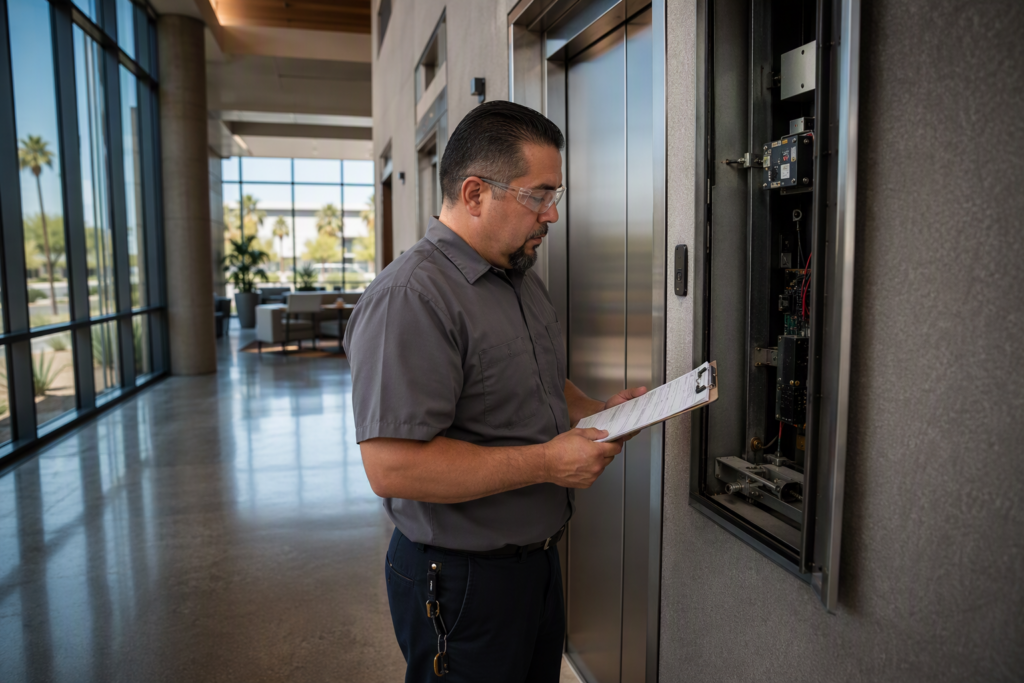
Elevator Service in Phoenix, AZ | Arizona Elevator Solutions
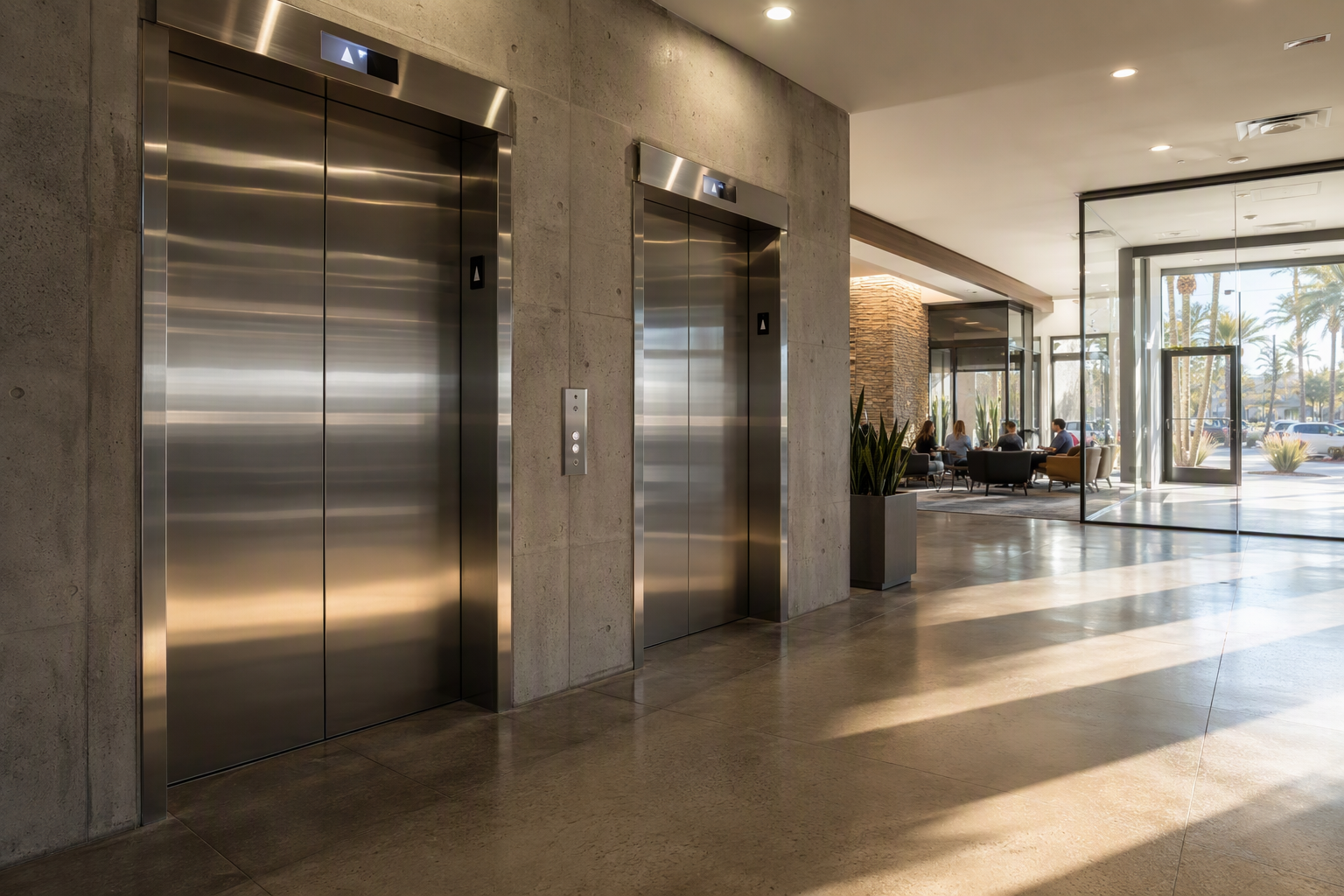
For commercial building owners and property managers in Phoenix, elevator downtime is more than an inconvenience — it is a liability, a compliance concern, and a direct cost to tenants and operations. Arizona Elevator Solutions provides certified elevator service throughout Arizona, helping commercial properties move from reactive emergency calls to a proactive maintenance posture that keeps equipment running reliably year-round.
What Causes Elevator Breakdowns Most Often in Commercial Buildings?
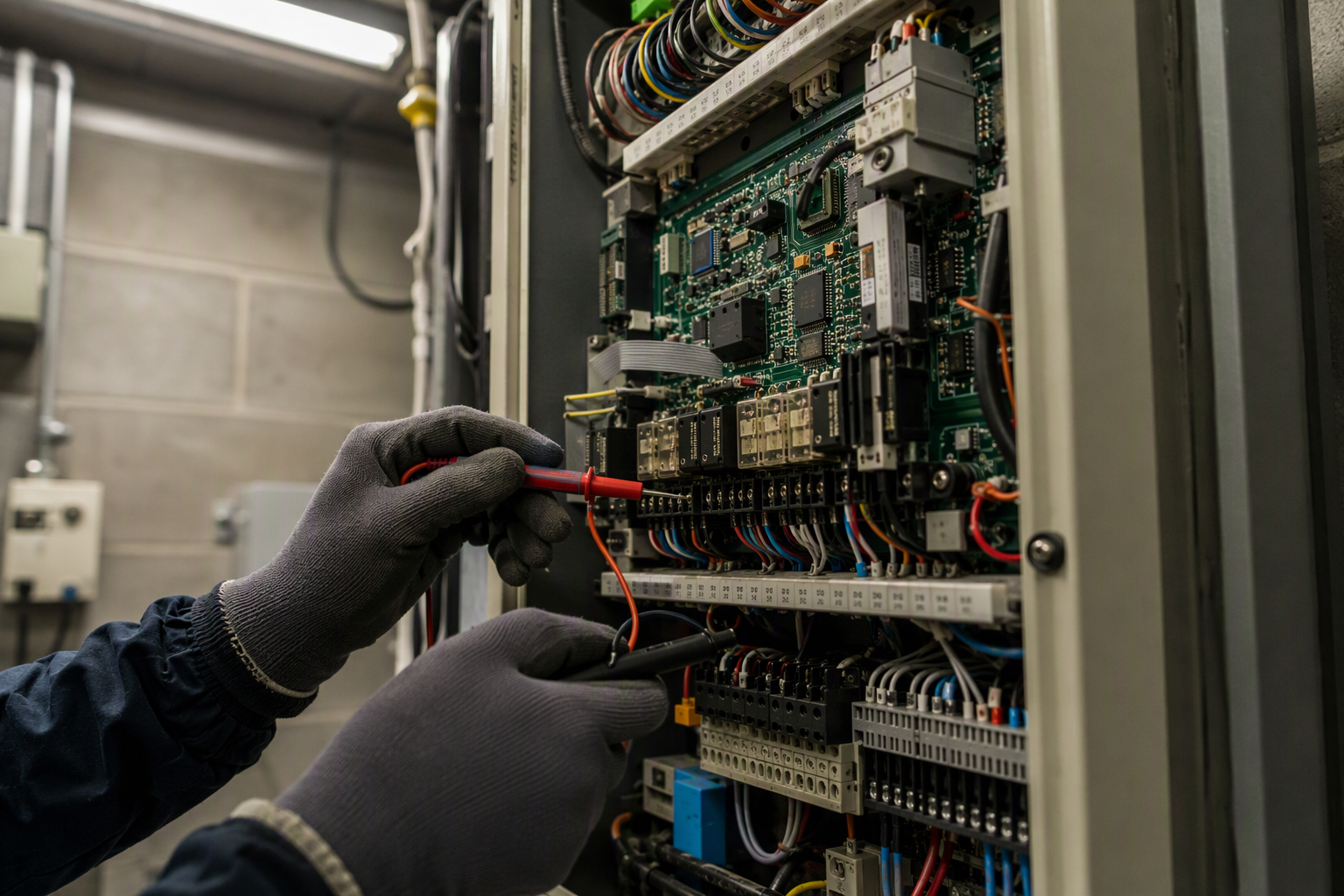
The most frequent sources of elevator failures in commercial buildings fall into several identifiable categories. Understanding these root causes is the first step toward reducing unplanned outages.
- Door system wear: Door operators, rollers, gibs, and safety edges endure thousands of open-and-close cycles daily. Worn or misaligned door components are among the leading mechanical causes of elevator shutdowns, as modern safety systems halt the cab when door circuits do not confirm a clean close.
- Control system and circuit board faults: Aging microprocessor controllers and relay logic panels are susceptible to power fluctuations, heat, and component degradation. A single failed relay or corroded connection can take an elevator out of service entirely.
- Hydraulic fluid and pump issues: For hydraulic elevators — common in low-rise commercial buildings — low fluid levels, pump seal failures, or contaminated fluid cause sluggish travel, leveling problems, and safety shutdowns.
- Rope, sheave, and brake wear: On traction elevators, wire rope wear, sheave grooving, and brake lining deterioration are progressive issues that, if left unaddressed, trigger safety devices and bring the equipment down.
- Deferred or missed preventive maintenance: Across all equipment types, the single largest driver of avoidable emergency calls is skipped or incomplete maintenance. Lubrication intervals missed, adjustments left undone, and minor irregularities left uninvestigated routinely escalate into major failures.
- Electrical and power supply problems: Voltage irregularities, tripped breakers, and faulty wiring connections cause intermittent or complete elevator shutdowns that can be difficult to diagnose without on-site expertise.
- Leveling and sensor issues: Floor-leveling sensors and encoders that drift out of calibration create tripping hazards and cause safety systems to take the elevator offline.
How Can Building Owners in Phoenix Reduce Emergency Elevator Repair Calls?

Reducing emergency repair frequency is achievable through a structured, proactive approach. The steps below represent a practical protocol for Phoenix commercial property owners.
- Establish a written preventive maintenance agreement. Work with a qualified elevator service company to define inspection intervals, lubrication schedules, adjustment procedures, and parts-replacement thresholds for every component on the unit.
- Ensure annual inspections are completed on time. Under A.R.S. §§ 23-491 through 23-491.16 and the Arizona Administrative Code R20-5-502 through R20-5-515, every conveyance in Arizona must be inspected annually and must hold a current certificate of inspection issued by the state. Equipment operating without a valid certificate is out of compliance and at heightened risk.
- Keep records current and certificates posted. Arizona law requires the state certificate to be kept at the location of the conveyance and available for inspection on request. The state serial number or certificate must also be posted in or near the elevator in an easily accessible location. Organized records allow service technicians to identify patterns and anticipate failures.
- Address minor issues immediately, not eventually. Report any unusual noise, slow door response, rough travel, or leveling inconsistency to your service provider promptly. Small symptoms that are ignored consistently become the emergency calls that interrupt business operations.
- Modernize aging control and door systems. Equipment that has exceeded its design lifespan accumulates repair costs that often exceed the investment in modernization. A qualified contractor can evaluate whether a component upgrade or full modernization delivers better long-term reliability.
- Coordinate with City of Phoenix and state requirements. Within the City of Phoenix, the City of Phoenix Elevator Section (Planning and Development Department) inspects elevators, escalators, moving walks, dumbwaiters, and chair lifts. Outside the city, the Industrial Commission of Arizona (ICA), Elevator Division — the agency formerly known as the ADOSH Elevator Safety Section prior to September 12, 2026 — administers state elevator safety under Laws 2026, Ch. 73. Understanding which authority has jurisdiction over your equipment helps ensure no inspection or permit requirement is missed.
- Confirm your contractor holds the appropriate Arizona license. The Arizona Registrar of Contractors issues R-12 (residential) and C-12 (commercial) elevator license classifications, which authorize the licensee to install and repair elevators, dumbwaiters, escalators, and moving walks. Verifying contractor credentials before signing a maintenance agreement protects building owners legally and practically.
What Arizona Regulations Govern Elevator Maintenance and Inspection in 2026?
Arizona elevator safety is governed by A.R.S. §§ 23-491 through 23-491.16, as amended by Laws 2026, Ch. 73, and implemented through Arizona Administrative Code R20-5-502 through R20-5-515. The adopted technical standard for equipment installed, repaired, or altered on or after January 1, 2023 is the ASME A17.1/CSA B44, 2019 edition (ASME A17.1-2019). Platform lifts and stairway chairlifts in the same installation window must comply with ASME A18.1-2020.
Key owner obligations under Arizona law include:
- Obtaining an inspection before any conveyance first goes into service, after any modification or alteration, and annually thereafter.
- Ensuring no conveyance operates without a valid annual certificate of inspection.
- Notifying the state at least 90 days before installing, relocating, or altering a conveyance.
- Notifying the state within 24 hours of any accident that injures a person or disables a conveyance.
- Ensuring that conveyances with firefighters’ emergency operation use the Arizona Firefighters Service (AZFS) key.
Arizona owners may engage a private elevator inspector authorized by the Industrial Commission of Arizona. However, using a private inspector does not relieve the owner or operator of any legal obligations, and a private inspector may not inspect equipment that the inspector, a company they own, or their employer owns, operates, or last serviced.
Does Elevator Code Compliance Reduce the Risk of Breakdowns?
Yes — and the relationship is direct. The ASME A17.1 Safety Code for Elevators and Escalators establishes maintenance, testing, and inspection requirements specifically designed to catch deterioration before it causes failure. Equipment maintained to code tolerances operates within the parameters its safety systems are designed for, reducing nuisance trips and unexpected shutdowns. Deferred compliance work, by contrast, accumulates risk. When safety sensors, brakes, or buffers fall outside code tolerances, the elevator’s own protection systems will — correctly — remove it from service.
What Should Building Owners Do Immediately After an Elevator Breakdown?
- Ensure passenger safety first. If passengers are trapped, contact emergency services. Do not attempt to open doors or extract passengers without trained personnel.
- Take the elevator out of service. Post clear signage and secure access to prevent additional passengers from attempting to use the equipment.
- Contact your elevator service provider. Arizona Elevator Solutions is available to respond to emergency service calls throughout Arizona. Reach the team at 480-557-7600.
- Document the incident. Note the time, symptoms observed, any alarms or error codes displayed, and whether any persons were affected.
- Report to the state if required. Under Arizona law, any accident that injures a person or disables a conveyance must be reported to the Industrial Commission of Arizona, Elevator Division, within 24 hours.
- Retain documentation for inspection records. Repair documentation supports compliance with recordkeeping obligations and helps identify recurring failure patterns.
How Does Arizona Elevator Solutions Serve the Phoenix Commercial Market?
Arizona Elevator Solutions focuses exclusively on the Arizona market, providing elevator maintenance, inspection coordination, modernization, and emergency repair services to commercial property owners, property management companies, healthcare facilities, hospitality properties, and multi-tenant office buildings throughout Phoenix and the surrounding region. Because the team works exclusively within Arizona’s regulatory environment, every service recommendation is aligned with ICA Elevator Division requirements, City of Phoenix Elevator Section jurisdiction, and the adopted ASME A17.1-2019 standard — without confusion about other states’ rules.
Arizona Elevator Solutions works with contractors holding the appropriate Arizona Registrar of Contractors R-12 and C-12 elevator license classifications, ensuring that installation, alteration, and repair work meets both the technical and licensing standards Arizona law requires.
What Is the Difference Between Preventive Maintenance and a Full Modernization?
Preventive maintenance involves scheduled inspection, lubrication, adjustment, testing, and replacement of wear components to keep existing equipment performing within design and code tolerances. It is the foundation of reliable elevator operation and the most direct lever for reducing emergency repair frequency.
Modernization involves replacing major systems — controls, door operators, drive machines, or the entire cab interior — typically because the existing equipment has aged beyond the point where maintenance alone delivers cost-effective reliability. A qualified elevator contractor can assess whether a specific property’s equipment is a maintenance candidate or has reached the threshold where modernization produces better outcomes in reliability, energy efficiency, and ADA and code compliance. Arizona Elevator Solutions provides this type of assessment as part of its commercial consultation process.
Are Older Elevators in Arizona Required to Be Upgraded to Current Code?
Under Arizona law, lawfully installed older conveyances may remain in service unless the state’s elevator chief determines that continued use presents a hazard to life, health, or property. Arizona does not mandate blanket retroactive upgrades simply because a newer code edition has been adopted. However, any repair, alteration, or modernization work performed on or after January 1, 2023 must comply with ASME A17.1-2019, the current adopted standard. Building owners should discuss with their service provider which components, if altered, would trigger code upgrade requirements — and plan accordingly rather than discovering compliance gaps during an inspection.
Schedule a Free Consultation with Arizona Elevator Solutions
Commercial building owners and property managers in Phoenix, AZ who want to reduce emergency repair calls, ensure annual inspection compliance, and build a reliable preventive maintenance program can connect with the Arizona Elevator Solutions team today.
Call now to Schedule a Free Consultation: 480-557-7600
Arizona Elevator Solutions serves commercial properties throughout Phoenix and across Arizona — bringing local regulatory knowledge, licensed contractor relationships, and dedicated elevator expertise to every service engagement.
Need elevator service you can rely on? Arizona Elevator Solutions is ready to help.