
Elevator Service in Phoenix, AZ | Arizona Elevator Solutions
Quick Answer: Whether to repair or modernize an aging commercial elevator in Phoenix depends on the equipment’s age, safety record, compliance status under Arizona’s adopted ASME A17.1-2019 Safety Code for Elevators and Escalators, and the long-term cost relationship between ongoing repairs and a full modernization investment — Arizona Elevator Solutions evaluates all of these factors to help Phoenix building owners make a confident, code-compliant decision.
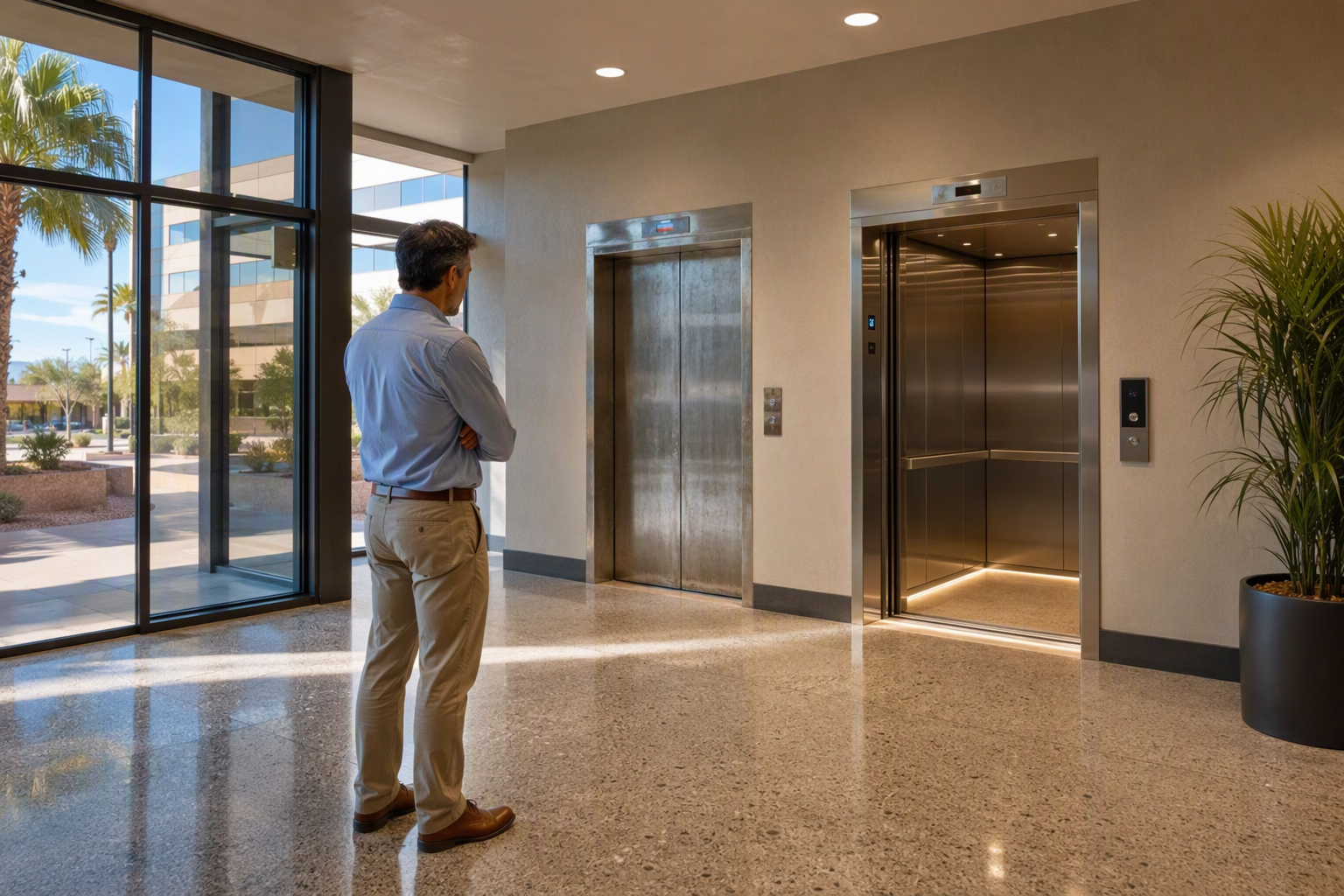
For commercial building owners in Phoenix and across Arizona, an aging elevator presents one of the most consequential maintenance decisions in the life of a property. Repairs may be appropriate for equipment with isolated mechanical issues, while modernization often becomes the smarter path when a system requires repeated interventions, falls short of current safety standards, or creates liability exposure. Arizona Elevator Solutions helps owners work through this decision with a structured, objective evaluation rooted in Arizona regulatory requirements and industry best practices.
What are the main factors that determine whether to repair or modernize a commercial elevator?
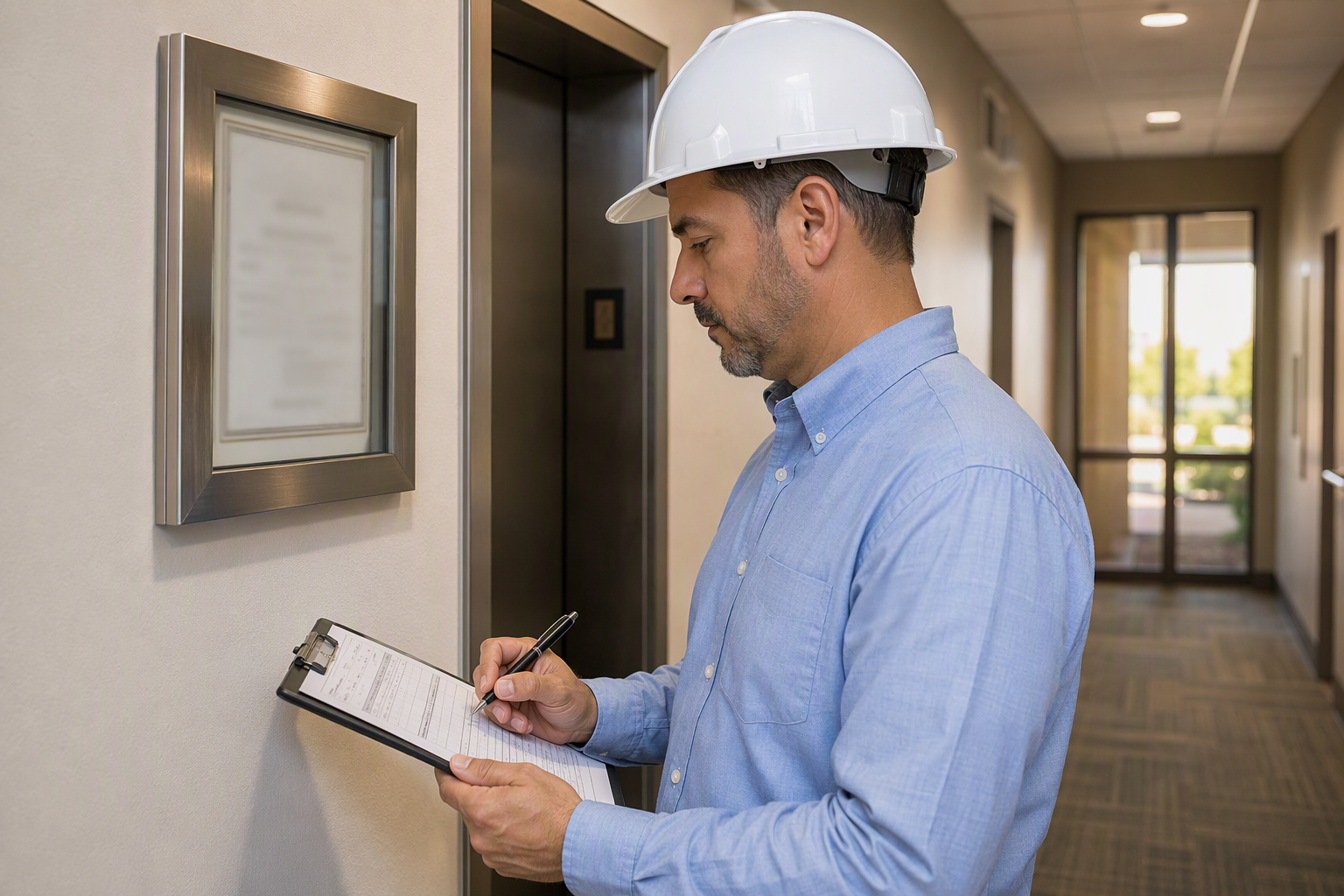
No single factor drives the repair-versus-modernize decision. Building owners and their service partners typically weigh several dimensions together:
- Age and overall condition of the equipment. Older hydraulic or traction systems may have discontinued components, making future repairs increasingly difficult and expensive.
- Frequency and cost of recent repairs. When repair invoices are recurring rather than isolated, cumulative costs can exceed the investment required for modernization.
- Compliance status. Arizona has adopted ASME A17.1-2019 for equipment installed, repaired, or altered on or after January 1, 2023. Equipment that repeatedly requires code-related corrections may be better served by a comprehensive modernization that brings the entire system into current compliance at once.
- Safety performance. A history of entrapments, door malfunctions, or leveling problems signals systemic risk that targeted repairs may not resolve.
- Tenant and operational impact. Downtime frequency affects tenant satisfaction, accessibility obligations under the Americans with Disabilities Act (ADA), and building marketability.
- Remaining useful life projection. A qualified assessment can estimate how many productive years remain in the existing equipment, giving owners a basis for financial comparison.
What does Arizona law require before any repair or modernization work can begin?
Arizona building owners must meet specific legal obligations before altering or modernizing a conveyance. Under A.R.S. §§ 23-491 through 23-491.16 and the Arizona Administrative Code R20-5-502 through R20-5-515, owners must notify the state at least 90 days before installing, relocating, or altering a conveyance.
Following any modification or alteration, the elevator must be inspected before it returns to service, and a new annual certificate of inspection must be issued by the Industrial Commission of Arizona (ICA), Elevator Division — the state’s elevator regulator as of September 12, 2026, formerly known as the ADOSH Elevator Safety Section. That certificate must be kept at the same location as the conveyance and made available on request, and the state serial number or certificate must be posted in or close to the elevator in an easily accessible location.
For elevators located within the City of Phoenix, the City of Phoenix Elevator Section (Planning and Development Department) handles inspections; the ICA Elevator Division covers equipment elsewhere in Arizona. Contractors performing this work must hold the appropriate Arizona Registrar of Contractors license — either the R-12 or C-12 elevator classification — which authorizes the installation and repair of elevators, dumbwaiters, escalators, and moving walks.
How does the “repair versus modernize” cost calculation actually work?
A widely used industry framework compares the projected annual repair cost against the capital cost of modernization spread over the expected service life of modernized equipment. When the cumulative cost of continued repairs — accounting for parts availability, labor complexity, and increasing failure frequency — approaches or exceeds the modernization investment over a reasonable horizon, modernization typically produces the stronger financial outcome.
This calculation also benefits from incorporating less visible costs: energy consumption differences between older and newer drive systems, insurance considerations tied to equipment condition, and tenant turnover risk associated with unreliable service. Arizona Elevator Solutions presents owners with a side-by-side comparison during the consultation process so the decision rests on transparent data rather than assumptions.
What does elevator modernization actually include, and how disruptive is it?
Modernization scope varies significantly based on the elevator’s condition and the owner’s goals. A partial modernization might address the control system, door operator, and safety devices while retaining the existing cab and mechanical components. A full modernization replaces virtually everything — drive machine, controller, cab interior, fixtures, and safety systems — effectively producing a new-performing elevator in the existing hoistway.
Disruption depends on the scope and the building’s elevator configuration. Single-elevator buildings require careful scheduling to minimize tenant impact, while multi-elevator facilities can often allow phased work that keeps at least one unit in service. Arizona Elevator Solutions coordinates modernization timelines with building management to reduce operational disruption.
All modernization work on equipment altered on or after January 1, 2023 must conform to ASME A17.1-2019 as adopted by Arizona, and platform lifts or stairway chairlifts altered on or after that date must comply with ASME A18.1-2020.
When does Arizona law require an elevator to be taken out of service or upgraded regardless of owner preference?
Arizona’s regulatory framework allows lawfully installed older conveyances to remain in use unless the ICA Elevator Division’s elevator chief determines that continued operation poses a hazard to life, health, or property. This means age alone does not automatically mandate modernization — but a documented safety deficiency can trigger mandatory action.
Owners must also notify the state within 24 hours of any accident that injures a person or disables a conveyance. An accident of this nature typically prompts a compliance review that may result in required corrective work before the elevator is permitted to return to service. Proactive modernization or systematic repair programs are generally far less disruptive than reactive compliance proceedings.
How should a building owner evaluate elevator service vendors when making this decision?
The repair-versus-modernize decision is only as reliable as the assessment behind it. Building owners benefit from choosing a service partner who can demonstrate the following:
- Holds the appropriate Arizona Registrar of Contractors R-12 or C-12 license for elevator work
- Is familiar with both the ICA Elevator Division requirements and, for Phoenix properties, the City of Phoenix Elevator Section process
- Provides a written assessment that distinguishes between safety-critical deficiencies and cosmetic or comfort-related improvements
- Can document compliance with ASME A17.1-2019 and relevant ADA accessibility requirements
- Has no financial incentive to recommend one path over the other without objective supporting data
Arizona Elevator Solutions serves commercial properties throughout the Phoenix metro area and across Arizona, bringing local knowledge of AHJ processes, inspection timelines, and contractor requirements that out-of-state or national vendors may lack.
What steps should a commercial building owner follow to begin the repair-versus-modernize evaluation?
- Gather the elevator’s maintenance and service history. Collect all inspection reports, repair invoices, and the current state certificate of inspection. Note any recurring failures or safety-related findings.
- Confirm compliance and inspection status. Verify that the conveyance holds a valid annual certificate of inspection from the ICA Elevator Division (or the City of Phoenix Elevator Section, if applicable) and that the state serial number is posted as required.
- Schedule a professional condition assessment. Have a licensed Arizona elevator contractor perform a systematic evaluation of the drive system, controls, doors, safety devices, and cab components to identify deficiencies and estimate remaining useful life.
- Request a written cost comparison. Ask the service provider to document both a repair scope and a modernization scope with associated costs, projected service life, and compliance implications for each path.
- Evaluate ADA and accessibility implications. Determine whether either path affects the elevator’s compliance with ADA accessibility requirements, particularly for cab dimensions, controls, and door timing.
- Consult with building ownership, management, and legal counsel as appropriate, particularly if the assessment reveals conditions that may affect tenant obligations or property insurance.
- Submit required notices. If modernization or alteration is selected, ensure the 90-day advance notification to the state is submitted and that the post-alteration inspection is scheduled before the elevator returns to service.
Does Arizona Elevator Solutions serve properties outside the City of Phoenix?
Arizona Elevator Solutions serves commercial building owners throughout the Phoenix metropolitan area and across the state of Arizona. Whether a property falls under the jurisdiction of the City of Phoenix Elevator Section or is inspected directly by the ICA Elevator Division, the team is experienced with the applicable inspection and compliance processes. Arizona Elevator Solutions is available for consultations, assessments, repair programs, and full modernization projects statewide.
Schedule a Free Consultation with Arizona Elevator Solutions
Making the right repair-versus-modernize decision protects your tenants, your investment, and your compliance standing under Arizona law. Arizona Elevator Solutions provides objective, code-informed evaluations for commercial elevator owners throughout Phoenix and across Arizona.
Call Arizona Elevator Solutions today to schedule your free consultation: 480-557-7600
Need elevator service you can rely on? Arizona Elevator Solutions is ready to help.






