Elevator Service in Phoenix, AZ | Arizona Elevator Solutions
For building owners and property managers in Phoenix and across Arizona, understanding elevator lifespan and replacement timelines is essential for capital planning, tenant safety, and regulatory compliance. Arizona Elevator Solutions provides certified elevator service throughout Arizona, helping commercial, residential, and industrial property owners navigate every stage of an elevator’s life — from routine maintenance and annual inspections to full modernization and replacement.
What Is the Average Lifespan of a Commercial Elevator?
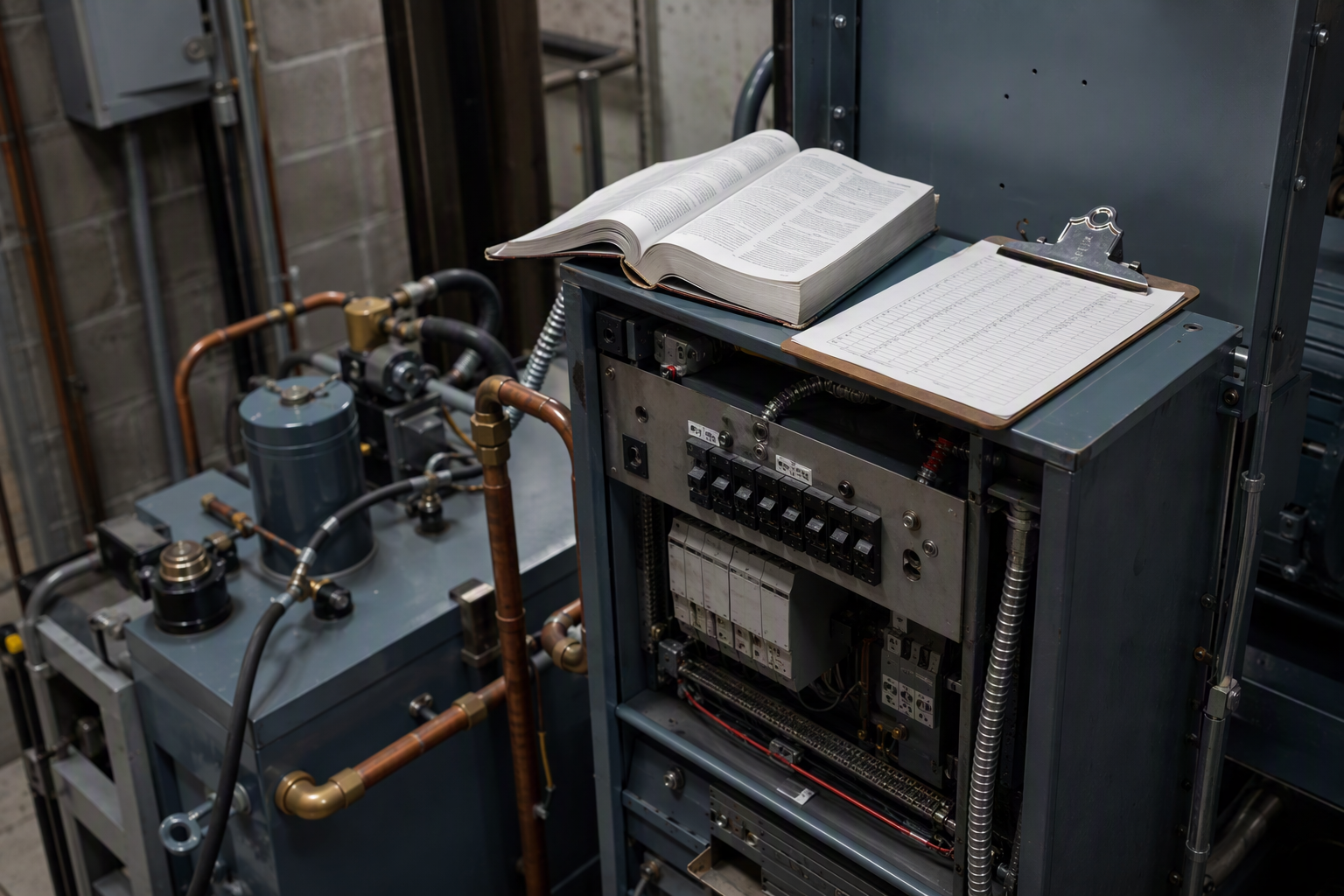
The service life of a commercial elevator depends heavily on usage intensity, maintenance history, and the quality of the original installation. In general, well-maintained commercial elevator systems can operate effectively for 20 to 25 years before major component replacement or full modernization becomes cost-justified. High-traffic elevators in busy Phoenix office towers, hospitals, or mixed-use developments may reach functional obsolescence sooner, while low-use systems in smaller buildings can remain serviceable longer.
It is important to distinguish between the mechanical life of the equipment and its compliance life. An elevator may still run but fail to meet current editions of the ASME A17.1 Safety Code for Elevators and Escalators or accessibility requirements under the Americans with Disabilities Act (ADA). In Arizona, compliance with the applicable ASME standards is enforced through the state’s elevator safety program, which means an aging elevator that still operates may nonetheless require modernization to remain legally in service.
How Often Do Elevators Need to Be Replaced?
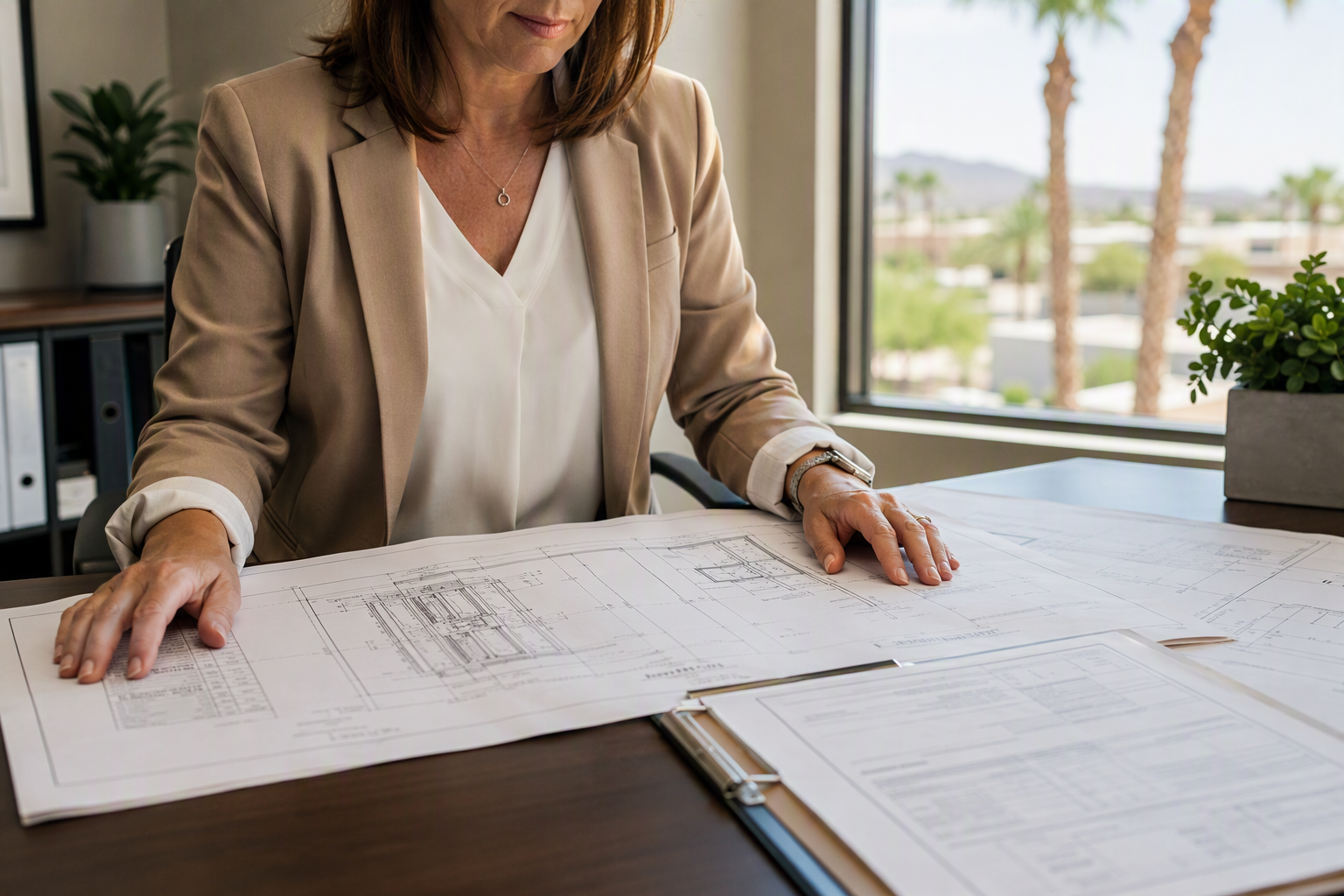
Replacement — meaning the complete removal and installation of a new elevator system — is far less common than modernization. Most commercial elevator owners in Phoenix find that targeted modernization of major subsystems (controls, hydraulics, cab interiors, door operators, or drive systems) extends service life and defers the cost of full replacement. The decision to replace rather than modernize is typically driven by one or more of the following conditions:
- Obsolete control systems for which replacement parts are no longer manufactured
- Structural deterioration of the hoistway or machine room that makes renovation impractical
- Chronic mechanical failures that generate repair costs exceeding the value of continued operation
- Code deficiencies so extensive that modernization costs approach the cost of full replacement
- Changes in building use that require a fundamentally different elevator configuration or capacity
There is no single mandated replacement interval in Arizona or under federal standards. The requirement is ongoing compliance — not a fixed replacement clock.
What Arizona Codes and Inspections Govern Elevator Safety?
Arizona administers elevator safety through a state regulatory framework that adopts and enforces nationally recognized standards. The governing federal technical standard is the ASME A17.1 Safety Code for Elevators and Escalators for new installations, and the ASME A17.3 Safety Code for Existing Elevators and Escalators for existing equipment. ASME A17.3 is particularly relevant to the question of lifespan and modernization because it establishes retroactive safety requirements that existing elevators must meet regardless of their original installation date.
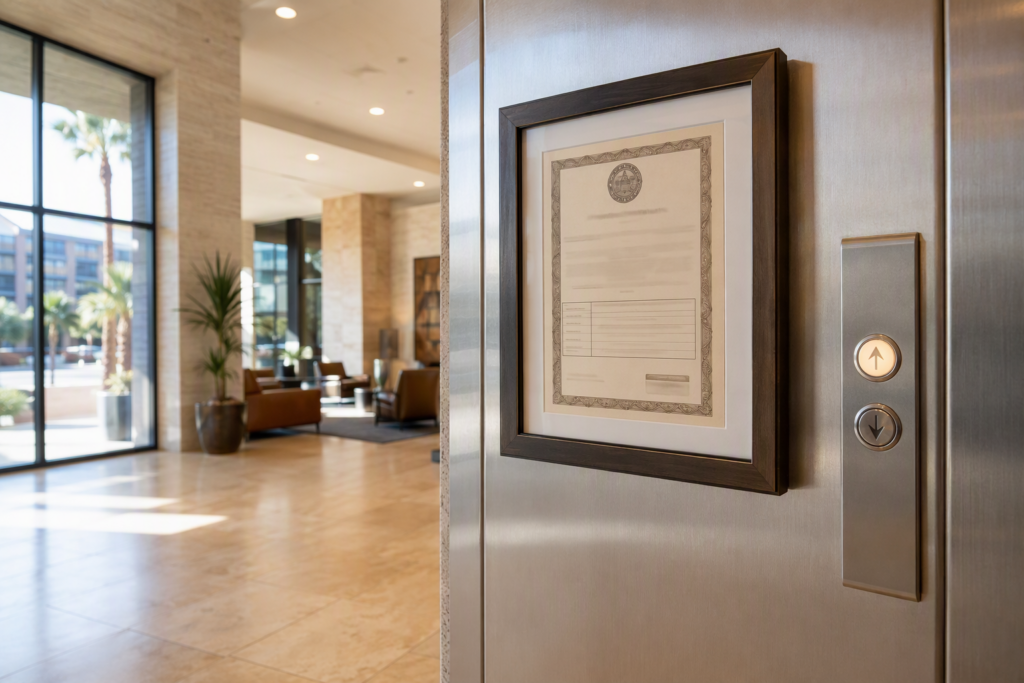
Commercial elevators in Arizona are subject to periodic inspections by the state’s elevator safety authority. These inspections evaluate whether the elevator meets applicable code requirements and whether it is safe for continued operation. Building owners who allow an elevator to fall out of compliance risk shutdown orders, liability exposure, and the cost of emergency remediation — outcomes far more disruptive and expensive than proactive maintenance and planned modernization.
ADA accessibility requirements under Title II and Title III of the Americans with Disabilities Act also apply to commercial elevators and must be considered when evaluating whether an aging system should be modernized or replaced.
What Are the Signs That an Elevator Needs Replacement or Modernization?
Property managers in Phoenix should monitor their elevator systems for the following indicators that action beyond routine maintenance may be needed:
- Increasing frequency of service calls — A pattern of recurring breakdowns, rather than isolated incidents, signals aging components
- Extended parts lead times — When replacement parts must be custom-fabricated or sourced from discontinued inventories, repair windows grow and costs escalate
- Rough or inconsistent ride quality — Leveling problems, jerky starts and stops, or excessive noise often indicate worn drive or control components
- Door malfunctions — Door operator failures are among the most common complaints in older systems and can pose entrapment and injury risks
- Failed inspections or open violations — Unresolved code deficiencies from an Arizona elevator inspection are a direct signal that modernization or replacement is required
- Energy inefficiency — Older hydraulic and traction systems consume significantly more energy than modern equivalents, contributing to elevated operating costs
What Does an Elevator Modernization Typically Involve?
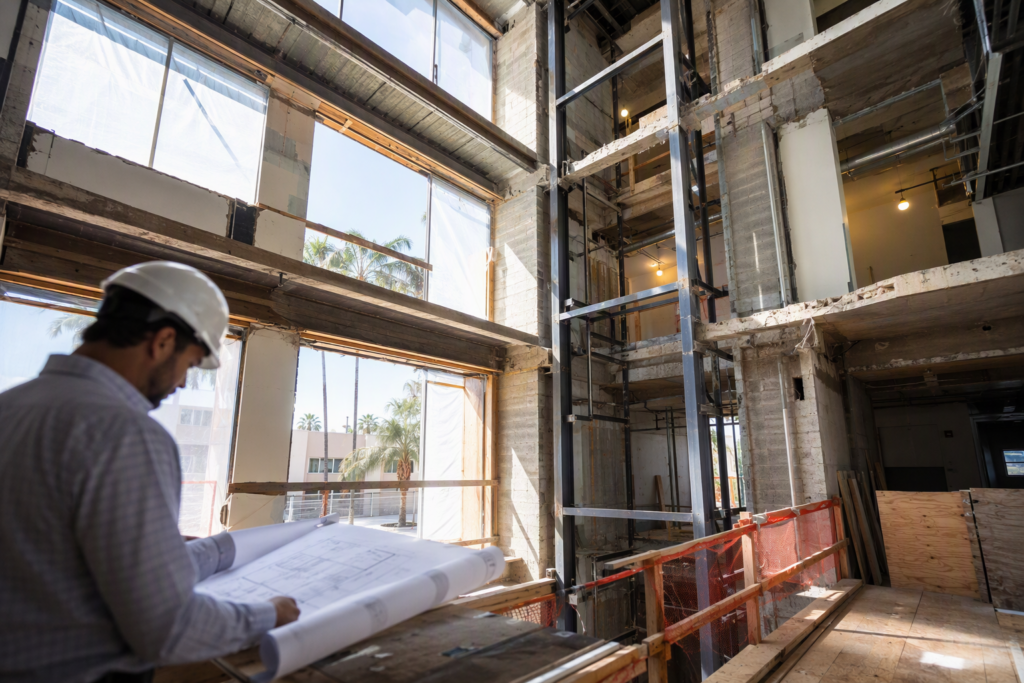
Modernization is the replacement of major elevator subsystems while retaining the existing hoistway and, in many cases, the cab structure. For Phoenix commercial properties, a modernization project commonly addresses:
- Control system upgrades to current microprocessor-based technology
- Drive system replacement (for traction elevators) or hydraulic unit overhaul (for hydraulic elevators)
- Door operator and door hardware replacement
- Safety device upgrades required to meet current ASME A17.3 retroactive requirements
- Cab interior renovation, lighting upgrades, and ADA-compliant fixture updates
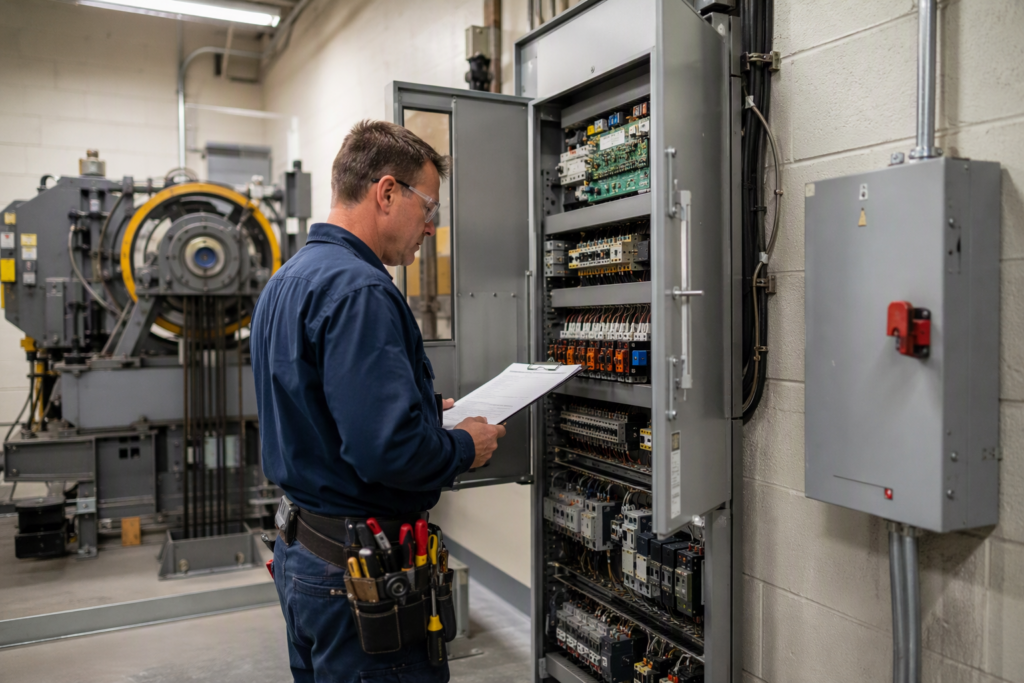
- Machine room upgrades, including ventilation and electrical service improvements
A properly scoped modernization can extend the effective life of an elevator system by many years while bringing it into compliance with current Arizona code requirements.
What Steps Should a Building Owner Take When an Elevator Approaches End of Life?
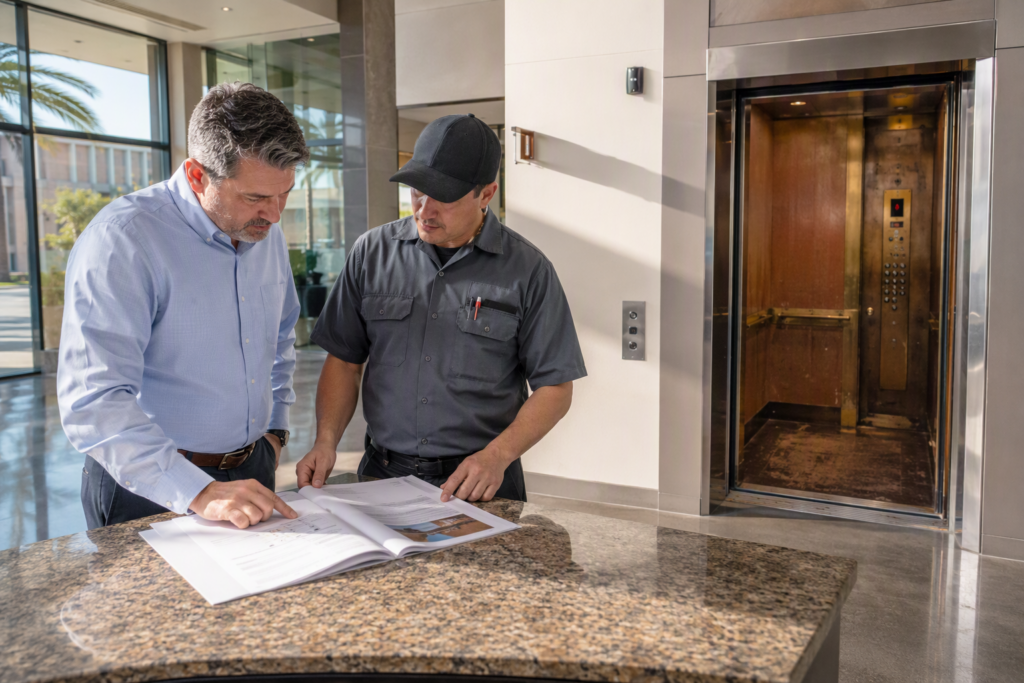
- Commission a condition assessment. Have a qualified elevator service company conduct a comprehensive evaluation of all major systems — mechanical, electrical, structural, and code compliance — to establish a clear picture of the elevator’s current state.
- Review inspection and violation history. Obtain the elevator’s inspection records from Arizona’s elevator safety authority and identify any outstanding violations or recurring deficiency categories.
- Request a modernization-versus-replacement analysis. Ask your elevator service provider to prepare a written comparison of the projected cost and benefit of targeted modernization, comprehensive modernization, and full replacement, including anticipated downtime for each path.
- Evaluate ADA compliance gaps. Confirm whether the existing equipment meets current ADA accessibility standards and factor remediation costs into the decision.
- Develop a capital plan. Work with your service provider to establish a phased maintenance and modernization schedule that aligns with your building’s budget cycles and minimizes tenant disruption.
- Select a licensed Arizona elevator contractor. Ensure any modernization or replacement work is performed by a contractor licensed to perform elevator work in Arizona and that all permits and inspections required by the state are properly obtained and completed.
How Does Phoenix’s Climate Affect Elevator Lifespan?
Phoenix’s desert climate creates operating conditions that differ meaningfully from national averages. Extreme summer heat places sustained thermal stress on hydraulic fluids, motor windings, control electronics, and door operator components. Machine rooms that lack adequate ventilation or cooling can see accelerated component degradation. Buildings that invest in proper machine room climate control and use fluids and lubricants specified for high-temperature operation tend to extend the interval between major repairs. For Arizona building owners, climate-aware preventive maintenance is not optional — it is a material factor in preserving elevator life and avoiding premature replacement costs.
Why Choose Arizona Elevator Solutions for Elevator Service in Phoenix?
Arizona Elevator Solutions is a certified elevator service company serving Phoenix and communities throughout Arizona. The company’s focus is exclusively on the Arizona market, meaning its team understands the specific regulatory environment enforced by Arizona’s elevator safety authority, the ASME codes adopted in the state, and the real-world operating conditions that Arizona’s climate creates for elevator equipment.
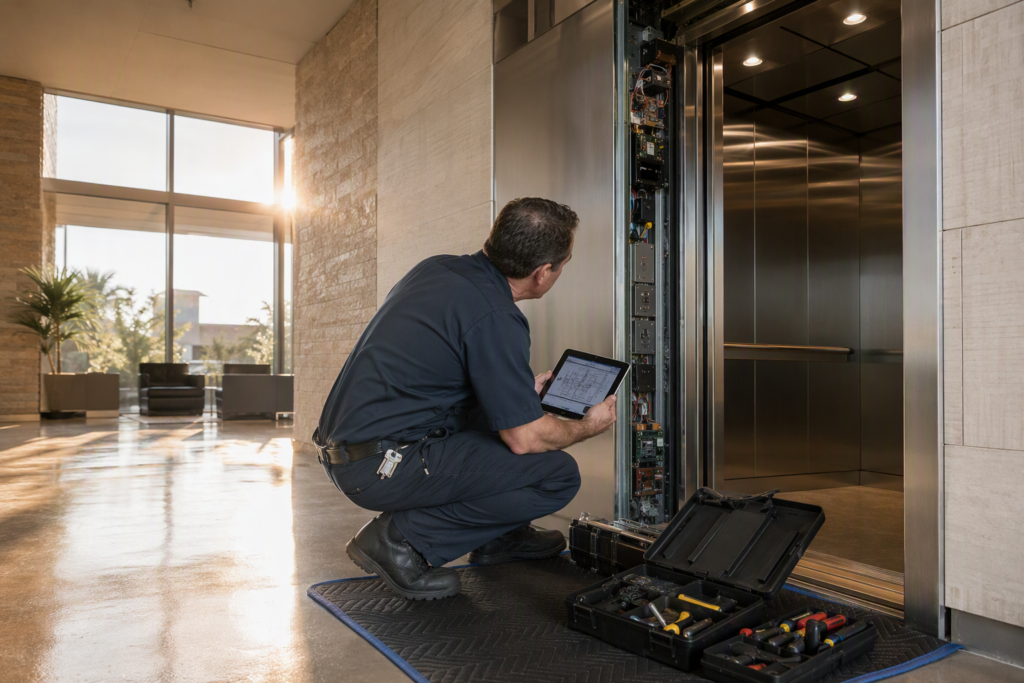
Arizona Elevator Solutions provides comprehensive elevator services including preventive maintenance, code compliance inspections, modernization planning, and full replacement projects for commercial, multi-family residential, healthcare, hospitality, and industrial facilities. Emergency service availability is maintained to support building owners when unplanned outages occur. For non-emergency needs, the company offers scheduled consultations to help property owners understand where their elevator systems stand relative to code requirements and end-of-life considerations.
Schedule a Free Consultation
If your Phoenix-area commercial elevator is aging, showing signs of increased maintenance needs, or approaching an inspection deadline, Arizona Elevator Solutions is available to help you assess your options. Contact the team today to schedule a free consultation and receive a professional evaluation of your elevator’s condition, compliance status, and long-term service plan.
Call Arizona Elevator Solutions: 480-557-7600
Serving Phoenix and communities throughout Arizona — from commercial high-rises and medical facilities to multi-family residential buildings and industrial properties.
Need elevator service you can rely on? Arizona Elevator Solutions is ready to help.