Elevator Requirements and Compliance Obligations for Senior Living and Assisted Living Facilities in Arizona
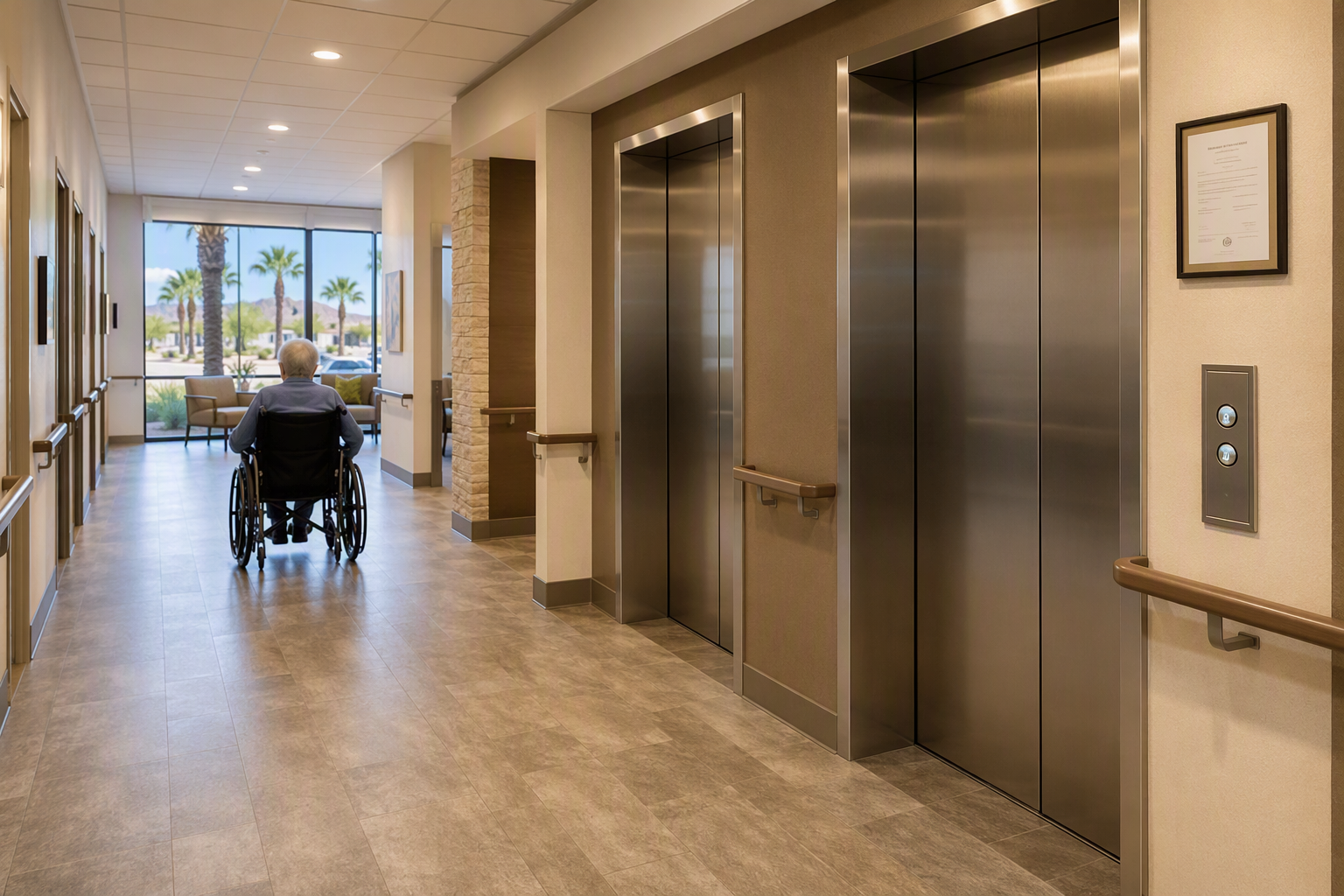
For operators and administrators of senior living, assisted living, and memory care communities across Phoenix, Tucson, Scottsdale, and Mesa, elevator compliance is not simply a regulatory checkbox — it is a direct patient-safety and liability obligation. Residents may depend on elevators as their sole means of vertical travel, making uptime, accessibility, and code compliance mission-critical. This guide covers every material compliance requirement your facility must meet and the questions your next inspector is likely to ask.
—
What Federal Codes Govern Elevators in Senior Living Facilities?
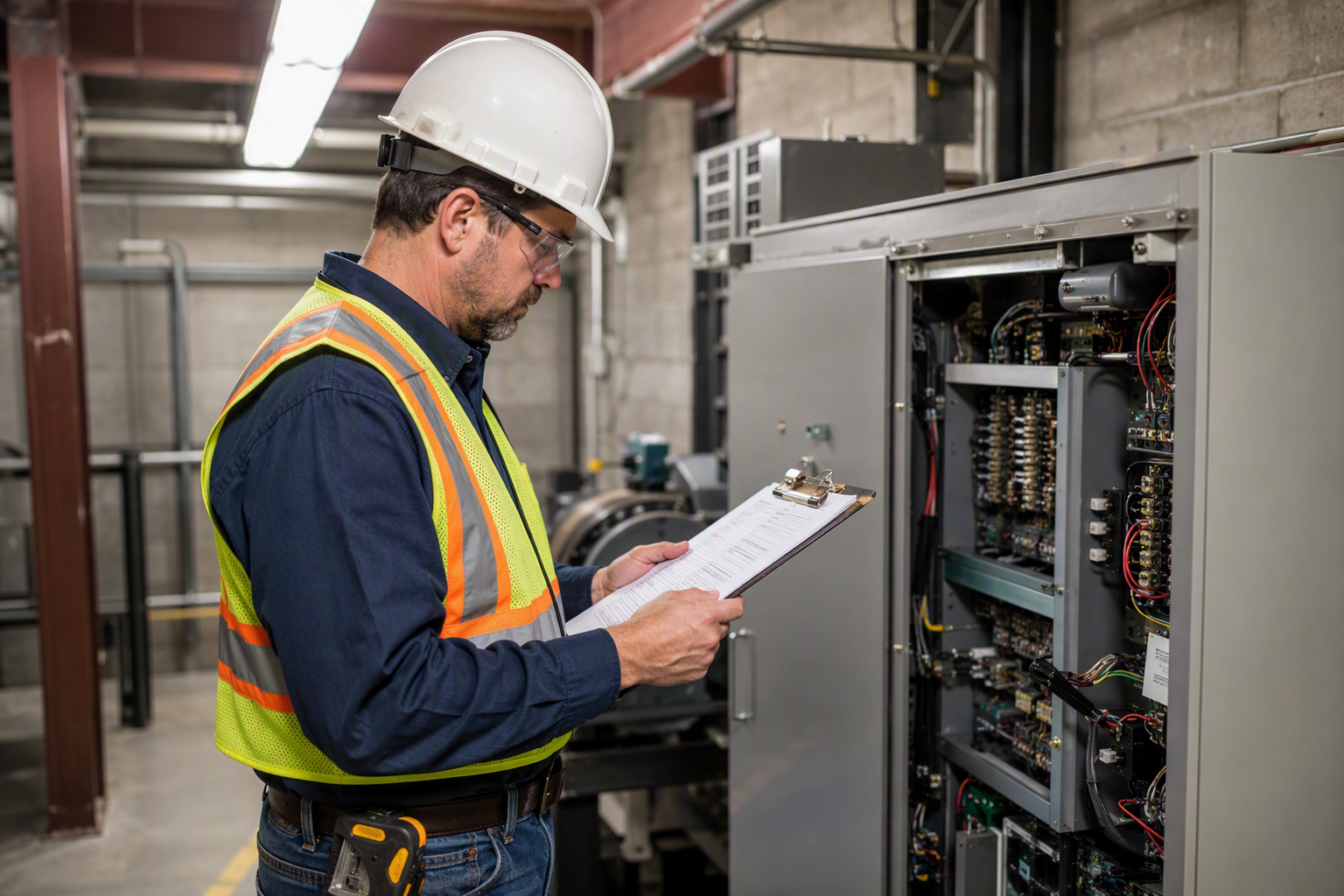
Two federal-level code families form the baseline for elevator compliance at any senior living or assisted living facility in Arizona.
ASME A17.1 Safety Code for Elevators and Escalators sets the design, installation, and performance requirements for new elevators. Any elevator installed in a new senior living facility or added during a major renovation must meet the edition of ASME A17.1 adopted by Arizona at the time of permit issuance.
ASME A17.3 Safety Code for Existing Elevators and Escalators applies to elevators already in service. This standard defines the minimum safety requirements that existing equipment must meet, regardless of the edition under which it was originally installed. For older assisted living buildings — a common situation across Arizona’s established communities — A17.3 compliance is the practical starting point for any modernization or inspection conversation.
The Americans with Disabilities Act imposes additional accessibility obligations. In a senior living or assisted living setting, where a significant portion of residents use wheelchairs, walkers, or other mobility aids, ADA elevator requirements are operationally inseparable from basic facility function. Key ADA elevator provisions address call button height and size, door timing and reopening devices, floor designations, leveling accuracy, and audible and visual signals — all of which affect residents with mobility or sensory impairments.
—
What Arizona-Specific Requirements Apply to Assisted Living Elevators?
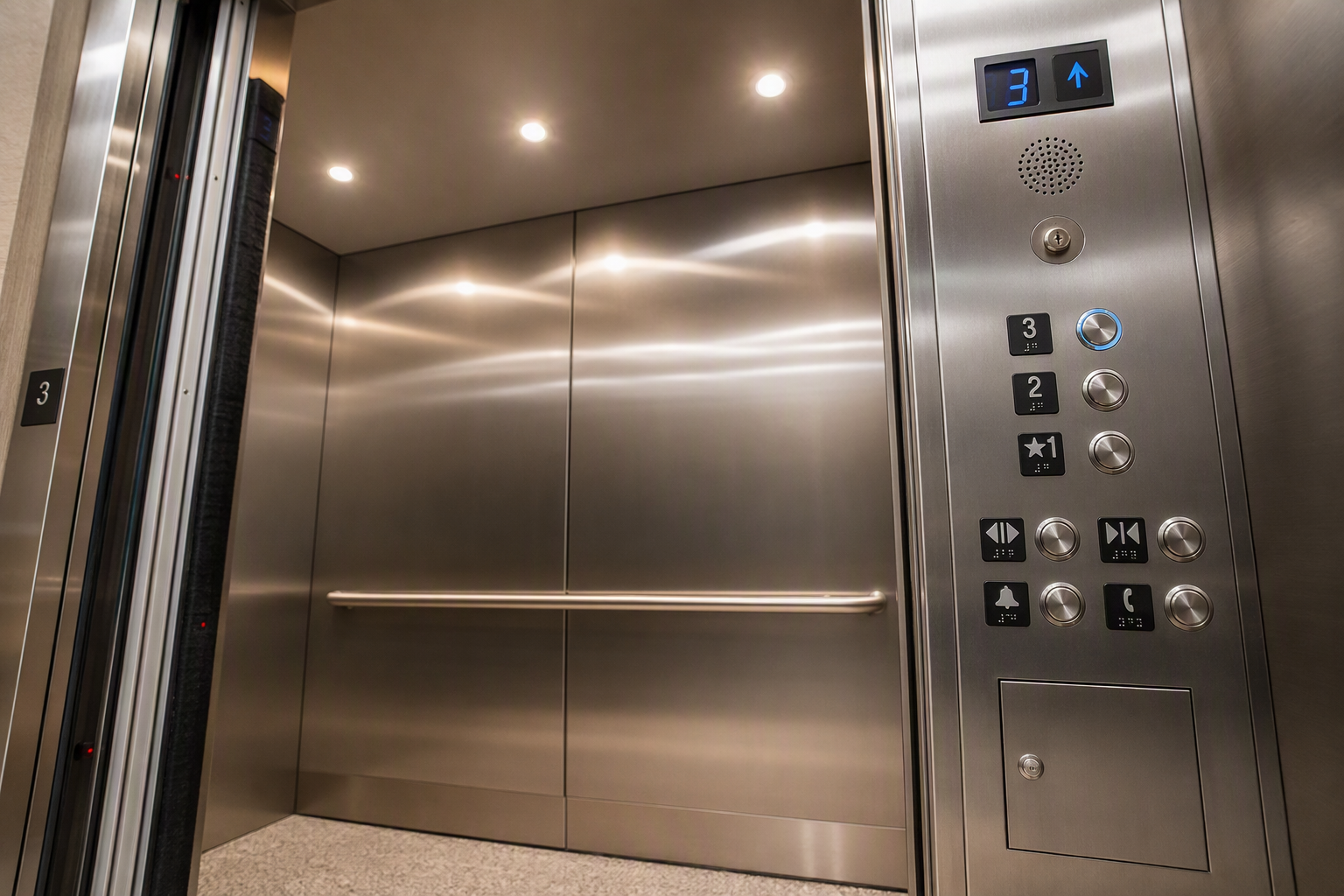
Arizona administers elevator safety through the Arizona Division of Occupational Safety and Health (ADOSH), which operates under the Arizona Industrial Commission. ADOSH enforces the state elevator safety program, including licensing of elevator contractors and mechanics, permitting of new installations and alterations, and issuance of certificates of operation.
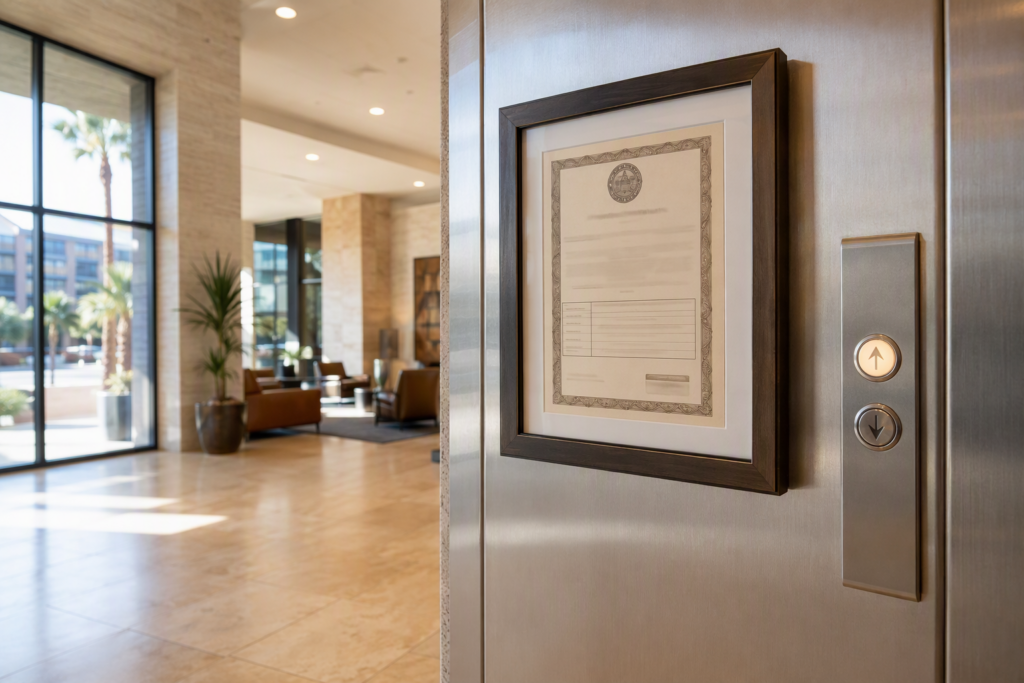
In Arizona, a valid certificate of operation must be issued by ADOSH and posted in or near each elevator. Facilities that operate elevators without a current certificate of operation are out of compliance with state law and may face citations, fines, or orders to cease elevator use — an outcome with severe implications for a senior living community where elevator access may be essential for resident safety and egress.
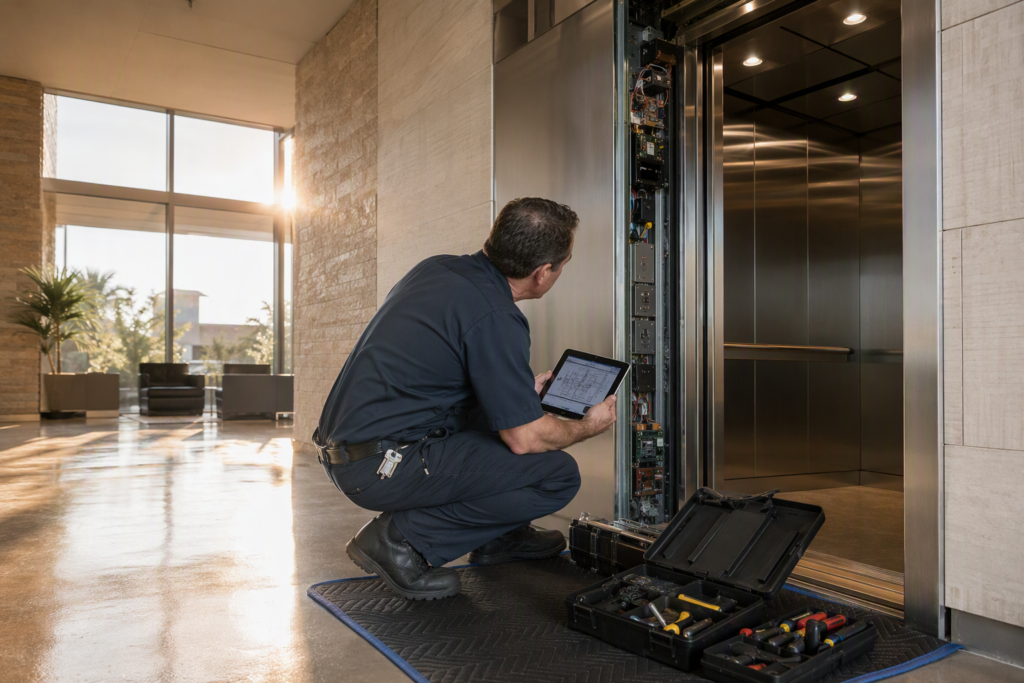
Elevator work in Arizona — including installation, alteration, and maintenance — must be performed by contractors and mechanics holding current Arizona elevator licenses. Facility administrators should verify that any service provider, including their maintenance contractor, holds the appropriate Arizona license before work begins.
Arizona Elevator Solutions is a certified elevator service company operating across Phoenix, Tucson, Scottsdale, Mesa, and surrounding Arizona communities, providing inspection-ready maintenance programs tailored to the unique demands of healthcare and senior living environments.
—
What Are the Inspection Intervals for Senior Living Facility Elevators in Arizona?
Arizona requires periodic inspections of all elevators subject to state jurisdiction. Inspection frequency is determined by ADOSH and tied to the type and use of the equipment. Senior living facilities should not assume that a one-time inspection satisfies ongoing obligations — certificates of operation require periodic renewal, and facilities must maintain inspection records on-site and available for review.
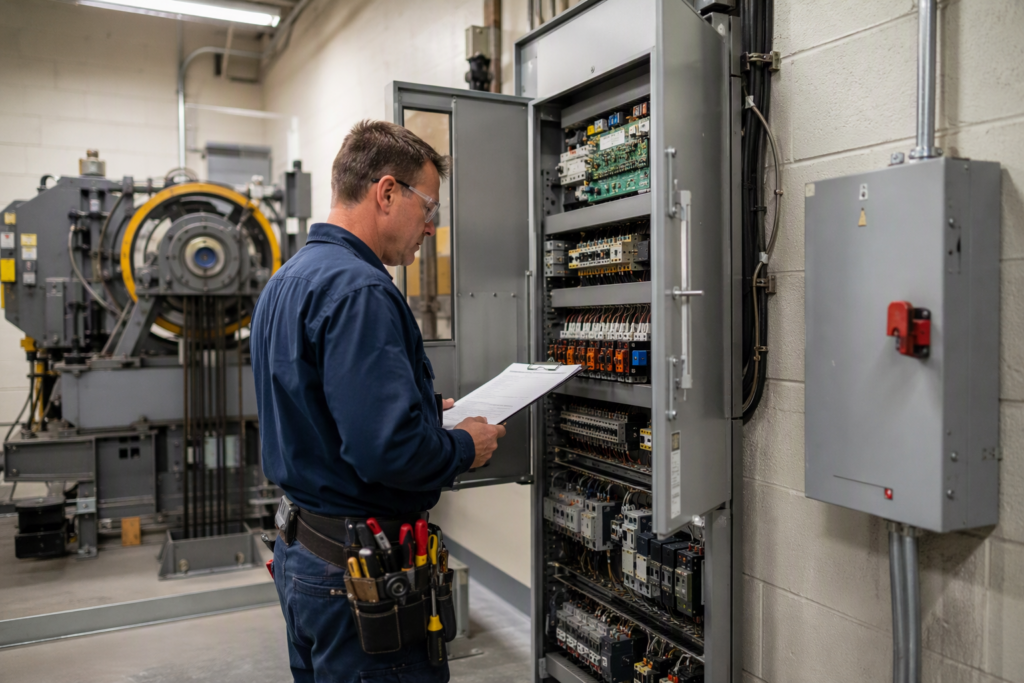
In addition to state-mandated inspections, the ASME A17.1 and A17.3 codes reference routine maintenance and periodic testing requirements — including periodic no-load and full-load safety tests — that must be documented and retained. Arizona’s adoption of these standards means these testing intervals are not optional.
Facility operators should work with a qualified Arizona-licensed elevator service provider to establish a documented maintenance log that satisfies both ADOSH and ASME requirements, as inspectors will review these records during routine and complaint-driven inspections.
—
What ADA Accessibility Requirements Must Senior Living Elevators Meet?
Under the Americans with Disabilities Act, elevators serving facilities that are places of public accommodation or that receive federal funding must meet specific accessibility standards. For senior living communities — particularly those that accept Medicare or Medicaid — ADA compliance is both a federal accessibility obligation and a condition of program participation.
Key ADA elevator requirements relevant to assisted living facilities include:
- Door reopening devices: Elevator doors must reopen automatically when obstructed, protecting residents who move more slowly due to age or mobility limitations.
- Door timing: Doors must remain open long enough for residents using mobility aids to enter and exit safely.
- Floor leveling: Elevators must level accurately to within one-half inch of the landing, reducing trip hazards for residents with gait or balance issues.
- Call controls: Call buttons must be mounted within accessible reach ranges and meet minimum size requirements.
- Cab interior controls: All controls must be within accessible reach and include raised and Braille characters.
- Audible and visual signals: Both audible and visible indicators are required at each floor to serve residents with sensory impairments.
- Emergency communication: A two-way emergency communication system must be operable without voice for residents who may be non-verbal.
—
What Happens If a Senior Living Facility Fails an Elevator Inspection in Arizona?
When an ADOSH inspection identifies violations, the facility receives a citation with a required abatement timeline. For serious safety violations, ADOSH may issue an out-of-service order, requiring the elevator to be taken offline until corrections are made and a re-inspection is passed. In a senior living environment, an out-of-service elevator can constitute a life-safety emergency — residents on upper floors may lose access to dining, amenities, and emergency egress pathways.
Repeated or willful violations can result in escalating civil penalties under Arizona law. Facilities that experience inspection failures should immediately engage a licensed Arizona elevator contractor to assess the scope of required corrections and develop a documented correction plan to present to ADOSH.
Arizona Elevator Solutions works with senior living operators across Phoenix, Tucson, Scottsdale, and Mesa to assess existing equipment, identify deficiencies before scheduled inspections, and implement corrections that restore compliance efficiently.
—
What Elevator Modernization Requirements Apply to Older Assisted Living Buildings?
Many assisted living communities in Arizona operate in buildings constructed decades ago, with elevators originally installed under earlier code editions. The ASME A17.3 Safety Code for Existing Elevators establishes the minimum safety features that existing equipment must meet, and Arizona’s enforcement of this standard means older equipment is not automatically exempt from current safety requirements.
Common modernization triggers for senior living facilities include:
- Failure to meet ASME A17.3 minimum requirements identified during inspection
- Parts obsolescence — when replacement components are no longer manufactured, repairs become impossible without modernization
- ADA compliance upgrades required by facility renovation or change of use
- Increased reliability demands driven by resident population growth or higher floor counts
- Proactive upgrades to reduce downtime risk in environments where elevator outages create immediate resident welfare concerns
Modernization projects require Arizona permits and ADOSH inspection upon completion before the elevator may return to service.
—
What Are the Emergency and Life-Safety Elevator Requirements for Arizona Senior Living Facilities?
Senior living and assisted living facilities face heightened emergency preparedness obligations. Arizona building codes and fire codes, enforced by local authorities having jurisdiction (AHJs) such as city building departments in Phoenix, Tucson, Scottsdale, and Mesa, may impose additional elevator-related life-safety requirements including:
- Firefighters’ emergency operation (Phase I and Phase II): Required under ASME A17.1, this feature allows fire department personnel to override normal elevator operation during emergencies — a critical safety feature in any multi-story occupied building.
- Standby power: Many local AHJs and state fire codes require elevators in healthcare-adjacent occupancies to be connected to emergency power systems to ensure operability during utility outages.
- Two-way emergency communication: Both ASME and ADA require operable two-way communication in the elevator cab, which must be functional and tested regularly.
Facility administrators should coordinate with their local AHJ to confirm which specific provisions apply to their occupancy classification and building configuration.
—
How Should a Senior Living Facility Prepare for an Elevator Inspection in Arizona?
Preparation for an ADOSH elevator inspection involves both documentation readiness and physical equipment condition. Follow these steps before your scheduled inspection:
- Locate and review your current certificate of operation. Confirm it is posted in or adjacent to the elevator and has not expired.
- Gather maintenance and testing records. Inspectors will request documentation of routine maintenance visits, lubrication logs, and periodic safety tests. Records should be organized chronologically and available on-site.
- Verify your elevator contractor’s Arizona license. Confirm that the company performing maintenance holds a current Arizona elevator contractor license.
- Conduct a pre-inspection walk-through. Check door operation, leveling accuracy, call button functionality, interior lighting, emergency communication, and visible safety devices.
- Review open permits or prior citations. Any unresolved citations from prior inspections must be addressed before or during the upcoming inspection.
- Confirm firefighters’ emergency operation is functional. Test Phase I and Phase II operation per manufacturer protocol and document the test.
- Check two-way communication systems. Verify that emergency communication is operational and that the monitoring service or point of contact is current.
- Schedule a pre-inspection assessment. Engaging a licensed elevator service company for a pre-inspection review allows deficiencies to be identified and corrected before the ADOSH inspector arrives.
—
Questions Your Inspector Will Ask
Arizona ADOSH elevator inspectors and local AHJ inspectors conducting acceptance or routine inspections at senior living facilities commonly focus on the following areas. Facility administrators and maintenance directors should be prepared to answer these questions and produce supporting documentation:
- “Where is your current certificate of operation, and is it posted as required?”
- “Who is your licensed elevator maintenance contractor, and can you provide their Arizona license number?”
- “Can you produce maintenance logs and service records for the past inspection period?”
- “When was the last periodic safety test performed, and do you have the written test results on file?”
- “Is firefighters’ emergency operation (Phase I and Phase II) functional and tested?”
- “Is the two-way emergency communication system operational and monitored?”
- “Are there any outstanding citations, violation notices, or permits from prior inspections?”
- “Has any alteration or repair work been performed on this equipment, and if so, was it permitted and inspected?”
- “Does the elevator level within the required tolerance at each landing?”
- “Are all required ADA accessibility features — including door timing, audible/visual signals, and Braille controls — present and functional?”
—
How Does Elevator Downtime Affect Assisted Living Facility Operations and Compliance?
In a senior living facility, an elevator outage is not a routine inconvenience — it can be a resident welfare and regulatory compliance event. Residents with mobility limitations or those housed on upper floors may lose access to meals, activities, medical appointments, and emergency egress routes. Facilities operating under state licensing through the Arizona Department of Health Services (ADHS) may have additional obligations to document and respond to equipment failures that affect resident care.
Proactive maintenance programs, rather than reactive repair-only approaches, are the industry standard for managing elevator reliability in healthcare environments. Documented preventive maintenance not only reduces unexpected failures but also demonstrates due diligence to ADOSH inspectors and facility licensing surveyors.
Arizona Elevator Solutions provides maintenance programs designed specifically for the continuous-operation demands of senior living and assisted living facilities in Phoenix, Tucson, Scottsdale, and Mesa — with documentation structured to support both ADOSH inspections and facility licensing reviews.
—
What Should Facility Administrators Know About Elevator Permits and Licensing in Arizona?
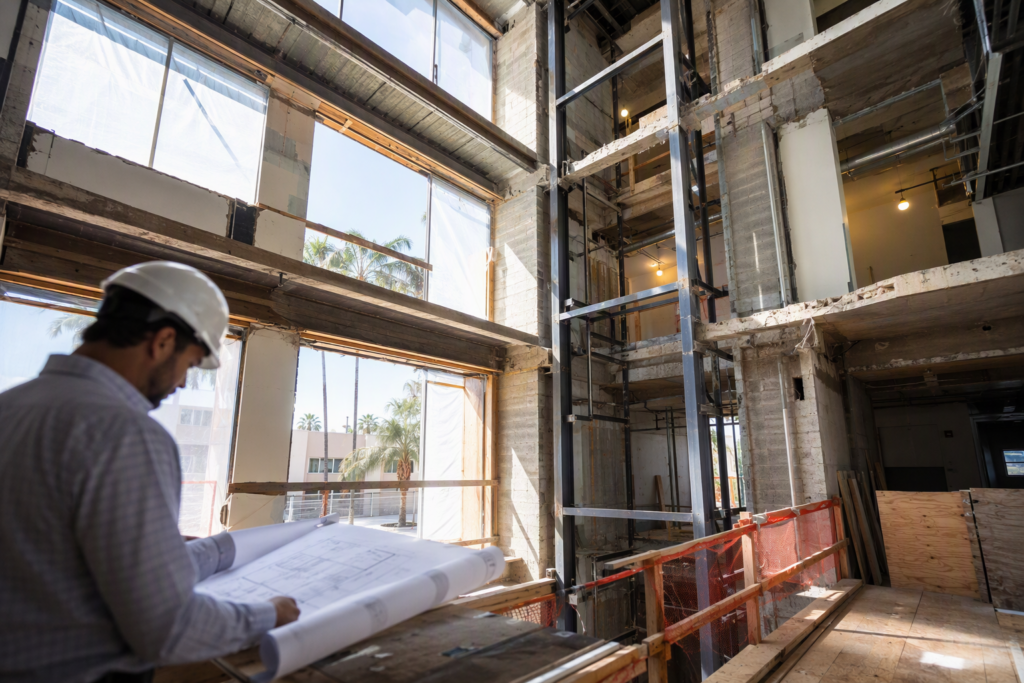
Arizona requires permits for new elevator installations and for alterations to existing equipment. An alteration — which can include control system upgrades, cab enclosure modifications, or door operator replacements — triggers a permit requirement, an ADOSH inspection upon completion, and issuance of a new or updated certificate of operation before the elevator returns to service.
Facility administrators who authorize or contract for elevator work without confirming that the contractor has pulled the required Arizona permit risk operating with an invalid certificate of operation — a compliance violation independent of the quality of the work performed. Always request a copy of the permit and the completed inspection report for your facility records.
—
What Is the Role of Local Authorities Having Jurisdiction (AHJs) in Senior Living Elevator Compliance?
While ADOSH administers Arizona’s statewide elevator safety program, local AHJs — including city building and fire departments in Phoenix, Tucson, Scottsdale, and Mesa — may impose additional requirements through local building codes and fire codes. New construction or major renovation projects typically require coordination with both ADOSH and the local AHJ.
Senior living facility operators should not assume that ADOSH approval alone satisfies all applicable requirements. Engaging a licensed elevator contractor with experience in Arizona’s major markets ensures that both state and local requirements are addressed in any installation, alteration, or modernization project.
—
Get a Free Elevator Compliance Assessment for Your Arizona Senior Living Facility
Elevator compliance in senior living and assisted living environments involves multiple overlapping code requirements, state licensing obligations, and local AHJ requirements. A deficiency found during an ADOSH inspection — rather than discovered proactively — can result in out-of-service orders, citations, and resident welfare disruptions that carry both operational and reputational consequences.
Contact Arizona Elevator Solutions for a free elevator assessment. A certified team serving Phoenix, Tucson, Scottsdale, Mesa, and communities throughout Arizona will review your equipment condition, maintenance documentation, and compliance status — and provide a clear picture of where your facility stands before your next inspection.
Contact Arizona Elevator Solutions for a free elevator assessment: 480-557-7600
Need elevator service you can rely on? Arizona Elevator Solutions is ready to help.