Elevator Modernization Options for Hospitals and Medical Facilities: Compliance & Downtime Guide
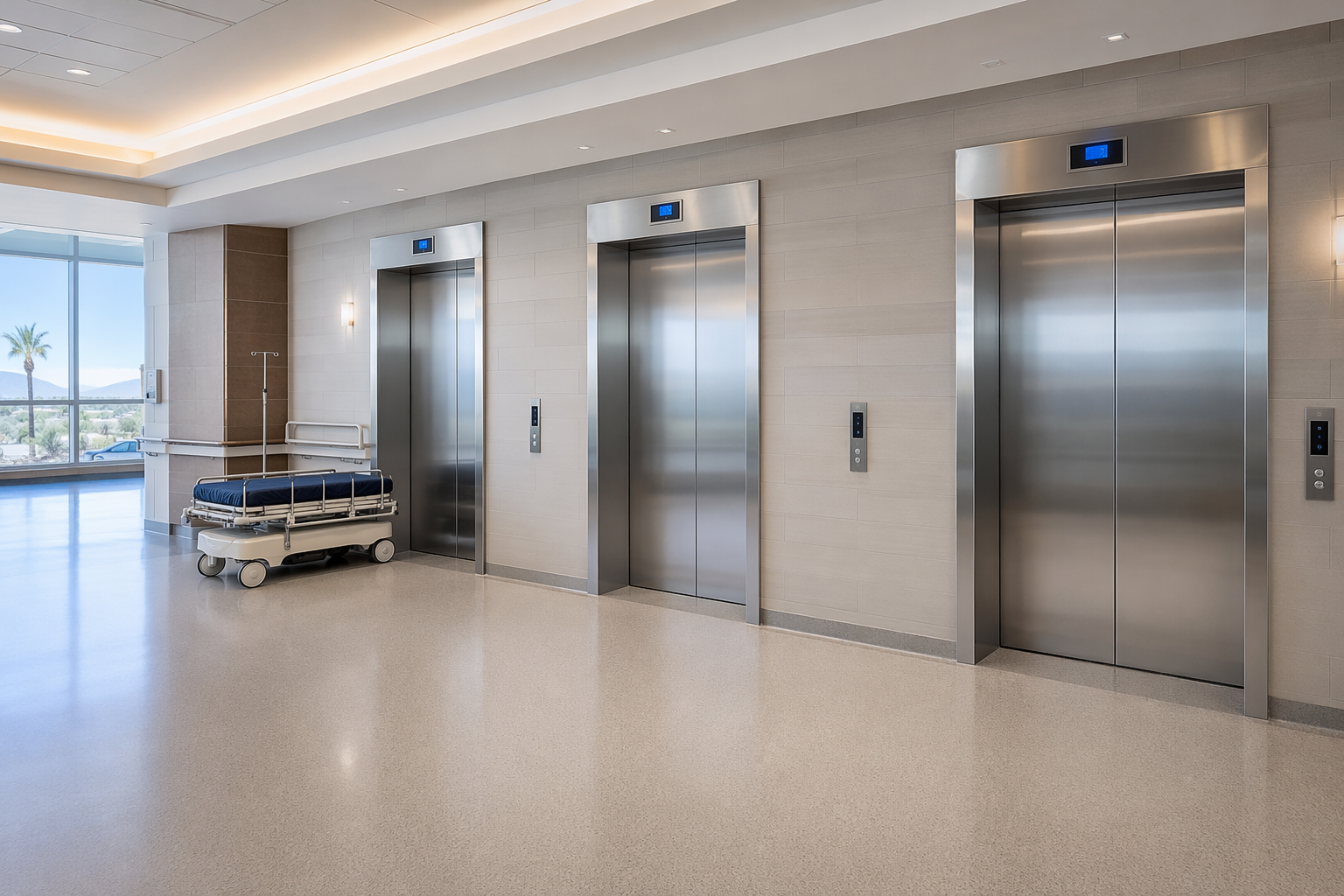
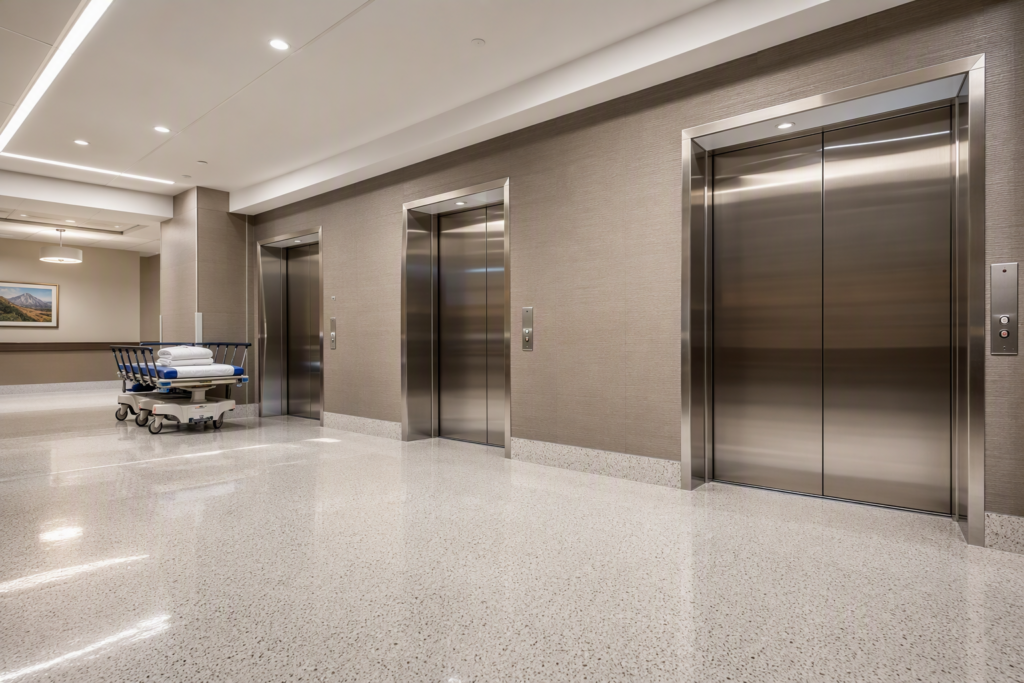
Healthcare facilities across Phoenix, Tucson, Scottsdale, and Mesa depend on elevators as critical infrastructure—moving patients on gurneys, transporting medication carts, and enabling rapid emergency response. When elevator systems age, modernization is not simply a capital improvement; it is a patient safety and regulatory obligation. This page outlines the full scope of modernization options available to Arizona hospitals and medical facilities, the compliance frameworks that govern those upgrades, and the strategies used to minimize disruption to clinical operations.
What Elevator Modernization Options Are Available for a Hospital or Medical Facility?
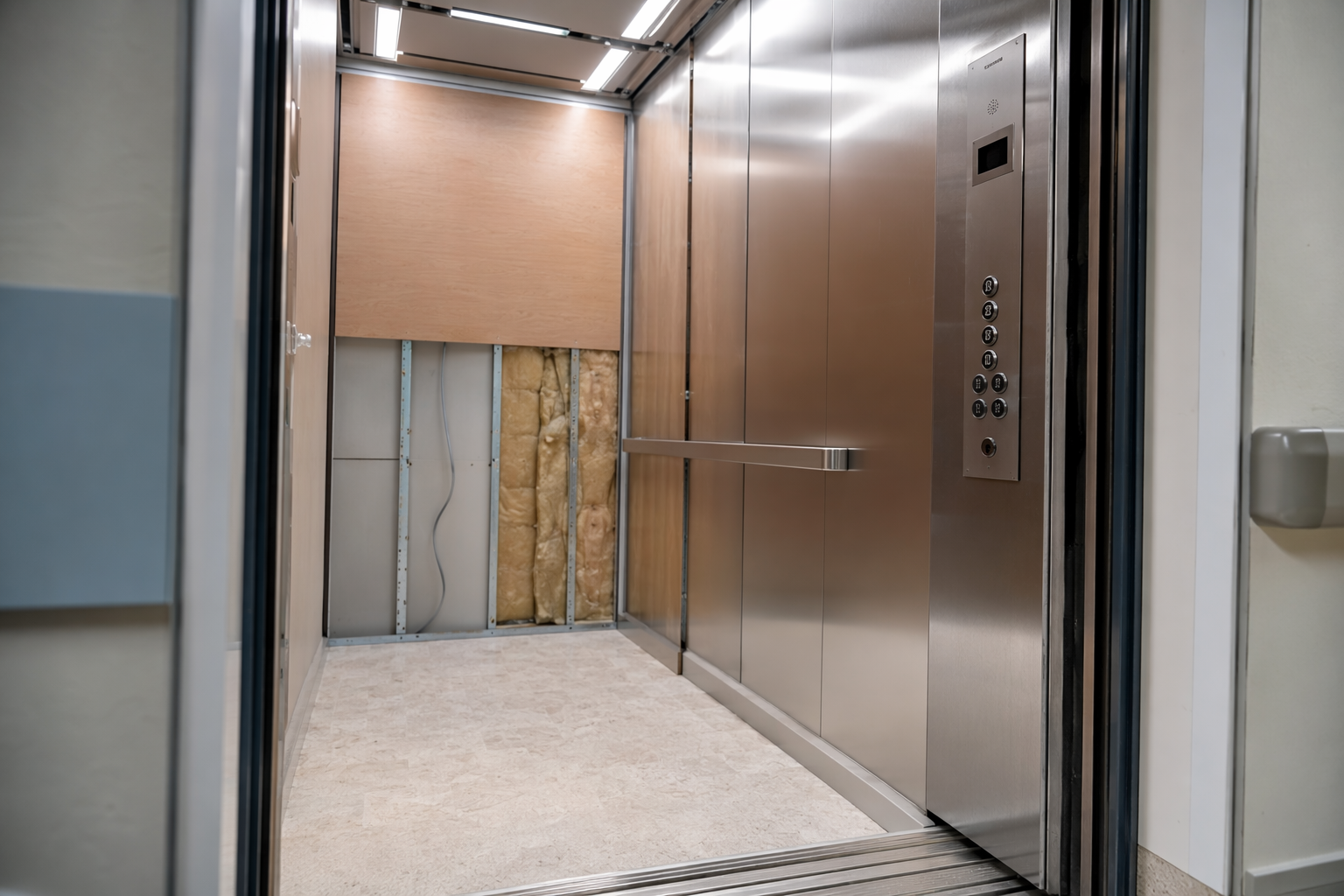
Modernization exists on a spectrum from targeted component replacement to a complete system overhaul. Medical facility administrators typically choose a scope based on the age of the equipment, the frequency of service calls, and the results of a formal condition assessment. The most common options include:
- Controls and Drive Modernization: Replacing relay-based or older microprocessor controls with modern, solid-state variable-voltage variable-frequency (VVVF) drive systems. This improves ride quality, reduces energy consumption, and restores manufacturer support for parts.
- Door System Upgrades: Installing new door operators, reopening devices, and safety edges. In a healthcare setting, wide-clearance doors (typically required to accommodate hospital beds and stretchers) are a priority, and worn door equipment is among the leading causes of entrapment and code violations.
- Cab Interior Renovation: Replacing wall panels, flooring, lighting, and handrails to meet infection-control expectations and ADA requirements for handrail grip and placement.
- Accessibility Compliance Upgrades: Installing ADA-compliant control panels with Braille, raised characters, audible signals, and correct mounting heights. The ADA establishes specific requirements for operable parts, floor designations, and door timing that directly affect hospital elevator configurations.
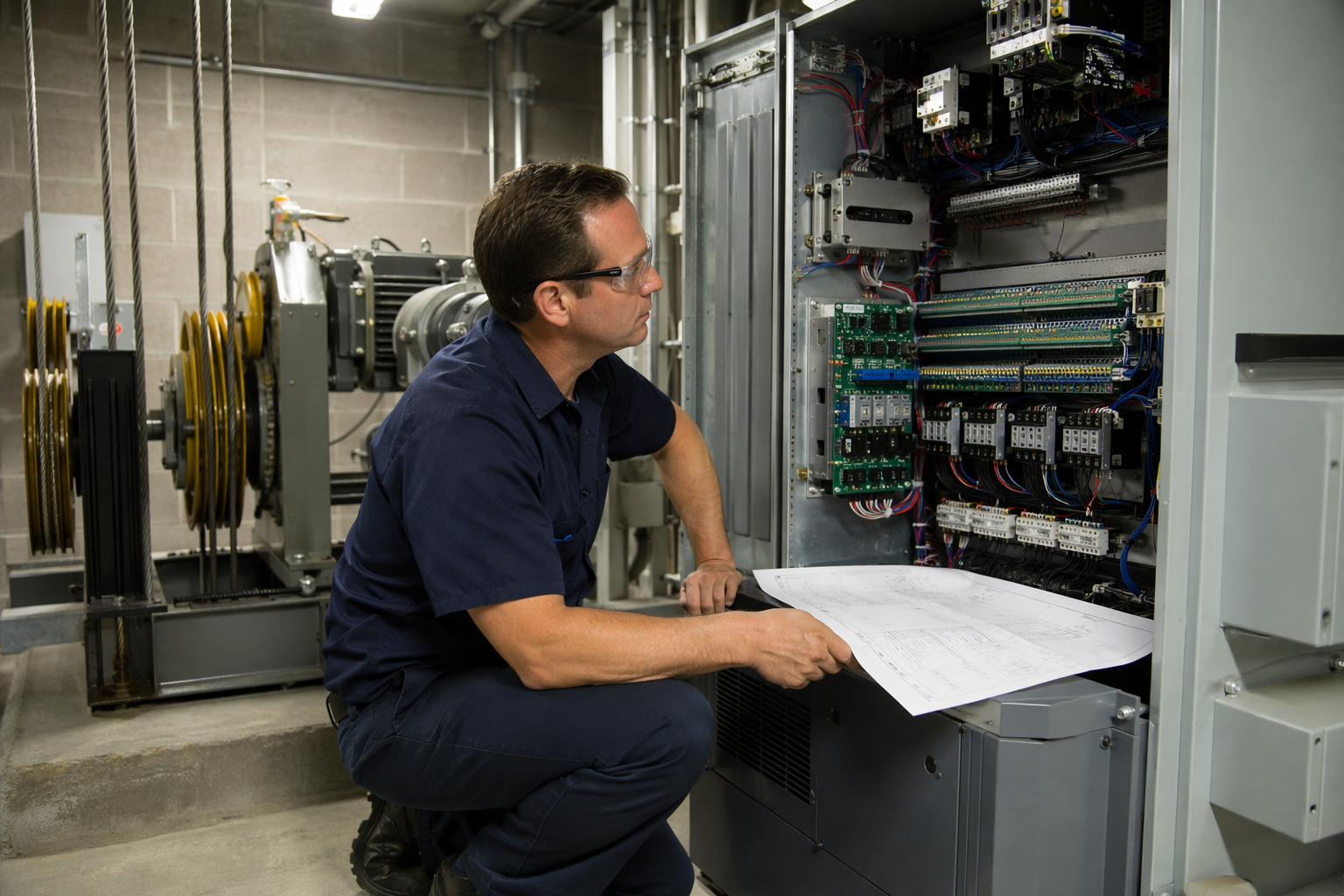
- Machine Room and Hoist Equipment Replacement: For older hydraulic or traction systems, replacing the machine, ropes, sheaves, or hydraulic power unit extends equipment life and restores code-compliant safety margins.
- Emergency Power and Fireman’s Service Upgrades: Hospitals are required to maintain elevator operation during power interruptions for patient evacuation. Modernization often includes upgrading Phase I and Phase II firefighters’ emergency operation systems and integrating elevators with standby generator systems.
- Remote Monitoring Integration: Adding connected monitoring systems that provide real-time fault diagnostics, reducing unplanned downtime in a setting where every out-of-service hour carries clinical consequences.
- Full System Replacement: When equipment is beyond economical repair, a complete machine replacement—including the rail system, buffers, safeties, and all electrical systems—may be the most cost-effective long-term solution.
Arizona Elevator Solutions conducts thorough condition assessments to help hospital facility managers determine which modernization scope aligns with their operational priorities, budget cycles, and code obligations.
What Compliance Codes Govern Hospital Elevator Modernization in Arizona?
Arizona hospital elevators are subject to multiple overlapping regulatory frameworks. Understanding each layer is essential before any modernization project begins.
- ASME A17.1 Safety Code for Elevators and Escalators: This is the primary safety standard governing new elevator installations. Modernization work that qualifies as an “alteration” under the code must comply with the applicable edition adopted by Arizona’s authority having jurisdiction (AHJ).
- ASME A17.3 Safety Code for Existing Elevators and Escalators: This retroactive code applies to elevators already in service. It establishes the minimum safety requirements that existing hospital elevators must meet, regardless of when they were installed, and drives many modernization decisions.
- Americans with Disabilities Act (ADA): Hospitals are places of public accommodation and must maintain accessible elevator features. Any alteration to a hospital elevator triggers ADA obligations for the path of travel, including cab controls, door timing, and signage.
- Arizona Department of Occupational Safety and Health (ADOSH): ADOSH enforces elevator safety in Arizona workplaces, including hospitals, and coordinates with the State Elevator Safety Program for inspection and permitting. All modernization work requires permits and post-completion inspections.
- The Joint Commission and CMS Conditions of Participation: Hospitals accredited by The Joint Commission or certified under Medicare and Medicaid Conditions of Participation must demonstrate that life-safety systems—including elevators—are maintained and compliant. Elevator deficiencies identified during surveys can affect accreditation status.
- NFPA 99 and NFPA 101 (Life Safety Code): These fire and life-safety standards intersect with elevator operation, particularly for emergency power sequencing, smoke control, and fireman’s service requirements in healthcare occupancies.
What Are the Downtime Requirements and How Are They Managed in a Hospital Setting?
Unlike a commercial office building, a hospital cannot simply take an elevator bank offline for weeks without directly affecting patient care. Downtime planning for healthcare elevator modernization requires coordination between the elevator contractor, facilities management, clinical operations, and often the infection-control team.
Strategies used to minimize and manage downtime include:
- Phased Modernization: Modernizing one elevator at a time within a bank, keeping adjacent units operational throughout the project. This extends the project timeline but protects patient transport capacity.
- Off-Hours Scheduling: Performing the most disruptive work—such as machine room work or hoistway access—during overnight or weekend periods when patient transport demand is lower.
- Temporary Transport Protocols: Working with nursing and patient transport teams to establish detour routes and temporary procedures before any unit goes offline.
- Pre-fabrication and Staging: Preparing and pre-assembling components off-site to reduce the time the elevator is physically out of service.
- Coordination with Infection Control: Hoistway and machine room work generates dust and debris. Healthcare facilities require temporary barriers and negative-pressure protocols consistent with ICRA (Infection Control Risk Assessment) standards.
- Inspection Scheduling: Coordinating with Arizona’s elevator inspection authority in advance so that final inspections are scheduled immediately upon completion, preventing unnecessary extended out-of-service periods.
Arizona Elevator Solutions works directly with hospital facilities teams across the Phoenix metro, Tucson, Scottsdale, and Mesa areas to build modernization schedules that treat clinical continuity as a non-negotiable constraint.
How Does ADA Compliance Apply Specifically to Hospital Elevators?
The ADA requires that elevators in hospitals provide equal access to individuals with disabilities. Key requirements that frequently require attention during modernization include: control button mounting heights accessible from a wheelchair, Braille and raised-character floor designations, audible and visible floor indicators, door-open dwell times sufficient for individuals using mobility devices, and handrail specifications inside the cab. When a hospital undertakes an alteration—including a cab renovation—ADA obligations are triggered for the altered elements and the path of travel serving those elements.
What Is the Role of ASME A17.3 in Existing Hospital Elevator Upgrades?
The ASME A17.3 Safety Code for Existing Elevators and Escalators is the standard that applies retroactively to elevators already in service in Arizona. It establishes a baseline set of safety devices and features that all existing elevators must have, regardless of the edition of A17.1 under which they were originally installed. For hospital elevators, this commonly means that older units may need to be brought into compliance with requirements for car safety devices, door reopening devices, and emergency lighting even if no voluntary modernization is planned. A17.3 compliance reviews often reveal the need for modernization work that facility managers were not aware was required.
What Is the Permitting and Inspection Process for Hospital Elevator Modernization in Arizona?
In Arizona, elevator modernization work requires permits issued through the state elevator safety program administered under ADOSH. The general process follows these steps:
- Submit a permit application and project drawings to the appropriate Arizona authority having jurisdiction (AHJ) before work begins.
- Receive permit approval. Work may not commence on regulated components until the permit is issued.
- Complete the modernization work using licensed elevator contractors and mechanics.
- Schedule a state inspection upon project completion.
- Obtain a new Certificate of Operation, which must be posted inside the elevator car, before the unit is returned to passenger service.
Hospital facility managers should factor permitting lead times into their project schedules. Arizona Elevator Solutions manages the permitting process on behalf of healthcare clients to prevent administrative delays from extending downtime.
How Long Does a Hospital Elevator Modernization Project Typically Take?
Project duration depends on the scope of modernization selected, the number of units involved, and the downtime restrictions imposed by the facility. A targeted controls modernization on a single elevator may be completed in a matter of days of actual work, while a full system replacement in a phased, off-hours schedule can extend over several months. The permitting and inspection process adds time on both ends of the construction window. Facilities teams should request a detailed project schedule as part of any proposal so that clinical operations planning can begin well in advance.
What Should Hospital Facility Managers Look for When Selecting an Elevator Modernization Contractor?
Selecting a contractor for healthcare elevator modernization involves considerations beyond price. Facility managers should evaluate whether the contractor holds the required Arizona elevator contractor license, has documented experience working within active healthcare environments, demonstrates familiarity with ASME A17.1, ASME A17.3, and ADA requirements as they apply in Arizona, and can provide references from comparable healthcare projects in the state. The ability to manage ICRA compliance, coordinate with clinical staff, and work within off-hours schedules without disrupting patient care is particularly important in a hospital setting.
What Are the Risks of Deferring Elevator Modernization in a Medical Facility?
Deferred modernization in a healthcare setting carries compounding risks. Aging equipment is more prone to unplanned outages, which in a hospital can disrupt patient transport, pharmacy delivery, and emergency response. Older control systems and door equipment are leading contributors to elevator-related incidents. From a regulatory standpoint, elevators that fall out of compliance with ASME A17.3 requirements can be ordered out of service by Arizona’s inspection authority, creating immediate operational crises. Joint Commission surveyors who identify elevator deficiencies as life-safety findings can require corrective action plans that carry their own timeline and documentation burdens.
Questions Your Inspector Will Ask
When an Arizona elevator inspector visits a hospital for a routine inspection or a post-modernization final inspection, the following topics are typically examined. Facility managers benefit from being prepared to address each of these:
- Is the current Certificate of Operation posted inside the elevator car and up to date?
- When was the most recent full load test and safety test performed, and are records available?
- Are all door safety devices—including reopening devices and safety edges—functioning correctly on every door?
- Is Phase I and Phase II firefighters’ emergency operation functional and tested?
- Is emergency lighting operational in the cab and machine room?
- Are ADA-compliant control panels installed with correct mounting heights, Braille, and audible signals?
- Is the machine room access restricted to authorized personnel, and is it free of storage, water intrusion, and excessive heat?
- Are all required safety devices—governor, safeties, buffers—present and in the condition required by the applicable ASME standard?
- Has any alteration been performed since the last inspection, and if so, was the required permit obtained and an inspection completed before return to service?
- Are maintenance records available and current, demonstrating that a maintenance program compliant with ASME A17.1 requirements is in place?
What Makes Healthcare Elevator Modernization Different from Commercial Projects?
Hospital elevators operate under conditions that differ materially from commercial office elevators. They run more cycles per day, carry heavier loads including hospital beds and medical equipment, must meet stricter door-timing and reopening requirements to protect non-ambulatory passengers, and are subject to infection-control constraints that affect how and when construction work can be performed. Fire and emergency power integration requirements are more complex in a healthcare occupancy than in a typical commercial building. For these reasons, modernization projects in hospitals require contractors who approach the work with an understanding of the clinical environment, not simply the mechanical one.
Arizona Elevator Solutions serves healthcare facilities throughout Phoenix, Tucson, Scottsdale, and Mesa with modernization programs designed around the operational realities of active medical environments.
What Energy and Operational Efficiency Benefits Come with Modernization?
Beyond compliance, modernization delivers measurable operational benefits for healthcare facilities. Modern VVVF drive systems use significantly less energy than older hydraulic or direct-current systems. Upgraded controls enable destination dispatch and traffic management, reducing wait times in high-demand clinical environments. Remote monitoring reduces the frequency and duration of unplanned outages by enabling predictive maintenance. These efficiency gains matter in healthcare facilities where capital budgets are scrutinized and operational continuity is a patient-safety issue, not merely a convenience.
Ready to Assess Your Hospital Elevator System?
Modernizing a hospital or medical facility elevator requires expertise in ASME A17.1, ASME A17.3, ADA compliance, Arizona permitting, and healthcare operational constraints. Arizona Elevator Solutions provides free elevator assessments for healthcare facilities throughout Phoenix, Tucson, Scottsdale, and Mesa—helping facility managers understand their compliance obligations, modernization options, and realistic downtime expectations before committing to a project.
Contact Arizona Elevator Solutions for a free elevator assessment: 480-319-7157