Quick Answer: To get competitive elevator maintenance and repair bids, issue a written Request for Proposal (RFP) that details your equipment inventory, required service intervals under ASME A17.1 and A17.3, coverage terms, parts and labor scope, inspection compliance, and response expectations — then compare at least three proposals on total cost of ownership, not just monthly price.

Bidding out an elevator service contract is one of the most consequential facility decisions a building owner or property manager in Arizona can make. Done correctly, the process protects building occupants, keeps equipment compliant with applicable codes, and controls long-term maintenance costs. Done poorly, it locks a building into restrictive agreements, hidden exclusions, and ballooning repair bills. This guide walks through every step — from assembling a scope of work to evaluating proposals and spotting the terms vendors prefer you not read closely.
What Should a Complete Elevator Maintenance Scope of Work Include?
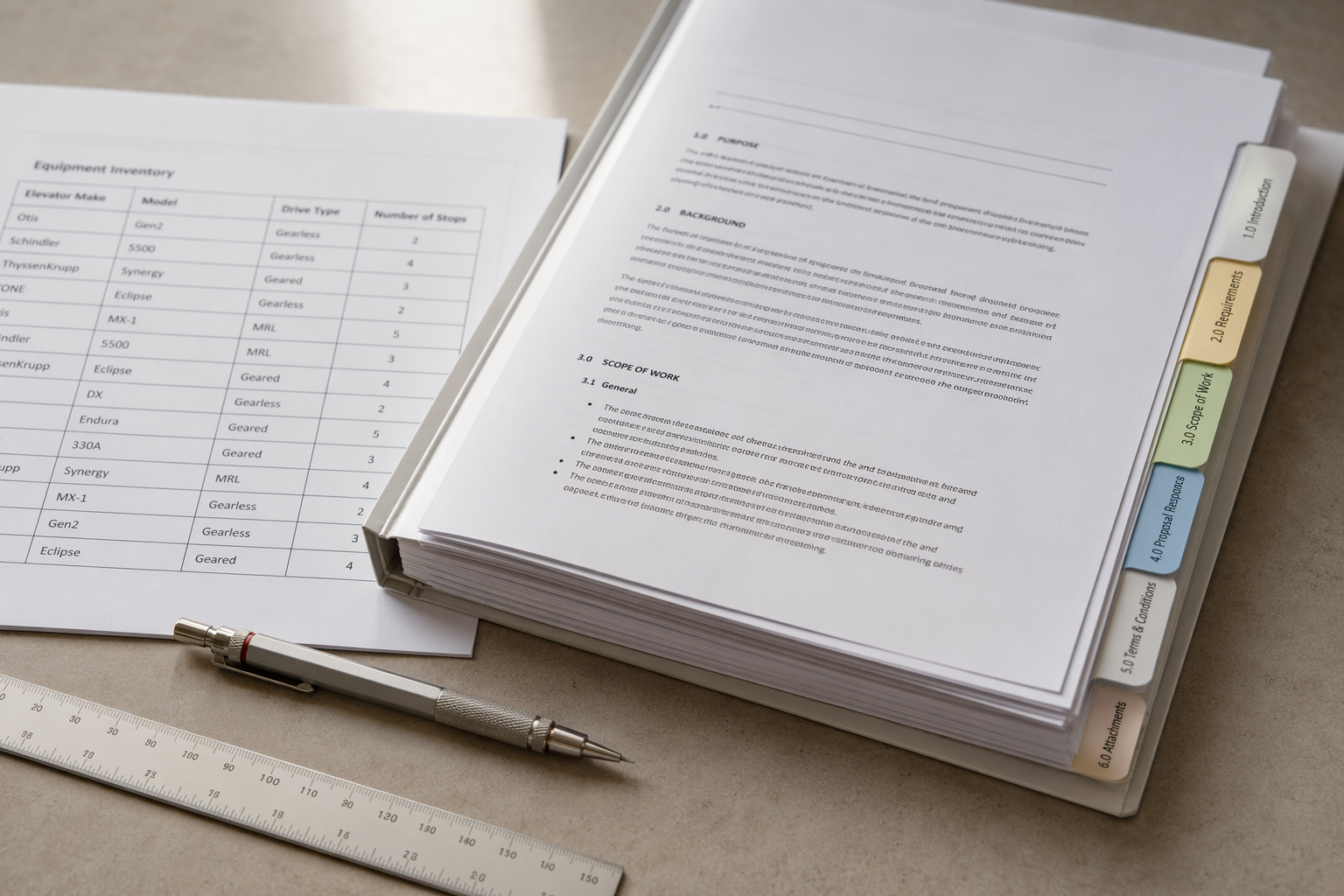
A well-written scope of work is the foundation of every fair bid. Without it, contractors bid on different assumptions and proposals become impossible to compare. The scope should address the following elements:
- Equipment inventory: Make, model, drive type (hydraulic, traction, MRL), capacity, number of stops, age, and any recent modernizations for every unit covered.
- Coverage type: Full maintenance (parts and labor included), oil and grease only, or a custom hybrid. Define exactly which components are covered and which are excluded.
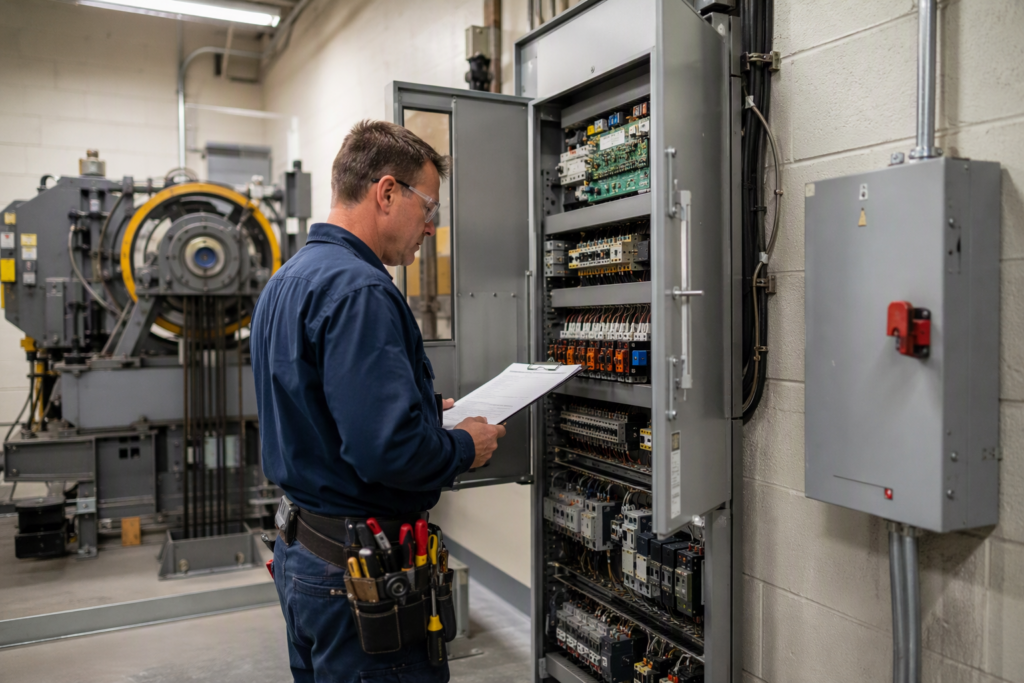
- Inspection and testing requirements: Arizona-based buildings must comply with applicable requirements under ASME A17.1 Safety Code for Elevators and Escalators and ASME A17.3 Safety Code for Existing Elevators and Escalators. The scope should specify who coordinates and pays for third-party inspections required by the Arizona authority having jurisdiction (AHJ).
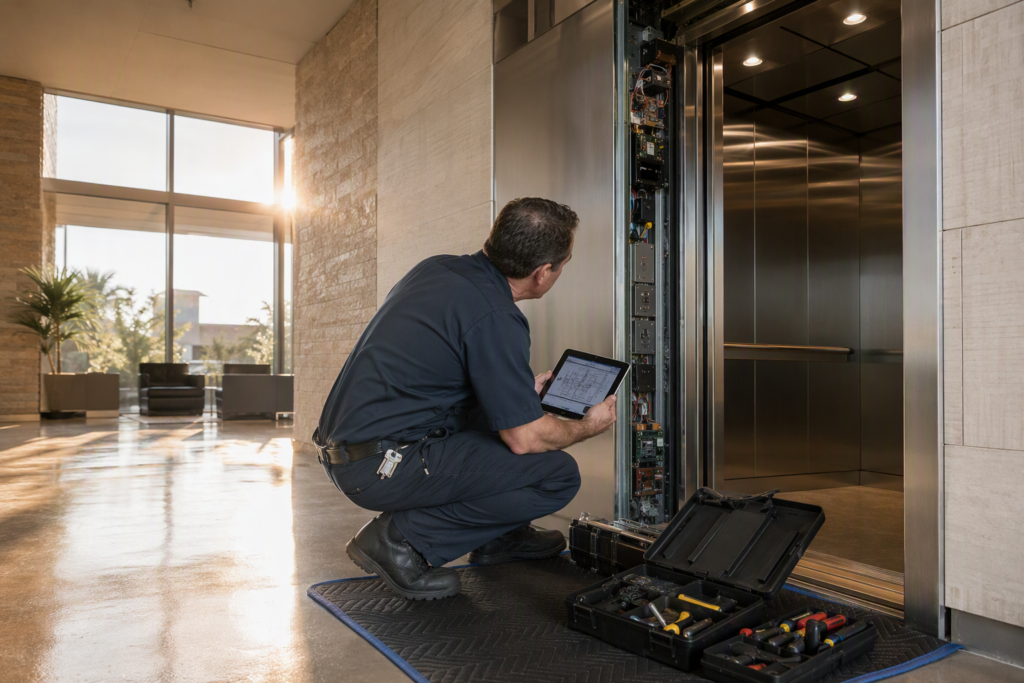
- Preventive maintenance schedule: Frequency of lubrication, adjustment, and inspection visits should be defined in writing, not left to contractor discretion.
- Emergency callback coverage: Hours during which emergency service is included, and how callbacks outside those hours are billed.
- Parts and labor exclusions: Any components not covered — major hydraulic cylinders, modernization parts, vandalism damage — must be listed explicitly.
- Record-keeping and reporting: Maintenance logs, callback records, and deficiency reports should be delivered on a defined schedule.
- ADA compliance obligations: Identify who is responsible for ensuring equipment meets ADA Standards for Accessible Design accessibility requirements.
- Contract term, escalation, and exit terms: Length of agreement, annual price escalation methodology, and exit clauses must be explicit.
How Do You Issue an Elevator Maintenance RFP to Multiple Contractors?
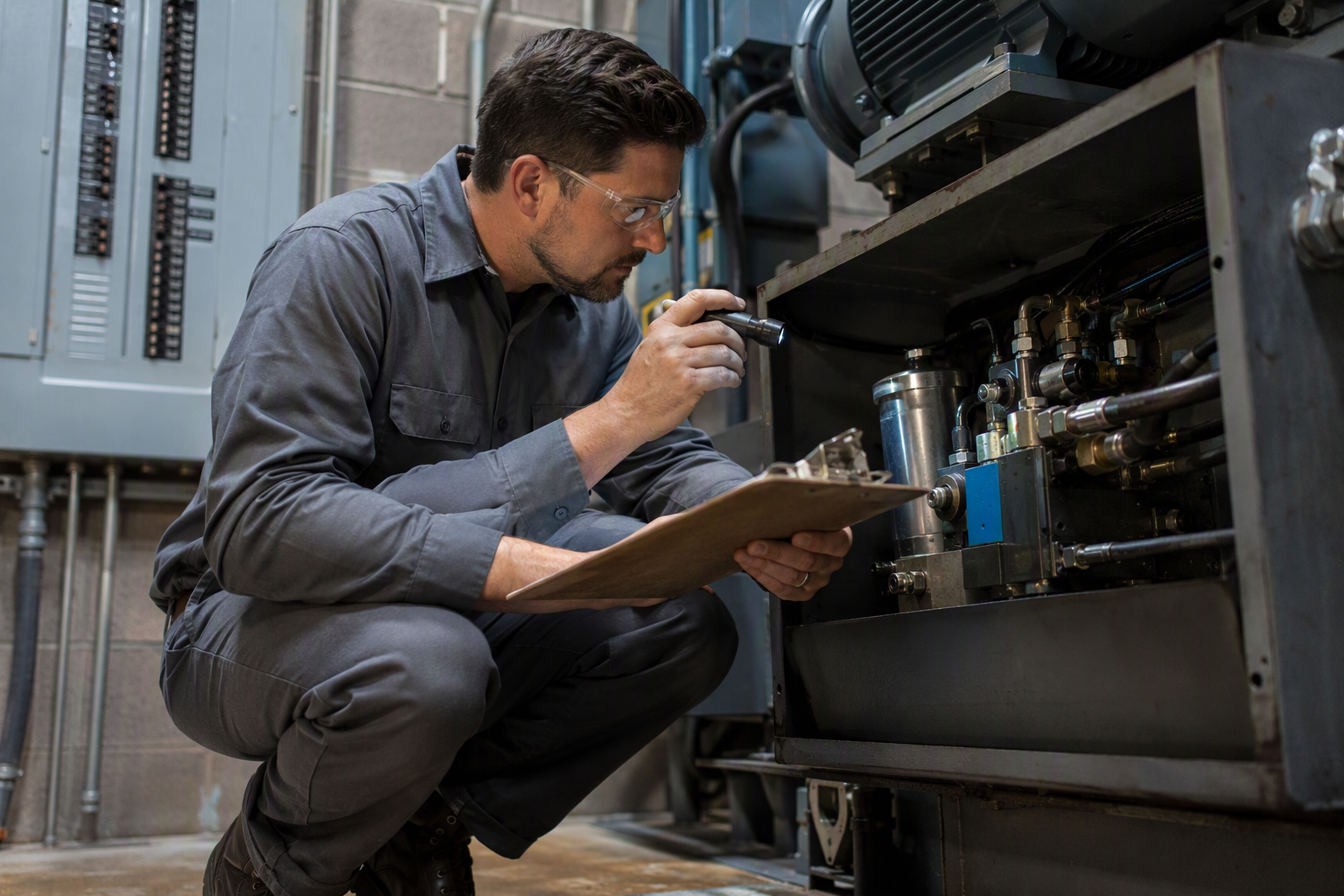
Issuing a structured Request for Proposal ensures every bidder responds to the same requirements, making comparison straightforward. Follow these steps:
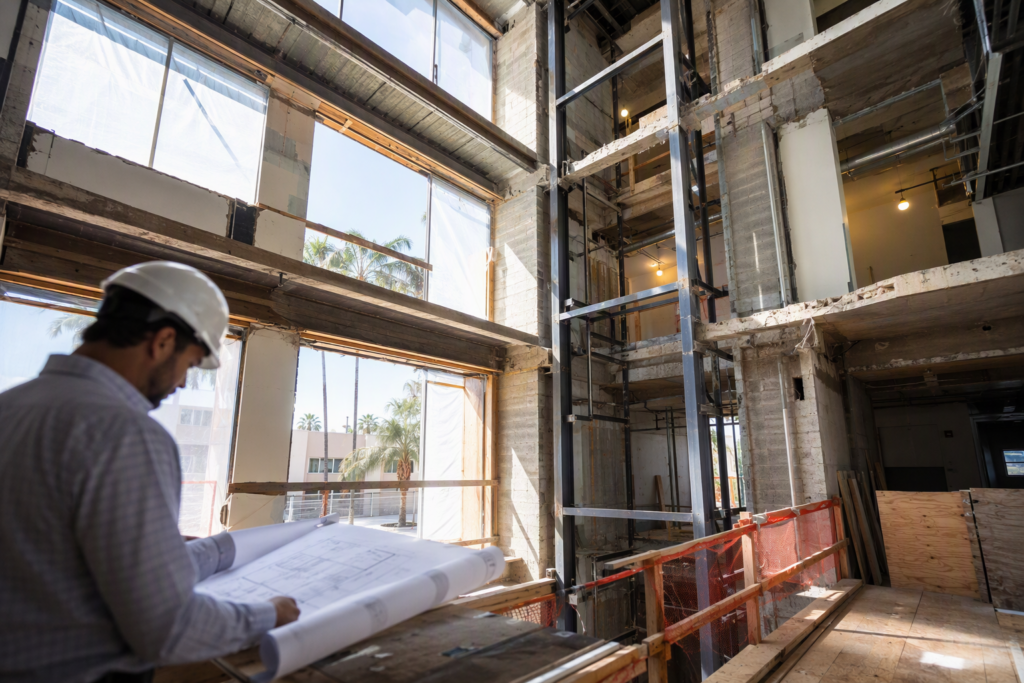
- Compile your equipment inventory. Pull the equipment registration records and any existing maintenance logs. Gather model numbers, capacity ratings, installation dates, and the date of the last state inspection.
- Document current deficiencies. If a third-party inspection report exists, include it. Known deficiencies affect scope and price — surface them upfront rather than discovering them mid-contract.
- Draft the scope of work using the elements listed in the section above. Be specific about coverage type and exclusions.
- Define evaluation criteria in advance. Decide how proposals will be scored — price, coverage depth, contractor qualifications, local presence, references — before reviewing any bids.
- Identify at least three qualified bidders. Include both large national elevator companies and independent certified service providers. Independent contractors often offer more flexible terms and comparable technical capability.
- Issue the RFP with a firm deadline. Allow adequate time — typically two to three weeks — for contractors to perform a site walk and prepare a complete proposal.
- Require a mandatory site walk. No contractor should price a maintenance agreement without physically inspecting each unit. Proposals submitted without a site visit should be viewed with skepticism.
- Request clarifications in writing. Any questions from bidders and your responses should be distributed to all bidders simultaneously to maintain a level playing field.
- Collect and compare proposals using a standardized matrix (see the comparison table below).
- Check references and verify licensing. Confirm that each bidder holds the appropriate Arizona contractor credentials and that their technicians are qualified under applicable requirements.
How Do You Compare Elevator Maintenance Proposals Side by Side?
Monthly price is the most visible number in any proposal — and frequently the least meaningful for total cost comparison. The table below identifies the key variables to evaluate across competing bids.
| Evaluation Factor | What to Look For | Red Flags |
|---|---|---|
| Coverage Type | Full maintenance (parts + labor) vs. oil and grease only. Confirm which components are explicitly included. | Vague language like “routine maintenance items” without a parts list. |
| Parts Exclusions | A specific written list of excluded components. | Broad exclusion language covering “major components” without defining them. |
| Callback Response | Clear definition of what constitutes a callback and billing terms for after-hours service. | No defined response expectations in the written agreement. |
| Inspection Coordination | Contractor assumes responsibility for scheduling and coordinating AHJ-required inspections. | Owner is left to coordinate inspections independently. |
| Annual Price Escalation | Escalation tied to a defined index with a cap. | Uncapped escalation or no escalation clause (price can increase at contractor discretion). |
| Contract Term and Exit | Reasonable term (one to three years) with a defined exit process and notice period. | Five-year or longer terms with automatic renewals and significant early termination penalties. |
| Proprietary Parts Lock-in | Use of standard, non-proprietary parts that any qualified contractor can service. | Installation of proprietary control systems that make switching contractors prohibitively expensive. |
| Record-Keeping | Regular written maintenance logs and inspection reports delivered to the owner. | No defined reporting obligation; records held only by the contractor. |
| ADA Compliance Responsibility | Clear assignment of responsibility for ADA compliance checks and remediation. | No mention of accessibility compliance in the proposal. |
| OSHA Compliance | Contractor certifies compliance with OSHA safety requirements for elevator work. | No reference to worker safety compliance. |
What Contract Terms Do Elevator Vendors Prefer You Not Read Closely?
Large elevator service contracts are written by legal teams whose goal is to protect the vendor. Several clauses consistently disadvantage building owners:
- Automatic renewal clauses: Many standard contracts renew for the full original term — sometimes five years — if written notice of non-renewal is not provided within a narrow window, often 90 days before expiration. Missing this window can obligate a building to years of additional service.
- Proprietary parts and diagnostic lock-in: Some large contractors install diagnostic systems or control boards that are not compatible with competitor equipment, making it expensive or technically impossible to switch vendors without a modernization.
- Broad “major component” exclusions: Contracts with low monthly rates frequently exclude the most costly components — hydraulic cylinders, controllers, motors, and door operators — under undefined “major component” language.
- Callback billing ambiguity: Some contracts include a limited number of callbacks per month, then bill for additional visits at premium hourly rates. The definition of what triggers a billable callback varies significantly.
- Unilateral price adjustment rights: Without a defined escalation cap, some contracts allow contractors to adjust pricing with short notice, leaving owners with little leverage.
- Indemnification asymmetry: Review which party bears liability for code violations or inspection failures. Contracts that shift compliance liability to the building owner while limiting contractor liability deserve close legal review.
What Are the Pros and Cons of Full Maintenance vs. Oil-and-Grease-Only Contracts?
| Contract Type | Pros | Cons | Best Suited For |
|---|---|---|---|
| Full Maintenance | Predictable costs; parts and labor covered; contractor has financial incentive to maintain equipment well to avoid costly repairs | Higher monthly cost; requires careful review of what “full” actually means in the specific contract; risk of proprietary parts installation | Older equipment with higher repair probability; buildings where budget predictability is a priority |
| Oil and Grease Only | Lower monthly cost; owner controls parts sourcing and repair vendor selection | Repair costs are unpredictable; owner bears full financial risk for component failures; requires owner to manage multiple vendors | Newer or recently modernized equipment with low repair risk; owners with in-house facilities management expertise |
| Hybrid / Custom Scope | Tailored coverage matching actual risk profile; can include specific high-value components while excluding others | Requires more negotiation and contract drafting expertise; not all contractors offer this structure | Buildings with mixed-age equipment or specific known risk areas |
What ASME and Arizona Code Requirements Should the Scope Address?
Arizona-based building owners and property managers should ensure that any maintenance contract explicitly addresses compliance with the following federally recognized codes, which govern elevator safety and maintenance practice:
- ASME A17.1 Safety Code for Elevators and Escalators — establishes safety requirements for new elevator installations, including maintenance obligations.
- ASME A17.3 Safety Code for Existing Elevators and Escalators — governs retrofit and ongoing compliance requirements for existing equipment, which applies to the majority of Arizona’s installed elevator inventory.
- ASME A17.6 Standard for Elevator Suspension, Compensation, and Governor Systems — relevant for traction elevator rope and suspension maintenance scope.
- ADA Standards for Accessible Design — elevator accessibility features must be maintained in working condition. The scope should identify who is responsible for ensuring ongoing ADA compliance.
- OSHA requirements for elevator maintenance personnel and machine room safety should be referenced in the contractor’s safety program documentation.
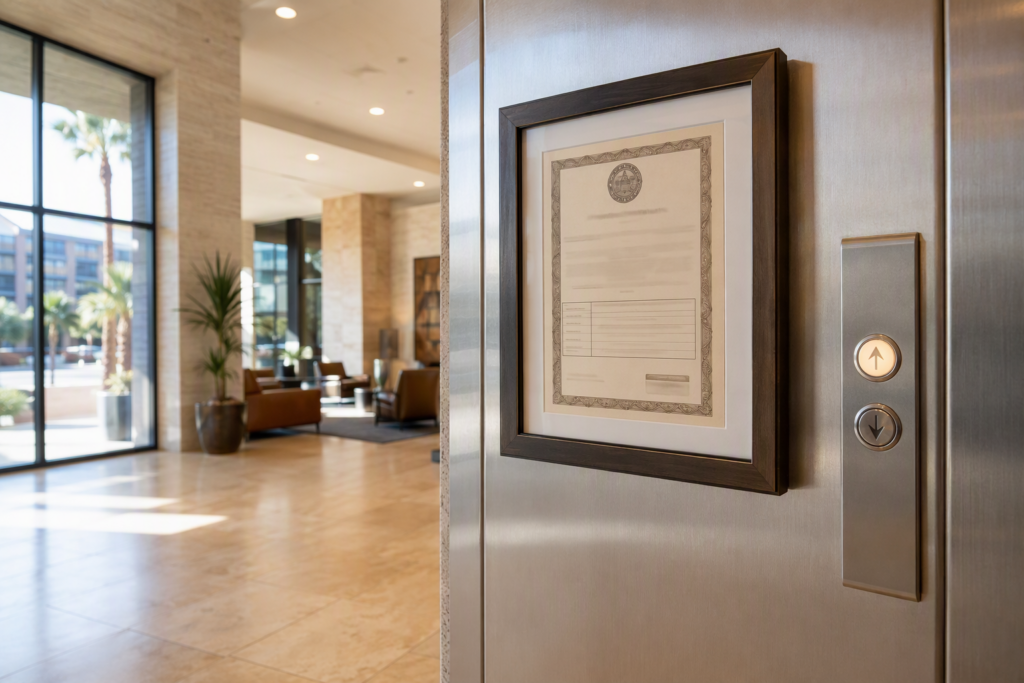
The scope should also specify that the contractor will coordinate with the Arizona authority having jurisdiction (AHJ) for all required periodic inspections and will provide the building owner with copies of all inspection certificates and deficiency notices.
How Many Bids Should You Get for an Elevator Maintenance Contract?
Facilities management best practice and many public procurement guidelines recommend a minimum of three competitive bids for any significant service contract. For elevator maintenance, three bids allows a building owner to establish a meaningful price range, identify outliers in either direction, and verify that the scope was interpreted consistently. Fewer than three bids reduces competitive pressure and limits the owner’s ability to negotiate terms. Including at least one independent certified elevator service provider alongside national manufacturers’ service divisions typically produces the broadest range of pricing and contract flexibility.
What Questions Should You Ask Elevator Contractors During Proposal Evaluation?
During interviews or written clarification rounds, the following questions provide useful differentiation between proposals:
- What specific parts are covered, and can you provide a written excluded parts list?
- Will any proprietary diagnostic or control equipment be installed that would restrict future vendor changes?
- How are callbacks outside standard hours billed, and what is the definition of a callback?
- Who coordinates and pays for AHJ-required inspections under this contract?
- What is the escalation methodology, and is there a cap?
- What is the early termination process and associated cost?
- How are maintenance logs provided to the building owner, and on what schedule?
- Can you provide references from comparable Arizona properties currently under this contract?
What Is the Typical Timeline for Running an Elevator Bid Process?
A thorough elevator maintenance bid process typically follows this general timeline:
| Phase | Activity | Approximate Duration |
|---|---|---|
| Preparation | Equipment inventory, existing contract review, scope drafting | One to two weeks |
| Vendor Identification | Research qualified Arizona contractors, issue RFP invitations | Three to five business days |
| RFP Open Period | Contractor site walks, Q&A period, proposal preparation | Two to three weeks |
| Proposal Review | Comparative matrix scoring, clarification requests | One week |
| Negotiation and Award | Contract term negotiation, legal review, execution | One to two weeks |
| Total | Six to nine weeks from start to signed contract |
Building owners who begin this process at least 90 days before their current contract expires maintain the strongest negotiating position. Waiting until the final 30 days substantially reduces leverage and may force acceptance of unfavorable terms.
Should You Use an Independent Elevator Contractor or a Manufacturer’s Service Division?
Both categories of contractor can perform qualified maintenance work. The relevant differences come down to contract flexibility, pricing structure, and parts practices:
- Manufacturer service divisions have deep familiarity with their own equipment and may offer strong warranty-aligned service for newer installations. However, they may be more likely to install proprietary components and typically offer less contract flexibility.
- Independent certified elevator service providers can service most major brands of equipment, often provide more negotiable contract terms, and are less likely to create proprietary lock-in. They also frequently offer more local responsiveness for Arizona-based properties.
Arizona Elevator Solutions is an independent elevator service provider serving building owners and property managers throughout Arizona. As an independent contractor, Arizona Elevator Solutions provides transparent scope-of-work proposals without proprietary lock-in, giving clients the flexibility to compare and negotiate on equal terms.
What Happens If an Elevator Is Out of Compliance During a Contract Gap?
If an elevator operates without a current maintenance agreement or with a lapsed inspection certificate in Arizona, the building owner bears direct responsibility for any code deficiencies identified by the AHJ. Equipment that does not meet applicable ASME A17.1 or A17.3 requirements may be ordered out of service by the AHJ until deficiencies are remediated. ADA compliance obligations under federal accessibility law also continue regardless of whether a maintenance contract is in force. Building owners should plan the bid timeline to ensure no gap in coverage between expiring and incoming contracts.
How Do You Evaluate Total Cost of Ownership Rather Than Monthly Price?
Comparing elevator proposals on monthly price alone routinely leads to poor decisions. A low monthly rate can be more than offset by high callback billing rates, broad parts exclusions, and annual escalation without a cap. To evaluate total cost of ownership across a contract term:
- Calculate the base cost over the full proposed term at the quoted monthly rate.
- Model the escalation clause at its maximum allowable rate for each contract year.
- Estimate the cost exposure from excluded parts based on equipment age and condition — older hydraulic equipment, for example, may carry meaningful hydraulic cylinder risk that a low-cost proposal excludes entirely.
- Add estimated after-hours callback costs based on your property’s historical callback frequency.
- Factor in the cost and process complexity of exit if the relationship does not perform — early termination fees, transition costs, and any proprietary equipment removal.
- Compare the resulting total cost of ownership figures across proposals, not the headline monthly rates.
Why Choose Arizona Elevator Solutions for Your Elevator Maintenance and Repair Needs?
Arizona Elevator Solutions is a certified independent elevator service company serving commercial, residential, and institutional properties throughout Arizona. As an independent provider, Arizona Elevator Solutions offers:
- Transparent, itemized scope-of-work proposals that are designed for direct comparison with competing bids
- Maintenance agreements structured without proprietary lock-in
- Coverage aligned with ASME A17.1 and A17.3 requirements applicable in Arizona
- Coordination of AHJ-required inspections as part of the service relationship
- Documented maintenance logs and deficiency reporting delivered to the building owner
- Assistance navigating ADA accessibility compliance for elevator equipment
Building owners who include Arizona Elevator Solutions in their bid process gain a local independent benchmark against which to evaluate any proposal from a national competitor.
Get a Free Elevator Assessment Before You Bid
Before issuing an RFP, understanding the current condition and compliance status of your equipment gives you a stronger negotiating position and prevents surprise costs after contract award. Contact Arizona Elevator Solutions for a free elevator assessment — no obligation, no proprietary equipment installed.
Call Arizona Elevator Solutions: 480-557-7600
Need elevator service you can rely on? Arizona Elevator Solutions is ready to help.