Elevator Maintenance: Complete Comparison and Decision Guide for Arizona Property Owners
Elevator maintenance is not optional in Arizona — it is a legal obligation tied directly to your annual certificate of inspection. Whether you manage a commercial high-rise in Phoenix, a mid-rise residential building in Scottsdale, or a small medical facility in Tucson, understanding your maintenance options helps you protect building occupants, avoid regulatory penalties, and extend equipment life. This guide compares every major maintenance approach, answers the most common decision questions, and identifies where Arizona Elevator Solutions fits into your compliance strategy.
What Are the Different Types of Elevator Maintenance Plans?
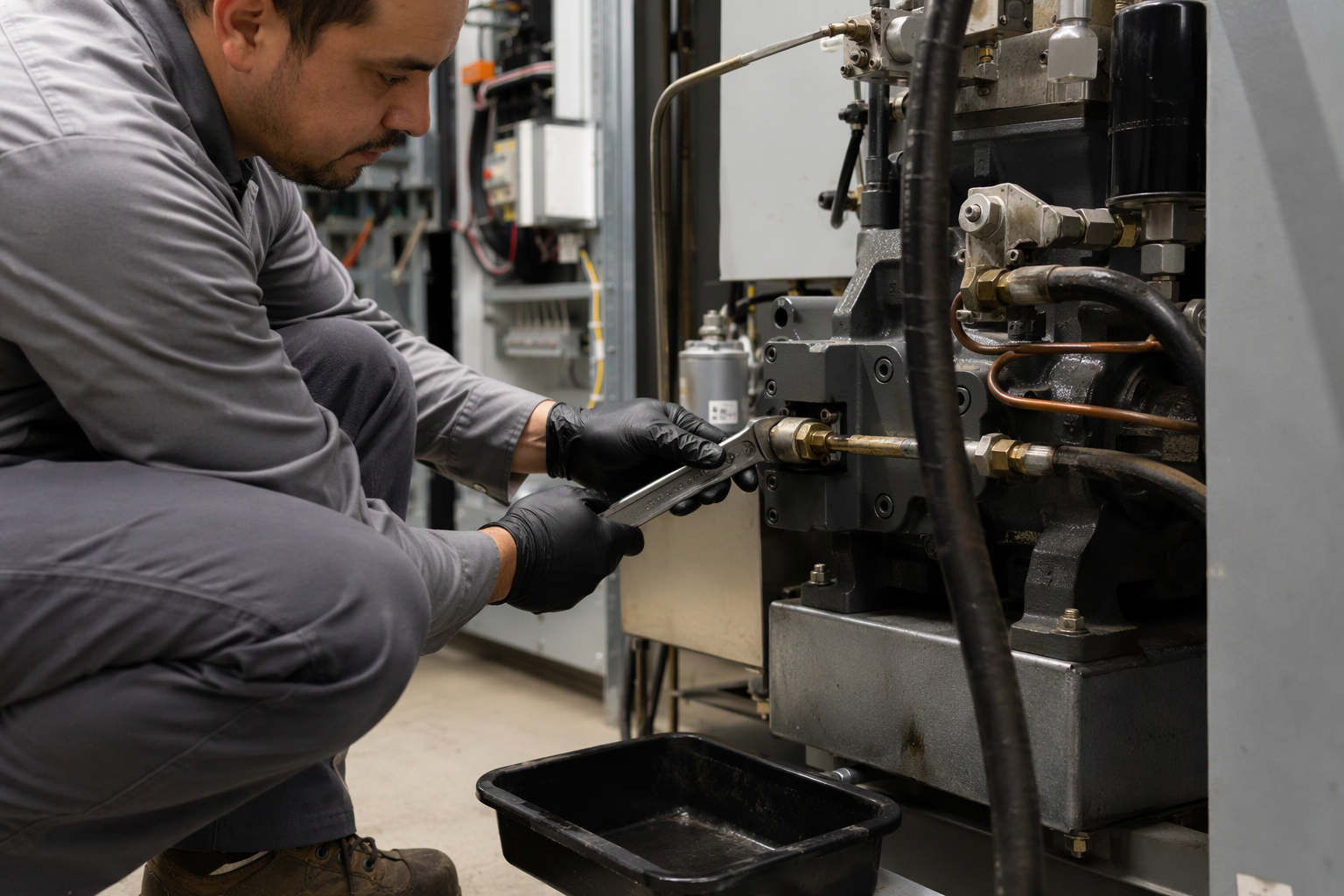
Not all maintenance agreements are created equal. Arizona property owners typically encounter four categories of service arrangement:
| Plan Type | What Is Covered | Best For | Key Limitation |
|---|---|---|---|
| Oil & Grease (Basic) | Lubrication, minor adjustments, visual checks | Low-use residential elevators | Parts and labor billed separately; no breakdown protection |
| Full Maintenance (Comprehensive) | All labor, parts, callbacks, adjustments | High-traffic commercial and multi-tenant buildings | Higher monthly cost; exclusions vary by contractor |
| Partial Maintenance | Labor included; owner pays for parts | Mid-size buildings with limited budgets | Unpredictable parts costs; contract exclusions common |
| Time and Materials (T&M) | Pay per visit, no ongoing contract | Low-traffic or seldom-used equipment | Highest per-visit cost; no priority scheduling |
Arizona Elevator Solutions offers independent maintenance programs across all four categories, providing building owners an alternative to manufacturer-tied service agreements and giving clients greater flexibility to match coverage to actual equipment needs.
What Does Arizona Law Require for Elevator Maintenance and Inspection?
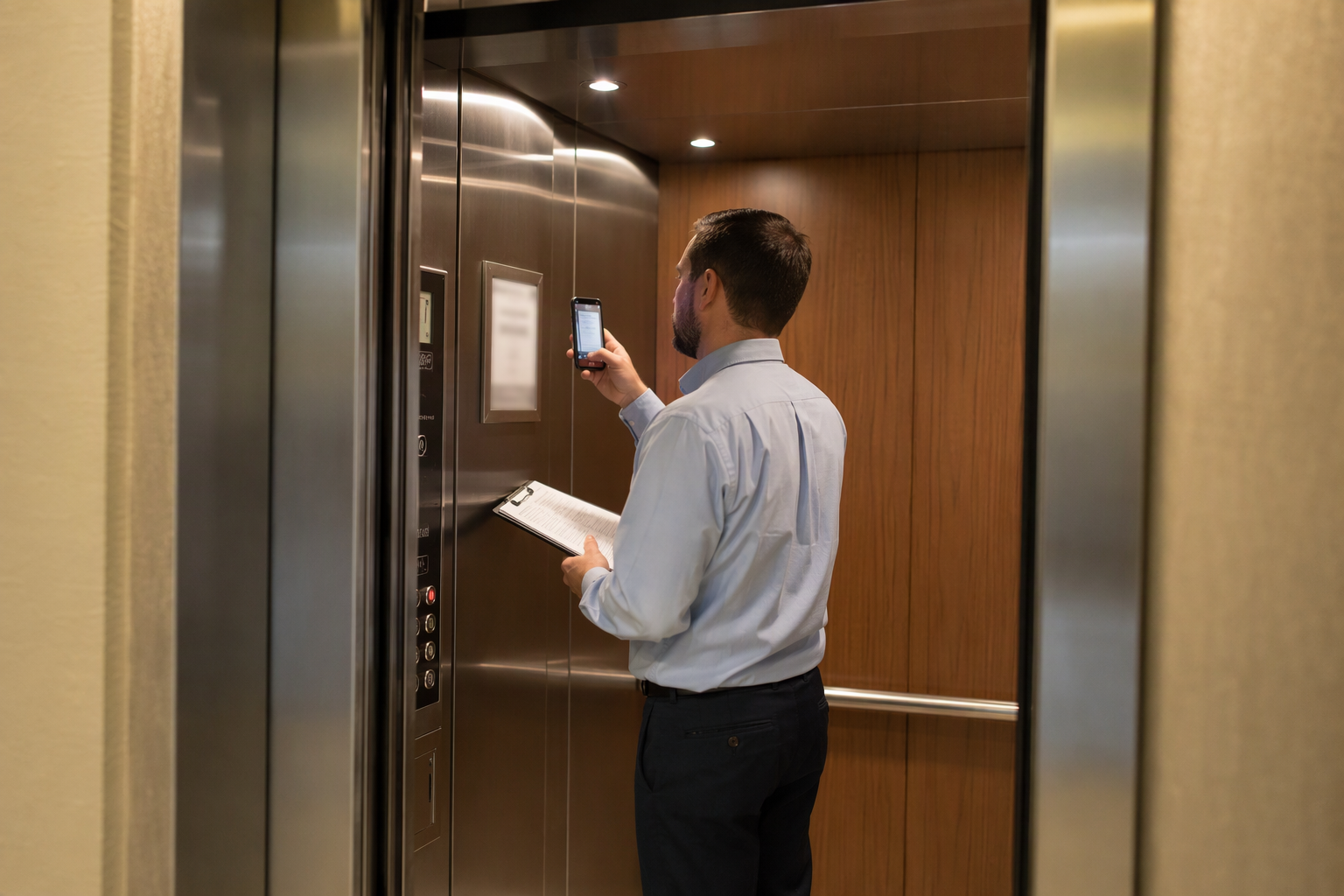
Under A.R.S. §§ 23-491 through 23-491.16 (Safety Conditions for Elevators and Similar Conveyances), as amended by Laws 2026, Ch. 73, every conveyance operating in Arizona must hold a valid annual certificate of inspection issued by the state. The Industrial Commission of Arizona’s Elevator Division — formerly called the ADOSH Elevator Safety Section until September 12, 2026 — is the governing regulatory authority for all elevators outside the City of Phoenix. Inside the City of Phoenix, the Phoenix Elevator Section of the Planning and Development Department handles inspections.
Key statutory obligations every Arizona property owner must meet:
- Each conveyance must be inspected before first going into service, after any modification or alteration, and annually after that.
- No conveyance may operate without a valid annual certificate of inspection.
- The certificate must be kept at the same location as the conveyance and made available on request.
- The state serial number or the certificate must be posted in or near the conveyance in an easily accessible location.
- Owners must notify the state at least 90 days before installing, relocating, or altering a conveyance.
- Owners must notify the state within 24 hours of any accident that injures a person or disables a conveyance.
- Conveyances with firefighters’ emergency operation must use the Arizona Firefighters Service (AZFS) key.
Equipment installed, repaired, or altered on or after January 1, 2023 must comply with the ASME A17.1/CSA B44 Safety Code for Elevators and Escalators, 2019 edition, per Arizona Administrative Code R20-5-502 through R20-5-515. Platform lifts and stairway chairlifts installed, repaired, or altered on or after January 1, 2023 must comply with ASME A18.1-2020.
Routine maintenance does not replace the annual inspection, but a well-documented maintenance program demonstrates to inspectors that equipment is being actively managed — which matters when the inspector evaluates whether a deficiency is chronic or incidental.
What Is the Difference Between Maintenance and Inspection in Arizona?
These two terms are often confused but represent distinct legal obligations:
| Function | Maintenance | Inspection |
|---|---|---|
| Purpose | Prevent failures, preserve performance | Verify safety compliance per code |
| Who Performs It | Licensed elevator contractor (R-12 or C-12 ROC license) | ICA Elevator Division or authorized private inspector |
| Frequency | Typically monthly or quarterly per contract | Annually (plus initial and post-alteration) |
| Output | Service records, lubrication logs, parts reports | Certificate of inspection issued by the state |
| Legal Authority | Arizona ROC contractor licensing (R-12 / C-12) | A.R.S. §§ 23-491 through 23-491.16; ICA Elevator Division |
A private elevator inspector registered with the Industrial Commission of Arizona may perform annual inspections, but that inspector may not inspect any conveyance owned, operated, or last serviced by the inspector, a company the inspector owns, or the inspector’s employer. Using a private inspector does not relieve the owner or operator of their legal obligations. Arizona Elevator Solutions can coordinate inspection scheduling and ensure your equipment is prepared before an inspection visit.
What Are the Pros and Cons of a Full Maintenance Contract vs. Time and Materials?
| Factor | Full Maintenance Contract | Time and Materials (T&M) |
|---|---|---|
| Cost Predictability | High — fixed monthly fee | Low — variable per visit |
| Callback Coverage | Typically included | Billed separately each visit |
| Parts Coverage | Usually included (review exclusions) | Owner pays all parts at market rate |
| Compliance Documentation | Contractor tracks service history | Owner must self-manage records |
| Vendor Lock-In Risk | Higher — multi-year contracts common | None — use any qualified contractor |
| Best Use Case | High-traffic commercial, multi-unit residential | Low-use or single-family residential lifts |
| Inspection Readiness | Contractor ensures annual prep | Owner must schedule separately |
Arizona Elevator Solutions provides independent full maintenance contracts without proprietary parts restrictions, meaning owners are not forced into sourcing components exclusively from one manufacturer — a common drawback of OEM-tied service agreements.
What Should Be Included in a Routine Elevator Maintenance Visit?
A thorough maintenance visit covers mechanical, electrical, and safety systems. The following protocol reflects tasks aligned with the ASME A17.1 Safety Code for Elevators and Escalators maintenance requirements:
- Machine room inspection: Check oil levels in the gearbox and hydraulic reservoir, inspect machine room temperature and ventilation, and verify controller condition.
- Drive and motor checks: Test motor operation, inspect brake adjustment and lining wear, and verify drive belt or sheave condition.
- Door system inspection: Lubricate door tracks and hangers, test door open and close forces, check door restrictors, and verify safety edge or light curtain function.
- Cab interior check: Test all call buttons and indicators, verify emergency lighting and alarm bell operation, and confirm the emergency phone is functional.
- Governor and safety device test: Inspect governor rope tension and sheave lubrication; verify governor trip mechanism.
- Buffer and pit inspection: Check pit for water intrusion, inspect pit lighting and stop switch, examine buffer condition and oil levels (oil buffers).
- Leveling and ride quality: Verify floor-to-floor leveling accuracy and test for excessive vibration or noise.
- Compliance documentation: Update service log, note any deficiencies requiring follow-up, and confirm the state serial number tag and certificate remain properly posted.
How Does Elevator Maintenance Affect ADA Compliance?
The Americans with Disabilities Act (ADA) requires that elevators providing access to public accommodations and commercial facilities be maintained in operable working condition. When an elevator is out of service for a period beyond a brief interruption, building owners may face ADA exposure if no accessible alternative route is provided.
Practical maintenance steps that directly support ADA compliance include:
- Maintaining door open times sufficient for individuals using mobility devices
- Keeping cab leveling accurate so there is no trip hazard at the threshold
- Ensuring audible and visual indicators function correctly
- Maintaining the emergency communication system required under ADA guidelines
A proactive maintenance program reduces unplanned downtime, which is the most common source of ADA-related complaints for elevator-served buildings. Arizona Elevator Solutions incorporates ADA operational checks into standard maintenance visits.
What Are the OSHA Requirements Related to Elevator Maintenance?
OSHA establishes worker safety requirements that affect how elevator maintenance work is performed, particularly in machine rooms and pits. Relevant OSHA considerations include lockout/tagout (LOTO) procedures when technicians work on energized equipment, confined space protocols for pit entry, and fall protection requirements. Building owners are responsible for ensuring that any contractor performing maintenance on their premises follows applicable OSHA standards. Arizona Elevator Solutions follows OSHA safety protocols during all service visits.
What Questions Should Arizona Property Owners Ask Before Signing a Maintenance Contract?
Before committing to any elevator maintenance agreement, building owners should evaluate the following:
| Question | Why It Matters |
|---|---|
| Does the contractor hold an R-12 or C-12 license from the Arizona Registrar of Contractors? | This is the required license classification to legally install and repair elevators in Arizona |
| Are parts proprietary or open-market? | Proprietary parts can limit future vendor options and increase replacement costs |
| What is the contract cancellation terms? | Multi-year lock-ins with large exit fees limit flexibility |
| Does the contract include annual inspection coordination? | Separating maintenance and inspection prep can create compliance gaps |
| How are deficiencies documented and reported? | ICA Elevator Division inspectors may review maintenance records |
| Who is the authority having jurisdiction (AHJ) for my property? | Phoenix properties report to the City of Phoenix Elevator Section; all others report to the ICA Elevator Division |
| How is accident notification handled? | Arizona law requires owner notification to the state within 24 hours of any injury or disabling accident |
When Should an Arizona Property Owner Consider Modernization Instead of Continued Maintenance?
Maintenance can extend the life of aging equipment, but there are conditions where continued repair becomes less practical than modernization. Property owners should evaluate modernization when:
- Replacement parts for aging controllers or drive systems are no longer manufactured or available within reasonable lead times
- The frequency of callbacks and emergency repairs has increased significantly over consecutive years
- The equipment cannot meet current ASME A17.1-2019 safety requirements without major alteration
- The building is undergoing renovation that triggers alteration requirements under Arizona Administrative Code R20-5-502 through R20-5-515
- Energy consumption from aging hydraulic or traction systems represents a significant operational cost
Under Arizona law, lawfully installed older conveyances may remain in service unless the state’s elevator chief determines the continued use is a hazard to life, health, or property. However, any repair or alteration performed on or after January 1, 2023 must bring the affected components into compliance with ASME A17.1-2019. Arizona Elevator Solutions can assess whether continued maintenance or modernization is the more practical path for a specific unit.
How Do Independent Elevator Service Companies Compare to OEM Manufacturer Service Teams?
| Comparison Factor | OEM / Manufacturer Service | Independent Service (e.g., Arizona Elevator Solutions) |
|---|---|---|
| Parts Access | Proprietary parts; often sourced only through manufacturer | Open-market and OEM-compatible parts |
| Contract Flexibility | Multi-year agreements common with exit penalties | Flexible terms; shorter commitment periods available |
| Equipment Brands Serviced | Typically limited to own brand | Multi-brand capability across major manufacturers |
| Local Knowledge | Varies by regional dispatch center | Arizona-based, familiar with ICA Elevator Division requirements |
| Inspection Coordination | May or may not coordinate with ICA or Phoenix Elevator Section | Coordinates annual inspection prep and documentation |
| Price Transparency | Pricing often tied to proprietary parts markup | Competitive open-market pricing |
Arizona Elevator Solutions operates as an independent, Arizona-based elevator service company, offering maintenance programs for equipment from multiple manufacturers without the parts restrictions or long-term lock-in terms associated with many OEM service agreements.
What Happens if an Arizona Elevator Fails Its Annual Inspection?
When an elevator fails its annual inspection in Arizona, the conveyance may not legally operate until deficiencies are corrected and re-inspection confirms compliance. The sequence of events typically follows this process:
- Deficiency notice issued: The inspector documents the specific code violations or safety deficiencies found during the inspection visit.
- Equipment tagged out of service: If deficiencies present an immediate hazard, the conveyance is ordered out of service and may not carry passengers until cleared.
- Owner notifies the ICA Elevator Division: The owner or operator is responsible for communicating the correction plan to the regulating authority.
- Licensed contractor performs repairs: An R-12 or C-12 licensed contractor completes the required corrective work in compliance with ASME A17.1-2019 for equipment altered on or after January 1, 2023.
- Re-inspection scheduled: A follow-up inspection is arranged — either through the ICA Elevator Division or an authorized private inspector who has not serviced the conveyance.
- Certificate re-issued: Upon passing re-inspection, the state issues a new certificate of inspection, which must be kept on-site and the serial number or certificate posted near the conveyance.
Maintaining a documented service record through a qualified contractor like Arizona Elevator Solutions reduces the likelihood of inspection failures by identifying and correcting developing deficiencies before the annual inspection date.
Summary: Choosing the Right Elevator Maintenance Approach in Arizona
The right maintenance strategy depends on equipment age, traffic volume, budget structure, and the specific requirements of the authority having jurisdiction for your property — the ICA Elevator Division for most of Arizona, or the City of Phoenix Elevator Section for equipment within Phoenix city limits. A comprehensive maintenance contract with a licensed, independent Arizona elevator contractor provides the strongest combination of compliance documentation, cost control, and equipment reliability.
Key decision factors at a glance:
- Compliance baseline: Arizona law requires annual inspection and a valid certificate regardless of maintenance approach
- Equipment age: Older equipment with aging parts supply benefits most from full maintenance coverage
- Traffic volume: High-use commercial elevators justify comprehensive plans; low-use residential lifts may operate efficiently on T&M
- Contractor independence: Independent contractors provide multi-brand service and open-market parts access
- Documentation: Consistent service records support inspection outcomes and demonstrate owner diligence under A.R.S. §§ 23-491 through 23-491.16
- ADA continuity: Proactive maintenance reduces downtime that can create ADA exposure for public-accommodation buildings
Arizona Elevator Solutions is an independent elevator service company serving Arizona property owners with maintenance programs designed to meet ICA Elevator Division requirements, ASME A17.1-2019 standards, and ADA operational obligations across a wide range of equipment types and building categories.
Contact Arizona Elevator Solutions for a free elevator assessment at 480-557-7600.
Need elevator service you can rely on? Arizona Elevator Solutions is ready to help.