Elevator Upgrades and Capital Improvements to Budget for in 2027: A Healthcare Facility Guide for Arizona
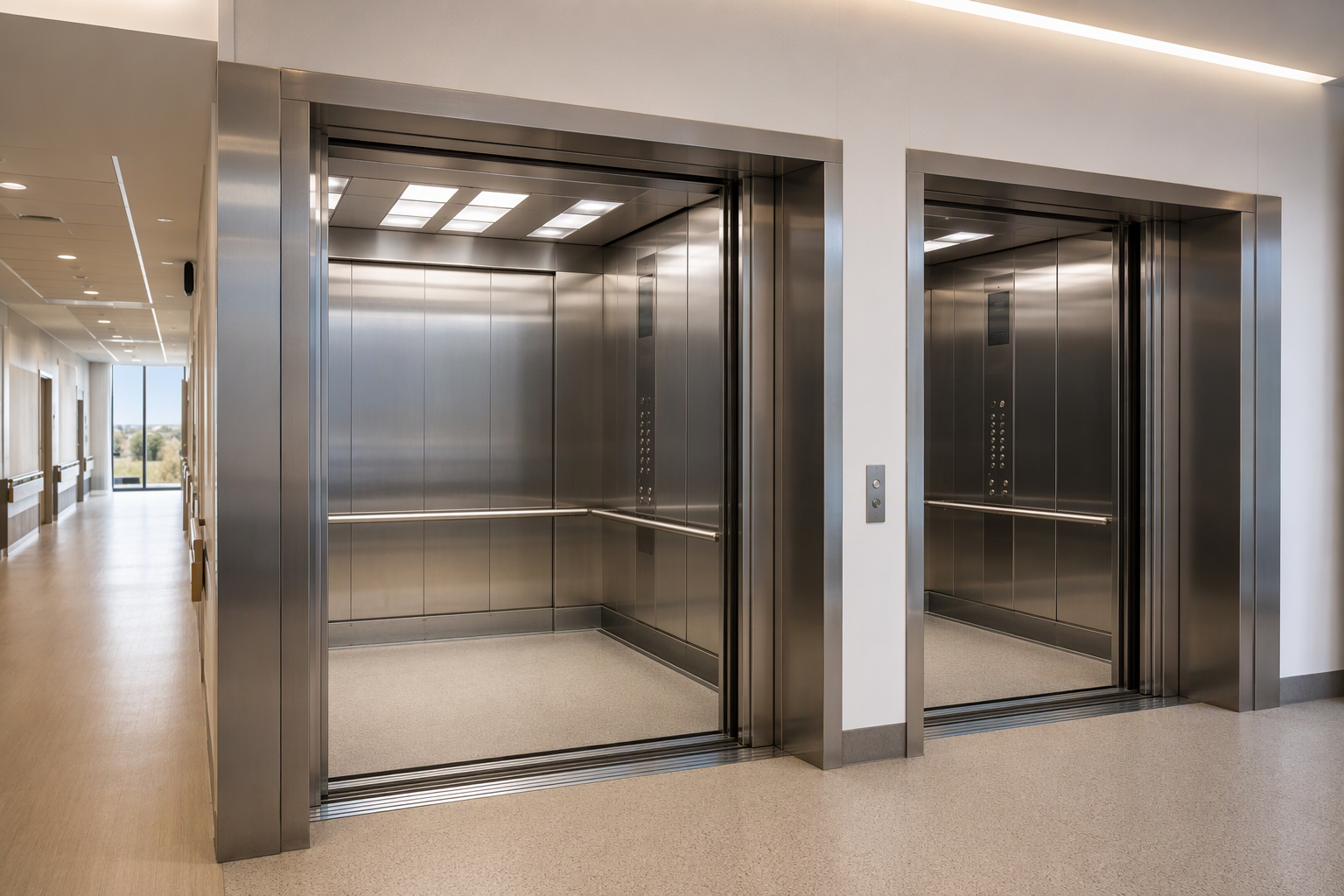
Healthcare buildings in Phoenix, Tucson, Scottsdale, and Mesa place uniquely heavy demands on vertical transportation. Patients in beds, clinical staff with carts, and emergency responders all share the same cabs. Planning elevator capital improvements for 2027 now — not in late 2026 — gives facility managers enough runway to satisfy the Industrial Commission of Arizona’s 90-day advance notification requirement before any installation, relocation, or alteration work begins.
This guide walks through the upgrades most likely to appear on a healthcare facility’s 2027 capital plan, the compliance framework that governs them in Arizona, and the questions a state-authorized inspector will ask during the next annual inspection cycle.
What Compliance Standards Govern Hospital Elevators in Arizona?
Arizona healthcare elevators sit at the intersection of several overlapping frameworks:
- ASME A17.1/CSA B44 Safety Code for Elevators and Escalators (2019 edition): The Industrial Commission of Arizona (ICA), Elevator Division adopted this edition for equipment installed, repaired, or altered on or after January 1, 2023, effective January 9, 2023, under Arizona Administrative Code R20-5-502 through R20-5-515. Any alteration you undertake in 2027 must conform to this edition.
- Americans with Disabilities Act (ADA): Federal law requires accessible cab dimensions, control button heights, Braille signage, door timing, and audible/visual indicators throughout the life of the building.
- Arizona Firefighters Service (AZFS) Key: Conveyances in Arizona with firefighters’ emergency operation must use the AZFS key — a state-specific requirement that is distinct from key types used elsewhere and must be verified during any cab or controller modernization.
- A.R.S. §§ 23-491 through 23-491.16 (Safety Conditions for Elevators and Similar Conveyances), as amended by Laws 2026, Ch. 73: This statute governs certificates of inspection, owner obligations, accident reporting, and licensing of elevator contractors through the Arizona Registrar of Contractors (R-12 and C-12 classifications).
- City of Phoenix Elevator Section: For facilities located inside Phoenix city limits, the City of Phoenix Planning and Development Department inspects elevators and related equipment. State ICA jurisdiction applies for facilities outside Phoenix — including most Tucson, Scottsdale, and Mesa properties.
- OSHA General Industry Standards: Machine room safety, lockout/tagout, and worker access protocols apply during any modernization or repair project.
Why Do Healthcare Facilities Need a Longer Planning Horizon Than Other Commercial Buildings?

Hospitals and outpatient surgery centers cannot simply take an elevator offline without clinical consequence. Patient transport, sterile supply, and emergency response workflows all depend on predictable vertical access. A 2027 upgrade project typically requires:
- A current-condition assessment conducted in 2026 to identify which units are highest priority.
- Submission of alteration permits and the state’s required 90-day advance notification to the ICA Elevator Division before work begins.
- Coordination with infection control teams, because machine room work in a clinical building may require barrier protocols.
- Phased outage scheduling so at least one cab per bank remains in service at all times.
- Post-modernization inspection, certificate renewal, and updated posting of the state serial number and certificate in or near each conveyance.
Arizona Elevator Solutions works with healthcare facility managers across Phoenix, Tucson, Scottsdale, and Mesa to structure phased upgrade plans that keep operations running while meeting ICA deadlines.
What Elevator Upgrades Should a Healthcare Facility Prioritize for 2027?
The following improvement categories represent the highest-frequency items in healthcare capital plans for Arizona commercial buildings entering a modernization cycle:
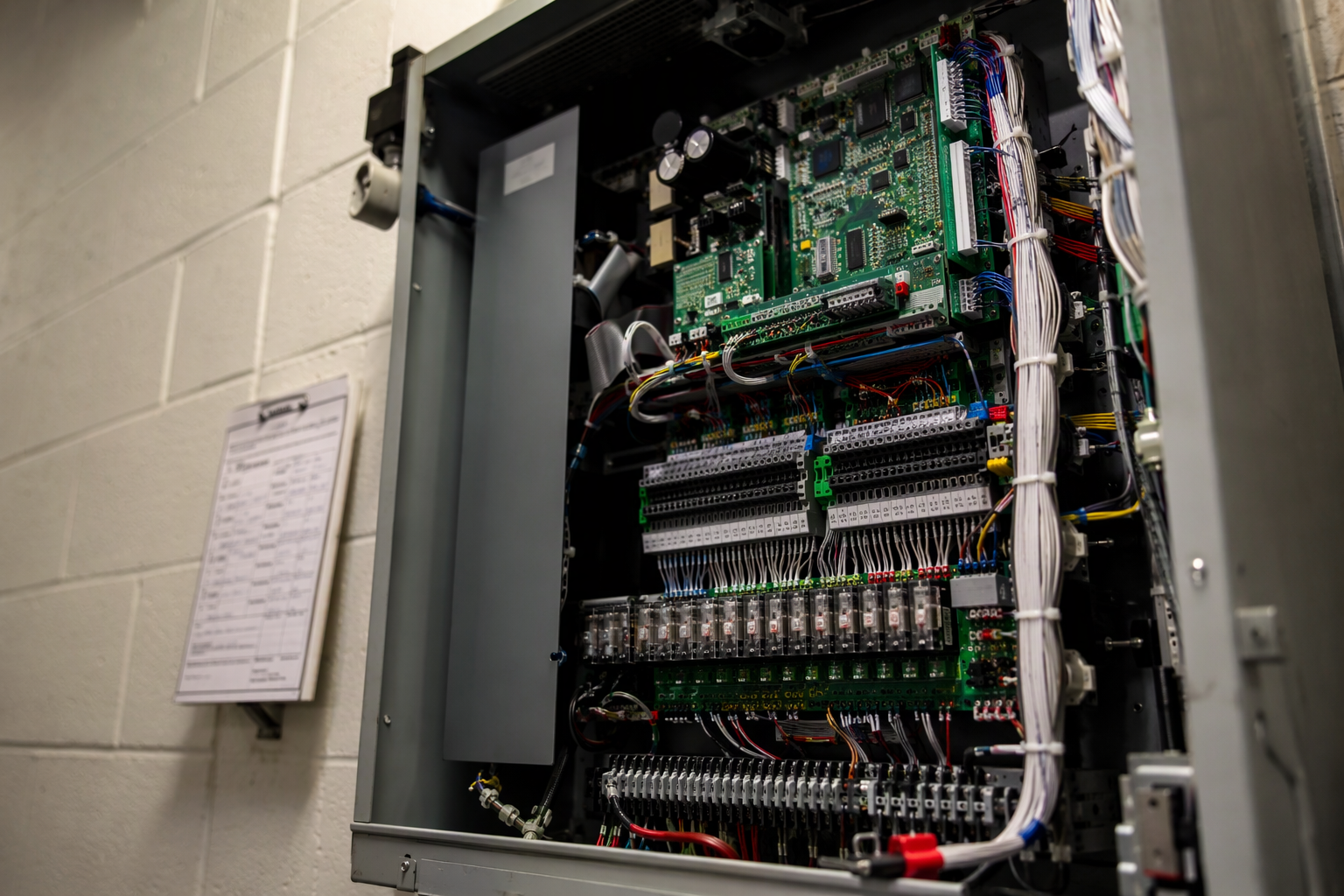
- Controller and Drive System Modernization: Older relay-logic or first-generation microprocessor controllers become difficult to service as parts are discontinued. Modern solid-state drives and programmable logic controllers reduce energy consumption, improve door timing accuracy, and are engineered to meet ASME A17.1-2019 safety requirements triggered by alteration.
- Door Operator and Safety Edge Upgrades: Healthcare cabs see high door-cycle counts from beds, wheelchairs, and carts. Worn door operators and outdated safety edges are a leading source of entrapment and injury events. Replacement with current light-curtain or multi-beam safety edges is a direct ADA and ASME compliance item.
- Cab Interior Rehabilitation: Wall panels, flooring, handrails, and lighting are replaced for infection control as much as aesthetics. Antimicrobial surfaces and LED lighting with appropriate color-rendering index are increasingly specified in clinical environments.
- ADA Cab and Signage Compliance: Control button height, Braille plates, audible floor announcements, cab dimensions for stretcher access, and door open times must all conform to ADA requirements. These are frequently cited during both ADA facility audits and state elevator inspections.
- Firefighters’ Emergency Operation and AZFS Key Retrofit: Any controller replacement or Phase I/Phase II firefighters’ service modification must be verified for AZFS key compatibility. This is a state-specific requirement that affects every Arizona healthcare elevator modernization project.
- Machine Room and Pit Safety: ASME A17.1-2019 and OSHA general industry standards require adequate lighting, guarding, and access in machine rooms and pits. Projects that touch the machine room may trigger a broader code-compliance review.
- Platform Lifts for Accessible Routes: Platform lifts and stairway chairlifts installed, repaired, or altered on or after January 1, 2023 must comply with ASME A18.1-2020 under Arizona rules. Facilities adding accessible routes in 2027 should confirm any new lift falls under this standard.
- Remote Monitoring and Emergency Communications: Two-way voice communication systems in cabs are an ASME and ADA requirement. Upgrading to modern two-way communication over cellular or VoIP is frequently bundled with controller modernization and simplifies ongoing testing documentation.
What Are Arizona’s Annual Inspection Requirements That Affect My 2027 Budget?
Under A.R.S. §§ 23-491 through 23-491.16, every conveyance in Arizona must be inspected before it first goes into service, after any modification or alteration, and annually thereafter. No conveyance may operate without a valid annual certificate of inspection issued by the state. The certificate must be kept at the same location as the conveyance and be available on request; the state serial number or certificate must be posted in or near the cab in an easily accessible location.
Healthcare facility managers should build annual inspection fees, any re-inspection costs following alteration work, and the administrative time for 90-day pre-notification into every project budget line. Arizona owners may engage a private elevator inspector authorized by the ICA, provided that inspector is not affiliated with the company that last serviced the equipment.
How Does a 2027 Modernization Project Trigger ASME A17.1-2019 Requirements?
When an alteration is made to an existing elevator, Arizona’s adopted code — ASME A17.1-2019 — determines which additional components must be brought into compliance as part of that project. This “alteration trigger” is one of the most important budget planning concepts for healthcare facility owners. Replacing a controller, for example, may require simultaneous upgrades to safety devices, door operators, or car safeties if those components do not meet 2019 edition requirements.
Arizona Elevator Solutions recommends requesting a written alteration-trigger analysis before finalizing a 2027 project budget so that scope creep is identified in advance rather than discovered during the permit process.
What Should a Healthcare Facility Include in a Multiyear Capital Plan Beyond 2027?
A well-structured capital plan looks at equipment age, inspection history, parts availability, and clinical-impact risk across a rolling five-year window. Categories that typically appear in years two through five include traction machine and sheave replacement, hydraulic cylinder and fluid system updates for low-rise buildings, rope and governor replacement cycles, and ongoing ADA compliance monitoring as federal technical guidance evolves.
Arizona Elevator Solutions provides facility assessments that document the current condition of each conveyance and map projected replacement timelines to Arizona’s annual inspection cycle, helping healthcare owners present defensible capital requests to their boards and finance teams.
How Does the Arizona Registrar of Contractors Licensing Requirement Affect Vendor Selection?
Any contractor performing elevator installation or repair work in Arizona must hold either an R-12 or C-12 license from the Arizona Registrar of Contractors. These classifications specifically cover elevators, dumbwaiters, escalators, and moving walks. Verifying contractor licensing before awarding a 2027 modernization contract is an owner obligation — using an unlicensed contractor does not relieve the facility of its legal responsibilities under Arizona law. Healthcare risk managers should request and retain ROC license documentation as part of the project file.
What Happens After an Elevator Accident or Unexpected Shutdown in an Arizona Healthcare Building?
Arizona owners must notify the ICA Elevator Division within 24 hours of any accident that injures a person or disables a conveyance. In a healthcare setting, an unexpected elevator shutdown can directly affect patient care, so facilities should have a documented response protocol that includes immediate notification to the ICA, isolation of the affected unit, and coordination with the service contractor for emergency repair. Arizona Elevator Solutions serves healthcare facilities across Phoenix, Tucson, Scottsdale, and Mesa and can be engaged for maintenance contracts that include defined response procedures for unplanned outages.
What Is the Difference Between ICA Elevator Division Jurisdiction and City of Phoenix Oversight?
Since September 12, 2026, Arizona elevator safety is administered by the Industrial Commission of Arizona’s Elevator Division (formerly the ADOSH Elevator Safety Section under Laws 2026, Ch. 73). However, for healthcare facilities located within the City of Phoenix, the City of Phoenix Elevator Section — part of the Planning and Development Department — conducts inspections of elevators, escalators, moving walks, dumbwaiters, and chair lifts. Facilities outside Phoenix, including most Tucson, Scottsdale, and Mesa locations, fall under ICA Elevator Division jurisdiction. Healthcare facility managers should confirm which authority has jurisdiction over each of their buildings before submitting permit applications or scheduling 2027 alteration work.
Questions Your Inspector Will Ask
Whether your next annual inspection is conducted by the ICA Elevator Division, the City of Phoenix Elevator Section, or an ICA-authorized private inspector, healthcare facility managers should be prepared to answer the following:
- Is the current certificate of inspection posted in or immediately adjacent to each cab in an easily accessible location?
- Is the state serial number tag affixed to the controller or mainline disconnect for each conveyance?
- Have all alterations since the last inspection been permitted and re-inspected as required, with updated certificates issued?
- Do all cabs with firefighters’ emergency operation use the Arizona Firefighters Service (AZFS) key?
- Have Phase I and Phase II firefighters’ service systems been tested within the required intervals?
- Are two-way emergency communication systems operational in every cab?
- Are machine room access, lighting, and guarding in compliance with ASME A17.1-2019 and applicable OSHA standards?
- Have door safety devices — including safety edges or light curtains — been tested and documented?
- Is there a written log of maintenance performed on each conveyance available for review?
- Were the ICA and appropriate local authority notified at least 90 days before any alteration work performed since the last inspection?
- For any platform lifts added or altered since January 1, 2023 — do they comply with ASME A18.1-2020?
How Do Healthcare Facilities in Phoenix, Tucson, Scottsdale, and Mesa Get Started with 2027 Planning?
The most effective starting point is a comprehensive elevator condition assessment conducted in 2026, before project budgets are finalized. The assessment should document equipment age, current compliance status relative to ASME A17.1-2019, known deficiencies from prior inspection reports, and an estimate of which units are likely to require alteration-triggered upgrades. With that documentation, facility managers can prioritize projects by clinical impact, compliance risk, and cost, and can submit the required 90-day advance notifications to the ICA Elevator Division well ahead of any 2027 construction start dates.
Arizona Elevator Solutions serves healthcare facilities throughout Phoenix, Tucson, Scottsdale, and Mesa, providing assessments and modernization planning aligned with Arizona’s regulatory framework and the clinical demands of healthcare environments.
Contact Arizona Elevator Solutions for a free elevator assessment at 480-557-7600.
Need elevator service you can rely on? Arizona Elevator Solutions is ready to help.