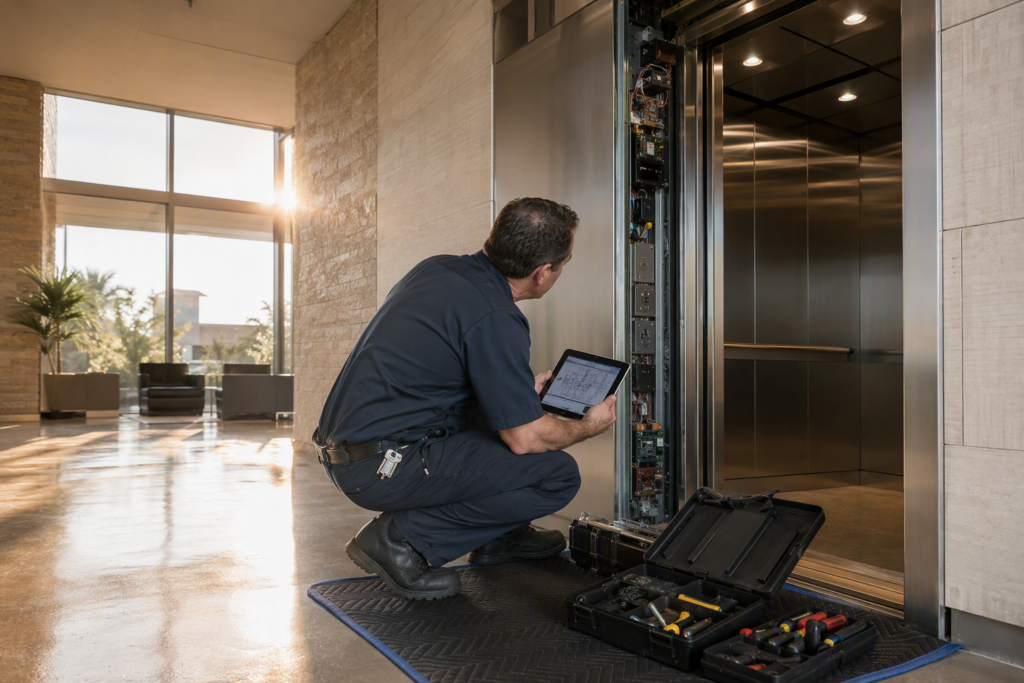
How Many Elevators Does My Healthcare Building Need? Code Requirements & Capacity Rules
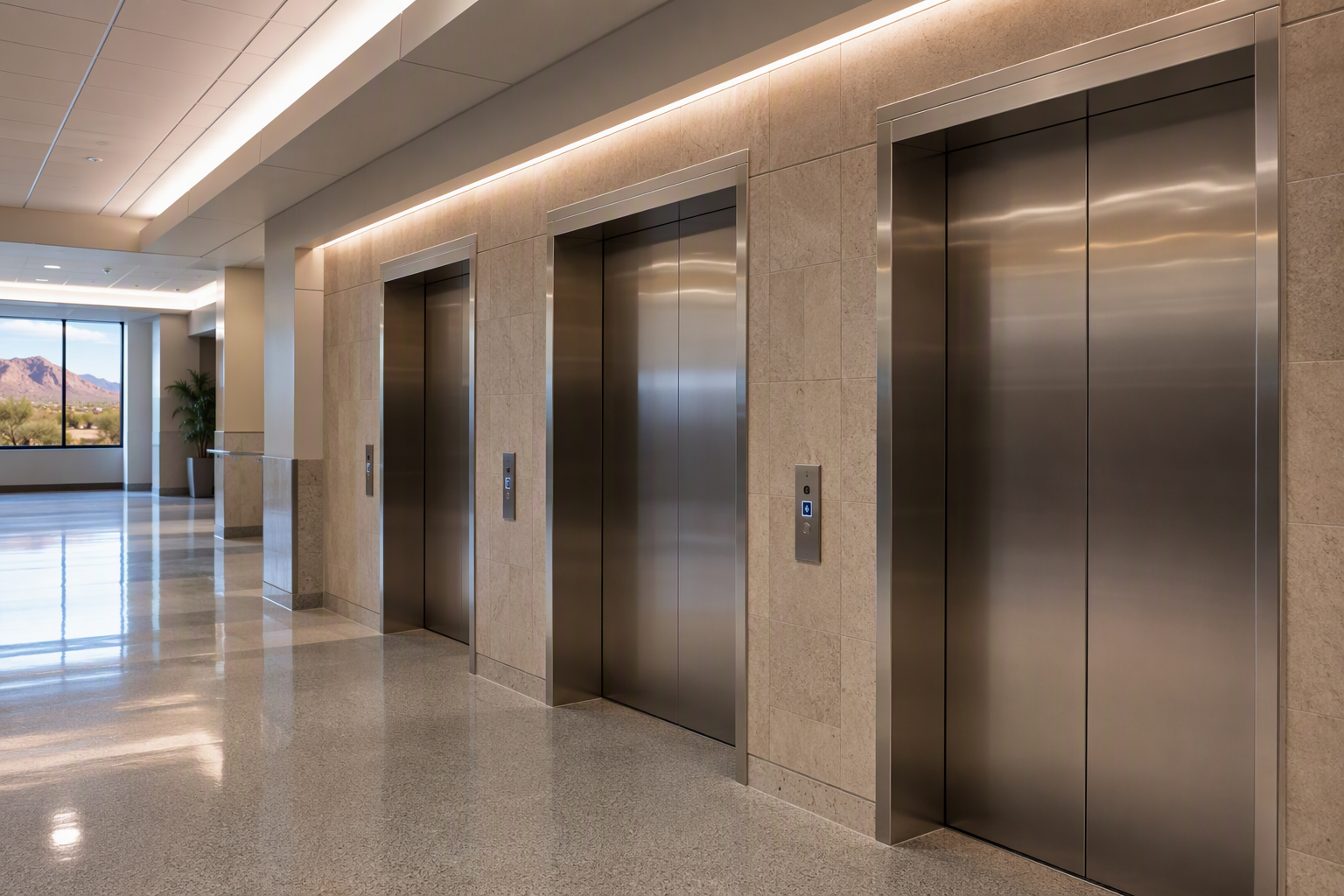
Determining vertical transportation requirements for a hospital, medical office building, surgery center, or long-term care facility in Phoenix, Tucson, Scottsdale, or Mesa involves multiple overlapping standards. Building owners and facility managers frequently ask: how many elevators does my building need by code, and what determines the required number and capacity? The answer is never a single number — it is a calculation driven by occupancy type, patient volume, floor count, regulatory minimums, and functional need. The sections below walk through every factor that matters.
What Federal and State Codes Govern Elevator Requirements in Arizona Healthcare Facilities?
Three primary layers of regulation apply to healthcare elevators in Arizona.
- ASME A17.1 Safety Code for Elevators and Escalators: Arizona has adopted the ASME A17.1-2019 edition for all equipment installed, repaired, or altered on or after January 1, 2023. This code sets minimum design, construction, installation, and inspection requirements for every conveyance in the state.
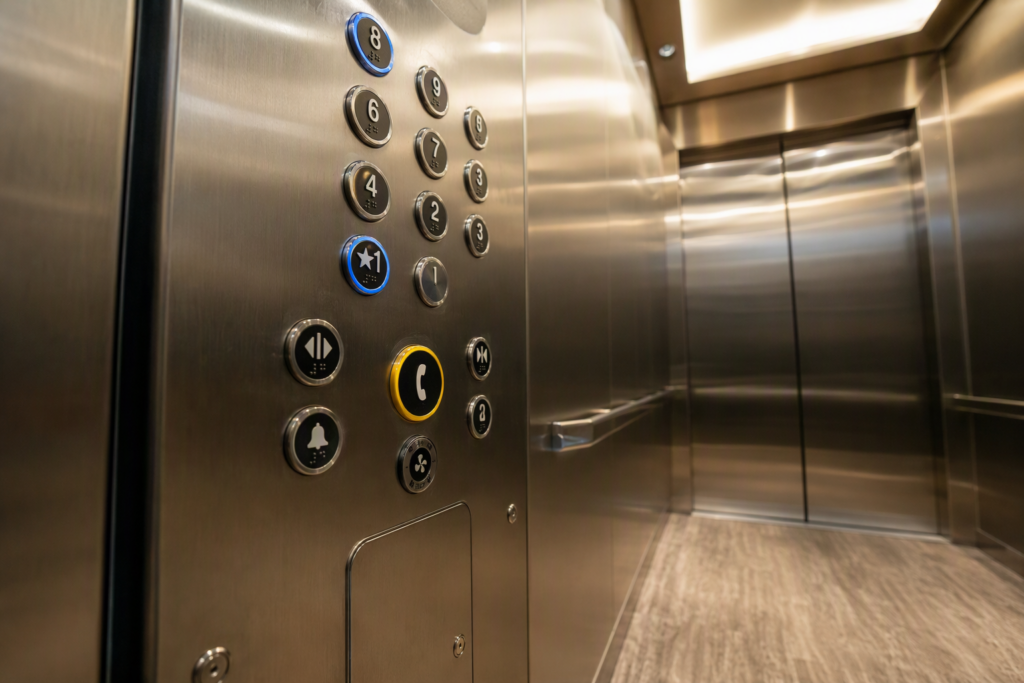
- Americans with Disabilities Act (ADA): Federal accessibility law requires that elevators in multi-story facilities be accessible to people with disabilities. Cab dimensions, door clear-opening widths, control heights, and call button requirements are all specified. Healthcare facilities, which serve patients with mobility limitations as a matter of course, must treat ADA compliance as a baseline — not an option.
- Arizona State Law — A.R.S. §§ 23-491 through 23-491.16: Arizona’s elevator safety statutes, as amended by Laws 2026, Ch. 73, require that no conveyance operate in Arizona without an annual certificate of inspection issued by the state. The Industrial Commission of Arizona (ICA), Elevator Division, administers this program. Within the City of Phoenix, the City of Phoenix Elevator Section (Planning and Development Department) conducts inspections; the ICA handles all equipment outside Phoenix.
In addition, the International Building Code (IBC) as locally adopted, National Fire Protection Association standards, and the Facility Guidelines Institute (FGI) Guidelines for Design and Construction of Hospitals all influence minimum elevator counts and cab sizing for licensed healthcare occupancies. Owners should confirm which edition of these standards the applicable local Authority Having Jurisdiction (AHJ) has adopted before submitting construction documents.
What Determines How Many Elevators a Healthcare Building Requires?

No single formula covers every healthcare facility. The minimum number of elevators is driven by the intersection of several variables:
- Building height and number of floors served. A single-story medical office building may require no elevator for code compliance (though ADA accessibility requirements still apply when specific thresholds are met). A multi-story hospital or skilled nursing facility will require at minimum one accessible elevator per the ADA, and typically multiple cars driven by traffic analysis.
- Licensed bed count. The FGI Guidelines — widely adopted by state health departments as the design standard for licensed healthcare facilities — specify minimum elevator counts tied directly to the number of patient beds above grade. Facilities above defined bed thresholds are required to provide a minimum number of hospital-grade elevators to serve patient transport.
- Occupant and staff load. Healthcare buildings have simultaneous peak demand from patients, visitors, clinical staff, and support services (dietary, housekeeping, materials management). Traffic engineering studies are used to size the elevator bank so that average wait times remain within acceptable clinical parameters.
- Type of healthcare occupancy. Acute-care hospitals, ambulatory surgery centers, behavioral health facilities, long-term care communities, and medical office buildings each have different functional demands. A hospital’s elevator program must accommodate beds, stretchers, supply carts, and crash teams simultaneously — requirements that do not apply to a standard medical office building.
- Floor plate size and configuration. Large floor plates with significant horizontal distances between departments may require additional elevator banks to prevent unacceptable travel times in emergencies.
- Emergency and service separation. Best-practice design — and in many licensed facilities, regulatory guidance — calls for separating passenger, service/freight, and dedicated bed/stretcher elevators so that clinical emergencies do not compete with routine supply runs.
What Minimum Cab Size and Capacity Are Required for Hospital Elevators?
The ASME A17.1 code and ADA standards together establish minimum cab dimensions, and the FGI Guidelines add healthcare-specific requirements. For a cab to accommodate a standard hospital bed with attendants, interior dimensions must be substantially larger than a typical commercial elevator. The ADA requires sufficient space for a wheelchair user to enter, maneuver, and exit. Healthcare design guidance commonly calls for cabs large enough to accommodate a gurney, stretcher, or hospital bed along with clinical staff — requirements that typically yield a rated capacity well above that of a standard office elevator.
Arizona owners should confirm that any new or replacement equipment meets ASME A17.1-2019 and current ADA Standards for Accessible Design. Arizona Elevator Solutions reviews both sets of requirements during facility assessments in Phoenix, Tucson, Scottsdale, and Mesa to identify gaps before they become inspection failures.
Does ADA Require an Elevator in Every Multi-Story Healthcare Building?
The ADA contains a general elevator exemption for buildings with fewer than three stories or fewer than three thousand square feet per floor — but this exemption does not apply to healthcare facilities. Hospitals, medical care facilities, and shopping malls are explicitly excluded from the exemption, meaning ADA-compliant vertical access is required regardless of building size or story count whenever a healthcare facility occupies more than one floor. Owners of small medical practices in two-story buildings sometimes discover this requirement only at permitting; early planning avoids costly mid-construction retrofits.
What Are Arizona’s Annual Inspection and Certificate Requirements for Healthcare Elevators?
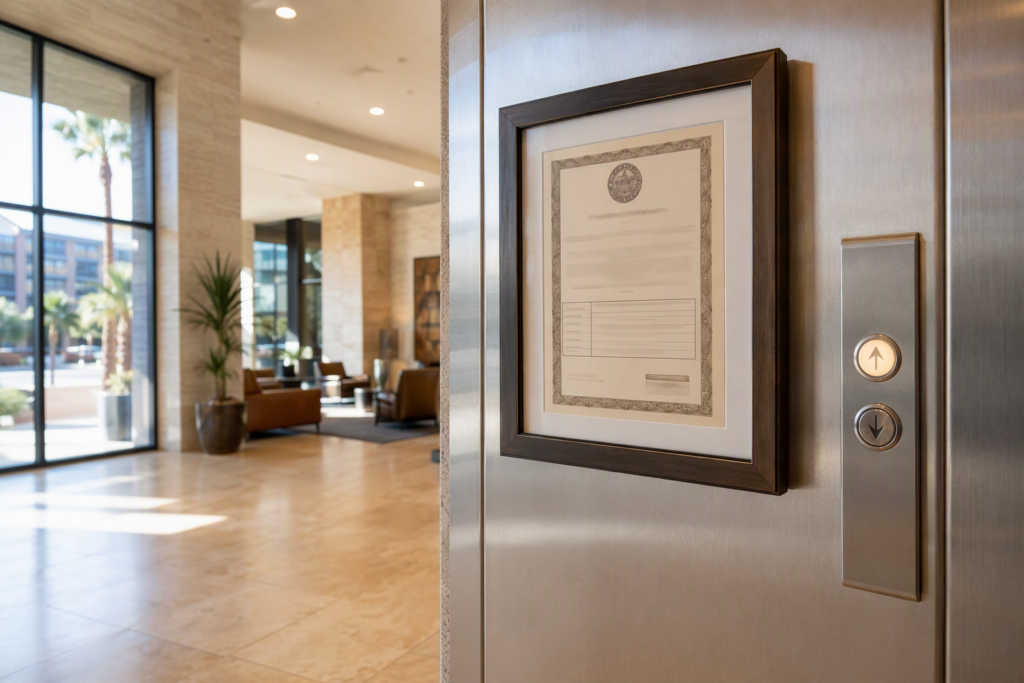
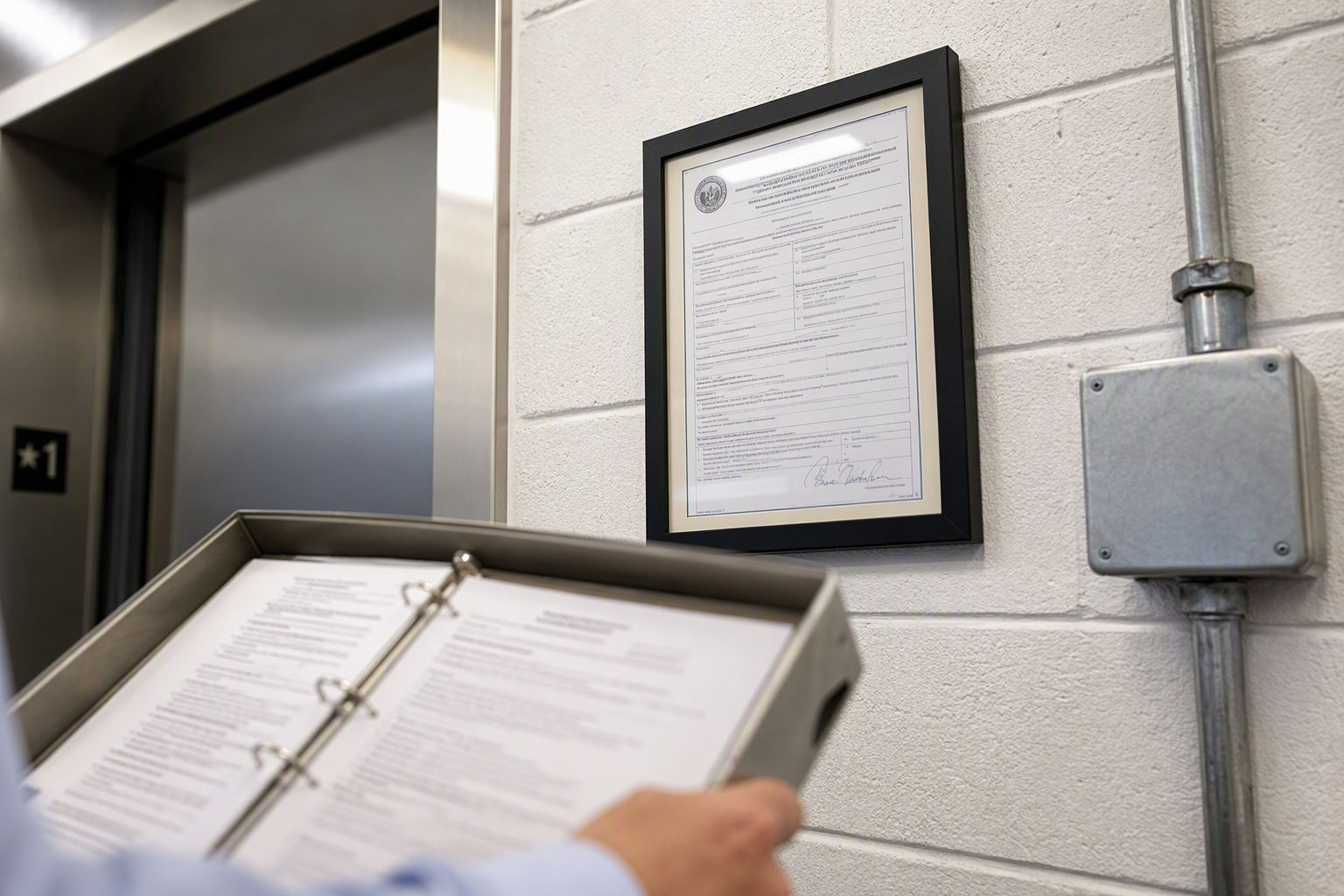
Under A.R.S. §§ 23-491 through 23-491.16 and Arizona Administrative Code R20-5-502 through R20-5-515, every conveyance in Arizona must be inspected before it first goes into service, after any modification or alteration, and annually thereafter. No elevator may operate without a valid annual certificate of inspection. The certificate must be kept at the same location as the conveyance and made available on request; the state serial number or certificate must also be posted in or near the cab in an accessible location.
Healthcare facility managers should note that a lapsed certificate is not a minor administrative oversight — it is a statutory violation that can expose the owner or operator to liability and force the conveyance out of service. Arizona Elevator Solutions helps healthcare clients in Phoenix, Tucson, Scottsdale, and Mesa track inspection due dates and coordinate with authorized private inspectors to prevent lapses.
Arizona owners may hire a private elevator inspector authorized by the Industrial Commission of Arizona. Such inspectors must register with the commission annually and complete at least eight hours of approved continuing education. An inspector may not inspect a conveyance owned, operated, or last serviced by the inspector’s own employer or a company the inspector owns — a conflict-of-interest rule particularly relevant when evaluating independent inspection options.
What Is the Arizona Firefighters Service Key Requirement for Healthcare Elevators?
All Arizona conveyances equipped with firefighters’ emergency operation must use the Arizona Firefighters Service (AZFS) key. This state-specific requirement affects every healthcare elevator with fire service recall capability — which in practice means virtually every elevator installed in a licensed healthcare facility. Buildings with older equipment that uses a non-AZFS key must update their hardware to remain compliant. This is a detail that out-of-state contractors unfamiliar with Arizona requirements sometimes overlook during renovation projects.
When Must Arizona Healthcare Owners Notify the State About Elevator Work?
Arizona owners must notify the Industrial Commission of Arizona’s Elevator Division at least 90 days before installing, relocating, or altering a conveyance. For healthcare facilities planning capital projects — new towers, department relocations, or equipment upgrades — this 90-day advance notice requirement must be built into the project schedule. Owners must also notify the state within 24 hours of any accident that injures a person or disables a conveyance. Healthcare risk managers should ensure that on-call contacts for elevator incidents have this reporting obligation documented in their emergency procedures.
What Contractor Licensing Is Required for Elevator Installation or Repair in Arizona?
The Arizona Registrar of Contractors (ROC) issues R-12 (residential) and C-12 (commercial) elevator license classifications authorizing the holder to install and repair elevators, dumbwaiters, escalators, and moving walks. Any contractor performing elevator installation or repair work at an Arizona healthcare facility should hold the appropriate ROC classification. Note that the ROC licenses contractors but does not issue the annual certificate of inspection — that authority rests with the Industrial Commission of Arizona’s Elevator Division (or the City of Phoenix Elevator Section within Phoenix city limits).
What Should Healthcare Facility Managers Do When Planning a New Building or Major Renovation?
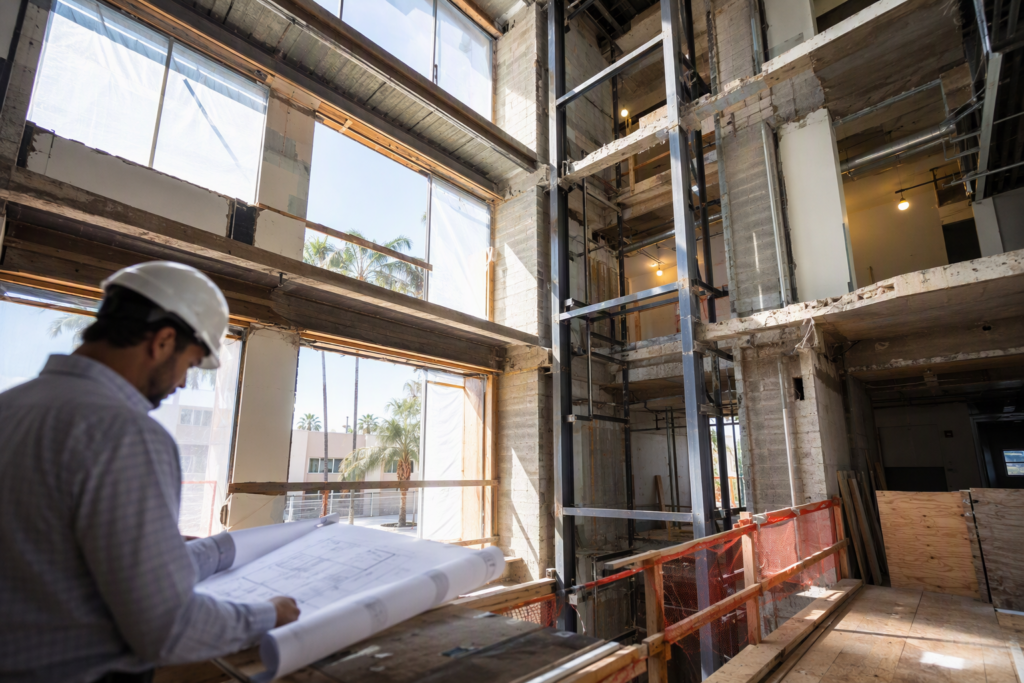
- Engage a licensed elevator consultant or contractor early. Elevator shafts, pit depths, overhead clearances, and machine room requirements must be incorporated into the structural design before architectural drawings are finalized. Retrofitting shaft dimensions after construction is costly.
- Conduct a traffic analysis. Work with your design team to model peak-hour demand based on bed count, staff shifts, and visitor patterns. The analysis will determine the number of cars, group configuration, and dispatch algorithm required to meet clinical service levels.
- Confirm which code editions the AHJ has adopted. Arizona has adopted ASME A17.1-2019 at the state level. The City of Phoenix Elevator Section and other local jurisdictions may have additional requirements; confirm with the applicable AHJ before finalizing specifications.
- Submit the 90-day advance notice to the ICA Elevator Division. Build this deadline into the project schedule before permit submission.
- Specify ADA-compliant cab dimensions and controls. Verify that cab sizes meet the functional requirements of your patient population, including bariatric equipment if applicable.
- Confirm the AZFS key requirement with your contractor. Every elevator with fire service recall must be equipped with the Arizona Firefighters Service key.
- Establish an ongoing maintenance and inspection program. Annual certificates of inspection are legally required; a preventive maintenance contract reduces the risk of unplanned downtime and helps ensure equipment is ready for annual inspection.
Does the Type of Healthcare Occupancy Change Elevator Requirements?
Yes. A licensed acute-care hospital, a freestanding emergency department, an ambulatory surgery center, a behavioral health facility, and a skilled nursing facility each carry different regulatory frameworks. Licensing agencies — including the Arizona Department of Health Services for licensed healthcare facilities — may reference FGI Guidelines or other design standards that impose elevator requirements beyond the base building code. Owners should review both the building code requirements enforced by the local AHJ and any facility-licensing standards enforced by the applicable health agency before finalizing an elevator program.
What Happens to Older Elevators Already in Service at a Healthcare Facility?
Under Arizona law, lawfully installed older conveyances may remain in use unless the ICA’s elevator chief determines that continued use poses a hazard to life, health, or property. However, “grandfathered” equipment is not exempt from annual inspection requirements or from modifications required to correct a specific hazard finding. Healthcare facility managers with aging elevator fleets should plan proactively: deferred modernization can lead to parts obsolescence, extended downtime during unplanned repairs, and potential compliance findings that force a car out of service — a serious operational risk in a clinical environment. Arizona Elevator Solutions provides modernization assessments for healthcare facilities across Phoenix, Tucson, Scottsdale, and Mesa, helping owners weigh repair versus replacement decisions against current code requirements.
Questions Your Inspector Will Ask
Whether the inspection is conducted by the City of Phoenix Elevator Section or a private inspector authorized by the Industrial Commission of Arizona’s Elevator Division, healthcare facility managers should be prepared to answer the following:
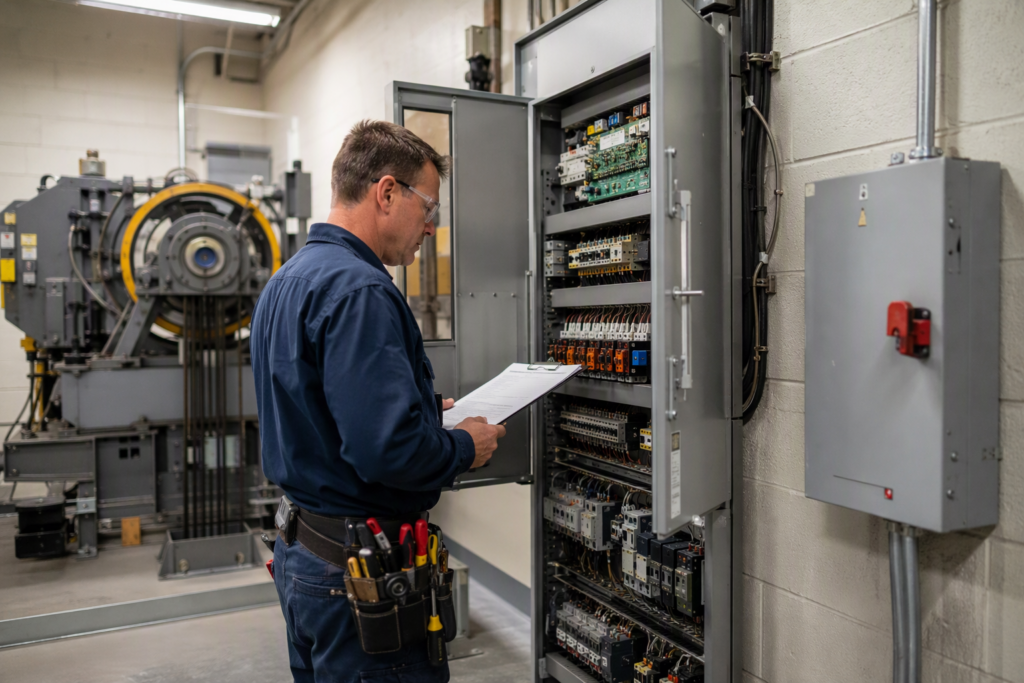
- Is the current certificate of inspection posted in or near the cab, and is the state serial number tag affixed to the controller or mainline disconnect?
- Has any alteration, modification, or repair been performed since the last inspection — and if so, was the ICA notified at least 90 days in advance?
- Does firefighters’ emergency operation use the Arizona Firefighters Service (AZFS) key?
- Are all cab interior dimensions, door widths, and control panel heights compliant with current ADA standards?
- Are maintenance records available and current, including documentation of any deficiency corrections from the prior inspection?
- Has the facility experienced any accident, injury, or conveyance disablement since the last inspection — and if so, was the ICA notified within 24 hours?
- Is the certificate of inspection kept at the location of the conveyance and available for immediate review?
- For new or recently altered equipment: was the conveyance inspected before it was placed into service?
How Can Healthcare Facility Managers Stay Ahead of Compliance Requirements?
Proactive compliance management for healthcare elevators involves three ongoing responsibilities: maintaining valid annual certificates of inspection, ensuring that any capital project involving elevator installation or alteration meets the 90-day advance notice requirement, and keeping maintenance records that document corrective actions from prior inspections. Healthcare facilities that allow certificates to lapse — even briefly — expose themselves to both regulatory and liability risk in a setting where elevator downtime has direct patient care consequences.
Arizona Elevator Solutions works with healthcare facility teams across Phoenix, Tucson, Scottsdale, and Mesa to build inspection calendars, coordinate with authorized private inspectors, and identify equipment that may need modernization to meet current ASME A17.1-2019 requirements. A scheduled assessment is far less disruptive than an emergency repair or an out-of-service notice from an inspector.
Schedule a Free Elevator Assessment for Your Healthcare Facility
Whether the question is how many elevators a new facility requires, whether existing equipment meets current Arizona code, or how to prepare for an upcoming annual inspection, the answers depend on the specific details of the building, its occupancy, and the applicable regulatory requirements.
Contact Arizona Elevator Solutions for a free elevator assessment: 480-557-7600
Arizona Elevator Solutions serves healthcare facilities throughout Phoenix, Tucson, Scottsdale, and Mesa, providing equipment assessments, modernization guidance, and compliance support aligned with Arizona’s elevator safety statutes, ASME A17.1 Safety Code for Elevators and Escalators, and ADA accessibility requirements.
Need elevator service you can rely on? Arizona Elevator Solutions is ready to help.