How Often Should Elevators Be Inspected? Complete FAQ Guide for Arizona Building Owners
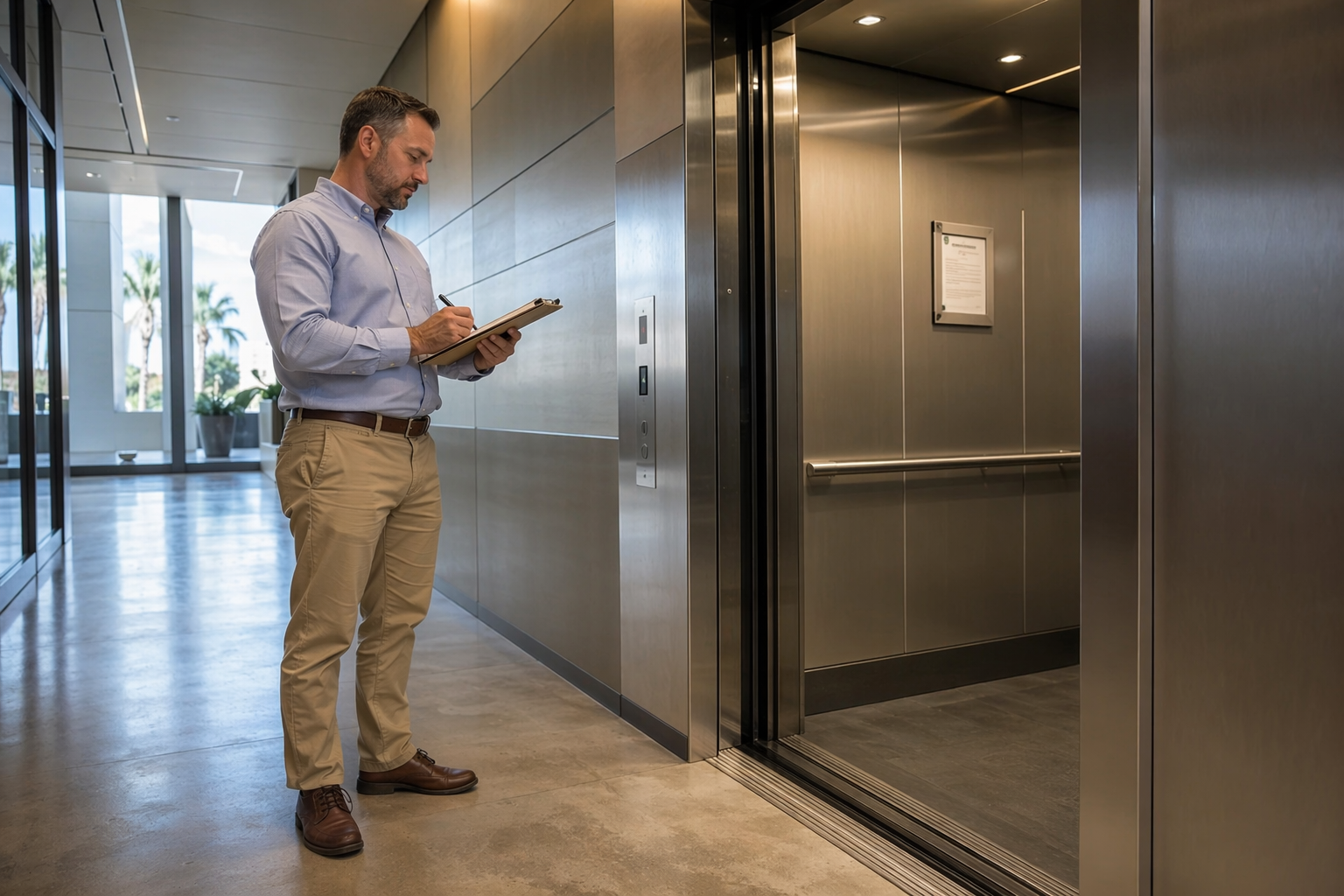
After 15 years in the elevator service industry across Arizona, the single most common compliance gap I see in commercial and residential buildings is missed or overdue inspections. What building owners often don’t realize is that inspection schedules aren’t optional suggestions — they are legally mandated safety requirements tied directly to occupancy permits and liability exposure. This guide answers every question I hear from property managers, HOAs, and facility directors across the Phoenix metro area and beyond.
How Often Should Elevators Be Inspected?
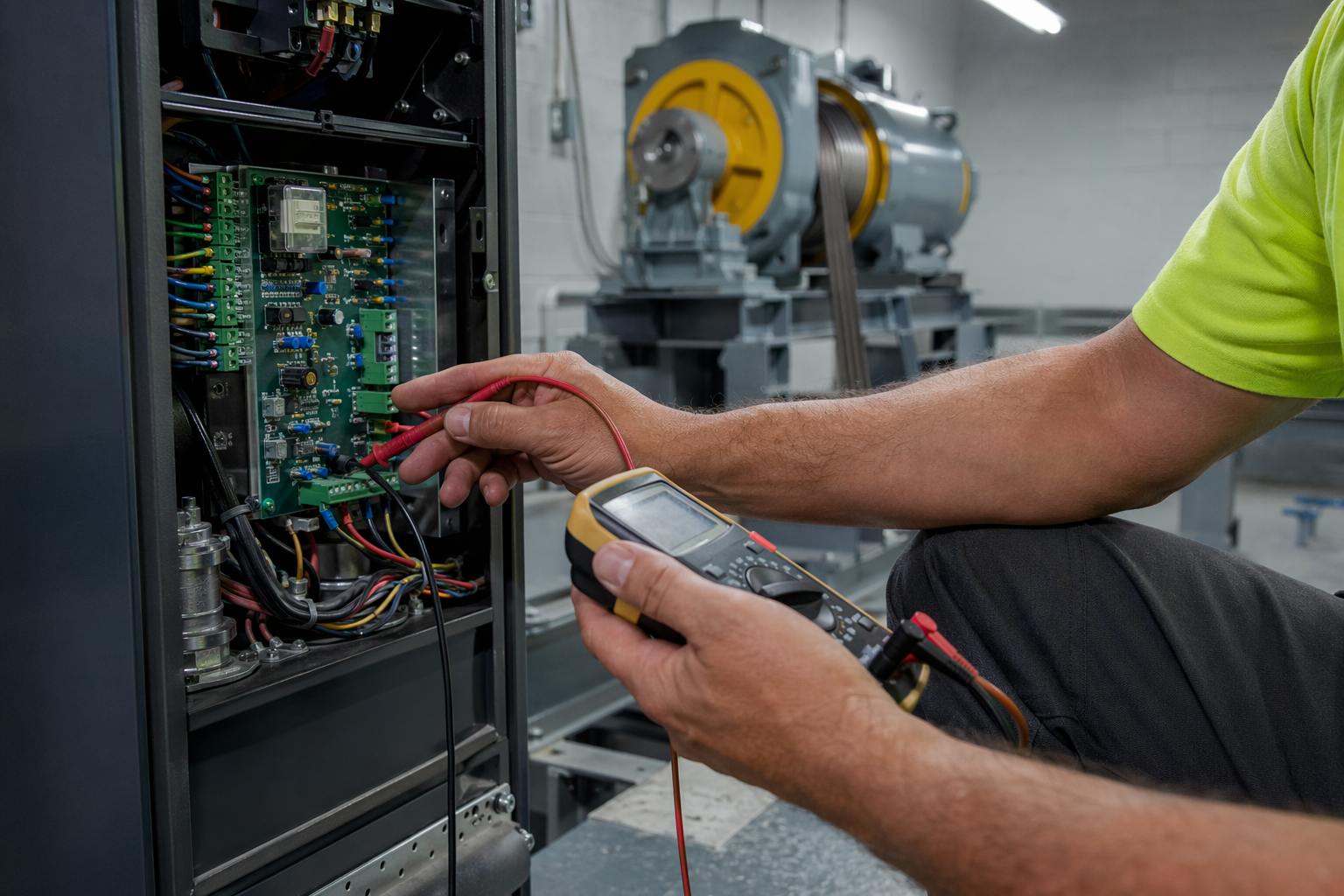
Most elevators in Arizona must receive a full safety inspection once every 12 months, with routine maintenance performed every 1 to 3 months depending on the elevator type, traffic volume, and equipment age.
Under ASME A17.1/CSA B44, the Safety Code for Elevators and Escalators, annual inspections are the baseline standard for most passenger and freight elevators. Arizona enforces these requirements through the Arizona Department of Occupational Safety and Health (ADOSH) and local jurisdictions. Missing your annual inspection cycle doesn’t just put occupants at risk — it can result in fines, forced shutdowns, and legal liability if an incident occurs.
Frequency escalates based on real-world factors: a high-traffic elevator in a 20-story Phoenix office tower needs more frequent attention than a single-stop residential lift. Usage cycles, environmental conditions (including Arizona’s extreme heat), and equipment age all influence how often a qualified technician should be on-site.
What Is the Difference Between an Elevator Inspection and Elevator Maintenance?

An elevator inspection is a formal, code-required safety evaluation performed by a certified third-party inspector, while maintenance is an ongoing service program performed by a licensed elevator technician to keep the equipment running safely between inspections.
Many building owners conflate the two, but they serve distinct legal and operational functions. Inspections result in an official report and, if passed, a Certificate of Inspection that must be posted inside the elevator cab. Maintenance visits — typically monthly or quarterly — include lubrication, adjustment, cleaning, and component testing that prevent failures before they happen.
Arizona Elevator Solutions provides both ADOSH-compliant maintenance programs and coordinates with certified inspectors to ensure your building passes every annual evaluation without surprises.
What Do Arizona State Laws Say About Elevator Inspection Frequency?
Arizona state law requires that all elevators subject to ADOSH jurisdiction be inspected at least once every 12 months by a licensed QEI (Qualified Elevator Inspector), and a current Certificate of Inspection must be displayed inside the cab at all times.
The Arizona Department of Occupational Safety and Health administers elevator safety under Arizona Revised Statutes (A.R.S.) Title 23, adopting ASME A17.1 as the controlling technical standard. The specific inspection interval and testing requirements depend on the device type:
| Elevator/Lift Type | Required Inspection Frequency | Periodic Test Requirement | Governing Standard |
|---|---|---|---|
| Traction Passenger Elevator | Annual (every 12 months) | Full-load safety test every 5 years | ASME A17.1, Part 8 |
| Hydraulic Passenger Elevator | Annual (every 12 months) | Pressure test every 5 years | ASME A17.1, Part 8 |
| Freight Elevator | Annual (every 12 months) | Full-load test every 5 years | ASME A17.1, Part 8 |
| Limited Use / Limited Application (LU/LA) | Annual (every 12 months) | Every 5 years | ASME A17.1, Section 5.2 |
| Dumbwaiter | Annual (every 12 months) | Every 5 years | ASME A17.1, Part 7 |
| Escalator / Moving Walk | Annual (every 12 months) | Step/pallet removal test every 5 years | ASME A17.1, Part 6 |
| Residential Elevator (LULA) | Annual (recommended); varies by jurisdiction | Every 5 years | ASME A17.1, Section 5.3 |
| Platform / Wheelchair Lift | Annual (every 12 months) | Every 5 years | ASME A18.1 |
Cities such as Phoenix and Scottsdale may layer additional municipal requirements on top of state minimums. Always verify with your local Authority Having Jurisdiction (AHJ) — our team at Arizona Elevator Solutions stays current with requirements across all four markets we serve.
How Often Should Elevator Maintenance Be Performed (Beyond Annual Inspections)?
Most commercial elevators should receive preventive maintenance visits every 1 to 3 months, with high-traffic units in office buildings, hospitals, and hotels requiring monthly service at minimum.
The ASME A17.1 code does not prescribe a specific maintenance interval — that is left to the judgment of the elevator contractor and building owner. However, industry best practice and manufacturer service agreements typically establish the following cadence:
- Monthly maintenance: High-traffic buildings (100+ trips/day), hospitals, hotels, senior living facilities, transit hubs
- Quarterly maintenance: Medium-traffic commercial buildings, mid-rise office buildings, retail centers
- Semi-annual maintenance: Low-traffic buildings, small residential buildings, limited-use lifts
In Arizona, extreme summer heat — regularly exceeding 115°F in the Phoenix metro — accelerates wear on hydraulic fluid, electrical components, and cooling systems inside machine rooms. This environmental reality means Arizona buildings often benefit from maintenance schedules on the more frequent end of the spectrum, a factor our technicians account for in every service plan we design.
What Happens During an Annual Elevator Safety Inspection?
During an annual safety inspection, a QEI-certified inspector performs a systematic evaluation of all safety devices, mechanical systems, electrical components, cab integrity, and code compliance items as defined by ASME A17.1.
A typical annual inspection in Arizona includes:
- Verification of safety device functionality (governor, safeties, buffers, interlocks)
- Door operation and closing force measurements (per ASME A17.1 and ADA requirements)
- Emergency lighting and communication system testing
- Leveling accuracy and ride quality assessment
- Machine room condition, ventilation, and temperature verification
- Review of maintenance logbooks and prior inspection records
- Hydraulic system integrity checks (for hydraulic units)
- Pit condition, lighting, and stop switch verification
After passing inspection, the inspector issues a Certificate of Inspection valid for 12 months. If violations are found, a correction timeline is established — and re-inspection may be required before the elevator can legally return to service.
What Are the Consequences of Missing an Elevator Inspection Deadline?
Missing an elevator inspection deadline in Arizona can result in mandatory elevator shutdown, civil fines, voided insurance coverage, and significant legal liability if an injury occurs on an elevator operating without a current certificate.
ADOSH has the authority to issue cease-and-use orders for elevators operating without valid certificates. Beyond regulatory consequences, property owners should understand the liability exposure: if a personal injury lawsuit involves an elevator that was operating with an expired inspection certificate, the absence of that certificate is strong evidence of negligence per se in Arizona civil courts. In 2026, with increased regulatory scrutiny on building safety across Maricopa County, this is not a risk worth taking.
Do Newly Installed Elevators Need to Be Inspected Before Use?
Yes — every newly installed elevator in Arizona must pass an acceptance inspection by a licensed QEI before it can be placed into service, regardless of whether it is a new building or a modernized existing unit.
Acceptance inspections are more comprehensive than annual inspections and verify that the installation fully complies with the current edition of ASME A17.1 adopted by Arizona. This includes witnessing specific tests such as governor-tripping speed, safety application, and buffer engagement. Only after this inspection passes and a Certificate of Inspection is issued can the elevator be used by building occupants.
How Does Elevator Inspection Frequency Compare to Other Countries or States?
The United States generally requires annual elevator inspections, which is consistent with most developed countries, though some jurisdictions have moved to risk-based inspection models that vary frequency based on elevator condition scores.
In comparison, the European Union’s Lifts Directive 2014/33/EU requires periodic inspections at intervals defined by national member states — often every 2 years for low-risk units and annually for high-traffic equipment. Several U.S. states, including New York and Illinois, have adopted supplemental rules that require more frequent inspections for elevators in high-rise buildings. Arizona currently adheres to the standard annual ASME A17.1 cycle, making consistent annual compliance the clearest path to staying legal and safe.
How Much Does an Elevator Inspection Cost in Arizona?
In Arizona, a standard annual elevator inspection typically costs between $150 and $500 per unit, depending on elevator type, location, and whether the inspection is coordinated through a full-service maintenance contractor or booked independently.
Here is a general cost breakdown for 2026 based on equipment type and market conditions in Phoenix, Scottsdale, Tucson, and Mesa:
- Standard passenger elevator annual inspection: $175–$350
- Hydraulic elevator inspection: $200–$400
- Freight elevator inspection: $250–$500
- Five-year periodic (Category 1 or Category 5) test: $500–$2,500+ depending on test type and elevator capacity
- Platform lift / LULA inspection: $150–$275
Note that inspection fees are separate from maintenance costs. Bundling maintenance and inspection coordination through a single provider like Arizona Elevator Solutions often reduces total annual cost by eliminating redundant administrative fees and scheduling conflicts.
What ADA Requirements Apply to Elevator Inspections and Maintenance?
Under the Americans with Disabilities Act (ADA), elevators in multi-story public accommodations and commercial facilities must remain operational and accessible, meaning maintenance failures that take an elevator out of service for extended periods may constitute an ADA violation.
The ADA does not specify inspection frequency, but it does require that accessible routes remain functional. If an elevator is the only accessible means of reaching an upper floor, an extended outage — particularly one caused by deferred maintenance — can expose a building owner to ADA complaints and DOJ enforcement. Best practice is to ensure that maintenance programs explicitly include testing of ADA-required features: door reopening devices, leveling accuracy to within ½ inch of floor level, audible floor announcements (for buildings covered by ADA Standards for Accessible Design Section 407), and compliant cab dimensions.
How Do I Know If My Elevator Is Due for a 5-Year Periodic Test?
Your elevator’s 5-year periodic test date is tracked from the date of the last witnessed test, and it will appear in your Certificate of Inspection records and the ADOSH permit file — your elevator maintenance contractor should proactively notify you when this milestone is approaching.
ASME A17.1 defines two major periodic test categories relevant to most Arizona elevators:
- Category 1 Test (Annual): No-load safety test, performed as part of the annual inspection cycle
- Category 5 Test (Five-Year): Full-rated-load, full-speed safety test — the most comprehensive and most commonly overlooked requirement
The Category 5 test requires advance scheduling, coordination with a licensed QEI, and temporary removal of the elevator from service. Buildings that fail to track this cycle often discover they are years overdue only when a new property manager audits records or a sale triggers due diligence. Arizona Elevator Solutions maintains a proactive notification system for all clients to ensure no test deadline is ever missed.
Can a Building Owner Perform Their Own Elevator Inspection in Arizona?
No — Arizona law requires that all formal safety inspections be conducted by a Qualified Elevator Inspector (QEI) certified by ASME/ANSI QEI-1, and self-inspections by building owners or unlicensed personnel do not satisfy the legal requirement.
Maintenance tasks such as cleaning, lubricating, and minor adjustments may be performed by trained in-house staff in some jurisdictions, but the formal inspection that results in a Certificate of Inspection must always be conducted by a QEI-certified inspector. Attempting to cut costs by skipping third-party inspection creates enormous legal exposure and puts occupants at genuine safety risk.
What Factors Increase the Recommended Inspection and Maintenance Frequency?
Several factors beyond code minimums warrant increased inspection and maintenance frequency, including high daily trip counts, building type, elevator age, recent repairs, and environmental conditions like Arizona’s extreme heat.
As a technician with 15 years of field experience across Arizona, I consider these the highest-impact escalating factors:
- Age: Elevators over 20 years old have higher component wear rates and benefit from quarterly or monthly maintenance
- Usage volume: Elevators making 200+ trips per day wear significantly faster than low-use units
- Heat exposure: Machine rooms in Arizona buildings without adequate HVAC can see ambient temperatures above 100°F, accelerating bearing wear, hydraulic fluid breakdown, and electronic failures
- Building type: Hospitals, senior living, and schools face heightened duty-of-care requirements and should lean toward monthly maintenance
- Recent incidents or repairs: Any elevator that has experienced an entrapment, emergency stop, or major component repair should receive increased monitoring in the following 90 days
How Do I Find a Qualified Elevator Inspector in Phoenix or Tucson, Arizona?
To find a QEI-certified elevator inspector in Phoenix, Tucson, Scottsdale, or Mesa, contact ADOSH directly, search the ASME QEI certification database, or work with a licensed elevator contractor who coordinates third-party inspections as part of their service offering.
Arizona Elevator Solutions works with a network of ASME QEI-1 certified inspectors throughout Maricopa and Pima Counties. Rather than requiring building owners to independently locate, schedule, and coordinate with inspectors, we handle that process as part of our full-service maintenance agreements — streamlining compliance and reducing the administrative burden on facility managers.
What Records Should I Keep Related to Elevator Inspections?
Arizona building owners must retain the current Certificate of Inspection (posted in the cab), all inspection reports, maintenance logs, violation notices, and test records for a minimum period consistent with ADOSH record retention requirements — industry best practice is to retain all elevator records for at least 10 years.
Proper documentation serves multiple critical functions:
- Demonstrates compliance during ADOSH audits or insurance reviews
- Establishes a maintenance history that can reduce liability in injury claims
- Supports property valuation and due diligence during real estate transactions
- Helps technicians identify recurring issues and plan proactive repairs
Digital record-keeping is strongly recommended. Arizona Elevator Solutions provides all clients with a secure online portal where inspection reports, maintenance visit logs, and compliance documents are stored and accessible at any time.
What Should I Do If My Elevator Fails an Inspection?
If your elevator fails an inspection, it must be taken out of service immediately or by the deadline specified in the violation notice, and all cited deficiencies must be corrected and re-inspected before the elevator can legally return to service.
Common reasons Arizona elevators fail annual inspections include:
- Inoperative emergency lighting or emergency communication systems
- Door closing force exceeding ASME A17.1 limits (maximum 30 lbf for closing)
- Excessive leveling inaccuracy
- Deteriorated or missing cab interior components
- Expired Category 5 test
- Pit water infiltration or inadequate lighting
- Missing or expired signage
When a client receives a failed inspection report, our technicians at Arizona Elevator Solutions prioritize same-week correction of all cited items, coordinate re-inspection scheduling, and document the corrective actions to protect the building owner’s compliance record.
How Does Elevator Age Affect Inspection Requirements and Frequency?
Older elevators — particularly those installed before 1990 — face higher rates of component failure, may lack modern safety features required by current ASME A17.1 editions, and typically require more frequent maintenance visits to remain safe and compliant.
Arizona has a substantial inventory of aging elevator equipment in older commercial buildings throughout downtown Phoenix, central Tucson, and established Scottsdale business districts. While existing installations are generally grandfathered under the code edition in effect at the time of installation for most provisions, certain retroactive safety requirements have been added over the years — including requirements for car-top emergency lighting, firefighters’ service, and door reopening device functionality. A modernization assessment can identify whether aging equipment has reached the point where upgrade costs are more economical than continued repair spending.
Are Residential Elevators Subject to the Same Inspection Requirements as Commercial Elevators in Arizona?
Private residential elevators in single-family homes are generally exempt from mandatory ADOSH inspection requirements in Arizona, but residential elevators in multi-family buildings, condominiums, and HOA communities are subject to the same annual inspection requirements as commercial units.
This distinction confuses many property owners. A home elevator serving a private residence is not covered by ADOSH, though installation still requires a building permit and passes a one-time acceptance inspection. However, the moment an elevator serves common areas or multiple residential units — as in a condominium tower or assisted living facility — it falls fully under ASME A17.1 and annual inspection requirements apply without exception. HOA boards in Mesa and Scottsdale that manage multi-story common areas should verify their elevator compliance status with a licensed contractor.
How Can I Create a Long-Term Elevator Compliance Calendar for My Building?
A long-term elevator compliance calendar should map annual inspection dates, monthly or quarterly maintenance visits, Category 5 five-year test milestones, and any manufacturer-recommended component replacement intervals onto a master schedule reviewed and updated every year.
Here is a simplified compliance calendar framework for a typical Arizona commercial elevator:
- Monthly: Maintenance visit (high-traffic buildings) — lubrication, safety device checks, cab inspection
- Quarterly: Maintenance visit (medium-traffic buildings) — full mechanical and electrical review
- Annually: QEI safety inspection, Certificate of Inspection renewal, Category 1 no-load test
- Every 3 years: Hydraulic fluid analysis and potential replacement (hydraulic units)
- Every 5 years: Category 5 full-load safety test (governor, safeties, buffers)
- Every 10–25 years: Modernization assessment based on equipment condition and code evolution
Arizona Elevator Solutions builds this calendar for every client at the start of a maintenance agreement and sends automated reminders 60 days before every major deadline — because no building owner should be surprised by a compliance gap.
Why Should I Choose Arizona Elevator Solutions for Elevator Inspections and Maintenance?
Arizona Elevator Solutions is a locally operated, IUEC-certified elevator service company with deep familiarity with ADOSH requirements, Arizona’s unique climate challenges, and the specific compliance landscape across Phoenix, Tucson, Scottsdale, and Mesa.
Here is what differentiates our service in the Arizona market:
- IUEC-certified technicians with manufacturer training across all major elevator brands
- Proactive compliance tracking — we notify you before deadlines, not after
- Transparent inspection coordination with licensed QEI inspectors
- Local knowledge of ADOSH enforcement patterns and municipal AHJ requirements in all four markets
- Emergency response capability for unplanned outages and entrapments
- Digital documentation portal for complete compliance record access
Whether you manage a single elevator in a Mesa medical office or a fleet of elevators across a Scottsdale resort campus, our service programs are structured to keep you fully compliant, fully documented, and fully protected.
Summary: Elevator Inspection Frequency at a Glance
To summarize the core requirements every Arizona building owner and property manager should have memorized:
- Annual inspection by a QEI-certified inspector: required for all regulated elevators
- Monthly to quarterly maintenance by a licensed technician: required for practical safety and equipment longevity
- Every 5 years — Category 5 test: full-load, full-speed safety evaluation
- Certificate of Inspection must be current and posted inside the cab at all times
- ASME A17.1 is the controlling technical standard; Arizona enforces it through ADOSH
- Extreme Arizona heat is a real accelerating factor — do not use national-average maintenance schedules without adjusting for local conditions
Get Your Free Elevator Compliance Assessment Today
Don’t wait for a failed inspection or a regulatory shutdown to discover a compliance gap. Contact Arizona Elevator Solutions for a free elevator assessment — we serve property owners, facility managers, and HOAs throughout Phoenix, Tucson, Scottsdale, and Mesa with no-obligation compliance reviews and customized maintenance programs built around Arizona’s specific regulatory requirements.
Call us today: 480-319-7157
Our IUEC-certified technicians are ready to review your inspection records, identify any compliance gaps, and put a proactive maintenance plan in place — so your elevators stay safe, legal, and operational every day of the year.