Elevator Contracts for Healthcare Facilities in Arizona
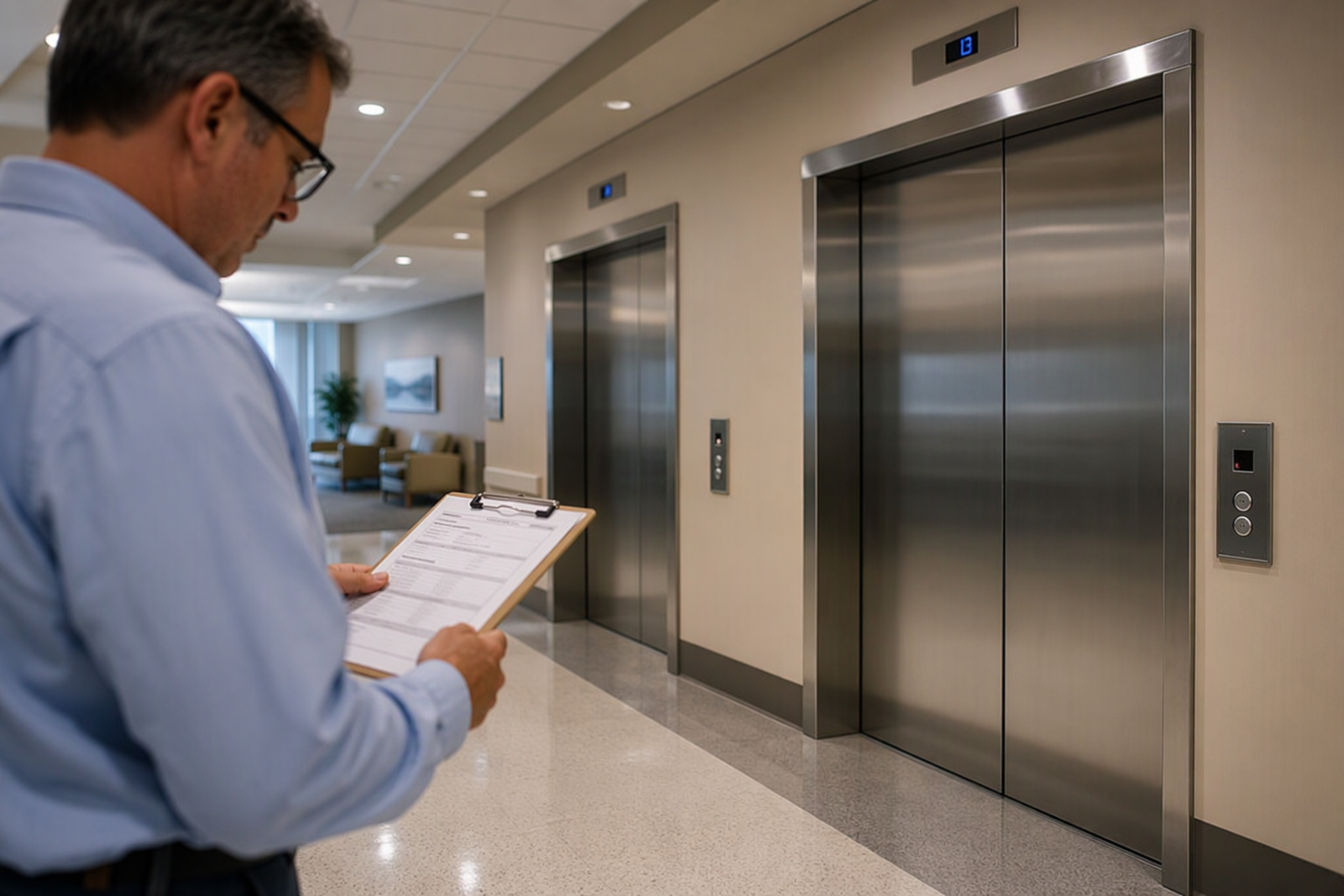
Hospitals, outpatient surgery centers, long-term care facilities, and medical office buildings in Phoenix, Tucson, Scottsdale, and Mesa depend on elevators around the clock. A single unplanned outage can delay patient transport, obstruct emergency response, and trigger regulatory scrutiny. Structuring the right elevator contract—one that aligns with Arizona law, federal accessibility standards, and healthcare-specific operational demands—is not optional. It is a patient safety obligation.
What Does a Healthcare Elevator Contract Cover?
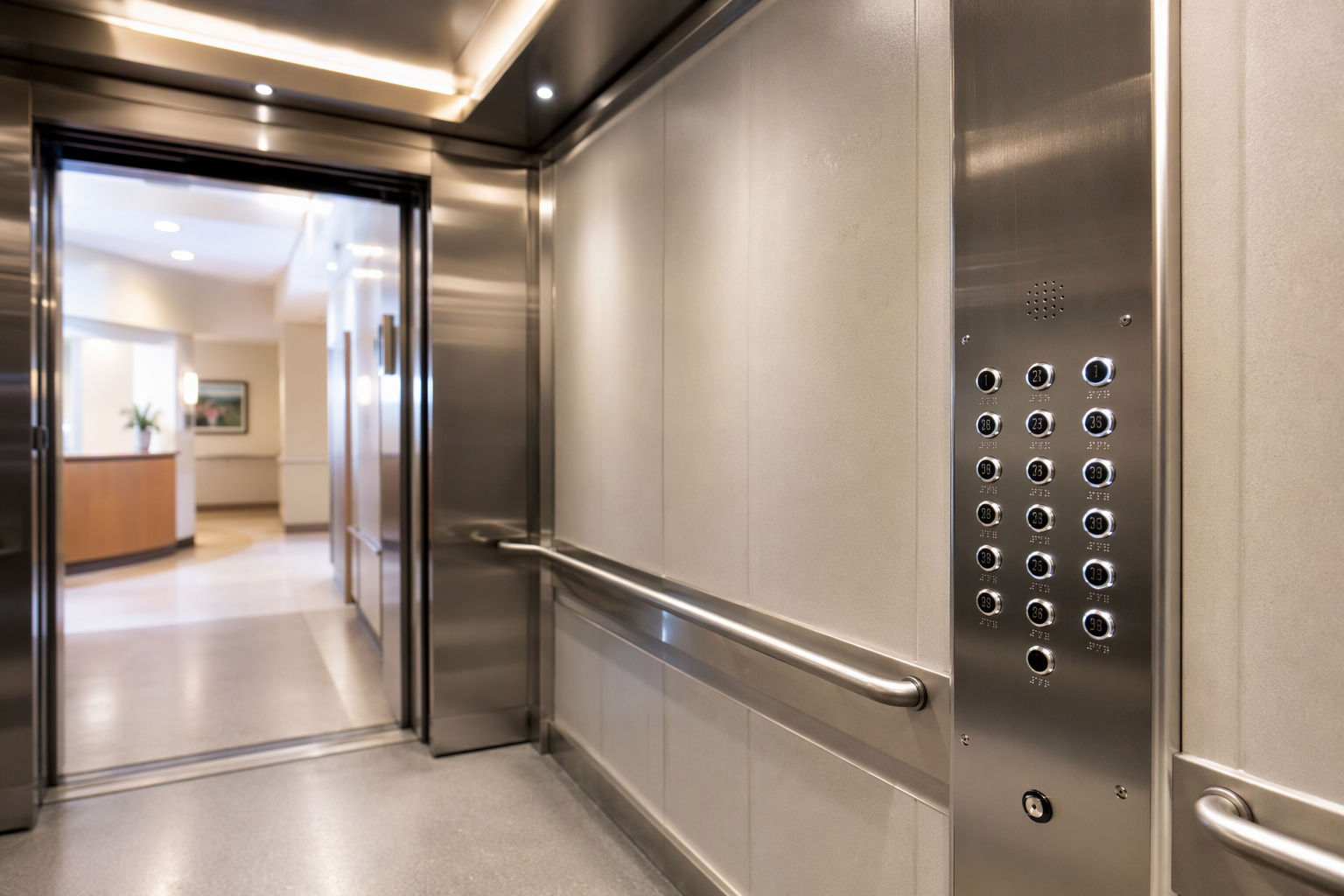
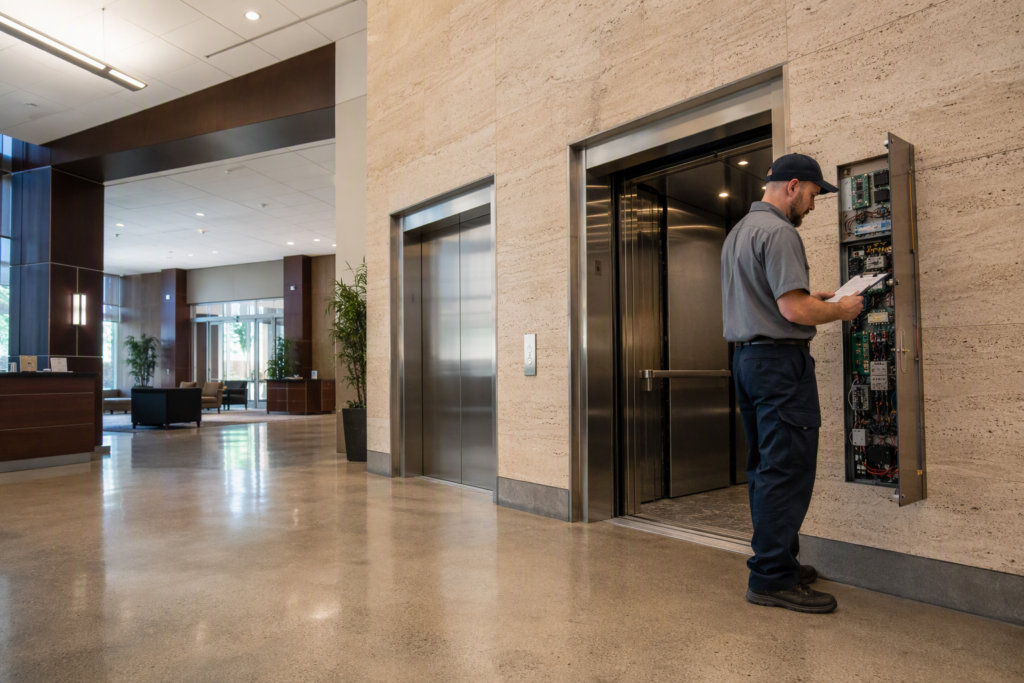
A well-structured healthcare elevator contract typically covers scheduled preventive maintenance visits, lubrication and adjustment of mechanical components, safety device testing, callback response for unplanned outages, parts supply agreements, compliance documentation, and coordination with state and local inspection authorities. For healthcare settings, contracts should also address after-hours coverage, priority service for patient-critical equipment, and documentation trails required by accreditation bodies such as The Joint Commission.
Arizona Elevator Solutions structures healthcare maintenance agreements to address the unique operational intensity of medical environments, where elevator downtime is not merely inconvenient—it can directly affect patient care delivery.
What Arizona Regulations Apply to Healthcare Elevators?
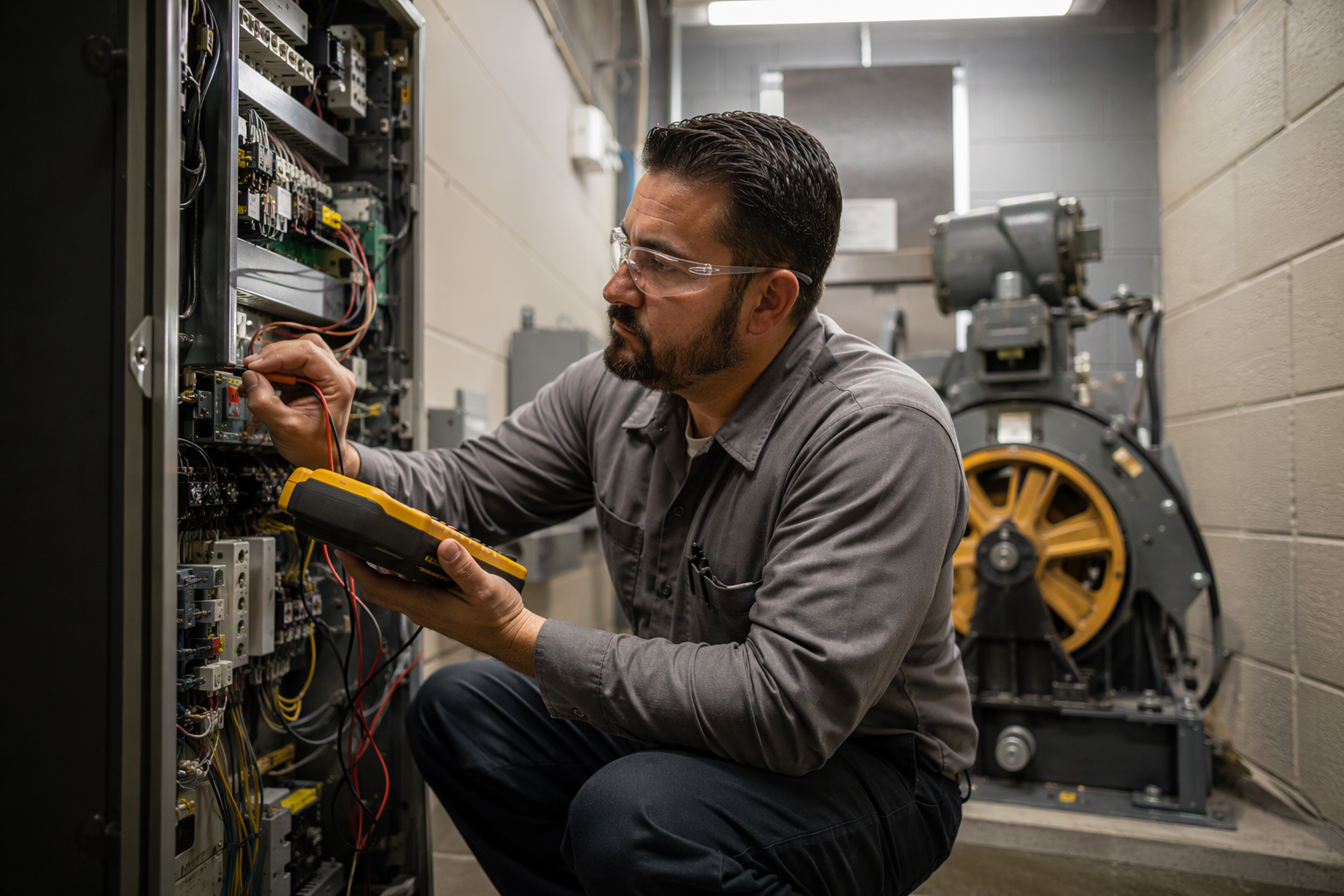
Healthcare facilities operating in Arizona are subject to multiple overlapping regulatory frameworks:
- State statute: A.R.S. §§ 23-491 through 23-491.16 (Safety Conditions for Elevators and Similar Conveyances), as amended by Laws 2026, Ch. 73, governs all conveyances in Arizona. No elevator may operate without an annual certificate of inspection issued by the state.
- State regulator: The Industrial Commission of Arizona (ICA), Elevator Division—formerly called the ADOSH Elevator Safety Section until September 12, 2026—administers elevator safety statewide, except within the City of Phoenix, where the City of Phoenix Elevator Section (Planning and Development Department) handles inspections.
- Adopted code: Arizona adopted ASME A17.1/CSA B44, 2019 edition, effective January 9, 2023, for equipment installed, repaired, or altered on or after January 1, 2023. Healthcare facilities that have recently renovated vertical transportation systems must comply with this edition.
- Platform lifts and chairlifts: Any platform lift or stairway chairlift installed, repaired, or altered on or after January 1, 2023 must comply with ASME A18.1-2020, relevant to outpatient clinics and rehabilitation facilities with limited-use vertical access points.
- Federal accessibility: The Americans with Disabilities Act (ADA) requires accessible routes and operable elevator controls for patients, visitors, and staff with disabilities. Healthcare facilities face heightened scrutiny given the population they serve.
- Workplace safety: OSHA regulations apply to elevator maintenance workers and to the safety of staff who rely on vertical transportation to move patients, equipment, and pharmaceuticals.
- Contractor licensing: Arizona elevator work must be performed by contractors holding the Arizona Registrar of Contractors R-12 or C-12 elevator license classification, which authorizes installation and repair of elevators, dumbwaiters, escalators, and moving walks.
Under Arizona Administrative Code R20-5-502 through R20-5-515, owners must notify the ICA Elevator Division at least 90 days before installing, relocating, or altering a conveyance—a critical planning consideration for healthcare facilities undergoing construction or expansion. Any accident that injures a person or disables a conveyance must be reported to the state within 24 hours.
Why Do Healthcare Facilities Need a Dedicated Elevator Contract?
General commercial elevator contracts are not designed for the demands of a 24/7 medical environment. Healthcare-specific agreements account for the following:
- Continuous operation requirements for patient transport and emergency response
- Bariatric and heavy-duty elevator systems common in hospitals
- Medical gas and equipment transport restrictions that affect cab configuration maintenance
- Accreditation documentation requirements for facilities subject to Joint Commission or CMS surveys
- Infection control protocols that govern when and how technicians may work inside clinical spaces
- Coordination with facilities management and biomedical engineering teams
What Should Healthcare Administrators Look for in an Elevator Service Contract?
When evaluating elevator contract proposals, healthcare facility managers in Arizona should prioritize the following contract elements:
- Scope of maintenance: Confirm the contract specifies which components are covered under preventive maintenance versus billable repairs.
- Inspection coordination: The provider should manage scheduling with the ICA Elevator Division or the City of Phoenix Elevator Section, as applicable, and ensure the annual certificate of inspection is obtained, posted near the conveyance, and kept on file at the facility.
- Compliance documentation: Accreditation surveys require documented maintenance records. Contracts should specify record format, retention period, and delivery method.
- State serial number management: Every Arizona conveyance carries a state serial number on a tag fixed to the controller or mainline disconnect. The service provider should track this across all units in a multi-elevator facility.
- Firefighters’ emergency operation: Arizona conveyances with firefighters’ emergency operation must use the Arizona Firefighters Service (AZFS) key. The contract should address testing and compliance for this feature.
- Private inspector provisions: Arizona owners may hire a private elevator inspector authorized by the ICA to perform annual inspections. The contract should clarify whether the service provider arranges this or whether the facility does so independently—noting that a private inspector may not inspect a conveyance last serviced by their own employer.
How Does the Annual Inspection Process Work for Arizona Healthcare Elevators?
- Confirm that the facility’s elevator contract includes inspection scheduling as a covered service or that the facility has separately arranged for a qualified inspector.
- Notify the ICA Elevator Division of any planned alterations or new installations at least 90 days in advance.
- Ensure all maintenance records are current and accessible before the inspection date.
- Confirm that each conveyance’s state serial number tag is intact on the controller or mainline disconnect.
- Verify that the current certificate of inspection is posted in or adjacent to each conveyance in an easily accessible location.
- Address any deficiencies identified during the inspection before the next operational period, documenting corrective actions.
- Retain the new annual certificate at the facility location where the conveyance operates, as required by Arizona law.
Questions Your Inspector Will Ask
Healthcare facility managers should be prepared to answer the following questions when the ICA Elevator Division inspector or an authorized private inspector visits the property:
- Is the current annual certificate of inspection posted in or immediately adjacent to each conveyance?
- Is the certificate also kept on file at this facility location?
- Can you produce maintenance records for each conveyance, including dates of service, components inspected, and technician identification?
- Have any alterations or repairs been made to the conveyance since the last inspection, and was the ICA notified if required?
- Does each conveyance with firefighters’ emergency operation use the Arizona Firefighters Service (AZFS) key?
- Has the facility experienced any accidents or conveyance disablements? Were they reported to the state within 24 hours?
- Is the state serial number tag intact on the controller or mainline disconnect for each unit?
- Who is the facility’s current elevator service contractor, and do they hold an Arizona Registrar of Contractors R-12 or C-12 license?
What Is the Difference Between a Full-Maintenance Contract and a Parts-and-Labor Contract?
A full-maintenance contract typically includes all parts, labor, and routine maintenance visits, providing cost predictability for large healthcare systems managing multiple units. A parts-and-labor contract (sometimes called a time-and-materials contract) covers labor and specified parts but may exclude certain components, leading to variable costs. For healthcare facilities where budget certainty and minimal administrative burden are priorities, full-maintenance agreements are generally more practical—though the exact structure should be negotiated based on the age, type, and volume of the facility’s elevator inventory.
How Do Multi-Site Healthcare Systems Manage Elevator Contracts Across Arizona?
Health systems with campuses in Phoenix, Scottsdale, Tucson, and Mesa benefit from consolidated service agreements that provide uniform maintenance standards, centralized documentation, and consistent compliance management across all locations. Arizona Elevator Solutions serves healthcare clients across these markets, allowing facilities teams to work with a single point of accountability rather than managing multiple regional vendors with inconsistent documentation practices.
What Happens If a Healthcare Facility Operates Without a Valid Certificate of Inspection?
Under Arizona law, no conveyance may operate without a valid annual certificate of inspection. Operating an elevator without this certificate exposes the healthcare organization to regulatory action by the ICA Elevator Division, potential liability in the event of an incident, and possible findings during accreditation surveys. The certificate must be both posted near the conveyance and kept on file at the facility. Facilities should treat certificate expiration dates with the same urgency as other compliance deadlines.
How Do ADA Requirements Affect Healthcare Elevator Contracts?
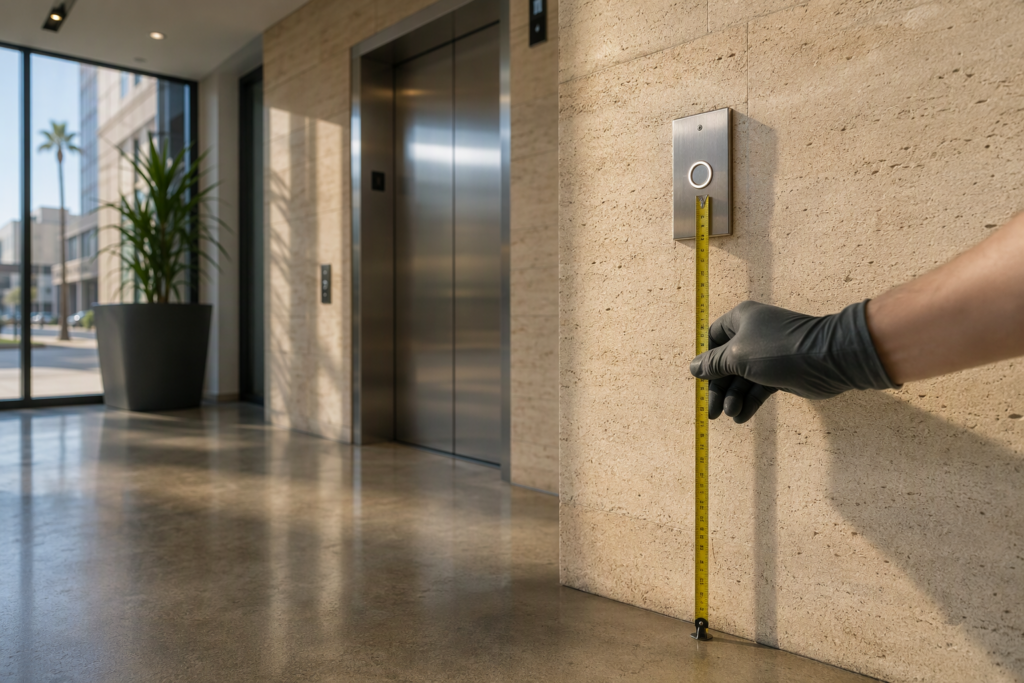
The ADA requires that elevators serving multiple floors in healthcare buildings provide accessible routes for patients, visitors, and employees with disabilities. Maintenance contracts should explicitly include inspection and testing of ADA-related features: door timing and force, control button height and tactile markings, audible signals, and cab leveling tolerances. Failure to maintain these features can result in ADA complaints and federal enforcement actions independent of state elevator code compliance.
What Should a Healthcare Facility Do After an Elevator Incident?
- Ensure all affected persons receive appropriate medical attention immediately.
- Secure the conveyance and prevent further use until it has been inspected and cleared.
- Notify the ICA Elevator Division within 24 hours of any accident that injures a person or disables a conveyance, as required by Arizona law.
- Contact the elevator service provider to arrange an emergency inspection and document the condition of the equipment.
- Preserve all maintenance records, inspection certificates, and service logs related to the unit involved.
- If the incident occurred within the City of Phoenix, also coordinate with the City of Phoenix Elevator Section as the local authority having jurisdiction.
- Work with legal and risk management teams to document the incident response for accreditation and liability purposes.
How Often Should Healthcare Elevators Be Serviced Under a Contract?
Arizona law requires annual inspection of every conveyance, and inspection before first use and after any modification or alteration. Beyond the state inspection schedule, the appropriate frequency of preventive maintenance visits depends on equipment type, usage volume, and the age of the installation. High-traffic hospital elevators operating across three shifts daily will require more frequent lubrication, adjustment, and safety device testing than a low-use medical office lift. Contract terms should reflect actual usage intensity rather than a one-size-fits-all schedule.
Can a Healthcare Facility Use a Private Elevator Inspector Under an Arizona Contract?
Yes. Arizona owners may hire a private elevator inspector authorized by the Industrial Commission of Arizona to perform initial or annual inspections. However, Arizona law specifies that a private inspector may not inspect a conveyance owned, operated, or last serviced by the inspector, a company the inspector owns, or the inspector’s employer. This means a healthcare facility cannot use its elevator maintenance contractor’s in-house inspector to perform the official annual inspection if that contractor also serviced the equipment. Using a private inspector does not relieve the owner or operator of their legal obligations under Arizona law.
What Should Healthcare Facilities in Phoenix Know About Local Inspection Authority?
Healthcare facilities located within the City of Phoenix are inspected by the City of Phoenix Elevator Section, which operates under the Planning and Development Department. This section inspects elevators, escalators, moving walks, dumbwaiters, and chairlifts within city limits. Equipment located outside Phoenix is handled by the ICA Elevator Division. Multi-site health systems should confirm which authority has jurisdiction over each campus and ensure their elevator contract provider is familiar with both agencies’ documentation and scheduling requirements.
Arizona Elevator Solutions works with healthcare facilities across Phoenix, Scottsdale, Tucson, and Mesa, maintaining familiarity with both the ICA Elevator Division’s statewide requirements and the City of Phoenix Elevator Section’s local processes to avoid compliance gaps during inspection cycles.
Contact Arizona Elevator Solutions for a free elevator assessment at 480-557-7600.
Need elevator service you can rely on? Arizona Elevator Solutions is ready to help.