
Switching elevator service to a new provider is a process that affects regulatory compliance, equipment safety, and building operations. In Arizona, elevator owners carry direct legal responsibility for maintaining their conveyances in a safe and compliant condition regardless of which service contractor they use. Understanding each step of the transition — from contract review to compliance documentation — helps building owners avoid lapses in certification and reduces the risk of equipment downtime.
Arizona Elevator Solutions approaches provider transitions as a structured, data-informed process, helping building owners in Arizona document their equipment status, verify regulatory standing, and transition service without gaps in coverage.
What does an elevator service contract typically cover, and why does it matter when switching providers?
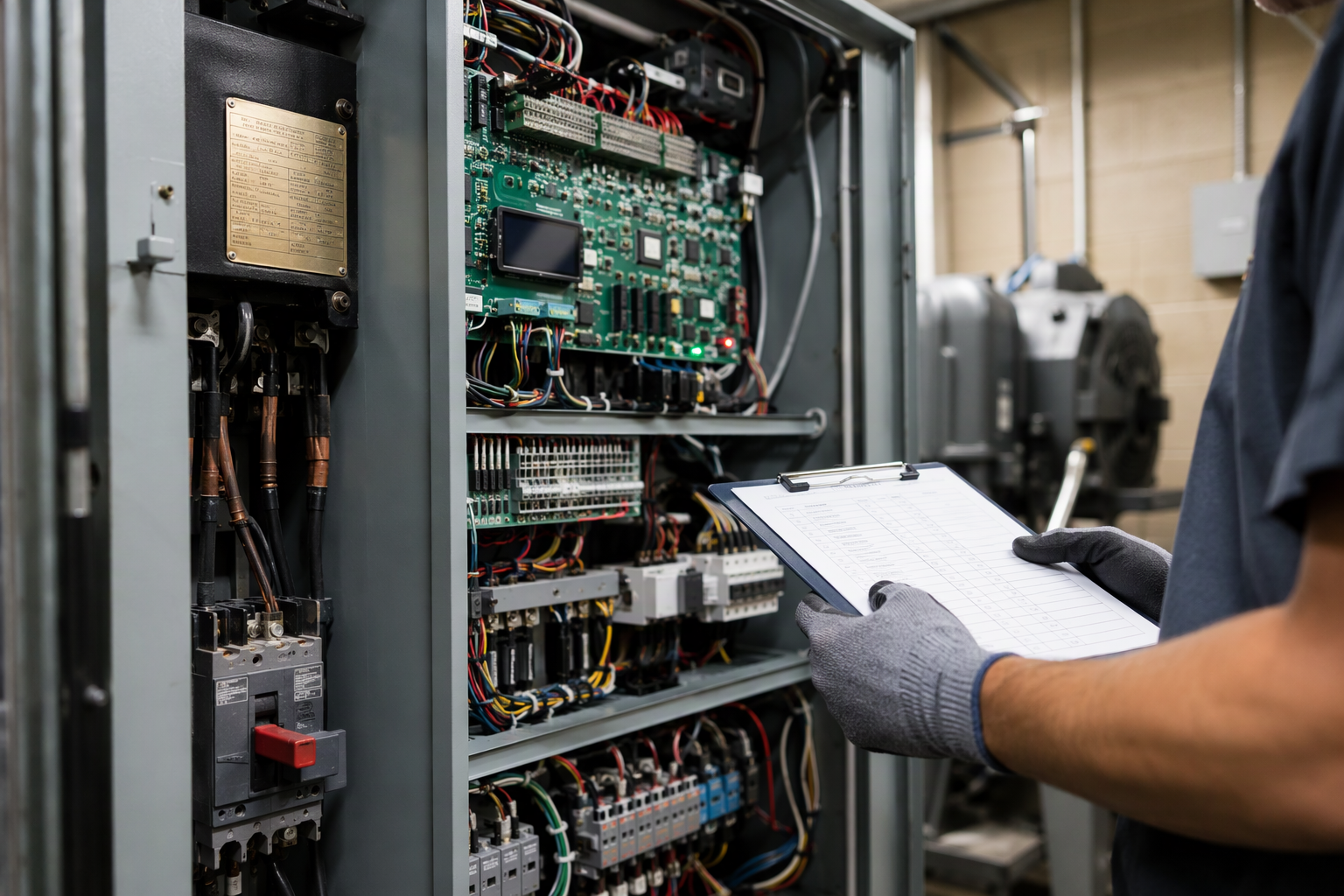
An elevator maintenance contract typically defines the scope of preventive maintenance visits, emergency callback response obligations, parts coverage, and exclusions. When switching providers, the contract terms determine how much notice is required, whether there are early-termination penalties, and who retains ownership of proprietary diagnostic tools or software linked to the equipment.
Some manufacturers produce elevator control systems that use proprietary software, meaning a new service provider may need a software license or specialized tools to service those controls. Building owners should request documentation of any proprietary equipment dependencies before signing a new service agreement. Arizona Elevator Solutions recommends requesting a full equipment inventory and software access disclosure from the outgoing provider as part of any transition.
What are the legal steps required to switch elevator service providers in Arizona?
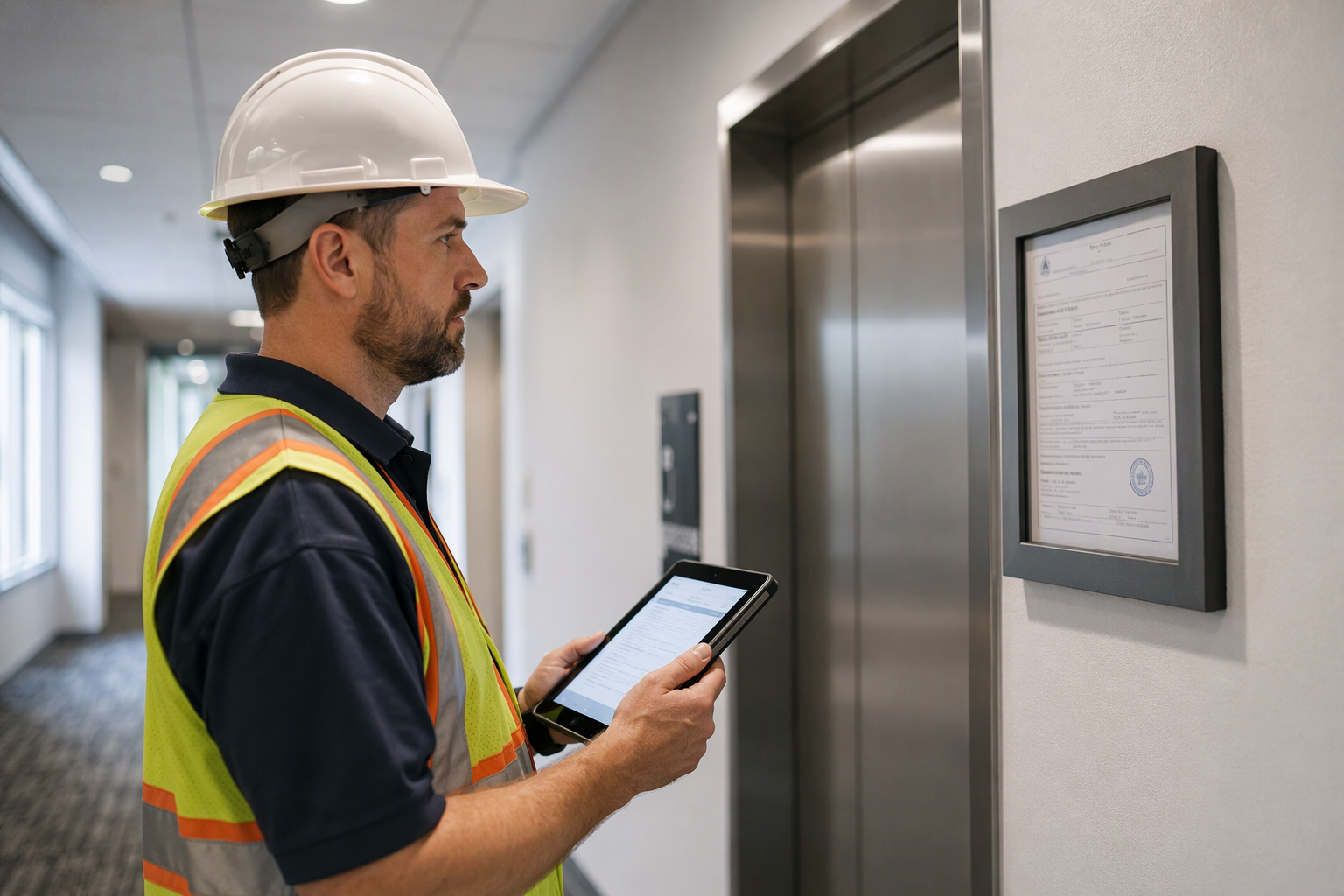
Arizona law places compliance obligations on the building owner, not the service contractor. The following steps reflect the requirements established under A.R.S. §§ 23-491 through 23-491.16 and Arizona Administrative Code R20-5-502 through R20-5-515.
- Review your current service contract for termination clauses, notice periods, and any equipment or documentation the outgoing provider controls.
- Obtain your elevator’s state serial number, which is fixed to the controller or mainline disconnect on every Arizona conveyance. This number is required for all regulatory filings and service records.
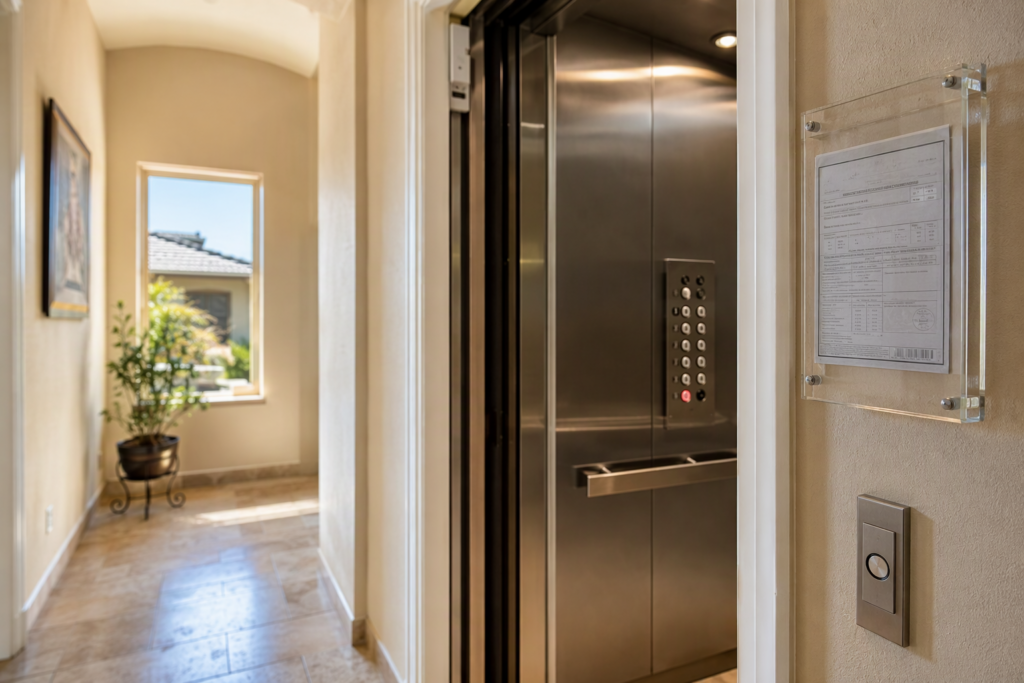
- Confirm the current certificate of inspection is valid and posted. Arizona law requires that the annual certificate of inspection be kept at the same location as the conveyance and made available on request. The state serial number or the certificate must be posted in or close to the conveyance in an easily accessible location.
- Verify the new provider’s Arizona Registrar of Contractors license. The R-12 (residential) and C-12 (commercial) elevator license classifications are the classifications that authorize a contractor to install and repair elevators, dumbwaiters, escalators, and moving walks in Arizona. Engaging an unlicensed contractor exposes the building owner to regulatory risk.
- Schedule a condition assessment with the incoming provider before the transition date so the new contractor can document the equipment’s current state and identify any deferred maintenance or outstanding issues.
- Request all maintenance records, inspection reports, and test documentation from the outgoing provider. Arizona owners are responsible for the conveyance’s compliance history regardless of contractor changes.
- Confirm notification obligations. If the transition involves any repairs, alterations, or modifications to the conveyance, Arizona owners must notify the Industrial Commission of Arizona, Elevator Division at least 90 days before any installation, relocation, or alteration work begins.
- Ensure the new provider is familiar with Arizona’s adopted code. Equipment installed, repaired, or altered on or after January 1, 2023 must comply with the ASME A17.1/CSA B44, 2019 edition. Platform lifts and stairway chairlifts installed, repaired, or altered on or after the same date must comply with ASME A18.1-2020.
- For equipment in the City of Phoenix, confirm whether the City of Phoenix Elevator Section (Planning and Development Department) has any open permits or outstanding inspection items, since Phoenix inspects elevators within city limits while the Industrial Commission of Arizona handles equipment elsewhere in the state.
- Establish a transition date and confirm no gap in service coverage, particularly for emergency callback obligations and any safety monitoring systems.
How does Arizona’s regulatory structure affect a provider switch?
Since September 12, 2026, Arizona elevator safety has been administered by the Industrial Commission of Arizona’s Elevator Division (formerly known as the ADOSH Elevator Safety Section). The Elevator Division issues the annual certificate of inspection that every Arizona conveyance must carry to remain in lawful operation. No conveyance may operate in Arizona without that certificate.
Switching service providers does not alter the owner’s obligation to maintain an active certificate. The certificate is tied to the conveyance and the owner, not to the service contractor. If the transition involves a modification or alteration to the equipment, a new inspection may be required before the conveyance returns to service, regardless of when the most recent annual inspection occurred.
Arizona owners may engage a private elevator inspector authorized by the Industrial Commission of Arizona to perform initial or annual inspections. Those inspectors must register with the commission annually and complete at least eight hours of approved continuing education. Critically, a private inspector may not inspect a conveyance owned, operated, or last serviced by the inspector, a company the inspector owns, or the inspector’s employer — a conflict-of-interest rule that is especially relevant during provider transitions when new service relationships are being established.
What equipment documentation should a building owner collect before switching providers?
Comprehensive documentation protects the building owner during and after a provider transition. The following records should be gathered before the outgoing contractor’s access is terminated:
- Current annual certificate of inspection and all prior certificates
- State serial number assignment records
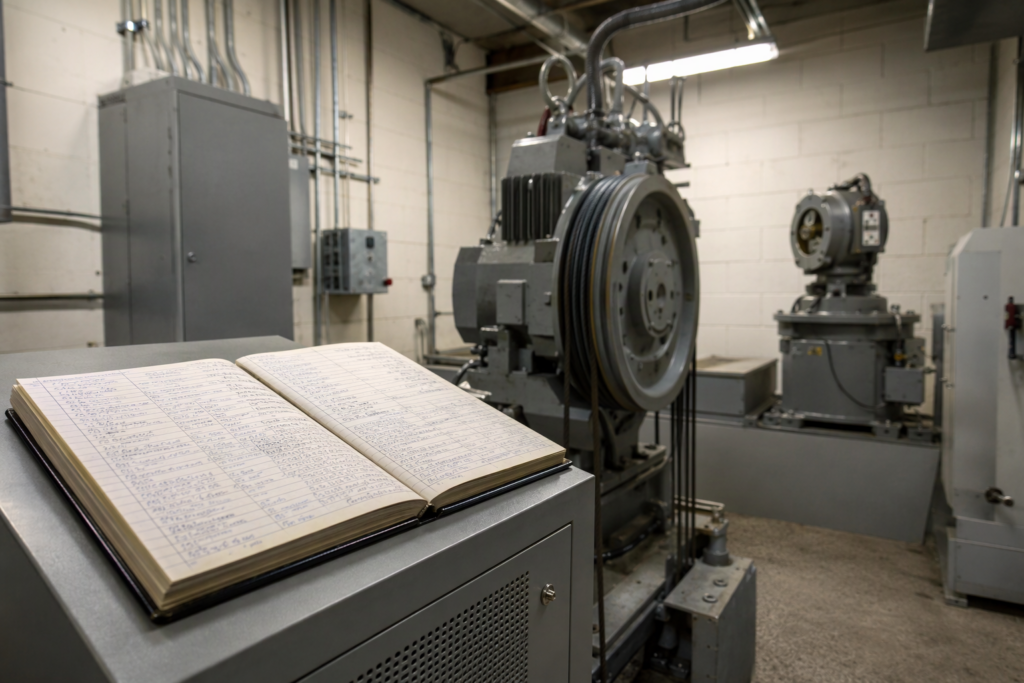
- Maintenance logs and lubrication records
- Inspection and test reports, including five-year full-load tests where applicable under ASME A17.1
- Repair and parts replacement history
- Wiring diagrams and as-built drawings
- Manufacturer manuals for the drive, controller, and door systems
- Documentation of any outstanding deficiencies noted in prior inspections
- Records of any accident reports filed with the Industrial Commission of Arizona (Arizona law requires the owner to notify the state within 24 hours of any accident that injures a person or disables a conveyance)
Arizona Elevator Solutions conducts a systematic documentation review during provider transitions so that building owners have a verified baseline record before the new service relationship begins.
What is the role of the ASME A17.1 Safety Code when switching elevator service?
The ASME A17.1 Safety Code for Elevators and Escalators establishes the technical standards for elevator maintenance, testing, and inspection intervals. Arizona has adopted the 2019 edition as its governing standard for equipment installed, repaired, or altered on or after January 1, 2023. When a new service provider takes over, one of their first responsibilities is to assess whether the equipment’s maintenance and testing history is consistent with ASME A17.1 requirements.
Specific areas the incoming provider should evaluate include periodic test intervals, lubrication schedules, brake inspection records, and door system adjustments. Any deferred maintenance that the outgoing contractor failed to address becomes the new contractor’s responsibility to disclose to the owner. Arizona Elevator Solutions uses ASME A17.1-2019 as the technical benchmark when conducting transition assessments.
How do ADA accessibility requirements factor into a provider change?
The Americans with Disabilities Act imposes obligations on building owners — not service contractors — regarding elevator accessibility. Switching providers does not create a new ADA compliance deadline, but a transition assessment is a practical opportunity to verify that call button heights, leveling accuracy, door timing, and audible/visual signals meet ADA standards. If the new provider identifies accessibility deficiencies during the transition inspection, the building owner should address them promptly to avoid ADA liability.
What are the most common reasons building owners switch elevator service providers?
The reasons building owners seek new elevator service providers tend to fall into several consistent categories:
- Response time dissatisfaction: Extended waits for emergency callbacks create safety concerns and tenant complaints.
- Deferred maintenance accumulation: When preventive maintenance visits are shortened or skipped, equipment reliability declines over time.
- Lack of transparency: Building owners report frustration when service providers do not share inspection findings, parts replacement justifications, or test results in writing.
- Proprietary parts pricing: Some contractors use proprietary components that must be sourced exclusively through them, creating pricing leverage.
- Compliance gaps: Outstanding deficiencies identified by Arizona inspectors that the current provider has not resolved prompt owners to seek contractors with stronger compliance track records.
- Ownership or management changes: Property acquisitions and management transitions often trigger a service contract review.
How long does a typical elevator service provider transition take?
The duration of a provider transition depends on contract notice requirements, the complexity of the equipment, the volume of documentation to transfer, and whether any repairs or inspections must be completed before the new provider assumes full responsibility. Straightforward transitions in which the equipment is current on inspections and the existing contract includes a standard notice period can often be completed within the timeframe specified in the outgoing contract. Transitions involving deferred maintenance, outstanding inspection deficiencies, or proprietary software access issues typically require additional coordination time.
Building owners should plan transitions far enough in advance to avoid any gap in coverage, particularly for emergency services. Arizona Elevator Solutions recommends initiating the transition process well before the intended switchover date to allow for documentation review, condition assessment, and any required notifications to the Industrial Commission of Arizona.
Does switching providers trigger a new inspection in Arizona?
A simple change of service contractor — with no repairs, alterations, or modifications to the conveyance — does not automatically trigger a new state inspection. The existing annual certificate of inspection remains valid through its expiration date. However, if the transition involves any repair work that qualifies as an alteration under Arizona Administrative Code R20-5-502 through R20-5-515, or if the new provider discovers conditions that must be corrected before the equipment is safe to operate, additional inspection or testing may be required.
The incoming provider should conduct a condition assessment independent of any state inspection to establish a documented baseline. This protects both the building owner and the new contractor from inheriting undisclosed liability.
What questions should a building owner ask a prospective new elevator service provider?
Before executing a new service agreement, building owners in Arizona should ask prospective providers the following:
- Does your company hold an active Arizona Registrar of Contractors R-12 or C-12 license classification?
- Are your inspectors registered with the Industrial Commission of Arizona’s Elevator Division, and do they meet the annual continuing education requirement?
- What is your documented process for identifying and reporting deficiencies found during maintenance visits?
- Can you service equipment that uses proprietary control systems from the previous contractor or manufacturer?
- How do you handle documentation transfers and baseline assessments during a provider transition?
- What is your protocol for notifying the building owner and the Industrial Commission of Arizona after any incident that injures a person or disables a conveyance?
- How do you document compliance with ASME A17.1-2019 test and inspection intervals?
What industry trends are shaping elevator service provider transitions in 2025 and 2026?
Several qualitative trends are influencing how building owners approach elevator service transitions heading into 2026:
Remote monitoring adoption: More elevator systems are being equipped with IoT-based monitoring platforms that track door cycles, motor performance, and fault codes in real time. When switching providers, building owners should clarify who owns the monitoring hardware and data, since these systems are sometimes leased by the outgoing contractor.
Proprietary control system complexity: Newer elevator controllers increasingly use manufacturer-specific software that limits third-party serviceability. This trend has increased the importance of negotiating open-access provisions in service contracts before they are signed rather than during a transition.
Regulatory modernization: Arizona’s transition of elevator safety administration from the ADOSH Elevator Safety Section to the Industrial Commission of Arizona’s Elevator Division, effective September 12, 2026 under Laws 2026, Ch. 73, reflects a broader national trend toward consolidating elevator safety oversight within dedicated regulatory bodies. Building owners should verify that their service providers are current on Arizona’s updated agency structure and submission procedures.
Demand for compliance transparency: Building owners and property managers are increasingly requiring service providers to deliver digital maintenance logs and inspection records as a standard contract deliverable, rather than keeping those records solely within the contractor’s internal systems.
Workforce and parts availability: Supply chain conditions affecting elevator parts availability have made planned preventive maintenance more critical than reactive repair. Incoming providers should demonstrate an inventory or sourcing plan for the specific equipment being transitioned.
Arizona Elevator Solutions monitors these developments and structures its service agreements to give building owners transparent access to their own equipment data throughout the relationship.
What role does OSHA play in an elevator service provider transition?
The Occupational Safety and Health Administration sets standards that apply to elevator work performed by service technicians, including lockout/tagout procedures, fall protection, and confined space protocols where applicable. When transitioning providers, building owners should confirm that the incoming contractor maintains documented OSHA compliance programs for elevator service work. OSHA obligations apply to the contractor’s employees; however, building owners have a general duty to maintain a safe worksite and should not engage contractors who cannot demonstrate safety program compliance.
What happens to firefighters’ emergency operation requirements during a provider transition?
Arizona conveyances equipped with firefighters’ emergency operation must use the Arizona Firefighters Service (AZFS) key. When switching providers, building owners should confirm that the incoming contractor is knowledgeable about AZFS key requirements and that the emergency operation features are tested and functional as part of the transition condition assessment. Any modifications to firefighters’ emergency operation systems would trigger notification and inspection requirements under Arizona Administrative Code.
How does Arizona Elevator Solutions support building owners through a provider transition?
Arizona Elevator Solutions provides structured transition support that includes documentation review, baseline condition assessments referenced against ASME A17.1-2019 requirements, verification of compliance standing with the Industrial Commission of Arizona’s Elevator Division, and coordination with the City of Phoenix Elevator Section for equipment within Phoenix city limits. The company operates exclusively in Arizona and focuses its expertise on the state-specific regulatory environment that governs Arizona building owners.
By treating each transition as a compliance event rather than a simple contractor handoff, Arizona Elevator Solutions helps building owners avoid the gaps in documentation, inspection currency, and regulatory standing that commonly arise when provider changes are handled informally.
Contact Arizona Elevator Solutions for a free elevator assessment at 480-557-7600.
Need elevator service you can rely on? Arizona Elevator Solutions is ready to help.