Elevator Requirements for New Hotels & Multifamily Buildings in Scottsdale & Phoenix, AZ | Arizona Elevator Solutions
Planning a new hotel, apartment complex, or condominium in the Phoenix metro or Scottsdale? Elevator compliance is one of the most consequential decisions a developer, general contractor, or property owner will face before a certificate of occupancy is issued. Getting it right from the start prevents costly retrofit work, construction delays, and legal exposure. Arizona Elevator Solutions works with commercial developers and building owners across the Valley to navigate every phase of elevator installation — from code planning through final inspection.
What Codes Govern Elevator Installation in Arizona?
Arizona elevator installations are governed by a combination of federal standards and state-administered rules:
- ASME A17.1 Safety Code for Elevators and Escalators — the primary technical standard covering construction, installation, operation, inspection, testing, maintenance, alteration, and repair of elevators and related conveyances. Arizona adopts this code as the baseline technical requirement for new installations.
- Americans with Disabilities Act (ADA) — federal law requiring that elevators in new multistory commercial and multifamily buildings meet specific accessibility standards, including cab dimensions, door clearance, controls, and floor call buttons.
- Arizona Revised Statutes (ARS) Title 23, administered by ADOSH — the Arizona Division of Occupational Safety and Health oversees the licensure of elevator contractors, permitting of new elevator installations, and ongoing periodic inspections of all conveyances in the state.
- Local Authority Having Jurisdiction (AHJ) — both the City of Phoenix and the City of Scottsdale may impose additional building department requirements through their adopted International Building Code (IBC) amendments. Always confirm applicable local amendments with the relevant city building department before design is finalized.
Because Arizona administers elevator safety at the state level through ADOSH rather than delegating entirely to individual municipalities, most core requirements are uniform across Phoenix and Scottsdale, though local plan check processes differ.
When Is an Elevator Required in a New Hotel or Multifamily Building?
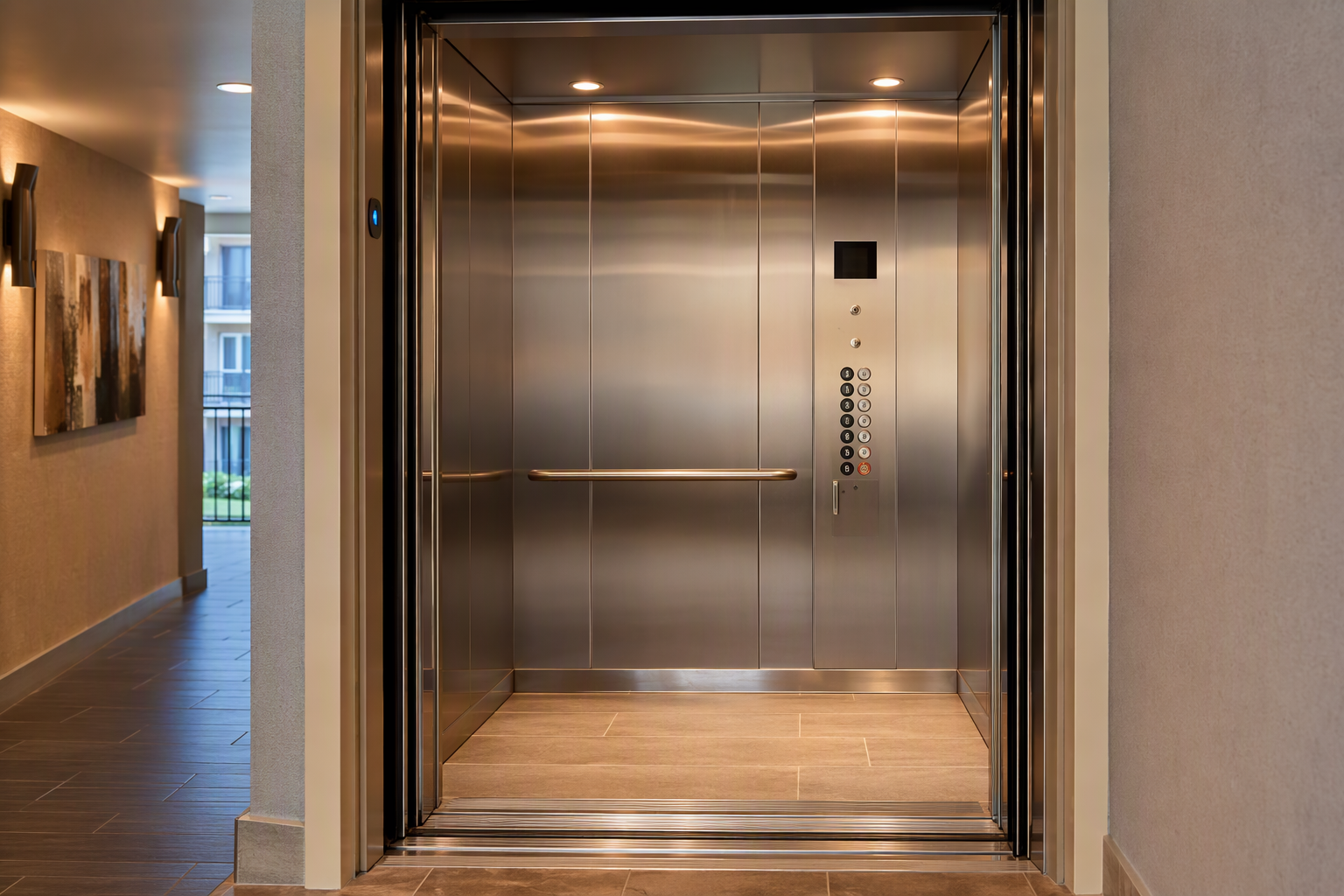
The ADA and the International Building Code (as adopted by Arizona) establish thresholds that trigger mandatory elevator installation. For most new multistory hotels and multifamily residential buildings, an elevator is required when the building contains more than one story and is not otherwise exempt. Single-story buildings and certain limited-occupancy structures may qualify for exemptions, but those exemptions do not typically apply to hotels or apartment buildings of typical commercial scale.
ADA accessibility requirements further mandate that elevators serving floors above or below the ground floor in new construction must meet specific cab size, door width, control height, Braille signage, and audible signal requirements. Buildings designed to avoid elevator requirements through architectural manipulation may still face compliance scrutiny during plan review.
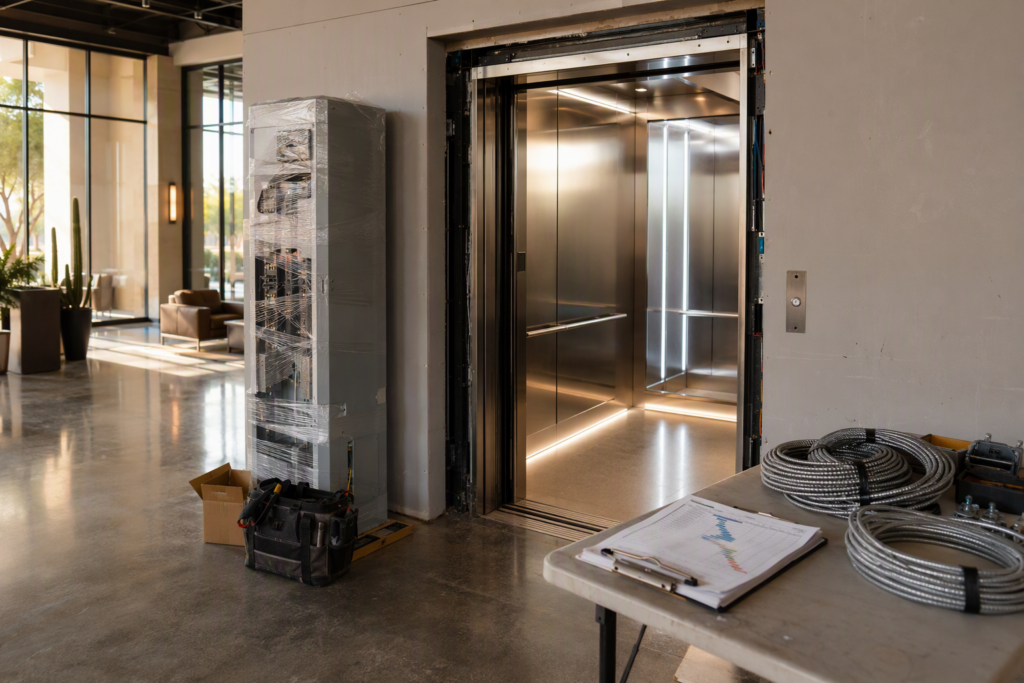
Developers should engage a qualified elevator consultant or licensed elevator contractor early in schematic design — before structural drawings are set — to ensure shaft dimensions, pit depth, overhead clearance, and machine room or machine-room-less (MRL) configurations are fully accounted for.
What Are the Permit and Inspection Requirements in Arizona?
All new elevator installations in Arizona require a permit issued through ADOSH before work begins. The process generally follows these steps:
- Design and submittal: The licensed elevator contractor submits construction drawings, equipment specifications, and load calculations to ADOSH for plan review.
- Permit issuance: ADOSH reviews the submittal for compliance with ASME A17.1 and applicable Arizona statutes. A permit is issued upon approval.
- Installation: All work must be performed by an elevator contractor holding a valid Arizona elevator contractor license issued under ARS Title 23.
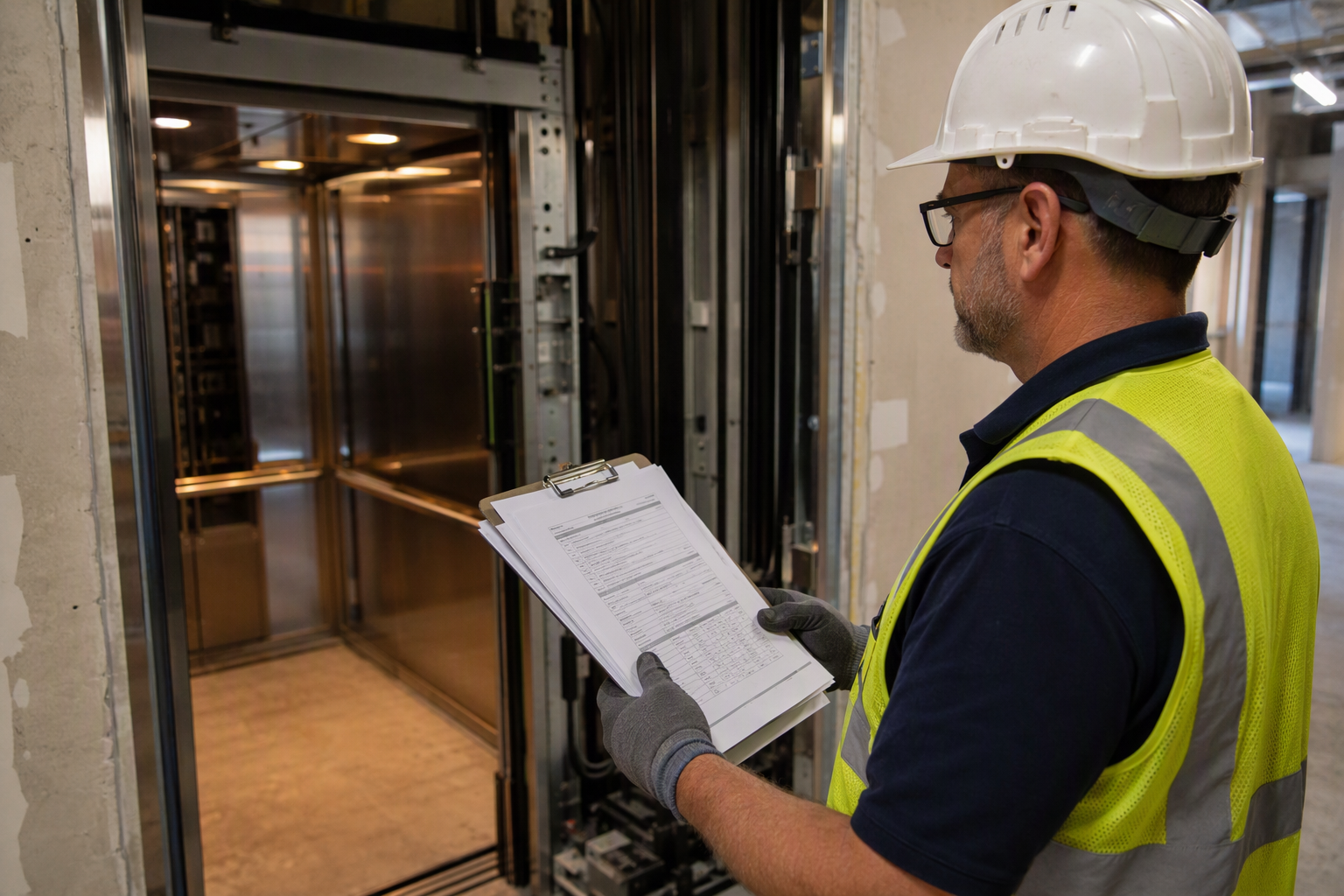
- Witnessing and testing: ADOSH or an approved third-party inspector witnesses the final acceptance test. Tests include safety device operation, speed, load, door performance, and emergency systems.
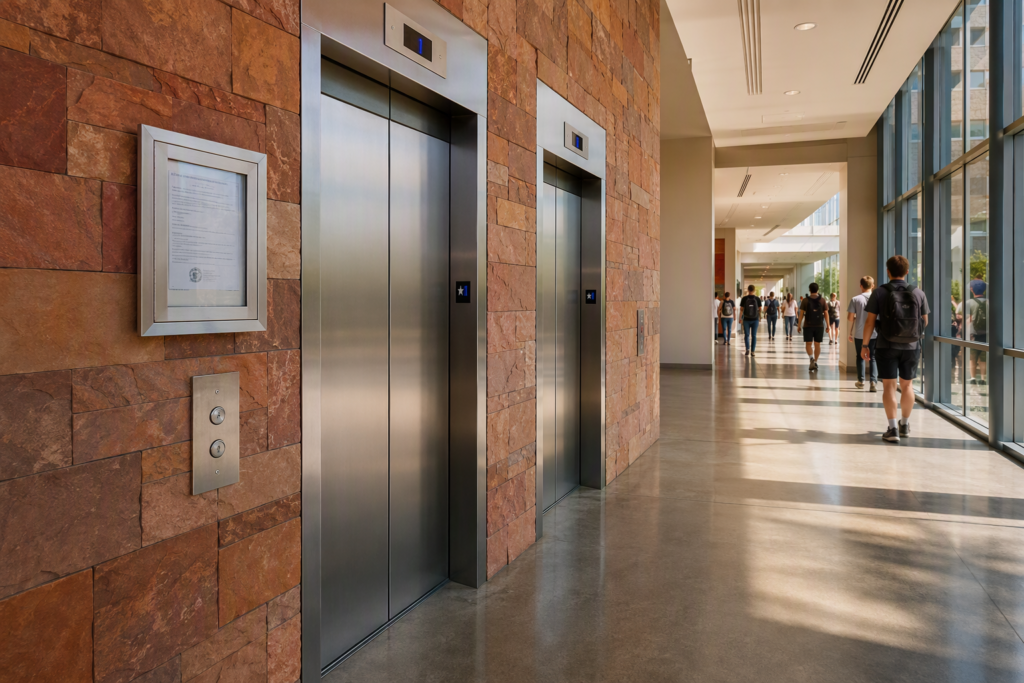
- Certificate of Operation: Upon passing inspection, ADOSH issues a Certificate of Operation, which must be posted in the elevator machine room. Without this certificate, the elevator cannot be legally operated.
- Local building department sign-off: The city building department (Phoenix or Scottsdale) will require evidence of the ADOSH Certificate of Operation as part of the overall certificate of occupancy process.
What Ongoing Inspection Requirements Apply After Opening?
After a Certificate of Operation is issued, Arizona requires periodic inspections to keep elevators legally in service. The ASME A17.1 code and ASME A17.3 Safety Code for Existing Elevators and Escalators establish inspection and testing intervals for in-service conveyances. Arizona enforces routine inspections through ADOSH, and building owners are responsible for ensuring their equipment is maintained, tested, and current on all required certifications.
Property managers for hotels and multifamily buildings should maintain a service and maintenance contract with a licensed Arizona elevator contractor to ensure equipment remains code-compliant between inspections and that any deficiencies identified during inspections are corrected promptly.
What ADA Accessibility Standards Apply to Hotel and Multifamily Elevators?
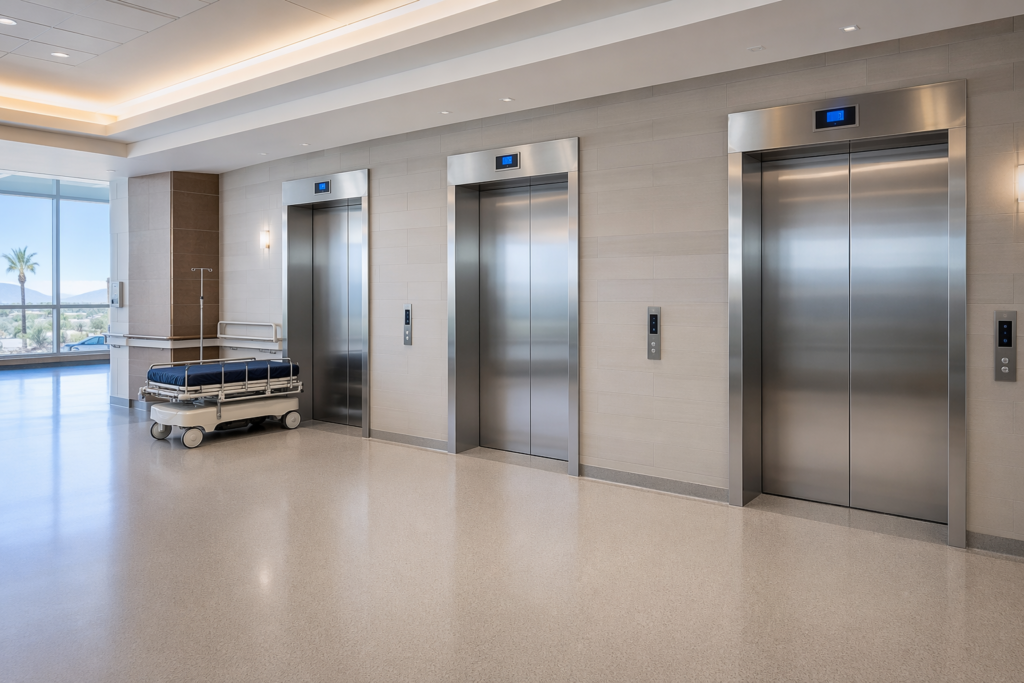
Under the ADA, new elevators in hotels and multifamily buildings must meet specific accessibility requirements, including but not limited to:
- Minimum cab interior dimensions that allow wheelchair access and turning
- Door clear opening width meeting federal accessibility standards
- Control panels with raised characters and Braille, mounted within accessible reach ranges
- Audible and visual floor indicators
- Two-way communication systems in the cab
- Leveling accuracy so the cab floor aligns with the building floor within a compliant tolerance
ADA compliance is enforced independently of state elevator safety inspections, meaning a building can pass its ADOSH safety inspection and still face ADA liability if accessibility features are inadequate. Engaging both an elevator contractor and an ADA consultant during design is advisable for any new hotel or multifamily project.
What Equipment and Technology Choices Should Developers Consider?
For new hotel and multifamily construction in the Phoenix and Scottsdale market, the most common elevator configurations include:
- Hydraulic elevators: Common in low-rise multifamily buildings, typically up to five or six stories. Lower initial installation cost, but considerations around fluid management and energy use apply in Arizona’s climate.
- Machine-room-less (MRL) traction elevators: Increasingly the preferred choice for mid-rise and high-rise construction. MRL systems eliminate the need for a dedicated overhead machine room, recovering rentable square footage — a significant advantage in competitive Scottsdale and Phoenix development.
- Geared and gearless traction elevators: Used in mid- to high-rise hotels and mixed-use towers, particularly where speed and ride quality are priorities for a hospitality brand standard.
The choice of system affects shaft dimensions, structural loads, electrical service requirements, and long-term maintenance costs. A licensed elevator contractor should be part of the project team before the structural engineer finalizes core and shaft designs.
What Are the Most Common Compliance Mistakes on New Construction Projects?
- Undersized pit depth or overhead clearance: Shafts built without confirmed equipment specifications routinely require costly structural modifications during construction.
- Electrical service not coordinated early: Elevator equipment has specific power supply requirements that must be coordinated with the electrical engineer of record.
- Delaying contractor engagement: Bringing in the elevator contractor after structural drawings are complete often results in design conflicts that require change orders.
- ADA oversight: Assuming that ASME compliance automatically satisfies ADA — it does not.
- Failure to budget for inspection lead times: ADOSH inspection scheduling should be factored into the overall construction schedule to avoid certificate of occupancy delays.
Why Work With a Local Arizona Elevator Contractor for New Construction?
Arizona Elevator Solutions is a certified elevator service company operating exclusively in Arizona, with direct working knowledge of ADOSH processes, Phoenix and Scottsdale building department requirements, and the practical realities of construction in the Valley’s climate and market. The team serves commercial developers, hotel operators, multifamily property owners, and general contractors across the greater Phoenix metro area, including Scottsdale, Tempe, Mesa, Chandler, Gilbert, and surrounding communities.
Local expertise matters in elevator work. Understanding ADOSH’s plan review process, knowing the typical lead times for inspections, and having established relationships with local AHJs all affect how smoothly a new construction project moves from permit to Certificate of Operation.
Arizona Elevator Solutions provides new construction consulting, equipment specification support, installation, final acceptance testing coordination, ongoing maintenance, and emergency service for elevators and conveyances throughout Arizona.
Ready to Plan Your Elevator Installation in Phoenix or Scottsdale?
Whether the project is a boutique hotel on Scottsdale’s entertainment corridor or a multifamily development near downtown Phoenix, getting elevator planning right from day one protects the project schedule, budget, and long-term legal compliance.
Schedule a Free Consultation with Arizona Elevator Solutions today:
Call 480-319-7157 to speak with a member of the Arizona Elevator Solutions team about new construction elevator requirements, equipment selection, permitting, and maintenance programs for hotels and multifamily buildings in the Phoenix and Scottsdale area.
Need elevator service you can rely on? Arizona Elevator Solutions is ready to help.