Elevator Modernization Timeline: How Long It Takes and What Phases to Expect
Understanding the full timeline for elevator modernization helps building owners, facility managers, and property management teams plan for minimal disruption and budget accurately. The process is more involved than a simple repair — it is a capital improvement project governed by federal safety codes, Arizona permitting requirements, and manufacturer lead times. This FAQ hub covers every phase of a modernization project, from the moment a contract is signed through the final certificate of occupancy, with practical guidance for properties in Phoenix, Tucson, Scottsdale, and Mesa.
How Long Does Elevator Modernization Take from Contract Signing to Completion?
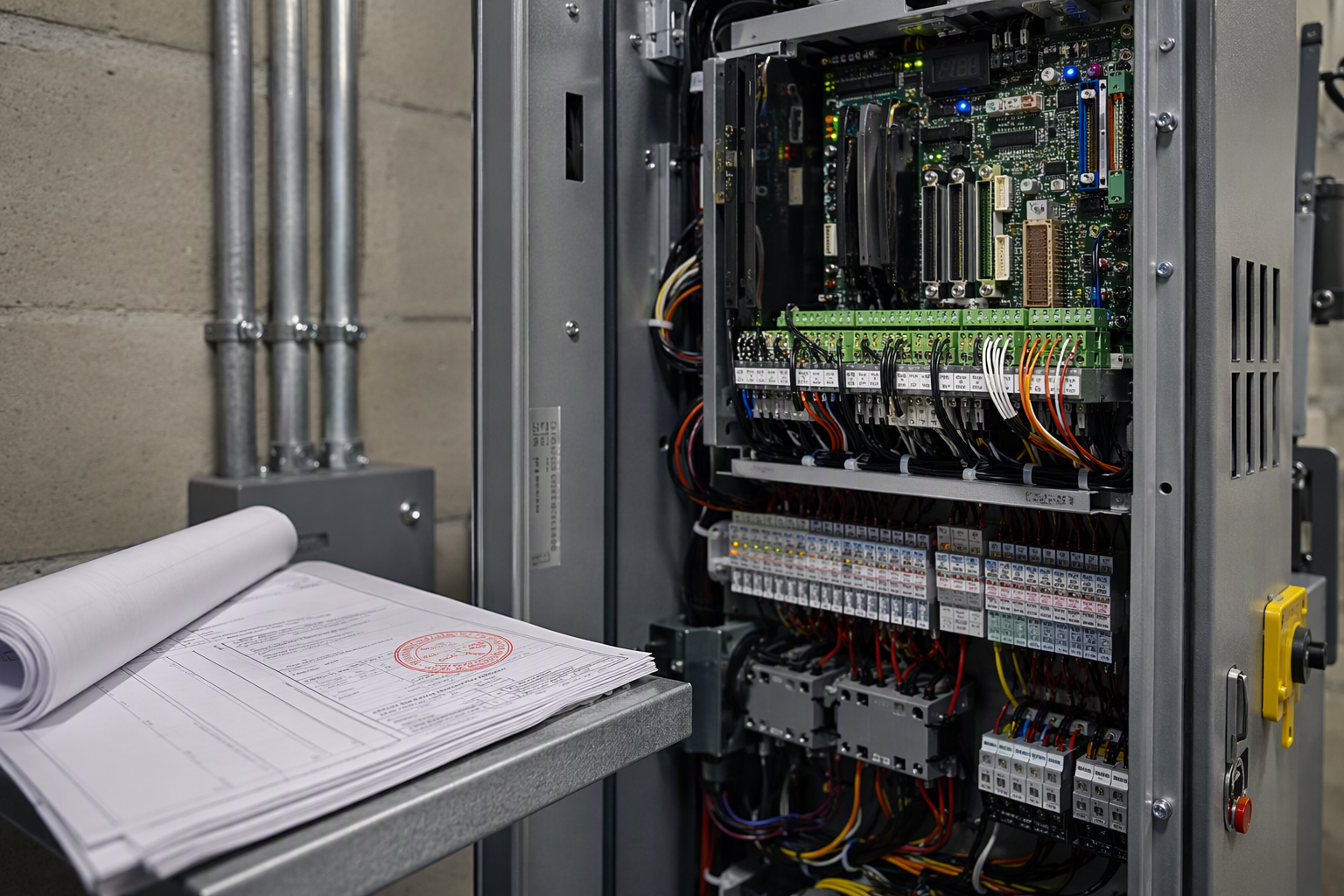
Most elevator modernization projects take between three and twelve months from contract execution to final inspection approval, with the majority of commercial projects landing in the four-to-six-month range.
The wide range exists because scope varies dramatically. A controls-only modernization — replacing the relay logic or outdated microprocessor system while retaining the existing cab, drive, and mechanicals — can move through permitting and installation relatively quickly. A full-system modernization that replaces the controller, drive system, cab interior, door operators, fixtures, and safety components involves more engineering coordination, longer equipment lead times, and more extensive code compliance reviews under ASME A17.3, the Safety Code for Existing Elevators and Escalators, which governs retroactive requirements when equipment is altered.
Arizona’s permit review timelines through the Authority Having Jurisdiction (AHJ) — typically a city or county building department — also factor into the schedule. Phoenix, Scottsdale, Tucson, and Mesa each maintain their own permit queues, and expedited review is not always available for elevator work.
What Are the Five Core Phases of an Elevator Modernization Project?
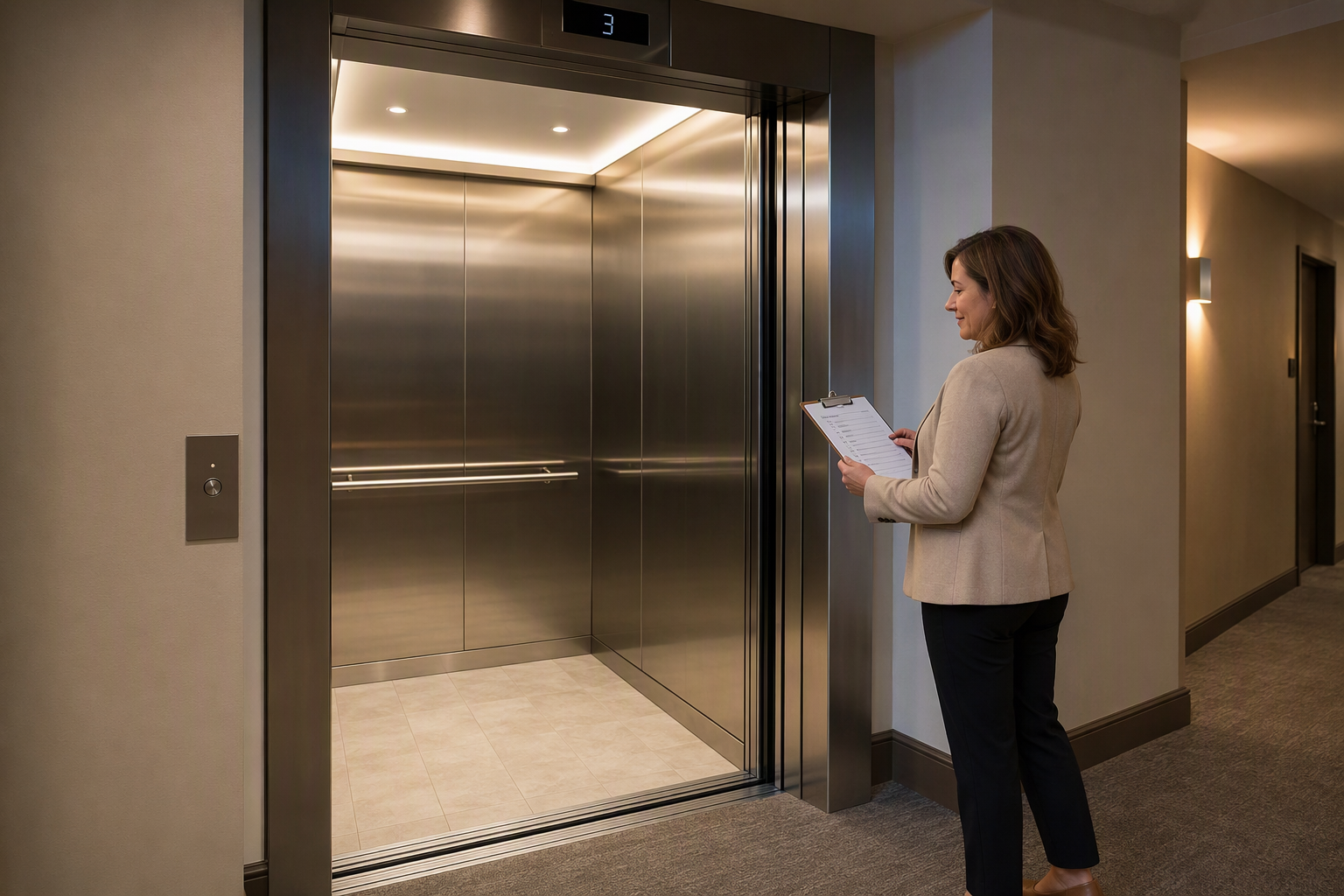
Every elevator modernization project follows five sequential phases: engineering and permitting, equipment procurement, installation, testing and commissioning, and final inspection and acceptance.
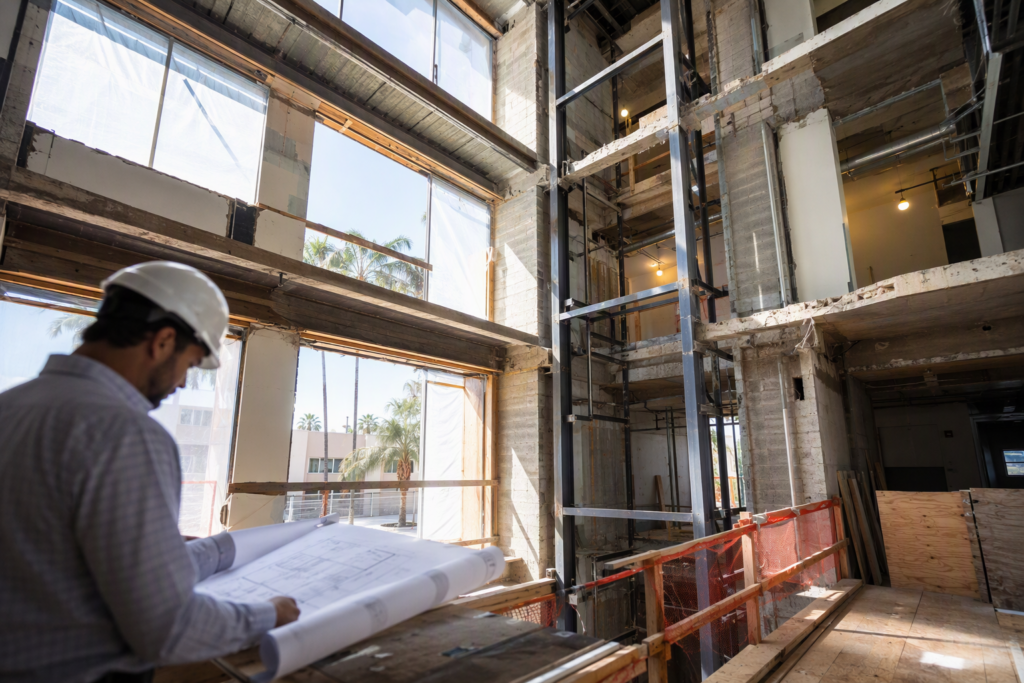
- Engineering and Permitting: The modernization contractor conducts a detailed field survey of the existing equipment, prepares engineering drawings and specifications, and submits permit applications to the AHJ. This phase typically takes four to ten weeks depending on permit queue times and the complexity of the scope.
- Equipment Procurement: Once permits are approved, equipment orders are placed with manufacturers. Lead times for controllers, drive systems, and door operators can range from six to sixteen weeks depending on the manufacturer, supply chain conditions, and any custom fabrication required for the cab.
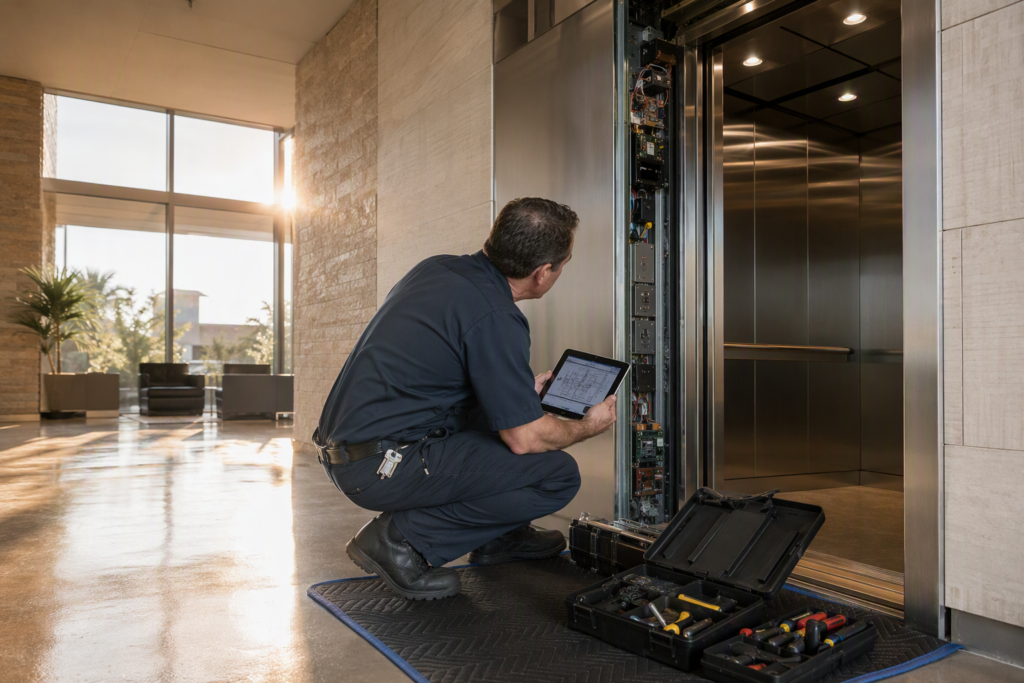
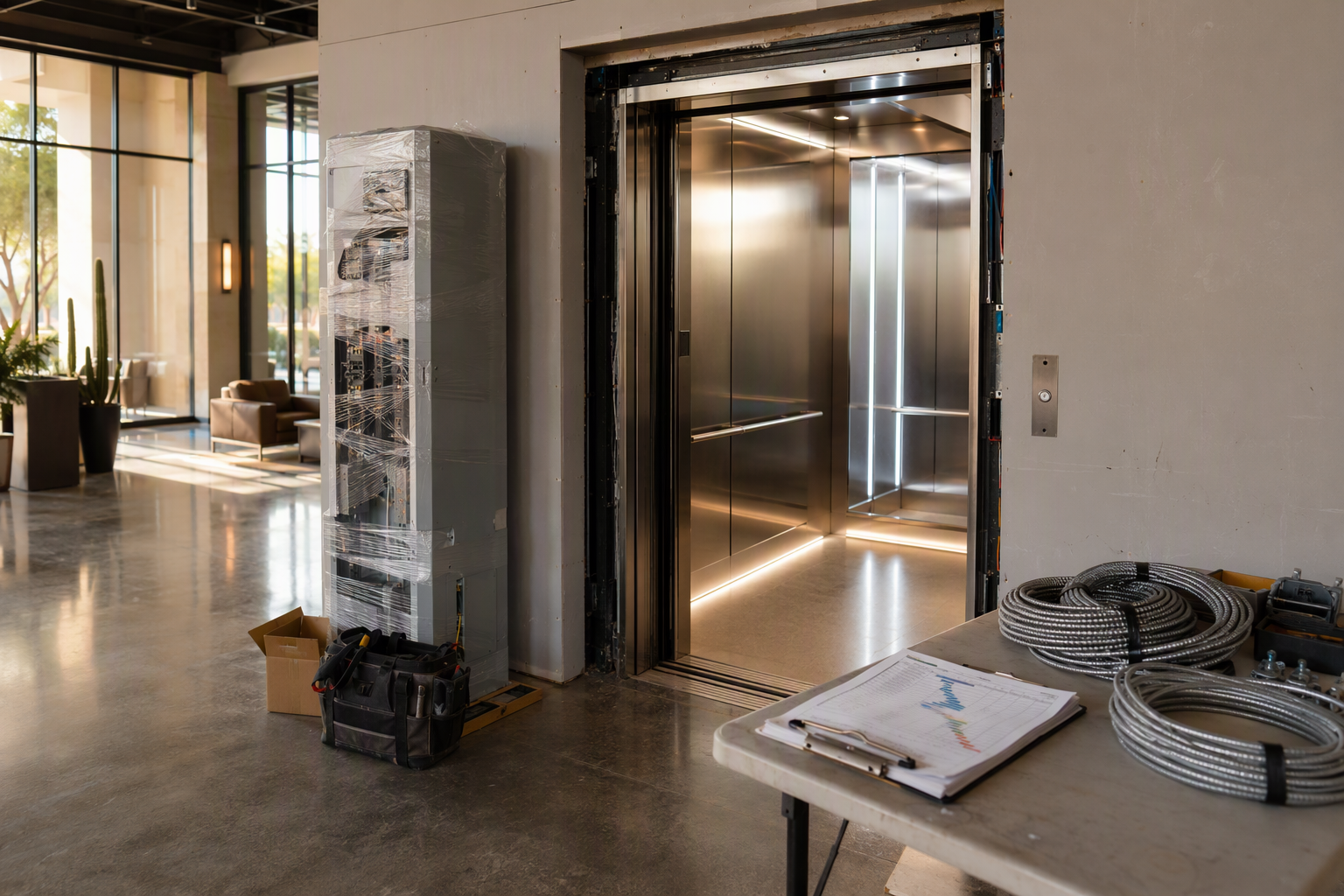
- Installation: The existing equipment is decommissioned and new components are installed. For most projects, the elevator is taken out of service during this phase. Installation timelines range from two to six weeks for a standard single-unit project.
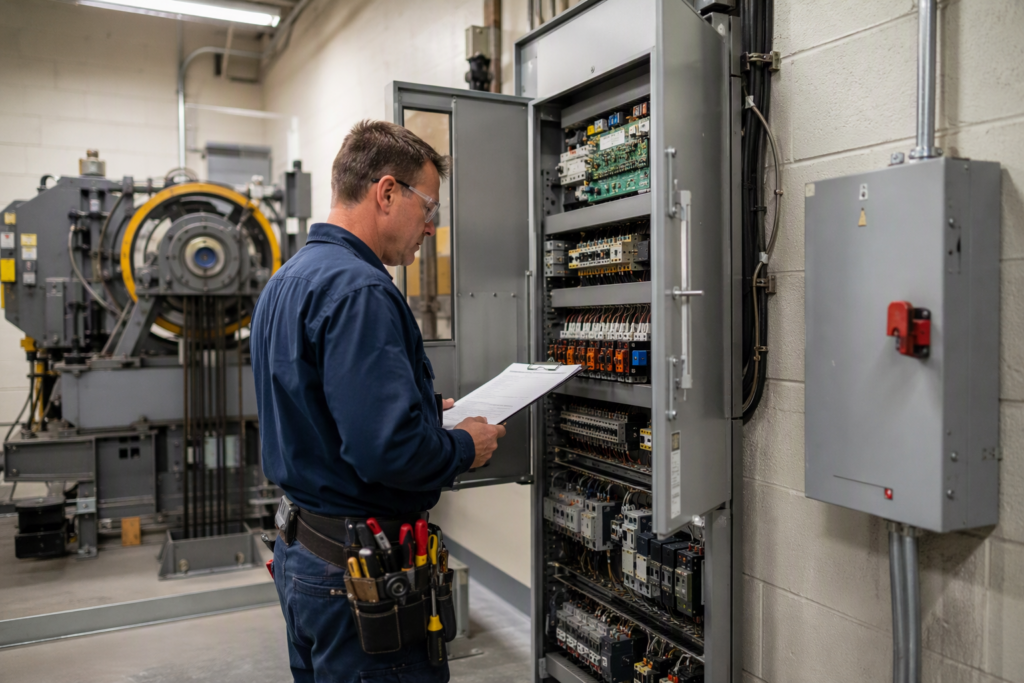
- Testing and Commissioning: The modernized elevator undergoes internal load testing, governor testing, safety gear testing, and operational verification. All testing must meet the requirements of ASME A17.1, the Safety Code for Elevators and Escalators, which sets acceptance test protocols for new installations and altered equipment.
- Final Inspection and Acceptance: A state or AHJ-authorized elevator inspector performs the mandatory acceptance inspection. Upon passing, the elevator receives an updated certificate of operation, and the building owner receives the final close-out documentation.
What Triggers the Need for Elevator Modernization Rather Than Routine Repair?
Modernization is generally indicated when the cost of maintaining aging equipment approaches or exceeds the cost of replacement, when parts are no longer available, or when the elevator fails to meet current code requirements for altered equipment under ASME A17.3.
Common triggers include obsolete relay-logic control systems for which replacement components are no longer manufactured, worn hydraulic cylinders in in-ground hydraulic elevators, deteriorated traction sheaves and ropes that cannot be economically replaced in isolation, and cab interiors that no longer meet ADA accessibility requirements for control panel height, button size, Braille markings, and audible signals. Building owners sometimes also modernize to improve energy efficiency, reduce callback rates, or upgrade to a destination-dispatch system in high-traffic environments.
How Does the Permitting Process Affect the Modernization Timeline in Arizona?
Arizona elevator permits are processed through the AHJ for the jurisdiction where the building is located — meaning Phoenix, Scottsdale, Tucson, and Mesa each have independent review processes that can add anywhere from two to eight weeks to a project schedule.
Arizona requires that elevator work be performed by contractors who hold the appropriate state licensing. Permit applications must typically include sealed engineering drawings, equipment specifications, and documentation demonstrating that the modernized installation will comply with the applicable edition of ASME A17.1 adopted by Arizona. Incomplete submittals result in correction cycles that extend the permitting phase. Experienced modernization contractors submit complete packages on the first attempt to avoid these delays.
What Equipment Lead Times Should Building Owners Anticipate?
Equipment lead times are frequently the longest single variable in a modernization schedule, ranging from six weeks for in-stock components to sixteen or more weeks for custom-manufactured controllers, drives, or cab enclosures.
Traction machine drives and solid-state controllers from major manufacturers often carry lead times in the eight-to-twelve-week range under normal supply conditions. Door operators and fixtures are generally available more quickly. Custom cab interiors — including specialty wall panels, flooring, and lighting — can take eight to twelve weeks depending on the fabricator. Building owners should confirm equipment lead times with their modernization contractor before finalizing the project schedule, and procurement should begin immediately upon permit approval to avoid unnecessary downtime.
How Long Will the Elevator Be Out of Service During Modernization?
Most elevator modernization projects require the unit to be taken completely out of service for the installation phase, which typically lasts two to six weeks for a single-unit project.
The out-of-service period is largely determined by the scope of work. A controls-only upgrade on a hydraulic elevator may require as few as ten to fifteen working days of downtime. A full traction modernization replacing the machine, controller, roping, cab, and fixtures may require four to six weeks of continuous outage. For buildings with multiple elevators, a staged approach — modernizing one car while keeping others operational — is often practical. For single-elevator buildings, temporary vertical access accommodations may be required under ADA guidelines for buildings serving the public.
What Does ASME A17.3 Require When an Elevator Is Altered?
Under ASME A17.3, the Safety Code for Existing Elevators and Escalators, any alteration to an elevator triggers a requirement to bring the altered components — and in some cases related systems — into compliance with the current edition of ASME A17.1.
This is a critical concept for building owners: a modernization that replaces only the controller may still trigger mandatory upgrades to the governor, safeties, or buffers if those components do not meet the requirements that apply to the new controller configuration. The scope of code-mandated upgrades should be identified during the engineering phase, before the contract is finalized, to avoid cost surprises mid-project. Arizona Elevator Solutions conducts comprehensive code compliance assessments as part of the pre-contract survey process to identify all required upgrades upfront.
What ADA Requirements Apply to Elevator Modernization Projects?
Elevator alterations in facilities that serve the public or that are commercial properties are subject to ADA accessibility standards, including requirements for call button height and size, hall lanterns, Braille and tactile markings, floor designations, audible signals, and cab dimensions.
The ADA Standards for Accessible Design specify that altered elements must comply with the current accessibility standards to the maximum extent feasible. For elevator modernizations, this typically means that the cab interior, fixtures, and door timing must be brought into ADA compliance as part of the project. Building owners who attempt to modernize controls alone while ignoring non-compliant fixtures may find that the AHJ requires additional accessibility upgrades before issuing the certificate of operation. Addressing ADA requirements proactively during project scoping avoids costly change orders during installation.
How Does Elevator Type — Hydraulic vs. Traction — Affect Modernization Timeline?
Hydraulic and traction elevators have different modernization scopes, equipment lead times, and inspection requirements, which means the type of elevator significantly influences overall project duration.
| Factor | Hydraulic Elevator Modernization | Traction Elevator Modernization |
|---|---|---|
| Typical Total Timeline | 3–6 months | 5–12 months |
| Key Equipment Components | Controller, power unit, cylinder/plunger, cab, fixtures | Controller, machine, drive, roping, cab, fixtures |
| Common Out-of-Service Duration | 2–4 weeks | 3–6 weeks |
| Environmental Considerations | Oil containment, underground cylinder condition | Hoistway clearances, machine room or MRL requirements |
| Primary Code Reference | ASME A17.1 / A17.3 | ASME A17.1 / A17.3 |
| Energy Efficiency Opportunity | VFD pump units | Regenerative drives |
| ADA Compliance Review Needed? | Yes | Yes |
What Should Be Included in a Modernization Contract Before Signing?
A comprehensive modernization contract should define the full scope of work, equipment specifications and manufacturers, permitting responsibilities, project schedule milestones, out-of-service period commitments, warranty terms, and the process for managing code-required upgrades discovered after work begins.
Building owners in Phoenix, Scottsdale, Tucson, and Mesa should specifically confirm that the contract addresses: which party is responsible for permit applications and fees; how unforeseen field conditions (such as deteriorated hoistway wiring or asbestos-containing materials in older machine rooms) will be handled; what warranties apply to equipment versus labor; and how final inspection scheduling will be coordinated with the AHJ. Vague scope language is the most common source of disputes and change orders in elevator modernization projects.
How Is the Final Inspection Scheduled and What Does It Involve?
The final inspection is scheduled by the modernization contractor with the AHJ’s authorized elevator inspection program, and it involves a comprehensive review of all altered systems against the applicable ASME A17.1 acceptance test requirements.
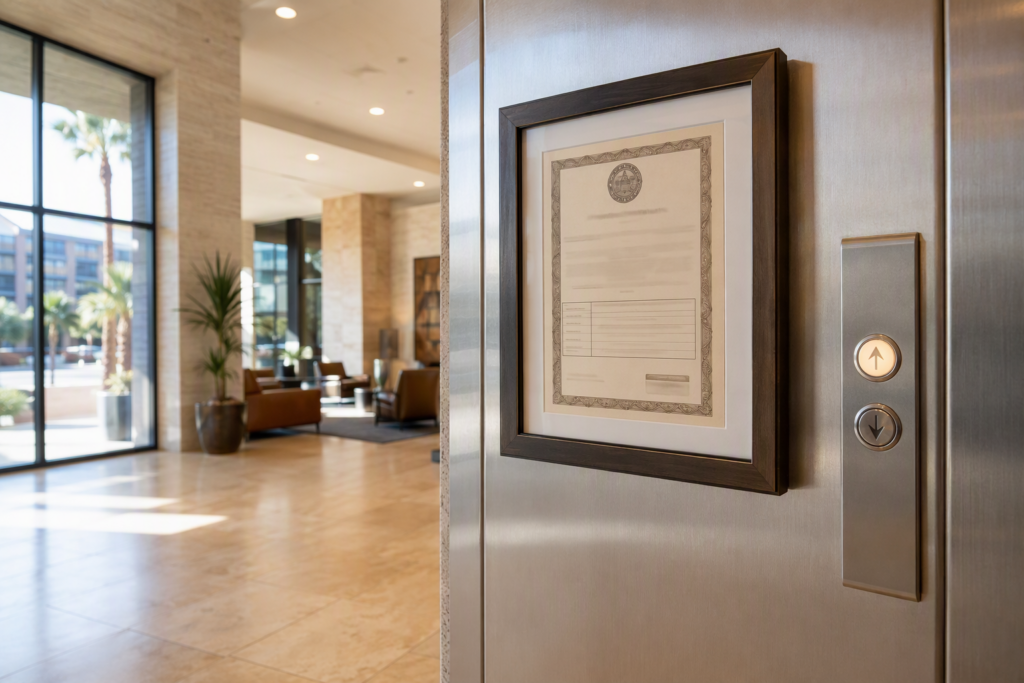
The inspector will typically witness load testing, safety device testing, door timing and force measurements, leveling accuracy, and emergency system operation. All deficiencies identified during the inspection must be corrected before the updated certificate of operation is issued. In Arizona, elevator certificates of operation must be displayed in or adjacent to the elevator at all times. Building owners should retain all inspection reports and close-out documentation in their facility records. Arizona Elevator Solutions coordinates inspection scheduling and ensures all pre-inspection checklist items are completed before the AHJ arrives to minimize re-inspection delays.
Can Modernization Be Phased to Reduce Upfront Cost?
Yes, phased modernization — sometimes called a multi-year or staged modernization — is a viable approach that spreads capital expenditure over time while progressively improving equipment condition and code compliance.
A common phased approach begins with the controller and door operator in phase one (often the highest-impact components for reliability), followed by cab interior and fixtures in phase two, and mechanical components such as the machine or hydraulic power unit in a subsequent phase. The important constraint is that each phase must independently comply with ASME A17.3’s alteration requirements — each permitted scope of work will be inspected and must pass on its own merits. Phasing should be planned holistically from the outset so that early phases do not require rework when later phases are executed.
What Role Does the Maintenance History Play in Planning a Modernization?
The documented maintenance and repair history of an elevator provides essential data for modernization planning, including recurring failure patterns, parts that have already been replaced, and components approaching end of useful life.
A thorough pre-modernization assessment should review the elevator’s callback history, inspection reports, oil usage records (for hydraulic units), and any outstanding correction notices from the AHJ. This history helps the engineering team identify which components genuinely need replacement versus which can be retained — preventing both over-specification that inflates cost and under-specification that results in continued reliability problems after the modernization is complete.
How Should Building Owners Communicate with Tenants During a Modernization Project?
Proactive, early communication with tenants and building users significantly reduces complaints, safety incidents, and operational disruption during elevator modernization projects.
- Notify tenants in writing at least thirty days before the elevator is taken out of service, stating the expected out-of-service start date, estimated duration, and the floor(s) affected.
- Identify and communicate alternative vertical access routes — stairs, other elevator banks — and confirm that accessible alternatives are available for individuals with disabilities as required under ADA.
- Post clear signage at elevator lobbies on all floors on the day service is suspended, with contractor contact information and an estimated return-to-service date.
- Provide weekly status updates during the out-of-service period, particularly if the schedule changes.
- Notify tenants at least forty-eight hours before the elevator is expected to return to service so they can plan accordingly.
What Factors Most Commonly Cause Elevator Modernization Projects to Run Over Schedule?
The most common schedule overruns in elevator modernization projects stem from permit delays, equipment delivery disruptions, discovery of unforeseen field conditions, and re-inspection failures — all of which can be partially mitigated through thorough pre-contract planning.
Permit delays are particularly common when the initial submittal package is incomplete or when the AHJ has a heavy backlog. Equipment delivery disruptions occur when lead times are not confirmed before the project schedule is set. Unforeseen field conditions — such as deteriorated hoistway wiring, non-standard pit depths, or asbestos-containing materials — can add weeks to the installation phase if not identified during the pre-contract survey. Re-inspection failures, when deficiencies are found during the acceptance inspection, add at minimum one to three weeks while corrections are made and re-inspection is scheduled. Engaging an experienced modernization contractor with strong AHJ relationships and a rigorous pre-survey process is the most effective risk mitigation strategy.
What Warranties Are Typically Provided on Modernized Elevator Equipment?
Warranties on modernized elevator equipment vary by component and manufacturer, but building owners should expect separate warranty terms for equipment (typically one to five years depending on the manufacturer and component) and for installation labor.
Controller manufacturers generally warrant their products against defects in materials and workmanship for a defined period. Drive systems, machine components, and door operators carry their own warranty terms. The modernization contractor’s labor warranty covers defects in the installation work itself. Building owners should obtain all warranty documentation in writing at project close-out and confirm whether the maintenance provider must be the installing contractor to preserve warranty validity — some manufacturers tie warranty coverage to a certified maintenance agreement.
How Do Energy Efficiency Upgrades Fit Into an Elevator Modernization Scope?
Energy efficiency improvements are a frequent secondary objective of elevator modernization projects and are most effectively incorporated at the time of controls or drive replacement rather than as standalone retrofits.
For traction elevators, modern variable-frequency drives (VFDs) and regenerative drive systems can meaningfully reduce energy consumption compared to older single-speed or two-speed motors. For hydraulic elevators, VFD-controlled pump units and LED cab lighting are common efficiency upgrades. LED lighting replacement in the cab and machine room is a low-cost, high-impact upgrade that can often be performed independently of a full modernization. Building owners seeking to meet sustainability benchmarks for their Phoenix, Scottsdale, Tucson, or Mesa properties should discuss energy efficiency options explicitly during the scoping phase.
What Qualifications Should an Elevator Modernization Contractor Hold in Arizona?
In Arizona, elevator contractors must hold the applicable state contractor license for elevator work, and technicians performing modernization work must hold the appropriate certification under applicable trade requirements.
Building owners evaluating modernization bids should confirm that the contractor holds a current Arizona contractor license, that the technicians assigned to the project carry valid certifications, and that the contractor carries appropriate liability and workers’ compensation insurance. References from comparable modernization projects in Arizona — particularly in the same city or for similar building types — are a meaningful indicator of a contractor’s familiarity with local AHJ requirements and permit processes. Arizona Elevator Solutions serves commercial and residential properties across Phoenix, Scottsdale, Tucson, and Mesa with modernization teams familiar with each jurisdiction’s permitting process and inspection requirements.
What Ongoing Maintenance Obligations Apply After Modernization Is Complete?
Modernized elevators require a structured preventive maintenance program to sustain performance, preserve warranty coverage, and comply with Arizona’s mandatory inspection requirements under the applicable ASME standards adopted by the state.
The ASME A17.1 Safety Code for Elevators and Escalators establishes requirements for periodic tests and inspections that must be performed at defined intervals throughout the life of the equipment. After modernization, the inspection cycle effectively resets with the acceptance inspection, and subsequent periodic inspections must be maintained without lapse. Building owners should ensure that post-modernization maintenance contracts explicitly address the new equipment installed — older maintenance agreements may not cover the components added during modernization and may need to be renegotiated.
How Can Building Owners in Phoenix, Scottsdale, Tucson, and Mesa Prepare for a Modernization Assessment?
Preparing a complete package of existing documentation and clearly defining project objectives before the assessment allows the modernization contractor to produce a more accurate scope and schedule estimate from the first visit.
- Gather all available documentation: original equipment manuals, as-built drawings, prior inspection reports, current certificate of operation, and maintenance records for at least the past three years.
- Compile a callback log or pull service records from the current maintenance provider documenting recurring problems, parts replaced, and mean time between failures.
- List any known ADA deficiencies, tenant complaints, or AHJ correction notices that remain outstanding.
- Define project objectives in priority order: reliability improvement, ADA compliance, energy efficiency, cab aesthetics, or technology upgrades such as destination dispatch.
- Identify building operational constraints: floors or hours during which elevator access is critical, tenant sensitivity to noise or dust, and any scheduling blackout periods such as lease commencement dates.
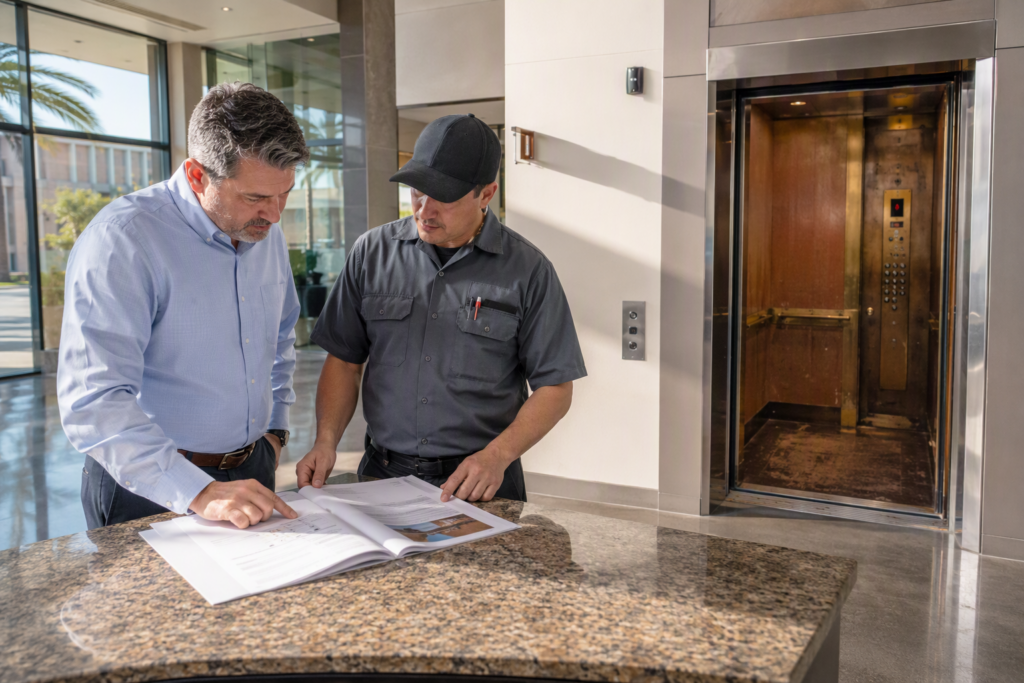
- Request that the assessing contractor provide a written scope document, preliminary schedule, and identification of all code-required upgrades triggered by the proposed scope — before contract execution.
Arizona Elevator Solutions provides free elevator modernization assessments for building owners and facility managers throughout Phoenix, Tucson, Scottsdale, and Mesa, delivering written scope documentation and code compliance analysis prior to contract. To schedule an assessment or discuss a current project, contact Arizona Elevator Solutions at 480-557-7600.
Need elevator service you can rely on? Arizona Elevator Solutions is ready to help.