Yes. A limited-use/limited-application (LU/LA) elevator is a recognized and code-compliant solution for school buildings that need vertical access between floors but have limited shaft space, budget constraints, or moderate traffic demands. In Arizona, every such installation must satisfy federal accessibility law, the ASME safety code adopted by the state, and the oversight requirements of the Industrial Commission of Arizona (ICA) Elevator Division. The sections below answer the most common questions schools in Phoenix, Tucson, Scottsdale, and Mesa ask before beginning a project.
What Exactly Is a Limited-Use/Limited-Application Elevator?
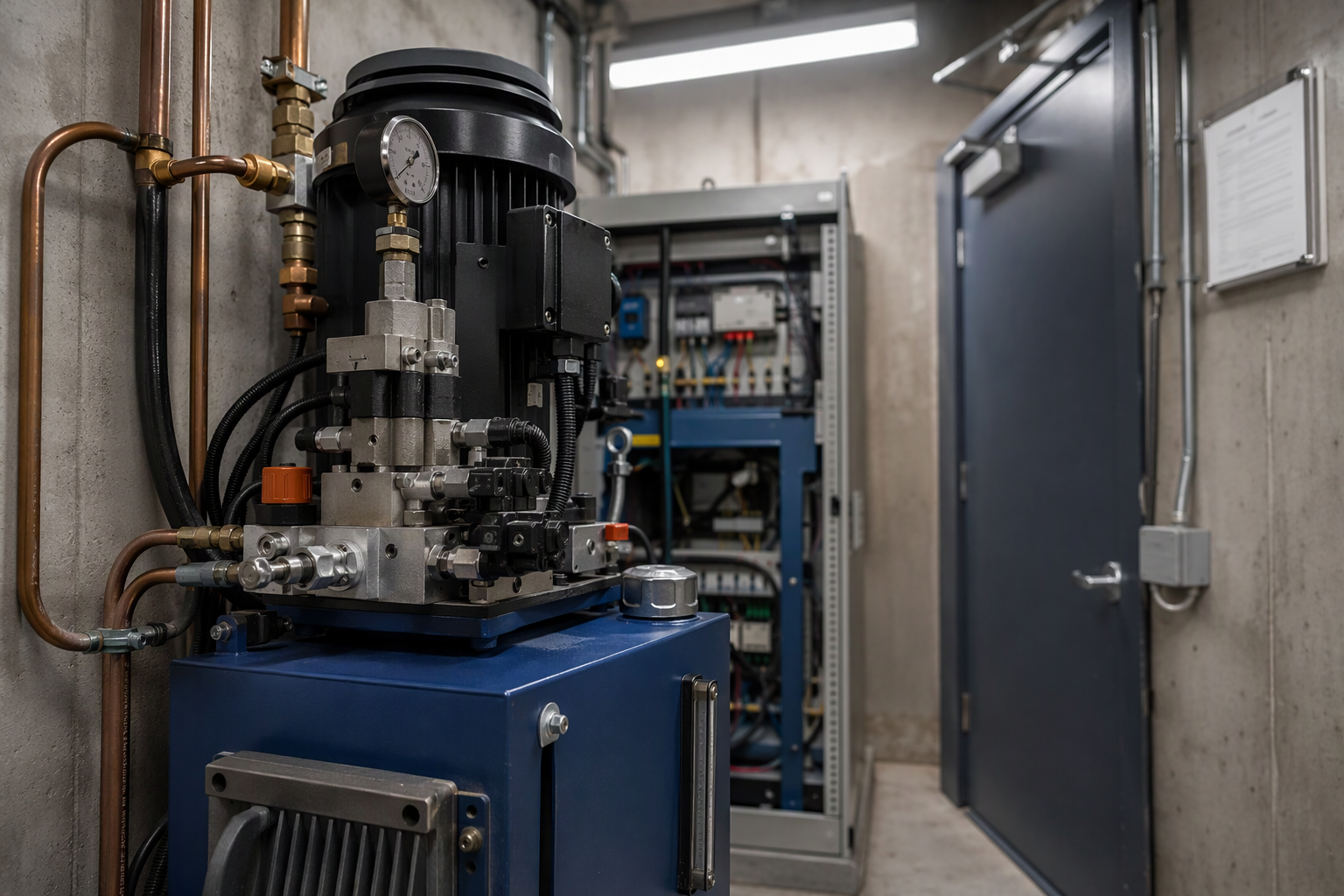
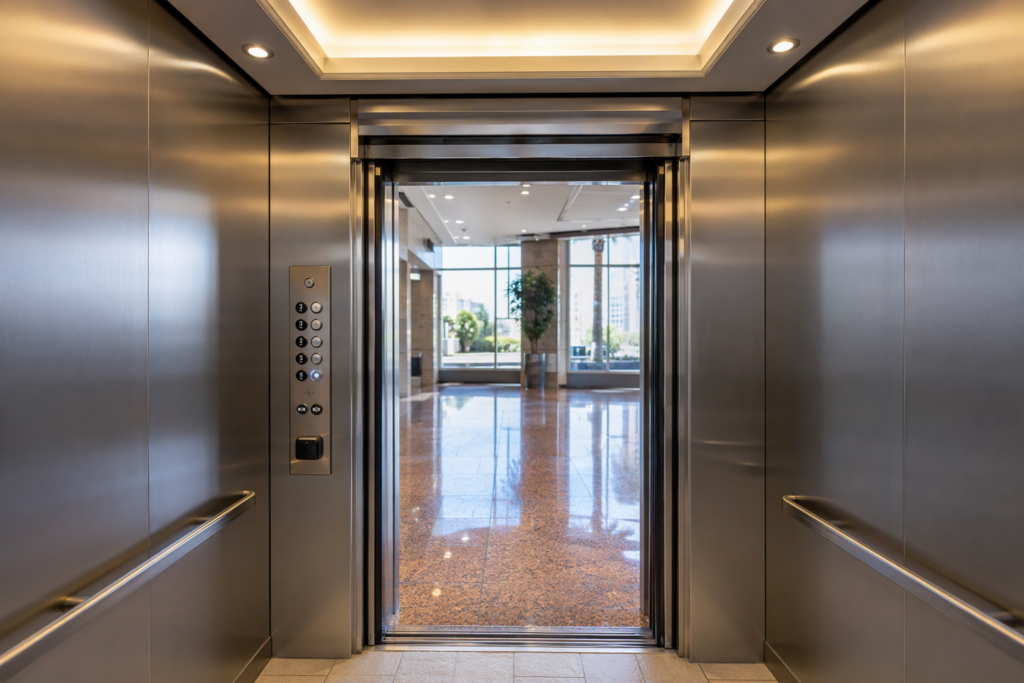
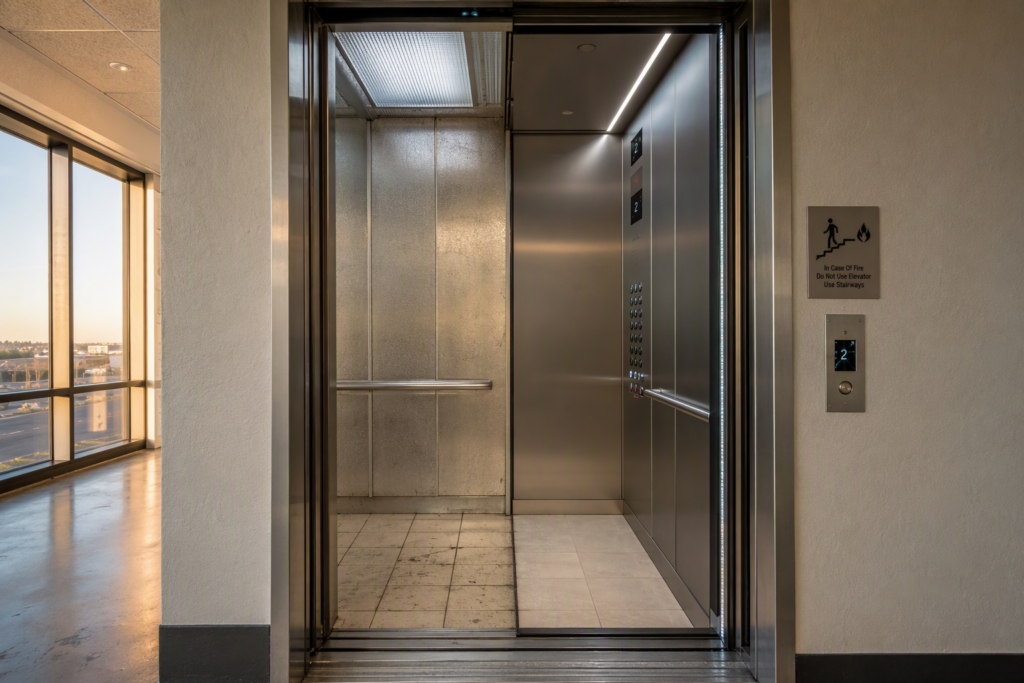
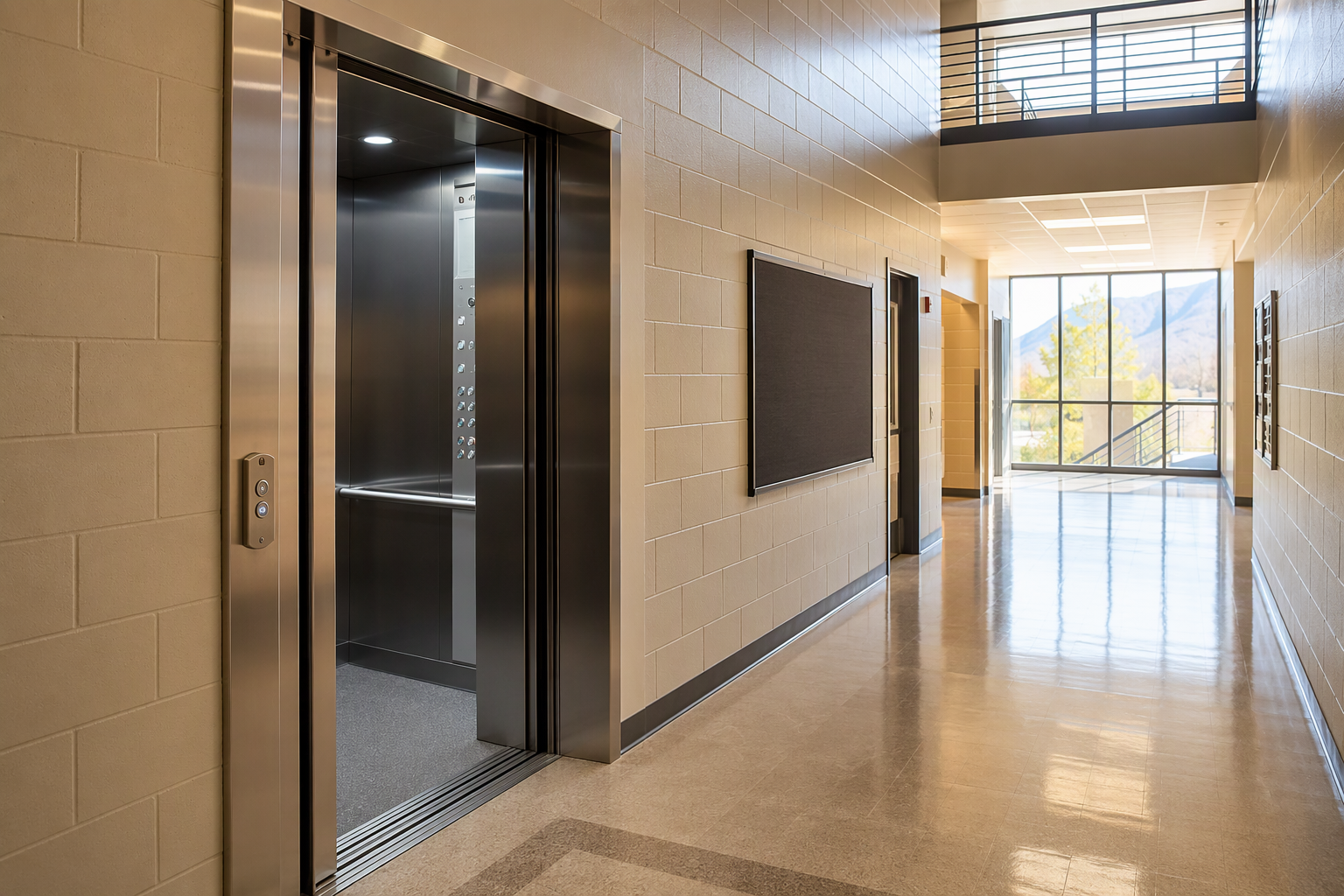
An LU/LA elevator is a class of passenger elevator defined under ASME A17.1 Safety Code for Elevators and Escalators. It is designed for buildings where full-capacity commercial elevators are impractical. Key characteristics include a reduced cab size, lower speed, and a simplified hoistway that requires less structural modification than a standard traction or hydraulic elevator. Despite these distinctions, an LU/LA unit installed in a school is still a commercial conveyance subject to the same Arizona inspection and certification rules that apply to any other elevator in the state.
Schools commonly choose LU/LA elevators for:
- Historic or older campus buildings with narrow corridors and limited floor-to-floor heights
- Multi-story classroom wings where full elevator traffic is not anticipated
- Library annexes, performing arts buildings, or administrative wings
- New construction projects seeking a cost-efficient ADA-compliant solution
Does an LU/LA Elevator Satisfy ADA Requirements in a School?
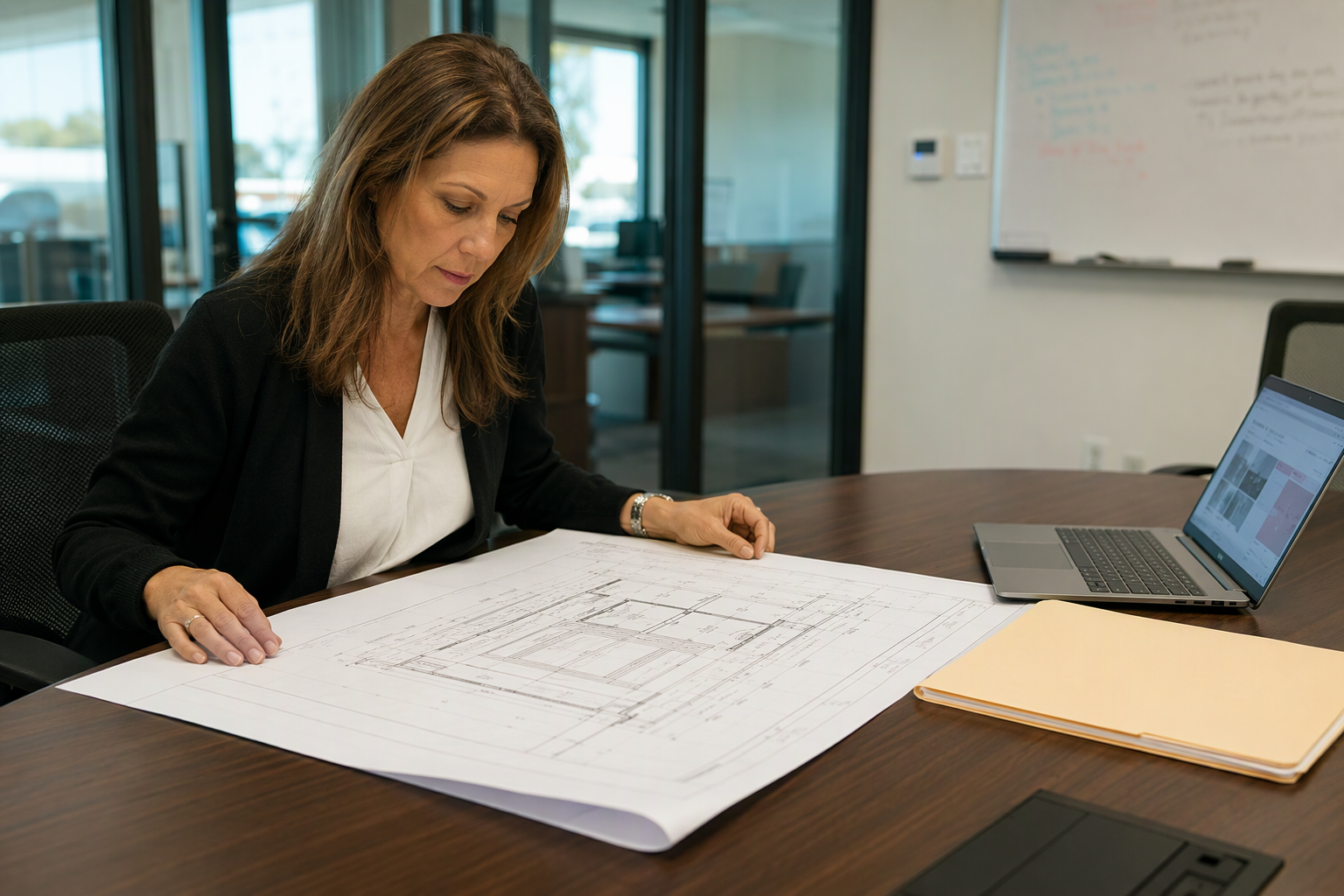
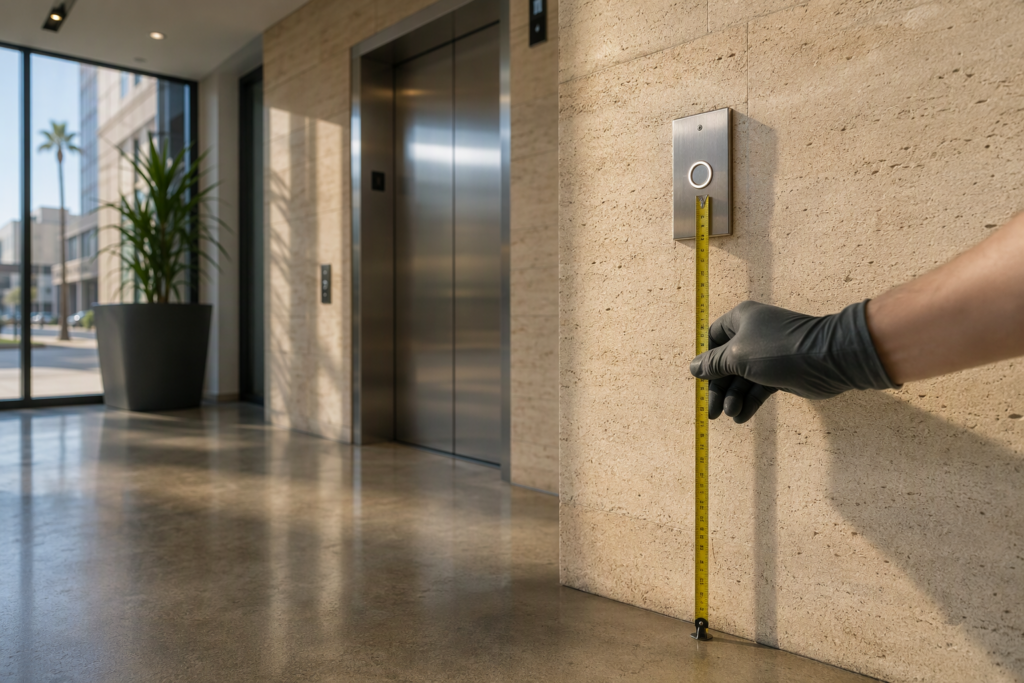
When properly specified, yes. The Americans with Disabilities Act requires that newly constructed or altered multi-story facilities—including public and private school buildings—provide accessible routes between floors. An LU/LA elevator configured to meet the ADA Standards for Accessible Design qualifies as that accessible route under most circumstances. Critical dimensions include minimum cab width, minimum cab depth, door clear width, and control height ranges. Any school undertaking an installation should confirm with its design team that the selected unit meets current ADA Standards, since those requirements interact with ASME specifications and local building codes.
Which ASME Code Governs LU/LA Elevator Installation in Arizona?
Arizona has adopted ASME A17.1/CSA B44, 2019 edition for equipment installed, repaired, or altered on or after January 1, 2023. This edition governs all aspects of LU/LA elevator design, construction, installation, and inspection in the state. The rules covering LU/LA equipment appear within Part II of ASME A17.1 and address maximum rated load, travel speed, cab dimensions, door configurations, and safety devices. Schools planning an installation in Phoenix, Tucson, Scottsdale, or Mesa in 2026 must ensure their contractor specifies equipment that conforms to the 2019 edition.
What Arizona State Regulations Apply to School Elevator Installations?
The governing statute is A.R.S. §§ 23-491 through 23-491.16, as amended by Laws 2026, Ch. 73, which establishes safety conditions for elevators and similar conveyances throughout Arizona. The Industrial Commission of Arizona (ICA) Elevator Division — formerly known as the ADOSH Elevator Safety Section until September 12, 2026 — administers these requirements. Implementing rules appear in Arizona Administrative Code R20-5-502 through R20-5-515.
The most important state requirements for a school installation include:
- Pre-installation notification: The school district or building owner must notify the ICA Elevator Division at least 90 days before installing, relocating, or altering a conveyance.
- Pre-service inspection: The elevator must be inspected and approved before it goes into service for the first time.
- Annual certificate of inspection: No conveyance may operate in Arizona without a valid annual certificate issued by the state. The certificate must be kept at the same location as the elevator and made available on request.
- State serial number posting: The state serial number or certificate must be posted in or close to the conveyance in an easily accessible location.
- Contractor licensing: Installation and repair work must be performed by a contractor holding an R-12 or C-12 elevator license classification from the Arizona Registrar of Contractors.
- Accident reporting: The owner must notify the state within 24 hours of any accident that injures a person or disables the conveyance.
Schools located inside the City of Phoenix must also coordinate with the City of Phoenix Elevator Section (Planning and Development Department), which performs inspections for equipment within city limits. Schools outside Phoenix fall under state jurisdiction handled by the ICA Elevator Division.
Are There Education-Sector-Specific Codes Beyond ASME and ADA?
Beyond ASME A17.1-2019 and the ADA, school facilities in Arizona must also comply with applicable provisions of the International Building Code as adopted locally, fire and life-safety codes enforced by the local authority having jurisdiction (AHJ), and any design requirements imposed by the Arizona School Facilities Division for state-funded construction. While these building and fire codes are enforced separately from elevator-specific rules, they directly affect hoistway construction, machine room design, ventilation, and emergency egress — all of which interact with elevator installation planning. Schools should engage their design team, general contractor, and an experienced elevator contractor early to map these overlapping requirements.
How Do You Install a Limited-Use Elevator in a School Building Step by Step?
- Conduct a feasibility assessment. Evaluate available floor space, structural capacity, floor-to-floor height, and electrical service. Arizona Elevator Solutions offers free assessments for school facilities in Phoenix, Tucson, Scottsdale, and Mesa.
- Engage a licensed architect or engineer. Plans for the hoistway, pit, and overhead clearance must be prepared and stamped by a qualified design professional.
- Select an ASME A17.1-2019-compliant LU/LA unit. Confirm the equipment meets ADA cab dimensions, door width, and control height requirements.
- File the 90-day notice with the ICA Elevator Division. Submit required documents to the Industrial Commission of Arizona at least 90 days before work begins.
- Obtain local building permits. Apply to the city or county building department for the structural, mechanical, and electrical permits the project requires.
- Complete installation with an R-12 or C-12 licensed contractor. Only Arizona Registrar of Contractors license holders in these classifications may legally perform the work.
- Schedule and pass the pre-service inspection. An ICA-authorized inspector — or an ICA-registered private elevator inspector — must inspect the unit before it is placed in service.
- Obtain and post the state certificate of inspection. Display the certificate and state serial number as required by Arizona law before allowing occupant use.
- Establish an annual maintenance and inspection program. Plan for recurring annual inspections to maintain the certificate and keep the elevator code-compliant.
How Long Does Installation Take for a School Project?
Project timelines vary based on building conditions, permit review cycles, and equipment lead times. In general, the planning and permitting phase — including the mandatory 90-day ICA notification window — represents the longest single segment of the schedule. Structural modifications and hoistway construction add additional time before equipment installation can begin. Schools planning to have an LU/LA elevator operational for the start of an academic year should begin the design and notification process well in advance. Arizona Elevator Solutions can outline a realistic project timeline during a preliminary assessment.
What Are the Ongoing Maintenance Requirements for a School Elevator in Arizona?
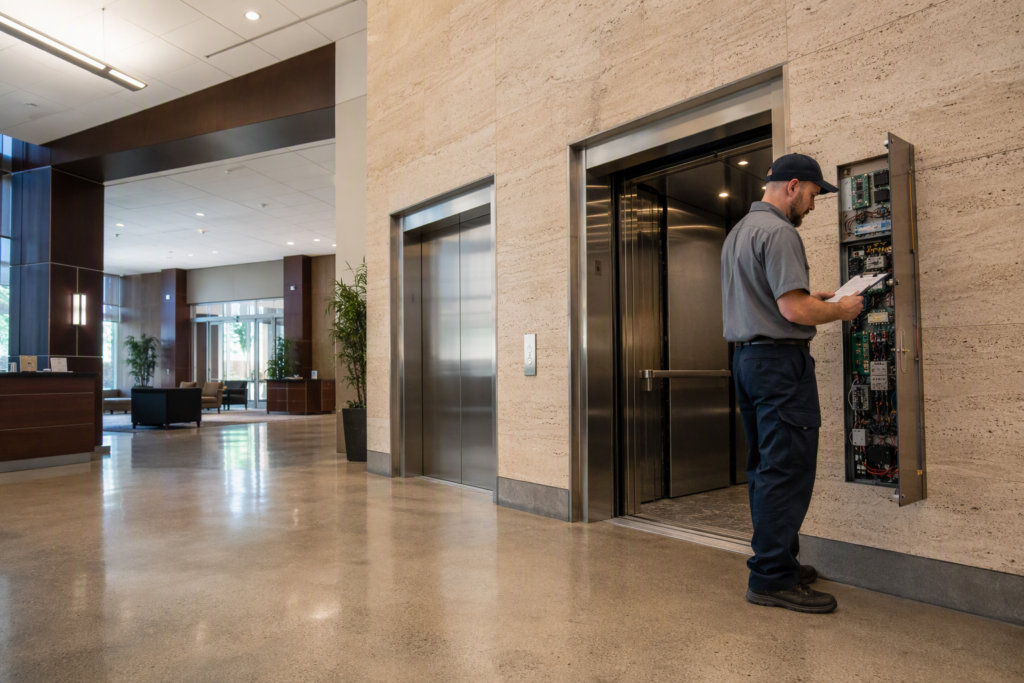
Once in service, a school’s LU/LA elevator must be inspected annually and must hold a current certificate of inspection issued by the state at all times. The certificate must remain on-site and be available for review. After any modification or alteration, the unit must be re-inspected before it returns to service. Owners may hire a private elevator inspector registered with the ICA — provided that inspector has no ownership or employment conflict with the servicing company — or rely on ICA inspectors. Regardless of who performs inspections, the school as owner retains full legal responsibility for compliance under A.R.S. §§ 23-491 through 23-491.16.
Beyond statutory inspections, routine preventive maintenance — lubrication, cable or hydraulic system checks, door alignment, safety device testing — reduces the risk of unplanned outages that disrupt students who depend on the elevator for accessibility.
Can an Existing School Elevator Be Upgraded to Meet Current Code?
Yes. Arizona law allows lawfully installed older conveyances to remain in service unless the ICA Elevator Division chief determines the equipment poses a hazard to life, health, or property. However, when a school undertakes an alteration or significant repair, the altered components must comply with ASME A17.1-2019 as adopted by Arizona. Schools with aging LU/LA units or standard elevators that have not been evaluated recently should request an assessment to understand which components may require upgrading and whether a full modernization is more cost-effective than piecemeal repairs.
Does Arizona Require a Special Firefighters’ Emergency Operation Key for School Elevators?
Yes. Arizona conveyances equipped with firefighters’ emergency operation must use the Arizona Firefighters Service (AZFS) key — a state-specific requirement that differs from key standards used in other jurisdictions. Schools must confirm that any new or modernized elevator with this feature is configured for the AZFS key. Local fire departments and the AHJ may also have coordination requirements for testing firefighters’ emergency operation during inspections.
Questions Your Inspector Will Ask
Before or during a pre-service or annual inspection of an LU/LA elevator in a school building, the assigned inspector is likely to raise the following questions. School facilities managers and administrators should be prepared to respond to each one.
- Is the state certificate of inspection current, and is it posted in or near the elevator as required?
- Is the state serial number tag affixed to the controller or mainline disconnect?
- Have all maintenance records been kept, and are they available for review on-site?
- Have any modifications or alterations been made since the last inspection, and was the ICA notified before work began?
- Is the emergency lighting and alarm system functional?
- Is the AZFS key present and confirmed operational for firefighters’ emergency operation?
- Have all safety devices — including buffers, safeties, and door interlocks — been tested in accordance with ASME A17.1-2019?
- Is the rated load placard posted in the cab, and does the cab configuration match the approved plans?
- Has the school reported any incidents, injuries, or unplanned disablements to the ICA within the required 24-hour window?
- Is the contractor performing maintenance licensed with an R-12 or C-12 classification from the Arizona Registrar of Contractors?
How Can Arizona Elevator Solutions Help Schools Plan an LU/LA Installation?
Arizona Elevator Solutions works with school districts and facilities teams throughout Phoenix, Tucson, Scottsdale, and Mesa to evaluate building conditions, identify the right equipment for each application, and guide owners through Arizona’s regulatory process from the initial 90-day ICA notification through post-installation annual compliance. The team is familiar with the intersection of ASME A17.1-2019, ADA requirements, and state statutes that school projects must navigate, and can coordinate with local authorities having jurisdiction to keep projects on schedule.
Contact Arizona Elevator Solutions for a free elevator assessment at 480-557-7600.
Need elevator service you can rely on? Arizona Elevator Solutions is ready to help.