Elevator Permits & Approval Process in Phoenix and Tucson: Complete FAQ Guide
Navigating the elevator permitting and approval process in Arizona can feel complex, especially when requirements differ between Phoenix and Tucson, and when major modernizations trigger the same scrutiny as brand-new installations. This comprehensive FAQ hub covers every stage of the process — from initial application through final inspection — using current code references and practical guidance drawn from real-world projects across the Phoenix metropolitan area and Tucson.
What is the first step to getting an elevator permit in Phoenix or Tucson?
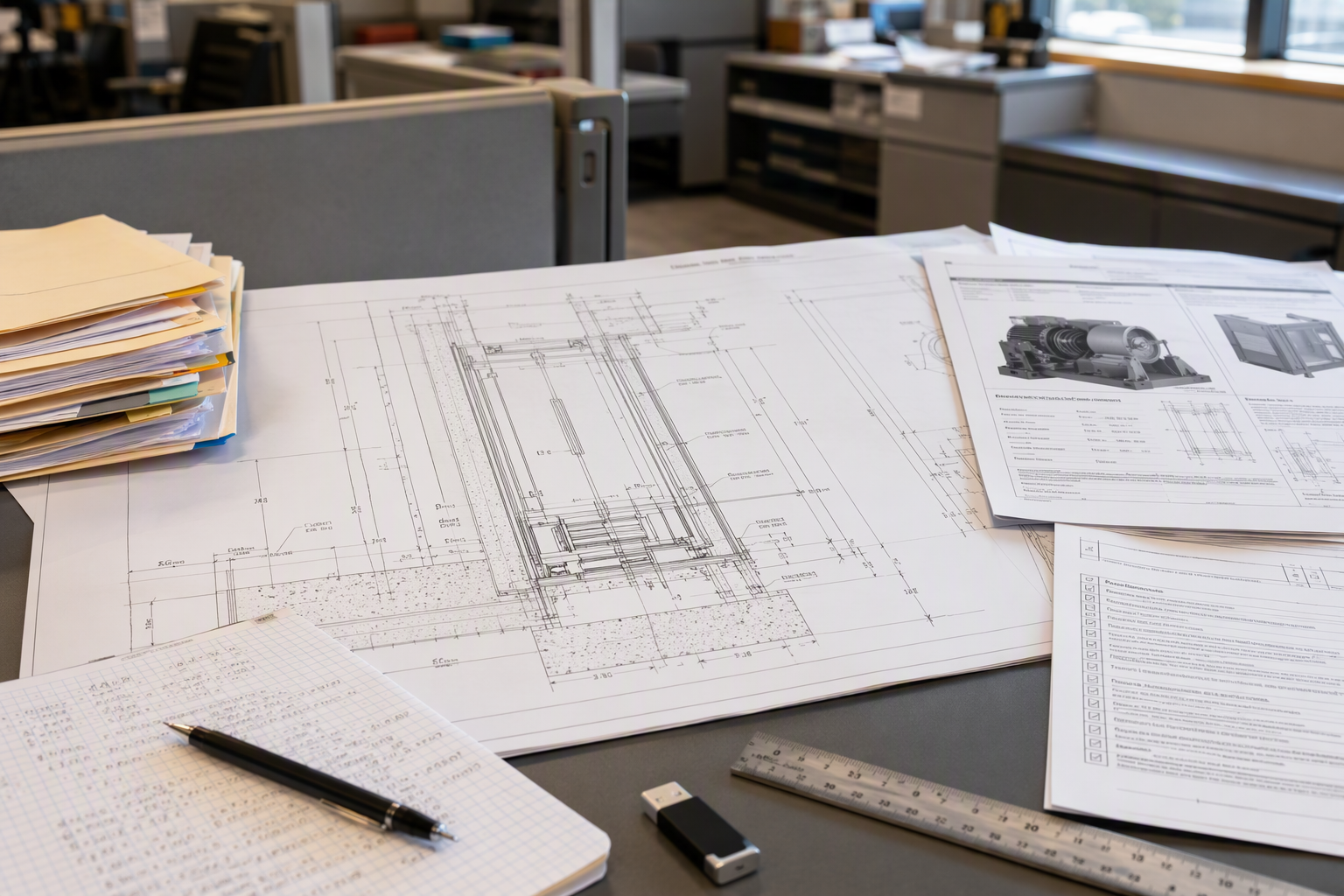
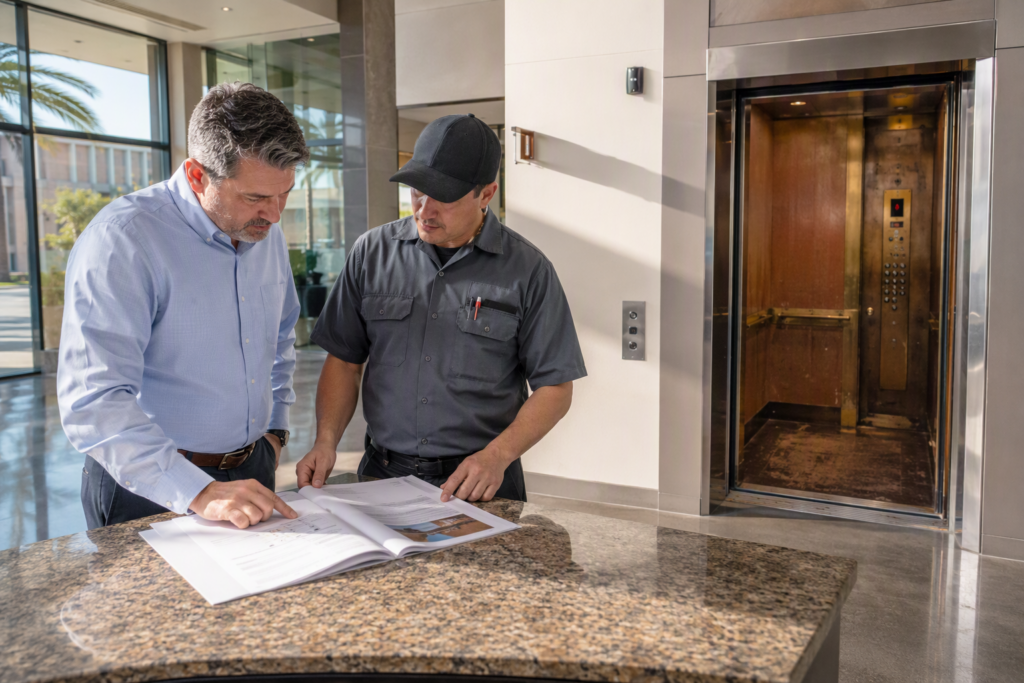
The first step is engaging a licensed elevator contractor to prepare and submit a permit application package — including construction drawings, equipment specifications, and applicable fees — to the city’s development services department before any installation or major modernization work begins.
In Phoenix, applications are submitted through the City of Phoenix Development Services Department. In Tucson, they go through the City of Tucson Development Services. Both jurisdictions require that the contractor hold an active Arizona state elevator contractor license, and both require plans to be prepared by or reviewed by a licensed engineer in many cases. Starting work without a permit is a code violation that can result in stop-work orders, fines, and costly demolition of partially completed work.
Arizona Elevator Solutions routinely assists building owners in Phoenix, Tucson, Scottsdale, and Mesa by preparing compliant documentation packages and coordinating directly with development services departments to prevent unnecessary delays.
What documents are required in the elevator permit application package?
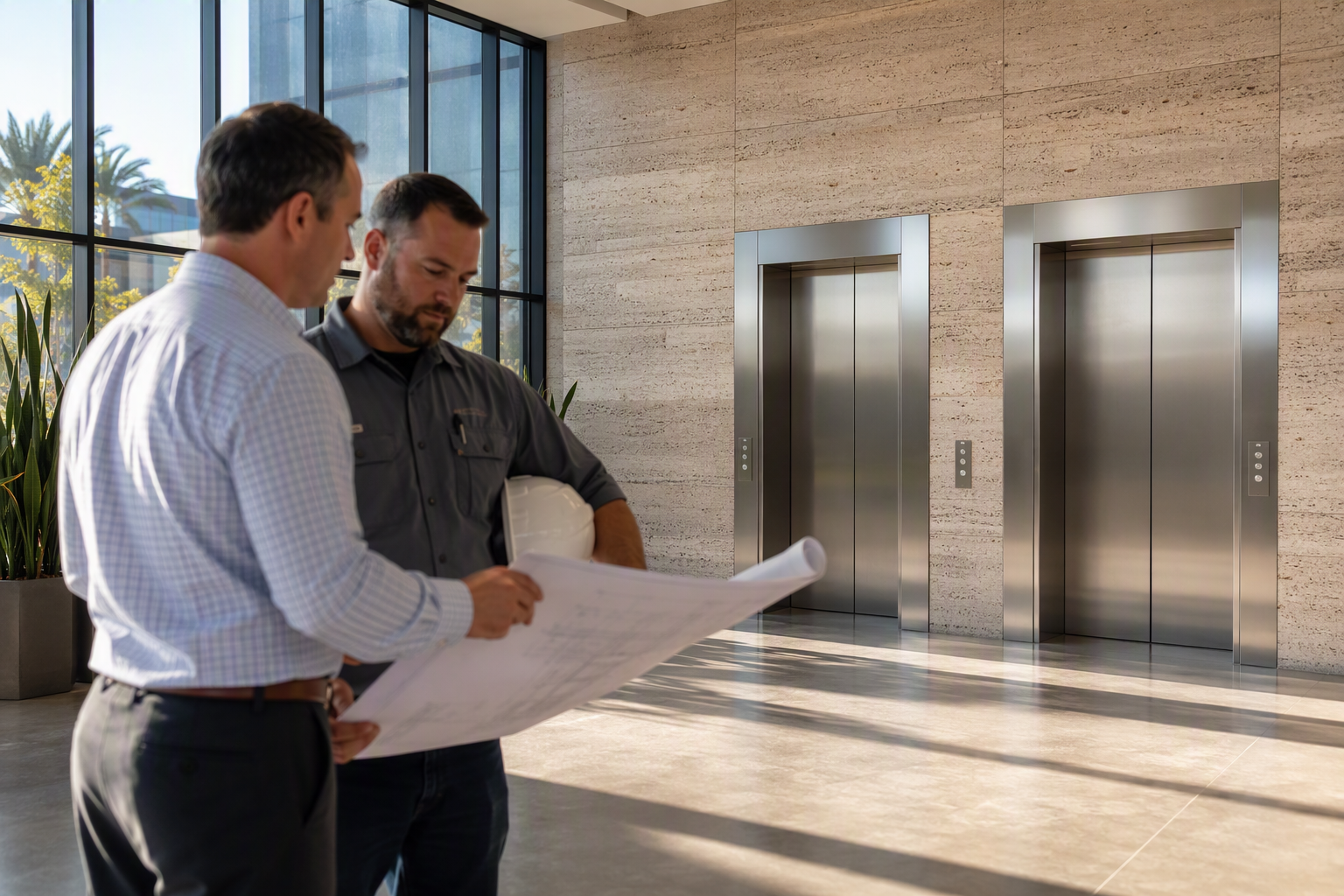
A complete permit application typically requires engineered construction drawings, equipment specifications and data sheets, a load and machine room layout plan, proof of contractor licensing, and the applicable permit fee payment.
Specifically, reviewers expect to see:
- Pit plan and cross-section drawings showing pit depth, overhead clearance, and machine room or machine space dimensions
- Hydraulic system schematics or traction drive layouts, depending on equipment type
- Manufacturer’s equipment cut sheets confirming ASME A17.1 compliance
- Load calculations verified by a licensed professional engineer when required by local plan review policy
- ADA compliance documentation where the installation must meet ADA Standards for Accessible Design
- Electrical single-line diagrams and panel schedules
- Seismic design data where applicable under the International Building Code requirements adopted by Arizona
Incomplete submissions are the leading cause of permit approval delays. A thorough initial package reduces back-and-forth with plan reviewers significantly.
Which building code and safety standard governs elevator installations in Arizona?
Arizona elevator installations are governed primarily by the ASME A17.1 Safety Code for Elevators and Escalators, which both Phoenix and Tucson have adopted by reference through the Arizona Administrative Code.
The ASME A17.1 standard establishes requirements for the design, construction, installation, operation, inspection, testing, maintenance, alteration, and repair of elevators and related conveyances. Arizona adopts the code edition specified in the Arizona Administrative Code, Title 4, Chapter 30, which governs the Arizona Elevator Safety Program administered through the Arizona Department of Occupational Safety and Health (ADOSH). Practitioners should verify the currently adopted edition with ADOSH, as code cycles update periodically and the 2025/2026 cycle may reference a more recent edition than projects designed several years ago.
Where public accessibility is required, projects must also satisfy ADA Standards for Accessible Design — covering car dimensions, door timing, control height, and tactile markings — and the applicable sections of the International Building Code and International Existing Building Code as locally amended.
Does Arizona have a state-level elevator licensing and inspection program?
Yes — Arizona operates a statewide elevator safety program through ADOSH, which licenses elevator contractors and mechanics, registers elevators, and authorizes inspections that must be performed by certified elevator inspectors.
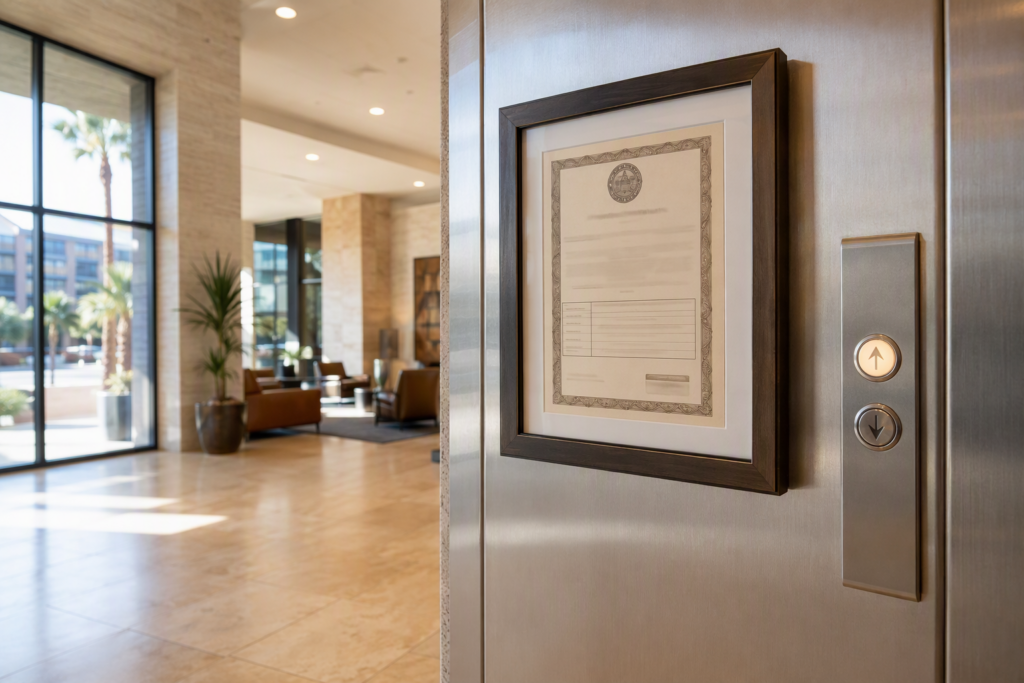
Under Arizona Revised Statutes Title 23, Chapter 5, all elevators in commercial and public-use buildings must be registered with the state program and must undergo periodic inspections by a state-certified elevator inspector or an accredited third-party inspection agency approved by ADOSH. The state program maintains records of each registered conveyance and issues the certificate of operation that must be posted in the elevator cab. Building owners who cannot produce a current certificate during a fire or building inspection can face enforcement action, including shutdown orders.
Contractors wishing to perform elevator work in Arizona must hold an Arizona Elevator Contractor license, and mechanics performing installations, alterations, or maintenance must hold an Arizona Elevator Mechanic license. These are distinct from general contractor licenses and require demonstrated competency in elevator-specific work.
How does the Phoenix permit process differ from the Tucson permit process?
The core code requirements are identical because both cities adopt ASME A17.1 and the Arizona Administrative Code, but the administrative processes — online portals, review timelines, fee schedules, and point-of-contact offices — differ between the two jurisdictions.
| Factor | City of Phoenix | City of Tucson |
|---|---|---|
| Permit Submission Portal | ProjectDox electronic plan review system | Tucson Development Services online portal |
| Plan Review Authority | Phoenix Development Services (Structural/Mechanical) | Tucson Development Services |
| State Inspection Authority | ADOSH or accredited third-party inspector | ADOSH or accredited third-party inspector |
| Certificate of Operation Issuer | State of Arizona (ADOSH) | State of Arizona (ADOSH) |
| Adopted Safety Standard | ASME A17.1 (AZ Admin Code edition) | ASME A17.1 (AZ Admin Code edition) |
| ADA Compliance Review | Required during plan review | Required during plan review |
| Expedited Review Available? | Yes (additional fee) | Yes (additional fee) |
Because Phoenix processes a higher annual volume of commercial permits, plan review queues can sometimes extend longer than in Tucson. Contractors experienced in both markets, such as Arizona Elevator Solutions, know how to structure submissions to minimize review cycles in each city.
What are the step-by-step stages of the elevator permit and approval process?
The approval process follows a predictable sequence from pre-application through final certificate issuance, and understanding each stage helps owners and project managers set realistic timelines and avoid costly interruptions.
- Pre-Application Consultation: Meet with a licensed elevator contractor to define scope, confirm equipment type, verify pit and overhead dimensions, and identify applicable code editions. This stage determines whether the project is a new installation, a major alteration, or a routine modernization.
- Engineering and Drawing Preparation: A professional engineer or elevator contractor prepares stamped construction drawings, equipment data sheets, load calculations, and all required supporting documents.
- Permit Application Submission: The licensed elevator contractor submits the complete application package — along with permit fees — to the city development services department (Phoenix or Tucson).
- Plan Review: City reviewers examine the submitted drawings for code compliance. They may issue a Request for Information (RFI) or correction comments requiring revised documents. Multiple review cycles are possible on complex projects.
- Permit Issuance: Once the plan review is approved, the building permit is issued. Work may not legally begin until the permit is in hand and posted on-site.
- Installation or Modernization: The licensed elevator contractor performs the work according to the approved drawings and ASME A17.1 requirements. No field deviations from approved plans are permitted without a plan revision and re-approval.
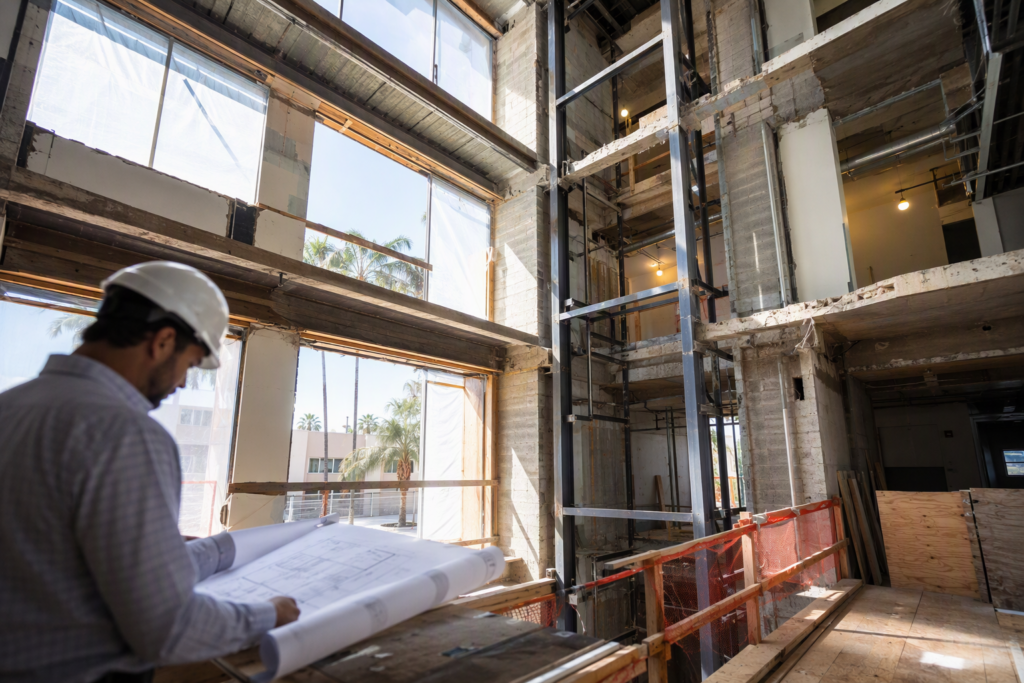
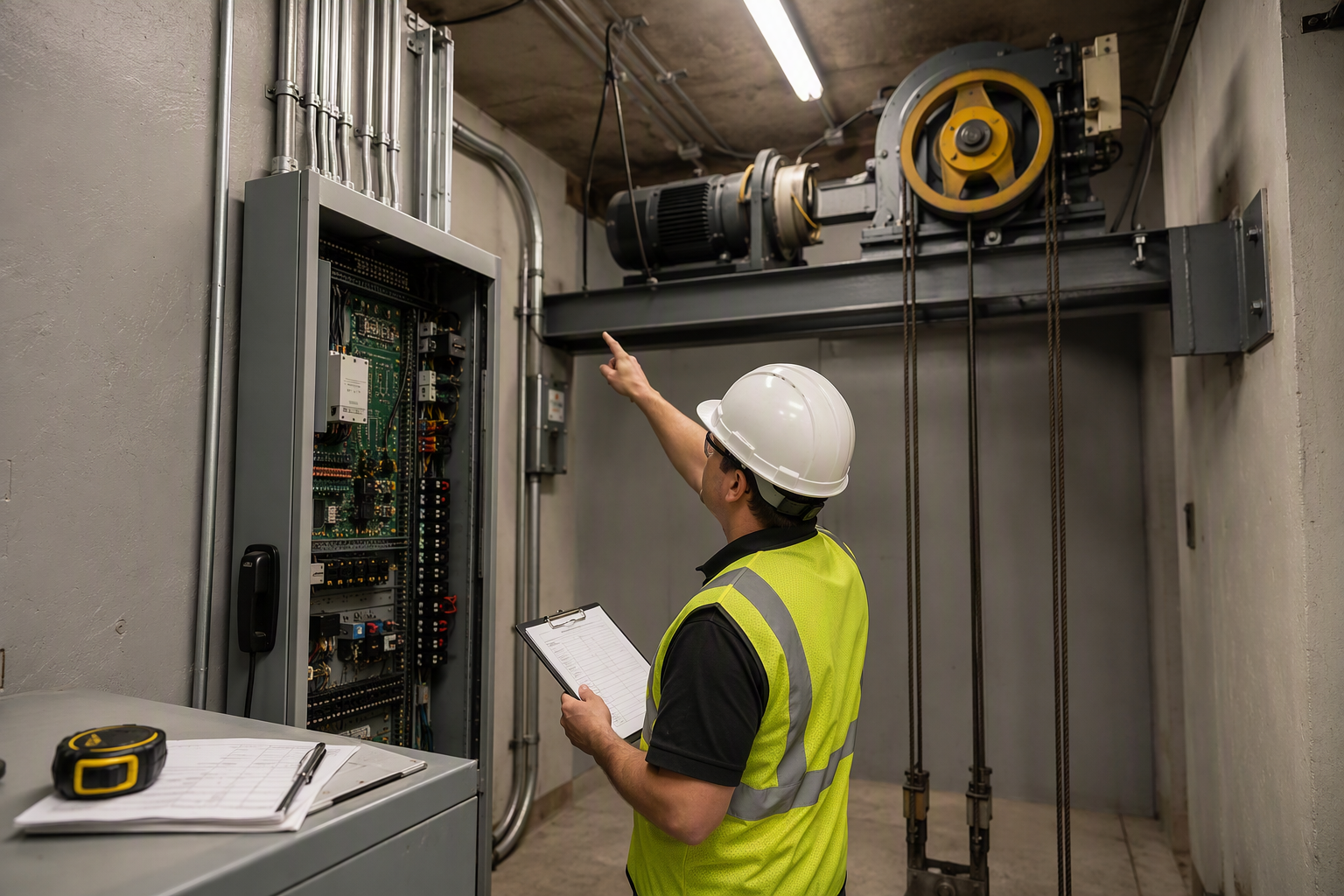
- Rough-In Inspection: A certified elevator inspector examines the pit, hoistway, and structural components before they are enclosed. Deficiencies must be corrected before proceeding.
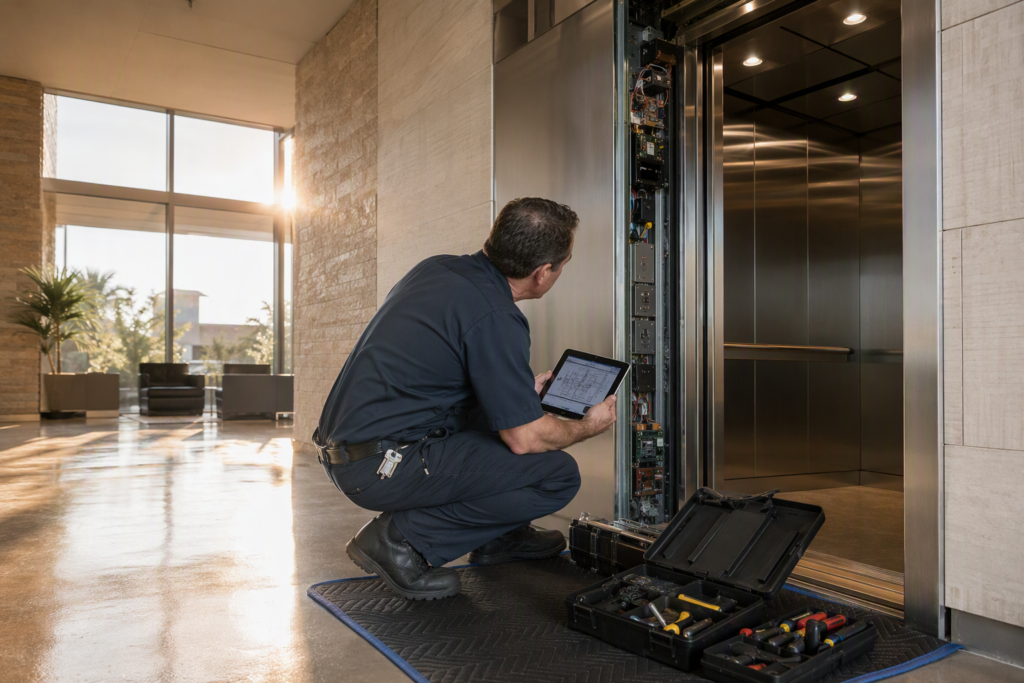
- Final Inspection and Acceptance Test: Upon completion of all installation work, the certified inspector conducts a full acceptance test per ASME A17.1 Section 8 requirements — including safety device tests, load tests, and operational checks.
- Certificate of Operation Issuance: Once the acceptance test passes, ADOSH issues the Certificate of Operation. This certificate must be posted inside the elevator cab before the unit is placed into public service.
- Ongoing Periodic Inspections: After commissioning, the elevator must receive periodic inspections on the schedule mandated by the Arizona Administrative Code to maintain the certificate of operation annually.
What triggers the permit requirement for a major modernization versus routine maintenance?
A permit is required whenever work constitutes an “alteration” under ASME A17.1 — broadly defined as any change to the equipment, its components, or its performance characteristics beyond replacing like-for-like parts during maintenance.
Common modernization activities that require a permit in Arizona include replacing the controller or drive system, changing the car or counterweight configuration, modifying the machine or machine space, upgrading door operators, adding or replacing safety devices, or changing the rated speed or capacity. Even cosmetic work that involves touching safety-related components can cross into alteration territory.
Routine maintenance — such as lubricating guide rails, replacing worn brake pads with identical parts, or adjusting door timing within code-permitted ranges — generally does not require a permit. When in doubt, the safest course is to consult with a licensed contractor before beginning work, because performing unpermitted alterations can result in retroactive inspection requirements, fines, and liability exposure.
How long does the elevator permit and inspection process typically take?
The overall timeline from permit application to certificate of operation varies based on project complexity, plan review queue depth, and inspection availability, but straightforward projects in Phoenix and Tucson often progress through the process over a period of weeks to several months.
New commercial elevator installations in multi-story buildings involve the longest timelines because they require full structural and mechanical plan review, may be part of a larger building permit, and require multiple inspection stages including pit rough-in and final acceptance testing. Modernization projects on existing permitted elevators tend to move faster because the hoistway and structural elements are already approved.
Owners and project managers can reduce delays by submitting complete documentation the first time, responding quickly to plan reviewer comments, scheduling inspections in advance rather than waiting until the last moment, and working with a contractor who has an established relationship with local development services staff and ADOSH inspectors.
What are the ADA requirements that affect new elevator installations?
New elevator installations in facilities covered by the Americans with Disabilities Act must comply with the ADA Standards for Accessible Design, which specify minimum car dimensions, door clear width, control panel height, hall call placement, tactile markings, and auditory signals.
Key ADA requirements relevant to elevator permitting include:
- Minimum elevator car interior dimensions (generally at least 80 inches deep by 68 inches wide for passenger elevators serving more than one floor in a multi-story facility, per ADA Standards Section 407)
- Door clear width of at least 36 inches
- Hall call buttons positioned within the reach range requirements of Section 308
- Car control panels with Braille and raised characters
- Floor designations with tactile characters on hoistway entrance jambs
- Automatic reopening devices on car doors
- Leveling accuracy within one-half inch of the floor
ADA compliance is reviewed during the city plan review stage. Buildings that are subject to alterations triggering accessibility requirements under the ADA may also need to address accessible routes to and from the elevator, not only the elevator car itself. The interaction between ADA, the International Building Code, and ASME A17.1 is one of the most technically nuanced aspects of elevator permitting, and experienced contractor guidance is valuable.
What types of elevators require permits in Arizona, and are there exemptions?
Virtually all power-operated elevators used in commercial, multi-family, and public-access buildings require permits and periodic inspections under the Arizona elevator safety program, with limited exemptions for certain private residential elevators and specified agricultural or industrial uses as defined in Arizona statute.
Conveyances subject to Arizona’s elevator safety program include traction elevators, hydraulic elevators, limited-use/limited-application (LULA) elevators, platform lifts, escalators, moving walks, and dumbwaiters. The program generally exempts single-family private residential elevators from the full commercial inspection regime, though equipment must still meet manufacturer installation requirements and applicable codes for safety.
Commercial property owners sometimes mistakenly assume that a small two-story hydraulic lift in a retail or restaurant setting falls below the threshold for regulation. This is generally incorrect — if the conveyance is accessible to the public or employees in a commercial setting, it is subject to the Arizona program. Confirming applicability with ADOSH before beginning any project is always advisable.
What is the role of the ADOSH elevator inspector versus the city building inspector?
The city building inspector confirms general construction compliance during the building permit process, while the ADOSH-certified elevator inspector (or accredited third-party inspector) performs the elevator-specific technical acceptance test required to issue the certificate of operation.
These two inspection streams run in parallel during a new elevator installation or major modernization. The building department may perform rough-in and final structural inspections to close out the building permit. Separately, the elevator inspector — acting under authority delegated through the Arizona elevator safety program — performs the acceptance test specified in ASME A17.1 Safety Code for Elevators and Escalators. Both streams must be completed successfully before the elevator can be legally placed in service. Failing to schedule the elevator-specific acceptance test is a common oversight that delays occupancy on new buildings.
What happens if an elevator fails its acceptance test inspection?
If an elevator fails its acceptance test, the inspector issues a written list of deficiencies, the elevator cannot be placed in service, and the contractor must correct all noted items and request a re-inspection before the certificate of operation can be issued.
Common reasons for acceptance test failures include safety device adjustments outside permitted tolerances, door timing not meeting ASME A17.1 requirements, governor and safeties not performing correctly under load test conditions, or missing or incorrect ADA-compliant signage and tactile markings. Re-inspection fees typically apply for each return visit, making it economically beneficial to ensure the installation is code-compliant before scheduling the acceptance test. Experienced contractors conduct a thorough pre-inspection walkthrough with their own checklist to minimize the probability of failure.
How much does an elevator permit typically cost in Phoenix or Tucson?
Permit fees are set by each city’s fee schedule and are generally calculated based on the valuation of the work or as a flat fee per conveyance type, with plan review fees charged separately in many cases.
Because fee schedules are updated periodically by each municipality, specific dollar figures should be confirmed directly with the Phoenix Development Services Department or the Tucson Development Services at the time of application. Variables affecting total permit cost include the type of conveyance, number of stops, whether expedited plan review is requested, re-inspection fees, and state registration fees charged by ADOSH. Owners budgeting for a new elevator installation or major modernization should request a pre-application fee estimate from both the city and the elevator contractor to capture all regulatory costs in project budgeting.
What worker safety requirements apply during elevator installation in Arizona?
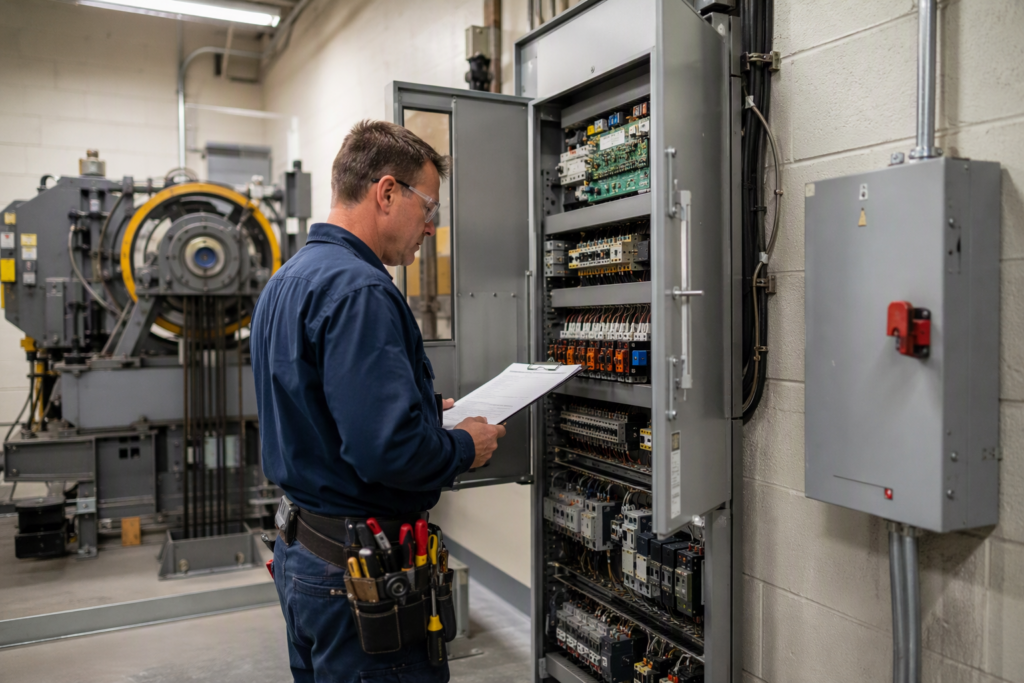
Elevator installation and modernization work must comply with OSHA standards for construction safety, including fall protection in elevator shafts, lockout/tagout procedures for electrical systems, and confined space protocols for pit work.
OSHA 29 CFR Part 1926 (Construction Standards) governs safety practices on construction sites, including hoistway work. Requirements include physical barriers at hoistway openings on all floors, personal fall arrest systems for mechanics working at heights, proper shoring of pit areas as needed, and safe access and egress for workers in machine rooms and machine spaces. Arizona operates its own OSHA-approved state plan — the Arizona Division of Occupational Safety and Health (ADOSH), which administers both worker safety and elevator safety programs — and enforces standards that are at least as effective as federal OSHA requirements.
Does a hydraulic elevator require a different permit process than a traction elevator?
Both hydraulic and traction elevators follow the same general permitting framework under ASME A17.1 and the Arizona Administrative Code, but the engineering documentation, inspection points, and specific code sections referenced in the permit package differ based on drive type.
Hydraulic elevator permit packages must include underground or above-ground cylinder specifications, hydraulic fluid containment provisions (including secondary containment to prevent soil contamination), power unit data, and pressure-relief valve documentation. Traction elevator packages focus on machine and drive specifications, counterweight data, governor and safety system details, and overhead structural loading. The acceptance test procedures specified in ASME A17.1 also differ by drive type. A contractor without experience across both types may produce incomplete permit packages for one of them.
What are the ongoing inspection and maintenance requirements after a certificate of operation is issued?
After a certificate of operation is issued, Arizona requires periodic inspections on a schedule established in the Arizona Administrative Code, and building owners are also responsible for maintaining the elevator in accordance with ASME A17.1 maintenance requirements and keeping maintenance records.
The periodic inspection interval for most commercial elevators under the Arizona program is annual, though the specific interval applicable to any given conveyance type should be confirmed against the current edition of the Arizona Administrative Code and ASME A17.1 requirements. The certificate of operation posted in the cab has an expiration date, and operating an elevator with an expired certificate is a violation subject to enforcement. Building owners should establish a maintenance contract with a licensed elevator contractor well in advance of certificate expiration to ensure inspections and any required repairs are completed on time.
Arizona Elevator Solutions provides ongoing maintenance and inspection support for elevator owners throughout Phoenix, Tucson, Scottsdale, and Mesa, helping building owners maintain current certificates of operation and avoid unplanned downtime.
What is a modernization versus a new installation, and why does the distinction matter for permitting?
A new installation involves constructing an elevator in a building that previously had none or adding a new conveyance, while a modernization replaces major components in an existing elevator — and the distinction affects which ASME A17.1 code edition applies and how extensively the entire system must be brought up to current standards.
One of the most consequential aspects of major modernization permitting is the “partial modernization” rule under ASME A17.1. When certain listed components are replaced — such as the control system, driving machine, or safety system — the standard may require that the entire elevator system be brought into compliance with the current code edition on specific interdependent systems, not just the components being replaced. This can significantly expand scope and cost beyond the originally anticipated modernization work. A thorough pre-project code compliance analysis by a knowledgeable contractor is essential before committing to a modernization scope.
How does seismic design affect elevator permit requirements in Arizona?
Arizona is located in a seismically active region, and the International Building Code seismic design requirements adopted by Phoenix and Tucson affect elevator guide rail bracing, counterweight retention, and other structural elements that must be reflected in permit drawings.
ASME A17.1 includes seismic requirements that are triggered based on the seismic design category applicable to a building’s location. Buildings in Phoenix and Tucson fall within seismic design categories that require guide rail and structural connections to resist seismic forces, counterweight retainer plates or other means of keeping counterweights in the rails during a seismic event, and in some categories, seismic switches that take the elevator out of service during an earthquake and return it to a designated floor. Permit drawings must include seismic calculations and details. Omitting seismic documentation is a common cause of plan review corrections.
What should a building owner look for when selecting an elevator contractor for a permitted installation?
Building owners should verify that any contractor holds an active Arizona Elevator Contractor license, has documented experience with plan review submissions in the relevant city, maintains appropriate insurance, and can demonstrate familiarity with current ASME A17.1 and ADA requirements.
Beyond licensing, important selection criteria include the contractor’s track record of first-submission permit approvals (which reflects the quality of their documentation), their relationships with ADOSH-certified inspectors, their ability to coordinate with the general contractor and structural engineer of record on a new construction project, and their capacity to support ongoing maintenance and inspection obligations after commissioning. Owners should request references from comparable projects in the same jurisdiction.
Arizona Elevator Solutions serves building owners, property managers, and general contractors across Phoenix, Tucson, Scottsdale, and Mesa with full-service support from initial permit application through acceptance testing and ongoing maintenance programs.
Are there special requirements for elevators in historic buildings undergoing renovation?
Historic buildings adding or modernizing elevators often receive consideration under the International Existing Building Code and may have flexibility in meeting certain dimensional requirements, but life-safety and structural requirements under ASME A17.1 cannot be waived, and ADA may require reasonable modifications even in historic structures.
The permitting process for a historic building elevator project typically involves additional coordination with the State Historic Preservation Office if the building is listed on the National Register or subject to preservation easements, as well as the standard development services and ADOSH processes. Hoistway construction in a historic building may be more complex and expensive than in new construction, and the permit package must fully document how the proposed installation achieves code compliance within the constraints of the existing structure. Early consultation with both the permitting authority and a licensed elevator contractor experienced in existing building projects is strongly recommended.
Need elevator service you can rely on? Arizona Elevator Solutions is ready to help.