Elevator Compliance and Maintenance Requirements for School Buildings in Arizona
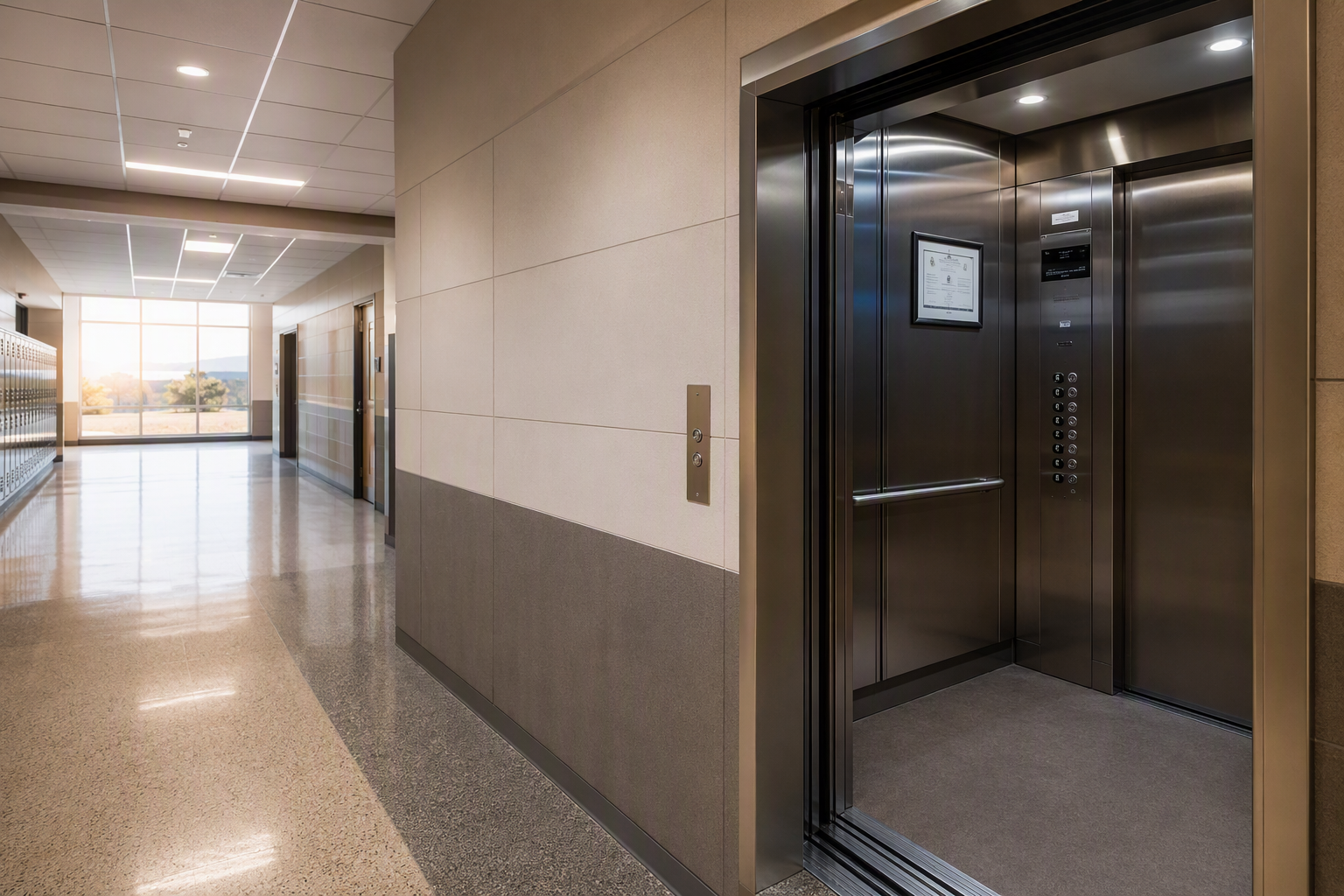
Arizona school districts — from the Phoenix Unified School District to campuses in Tucson, Scottsdale, and Mesa — operate elevators that serve students with disabilities, staff, and visitors every day. Falling out of compliance is not simply a regulatory matter; it creates genuine safety risks and can result in elevator shutdowns that disrupt ADA-required access. This guide covers every dimension of elevator compliance and maintenance that school facility managers need to understand in 2026.
—
What Federal Codes Govern Elevators in Arizona School Buildings?
Two federal frameworks establish the baseline for any school elevator in Arizona:
- ASME A17.1 Safety Code for Elevators and Escalators — the national technical standard that governs the design, construction, installation, operation, inspection, testing, maintenance, alteration, and repair of elevators. Arizona adopts ASME A17.1 by reference through its state elevator safety program.
- Americans with Disabilities Act (ADA) — requires that schools providing public accommodations ensure equal access. Elevators in multi-story school buildings are typically the primary means of vertical access for students and staff with mobility disabilities, making continuous compliance non-negotiable.
Arizona also enforces its own elevator safety statutes and rules administered through the Arizona Department of Occupational Safety and Health (ADOSH), which aligns with OSHA standards for workplace safety in school facilities where employees operate or maintain vertical transportation equipment.
—
What Are Arizona’s State-Level Inspection Requirements for School Elevators?
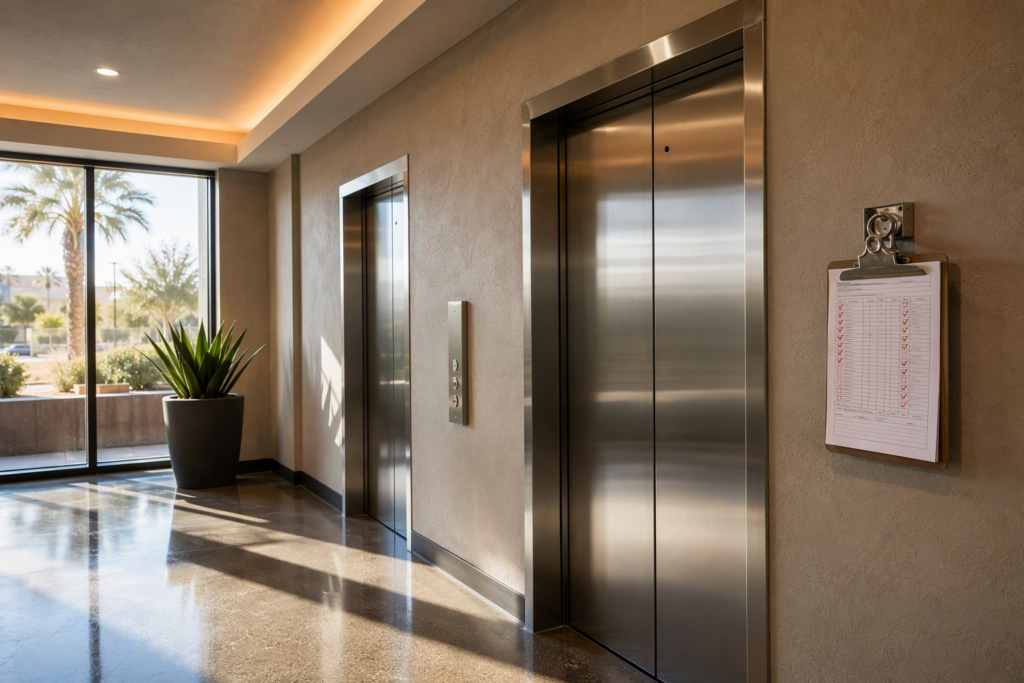
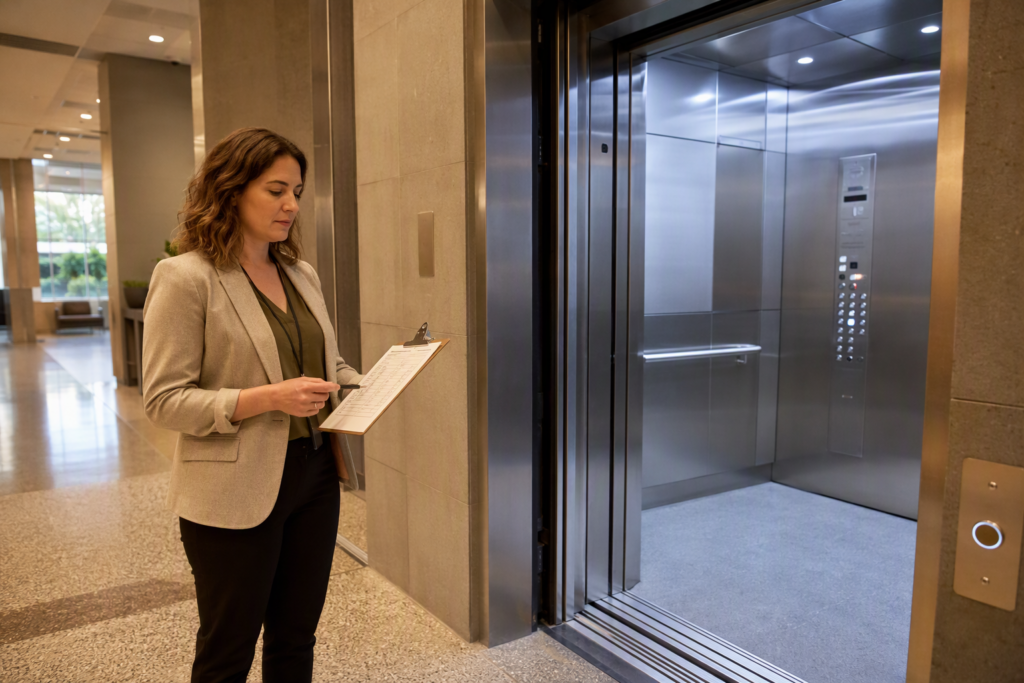
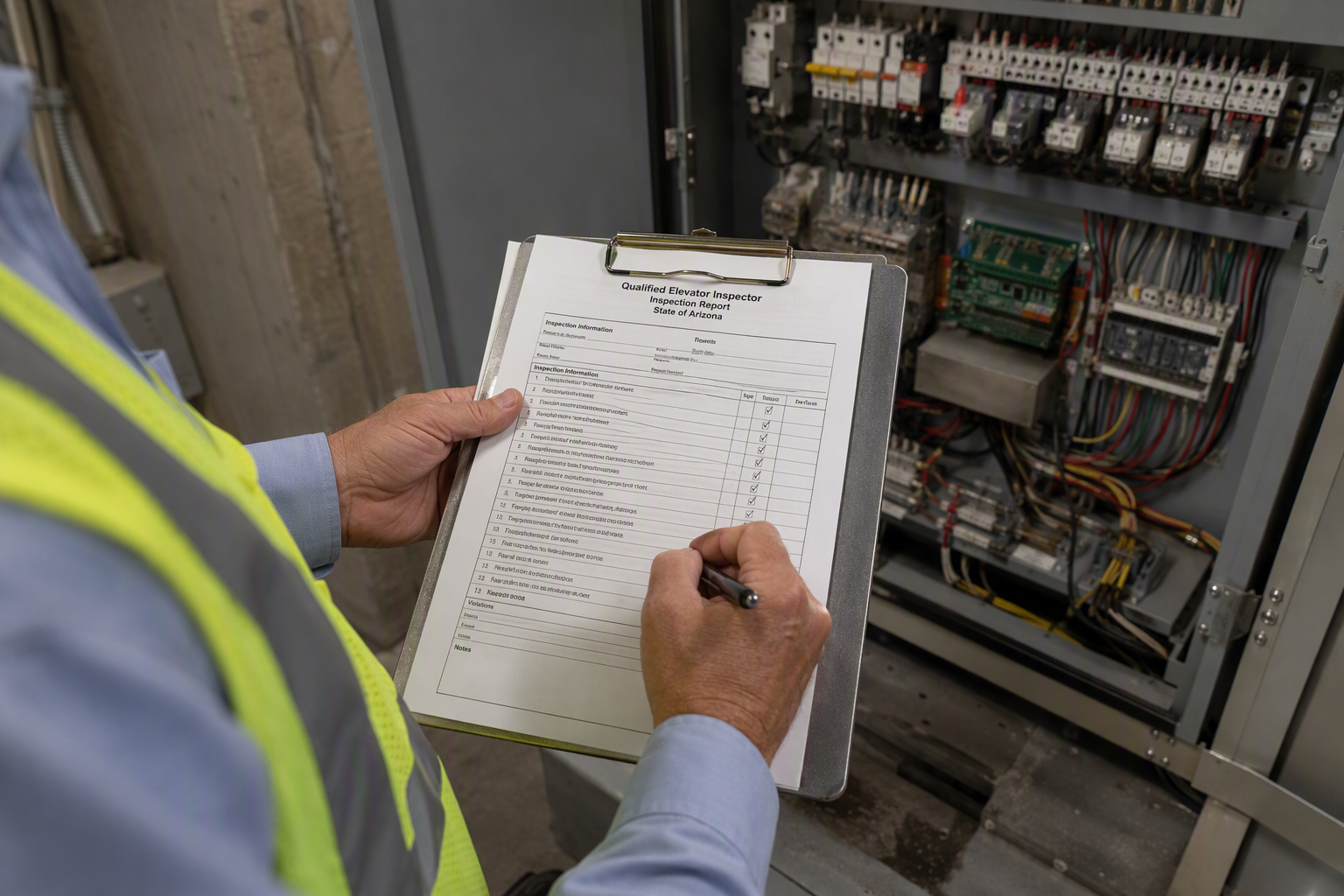
Under Arizona’s elevator safety program, every elevator in a school building must receive a periodic inspection by a Qualified Elevator Inspector (QEI). The inspection cycle is defined by ASME A17.1, which specifies the frequency and scope of routine inspections and tests. Schools must maintain a current Certificate of Inspection, which must be posted inside or adjacent to each elevator cab. Operating a school elevator without a valid, posted certificate is a violation that can result in mandatory shutdown orders.
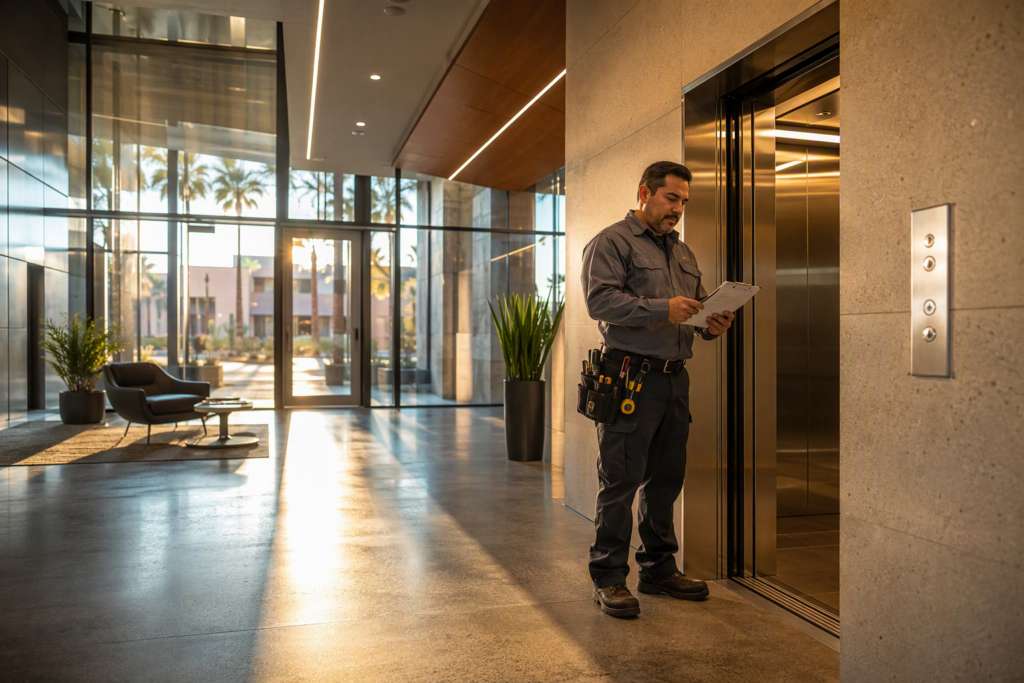
In addition to state-required inspections, schools should conduct internal maintenance checks between official inspections. Arizona Elevator Solutions works with school districts across Phoenix, Tucson, Scottsdale, and Mesa to establish preventive maintenance programs that keep inspection records current and equipment in full working order.
—
What Does ASME A17.1 Require for Ongoing School Elevator Maintenance?
ASME A17.1 does not simply address installation — it establishes enforceable maintenance obligations. Key requirements include:
- Written maintenance records: Maintenance control programs must be documented, covering inspection dates, tests performed, findings, and any corrective work completed.
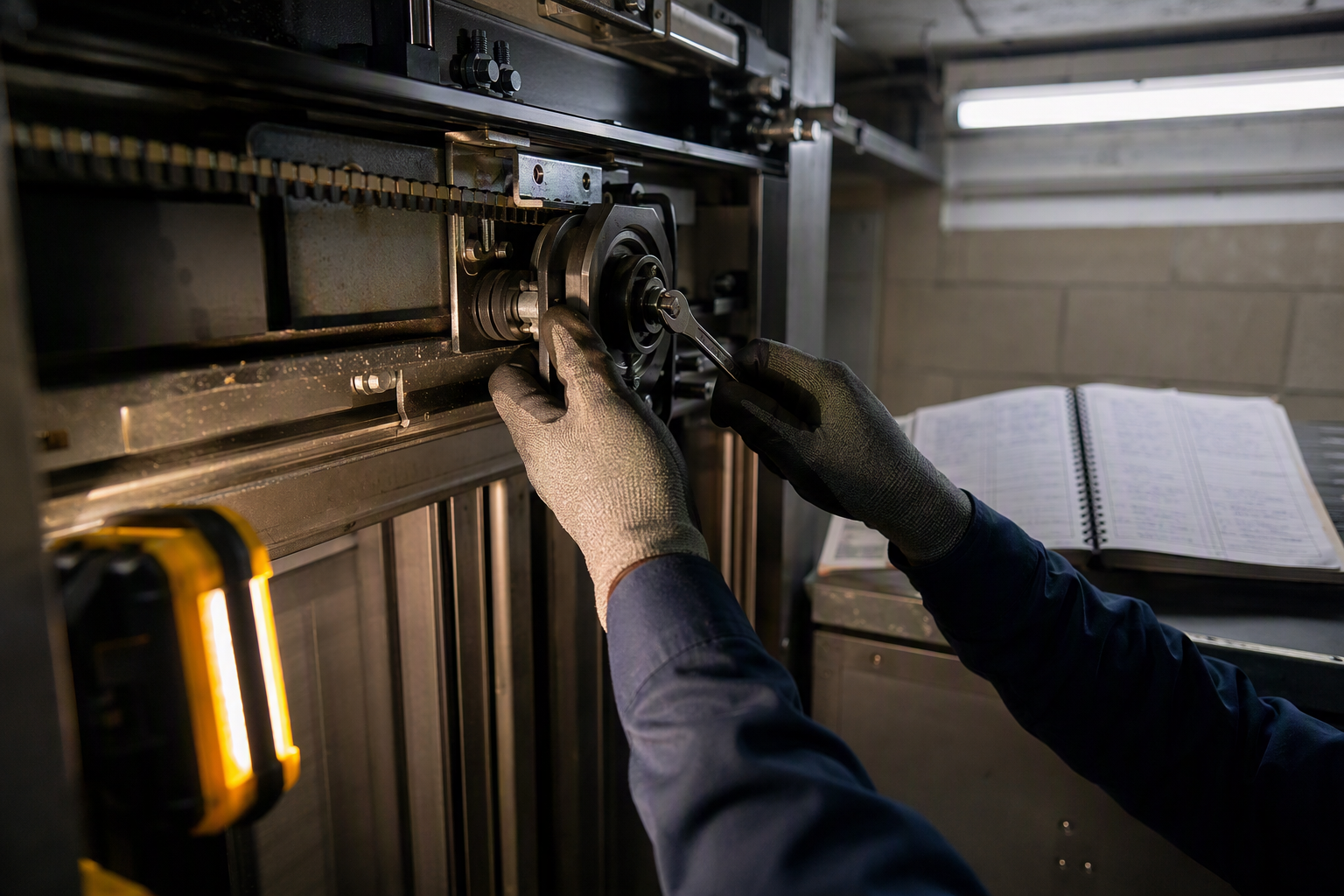
- Periodic tests: Safety devices such as governors, safeties, and buffers must be tested at intervals specified in the code. Hydraulic elevators have additional requirements related to pressure relief valves and fluid containment.
- Alteration documentation: Any modification to an existing school elevator — from adding a new floor stop to upgrading the controller — must be documented and may trigger a new inspection.
- Emergency operations: Firefighters’ emergency operation and Phase I and Phase II controls must be tested and verified to be functional.
Schools that lack a formal maintenance control program are at significant risk of non-compliance findings during state inspections. Arizona Elevator Solutions provides fully documented maintenance programs designed to satisfy ASME A17.1 requirements and ADOSH inspection criteria.
—
How Does ADA Compliance Apply Specifically to School Elevators?
The ADA requires that elevators in school buildings meet specific accessibility standards, including:
- Minimum cab dimensions to accommodate wheelchairs and mobility devices
- Braille and tactile signage on call buttons and inside the cab
- Audible and visible floor indicators
- Door reopening devices that respond to both light-ray and contact activation
- Controls mounted within reach range for users of wheelchairs
- Two-way emergency communication systems inside the cab
Many Arizona school buildings constructed before current ADA guidelines may have elevators that predate modern accessibility standards. A facility assessment by Arizona Elevator Solutions can identify gaps between existing equipment and current ADA requirements, allowing districts to plan upgrades before a complaint or audit triggers mandatory action.
—
What Happens If a School Elevator Fails an Arizona State Inspection?
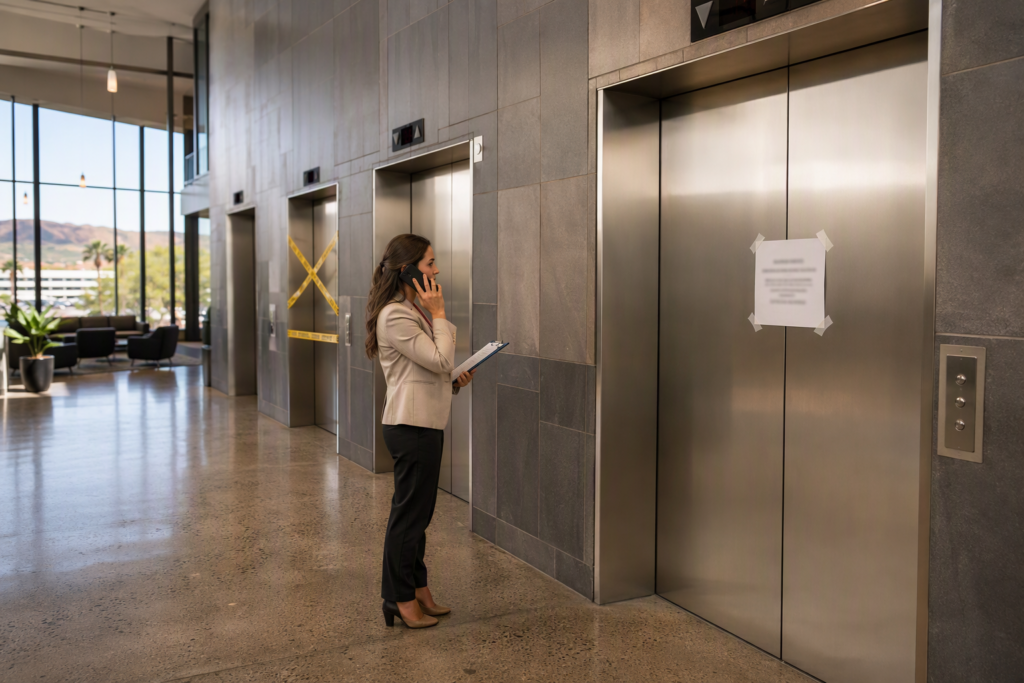
When an elevator fails a state inspection in Arizona, the inspector issues a violation notice and the elevator may be placed out of service until corrections are completed and verified. For a school, this means:
- Immediate loss of ADA-compliant vertical access, which may require the school to reassign classes, offices, or services to accessible floors.
- Notification obligations to staff, students, and families who depend on the elevator.
- Engagement of a licensed elevator contractor to complete the required corrective work.
- Submission of documentation showing corrective work was completed by qualified personnel.
- Scheduling a follow-up inspection or re-inspection with the state authority before the elevator is returned to service.
- Retention of all inspection and repair records as part of the ongoing maintenance file.
Proactive maintenance is significantly less disruptive and less costly than emergency repairs following an out-of-service order. Districts in the Phoenix metro area and southern Arizona work with Arizona Elevator Solutions to reduce the likelihood of failed inspections through scheduled preventive maintenance.
—
Are There Additional Requirements for Hydraulic Elevators Common in Single-Story School Additions?
Many Arizona school buildings use hydraulic elevators in low-rise additions. These units carry specific maintenance requirements under ASME A17.1, including:
- Regular inspection of the hydraulic cylinder and jack unit for leaks or corrosion
- Testing of the pressure relief valve to confirm it operates within specified limits
- Fluid containment compliance to prevent environmental contamination — particularly relevant for schools located near sensitive desert or riparian environments in Arizona
- Periodic load tests as required by the inspection schedule
Hydraulic elevators that have not been serviced according to the ASME A17.1 maintenance schedule are among the most common sources of inspection violations in school buildings.
—
What Records Must Arizona Schools Maintain for Elevator Compliance?
Proper documentation is a compliance requirement, not optional best practice. Arizona schools should maintain:
- Current Certificate of Inspection (posted in or adjacent to each cab)
- Complete maintenance logs from the licensed elevator contractor
- Records of all periodic tests including dates, results, and the identity of the performing contractor
- Documentation of any alterations, including permit records
- Emergency call logs for the in-cab two-way communication system
- Records of any incidents, entrapments, or service calls
During state inspections, inspectors routinely request maintenance records. Missing or incomplete records are themselves a violation finding independent of the physical condition of the equipment.
—
How Often Should Arizona Schools Schedule Preventive Elevator Maintenance?
ASME A17.1 requires that a maintenance control program be in place, and the frequency of maintenance visits is determined by the type and usage of the equipment. For school elevators — which typically see high traffic during passing periods and moderate use throughout the day — regular preventive maintenance visits help identify wear on cables, sheaves, door operators, and safety devices before those issues become compliance violations or service failures.
Arizona Elevator Solutions tailors maintenance schedules for school buildings based on equipment type, age, usage patterns, and the specific requirements of the ASME A17.1 maintenance control program applicable to that installation.
—
What Should Schools Do When Planning an Elevator Modernization or Upgrade?
Modernization of a school elevator is classified as an alteration under ASME A17.1 and triggers specific compliance requirements:
- Obtain permits from the Arizona elevator safety authority before work begins.
- Ensure the modernization scope is designed to bring the elevator into conformance with current ASME A17.1 and ADA standards.
- Confirm that all replacement components meet current code requirements — not merely the standards in effect at original installation.
- Schedule a post-modernization inspection with a Qualified Elevator Inspector before returning the unit to service.
- Update all maintenance records and the maintenance control program to reflect the upgraded equipment.
- Brief school staff on any changes to emergency procedures resulting from the modernization.
Modernization projects present an opportunity for Arizona school districts to address both ASME A17.1 compliance gaps and ADA accessibility shortfalls simultaneously, reducing long-term liability exposure.
—
Questions Your Inspector Will Ask
When an Arizona state elevator inspector arrives at a school building, facility managers should be prepared to answer the following:
- Is the Certificate of Inspection current and posted? Inspectors will check the posted certificate against their records immediately.
- Where are your maintenance logs? Expect a review of the full maintenance control program documentation, including dates and scope of all service visits.
- When was the last periodic test performed, and by whom? The inspector will verify that required tests — including safety, governor, and buffer tests — were completed by a licensed contractor at the correct intervals under ASME A17.1.
- Has any alteration been made to this elevator since the last inspection? Any change — including software updates to the controller — may constitute an alteration requiring disclosure and documentation.
- Is the firefighters’ emergency operation functional? Phase I and Phase II operation will be tested during the inspection.
- Does the two-way emergency communication system work? The inspector will test the in-cab communication device to confirm it connects to a monitored point.
- Are ADA-required features intact and functional? This includes door reopening devices, Braille signage, audible signals, and control reach ranges.
- Who is your licensed elevator contractor? Arizona requires that maintenance and repairs be performed by licensed personnel; the inspector may request contractor license verification.
—
How Do Schools in Phoenix, Tucson, Scottsdale, and Mesa Find a Qualified Elevator Contractor?
Arizona requires elevator contractors to hold a valid state license to perform maintenance, repair, or alteration work on elevators. When selecting a contractor, school districts should verify:
- Active Arizona elevator contractor license
- Familiarity with ASME A17.1 maintenance control program requirements
- Experience with the specific elevator types installed in the school (traction, hydraulic, limited use/limited application)
- Ability to provide fully documented maintenance records that satisfy state inspection requirements
- Knowledge of ADA accessibility standards as they apply to existing and modernized equipment
Arizona Elevator Solutions serves school districts and educational institutions throughout Phoenix, Tucson, Scottsdale, Mesa, and the surrounding communities, providing licensed elevator maintenance, repair, inspection support, and modernization services aligned with ASME A17.1 and ADA requirements.
—
Get Your School Elevator Assessment Today
Non-compliance with ASME A17.1, ADA requirements, or Arizona state elevator safety statutes puts students, staff, and your district at risk. A proactive assessment is the most effective way to identify gaps before an inspection finding forces your hand.
Contact Arizona Elevator Solutions for a free elevator assessment — call 480-557-7600 to speak with a licensed elevator professional serving Phoenix, Tucson, Scottsdale, and Mesa.
Need elevator service you can rely on? Arizona Elevator Solutions is ready to help.