Elevator Deficiency: Comparison and Decision Guide for Arizona Building Owners
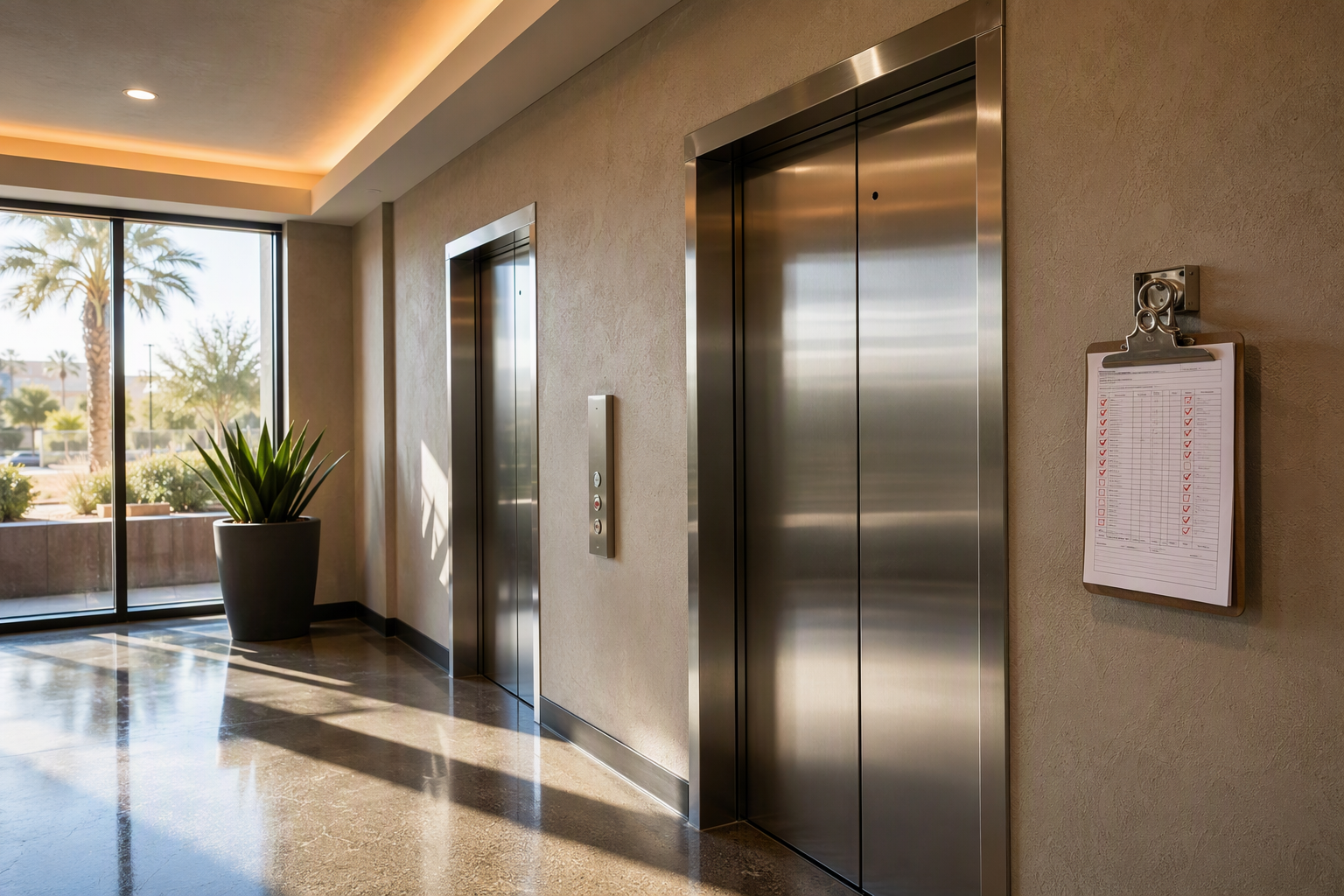
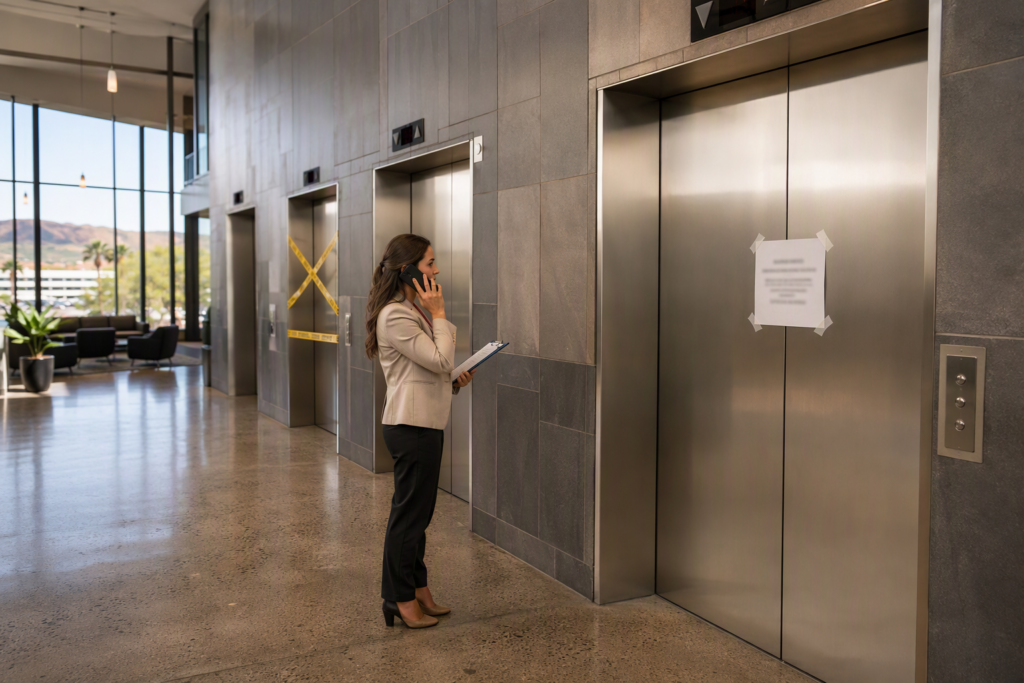
When an inspector marks an elevator deficiency on an inspection report, Arizona building owners face a timed, regulated decision. The choices — targeted repair, partial upgrade, full modernization, or decommissioning — carry different cost profiles, compliance timelines, and long-term implications. This guide walks through every dimension of that decision so owners, property managers, and facilities teams can act with confidence.
What Is an Elevator Deficiency?
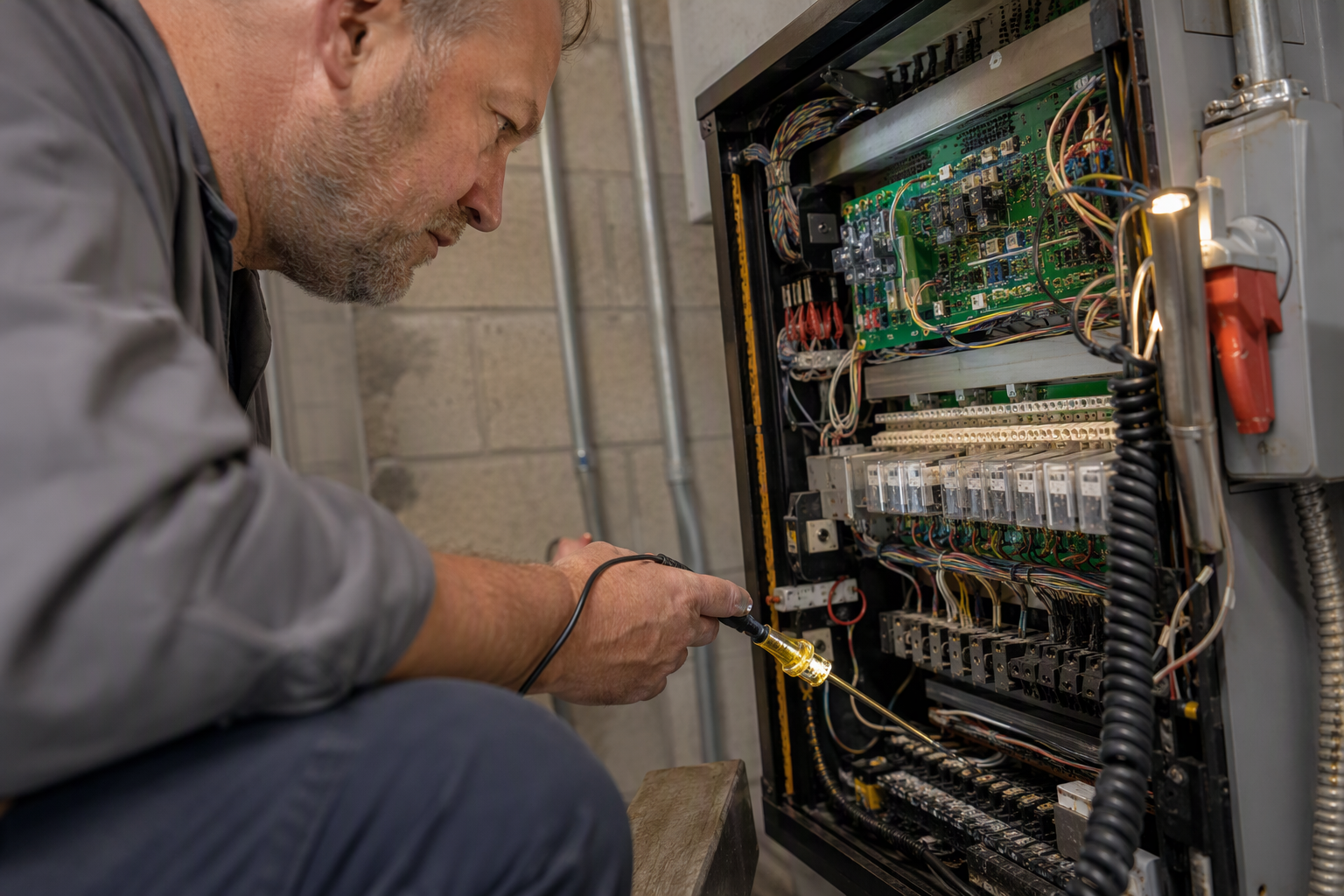
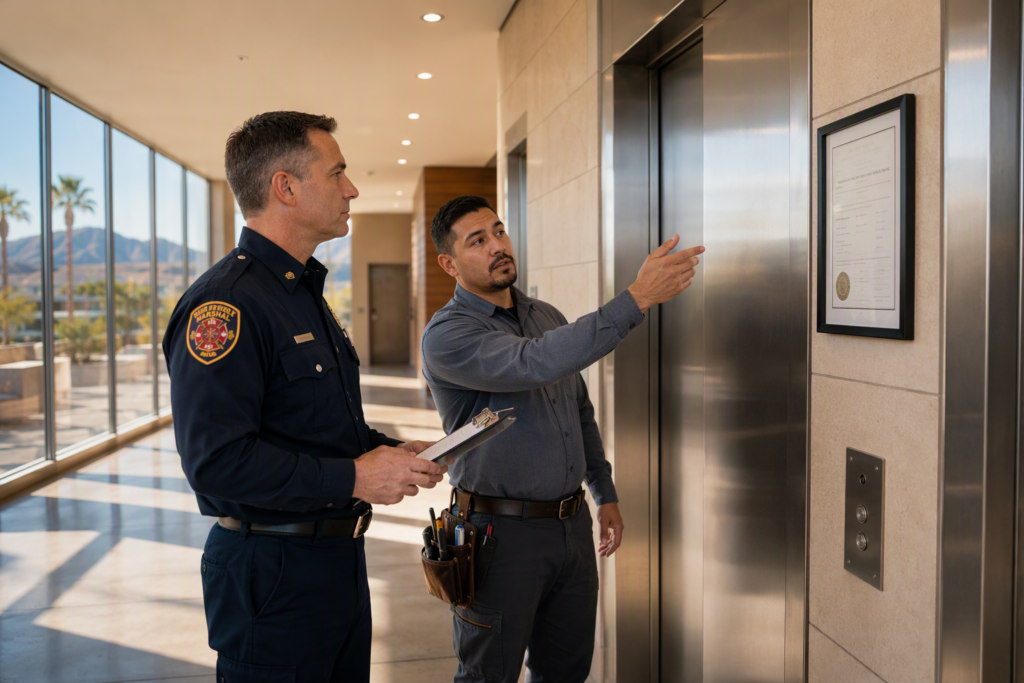
An elevator deficiency is a documented finding that a conveyance fails to meet a required safety, operational, or code standard. Deficiencies appear on the inspection report issued after an annual, post-modification, or initial inspection and can range from a worn door contact or missing signage to a failed safety circuit or outdated control system. Under A.R.S. §§ 23-491 through 23-491.16 and Arizona Administrative Code R20-5-502 through R20-5-515, no conveyance may operate in Arizona without a valid annual certificate of inspection. A deficiency can block or revoke that certificate.
Deficiencies are typically classified by severity:
- Imminent Hazard (Category A): Condition poses immediate risk to life, health, or property. The unit must be taken out of service immediately.
- Non-Imminent Hazard (Category B): Condition requires correction before the next annual inspection cycle but does not require immediate shutdown.
- Advisory / Observation: Condition is noted for future attention; does not yet affect certificate issuance but indicates deterioration.
For equipment installed, repaired, or altered on or after January 1, 2023, Arizona enforces the ASME A17.1-2019 edition. Older, lawfully installed conveyances may remain in service under legacy provisions unless the Industrial Commission of Arizona’s Elevator Division determines the use is a hazard to life, health, or property.
Who Regulates Elevator Deficiencies in Arizona?

Elevator safety in Arizona is administered by the Industrial Commission of Arizona (ICA), Elevator Division — formerly known as the ADOSH Elevator Safety Section until September 12, 2026, when Laws 2026, Ch. 73 transferred that function. The ICA Elevator Division issues certificates of inspection, registers private inspectors, and enforces compliance statewide, with one important exception: the City of Phoenix Elevator Section (Planning and Development Department) inspects elevators, escalators, moving walks, dumbwaiters, and chairlifts inside the City of Phoenix. Property owners in Phoenix report to the city; all other Arizona owners report to the ICA Elevator Division.
Contractors who perform repairs or modernizations must hold an R-12 or C-12 elevator license from the Arizona Registrar of Contractors. The ROC license authorizes installation and repair but does not issue the annual certificate of inspection — that certificate comes only from the ICA Elevator Division or a registered private inspector authorized by the commission.
Repair vs. Modernize vs. Decommission: Side-by-Side Comparison
| Decision Path | Best For | Typical Timeline | Compliance Outcome | Key Risk |
|---|---|---|---|---|
| Targeted Repair | Single or few isolated deficiencies; newer equipment | Days to a few weeks | Clears specific finding; certificate restored | Additional deficiencies emerge on next inspection cycle |
| Partial Modernization | Aging but structurally sound equipment with multiple subsystem failures | Weeks to a few months | Upgraded subsystems meet current code; certificate restored | Remaining legacy components may require future work |
| Full Modernization | Older equipment with systemic deficiencies; landlords planning long-term ownership | Several months | Full compliance with ASME A17.1-2019; extended useful life | Higher upfront investment; requires 90-day state notification before alteration begins |
| Decommission / Removal | Equipment beyond economical repair; building reconfiguration | Weeks to months | No certificate needed; ADA access obligations must be separately addressed | May create ADA accessibility gaps for multi-story facilities |
Pros and Cons at a Glance
| Path | Pros | Cons |
|---|---|---|
| Targeted Repair | Fastest path to restored certificate; lowest immediate cost; minimal downtime | Does not address root-cause aging; reactive cycle continues |
| Partial Modernization | Balances cost with compliance improvement; extends equipment life meaningfully | Scope creep common; may trigger full-code upgrade requirements under ASME A17.3 |
| Full Modernization | Single investment resolves all deficiencies; improves energy use and ride quality; strongest compliance posture | Longest downtime; highest upfront cost; requires advance state notification |
| Decommission | Eliminates ongoing inspection and maintenance obligations for that unit | Potential ADA liability; reduces building utility; may affect occupancy or tenant retention |
What Happens Immediately After an Elevator Deficiency Is Found?
- Review the inspection report in full. Identify whether the deficiency is classified as imminent hazard (requiring immediate shutdown) or non-imminent (requires correction before the next cycle). The certificate of inspection status will reflect this distinction.
- Post or remove the certificate as required. Arizona owners must keep the state certificate at the same location as the conveyance and make it available on request. If a certificate is not issued or is revoked, operating the conveyance violates state law.
- Contact an R-12 or C-12 licensed elevator contractor. Only contractors with the appropriate Arizona Registrar of Contractors license may legally perform elevator repairs or alterations. Arizona Elevator Solutions holds the required contractor licensing and can assess deficiency scope promptly.
- Determine whether the deficiency requires state notification. If corrective action constitutes a modification or alteration, owners must notify the Industrial Commission of Arizona’s Elevator Division at least 90 days in advance.
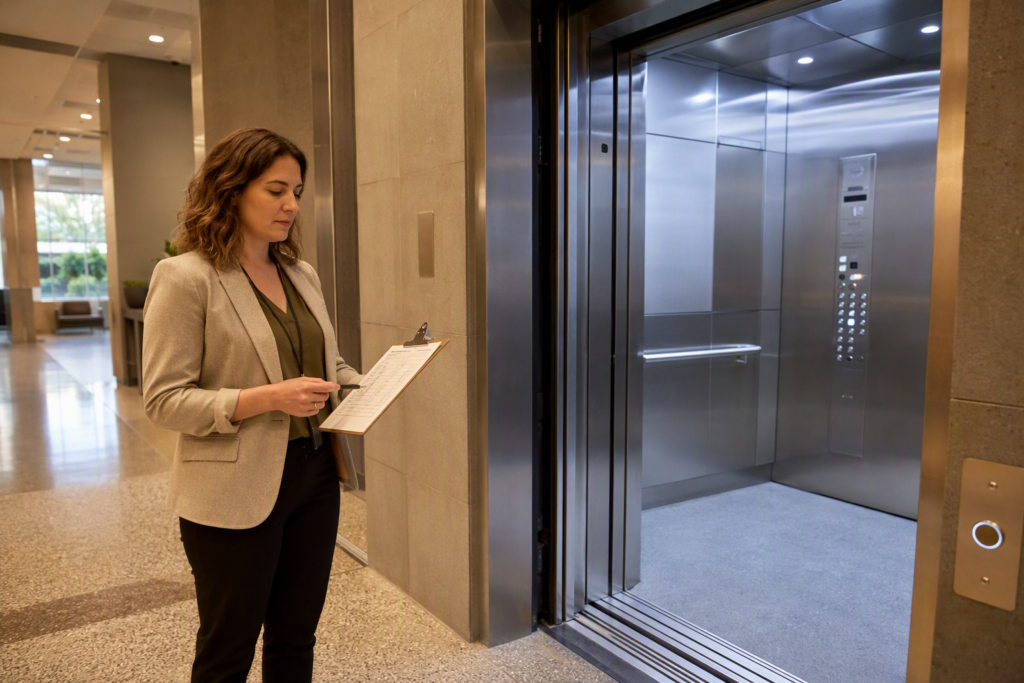
- Arrange re-inspection. After repairs are completed, schedule an inspection with the ICA Elevator Division or an authorized private inspector. Remember: a private inspector may not inspect equipment owned, operated, or last serviced by their own company or employer.
- Obtain and post the renewed certificate. Once the certificate is issued, post the state serial number or the certificate in or close to the conveyance in an easily accessible location as required by Arizona Administrative Code.
- Report any injury or disablement within 24 hours. If a deficiency caused or contributed to an accident that injured a person or disabled the conveyance, Arizona law requires the owner to notify the state within 24 hours.
How Does ASME A17.1-2019 Define Deficiency Categories?
The ASME A17.1 Safety Code for Elevators and Escalators is the primary technical standard adopted by Arizona for equipment installed, repaired, or altered on or after January 1, 2023. The code establishes detailed requirements for safety devices, doors and gates, hoistway construction, machine rooms, control systems, and accessibility features. When an inspected component does not meet a code requirement, the inspector documents it as a deficiency referencing the applicable code section.
For existing installations predating the 2019 edition, ASME A17.3 (the Safety Code for Existing Elevators and Escalators) governs retroactive requirements. Partial modernizations can trigger A17.3 retrofit obligations on connected subsystems — a key reason owners should conduct a comprehensive scope review before committing to piecemeal repairs.
What Are the Most Common Elevator Deficiencies in Arizona Buildings?
While every inspection is unique, the categories of deficiencies that consistently appear on Arizona inspection reports include:
- Door and gate system failures: Worn reopening devices, damaged car door gibs, or failing door operators are among the most frequently cited issues.
- Safety circuit and governor deficiencies: Overspeed governors and safety devices require periodic testing; documentation gaps or test failures generate citations.
- Hydraulic system issues: Aging hydraulic cylinders, leaking oil, or low relief valve settings create safety and environmental concerns.
- Control system obsolescence: Relay-logic control panels on older equipment may no longer support code-required features such as emergency lighting or firefighters’ emergency operation.
- Firefighters’ Emergency Operation (FEO): Arizona conveyances with FEO must use the Arizona Firefighters Service (AZFS) key. Non-conforming key switches are a common deficiency.
- Accessibility and signage gaps: Missing or non-compliant braille, button height, or landing signage may trigger both ASME and ADA deficiencies.
- Machine room conditions: Inadequate lighting, improper storage, or temperature extremes in machine rooms violate code requirements.
- Platform lift and stairway chairlift compliance: For units installed, repaired, or altered on or after January 1, 2023, compliance with ASME A18.1-2020 is required; older units on legacy provisions are subject to scrutiny.
How Does an Elevator Deficiency Affect ADA Compliance?
An elevator deficiency that results in unit shutdown can create an immediate ADA accessibility gap in any multi-story facility required to provide accessible vertical access. The ADA does not override state elevator safety law — a unit that is unsafe cannot remain in service solely to satisfy accessibility obligations — but owners must have a documented plan for accessible-route continuity during any shutdown period. Decommissioning a unit permanently requires a careful ADA analysis before proceeding, particularly in public accommodations and commercial facilities.
What Is the Role of a Private Elevator Inspector in Resolving Deficiencies?
Arizona owners may engage a private elevator inspector authorized by the Industrial Commission of Arizona to perform both initial and annual inspections. Private inspectors must register with the commission annually and demonstrate at least eight hours of approved continuing education per registration period. However, several key conflict-of-interest restrictions apply: a private inspector may not inspect any conveyance owned, operated, or last serviced by the inspector personally, a company the inspector owns, or the inspector’s employer. Engaging a private inspector does not relieve the owner or operator of any legal obligations under Arizona law.
Repair vs. Modernize: Decision Framework by Equipment Age and Deficiency Count
| Scenario | Recommended Path | Rationale |
|---|---|---|
| 1–2 isolated deficiencies, equipment under 15 years old | Targeted repair | Equipment is modern; deficiencies are likely component-level, not systemic |
| 3–5 deficiencies across multiple subsystems, equipment 15–25 years old | Partial or full modernization assessment | Multiple subsystem failures suggest systemic aging; repair cost may approach modernization cost over a short cycle |
| Deficiencies in safety-critical systems (governor, safety, hydraulic cylinder), equipment over 25 years old | Full modernization or replacement | Safety-critical failures on aged equipment carry compounding liability; long-term repair costs are unpredictable |
| Imminent hazard classification, unit shut down | Emergency repair with full scope assessment | Restore safe operation immediately; use the forced downtime to evaluate broader modernization ROI |
| Building undergoing major renovation or change of use | Full modernization with ADA and code alignment | Renovation often triggers alteration notifications; align elevator upgrades with broader construction schedule |
What Should Be Included in an Elevator Deficiency Remediation Proposal?
A credible remediation proposal from a licensed elevator contractor should include:
- A line-by-line response to each inspection report finding, referencing the applicable ASME code section
- Scope definition distinguishing repair (component replacement in kind) from alteration (which requires advance state notification)
- A clear statement of which ASME edition — A17.1-2019 for post-January 1, 2023 work, or A17.3 for retroactive requirements — governs each work item
- Timeline from notice-to-proceed through re-inspection and certificate reinstatement
- Identification of the R-12 or C-12 licensed contractor of record
- Documentation plan for the re-inspection process, including coordination with the ICA Elevator Division or a registered private inspector
Arizona Elevator Solutions provides deficiency remediation proposals structured to address each inspection finding individually, ensuring that the re-inspection process moves efficiently toward certificate reinstatement.
How Long Does It Take to Resolve an Elevator Deficiency in Arizona?
Resolution timelines depend on deficiency severity, parts availability, and whether the work constitutes an alteration requiring advance state notification. Isolated component repairs may be completed within days. Partial modernizations affecting control systems, door operators, or hydraulic cylinders typically take weeks. Full modernizations involving hoistway equipment or machine room upgrades can extend to several months, particularly when the required 90-day advance notification to the ICA Elevator Division must precede work commencement. Imminent hazard deficiencies require immediate shutdown and should be treated as emergency remediation with the fastest available contractor response.
Does Resolving a Deficiency Always Require an Alteration Permit?
Not always. Replacing a component in kind — same specification, same function — is generally classified as a repair, not an alteration, and may not trigger the 90-day advance notification requirement. However, changing a component type, upgrading a subsystem to a different technology, or modifying the hoistway or machine room typically constitutes an alteration under Arizona Administrative Code R20-5-502 through R20-5-515 and requires advance notice to the state. Owners should confirm the classification of their planned work with their licensed contractor and, when in doubt, submit notification early — the 90-day requirement is based on when work begins, not when the permit is approved.
Why Choose Arizona Elevator Solutions for Elevator Deficiency Remediation?
Arizona Elevator Solutions is an independent, Arizona-based elevator service company operating under the applicable R-12/C-12 contractor licensing framework. As an independent provider, the company is not tied to a single equipment manufacturer, which allows scope recommendations to be based on code compliance and building-owner objectives rather than product line incentives. Arizona Elevator Solutions serves building owners, property managers, and facilities teams across Arizona with deficiency assessments, repair, modernization planning, and coordination through the re-inspection and certificate reinstatement process — covering both ICA Elevator Division-regulated properties statewide and City of Phoenix-regulated properties within city limits.
Quick-Reference: Arizona Elevator Deficiency Compliance Checklist
| Action Item | Governing Authority | Timing |
|---|---|---|
| Obtain annual certificate of inspection | ICA Elevator Division / City of Phoenix Elevator Section | Annually; before operation |
| Post state serial number or certificate near conveyance | A.R.S. § 23-491 et seq.; AZ Admin Code R20-5 | Continuously |
| Notify state before installation, relocation, or alteration | ICA Elevator Division | At least 90 days before work begins |
| Report accident or disablement | ICA Elevator Division | Within 24 hours |
| Confirm AZFS key compliance for FEO-equipped units | Arizona Administrative Code | At each inspection |
| Verify contractor holds R-12 or C-12 ROC license | Arizona Registrar of Contractors | Before authorizing repair or alteration |
| Confirm platform lifts/chairlifts installed after Jan 1, 2023 meet ASME A18.1-2020 | ASME A18.1-2020 | At installation and post-alteration inspection |
| Address ADA accessible-route continuity during shutdown | ADA | Immediately upon unit shutdown |
Contact Arizona Elevator Solutions for a free elevator assessment at 480-557-7600.
Need elevator service you can rely on? Arizona Elevator Solutions is ready to help.