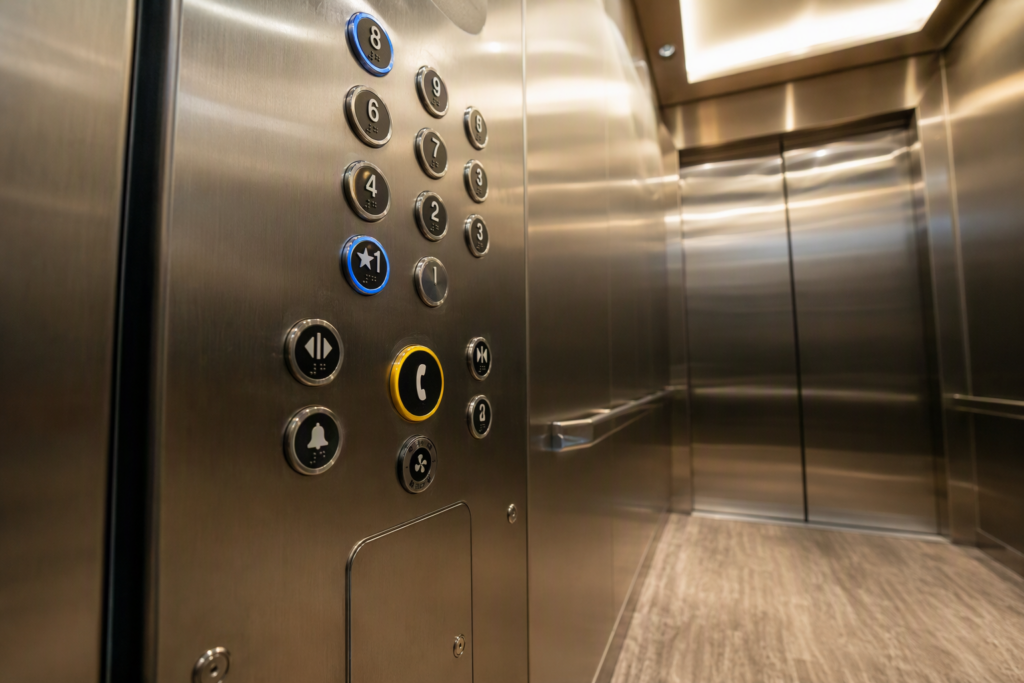
What Causes Elevator Breakdowns in Commercial Buildings and How to Reduce How Often Your Elevator Goes Out of Service
Direct Answer: The leading causes of commercial elevator breakdowns are deferred maintenance, aging mechanical and electrical components, and door system failures — all of which can be significantly reduced through documented preventive maintenance programs, timely modernization of worn parts, and compliance with annual inspection requirements under Arizona law.
Elevator downtime is more than an inconvenience. In a commercial building, an out-of-service elevator can trigger ADA compliance concerns, disrupt tenant operations, expose building owners to liability, and erode property value. Understanding what drives breakdowns — and what Arizona law requires owners to do about them — is the first step toward a more reliable vertical transportation system.
Arizona Elevator Solutions works with commercial building owners and property managers across Arizona to identify risk factors before they become service calls, using data-informed maintenance strategies aligned with current state and federal requirements.
—
What Are the Most Common Causes of Elevator Breakdowns in Commercial Buildings?
Elevator failures in commercial settings typically cluster around a handful of recurring mechanical, electrical, and operational failure modes. Understanding each category helps building managers prioritize corrective action.
1. Door System Failures
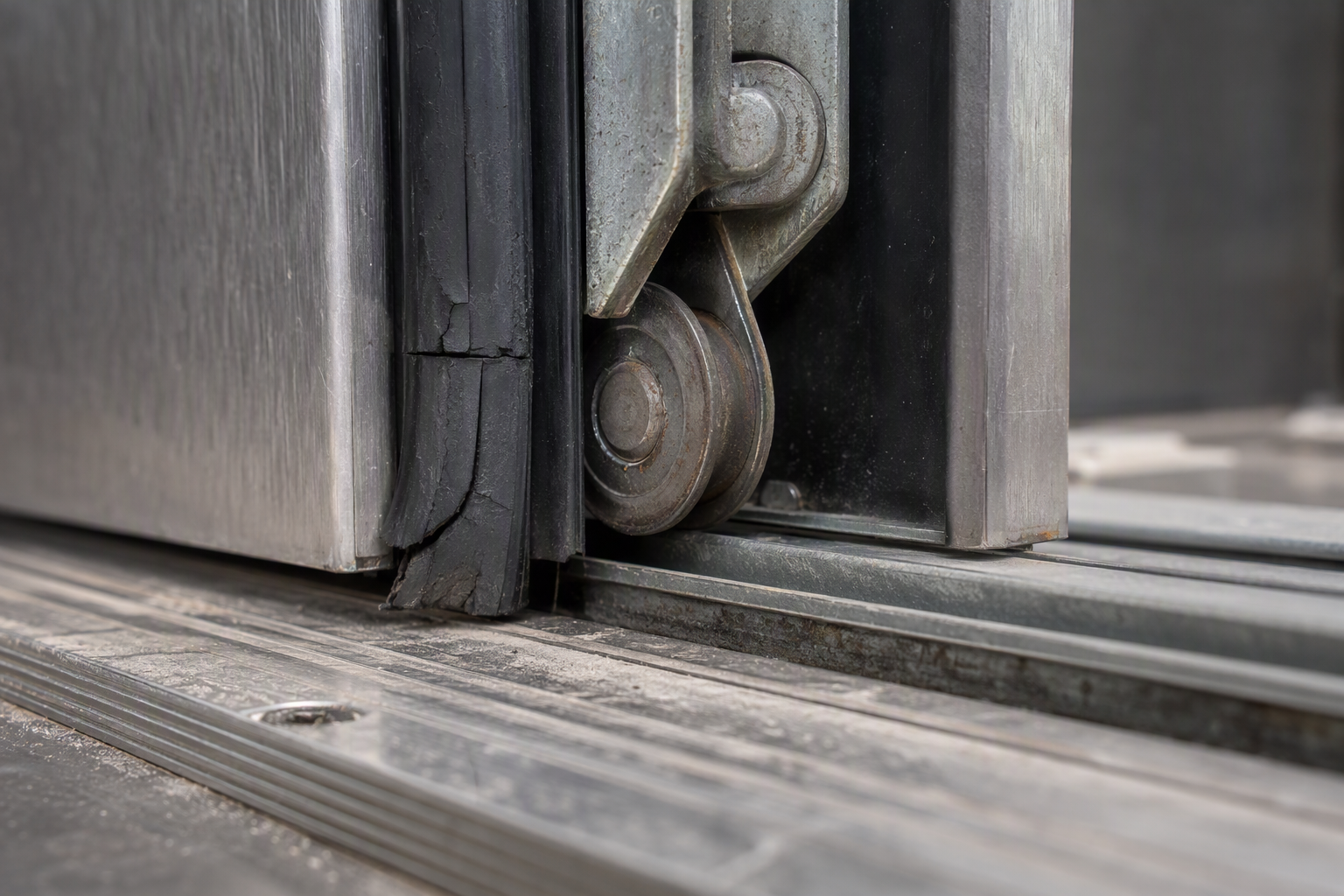
Door malfunctions are consistently cited across the elevator service industry as the single most frequent cause of elevator downtime. Door operators, rollers, gibs, and safety edges wear with every cycle. In high-traffic commercial buildings, an elevator may open and close its doors hundreds of times per day. Over time, door components fall out of alignment or wear to the point where safety sensors refuse to allow the cab to move — a deliberate safety feature that becomes a reliability problem when maintenance is deferred.
2. Deferred and Inadequate Preventive Maintenance
Elevators that are serviced on an irregular schedule or under stripped-down maintenance contracts accumulate small deficiencies that compound into major failures. Lubrication intervals get missed. Minor adjustments that would take minutes to make during a scheduled visit instead become emergency calls after the unit shuts down. Industry practitioners widely recognize deferred maintenance as the primary controllable driver of elevator downtime.
3. Aging Electrical and Control System Components
Older relay-logic and early microprocessor control systems become increasingly failure-prone as components age, spare parts become scarce, and software updates are no longer supported by the original manufacturer. Power quality issues — voltage spikes, harmonics, and ground faults — can corrupt controller logic or damage drive electronics. Commercial buildings with elevators that have not been modernized in twenty or more years are especially vulnerable to control-related outages.
4. Hydraulic System Issues (Hydraulic Elevators)
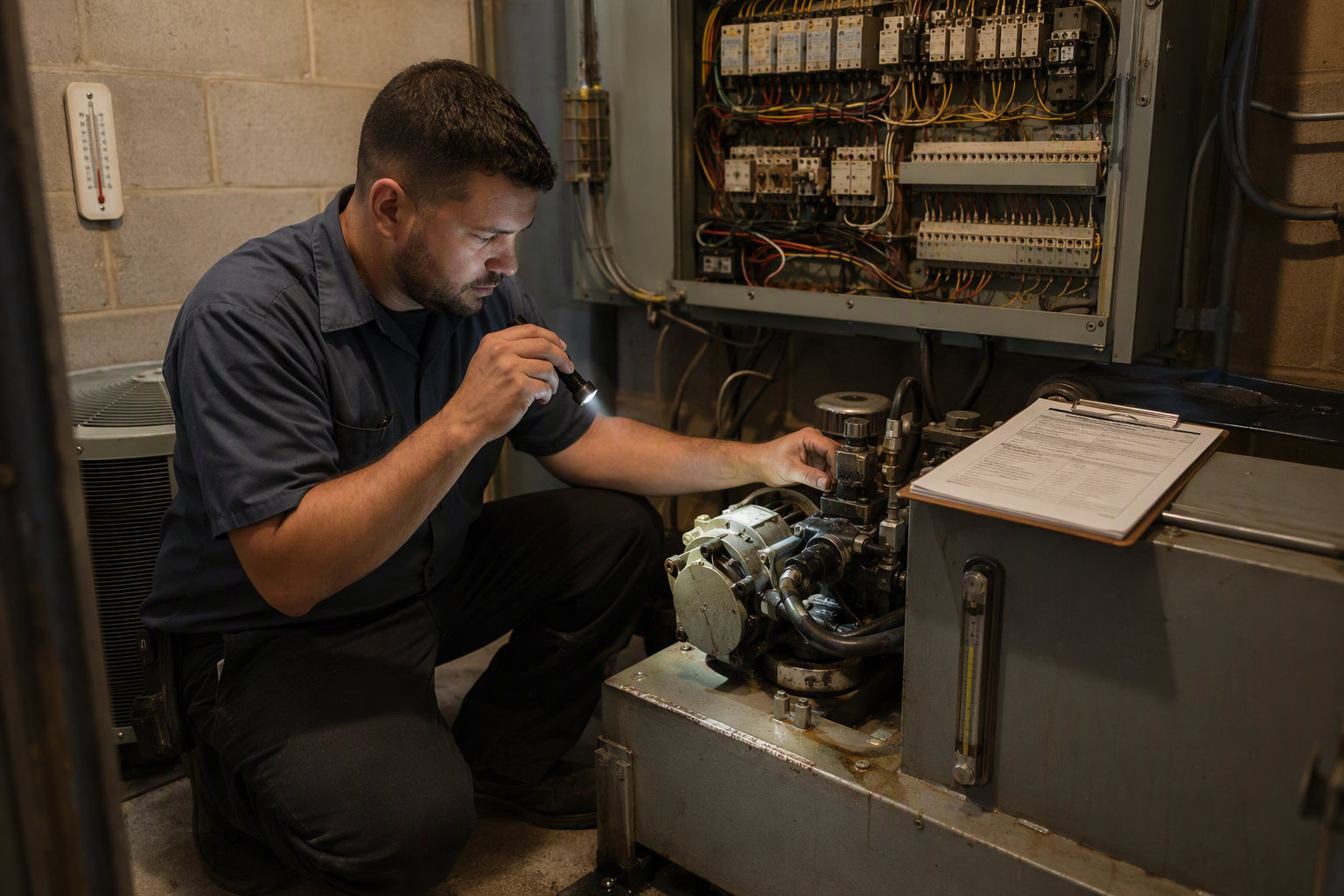
Hydraulic elevators are common in low-rise commercial buildings throughout Arizona. They are susceptible to fluid leaks from deteriorating seals and cylinders, contamination of hydraulic fluid, and pump and valve wear. Fluid viscosity is also sensitive to temperature, which in Arizona’s climate can be a meaningful factor during summer months when mechanical rooms are not climate-controlled.
5. Worn or Damaged Ropes and Sheaves (Traction Elevators)
Traction elevator hoist ropes and compensation ropes wear over time and must be inspected for broken wires, corrosion, and proper tension. Sheave groove wear changes rope contact geometry, accelerating rope deterioration and reducing braking reliability. These are safety-critical components governed by the ASME A17.1 Safety Code for Elevators and Escalators, which establishes inspection and replacement criteria.
6. Safety Device Nuisance Trips
Modern elevators are equipped with numerous safety devices — governors, safeties, buffers, leveling sensors, and pit switches — designed to halt operation when an unsafe condition is detected. When these devices are out of calibration, dirty, or experiencing intermittent electrical faults, they can trigger shutdowns under normal operating conditions. These “nuisance trips” are a leading source of callbacks and are largely preventable through thorough routine maintenance.
7. Environmental and Vandalism Factors
In commercial and multi-tenant buildings, environmental factors such as construction dust, water intrusion into the pit, and high ambient temperatures in unsecured machine rooms accelerate component wear. Vandalism — particularly to cab interior components, push buttons, and door equipment — is an operational reality in some building types and adds to maintenance burden.
—
What Does Arizona Law Require for Elevator Inspections and Maintenance?
Arizona building owners operate under a defined regulatory framework. As of September 12, 2026, elevator safety in Arizona is administered by the Industrial Commission of Arizona (ICA), Elevator Division — formerly called the ADOSH Elevator Safety Section. The governing statute is A.R.S. §§ 23-491 through 23-491.16, as amended by Laws 2026, Ch. 73.
Arizona’s administrative rules are found in Arizona Administrative Code R20-5-502 through R20-5-515. Equipment installed, repaired, or altered on or after January 1, 2023 must comply with ASME A17.1/CSA B44, 2019 edition. For platform lifts and stairway chairlifts in that same category, ASME A18.1-2020 applies.
Key owner obligations under Arizona law include:
- Each conveyance must be inspected before it first goes into service, after any modification or alteration, and annually thereafter.
- No conveyance may operate in Arizona without an annual certificate of inspection issued by the state.
- The owner must keep the state certificate at the same location as the conveyance and make it available on request.
- The state serial number or certificate must be posted in or close to the conveyance in an easily accessible location.
- Arizona owners must notify the ICA Elevator Division at least 90 days before installing, relocating, or altering a conveyance.
- Any accident that injures a person or disables a conveyance must be reported to the state within 24 hours.
- Conveyances with firefighters’ emergency operation must use the Arizona Firefighters Service (AZFS) key.
Within the City of Phoenix, the City of Phoenix Elevator Section (Planning and Development Department) handles inspections for elevators, escalators, moving walks, dumbwaiters, and chair lifts. The state ICA Elevator Division handles equipment outside Phoenix city limits.
Arizona owners may hire a private elevator inspector authorized by the ICA, but doing so does not relieve the owner of their legal obligations. Private inspectors must register with the commission annually and complete at least eight hours of approved continuing education. An inspector may not inspect a conveyance they own, operate, or last serviced.
Contractors performing elevator installation and repair work in Arizona must hold an R-12 or C-12 license classification from the Arizona Registrar of Contractors.
—
How Does the ASME A17.1 Safety Code Affect Breakdown Prevention?
The ASME A17.1 Safety Code for Elevators and Escalators is the technical backbone of elevator safety in Arizona and across North America. It establishes minimum requirements for design, construction, installation, maintenance, inspection, testing, and repair of elevators and related equipment.
From a reliability standpoint, ASME A17.1 matters because it sets the floor for what a compliant maintenance program must address. When equipment is maintained to code minimum and regularly inspected, safety device nuisance trips and major mechanical failures are substantially less likely. When maintenance falls below code standards, the risk of both regulatory citations and unplanned downtime increases.
The 2019 edition adopted in Arizona includes detailed provisions on periodic tests, maintenance records, and the qualifications required for those performing maintenance work. Building owners should confirm that their maintenance provider documents work in a manner consistent with these requirements.
—
What Is the ADA’s Role in Elevator Reliability for Commercial Buildings?
Under the Americans with Disabilities Act (ADA), elevators in most multi-story commercial buildings are required elements of an accessible path of travel. When an elevator is out of service, building owners may face questions about whether they are meeting their ongoing obligation to provide accessible facilities to people with disabilities.
The ADA does not specify maintenance intervals, but the practical consequence of elevator downtime is clear: a broken elevator in a building where no accessible alternative exists can create an immediate accessibility barrier. This gives building owners an additional, non-regulatory reason to treat elevator reliability as a compliance issue, not merely an operational one.
—
What Are the Warning Signs That an Elevator Is About to Go Out of Service?
Experienced elevator technicians recognize a consistent set of early indicators that a unit is trending toward a breakdown. Building managers who know what to look and listen for can report these signs to their service provider before a shutdown occurs:
- Unusual noises: Grinding, squealing, or banging sounds during travel or at the door can indicate worn components requiring attention.
- Slow or hesitant door operation: Doors that pause, reopen unnecessarily, or take noticeably longer to close signal wear in door operator or safety edge systems.
- Rough or uneven ride: Vibration, jerking at starts and stops, or inconsistent leveling at floors can point to guide rail, roller guide, or drive system issues.
- Erratic floor-leveling: A cab that stops several inches above or below the floor threshold is a safety risk and an early mechanical warning sign.
- Increased callback frequency: A rise in the number of service calls, even for minor resets, often indicates an underlying issue the maintenance provider should investigate systematically.
- Slow response or intermittent operation: Elevator dispatching that becomes inconsistent may reflect a degrading control system or communication wiring issue.
—
What Should a Commercial Building Owner Do Immediately After an Elevator Goes Out of Service?
- Ensure no one is trapped. Before anything else, verify that the cab is not occupied. If someone is trapped, contact your elevator service provider’s emergency line and, if needed, local emergency services. Do not attempt to force doors open without trained personnel.
- Post clear out-of-service signage. Place visible signage at all landings to direct building users to alternative accessible routes.
- Contact your licensed elevator maintenance contractor. Report the outage with as much detail as possible — any sounds, error codes displayed, or unusual behavior observed before shutdown.
- Check your reporting obligations. If the shutdown resulted from an accident that injured a person or disabled the conveyance, Arizona law requires you to notify the ICA Elevator Division within 24 hours.
- Document everything. Record the time of outage, any reported symptoms, and all communications with your service contractor. This documentation supports both maintenance recordkeeping and regulatory compliance.
- Verify your certificate of inspection is current and posted. A lapsed certificate compounds your regulatory exposure while the unit is out of service.
- Assess whether an accessibility accommodation is needed. If tenants or visitors with mobility limitations cannot access building areas, consult with building management about interim accommodations consistent with ADA obligations.
—
How Can Building Owners Reduce How Often Their Elevator Goes Out of Service?
Reducing elevator downtime in commercial buildings is achievable through a combination of proactive maintenance, strategic modernization, and owner engagement. The following approaches are grounded in accepted industry practice:
Establish a Documented Preventive Maintenance Program
A comprehensive maintenance contract — one that specifies what is lubricated, adjusted, tested, and inspected at each visit, and by whom — is the single most effective tool for reducing downtime. Owners should request maintenance logs after each visit and review callback frequency as a performance metric.
Prioritize Door System Maintenance
Given that door system failures are among the most frequent drivers of downtime, routine door adjustment, roller and hanger replacement, and safety edge testing deserve priority attention in every maintenance program.
Plan for Modernization Before Failure Forces It
Aging control systems, outdated hydraulic cylinders, and worn rope systems do not fail on a predictable schedule. Proactive modernization — replacing components based on condition and age rather than waiting for failure — is far less costly than emergency replacement and eliminates extended downtime periods. Arizona Elevator Solutions helps building owners assess modernization needs based on equipment condition, not generic timelines.
Maintain Environmental Controls in Machine Rooms
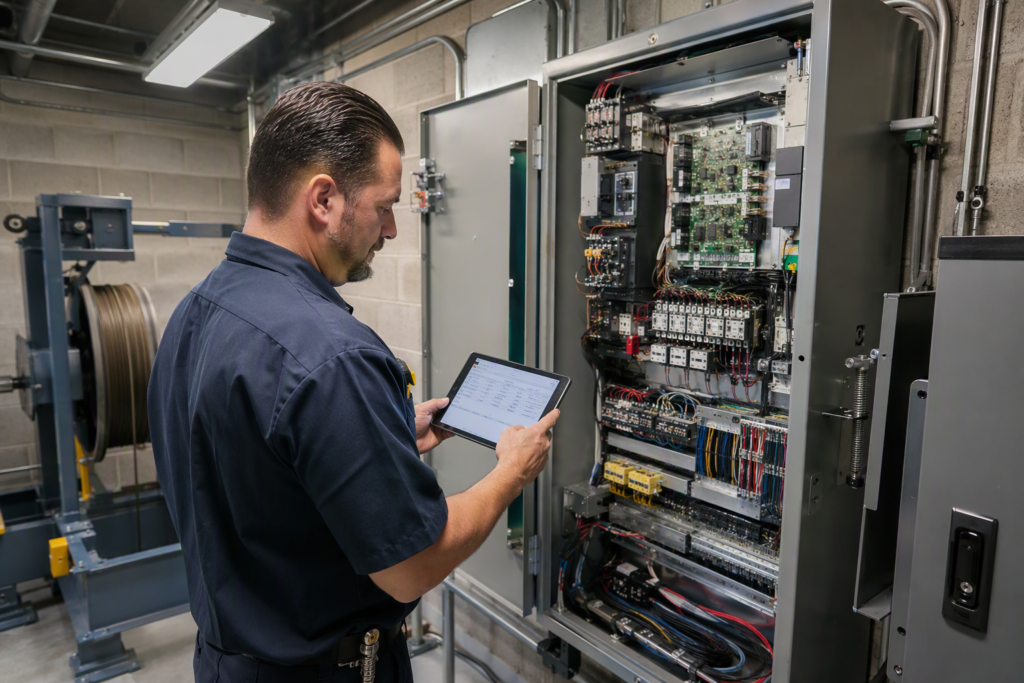
In Arizona’s climate, machine room temperature control is not optional. Sustained heat in an unventilated machine room accelerates insulation breakdown, lubricant degradation, and electronic component failure. Ensuring machine rooms are clean, ventilated, and within the manufacturer’s recommended temperature range is a low-cost intervention with meaningful reliability benefits.
Keep Inspections and Certificates Current
Annual inspections under Arizona law are not only a legal requirement — they are also an opportunity for an independent technical review of the unit’s condition. Lapses in inspection currency are a red flag that often correlate with deferred maintenance in other areas.
—
What Role Does Modernization Play in Preventing Elevator Breakdowns?
Elevator modernization refers to the replacement or upgrade of major system components — typically controls, door operators, drives, or cab interiors — without replacing the entire elevator. For aging commercial elevators, modernization is often the most cost-effective path to improved reliability, energy efficiency, and code compliance.
In Arizona, any modernization or alteration triggers the requirement to notify the ICA Elevator Division at least 90 days in advance and to bring altered components into compliance with ASME A17.1-2019. This regulatory checkpoint is also an opportunity to upgrade related systems and address known deficiencies under a single project.
Arizona Elevator Solutions advises building owners on whether modernization or continued reactive maintenance represents better long-term value, based on equipment condition assessments rather than assumptions.
—
What Are the 2025–2026 Industry Trends Affecting Commercial Elevator Reliability?
Several trends are shaping how commercial elevator maintenance and reliability are approached heading into 2026:
Remote monitoring and predictive maintenance: Elevator monitoring systems that transmit operational data in real time are increasingly common in new installations and as retrofit solutions on existing equipment. These systems can flag anomalous patterns — door cycle times, leveling deviations, motor current draw — before they produce a failure. The shift from reactive to predictive maintenance models is one of the more significant operational changes in the commercial elevator space.
Parts availability for legacy systems: Supply chain constraints have made sourcing components for older relay-logic and early microprocessor control systems more challenging. Building owners with aging equipment are increasingly finding that modernization timelines are driven by parts availability as much as by condition.
Code adoption cycles: Arizona adopted the 2019 edition of ASME A17.1 effective January 9, 2023. The industry is actively tracking the development of subsequent code editions, and building owners should understand that future alterations or installations may be subject to updated requirements.
Owner accountability: Regulatory frameworks across the industry are placing increasing emphasis on owner responsibility for documentation, inspection currency, and timely incident reporting — trends well-reflected in Arizona’s current statutory framework under A.R.S. §§ 23-491 through 23-491.16.
—
How Do I Know If My Elevator Maintenance Contract Is Adequate?
Not all elevator maintenance contracts provide the same level of service. Commercial building owners should evaluate their current agreement against the following considerations:
- Scope of coverage: Does the contract specify which components are included in routine maintenance, or does it use broad language that allows the contractor to exclude common failure points?
- Visit frequency and documentation: How often does a technician physically inspect the unit, and is written documentation provided after each visit?
- Emergency response provisions: What does the contract commit to for after-hours breakdowns, including trapped passenger situations?
- Parts and labor coverage: Are major component replacements included, or are they billed separately at rates that may not be disclosed in the contract?
- Contractor licensing: Does the contractor hold the appropriate R-12 or C-12 license from the Arizona Registrar of Contractors?
Arizona Elevator Solutions performs maintenance contract reviews as part of elevator assessments, helping building owners understand what their current agreement actually delivers.
—
Does OSHA Have Requirements That Affect Commercial Elevator Safety?
The Occupational Safety and Health Administration (OSHA) has jurisdiction over elevator safety as it relates to worker safety — including construction personnel, elevator technicians, and building maintenance staff who work on or near elevator equipment. OSHA standards address lockout/tagout procedures for maintenance work, pit safety, and machine room access controls.
While OSHA’s elevator-specific requirements focus on worker protection rather than passenger reliability, compliance with OSHA standards during maintenance and repair work directly supports overall equipment reliability by ensuring that maintenance is performed safely and systematically.
—
What Sourced Data Is Available on Commercial Elevator Performance?
| Reference | Requirement / Standard | Source |
|---|---|---|
| Arizona inspection frequency | Annual inspection required; also required before first use and after any alteration | A.R.S. §§ 23-491 through 23-491.16 |
| Applicable technical code (AZ, post-Jan. 1, 2023) | ASME A17.1/CSA B44, 2019 edition | ASME Codes & Standards |
| Platform/stairway lifts (AZ, post-Jan. 1, 2023) | ASME A18.1-2020 | ASME Codes & Standards |
| Incident reporting deadline (AZ) | Within 24 hours of any accident injuring a person or disabling a conveyance | A.R.S. §§ 23-491 through 23-491.16 |
| Pre-installation notice requirement (AZ) | At least 90 days before installing, relocating, or altering a conveyance | A.R.S. §§ 23-491 through 23-491.16 |
| Private inspector continuing education (AZ) | At least 8 hours of approved continuing education per annual registration | A.R.S. §§ 23-491 through 23-491.16 |
| ADA accessibility obligations | Elevators required in most multi-story commercial buildings as part of accessible path of travel | ADA.gov |
Note: Industry-wide failure rate statistics vary significantly by equipment age, type, maintenance quality, and building use. Arizona Elevator Solutions does not cite unverifiable aggregate statistics; the table above reflects only regulatory facts attributable to confirmed authoritative sources.
—
How Can Arizona Elevator Solutions Help Reduce My Elevator’s Downtime?
Arizona Elevator Solutions provides commercial building owners and property managers across Arizona with maintenance programs, modernization planning, inspection coordination, and equipment assessments grounded in current Arizona regulatory requirements and ASME standards. The team works to identify the specific failure-risk profile of each elevator — accounting for equipment age, use intensity, maintenance history, and environmental conditions — rather than applying a generic service template.
Services are aligned with the requirements of the Industrial Commission of Arizona Elevator Division and with ASME A17.1 technical standards, supporting both compliance and operational reliability. Arizona Elevator Solutions operates exclusively within Arizona and holds the appropriate contractor licensing under the Arizona Registrar of Contractors’ R-12/C-12 classifications for elevator work.
—
Get a Free Elevator Assessment for Your Arizona Commercial Property
Elevator downtime is expensive, disruptive, and largely preventable. Understanding the specific condition and compliance status of your equipment is the first step toward reducing unplanned outages and meeting Arizona’s annual inspection requirements under A.R.S. §§ 23-491 through 23-491.16.
Contact Arizona Elevator Solutions for a free elevator assessment. Call 480-557-7600 to speak with the Arizona Elevator Solutions team about your building’s elevator reliability, compliance status, and maintenance program.
Need elevator service you can rely on? Arizona Elevator Solutions is ready to help.