ADA Compliance Upgrades for Healthcare Elevators in Phoenix, AZ
Hospitals, outpatient clinics, surgery centers, and medical office buildings in Phoenix face a uniquely demanding compliance environment. Patient safety, staff efficiency, and legal liability all depend on elevators that meet federal accessibility law and Arizona’s current elevator safety code. For healthcare administrators and facility managers searching for ADA compliance upgrades in Phoenix, understanding exactly what the law requires — and who enforces it — is the essential first step.
Arizona Elevator Solutions works with healthcare facility managers across Phoenix, Scottsdale, Mesa, and Tucson to close compliance gaps before they become citations, injuries, or costly emergency retrofits.
What ADA Requirements Apply to Healthcare Elevators in Phoenix?
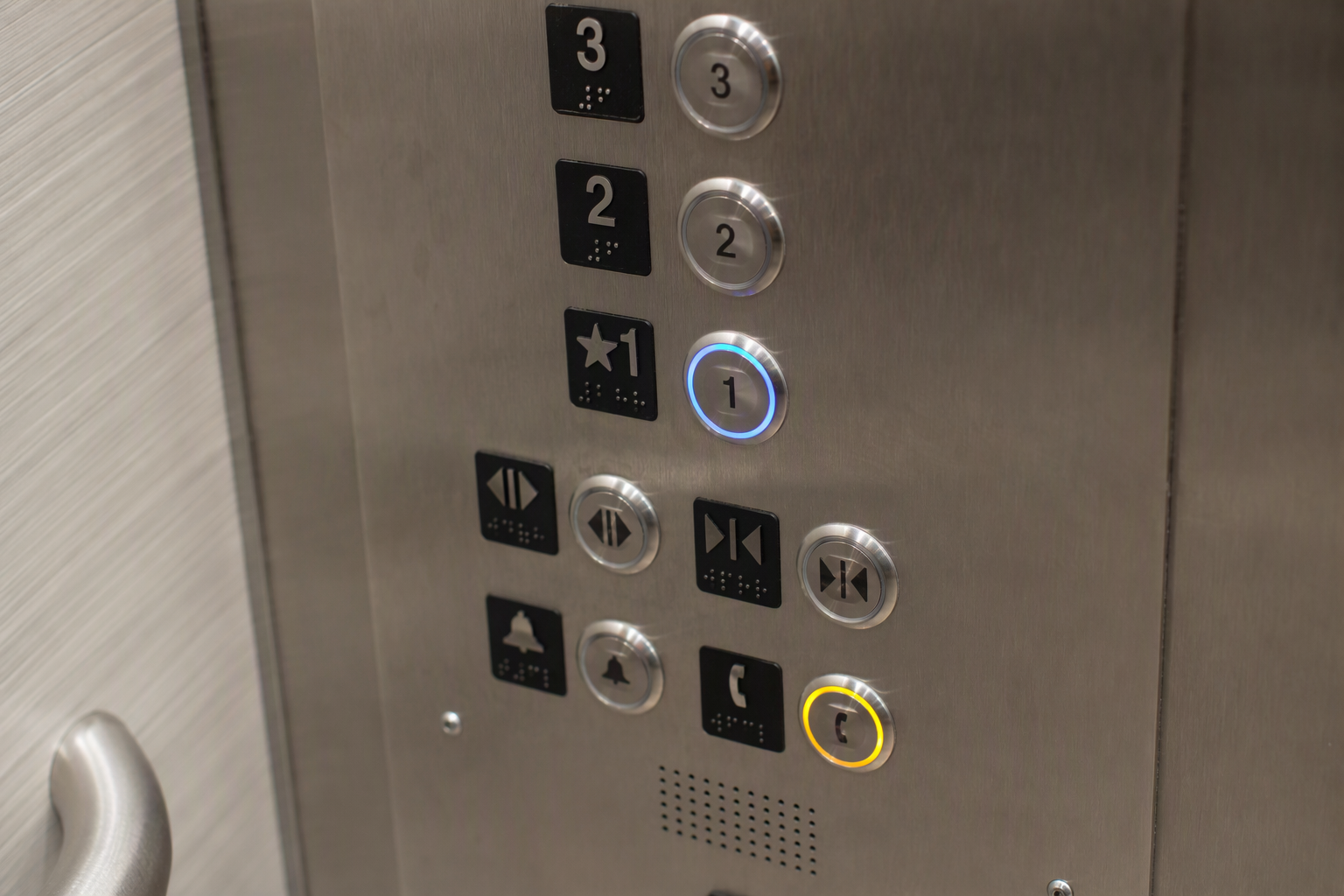
The Americans with Disabilities Act (ADA) requires that elevators in healthcare facilities serving the public be accessible to individuals with disabilities. For elevator equipment, the ADA Standards for Accessible Design specify requirements that include, but are not limited to:
- Door clear width: A minimum clear opening width that accommodates wheelchairs and mobility devices — critical in healthcare settings where hospital beds and stretcher transport also occur.
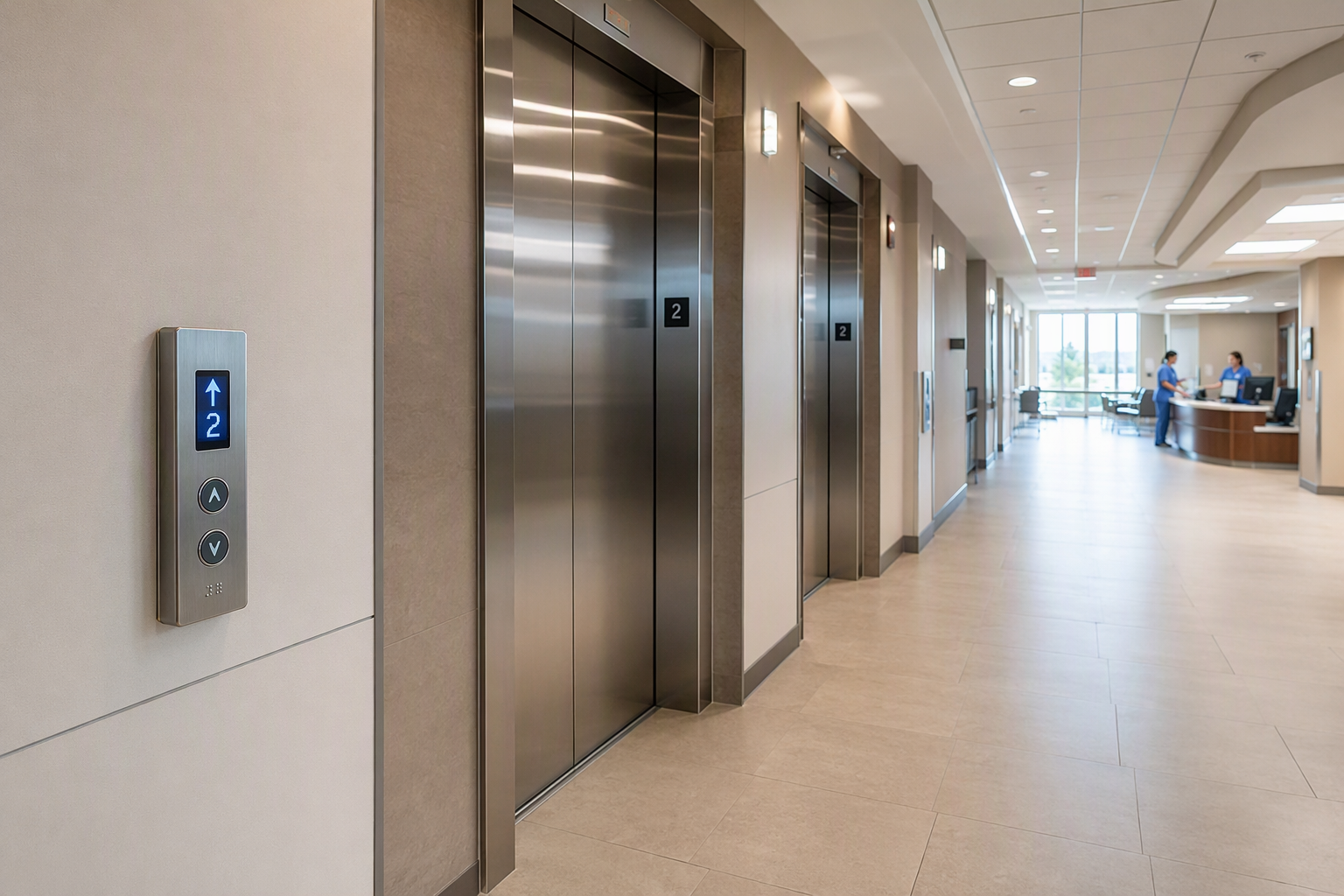
- Call button height and operation: Call buttons must be reachable from a wheelchair and operable without tight grasping, pinching, or twisting.
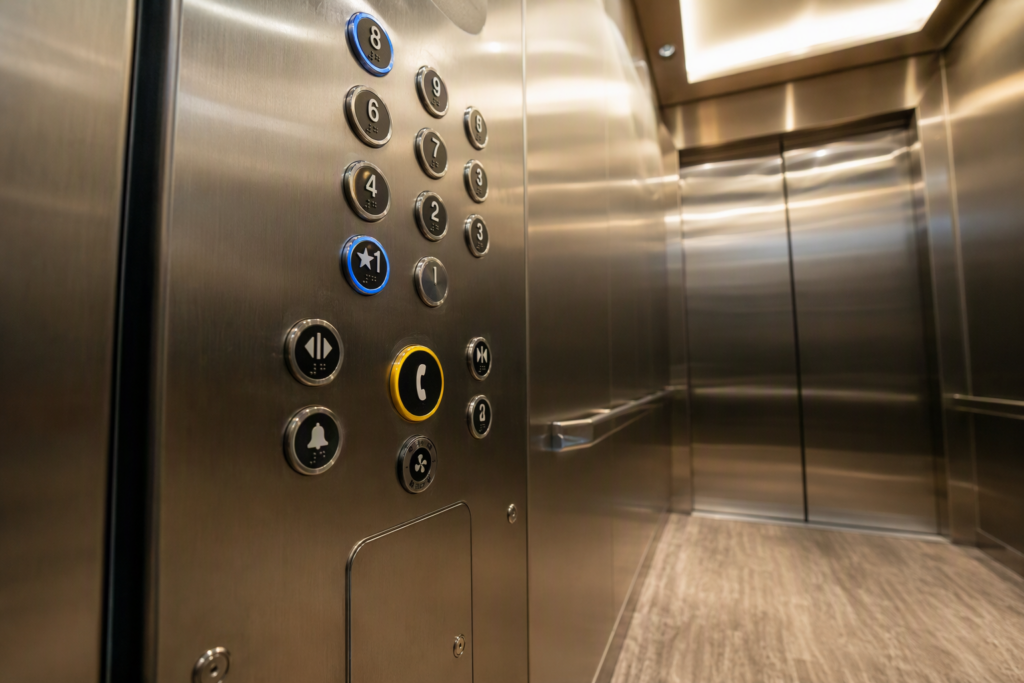
- Car controls: Control panels must be positioned within accessible reach ranges, with raised characters and Braille designations for each floor and function.
- Audible and visual signals: Both audible tones and visible indicators are required at hoistway entrances to signal car arrival and direction of travel.
- Floor designation: Raised characters and Braille must appear on both jambs of each hoistway entrance at a consistent mounting height.
- Two-way emergency communication: An accessible two-way communication system must be provided inside the car for passengers who cannot use a standard handset.
- Floor surfaces and leveling: The elevator must level accurately with the floor to prevent a tripping hazard for patients using walkers, canes, or wheelchairs.
In a healthcare context, these requirements carry heightened urgency. A patient arriving for dialysis or a visitor navigating an ICU floor cannot tolerate inaccessible controls, delayed doors, or an unlevel cab floor. Non-compliance also exposes the facility to ADA Title III complaints and potential federal civil rights liability.
Which Arizona Code Governs Elevator Compliance in Phoenix Healthcare Facilities?
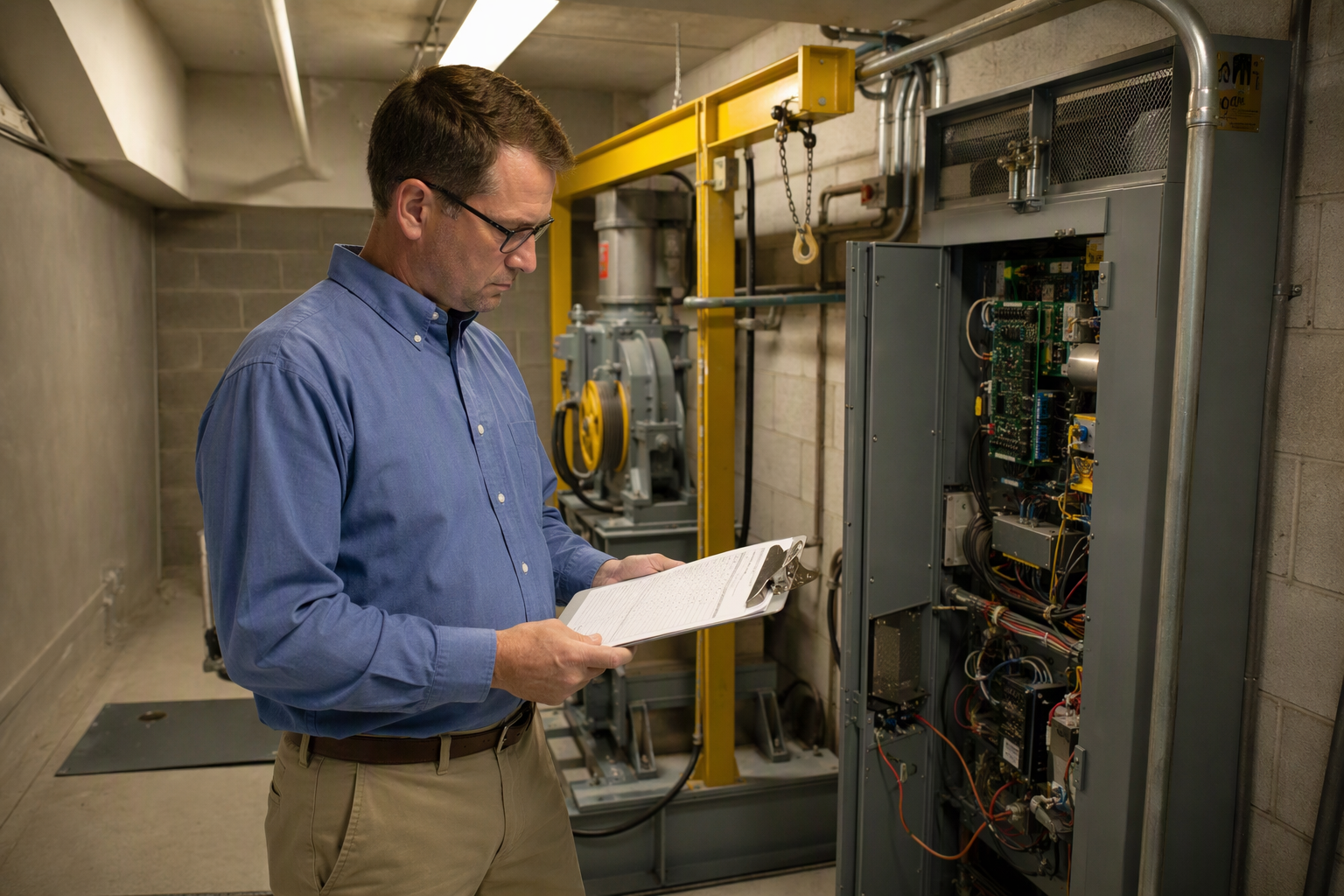
Arizona has adopted the ASME A17.1/CSA B44, 2019 edition for all equipment installed, repaired, or altered on or after January 1, 2023. This standard governs the design, construction, installation, operation, inspection, testing, maintenance, alteration, and repair of elevators and escalators statewide.
Oversight authority is divided as follows in 2026:
- Inside the City of Phoenix: The City of Phoenix Elevator Section (Planning and Development Department) inspects elevators, escalators, moving walks, dumbwaiters, and chairlifts.
- Outside Phoenix city limits: The Industrial Commission of Arizona (ICA), Elevator Division — formerly called the ADOSH Elevator Safety Section until September 12, 2026 — administers elevator safety under A.R.S. §§ 23-491 through 23-491.16 and Arizona Administrative Code R20-5-502 through R20-5-515.
For healthcare campuses that span multiple buildings or campus parcels in Scottsdale, Mesa, or Tucson, the ICA’s Elevator Division is typically the primary authority having jurisdiction (AHJ). Arizona Elevator Solutions coordinates directly with the appropriate AHJ to ensure every upgrade is inspected and certified correctly.
Does a Healthcare Facility in Phoenix Need an Annual Elevator Inspection?
Yes. Under Arizona law, every conveyance must be inspected before it first goes into service, after any modification or alteration, and annually thereafter. No conveyance may legally operate in Arizona without a current annual certificate of inspection issued by the state. The owner is required to keep that certificate at the same location as the conveyance and make it available on request. The state serial number or the certificate must also be posted in or close to the elevator in an easily accessible location.
For a busy hospital or outpatient surgery center running multiple elevators, tracking annual inspection windows across every car is a compliance burden that can fall through administrative cracks. Arizona Elevator Solutions helps healthcare clients build inspection schedules that account for all conveyances on a campus, so no certificate lapses.
What Is the Process for Completing ADA Compliance Upgrades on a Hospital Elevator?
- Schedule a compliance assessment. A qualified elevator contractor evaluates each car against current ADA Standards and ASME A17.1-2019 requirements, documenting every deficiency by car and floor.
- Prioritize findings by risk. Life-safety deficiencies — such as inoperative two-way communication or severely unlevel landings — are addressed before cosmetic or administrative items.
- Notify the state 90 days in advance. Arizona law requires owners to notify the ICA Elevator Division (or the City of Phoenix Elevator Section, if applicable) at least 90 days before installing, relocating, or altering a conveyance. Arizona Elevator Solutions manages this notification process on behalf of the facility.
- Execute the upgrade work. Upgrade components — control panels, Braille signage, two-way communication systems, leveling adjustments, door operators — are installed by a licensed elevator contractor holding the appropriate Arizona Registrar of Contractors R-12 or C-12 elevator license classification.
- Post-alteration inspection. After any modification or alteration, the conveyance must be inspected before it returns to service. An Arizona-authorized private elevator inspector may perform this inspection provided that inspector has no conflict of interest with the company that performed the work.
- Obtain and post the new certificate. Once the inspection passes, the facility updates its certificate records and confirms proper posting of the state serial number or certificate near the elevator.
- Document and retain records. Healthcare facilities subject to Joint Commission or CMS surveys should retain all compliance documentation in a readily accessible format for surveyors.
What Platform Lift Requirements Apply to Healthcare Facilities in Arizona?
Not every level-change solution in a medical facility involves a full elevator. Accessibility ramps are not always architecturally feasible in existing healthcare buildings, so platform lifts are sometimes used to bridge short vertical distances. Arizona platform lifts and stairway chairlifts installed, repaired, or altered on or after January 1, 2023 must comply with ASME A18.1-2020. Healthcare planners should confirm with their AHJ that a platform lift is an acceptable accessibility solution for the specific application before installation begins.
How Do Firefighters’ Emergency Operation Requirements Affect Healthcare Elevators?
Arizona conveyances equipped with firefighters’ emergency operation must use the Arizona Firefighters Service (AZFS) key. In healthcare buildings, where fire department access to upper floors can be a life-or-death matter, ensuring that elevator firefighters’ service is functional, properly keyed, and tested is both a code requirement and a patient-safety imperative. During an ADA compliance upgrade, Arizona Elevator Solutions reviews firefighters’ service functionality as part of a comprehensive car inspection.
What Happens if a Healthcare Elevator Is Involved in an Accident or Injury?
Arizona law requires the owner to notify the state within 24 hours of any accident that injures a person or disables a conveyance. For a healthcare facility, the calculus is especially serious: an injured patient or staff member creates simultaneous regulatory, liability, and patient-relations exposure. Maintaining elevators in continuous ADA and ASME code compliance — and keeping inspection certificates current — is the best risk-management strategy available.
Are Older Hospital Elevators Grandfathered Under Arizona Law?
Arizona law allows lawfully installed older conveyances to remain in use unless the ICA’s elevator chief determines that continued use constitutes a hazard to life, health, or property. However, grandfathering does not exempt a facility from ADA obligations, which are federal and apply independently of state code adoption dates. A hospital elevator that was code-compliant when installed in the 1990s may still require ADA upgrades to meet current accessibility standards. Arizona Elevator Solutions can assess which equipment qualifies for continued operation and which requires alteration or replacement.
How Long Do ADA Compliance Upgrades Typically Take for a Hospital Elevator?
Timeline depends on the scope and number of deficiencies identified during the assessment. Minor upgrades — Braille signage replacement, control panel repositioning, two-way communication system replacement — can often be completed in a planned maintenance window of a day or less per car. More substantial work, such as door operator replacement or cab interior reconfiguration, requires longer outages and advance coordination with clinical operations to ensure patient transport is not disrupted. The mandatory 90-day advance notification to the state AHJ for alterations should be factored into any upgrade project schedule from the outset.
What Should Healthcare Facility Managers Look for When Choosing an Elevator Compliance Contractor in Phoenix?
Healthcare facility managers should verify that any elevator contractor holds an active Arizona Registrar of Contractors R-12 or C-12 elevator license classification. They should also confirm that the contractor is familiar with both the ADA Standards for Accessible Design and ASME A17.1-2019 as adopted in Arizona, and that the contractor has experience navigating the City of Phoenix Elevator Section’s permitting process or the ICA’s notification requirements, depending on the facility’s location.
Arizona Elevator Solutions serves healthcare clients across Phoenix, Scottsdale, Mesa, and Tucson, and is familiar with the documentation and notification workflows required by both local and state authorities having jurisdiction.
Questions Your Inspector Will Ask
When an inspector from the City of Phoenix Elevator Section or the ICA Elevator Division arrives at a healthcare facility for an annual or post-alteration inspection, the following questions represent the core of their review. Facility managers and elevator contractors should be prepared to answer each one with documentation in hand.
- Is the current certificate of inspection posted in or near the elevator, and is the state serial number visible? Arizona law requires both.
- Has the owner or operator provided the required 90-day advance notice for any recent alteration? Inspectors will want to see confirmation of this notification if the scope of work included alterations.
- Are call buttons, control panels, and floor designations compliant with ADA reach range and tactile requirements? The inspector will measure heights and verify raised character and Braille placement.
- Is the two-way emergency communication system operational and accessible to a person who cannot use a standard handset? This is tested during the inspection, not just visually reviewed.
- Does the elevator level accurately with each floor, with no gap or lip that would impede wheelchair or stretcher access?
- Are audible and visible signals present and functional at each hoistway entrance?
- Is firefighters’ emergency service properly configured and keyed with an AZFS key?
- Is there a current maintenance contract, and are maintenance records available for review?
- Has any accident or injury occurred since the last inspection, and was the 24-hour notification to the state completed?
- For platform lifts: does the equipment comply with ASME A18.1-2020 if installed or altered on or after January 1, 2023?
Why Do Healthcare Facilities in Phoenix Choose Arizona Elevator Solutions?
Healthcare environments demand an elevator contractor who understands that downtime is not just an inconvenience — it can interrupt patient care. Arizona Elevator Solutions approaches healthcare compliance projects with a structured assessment process, transparent documentation, and coordination with the appropriate AHJ from day one. The team works across Phoenix, Scottsdale, Mesa, and Tucson, giving multi-campus health systems a single point of contact for compliance upgrades across Arizona.
Whether the goal is resolving a specific ADA deficiency identified in a Joint Commission survey, preparing for an upcoming annual inspection, or conducting a full portfolio assessment of all conveyances on a medical campus, Arizona Elevator Solutions provides the technical expertise and regulatory familiarity that healthcare facility managers need.
Get a Free Elevator Compliance Assessment for Your Healthcare Facility
Don’t wait for a citation, a patient injury, or a failed inspection to discover compliance gaps in your hospital or clinic elevators. Contact Arizona Elevator Solutions for a free elevator assessment and learn exactly where your facility stands against ADA requirements and Arizona’s adopted ASME A17.1-2019 standards.
Contact Arizona Elevator Solutions for a free elevator assessment: 480-557-7600
Serving healthcare facilities in Phoenix, Scottsdale, Mesa, Tucson, and communities throughout Arizona.
Need elevator service you can rely on? Arizona Elevator Solutions is ready to help.