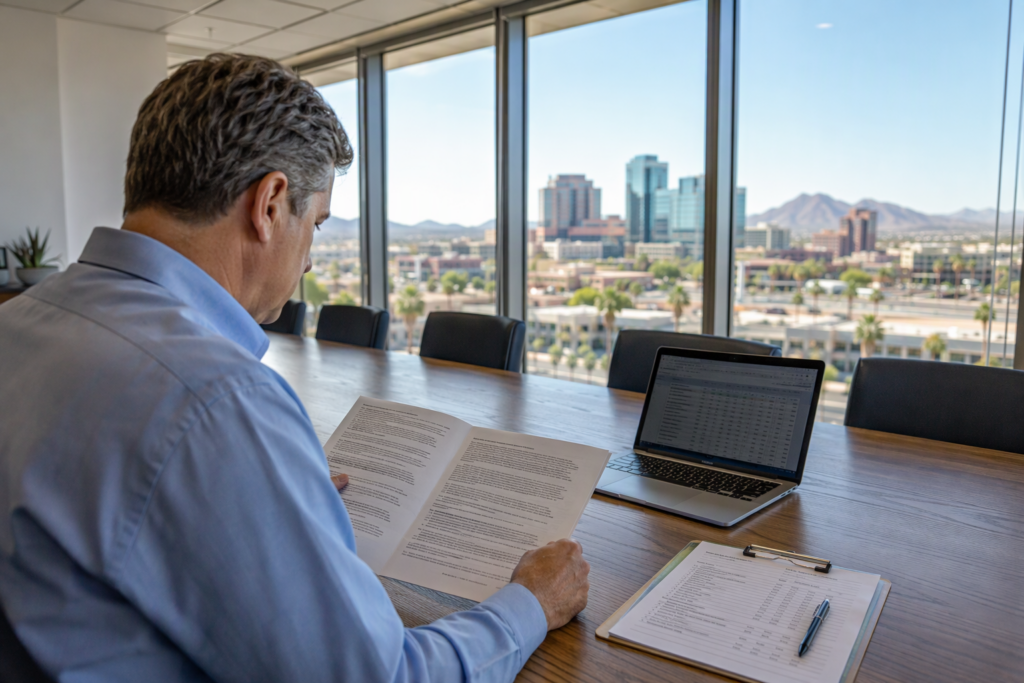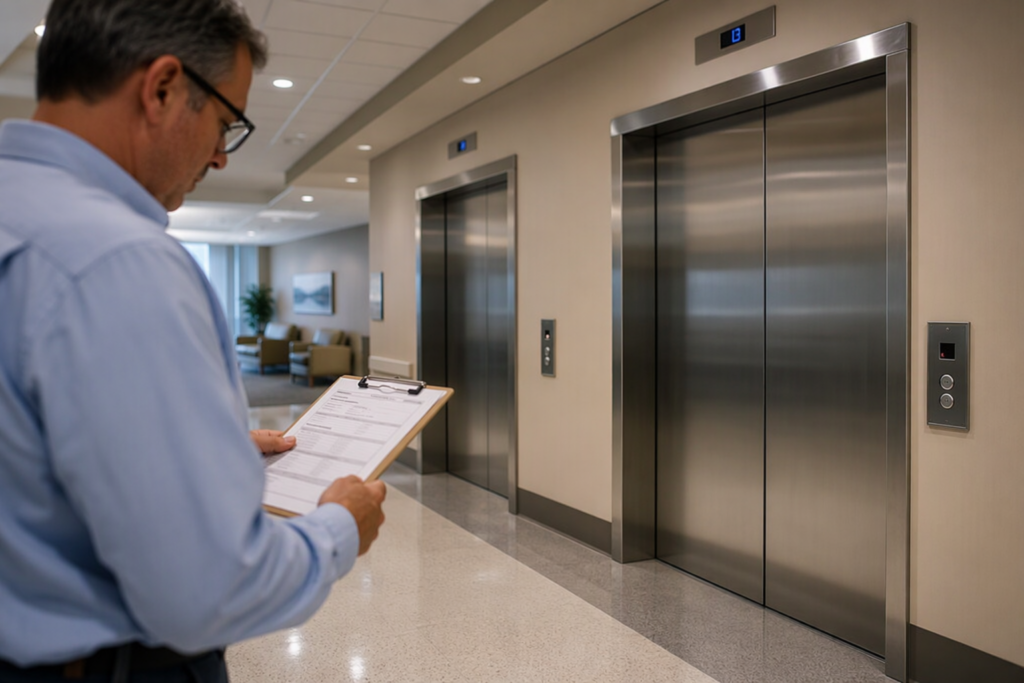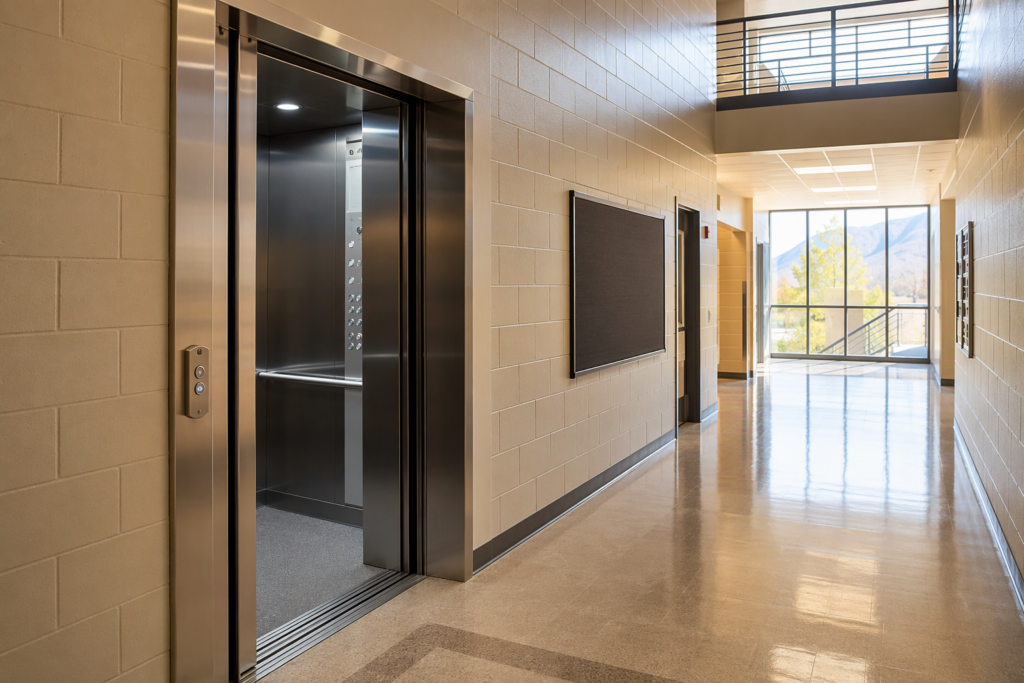
Arizona Elevator Solutions services all major elevator brands and manufacturers, including Otis, KONE, Schindler, ThyssenKrupp, Mitsubishi, Dover, Montgomery, and many others. Independent elevator service companies maintain the technical capability to work across virtually every commercial, residential, and industrial elevator platform regardless of original manufacturer.
Do You Service All Elevator Brands? Complete FAQ for Arizona Building Owners
Which elevator brands does an independent service company cover?
An independent, full-service elevator company covers virtually every brand on the market today, including Otis, KONE, Schindler, ThyssenKrupp, Mitsubishi, Fujitec, Dover, Montgomery, Westinghouse, Haughton, and Savaria, among many others.
Unlike manufacturer-tied service programs that lock owners into a single brand’s technicians and proprietary parts ecosystem, independent companies invest in multi-brand diagnostic tools, controller access software, and technical documentation for every major OEM platform. This means the brand stamped on a machine room door does not determine which company a building owner must call. Arizona Elevator Solutions maintains the equipment and training infrastructure to service the full spectrum of installed equipment across Phoenix, Tucson, Scottsdale, and Mesa, AZ, regardless of original manufacturer.
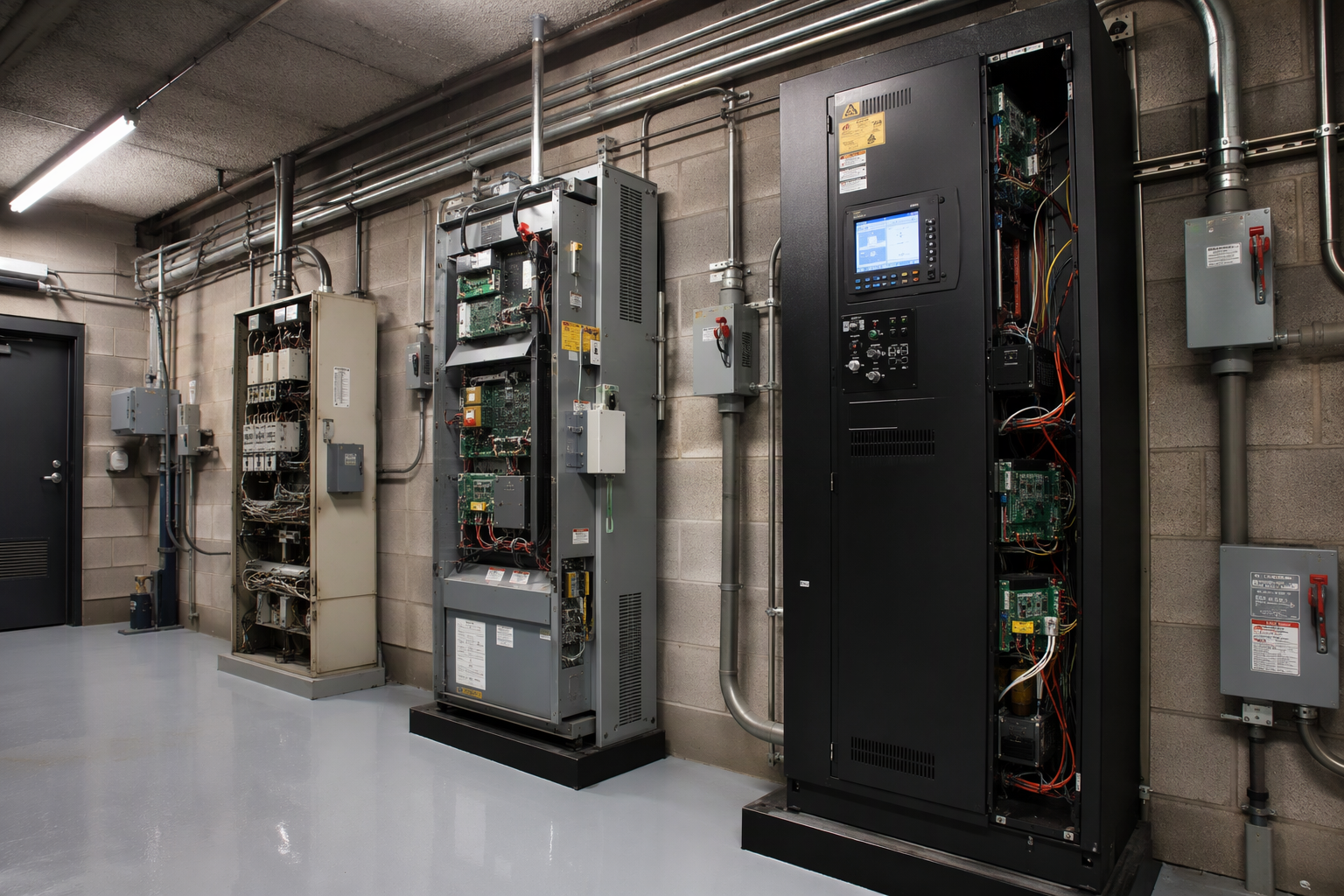
Practically speaking, most commercial buildings in the Phoenix metro area have mixed fleets — an older hydraulic unit from Dover alongside a newer MRL traction unit from KONE, for example. A multi-brand service capability eliminates the administrative complexity of juggling multiple vendor contracts.
What types of elevator equipment can be serviced beyond standard passenger cars?

Beyond standard passenger elevators, independent service companies maintain hydraulic freight elevators, machine-room-less (MRL) traction elevators, escalators, moving walks, dumbwaiters, platform lifts, and stairway chairlifts.
Arizona’s regulatory framework under A.R.S. §§ 23-491 through 23-491.16 defines “conveyance” broadly enough to include all of these equipment types. Each carries its own inspection, permitting, and certificate-of-inspection requirement. Arizona platform lifts and stairway chairlifts installed, repaired, or altered on or after January 1, 2023, must comply with ASME A18.1-2020. Standard passenger and freight elevators installed or altered on or after January 1, 2023, must comply with the ASME A17.1/CSA B44, 2019 edition, as adopted in Arizona and effective January 9, 2023.
Knowing which code edition applies to a specific unit is critical before any repair or alteration work begins. Applying the wrong edition to a modernization project can void a certificate of inspection and trigger re-inspection requirements.
Does it matter whether my elevator is hydraulic or traction?
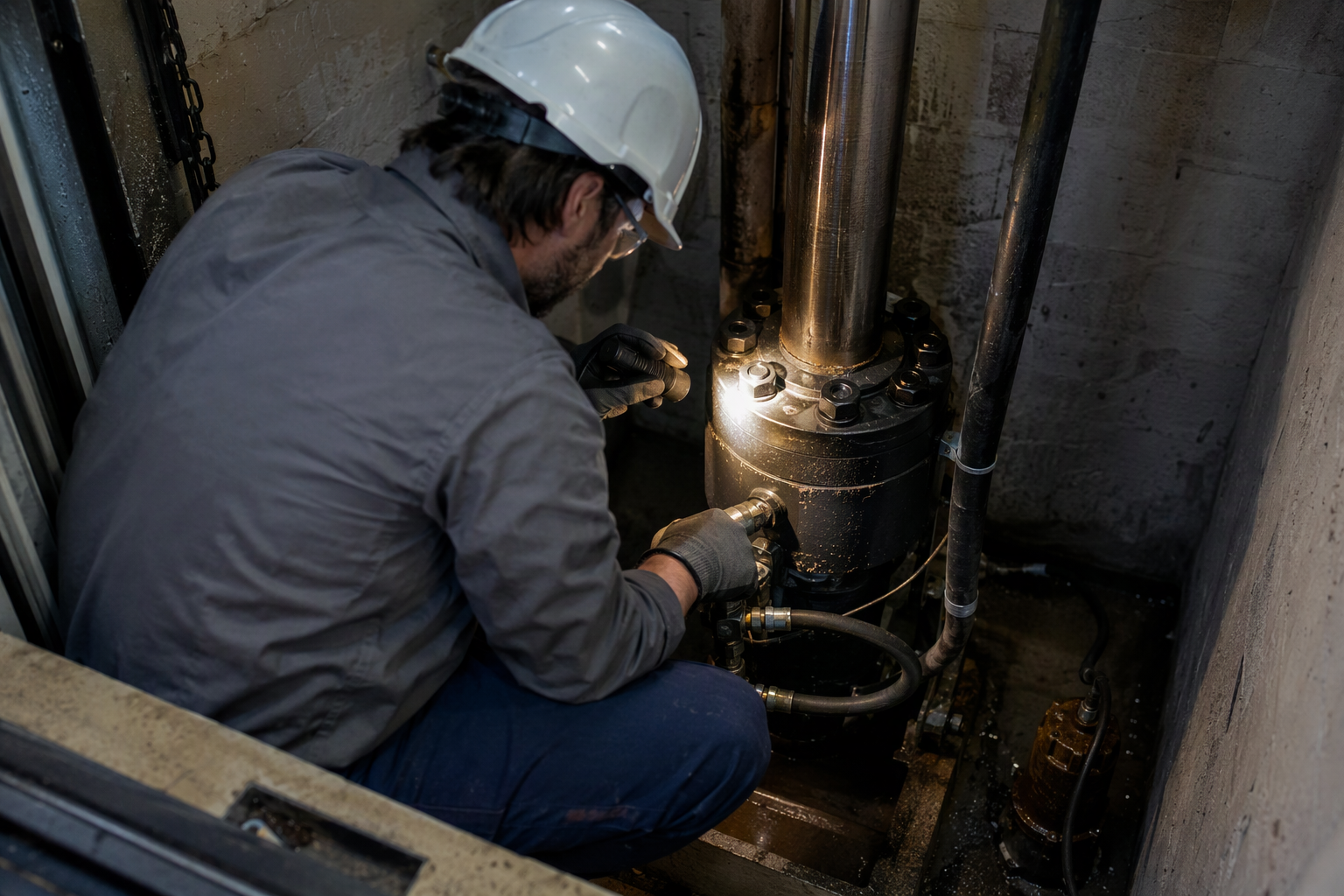
Drive type — hydraulic versus traction — requires different tooling, parts knowledge, and fluid-handling protocols, but a qualified independent service company is equipped to maintain and repair both systems.
Hydraulic elevators use a fluid-driven piston or ram mechanism and are common in low-rise commercial buildings across the Phoenix valley. Traction elevators use steel ropes and a counterweight system driven by an electric motor and are standard in mid- and high-rise buildings. Machine-room-less (MRL) traction units integrate the motor and controller into the hoistway itself, requiring specialized access procedures. Each system type has unique failure modes, lubrication schedules, and ASME A17.1 maintenance requirements, all of which a multi-brand service provider must be prepared to address.
What does Arizona law require before an elevator can operate legally?
Under Arizona law, no conveyance may operate without a valid annual certificate of inspection issued by the state, and that certificate must be kept at the same location as the conveyance and made available for inspection on request.
The governing statute is A.R.S. §§ 23-491 through 23-491.16, as amended by Laws 2026, Ch. 73. The corresponding administrative rules are found in Arizona Administrative Code R20-5-502 through R20-5-515. As of September 12, 2026, elevator safety in Arizona is administered by the Industrial Commission of Arizona (ICA), Elevator Division — formerly called the ADOSH Elevator Safety Section prior to that date.
Arizona owners must also have each conveyance inspected before it first goes into service and after any modification or alteration. The state serial number or the certificate must be posted in or close to the conveyance in an easily accessible location. Additionally, every conveyance is assigned a state serial number on a tag fixed to the controller or mainline disconnect — a detail service technicians verify during every maintenance visit.
Who is authorized to inspect an elevator in Arizona?
In Arizona, inspections may be performed by state inspectors from the Industrial Commission of Arizona’s Elevator Division or by private elevator inspectors authorized by the same commission.
Arizona private elevator inspectors must register with the commission every year and demonstrate at least eight hours of approved continuing education. There is a critical conflict-of-interest rule: a private inspector may not inspect a conveyance owned, operated, or last serviced by the inspector, a company the inspector owns, or the inspector’s employer. Using a private inspector does not relieve the owner or operator of their legal obligations under Arizona law.
Within the City of Phoenix specifically, the City of Phoenix Elevator Section (Planning and Development Department) inspects elevators, escalators, moving walks, dumbwaiters, and chair lifts. The state handles equipment located outside Phoenix city limits. Owners in Scottsdale, Mesa, and Tucson work directly with the ICA Elevator Division for inspection coordination.
What is the Arizona Firefighters Service (AZFS) key requirement?
Any Arizona conveyance equipped with firefighters’ emergency operation must use the Arizona Firefighters Service (AZFS) key — a state-specific requirement that building owners and their service companies must comply with.
Firefighters’ emergency operation allows emergency personnel to commandeer an elevator during a fire event. The AZFS key is Arizona’s designated key for this function, standardized so that first responders across the state can operate any compliant elevator. During maintenance, service technicians verify that the firefighters’ service key switch is functional, properly labeled, and uses the correct AZFS key profile. This is not an optional feature — failure to maintain compliant firefighters’ service operation is a code violation under ASME A17.1-2019 as adopted in Arizona.
What should building owners do immediately after an elevator accident or breakdown?
Arizona law requires owners to notify the state within 24 hours of any accident that injures a person or disables a conveyance, so a clear response protocol is essential.
- Ensure any trapped or injured occupants are safely evacuated by trained personnel or first responders — do not attempt self-rescue.
- Secure the elevator out of service immediately by locking out the main disconnect or posting signage preventing use.
- Contact your elevator service company to perform an emergency inspection and document the mechanical condition of the equipment.
- Notify the Industrial Commission of Arizona’s Elevator Division within 24 hours of the incident as required by A.R.S. §§ 23-491 through 23-491.16.
- Preserve any surveillance footage, maintenance logs, and inspection certificates — these will be required for the incident investigation.
- Do not return the elevator to service until it has been inspected and cleared by an authorized inspector and any required re-certification has been obtained.
How far in advance must Arizona owners notify the state before an installation or alteration?
Arizona owners must notify the Industrial Commission of Arizona’s Elevator Division at least 90 days before installing, relocating, or altering a conveyance.
This 90-day notice window exists so that the state can schedule plan review and arrange for pre-construction or pre-alteration inspection coordination. Missing this window can delay a project significantly, particularly for new commercial construction in fast-growing markets like Mesa and Scottsdale where permitting queues can be lengthy. Arizona Elevator Solutions advises building owners and developers to treat the 90-day notification as a hard project milestone — not a soft deadline — to avoid costly construction delays.
Alterations are broadly interpreted under the rules. Replacing a controller, changing the drive system, or modifying the capacity rating all typically qualify as alterations requiring advance notification and a subsequent inspection before the unit is returned to service.
What is the R-12 / C-12 elevator contractor license in Arizona?
The Arizona Registrar of Contractors issues R-12 (residential) and C-12 (commercial) elevator license classifications, which authorize contractors to install and repair elevators, dumbwaiters, escalators, and moving walks in Arizona.
These license classifications are issued by the Arizona Registrar of Contractors (ROC) and are separate from the annual certificate of inspection issued by the ICA Elevator Division. Holding an R-12 or C-12 license is a prerequisite for legally performing elevator installation and repair work in Arizona, but it does not substitute for the state inspection and certification process. Building owners should verify that any service provider they hire holds the appropriate ROC license classification before work begins.
Does ADA compliance affect elevator service and maintenance requirements?
Yes — elevators in public accommodations and commercial facilities must comply with ADA accessibility standards, and ongoing maintenance is required to keep accessibility features operational.
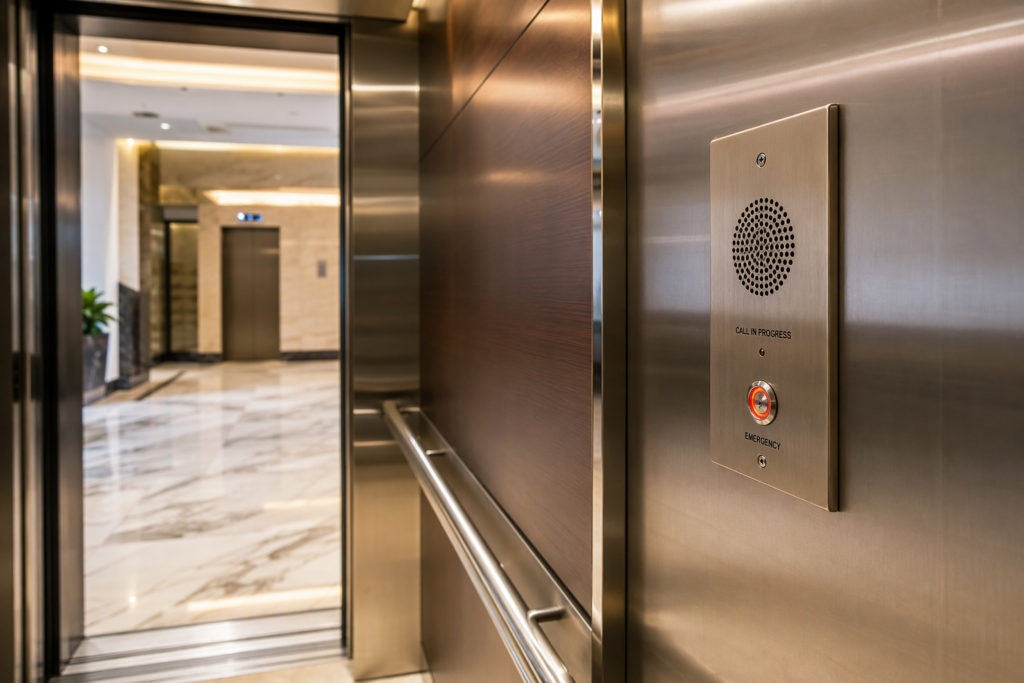
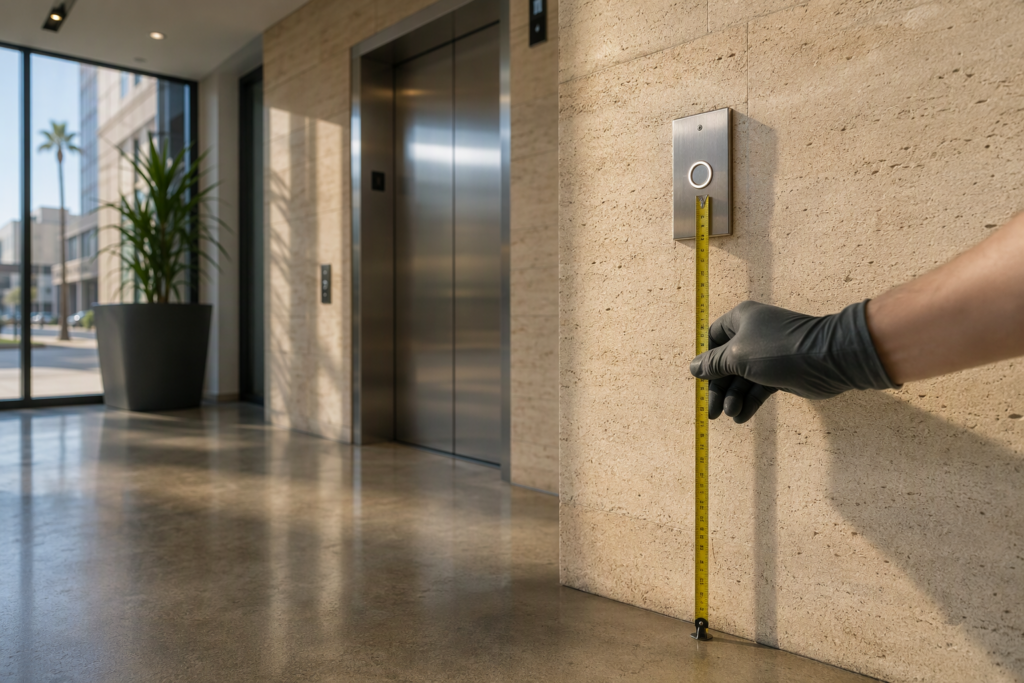
Under the Americans with Disabilities Act, elevator features including door reopening devices, cab dimensions, control button heights, Braille signage, audible floor indicators, and two-way emergency communication systems must remain fully functional. Deferred maintenance that takes these features out of service — even temporarily — can constitute an ADA violation. During routine maintenance visits, technicians should check every ADA-required feature as part of a standard maintenance checklist, not just the mechanical drive components. Buildings undergoing modernization projects also need to evaluate whether the scope of work triggers an obligation to bring the entire elevator into current ADA conformance.
What is a full-maintenance contract versus a parts-and-labor contract for elevators?
A full-maintenance contract covers all routine service, emergency callbacks, and parts; a parts-and-labor contract covers labor and some components but typically excludes major parts, while an oil-and-grease contract covers only lubrication and minor adjustments.
The table below summarizes the typical coverage distinctions building owners should evaluate when selecting a service agreement:
| Contract Type | Routine Maintenance | Emergency Callbacks | Parts Included | Major Modernization | Best Suited For |
|---|---|---|---|---|---|
| Full Maintenance | Yes | Yes | Yes (all) | No | High-traffic commercial, healthcare, Class A office |
| Parts & Labor | Yes | Yes | Partial (minor parts) | No | Mid-rise residential, mixed-use |
| Oil & Grease | Yes (lubrication only) | No (billed separately) | No | No | Low-use residential, dumbwaiters |
| Inspection Only | No | No | No | No | Owner-maintained equipment, annual certification only |
Building owners should carefully read the exclusions section of any elevator service contract. Proprietary parts clauses in OEM contracts — which require all replacement parts to be sourced from the original manufacturer at OEM pricing — can significantly increase the total cost of ownership over the life of the agreement. Independent service companies like Arizona Elevator Solutions typically source compatible parts from multiple suppliers, which provides more flexibility in managing maintenance budgets.
Can older elevators remain in service under Arizona law?
Yes — in Arizona, lawfully installed older conveyances may remain in use unless the state’s elevator chief determines the continued use poses a hazard to life, health, or property.
This provision under Arizona law means that a building owner is not automatically required to modernize an older elevator simply because a newer code edition has been adopted. However, the state’s elevator chief retains discretionary authority to order a unit out of service if it is deemed hazardous. This creates an important practical obligation: older equipment must be maintained in a condition that does not trigger a hazard determination. Deferred maintenance on aging equipment is the most common path to an enforcement action. The ASME A17.3 Safety Code for Existing Elevators and Escalators provides the technical benchmark for evaluating existing installations and is the standard that inspectors typically reference when assessing older units.
What modernization upgrades most commonly improve safety and compliance on older units?
The most impactful modernization upgrades for older elevators typically include controller replacement, drive system upgrades, door operator modernization, and emergency lighting and communication system updates.
Controller modernization replaces aging relay logic or early microprocessor systems with current solid-state controllers that support modern safety features, diagnostics, and firefighters’ service compatibility including AZFS key operation. Drive system upgrades — particularly converting older hydraulic units to variable-voltage variable-frequency (VVVF) drive systems — improve energy efficiency and ride quality. Door operator upgrades address one of the highest-frequency causes of service calls and passenger incidents. Emergency lighting and two-way communication systems must meet current ADA and ASME A17.1-2019 requirements. Each of these upgrades constitutes an alteration under Arizona rules, triggering the 90-day advance notification requirement and a post-alteration inspection before the unit returns to service.
How does switching from an OEM service contract to an independent provider work?
Transitioning from an OEM service contract to an independent provider involves reviewing the existing contract’s termination clause, conducting a condition assessment of the equipment, and ensuring all technical documentation is transferred to the new provider.
Many OEM contracts include automatic renewal clauses with 60- to 90-day cancellation windows, so building owners should review notice deadlines before initiating a transition. At the start of a new service relationship, a thorough condition audit documents the existing state of the equipment and establishes a baseline for the incoming provider. Building owners should also request copies of all maintenance logs, previous inspection certificates, and state serial number documentation — these records belong to the owner, not the service provider. Arizona Elevator Solutions conducts a detailed onboarding inspection at the start of any new service agreement to establish accurate equipment records and identify any existing code deficiencies that need to be addressed.
What records should Arizona building owners maintain for each elevator?
Arizona building owners should maintain the current certificate of inspection, maintenance logs, alteration permits, state serial number documentation, and incident reports for each conveyance.
Under A.R.S. §§ 23-491 through 23-491.16, the certificate of inspection must be kept at the same location as the conveyance and available for inspection on request. The state serial number assigned to each conveyance — located on a tag fixed to the controller or mainline disconnect — must also be posted in or close to the conveyance. Beyond these statutory minimums, maintaining complete maintenance logs creates a defensible record if a liability claim or regulatory inquiry arises. For buildings with multiple units, a centralized equipment management log that tracks each unit’s inspection dates, upcoming renewal deadlines, and open deficiency items is considered industry best practice.
What is the difference between a preventive maintenance visit and an emergency service call?
A preventive maintenance visit is a scheduled inspection and lubrication service performed at regular intervals to prevent failures; an emergency service call is an unplanned response to an equipment failure, entrapment, or safety hazard.
Preventive maintenance programs for elevators typically follow the manufacturer’s recommended service intervals as well as the requirements in ASME A17.1-2019 maintenance tables. During a preventive visit, technicians inspect and adjust door systems, lubricate guide rails and sheaves, test safety devices, check hydraulic fluid levels and condition, verify firefighters’ service operation, and test the emergency communication system. Emergency calls, by contrast, are reactive — often triggered by door malfunctions, hydraulic leaks, controller faults, or passenger entrapments. The frequency of emergency calls is closely correlated with the quality and consistency of preventive maintenance. Buildings that defer or skip scheduled maintenance visits statistically experience more frequent unplanned outages and higher overall service costs over time.
Does elevator brand affect the availability of replacement parts?
Elevator brand can significantly affect parts availability, lead times, and cost — particularly for discontinued or legacy brands where OEM supply chains no longer exist.
Major active manufacturers such as Otis, KONE, Schindler, and ThyssenKrupp maintain current parts inventories, though some proprietary components are only available through the OEM, which can affect lead times and pricing. For legacy brands — including Dover, Montgomery, Westinghouse, and Haughton, which are no longer manufactured under those names — parts may need to be sourced through aftermarket suppliers, reverse-engineered to specification, or substituted with compatible components that meet the original performance criteria. An experienced independent service company maintains supplier relationships across multiple parts channels, which is particularly valuable in markets like Phoenix and Tucson where the installed base includes a wide mix of equipment ages and brands. Any substitute or aftermarket part used in a repair or alteration must conform to the applicable requirements of ASME A17.1-2019 for the work being performed.
How should a building owner evaluate whether an elevator needs modernization versus continued maintenance?
The decision between modernization and continued maintenance depends on the age and condition of the equipment, the frequency and cost of service calls, the availability of parts, and whether current safety and accessibility standards can be met through maintenance alone.
A structured evaluation typically examines four factors. First, parts obsolescence: if critical components are no longer manufactured and no reliable aftermarket source exists, continued operation becomes increasingly risky. Second, maintenance cost trajectory: when annual maintenance and repair costs approach or exceed the annualized cost of modernization, the financial case for modernization becomes compelling. Third, safety and compliance gaps: if the existing equipment cannot meet the firefighters’ service, ADA accessibility, or other regulatory requirements without a scope of work that qualifies as an alteration, modernization may be the more efficient path. Fourth, reliability and tenant impact: frequent entrapments and unplanned outages in a commercial or multi-family building carry reputational and liability consequences beyond the direct repair cost. Arizona Elevator Solutions recommends that owners of units more than 20 years old request a formal condition assessment to inform this decision with equipment-specific data rather than general rules of thumb.
What are the most common elevator code violations found during Arizona inspections?
Common violations identified during Arizona inspections include non-functional door reopening devices, inoperative emergency lighting or communication systems, missing or incorrect firefighters’ service key configuration, and expired or improperly posted certificates of inspection.
Door-related deficiencies — including door closing force violations, non-functional door reversal devices, and worn sill grooves — are among the most frequently cited issues because door systems experience the highest cycle frequency of any elevator component. Emergency communication system failures are also common, particularly in older buildings where the original telephone line infrastructure has been decommissioned in favor of VoIP systems that may not be compatible with the elevator’s communication equipment. AZFS key non-compliance is a recurring finding on units that have changed service providers without a proper commissioning check. Certificate-of-inspection posting violations — where the certificate is not accessible in or immediately adjacent to the conveyance — are administratively straightforward to correct but can result in enforcement actions if discovered during an unannounced inspection.
Why should Arizona building owners choose an independent multi-brand service company over an OEM service program?
An independent multi-brand service company provides flexibility in parts sourcing, freedom from proprietary pricing structures, and the ability to service mixed equipment fleets under a single contract — advantages that OEM-tied programs typically cannot offer.
OEM service programs are structured around the manufacturer’s commercial interests, which can include mandatory use of proprietary parts, restricted access to diagnostic software for non-OEM technicians, and automatic contract renewal terms that make switching difficult. For building owners in Phoenix, Scottsdale, Mesa, and Tucson who manage properties with equipment from multiple manufacturers, maintaining separate OEM contracts for each brand creates administrative complexity and gaps in accountability. An independent provider like Arizona Elevator Solutions works across all brands under a single service relationship, applying consistent maintenance standards aligned with ASME A17.1-2019 and Arizona regulatory requirements regardless of which manufacturer’s nameplate is on the equipment. This approach gives building owners greater visibility into their overall elevator program and clearer accountability when issues arise.
Contact Arizona Elevator Solutions for a free elevator assessment at 480-557-7600.
Need elevator service you can rely on? Arizona Elevator Solutions is ready to help.