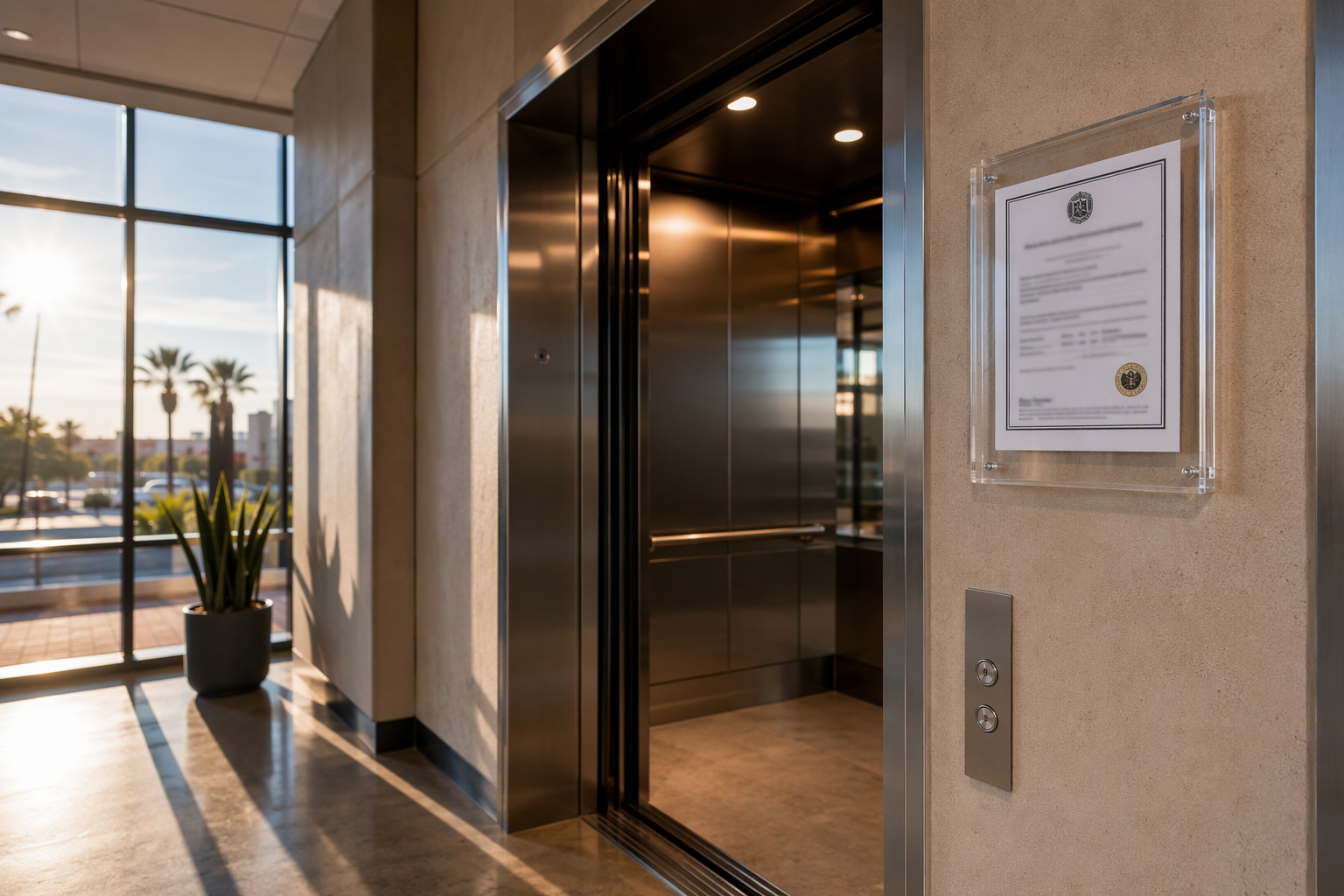
Arizona building owners and property managers often discover their elevator inspection is overdue only after a complaint, an accident, or a failed routine check. Understanding the inspection cycle, the state regulatory framework, and the consequences of non-compliance can protect tenants, limit liability, and keep operations running. This guide covers every stage — from recognizing your due date to recovering after a failed inspection — and explains where Arizona Elevator Solutions fits into the process.
—
How Do I Know If My Arizona Elevator Inspection Is Due?
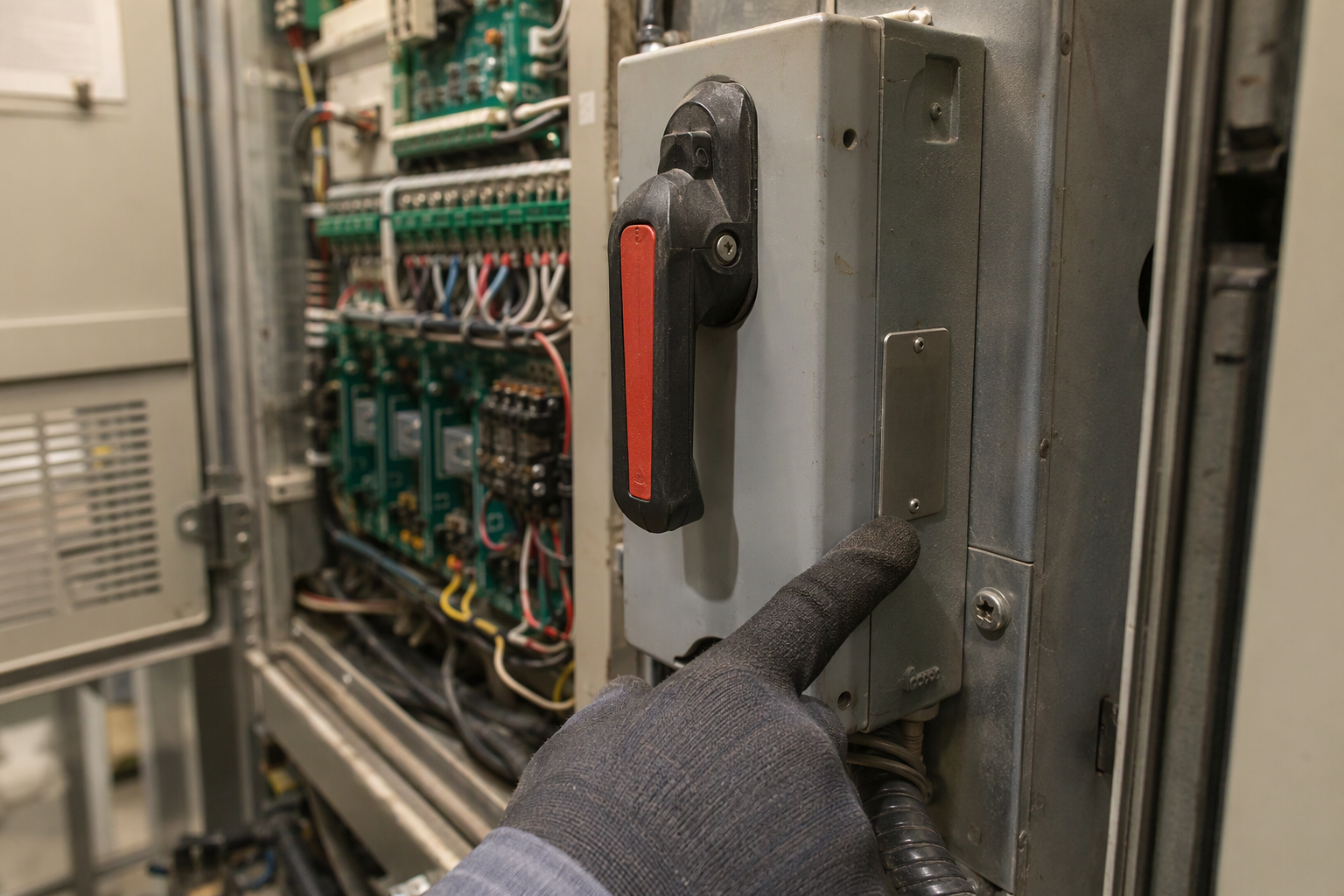
Arizona law requires every conveyance to hold a current annual certificate of inspection. The most reliable way to know whether your inspection is due is to locate that certificate.
Under A.R.S. §§ 23-491 through 23-491.16 (Safety Conditions for Elevators and Similar Conveyances), as administered by the Industrial Commission of Arizona (ICA), Elevator Division (formerly the ADOSH Elevator Safety Section before September 12, 2026), Arizona owners must:
- Keep the state certificate of inspection at the same location as the conveyance.
- Make the certificate available for inspection on request.
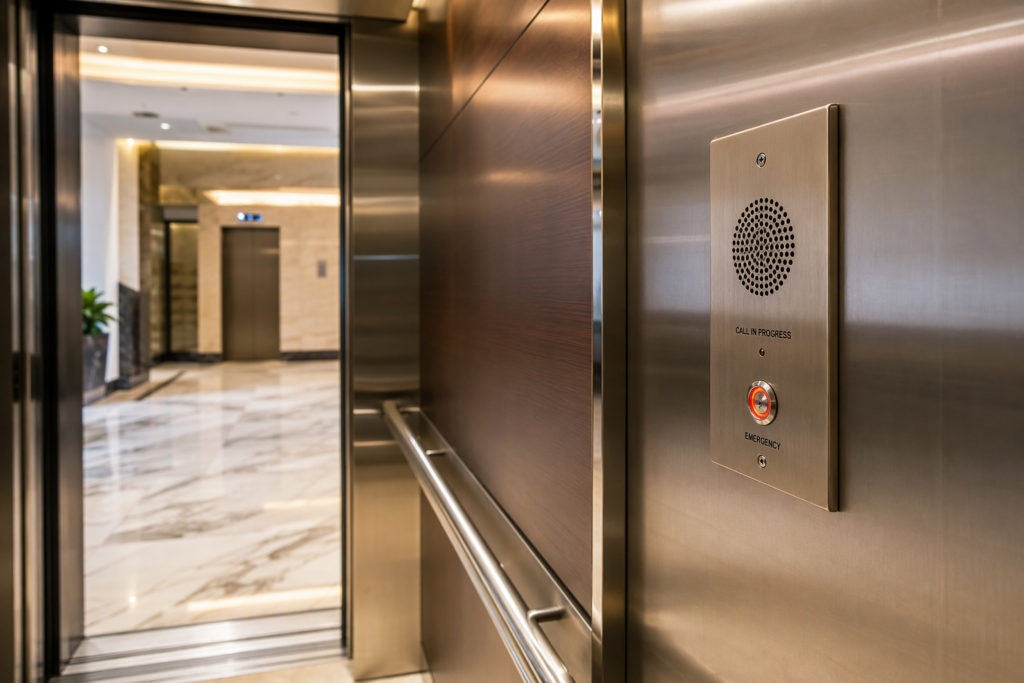
- Post the state serial number or the certificate in or close to the conveyance in an easily accessible location.
Practical steps to check your status:
- Locate the certificate posted in or near the elevator cab or machine room. The expiration date printed on it is your due date.
- Find the state serial number tag fixed to the controller or mainline disconnect — this is the unique identifier the ICA Elevator Division uses to track the conveyance.
- Contact the ICA Elevator Division with your state serial number to confirm active certificate status if the posted certificate is missing or unclear.
- If your building is inside the City of Phoenix, check with the City of Phoenix Elevator Section (Planning and Development Department), which inspects elevators, escalators, moving walks, dumbwaiters, and chair lifts within city limits. Equipment outside Phoenix is handled by the state.
- Review any recent alteration or modification records — an alteration triggers a new inspection requirement before the equipment returns to service, regardless of where the annual cycle stands.
Arizona Elevator Solutions recommends that owners set a calendar reminder at least sixty days before the certificate expiration date to allow time to schedule an authorized inspector and address any deficiencies before the inspection visit.
—
What Is the Legal Inspection Interval in Arizona?
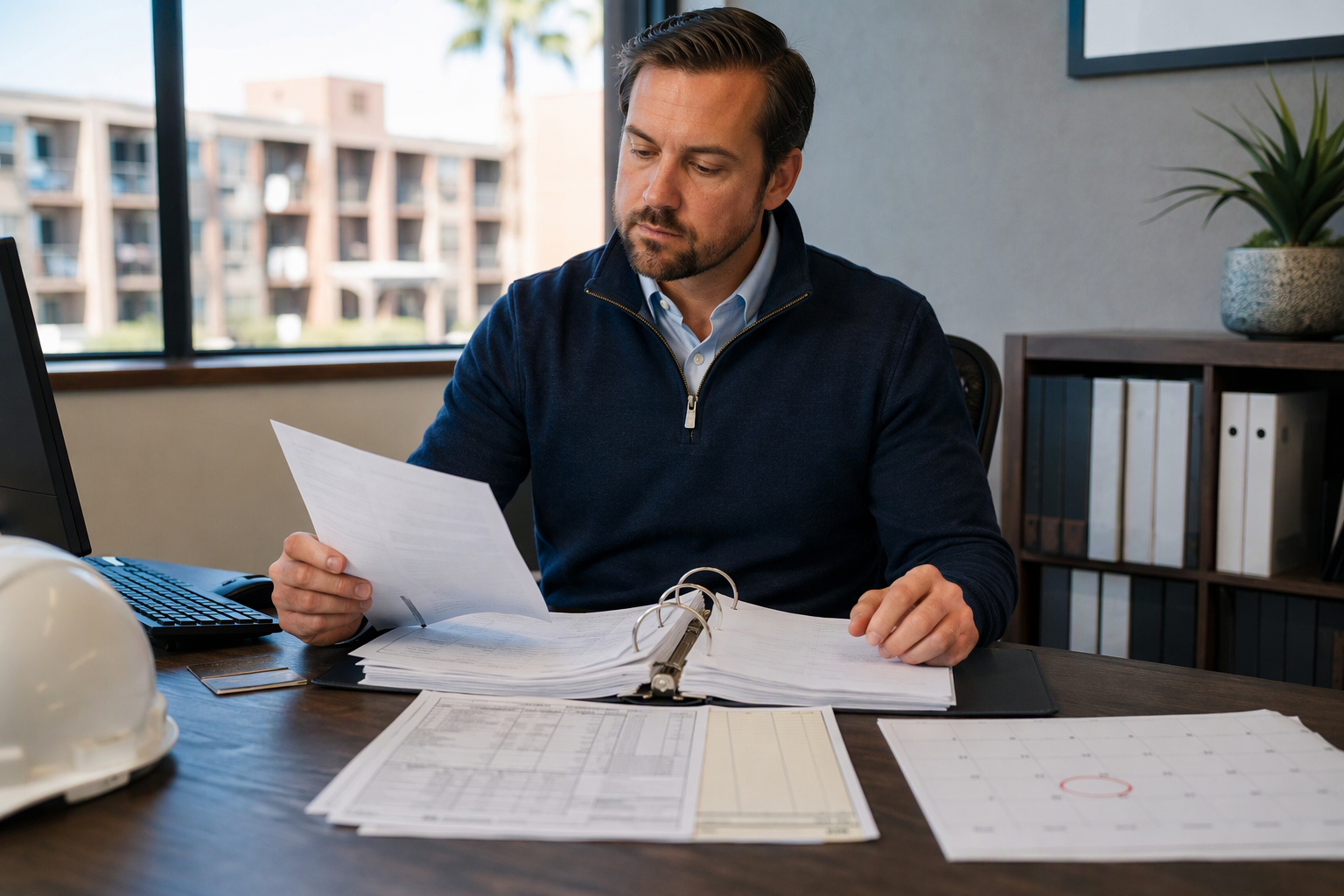
Arizona’s inspection intervals are set by statute and rule. Under A.R.S. §§ 23-491 through 23-491.16 and Arizona Administrative Code R20-5-502 through R20-5-515, Arizona owners must have each conveyance inspected:
- Before it first goes into service — a new installation may not operate until a certificate is issued.
- After any modification or alteration — the equipment must be re-inspected and re-certified before returning to service.
- Annually — every operating conveyance requires a certificate renewal each year.
No conveyance may legally operate in Arizona without a current annual certificate of inspection. Operating without one exposes owners to enforcement action by the ICA Elevator Division.
—
Who Is Authorized to Perform an Arizona Elevator Inspection?
Arizona owners have two pathways:
| Inspection Pathway | Who Performs It | Key Requirements | Considerations |
|---|---|---|---|
| ICA Elevator Division Inspector | State-employed inspector from the Industrial Commission of Arizona | Governed by ICA scheduling and availability | May have longer lead times; directly issues state certificate |
| ICA-Authorized Private Elevator Inspector | Private inspector registered annually with the ICA | Must show at least eight hours of approved continuing education per registration year; must register with the commission every year | Often more flexible scheduling; owner must still meet all legal obligations |
Important conflict-of-interest rule: An Arizona private elevator inspector may not inspect a conveyance owned, operated, or last serviced by the inspector, a company the inspector owns, or the inspector’s employer. This requirement is designed to protect inspection integrity.
Using a private elevator inspector does not relieve the owner or operator of their legal obligations under Arizona law. Arizona Elevator Solutions, as an independent service provider, is well-positioned to prepare equipment for inspection without the conflict-of-interest restrictions that apply to inspectors employed by maintenance contractors.
—
What Code Standard Applies to Arizona Elevators in 2026?
Arizona has adopted the ASME A17.1/CSA B44, 2019 edition (ASME A17.1-2019) Safety Code for Elevators and Escalators for equipment installed, repaired, or altered on or after January 1, 2023, effective January 9, 2023.
For platform lifts and stairway chairlifts installed, repaired, or altered on or after January 1, 2023, Arizona requires compliance with ASME A18.1-2020.
Lawfully installed older conveyances that pre-date current code adoptions may remain in use unless the ICA’s elevator chief determines that continued use poses a hazard to life, health, or property. This “grandfather” protection does not exempt older equipment from annual inspection requirements.
Federal accessibility requirements under the Americans with Disabilities Act (ADA) and applicable OSHA standards also apply independently of Arizona’s inspection certificate program and should be part of every owner’s compliance review.
—
What Do Arizona Elevator Inspectors Actually Look For?
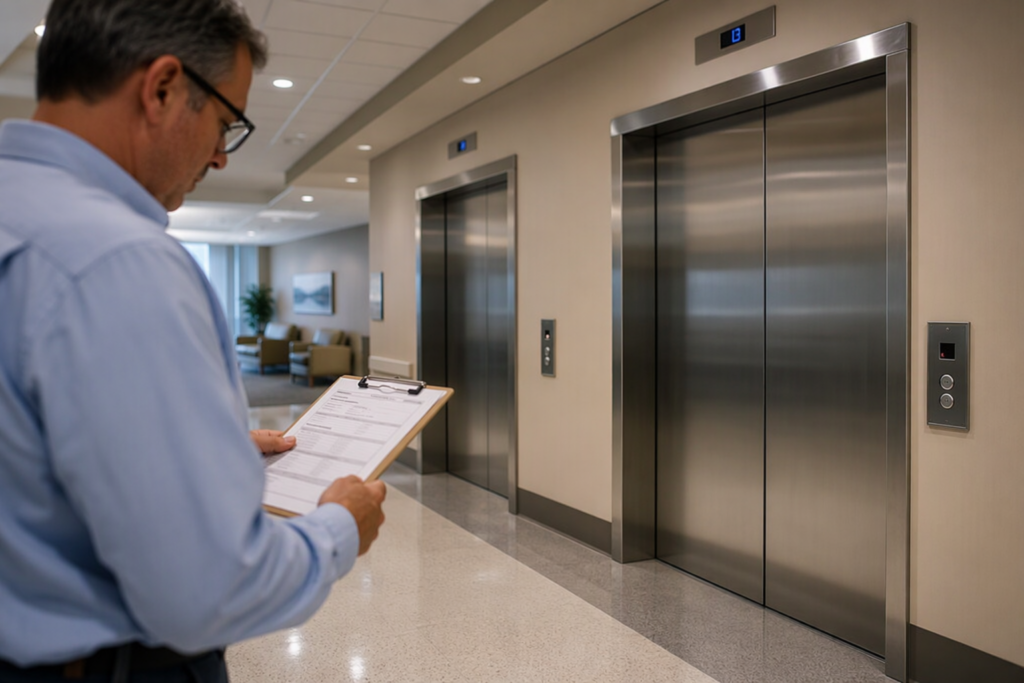
Inspectors conducting annual inspections under the ASME A17.1-2019 Safety Code for Elevators and Escalators and Arizona Administrative Code R20-5-502 through R20-5-515 evaluate the following areas. The table below summarizes common inspection categories, what is checked, and typical compliance implications.
| Inspection Category | What Inspectors Evaluate | Common Deficiency Triggers | Impact If Failed |
|---|---|---|---|
| Safety Devices | Governor, safeties, buffers, interlocks | Worn or misadjusted components | High — equipment taken out of service |
| Doors and Interlocks | Door reopening devices, interlock function, closure speed | Faulty sensors, slow closure, interlock gaps | High — direct passenger safety risk |
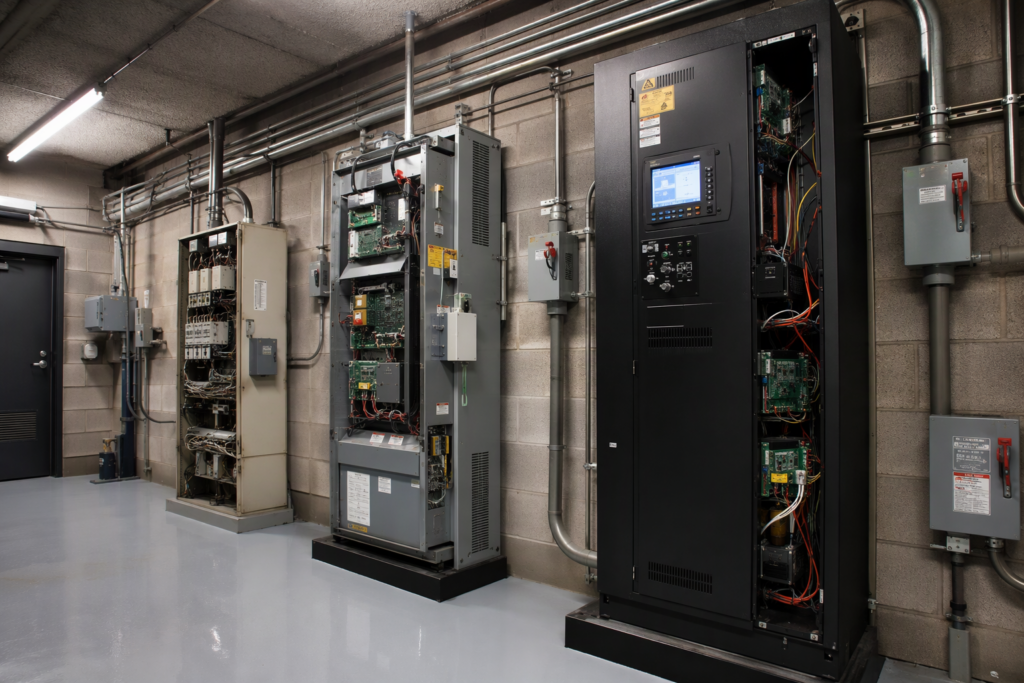
| Machine Room Conditions | Cleanliness, lighting, fire protection, access | Stored materials, inadequate lighting | Medium — correctable before re-inspection |
| Firefighters’ Emergency Operation | Phase I and Phase II recall function, key compatibility | Wrong key type — Arizona requires the AZFS (Arizona Firefighters Service) key | High — mandatory state requirement |
| Certificate and Serial Number Posting | Certificate displayed; state serial number tag on controller or mainline disconnect | Missing or expired certificate, missing tag | Medium — administrative violation |
| Structural and Mechanical Integrity | Guide rails, cab interior, ropes or hydraulic systems | Worn ropes, rail misalignment, cab damage | High — may require immediate shutdown |
| Electrical Systems | Wiring, grounding, overload protection | Improper wiring, missing ground faults | Medium to High |
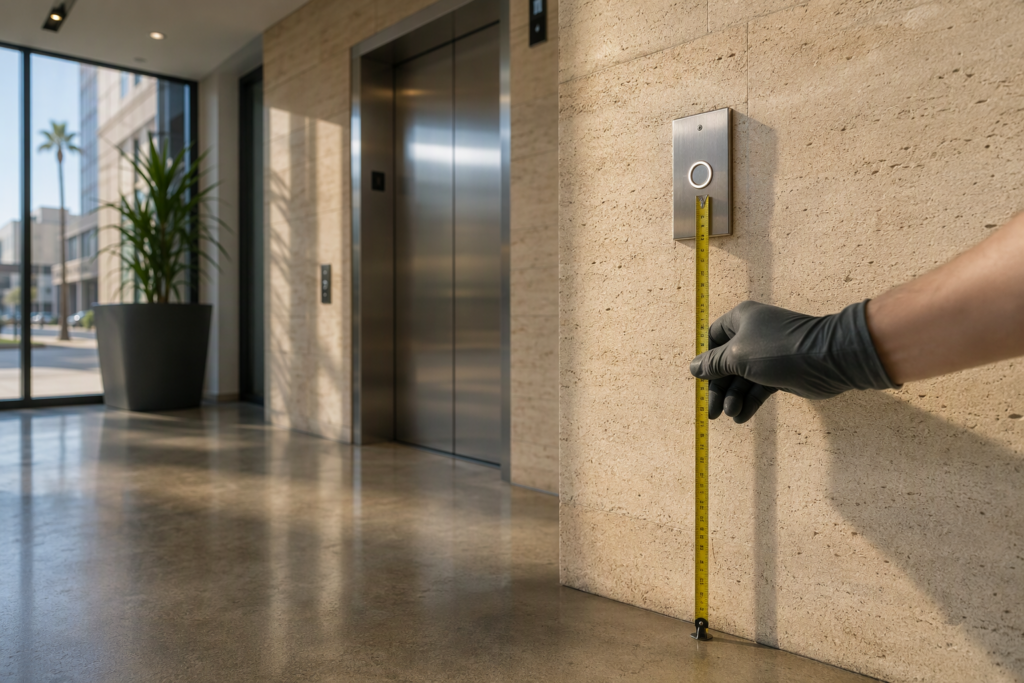
| ADA Accessibility Features | Control height, braille, leveling accuracy | Out-of-tolerance leveling, missing features | Medium — separate ADA enforcement exposure |
Arizona conveyances equipped with firefighters’ emergency operation must use the Arizona Firefighters Service (AZFS) key. Using a non-AZFS key is a code violation that inspectors flag specifically.
—
What Happens If My Elevator Fails the Arizona State Inspection?
A failed inspection in Arizona means the conveyance does not receive — or loses — its certificate of inspection. Because no conveyance may legally operate in Arizona without a current certificate, a failed inspection results in the equipment being taken out of service until deficiencies are corrected and the conveyance passes re-inspection.
The practical consequences for building owners include:
- Mandatory shutdown: Operating a conveyance without a valid certificate violates A.R.S. §§ 23-491 through 23-491.16 and exposes owners to enforcement action by the ICA Elevator Division.
- Tenant and visitor impact: Residents, employees, and visitors — including those who rely on the elevator for accessibility — cannot use the conveyance lawfully during the shutdown period.
- ADA exposure: Extended downtime affecting accessible routes can create separate liability under the Americans with Disabilities Act.
- Re-inspection requirement: The owner must correct all cited deficiencies and schedule a follow-up inspection before the certificate can be issued or reinstated.
- Accident reporting obligation: Arizona owners must notify the state within 24 hours of any accident that injures a person or disables a conveyance, adding an urgent compliance layer when failures are discovered following an incident.
—
What Should I Do Immediately After a Failed Inspection?
- Obtain the written inspection report from the inspector and review every cited deficiency before taking further action.
- Post notice on or near the conveyance that it is out of service, and restrict access to prevent unauthorized use.
- Notify building tenants and management of the shutdown and estimated timeline for repairs, particularly for multi-unit residential properties where elevator access affects daily living.
- Contact an ROC-licensed elevator contractor — Arizona Registrar of Contractors R-12 or C-12 classifications cover installation and repair of elevators, dumbwaiters, escalators, and moving walks — to assess and correct the cited deficiencies.
- Document all repair work performed, including parts replaced and work order records, to present to the re-inspector.
- Schedule re-inspection with an ICA-authorized inspector. If a private inspector performed the original inspection, confirm that no conflict of interest applies to the re-inspection.
- Verify certificate posting once the certificate is issued — confirm the certificate is displayed in or near the cab and the state serial number tag is visible on the controller or mainline disconnect.
- Review your maintenance schedule to identify whether the deficiencies resulted from deferred maintenance, and adjust the preventive maintenance program accordingly.
—
How Does a Pre-Inspection Maintenance Visit Differ from the Official Inspection?
| Factor | Pre-Inspection Maintenance Visit | Official State Inspection |
|---|---|---|
| Who performs it | Independent elevator service provider (e.g., Arizona Elevator Solutions) | ICA Elevator Division inspector or ICA-authorized private inspector |
| Legal authority | None — advisory and corrective only | Statutory authority under A.R.S. §§ 23-491–23-491.16 |
| Outcome | Service report; deficiencies corrected before official inspection | Certificate issued (pass) or deficiency notice (fail) |
| Conflict-of-interest rules | Not applicable — service provider is not performing the official inspection | Private inspector may not inspect equipment they or their employer last serviced |
| Primary benefit | Reduces risk of citation; identifies issues in advance | Required by law; issues the certificate that allows legal operation |
| Timing recommendation | Thirty to sixty days before the certificate expiration date | Before certificate expires; before first use; after any alteration |
Arizona Elevator Solutions provides independent pre-inspection maintenance assessments that are specifically designed to identify and correct deficiencies before the official inspection visit. Because Arizona Elevator Solutions operates as a service provider rather than an inspection entity, its technicians are not subject to the same conflict-of-interest restrictions that apply to authorized inspectors — meaning they can service equipment, document findings, and hand the conveyance off to an independent authorized inspector without regulatory restriction.
—
Does the City of Phoenix Have Its Own Elevator Inspection Program?
Yes. The City of Phoenix Elevator Section (Planning and Development Department) inspects elevators, escalators, moving walks, dumbwaiters, and chair lifts located inside the City of Phoenix. Equipment located outside Phoenix city limits falls under the ICA Elevator Division’s jurisdiction.
Phoenix building owners should confirm with the City of Phoenix Elevator Section whether their specific address falls within city limits and which authority is responsible for issuing their certificate. The annual certificate requirement and the prohibition on operating without a valid certificate apply regardless of which authority has jurisdiction.
—
What Notification Obligations Does an Arizona Elevator Owner Have Beyond Annual Inspections?
Annual inspections are the most familiar requirement, but Arizona law imposes additional notification duties that owners frequently overlook:
- New installations, relocations, or alterations: Owners must notify the state at least 90 days before installing, relocating, or altering a conveyance.
- Accidents and disabling incidents: Owners must notify the state within 24 hours of any accident that injures a person or disables a conveyance.
- Post-alteration inspection: Any modification or alteration triggers a full inspection requirement before the equipment returns to service — this is separate from and in addition to the annual cycle.
Failure to provide timely notification can result in enforcement action independently of whether the equipment itself passes inspection. Arizona Elevator Solutions recommends that owners incorporate these notification deadlines into their facilities management procedures and work with their elevator contractor to flag any planned alterations well in advance of the 90-day notice window.
—
How Does Contractor Licensing Relate to Inspection Compliance in Arizona?
The Arizona Registrar of Contractors (ROC) issues R-12 (residential) and C-12 (commercial) elevator contractor license classifications, which authorize the licensee to install and repair elevators, dumbwaiters, escalators, and moving walks. Repair and maintenance work performed to address inspection deficiencies should be completed by an ROC-licensed contractor holding the appropriate R-12 or C-12 classification.
It is important to understand the boundary of the ROC’s role: the Arizona Registrar of Contractors licenses elevator contractors but does not issue the annual certificate of inspection. The certificate is issued by the ICA Elevator Division (or by the City of Phoenix Elevator Section for equipment within Phoenix). Owners should verify that any contractor they engage holds the correct ROC classification before authorizing repair work.
—
What Is the Risk of Operating Without a Valid Certificate in Arizona?
Operating a conveyance without a current certificate of inspection is a direct violation of A.R.S. §§ 23-491 through 23-491.16. Beyond the statutory enforcement exposure, operating non-compliant equipment creates compounding risks:
- Liability in the event of injury: An owner who knowingly operates an elevator without a valid certificate faces significantly greater legal exposure if a passenger is injured, as the absence of the certificate is evidence of non-compliance with the state safety standard.
- Insurance implications: Property and general liability insurers may deny or reduce coverage for incidents involving equipment operated outside legal compliance.
- ADA accessibility obligations: Extended unavailability of an accessible elevator may trigger complaints under the Americans with Disabilities Act, particularly in multi-tenant commercial and residential buildings.
- Workplace safety: Employees who use the elevator as part of their work duties are subject to OSHA protections, and operating unsafe equipment can trigger OSHA investigations independently of state elevator enforcement.
—
How Can an Independent Elevator Service Provider Help With Compliance?
Arizona Elevator Solutions works with building owners, property managers, and facilities teams throughout Arizona to maintain conveyances in continuous compliance with ICA Elevator Division requirements. As an independent provider, Arizona Elevator Solutions:
- Conducts pre-inspection maintenance assessments to identify and correct deficiencies before the official inspection visit.
- Maintains familiarity with the ASME A17.1-2019 Safety Code for Elevators and Escalators and ASME A18.1-2020 requirements adopted by Arizona.
- Verifies that AZFS key requirements and certificate posting obligations are met before each inspection.
- Assists owners in tracking state serial numbers, certificate expiration dates, and notification deadlines.
- Coordinates with ROC-licensed contractors for repair work following a failed inspection.
Because Arizona Elevator Solutions operates as a service provider — not as an authorized inspector — there is no conflict-of-interest barrier to servicing equipment and then handing it off to an ICA-authorized private inspector for the official annual inspection.
—
Contact Arizona Elevator Solutions for a free elevator assessment at 480-557-7600.
Need elevator service you can rely on? Arizona Elevator Solutions is ready to help.