Elevator Service in Phoenix, AZ | Arizona Elevator Solutions
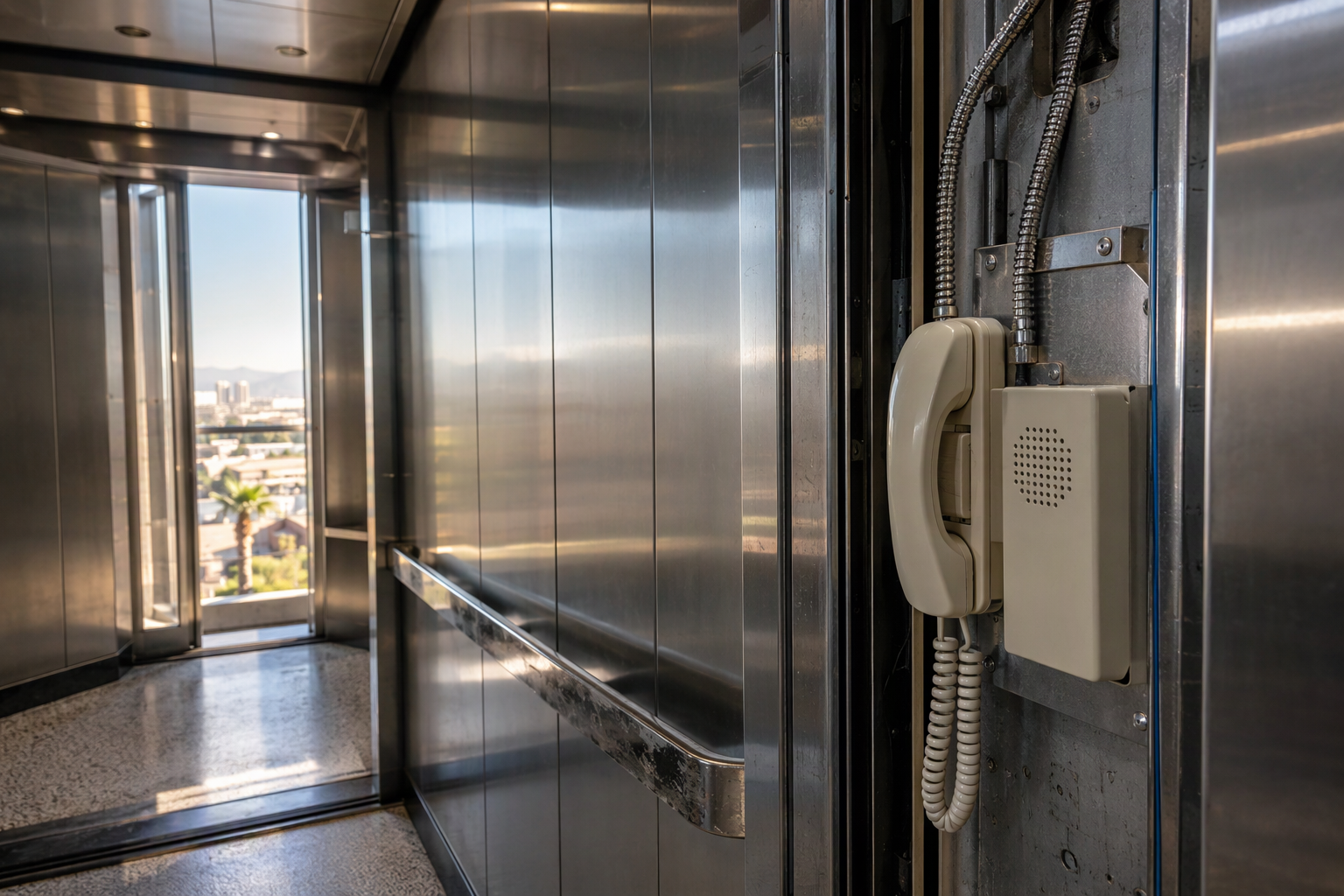
When the emergency telephone inside an elevator goes silent, the consequences extend beyond inconvenience. Under ASME A17.1-2019, the Safety Code for Elevators and Escalators adopted by Arizona for equipment installed, repaired, or altered on or after January 1, 2023, a functioning two-way emergency communications system is a mandatory safety requirement — not an optional feature. Arizona Elevator Solutions serves building owners, property managers, and facilities teams throughout the Phoenix metropolitan area and across Arizona, diagnosing and restoring communication systems so elevators remain compliant and safe for every occupant.
What causes elevator communication failure?
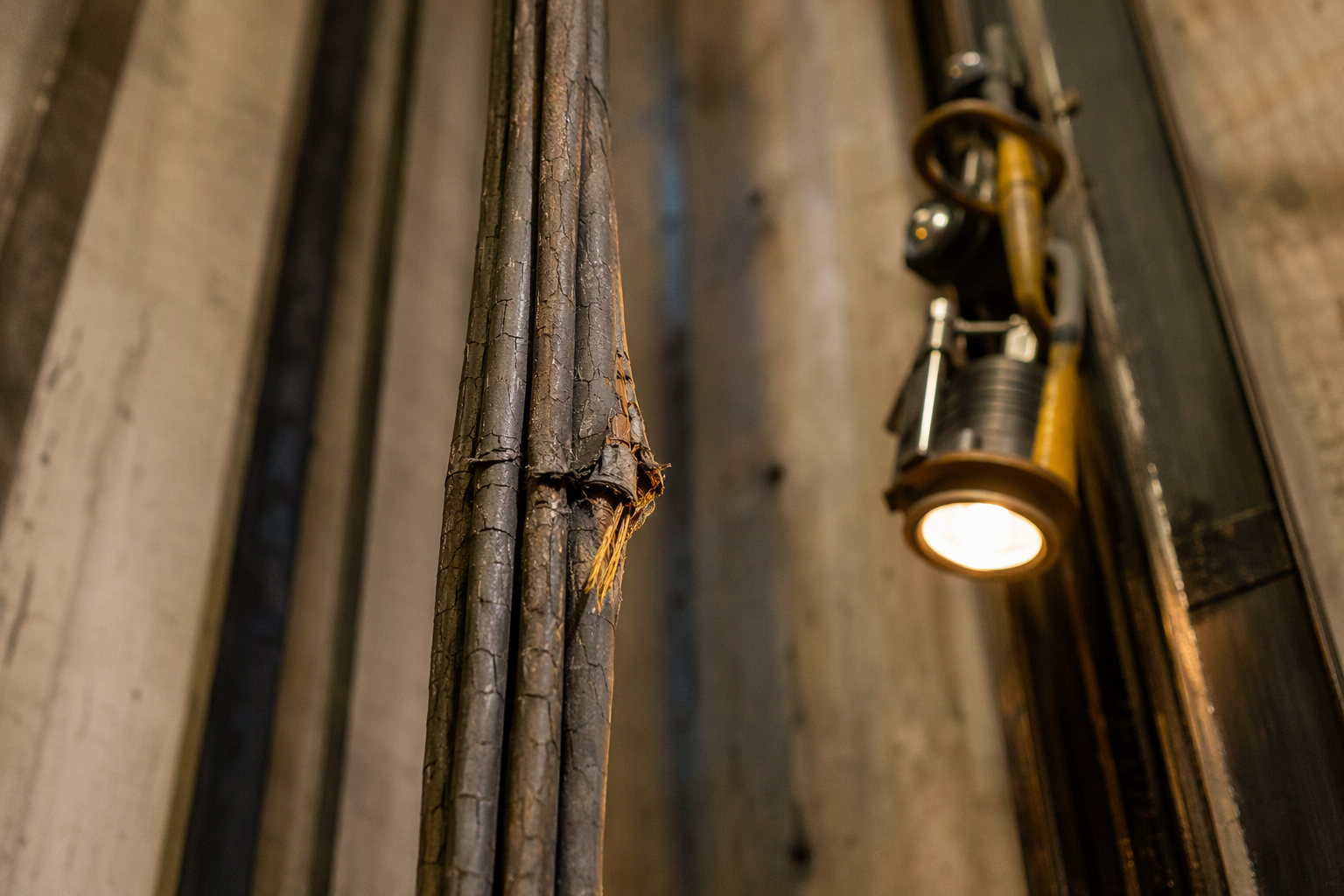
Communication failures rarely occur without a traceable root cause. The most common sources include:
- Wiring deterioration: Traveling cables that connect the cab to the hoistway can fray, corrode, or develop open circuits over time, cutting the signal path to the emergency phone.
- Phone unit failure: The handset, speaker, or auto-dialer module inside the cab can fail due to age, moisture intrusion, or power surges.
- Telephone line or VoIP configuration issues: Buildings that migrated from copper landlines to internet-based phone systems sometimes leave the elevator’s dedicated line improperly configured or entirely disconnected.
- Controller board faults: Communication circuits routed through the elevator controller can be disrupted by board failures, loose connections, or software errors in modern microprocessor-based systems.
- Power supply problems: An inadequate or failing power supply to the communication module produces intermittent or complete communication loss.
- Environmental factors: Extreme heat — a reality in Phoenix summers — can accelerate component degradation inside the hoistway and machine room.
Identifying the exact failure point requires systematic diagnostic testing from the cab, the traveling cable, the controller, and the terminal telephone connection — work best performed by trained elevator service personnel familiar with both the mechanical and electrical systems involved.
Is a broken elevator emergency phone a code violation in Arizona?

Yes. Arizona has adopted the ASME A17.1/CSA B44, 2019 edition as its governing safety code for elevators and conveyances installed, repaired, or altered on or after January 1, 2023, under A.R.S. §§ 23-491 through 23-491.16 and Arizona Administrative Code R20-5-502 through R20-5-515. A functioning two-way emergency communications system is a defined safety requirement under that code.
Beyond state rules, the Americans with Disabilities Act requires that emergency communication systems in elevators be accessible to people who are deaf or hard of hearing, typically through a visual or text-based alternative. A failure that eliminates communication entirely may create ADA exposure in addition to state code violations.
In Phoenix, the City of Phoenix Elevator Section within the Planning and Development Department inspects elevators inside city limits. Equipment outside Phoenix falls under the Industrial Commission of Arizona’s Elevator Division — formerly known as the ADOSH Elevator Safety Section until September 12, 2026. Either authority may flag a nonfunctional communication system during inspection.
What should building staff do immediately after discovering a communication failure?
- Take the elevator out of service. Post clear signage on each landing and prevent further passenger use until the system is repaired and verified.
- Check for trapped passengers. Confirm no one is currently inside the cab before shutting down the unit.
- Notify building management and document the discovery. Record the date, time, and observable symptoms in writing.
- Contact a licensed elevator service provider. In Arizona, elevator repair work must be performed by a contractor holding an R-12 or C-12 elevator license from the Arizona Registrar of Contractors.
- Notify the appropriate authority if an injury or disability occurred. Under Arizona law, owners must notify the state within 24 hours of any accident that injures a person or disables a conveyance.
- Do not return the elevator to service until the communication system passes a functional test. A repair that cannot be verified through a live test does not satisfy compliance requirements.
How does a technician diagnose and repair elevator communication failure?
A thorough diagnostic begins with a functional test of the emergency phone from the cab — checking dial tone, outbound call completion, and inbound audio clarity. From there, the inspection moves systematically through the signal path:
- Visual and continuity testing of the traveling cable conductors designated for communication circuits
- Inspection of the cab phone unit and its wiring terminations
- Review of the terminal block or patch point in the machine room or controller enclosure
- Confirmation that the designated telephone line or VoIP account is active and properly routed to an answering point
- Load testing of the power supply feeding the communication module
Repair may involve splicing or replacing sections of traveling cable, substituting the phone unit or auto-dialer, reconfiguring the building’s telephone infrastructure, or addressing controller-side wiring. Arizona Elevator Solutions carries the diagnostic equipment and replacement components needed to address the full range of communication failure scenarios common to Phoenix-area elevator inventory.
Does Arizona require the communication system to be tested during annual inspections?
Arizona requires each conveyance to be inspected before it first goes into service, after any modification or alteration, and annually after that. No conveyance may operate in Arizona without a valid annual certificate of inspection issued by the state. The certificate must be kept at the same location as the conveyance and made available on request; the state serial number or certificate must also be posted in or near the cab in an easily accessible location.
Emergency communication is among the operational systems a qualified inspector evaluates. Building owners who use a private elevator inspector — an option permitted under Arizona law — must ensure that inspector is authorized by the Industrial Commission of Arizona, registers with the commission annually, and completes at least eight hours of approved continuing education each year. A private inspector may not inspect any conveyance owned, operated, or last serviced by their own employer or company.
Can a VoIP or internet-based phone system replace the traditional landline in an elevator emergency phone?
Many Phoenix-area buildings have transitioned away from copper landlines, raising legitimate questions about whether VoIP is permissible for elevator emergency communication. The ASME A17.1 Safety Code for Elevators and Escalators defines performance requirements for two-way communication rather than specifying the underlying telephone technology, which means VoIP-based systems can be compliant — but only when they are properly configured, tested, and maintained.
Common VoIP-related failure points include inadequate power backup (a VoIP adapter without battery backup fails during a power outage), codec incompatibility with auto-dialer equipment, and latency that makes two-way voice communication unclear. Arizona Elevator Solutions evaluates the full communication path, including the telephony infrastructure, to ensure a VoIP-integrated emergency phone meets code performance requirements before the elevator returns to service.
How does elevator communication failure relate to broader elevator safety compliance in Phoenix?
Communication failure is frequently a symptom of deferred maintenance rather than an isolated event. Traveling cables that fail in the communication circuit often show wear in other conductors. Phone unit failures can point to broader moisture or environmental control problems in the cab. When Arizona Elevator Solutions responds to a communication fault, the diagnostic process includes a broader review of observable maintenance needs, giving building owners actionable information about the overall condition of their equipment — not just the presenting fault.
Phoenix’s commercial real estate market includes high-rise office towers, healthcare facilities, hotels, multifamily residential buildings, and hospitality properties, each with distinct elevator usage profiles and maintenance histories. Serving this range of facilities requires familiarity with equipment from multiple manufacturers and experience with the inspection expectations of both the City of Phoenix Elevator Section and the Industrial Commission of Arizona’s Elevator Division.
What records should building owners keep after a communication failure repair?
Maintaining complete documentation protects building owners during inspections and in the event of a liability dispute. Best practice includes retaining:
- A written repair record identifying the failed component, the corrective action taken, and the date of completion
- Results of the post-repair functional communication test
- Any updated wiring diagrams or specification sheets for replacement components
- Copies of correspondence with the Industrial Commission of Arizona or the City of Phoenix Elevator Section if the failure triggered a required notification
- The current annual certificate of inspection, which must be kept on-site and available for review
These records support the annual inspection process and demonstrate that the owner met their legal obligations under A.R.S. §§ 23-491 through 23-491.16 when the failure occurred.
Schedule a free consultation with Arizona Elevator Solutions at 480-557-7600.
Need elevator service you can rely on? Arizona Elevator Solutions is ready to help.