Elevator Service in Phoenix, AZ | Arizona Elevator Solutions
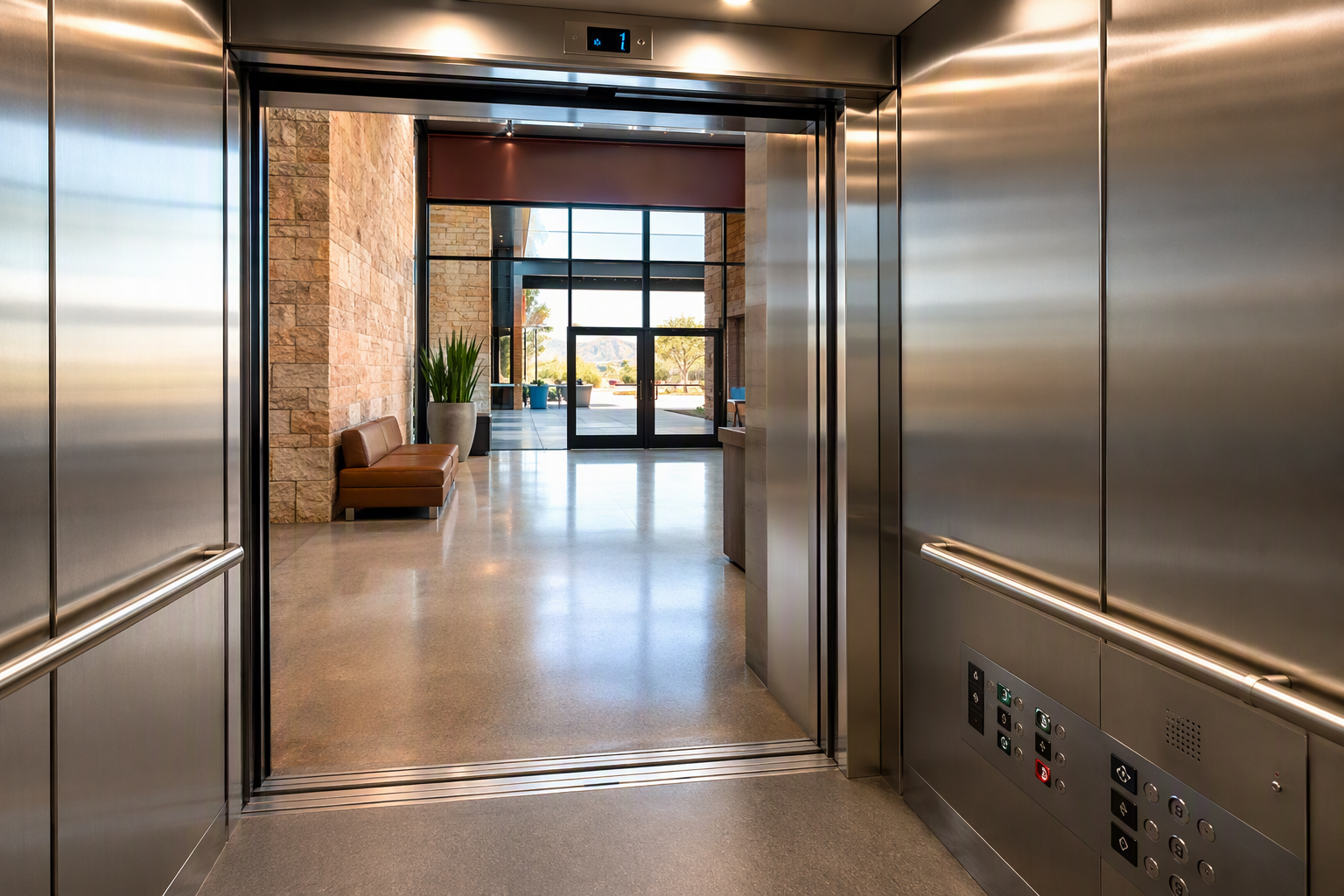
Buildings across the Phoenix metro area that rely on vertical transportation must satisfy two overlapping sets of rules: federal accessibility law and Arizona’s elevator safety requirements. ADA compliant elevators protect owners from liability, serve every visitor equitably, and must be kept in proper working order under Arizona state law. Arizona Elevator Solutions helps property owners, facility managers, and developers navigate both frameworks—from initial installation through annual inspections and ongoing maintenance.
What Makes an Elevator ADA Compliant?
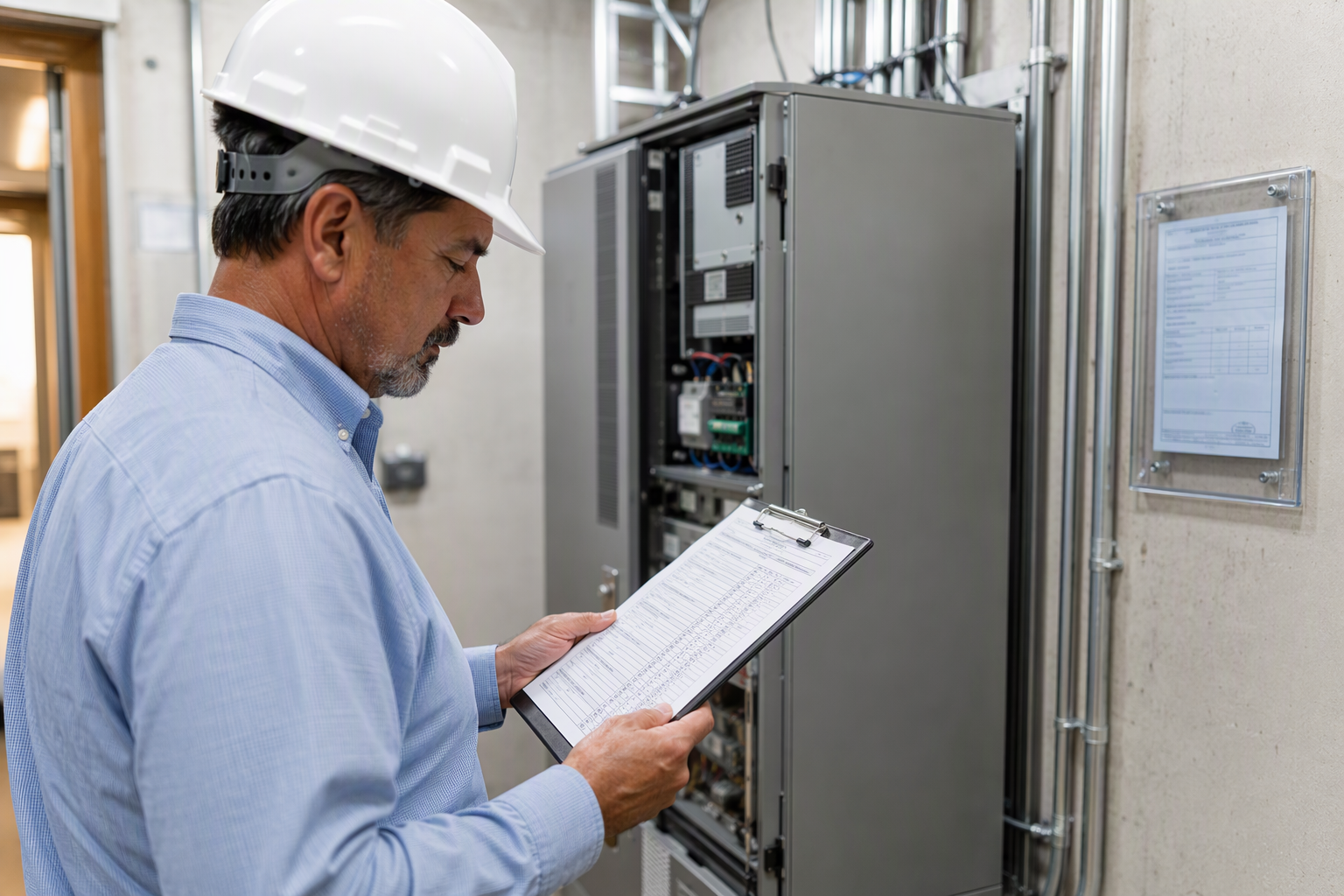
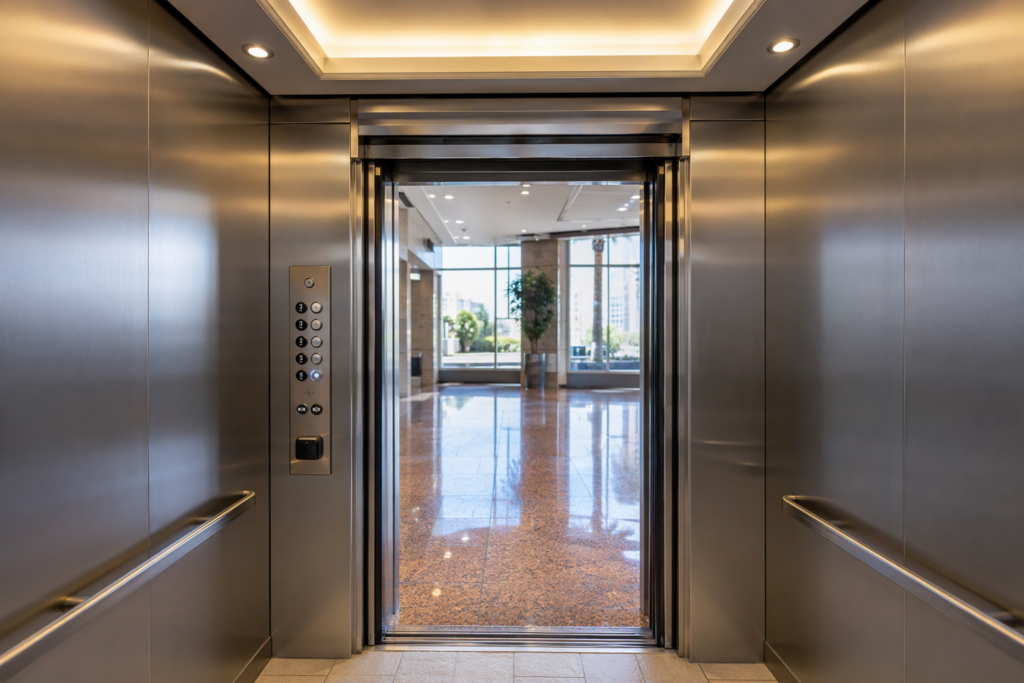
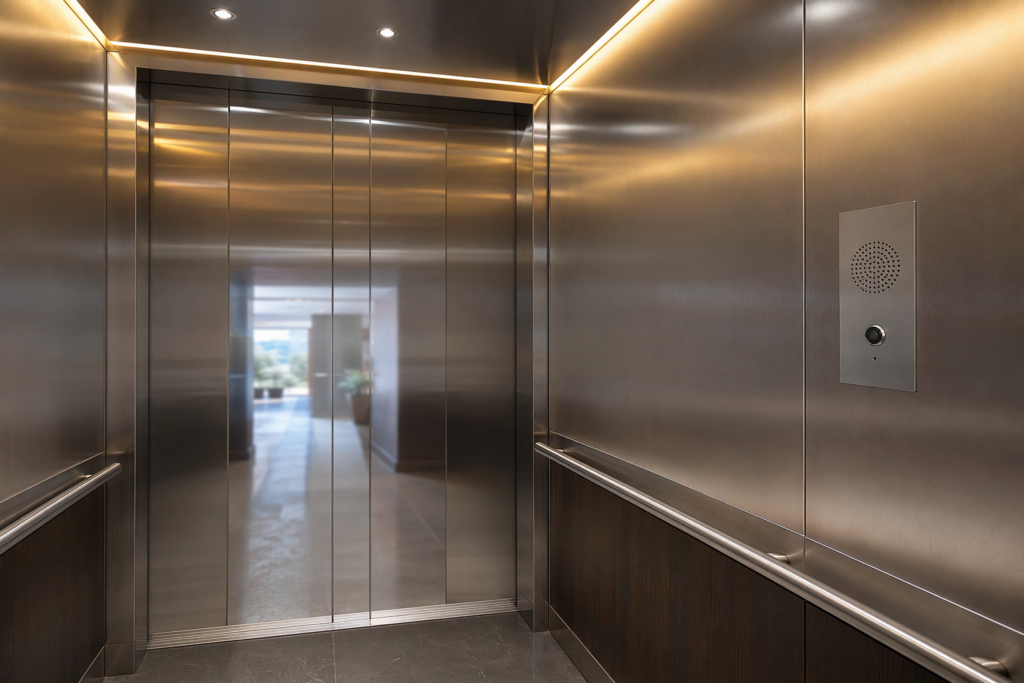
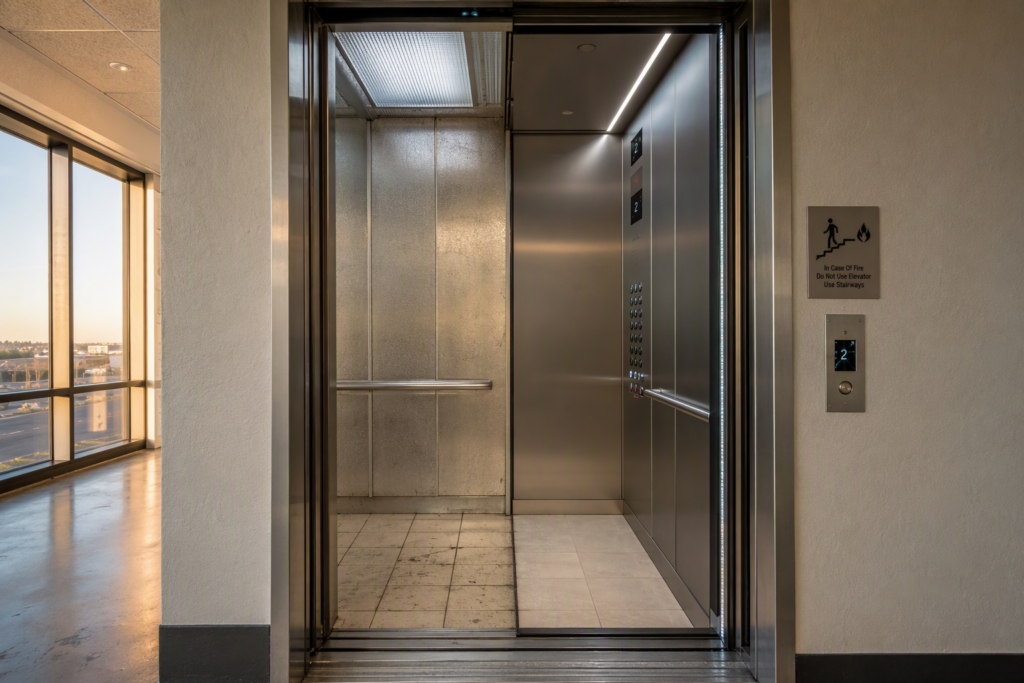
The Americans with Disabilities Act sets baseline accessibility standards for elevators in most public and commercial buildings. Key requirements address door width and timing, car dimensions, control panel height and button size, audible and visual floor indicators, handrails, and Braille signage. Platform lifts installed to serve areas where a full hoistway is not feasible must also meet ADA guidelines. Because ADA standards are federal law, they apply regardless of whether a building is in Phoenix proper or elsewhere in Arizona.
Arizona additionally requires that all conveyances—including those modified to achieve ADA compliance—comply with the ASME A17.1/CSA B44 Safety Code for Elevators and Escalators, 2019 edition, for equipment installed, repaired, or altered on or after January 1, 2023. Platform lifts and stairway chairlifts installed, repaired, or altered on or after that same date must comply with ASME A18.1-2020. Meeting ADA dimensions while also satisfying these mechanical safety codes is the baseline expectation for any compliant installation in Arizona.
Which Buildings in Phoenix Must Have ADA Compliant Elevators?
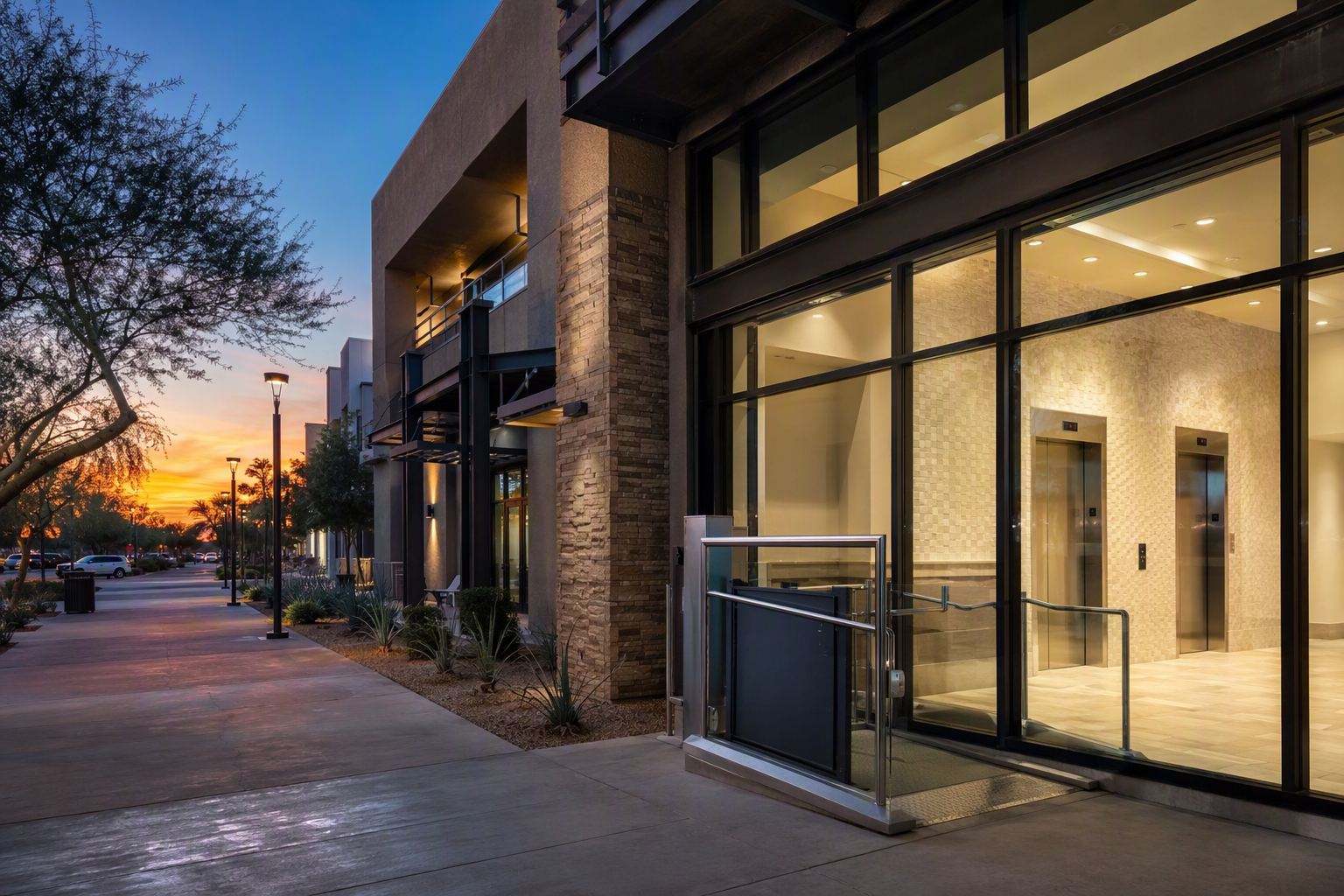
Under the ADA, most new multi-story commercial, governmental, and public-accommodation buildings are required to provide accessible vertical access. Alterations to existing buildings can also trigger ADA compliance obligations for the path of travel to the altered area. Residential buildings covered under the Fair Housing Act carry their own accessible-design requirements. Because the analysis depends on building type, occupancy, construction date, and scope of renovation, Arizona Elevator Solutions recommends consulting qualified legal or accessibility counsel alongside a certified elevator contractor when evaluating specific obligations.
How Does Arizona Regulate Elevator Safety and Inspections?
Arizona’s elevator safety program is administered by the Industrial Commission of Arizona (ICA), Elevator Division—formerly known as the ADOSH Elevator Safety Section until September 12, 2026, when Laws 2026, Ch. 73 restructured the program. The governing statute is A.R.S. §§ 23-491 through 23-491.16, and the applicable administrative rules are Arizona Administrative Code R20-5-502 through R20-5-515.
Within the City of Phoenix, the City of Phoenix Elevator Section (Planning and Development Department) inspects elevators, escalators, moving walks, dumbwaiters, and chairlifts. The ICA Elevator Division handles equipment located outside Phoenix city limits.
Key compliance obligations for Arizona owners include:
- Each conveyance must be inspected before it first goes into service, after any modification or alteration, and annually thereafter.
- No conveyance may operate in Arizona without a valid annual certificate of inspection issued by the state.
- The certificate must be kept at the same location as the conveyance and made available on request.
- The state serial number or certificate must be posted in or close to the conveyance in an easily accessible location.
- Owners must notify the state at least 90 days before installing, relocating, or altering a conveyance.
- Any accident that injures a person or disables a conveyance must be reported to the state within 24 hours.
- Conveyances with firefighters’ emergency operation must use the Arizona Firefighters Service (AZFS) key.
Arizona owners may hire a private elevator inspector authorized by the ICA Elevator Division to perform initial or annual inspections. Private inspectors must register with the commission annually and demonstrate at least eight hours of approved continuing education. An authorized private inspector may not inspect a conveyance owned, operated, or last serviced by that inspector, a company the inspector owns, or the inspector’s employer. Using a private inspector does not relieve the owner or operator of their legal obligations.
What Steps Should a Phoenix Property Owner Take to Achieve ADA Elevator Compliance?
- Assess the building’s current vertical transportation against ADA accessibility requirements, noting door widths, car dimensions, control placement, and signage.
- Identify whether the work constitutes a new installation, an alteration, or a retrofit, as each category carries different code triggers under both the ADA and Arizona’s adopted ASME standards.
- Notify the Industrial Commission of Arizona, Elevator Division (or the City of Phoenix Elevator Section for in-city projects) at least 90 days before beginning installation, relocation, or alteration work.
- Engage a licensed elevator contractor—Arizona requires R-12 or C-12 classification from the Arizona Registrar of Contractors for installation and repair work.
- Have all work inspected by an authorized inspector before returning the conveyance to service.
- Obtain and post the annual certificate of inspection in a location accessible to occupants and inspectors.
- Establish a recurring maintenance schedule to keep the equipment operating within ADA and ASME standards on an ongoing basis.
Can Existing Elevators Be Retrofitted for ADA Compliance?
Many older elevator installations can be upgraded to meet current ADA accessibility standards. Common retrofit work includes widening cab doors, replacing control panels with ADA-height fixtures and Braille labeling, adding audible and visual floor announcements, and updating handrail configurations. Any repair or alteration performed on or after January 1, 2023 must conform to the ASME A17.1-2019 Safety Code for Elevators and Escalators. Arizona law also permits lawfully installed older conveyances to remain in service unless the state’s elevator chief determines the equipment poses a hazard to life, health, or property—making proactive upgrades both a compliance strategy and a risk-management measure.
What Are the Risks of Operating a Non-Compliant Elevator in Arizona?
Operating a conveyance without a valid Arizona certificate of inspection is prohibited under A.R.S. §§ 23-491 through 23-491.16. Beyond state enforcement, a building that fails to provide accessible vertical transportation can face federal ADA complaints or litigation. Injuries occurring on poorly maintained or non-compliant equipment create additional liability exposure for owners and operators. Regular inspections, prompt reporting of accidents or equipment failures, and documented maintenance are the most effective ways to manage these risks.
Does ADA Compliance Apply to Platform Lifts and Chairlifts?
Yes. The ADA permits platform lifts as a compliant means of accessible vertical access in specific situations, including areas where full elevator installation is not technically feasible. In Arizona, platform lifts and stairway chairlifts installed, repaired, or altered on or after January 1, 2023 must comply with ASME A18.1-2020. These units are subject to the same pre-service inspection, annual inspection, and certificate-of-inspection requirements as full elevator installations under Arizona law.
How Does Arizona Elevator Solutions Serve the Phoenix Market?
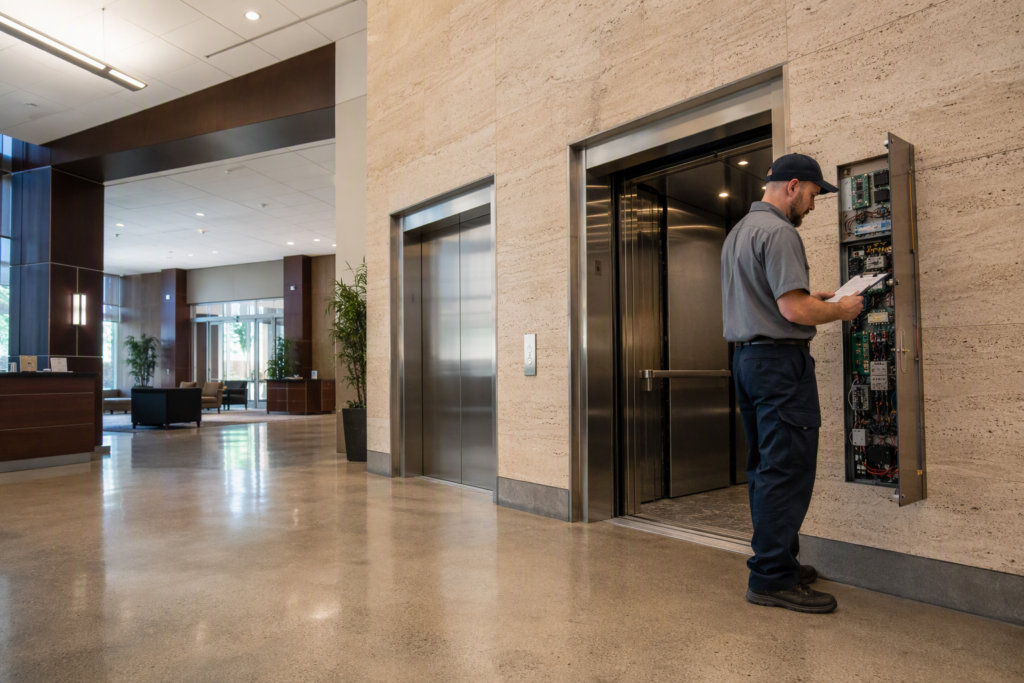
Arizona Elevator Solutions works with commercial property owners, healthcare facilities, hospitality operators, government agencies, residential communities, and developers throughout Phoenix and the broader Arizona market. The company’s work spans new elevator installation, ADA compliance retrofits, modernization projects, routine maintenance, and coordination with the City of Phoenix Elevator Section and the ICA Elevator Division on permitting and inspection logistics. Because Arizona Elevator Solutions operates exclusively within Arizona, the team is focused entirely on the regulatory environment, local inspection authorities, and building stock that Phoenix-area owners navigate every day.
For emergency situations involving a disabled or malfunctioning conveyance, Arizona Elevator Solutions provides after-hours support. Arizona law requires owners to notify the state within 24 hours of any accident that injures a person or disables a conveyance, and prompt professional response helps owners meet that obligation and return equipment to safe operation.
Schedule a free consultation with Arizona Elevator Solutions at 480-557-7600.
Need elevator service you can rely on? Arizona Elevator Solutions is ready to help.