ADA Elevator Accessibility Upgrades for Healthcare Facilities in Arizona
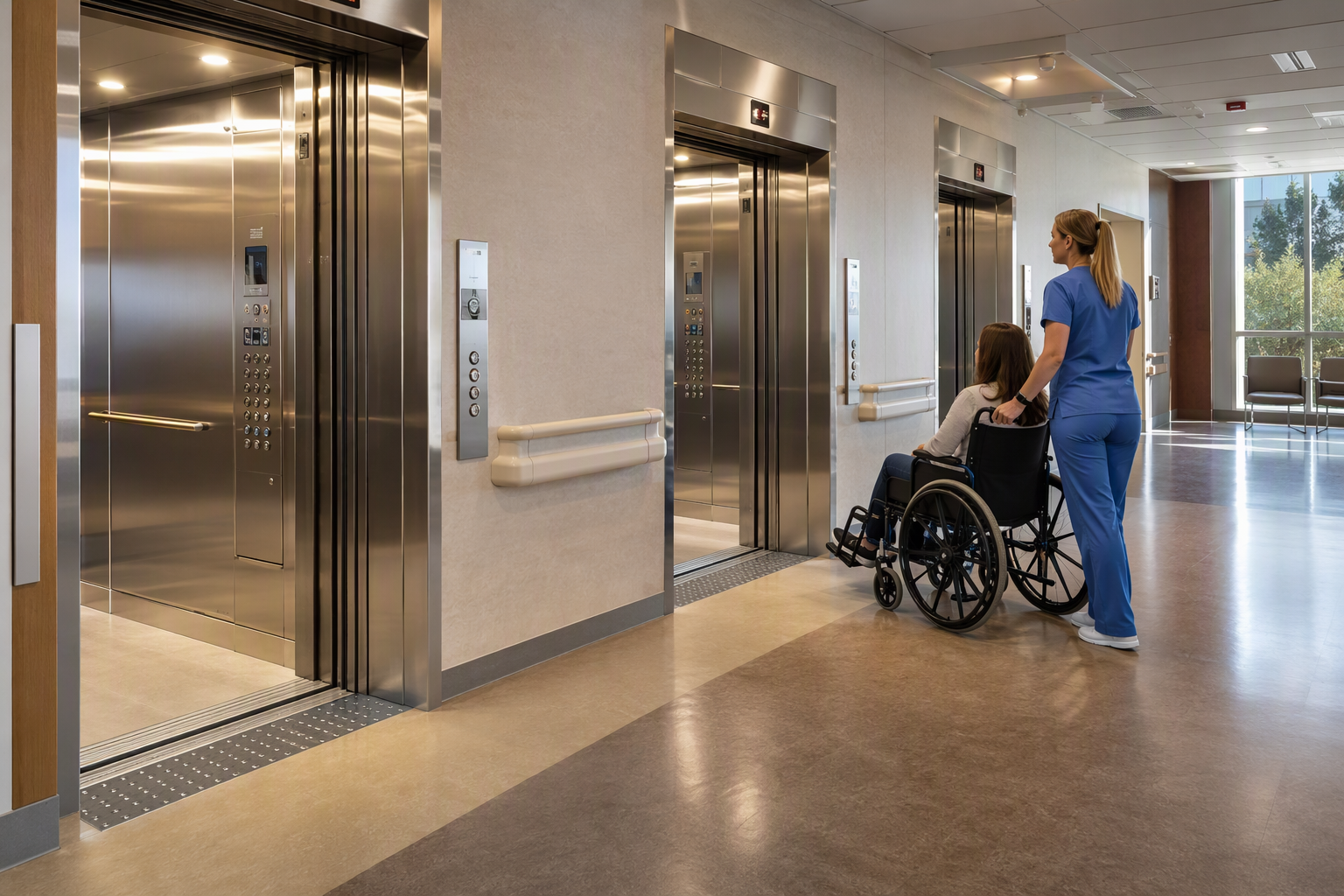
Healthcare facilities in Phoenix, Tucson, Scottsdale, and Mesa face a higher compliance bar than most commercial buildings. Patients using wheelchairs, staff transporting medical equipment, and visitors with mobility limitations all depend on elevators that meet both federal accessibility mandates and life-safety codes. Falling short on any of these requirements can expose a facility to federal complaints, state inspection failures, and—most critically—genuine harm to the people the facility is meant to serve.
This guide covers every compliance layer a healthcare facility manager or administrator needs to understand, from federal ADA obligations to Arizona-specific inspection requirements, and outlines exactly what upgrades are typically required in existing buildings.
What Does the ADA Actually Require for Elevators in Existing Healthcare Buildings?
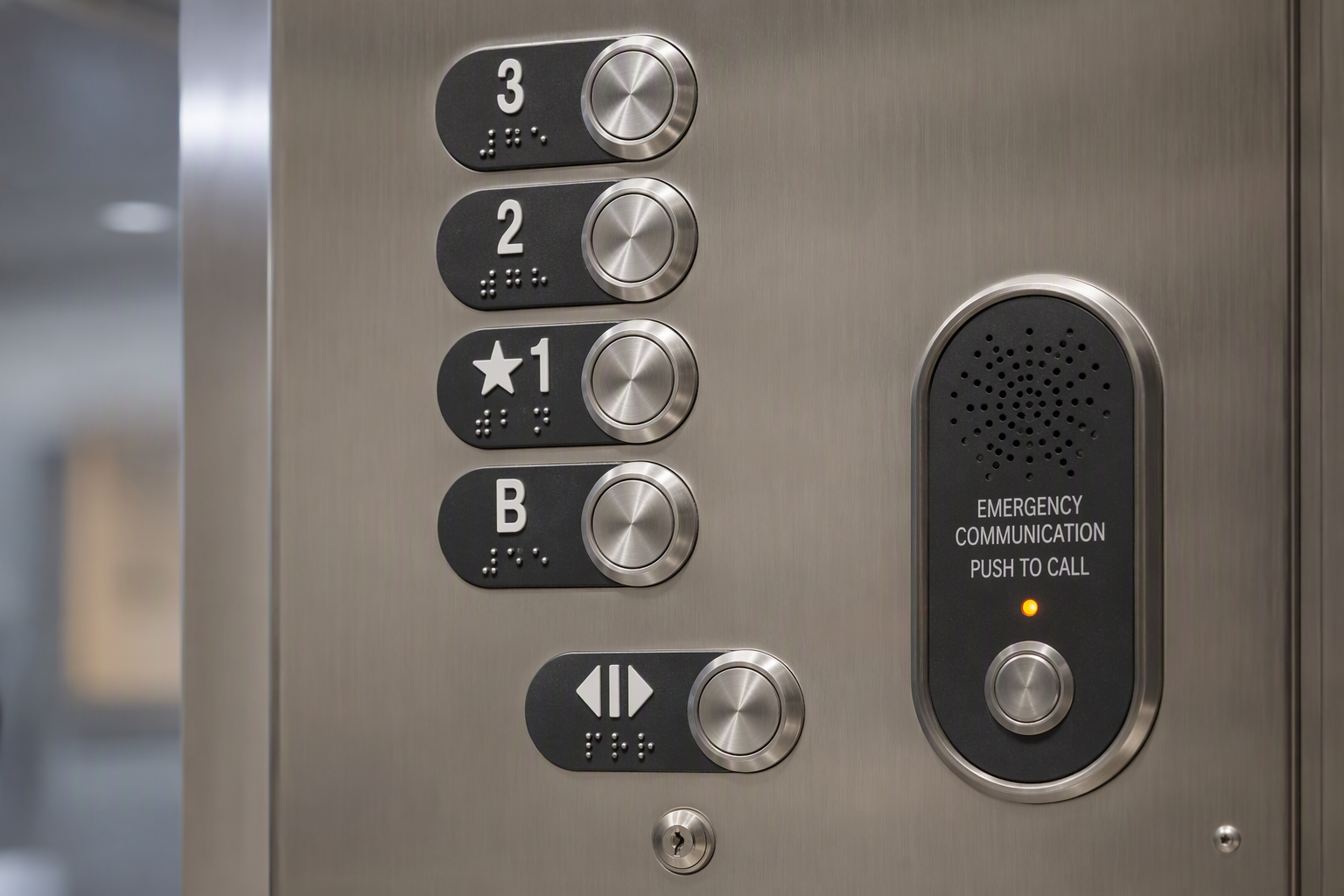
The ADA Standards for Accessible Design apply to places of public accommodation and commercial facilities, which includes hospitals, medical office buildings, outpatient clinics, rehabilitation centers, and long-term care facilities. For existing buildings undergoing alterations or barrier removal, the ADA requires elevators to be accessible to the maximum extent feasible.
Core ADA elevator requirements for existing healthcare facilities include:
- Cab dimensions: Inside clear floor space must accommodate a wheelchair user. The ADA specifies minimum interior dimensions for accessible elevator cabs, and healthcare facilities often need larger cabs to accommodate gurneys, wheelchairs, and IV equipment simultaneously.
- Door clear width: A minimum clear opening is required to allow wheelchair passage. Many older hospital elevators fall short of this standard.
- Door timing: Doors must remain open long enough for a person using a mobility device to enter and exit without risk of the door closing on them.
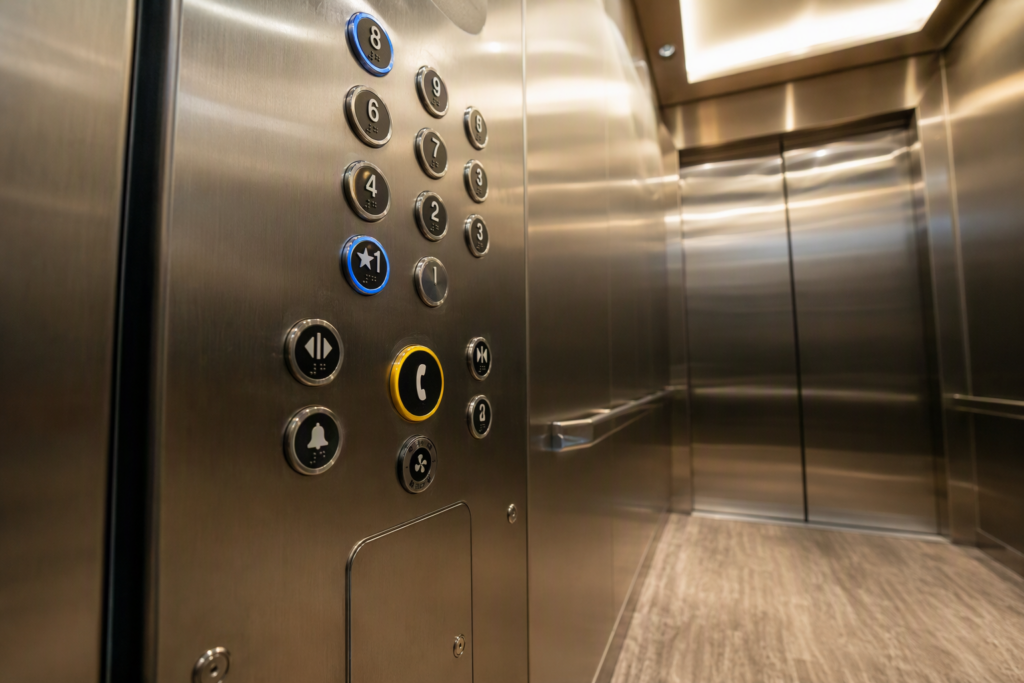
- Control panel height: All controls must be reachable from a seated position, with reach range requirements limiting the height of the highest operable part.
- Tactile markings and Braille: All floor-designation buttons and the door-open and door-close controls must include raised characters and Braille.
- Visual and audible signals: Hall lanterns and audible tones must indicate the direction of travel and the arrival of the cab.
- Floor level accuracy: The cab must stop level with each floor within a tolerance that allows wheelchair users to enter and exit without a threshold gap or step.
- Emergency two-way communication: An in-cab emergency communication system must be usable by someone who is deaf or hard of hearing, typically requiring a visual indicator confirming the call has been received.
- Illumination levels: Interior cab lighting must meet minimum levels to assist passengers with low vision.
How Does ASME A17.3 Apply to Existing Healthcare Elevators in Arizona?
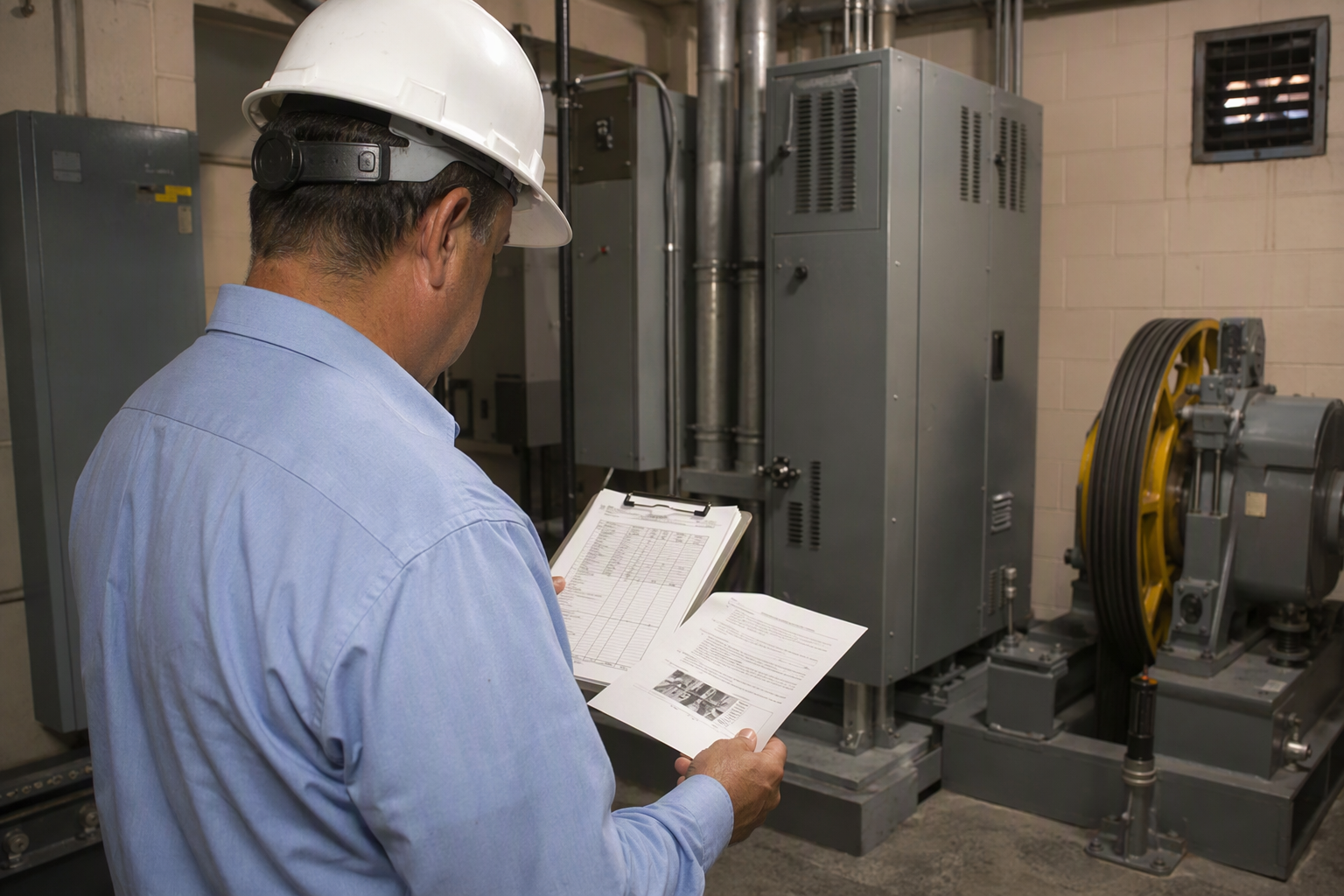
While the ADA governs accessibility, the ASME A17.3 Safety Code for Existing Elevators and Escalators governs life-safety and mechanical requirements for elevators already in service. Arizona adopts ASME codes through its state elevator safety program, administered by the Arizona Department of Occupational Safety and Health (ADOSH) under OSHA-aligned state authority.
For healthcare facilities, ASME A17.3 requirements that intersect with accessibility upgrades include:
- Leveling accuracy standards that align with ADA floor-level tolerances
- Door reopening device requirements to prevent door contact with passengers
- Emergency lighting inside the cab
- Phase I and Phase II firefighters’ emergency operation, which is mandatory in healthcare occupancies
- Periodic inspection and testing intervals that must be met to maintain a valid Arizona state certificate of operation
Any upgrade that modifies the elevator’s mechanical or electrical systems will also trigger review under the ASME A17.1 Safety Code for Elevators and Escalators, which governs new installations and major alterations. Arizona Elevator Solutions works directly with Arizona’s Elevator Safety Section to ensure all permitted alterations are inspected and certified correctly.
Are Healthcare Facilities Held to a Higher Standard Than Other Commercial Buildings?
Yes, in practice. Healthcare facilities are subject to additional oversight layers beyond the ADA and ASME codes:
- The Joint Commission (TJC): Accredited hospitals undergo facility surveys that include evaluation of vertical transportation accessibility and life-safety compliance.
- Centers for Medicare & Medicaid Services (CMS): Facilities participating in Medicare and Medicaid must comply with the Conditions of Participation, which incorporate life-safety standards that reference elevator accessibility and emergency operations.
- NFPA 101 Life Safety Code: Widely adopted in Arizona healthcare occupancy reviews, this code addresses elevator firefighters’ service and emergency power provisions that directly affect elevator operation during evacuations.
A hospital elevator that fails an ADA audit does not just risk a civil rights complaint — it can jeopardize CMS certification and TJC accreditation, both of which have significant financial consequences. Arizona Elevator Solutions understands this multi-agency compliance environment and structures assessment reports to address each regulatory layer.
What Is the Step-by-Step Process for Bringing a Healthcare Elevator into ADA Compliance?
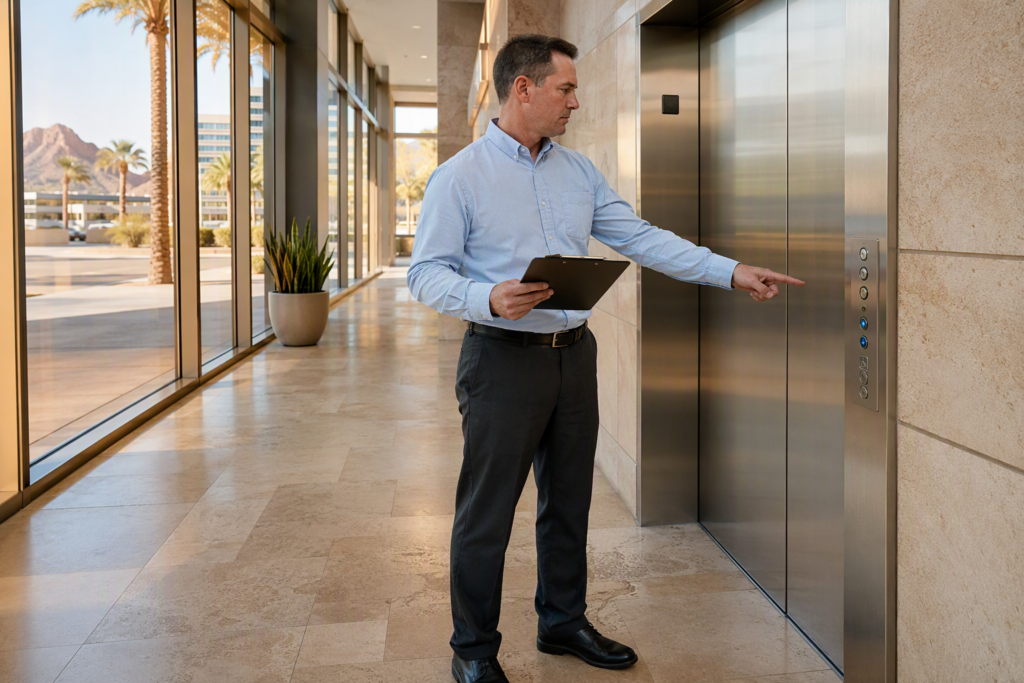
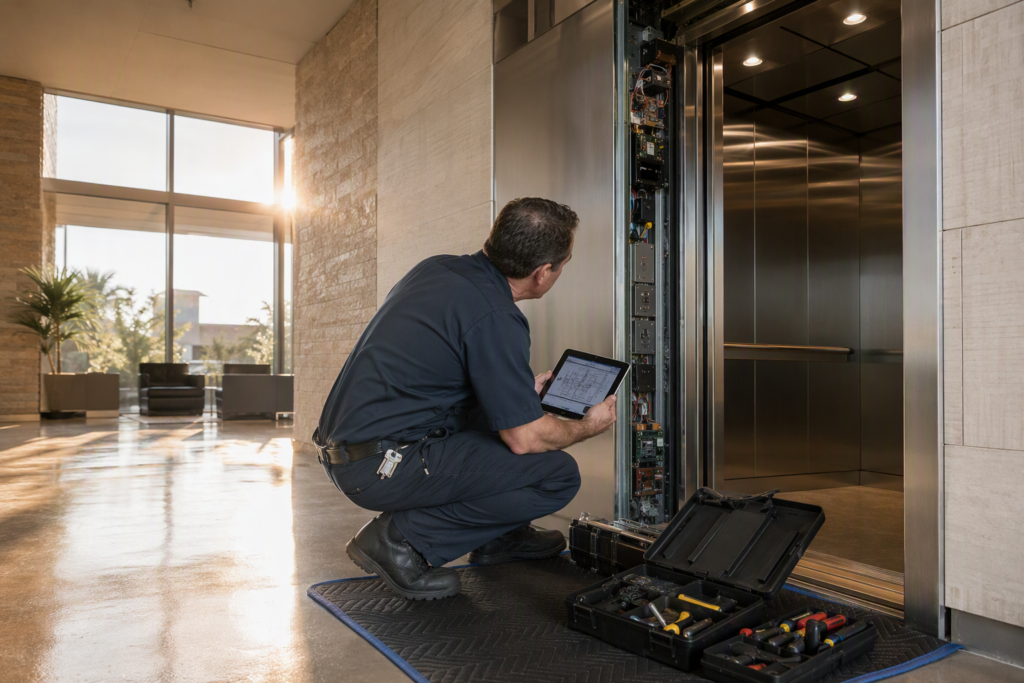
- Commission a full accessibility audit. Have a qualified elevator company conduct a physical inspection of every elevator in the facility, measuring cab dimensions, door widths, control heights, leveling accuracy, signage, and communication systems against current ADA standards.
- Review the Arizona state inspection record. Obtain the current certificate of operation from ADOSH and identify any outstanding violations or conditions noted by the state inspector.
- Prioritize barrier removal. Under the ADA, existing facilities must remove barriers where readily achievable. Rank findings by severity of access impact and cost of remediation.
- Develop a scope of work. Work with a licensed elevator contractor to document all required modifications, from control panel replacements and door timing adjustments to cab expansions if structurally feasible.
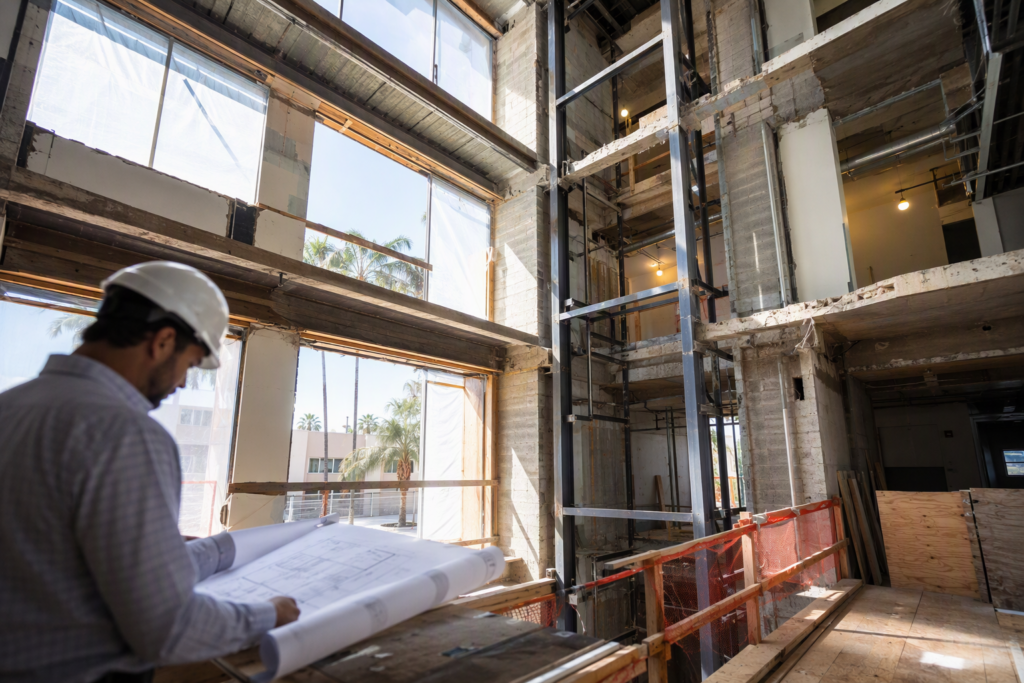
- Submit permit applications. File the required alteration permits with the Arizona Elevator Safety Section before any work begins. Major alterations require plan review.
- Complete the upgrades. A licensed elevator mechanic performs all modifications under the oversight of the elevator contractor of record.
- Schedule a state inspection. Once work is complete, the Arizona Elevator Safety Section must inspect and approve the modifications before the elevator is returned to full service.
- Update documentation. Retain all inspection certificates, test records, and compliance documentation in the facility’s life-safety files for surveyor and auditor review.
Which Specific Elevator Components Most Commonly Fail ADA Compliance in Older Arizona Healthcare Facilities?
Based on widely reported compliance patterns across the elevator industry, the most frequently cited deficiencies in existing healthcare elevators include:
- Control panel reach range violations: Older panels often have buttons mounted above the maximum height permitted for a forward or side reach from a wheelchair.
- Missing or worn tactile characters and Braille: Button legends degrade over time and must be replaced to remain readable by touch.
- Insufficient door dwell time: Door timing parameters set during original installation often predate modern accessibility standards.
- Emergency communication systems without visual confirmation: Older intercom systems that provide only audio output do not satisfy ADA requirements for deaf or hard-of-hearing users.
- Floor leveling drift: Aging hydraulic systems and worn rope drives cause cabs to stop slightly above or below floor level, creating a threshold hazard for wheelchair users.
- Inadequate cab lighting: Older fluorescent fixtures may not meet minimum illumination levels.
How Long Do ADA Elevator Upgrades Take in a Healthcare Facility?
Timeline depends heavily on the scope of required work. Minor modifications — such as control panel replacement, door timing adjustments, and tactile signage installation — can often be completed with brief, scheduled shutdowns that minimize disruption to patient transport. More extensive work, such as cab enlargement or hydraulic system replacement, requires longer outages and careful coordination with facility operations teams to ensure continuity of patient care.
Healthcare facilities in Phoenix, Scottsdale, Mesa, and Tucson should plan for permit review and state inspection scheduling time in addition to actual installation time. Arizona Elevator Solutions helps facilities develop realistic project timelines and phased upgrade plans that keep critical elevators in service throughout the process.
What Is the Difference Between an ADA Alteration Trigger and a Barrier Removal Obligation?
This distinction matters significantly for budget planning:
- Alteration trigger: When a healthcare facility modifies a primary function area — such as renovating a patient floor, adding a new wing, or reconfiguring a lobby — the ADA requires that the path of travel to the altered area, including vertical access, be made accessible to the extent that the cost does not exceed a defined percentage of the overall alteration cost. This is a mandatory obligation tied to the renovation project.
- Barrier removal: Independent of any renovation, the ADA requires places of public accommodation to remove existing barriers on an ongoing basis where doing so is readily achievable — meaning achievable without much difficulty or expense. Healthcare facilities must continually assess and address elevator accessibility barriers under this standard.
Understanding which obligation applies to a given situation determines both the legal timeline for compliance and the available budget framework. Arizona Elevator Solutions provides assessment reports structured to help legal and facilities teams make this determination accurately.
Does Every Floor in a Multi-Story Healthcare Building Require an Accessible Elevator?
The ADA generally requires that if a building has an elevator, it must be accessible. In multi-story healthcare facilities, which by their nature require vertical circulation for patients, visitors, and staff, every elevator serving public or patient areas must comply. The ADA elevator exemption that applies to small buildings with fewer than three stories or fewer than a defined number of square feet does not apply to healthcare facilities, which are expressly excluded from that exemption.
Questions Your Inspector Will Ask
When an Arizona state elevator inspector visits a healthcare facility — whether for a routine periodic inspection or following an alteration — the following questions and documentation requests are standard. Facilities should be prepared to answer all of them:
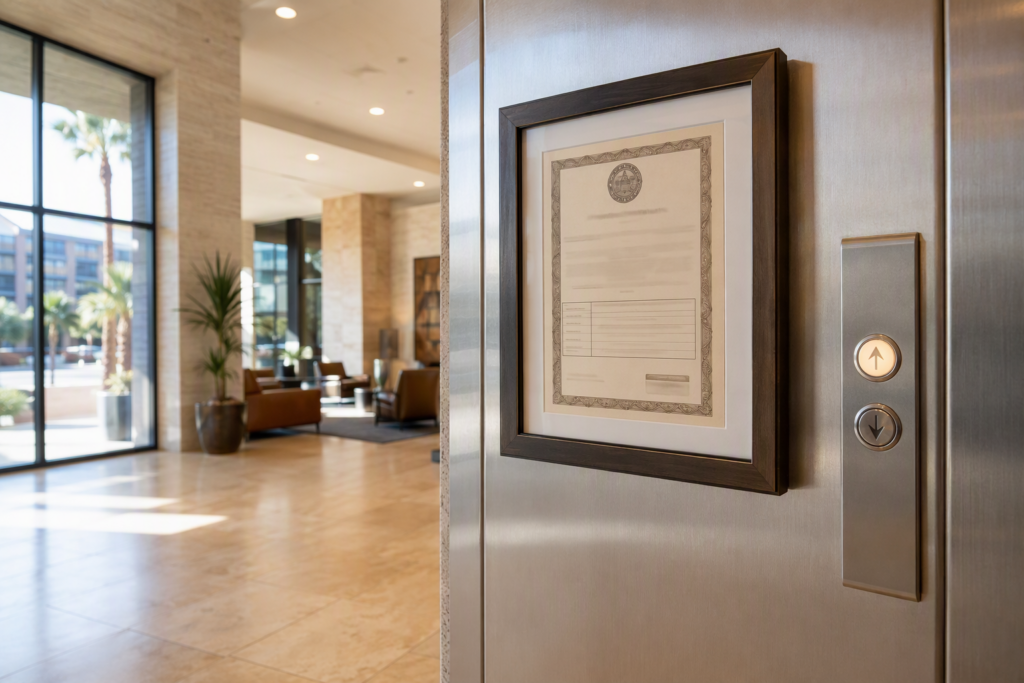
- Is the current certificate of operation posted and within its valid period?
- Have all required periodic tests been performed and documented, including five-year full-load safety tests for hydraulic units where applicable?
- Is firefighters’ emergency service (Phase I and Phase II) fully operational and tested?
- Does the emergency lighting operate on battery backup independent of building power?
- Is the in-cab two-way communication system functional and does it provide visual confirmation of connection for hearing-impaired passengers?
- Are all cab control buttons at reachable heights with legible tactile characters and Braille?
- Does the cab stop level with each floor within acceptable tolerance?
- Have any alterations been performed since the last inspection, and if so, were permits pulled and inspections completed?
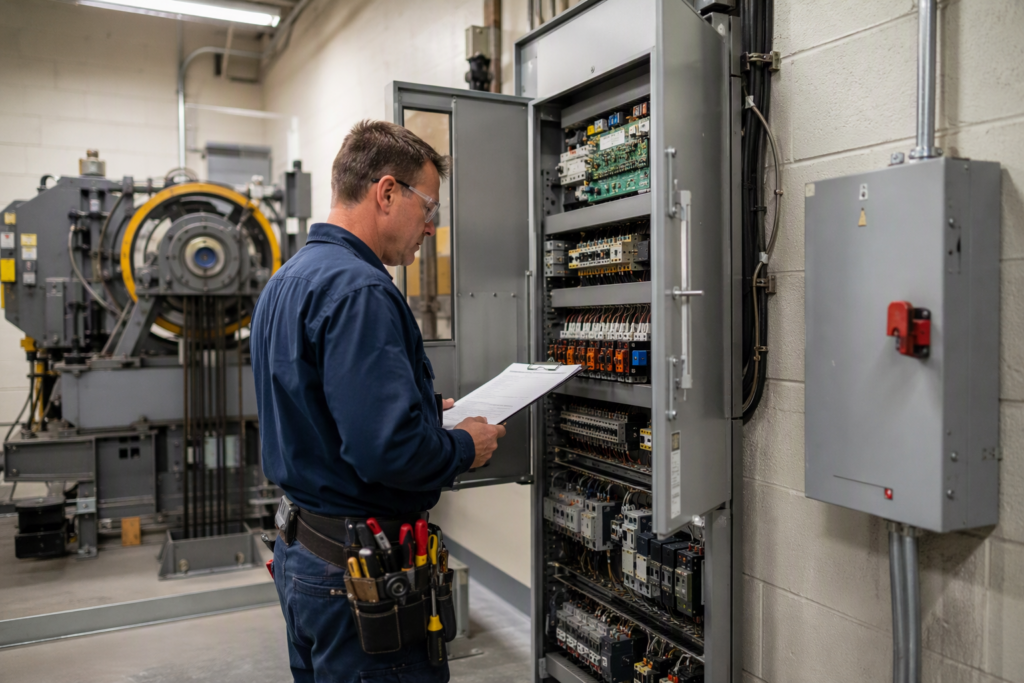
- Is the machine room or equipment space secure, properly lit, and free of stored materials?
- Are maintenance records available, and do they reflect the required maintenance intervals?
Facilities that cannot answer these questions affirmatively — or produce supporting documentation — face the risk of a failed inspection and a conditional or suspended certificate of operation, which could require elevator shutdown. Arizona Elevator Solutions conducts pre-inspection readiness reviews specifically to help healthcare clients avoid this outcome.
How Should a Healthcare Facility Evaluate Elevator Service Contractors for ADA Compliance Work?
Not every elevator company has experience navigating the intersection of ADA requirements, ASME codes, and the multi-agency compliance environment of healthcare facilities. When evaluating contractors, facilities should look for:
- Active Arizona state elevator contractor licensing
- Demonstrated familiarity with ADOSH elevator inspection processes in Arizona
- Experience producing compliance documentation suitable for TJC and CMS survey review
- The ability to coordinate outage scheduling with facility operations to protect patient care continuity
- Knowledge of both hydraulic and traction elevator systems, as healthcare facilities frequently have both
Arizona Elevator Solutions serves healthcare clients across Phoenix, Tucson, Scottsdale, and Mesa with a focus on code-compliant service, accurate documentation, and coordination that respects the operational realities of a clinical environment.
What Happens If a Healthcare Facility Ignores ADA Elevator Compliance?
The consequences of non-compliance are concrete and serious:
- ADA complaints and lawsuits: Any patient, visitor, or employee with a disability who is denied equal access may file a complaint with the U.S. Department of Justice or pursue private litigation under the ADA.
- CMS survey findings: Elevator accessibility deficiencies identified during a CMS survey can be cited as Conditions of Participation violations, potentially affecting Medicare and Medicaid reimbursement.
- TJC accreditation risk: The Joint Commission’s Environment of Care standards include physical accessibility requirements, and repeated or serious deficiencies can affect accreditation status.
- Arizona state elevator violations: ADOSH inspectors can issue citations and require corrective action for elevators operating out of compliance with state-adopted codes.
- Reputational and liability exposure: A healthcare facility known for accessibility barriers faces community trust consequences that extend well beyond regulatory action.
Get a Free Elevator Accessibility Assessment for Your Healthcare Facility
Healthcare facilities across Phoenix, Tucson, Scottsdale, and Mesa trust Arizona Elevator Solutions to navigate the full compliance landscape — from ADA barrier removal to ASME code conformance and state inspection readiness. An assessment from Arizona Elevator Solutions identifies every deficiency, prioritizes the work, and produces documentation ready for regulatory review.
Contact Arizona Elevator Solutions for a free elevator assessment: 480-557-7600
Need elevator service you can rely on? Arizona Elevator Solutions is ready to help.