How to Get Your Building Elevator Ready for the Annual State Inspection in Arizona
Direct Answer: To prepare your building elevator for Arizona’s annual state inspection, you must ensure your equipment complies with the ASME A17.1 Safety Code for Elevators and Escalators, maintain current maintenance logs, verify all safety devices are operational, and submit the required documentation to the Arizona Department of Occupational Safety and Health (ADOSH) before your scheduled inspection date.
Arizona building owners and facility managers face recurring compliance deadlines that carry real consequences — failed inspections can result in mandatory shutdowns, citations, and liability exposure. Understanding exactly what state inspectors evaluate, and preparing methodically in advance, is the difference between a smooth certification renewal and a costly re-inspection cycle.
What Is the Arizona Elevator Inspection Requirement?
The State of Arizona regulates elevator safety through the Occupational Safety and Health Administration framework at the federal level and through ADOSH at the state level. Arizona is a state-plan state, meaning ADOSH operates its own occupational safety program with standards that must be at least as effective as federal OSHA standards.
Elevators in Arizona must be inspected periodically — typically on an annual cycle for most passenger and freight elevator types — by a qualified elevator inspector. The governing technical standard for these inspections is the ASME A17.1 Safety Code for Elevators and Escalators, which sets the minimum safety requirements for construction, installation, operation, inspection, testing, maintenance, alteration, and repair of elevators and escalators in the United States.
Building owners are legally responsible for maintaining their elevators in compliance with applicable codes and for ensuring inspections occur on schedule. Failure to comply can result in the elevator being placed out of service until deficiencies are corrected and a re-inspection is passed.
What Does an Arizona State Elevator Inspector Actually Check?
Inspectors conducting annual elevator evaluations in Arizona follow the requirements outlined in the ASME A17.1 Safety Code for Elevators and Escalators. The inspection is comprehensive and covers both physical equipment conditions and administrative documentation. Key areas evaluated include:
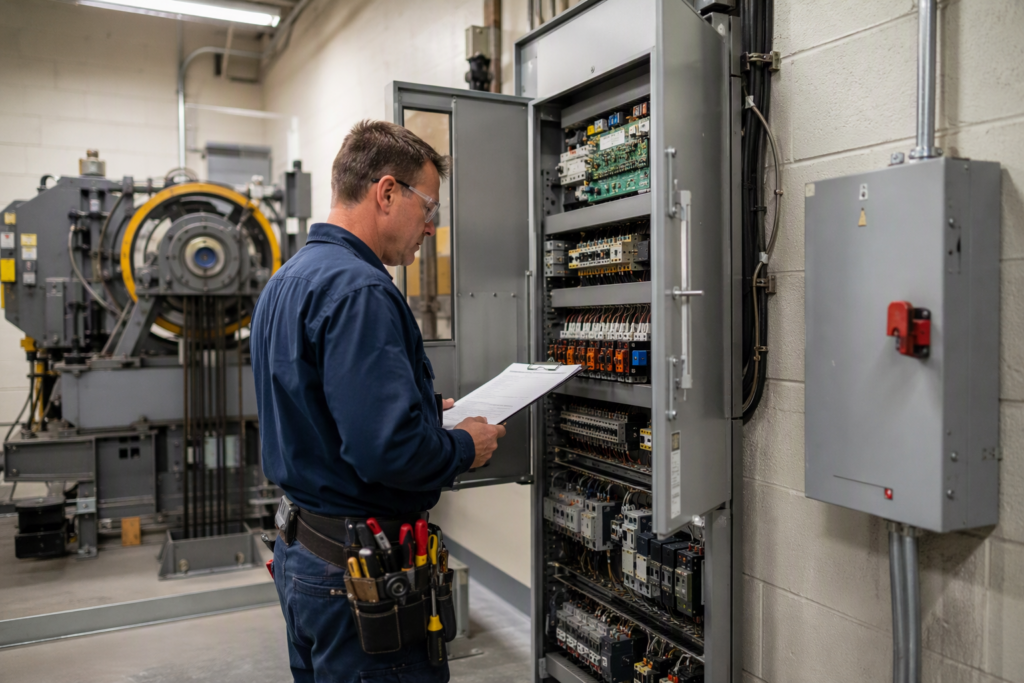
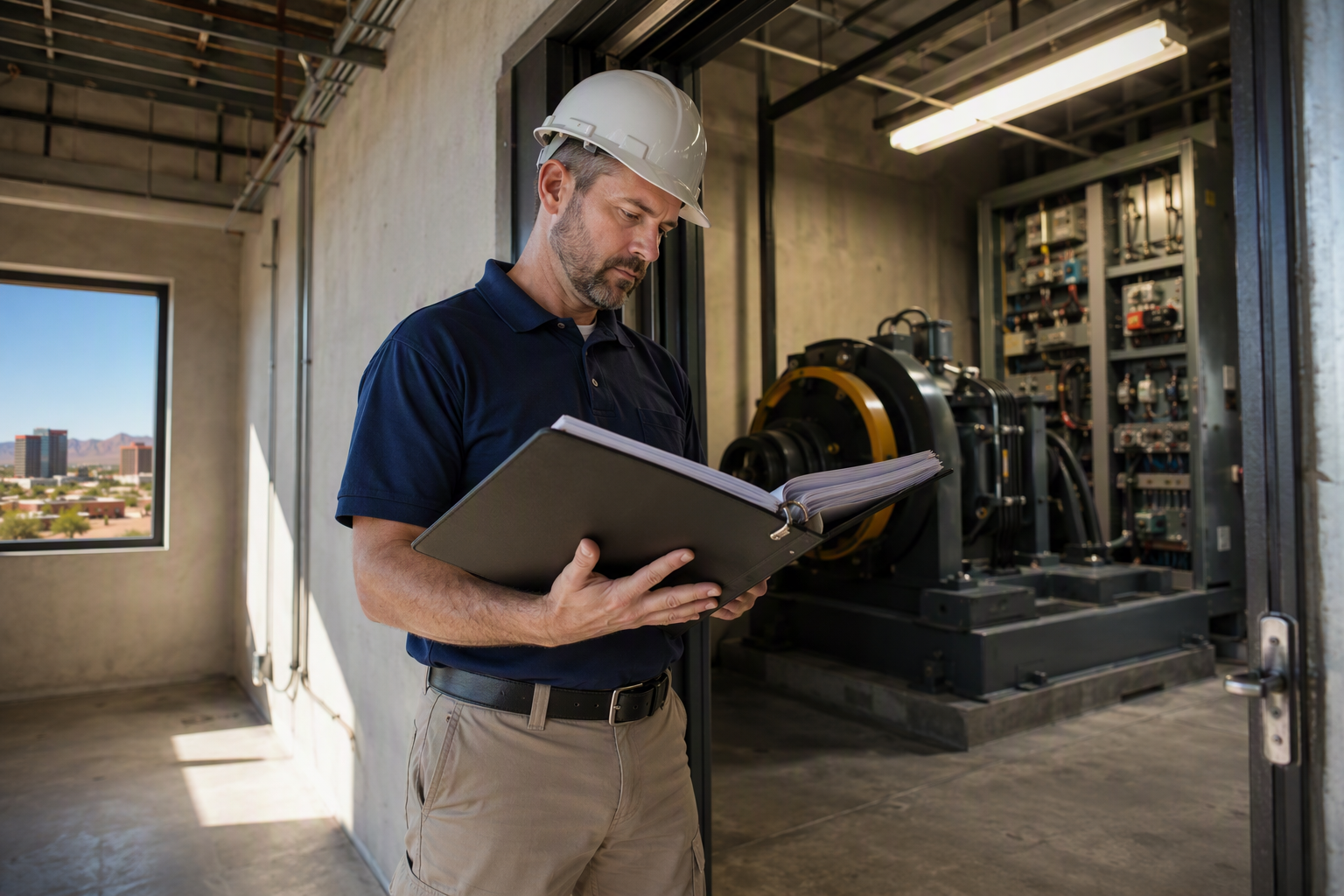
- Hoistway and machine room: Cleanliness, lighting, ventilation, access control, and absence of storage or combustible materials
- Car and hoistway doors: Proper operation, interlock function, door reopening devices, and door closing force compliance
- Safety devices: Governor, safeties, buffers, and pit stop switches must all be present and functional
- Electrical systems: Wiring condition, grounding, emergency lighting, and alarm systems
- Drive system and brake: Traction machine, hydraulic power unit (for hydraulic elevators), or drive sheave condition
- Emergency communication: A functioning two-way communication device inside the car, as required by both the ASME A17.1 code and ADA accessibility standards
- Load and capacity markings: Current and visible inside the car
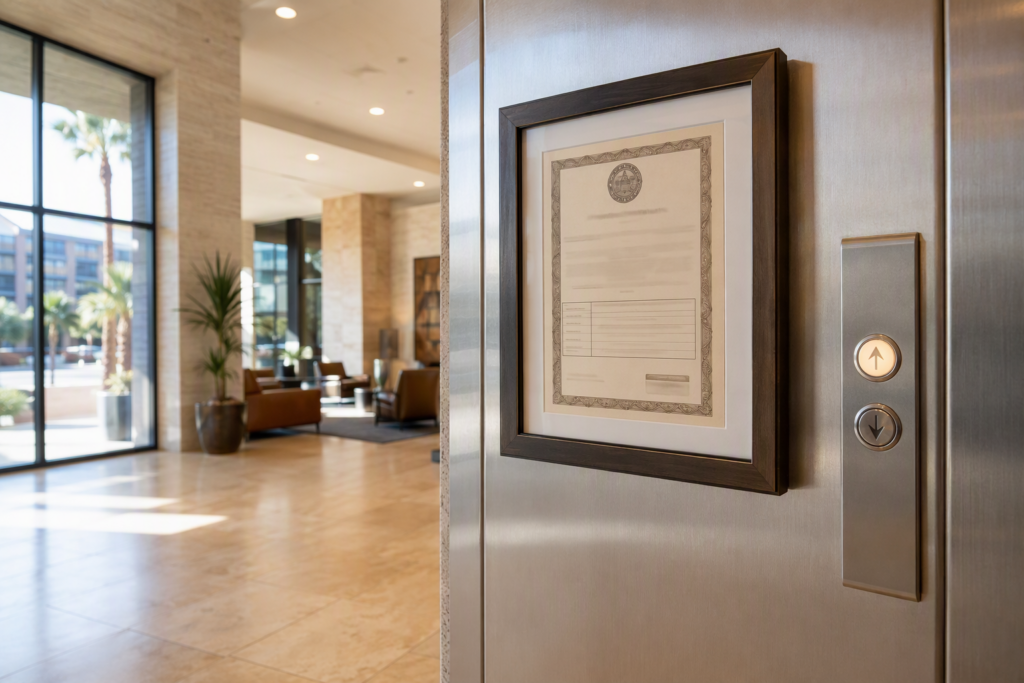
- Certificates and logs: Current inspection certificate posted in the car, maintenance records available for review
- Pit conditions: Pit ladder, lighting, stop switch, and sump pump (if applicable)
- Leveling accuracy: The car must level within acceptable tolerances at each landing
What Are the Step-by-Step Actions to Prepare for the Inspection?
Building owners and facility managers should begin preparation well before the scheduled inspection date. The following procedure covers the full preparation sequence:
- Retrieve your previous inspection report. Identify any deficiencies noted in the last inspection cycle and confirm they were corrected and documented.
- Review your maintenance contract. Confirm your elevator service provider is performing the required periodic maintenance tasks aligned with ASME A17.1 maintenance code requirements and that all service records are up to date.
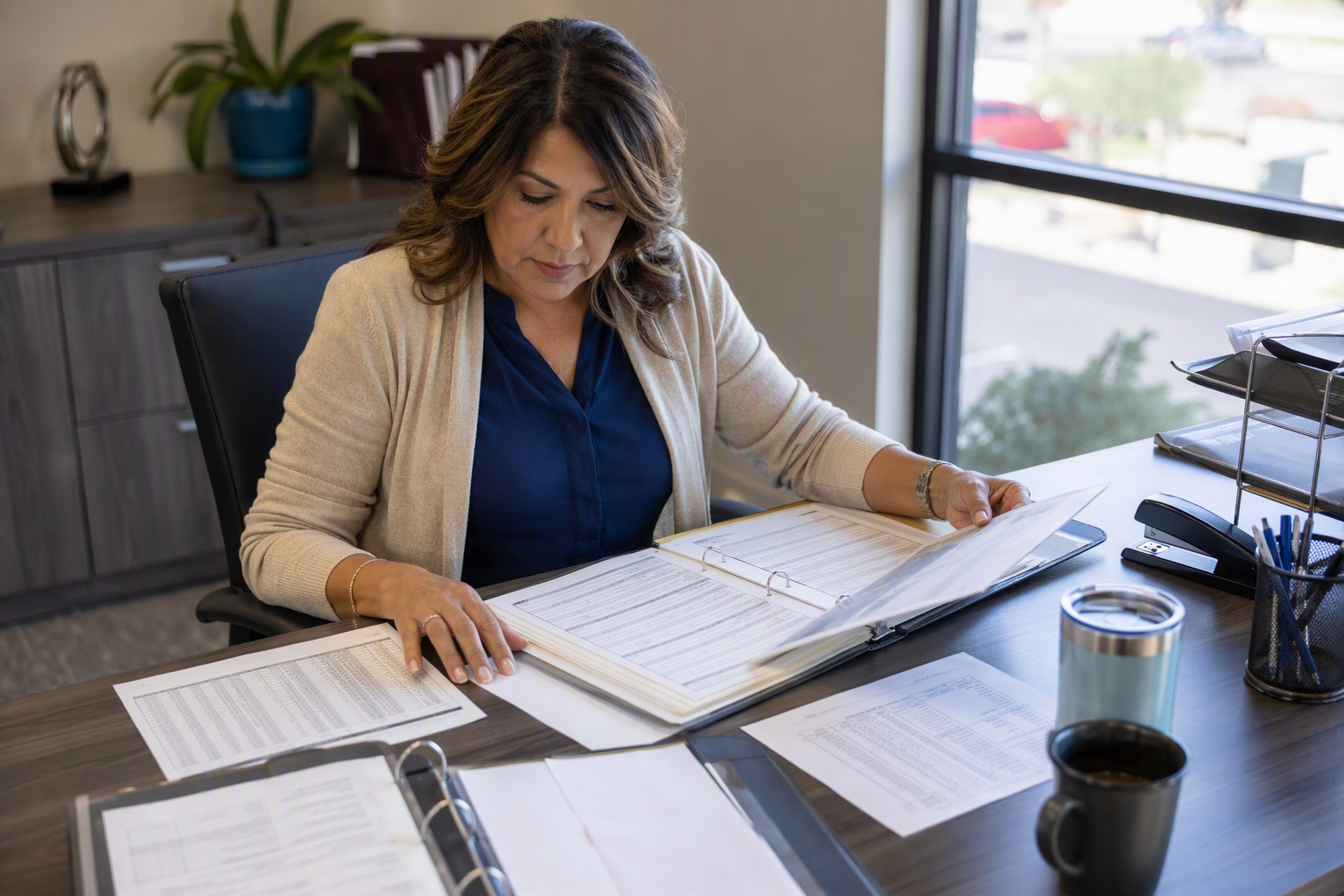
- Compile all required documentation. Gather maintenance logs, previous inspection certificates, test records, and any alteration permits issued since the last inspection.
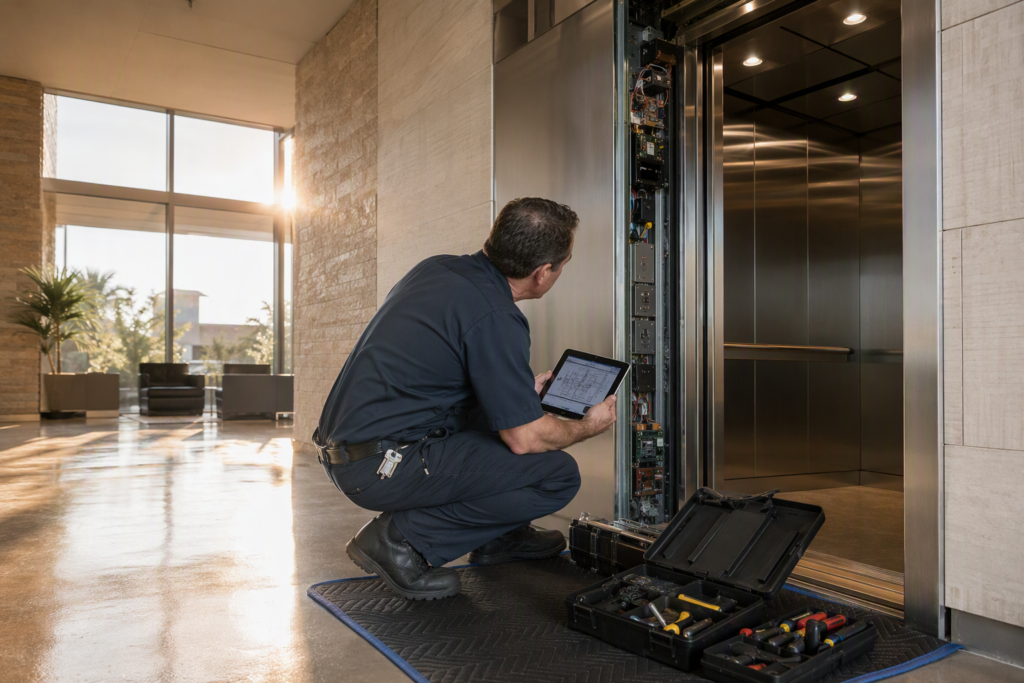
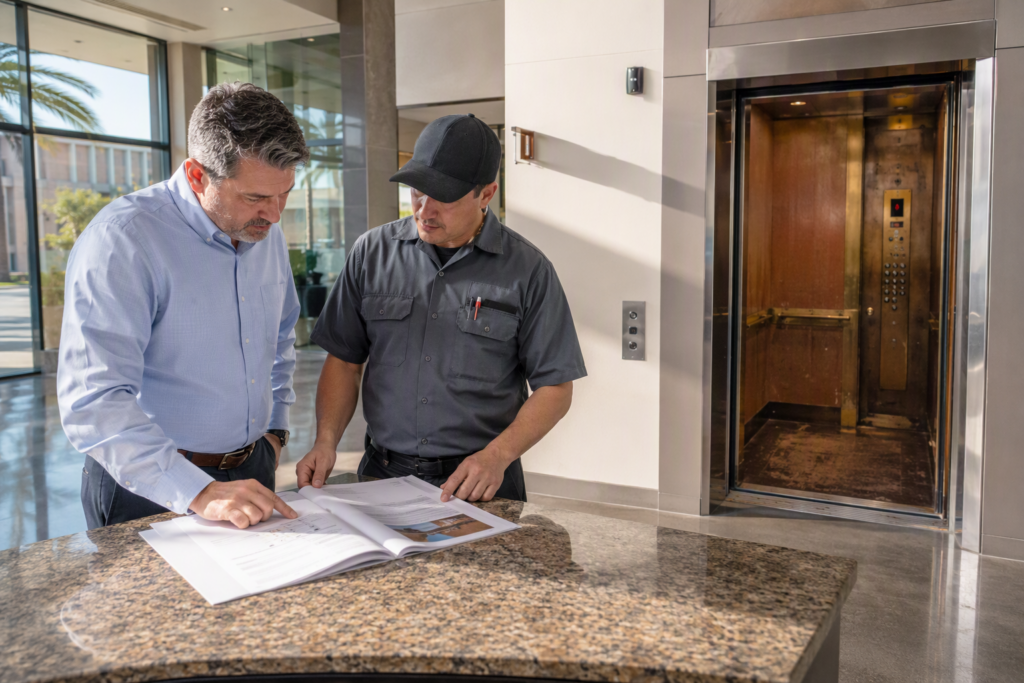
- Schedule a pre-inspection maintenance visit. Have a qualified elevator technician perform a thorough walk-through of all major systems — car, hoistway, machine room, and pit — before the official inspection date.
- Inspect the machine room and pit. Remove any stored materials, verify adequate lighting is functioning, confirm pit ladder is secure, and test the pit stop switch.
- Test all door operations manually. Confirm door reopening devices respond to obstruction, door closing force is within code, and all interlocks engage properly on every floor.
- Verify emergency communication. Test the two-way communication device inside the car to ensure it connects to a monitored location, as required by ADA and ASME standards.
- Check emergency lighting and alarm. Activate emergency lighting to confirm the backup power supply functions, and test the alarm bell or buzzer.
- Confirm load capacity and certificate posting. Verify the rated load placard and the most recent inspection certificate are displayed inside the car and are legible.
- Conduct or schedule required periodic tests. Arizona-adopted ASME standards require certain tests (such as safety and governor tests) at defined intervals. Confirm these are current and documented before the inspector arrives.
- Be present or designate a representative. Ensure a knowledgeable building representative is available during the inspection to provide access to all areas and answer questions about maintenance history.
What Documentation Must Be Ready on Inspection Day?
Documentation failures are among the most common causes of inspection complications. Inspectors expect to review the following on-site:
- Current maintenance contract or service records showing maintenance frequency and tasks performed
- Log of all callbacks, repairs, and component replacements since the last inspection
- Records of any required periodic tests (e.g., five-year full-load safety test for traction elevators, five-year pressure vessel test for hydraulic elevators)
- Any permits for alterations or modernizations completed since the previous inspection
- The prior year’s inspection certificate
All records should be organized and accessible — inspectors cannot wait while documentation is tracked down, and missing records may constitute a deficiency even if the physical equipment is in good condition.
What Are the Most Common Reasons Elevators Fail Arizona Inspections?
While every building situation is unique, certain deficiency categories appear repeatedly across elevator inspection cycles in Arizona. Understanding these helps facility managers prioritize their pre-inspection efforts:
- Door safety failures: Worn or misadjusted door reopening devices, excessive door closing force, or malfunctioning interlock contacts are among the most frequently cited issues
- Pit and machine room housekeeping: Storage of non-elevator materials, missing lighting, or blocked access can generate immediate citations
- Expired or missing periodic test records: Safety and governor tests, hydraulic pressure tests, and oil buffer tests each have code-defined intervals under ASME A17.1 — lapses are flagged
- Emergency communication deficiencies: Non-functional or unmonitored two-way communication systems are a combined ADA and ASME compliance issue
- Inadequate maintenance records: Gaps in the maintenance log raise questions about whether required tasks were actually performed
- Worn or damaged mechanical components: Frayed governor ropes, worn hoist ropes, or deteriorated buffers that passed visual inspection during regular maintenance but are flagged under closer inspector scrutiny
- Lighting deficiencies: Car lighting below required illumination levels, or failed pit and machine room lighting
How Do ADA Requirements Intersect With the State Inspection Process?
The annual state inspection focuses primarily on mechanical safety under ASME standards, but inspectors also evaluate features that overlap with ADA (Americans with Disabilities Act) requirements. Specifically, the two-way emergency communication system inside the elevator car must be accessible to individuals who are deaf or hard of hearing — meaning it cannot rely solely on voice communication. Building owners should verify their emergency communication system meets current ADA technical standards for accessible communication.
Additionally, control button height, tactile indicators, and audible floor signals are ADA requirements that, while not always the primary focus of the mechanical safety inspection, can trigger separate compliance obligations if deficiencies are identified. Proactively addressing ADA compliance alongside mechanical readiness reflects a complete approach to elevator management.
What Happens If Your Elevator Fails the Inspection?
When an elevator fails an Arizona state inspection, the inspector issues a written deficiency report specifying each item that does not meet the applicable code. The consequences depend on the severity of the deficiencies:
- Minor deficiencies: The elevator may continue operating under a conditional certificate while corrections are made within a defined timeframe. A re-inspection is then required to close out the deficiencies.
- Major or imminent hazard deficiencies: The elevator may be ordered out of service immediately and cannot be returned to operation until the hazardous condition is corrected and a re-inspection passes.
- Repeated non-compliance: Patterns of recurring deficiencies or failure to correct cited items within required timeframes can escalate to enforcement actions through ADOSH.
Re-inspection fees and the cost of expedited repairs to restore service can significantly exceed the cost of proactive maintenance. This is the core argument for systematic pre-inspection preparation rather than reactive repair.
What Are the Cost Drivers for Elevator Inspection Preparation?
The cost of preparing an elevator for annual inspection varies based on several factors. No single figure applies universally, but building owners should understand what drives costs in order to budget appropriately:
- Age and condition of equipment: Older equipment is more likely to require component replacement ahead of inspection
- Maintenance history: Buildings with consistent, documented maintenance programs typically spend less on pre-inspection remediation because issues are addressed progressively rather than deferred
- Type of elevator: Hydraulic systems, traction systems, and limited-use/limited-application (LULA) elevators each have different inspection criteria and maintenance cost profiles
- Number of units: Multi-elevator buildings may benefit from economies of scale when working with a service provider
- Overdue periodic tests: If required five-year tests have not been performed, scheduling and conducting these before inspection adds cost but is non-negotiable for compliance
- Emergency communication upgrades: Buildings with older communication systems that do not meet current ADA standards may need hardware upgrades
What Are the 2025–2026 Trends Affecting Elevator Compliance in Arizona?
Several qualitative trends are shaping how Arizona building owners approach elevator compliance heading into 2026:
Increased scrutiny of remote monitoring and maintenance documentation: As elevator technology evolves, inspectors and building owners alike are paying greater attention to whether maintenance programs are adequately documented — not just performed. Digital maintenance logs and remote diagnostics are becoming more common in commercial properties, and the expectation for thorough recordkeeping continues to rise.
Modernization pressure from aging equipment stock: A significant portion of commercial elevator equipment in Arizona is of an age where components are increasingly difficult to source and where cumulative wear creates heightened inspection risk. Many building owners are evaluating whether targeted modernization — controller upgrades, door operator replacements, or drive system updates — is more cost-effective than repeated repair cycles ahead of annual inspections.
ADA enforcement awareness: Increased awareness of ADA accessibility obligations among building owners and tenants is driving closer attention to elevator accessibility features, including emergency communication, as part of the broader compliance conversation.
Energy efficiency and code alignment: The most current edition of ASME A17.1 continues to evolve, and jurisdictions that update their adopted code editions bring new requirements into play. Arizona building owners who have not reviewed whether their state has adopted updated code editions risk being caught off-guard by changed inspection criteria.
Labor and parts lead time considerations: Supply chain dynamics continue to affect the availability of elevator components in 2025–2026. Building owners who identify needed repairs well in advance of their inspection date are better positioned to avoid delays caused by parts procurement timelines.
How Does Arizona Elevator Solutions Support Inspection Readiness?
Arizona Elevator Solutions provides building owners and facility managers with data-driven elevator assessment and maintenance services designed to eliminate inspection surprises. Rather than waiting for an annual inspection to surface deficiencies, the company’s approach centers on systematic pre-inspection evaluations that assess equipment condition against current ASME A17.1 requirements and identify documentation gaps before they become citations.
Arizona Elevator Solutions works with commercial buildings, multi-family residential properties, healthcare facilities, and institutional clients across Arizona to structure maintenance programs that produce clean inspection records. By aligning maintenance activity with code requirements and keeping documentation current, clients are positioned to approach annual inspections with confidence rather than uncertainty.
How Far in Advance Should Inspection Preparation Begin?
Beginning the preparation process at least 60 to 90 days before a scheduled inspection is widely considered best practice in the elevator maintenance industry. This timeline provides sufficient runway to:
- Conduct a thorough pre-inspection assessment
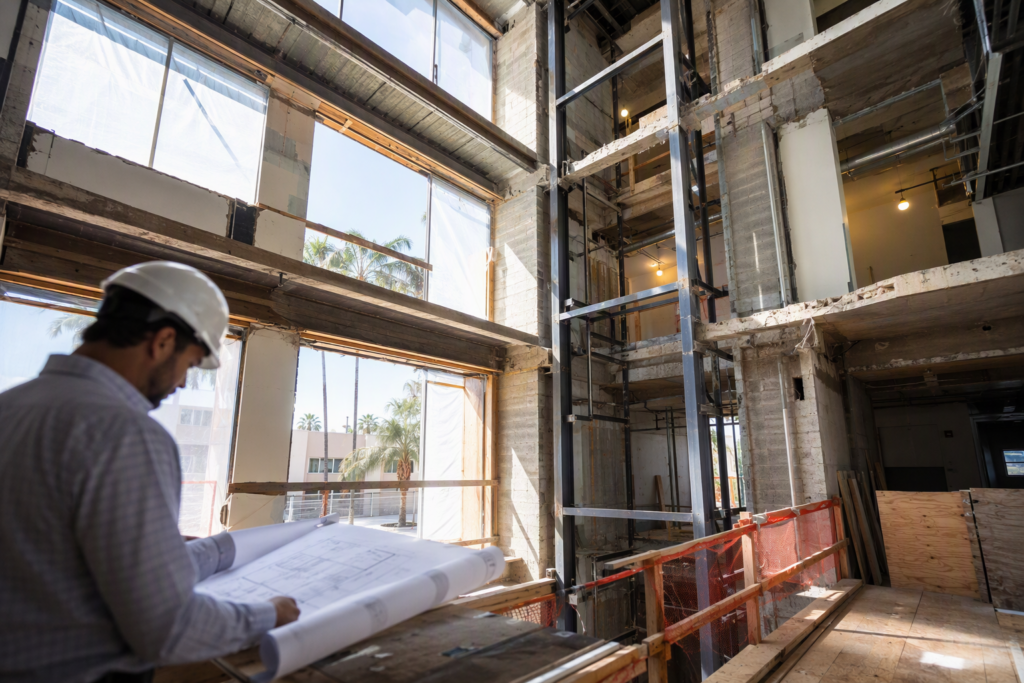
- Order and receive any needed replacement components
- Schedule and complete any overdue periodic tests
- Organize and complete documentation
- Make repairs and allow time for verification before the official inspection date
Buildings that begin preparation less than two to three weeks before inspection are at meaningful risk of being unable to complete identified remediation in time, particularly if parts need to be ordered or if a five-year test requires coordination with a third-party testing service.
Does Elevator Type Affect What Is Inspected?
Yes. The ASME A17.1 Safety Code for Elevators and Escalators contains distinct requirements for different elevator types. Hydraulic elevators, traction elevators, and LULA (limited-use/limited-application) elevators each have type-specific inspection and testing criteria. For example:
- Hydraulic elevators require periodic pressure vessel testing of the hydraulic cylinder and regular inspection of the power unit, including the hydraulic fluid condition and containment provisions
- Traction elevators require governor and safety device testing, hoist rope inspection, and brake testing on defined intervals
- LULA elevators — common in smaller commercial buildings and accessibility applications — follow a separate code section with requirements scaled to their lower capacity and speed ratings
Building owners managing multiple elevator types within a single property should confirm that their maintenance provider is familiar with the specific requirements for each unit type.
What Is the Role of the Elevator Maintenance Provider in Inspection Readiness?
A qualified elevator maintenance provider is central to inspection readiness. The maintenance provider’s responsibilities extend beyond responding to breakdowns — they are responsible for performing all code-required maintenance tasks, documenting that work accurately, and advising building owners when component conditions warrant attention or when periodic tests are coming due.
Building owners should expect their maintenance provider to:
- Provide clear maintenance logs that document tasks performed, dates, and technician identification
- Proactively notify the building owner when periodic tests are approaching their required intervals
- Conduct a formal pre-inspection walk-through prior to the scheduled annual inspection
- Provide written reports of any identified deficiencies with prioritization guidance
- Be available to accompany the state inspector during the annual inspection and address technical questions
If a maintenance provider cannot demonstrate that they are performing these functions, that itself is a risk factor for inspection outcomes.
What Should Building Owners Do Immediately After Receiving an Inspection Report?
- Read the entire report carefully. Identify each cited deficiency, the applicable code section referenced, and the severity classification assigned by the inspector.
- Prioritize imminent hazard items. Any items that resulted in an out-of-service order must be addressed before the elevator can be returned to operation — these take absolute priority.
- Notify your maintenance provider immediately. Share the inspection report in full and request a response plan with timelines for each deficiency.
- Track parts and scheduling. Confirm that any needed parts have been ordered and that repair scheduling aligns with required correction timeframes.
- Document all corrective actions. Maintain a written record of what was repaired, when, and by whom for every cited deficiency.
- Schedule the re-inspection. Do not wait until all repairs are complete to contact the inspection authority — coordinate the re-inspection date as repairs are nearing completion to minimize downtime.
- Review your maintenance program. Use the inspection report as a diagnostic tool to identify whether recurring deficiencies point to gaps in the ongoing maintenance program that should be addressed contractually.
Quick-Reference: Key Standards Governing Arizona Elevator Inspections
| Standard / Authority | Relevance to Elevator Inspection | Source |
|---|---|---|
| ASME A17.1 Safety Code for Elevators and Escalators | Primary technical code for construction, installation, maintenance, inspection, and testing of elevators in the United States | ASME Codes & Standards |
| ADA (Americans with Disabilities Act) | Governs accessibility requirements including emergency two-way communication and control accessibility | ADA.gov |
| ADOSH (Arizona Division of Occupational Safety and Health) | State agency responsible for elevator inspection program administration under the Arizona State Plan | OSHA.gov (Federal OSHA / State Plan reference) |
Summary: The Inspection Readiness Framework
Preparing a building elevator for Arizona’s annual state inspection is not a last-minute task — it is a continuous process anchored in consistent maintenance, accurate documentation, and proactive equipment assessment. The core framework involves aligning all maintenance activity with ASME A17.1 requirements, maintaining unbroken maintenance records, ensuring ADA accessibility features remain functional, and conducting a structured pre-inspection evaluation at least 60 to 90 days before the scheduled inspection date.
Building owners who treat inspection readiness as a year-round operational discipline — rather than an annual scramble — consistently achieve cleaner inspection outcomes, reduced remediation costs, and lower risk of service interruptions.
Arizona Elevator Solutions supports building owners across Arizona in building and sustaining this discipline through structured assessment, transparent documentation, and maintenance programs aligned with current code requirements.
Get Your Elevator Inspection-Ready — Free Assessment Available
Do not wait for the state inspector to identify what a proactive evaluation could have caught months earlier. Arizona Elevator Solutions offers a comprehensive elevator assessment to evaluate your equipment condition, documentation completeness, and compliance posture against current Arizona inspection standards.
Contact Arizona Elevator Solutions for a free elevator assessment: 480-557-7600
Need elevator service you can rely on? Arizona Elevator Solutions is ready to help.