What Questions Should I Ask Before Hiring an Elevator Maintenance Company in Arizona?
Hiring the right elevator maintenance company in Arizona is a decision that directly affects building safety, regulatory compliance, and long-term equipment reliability. The questions a building owner or property manager asks during the vendor selection process can mean the difference between a compliant, well-maintained vertical transportation system and one that poses liability and safety risks. This comprehensive FAQ covers every critical area — from compliance and inspections to contract terms and emergency protocols — to help property stakeholders in Phoenix, Tucson, Scottsdale, and Mesa make a fully informed hiring decision.
1. Is the company knowledgeable about Arizona-specific elevator regulations?
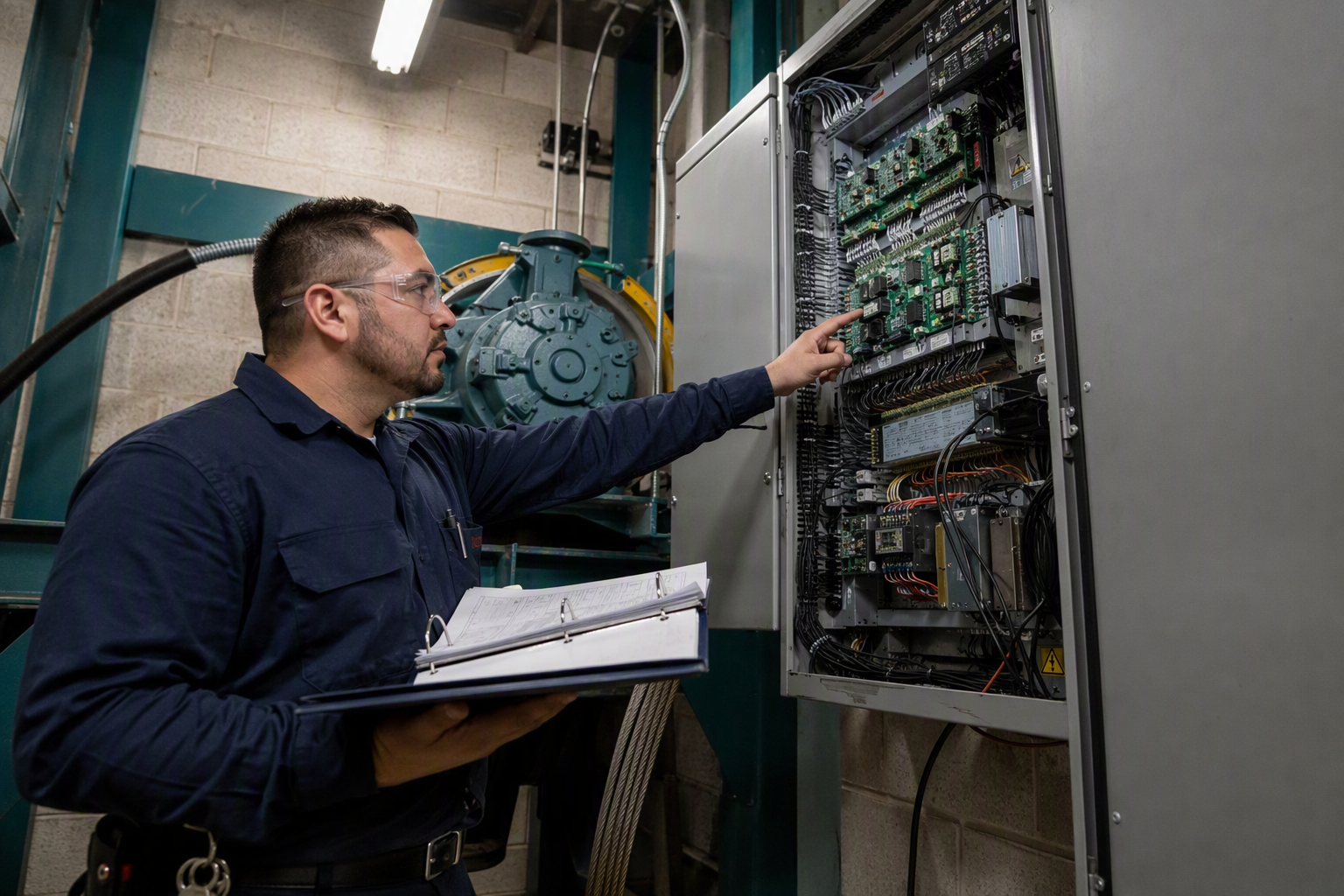
Arizona elevator maintenance companies must demonstrate working familiarity with both the ASME A17.1 Safety Code for Elevators and Escalators and the state-level enforcement framework administered through the Arizona Division of Occupational Safety and Health (ADOSH).
Arizona enforces elevator safety through ADOSH, which operates under the broader OSHA framework. Any maintenance contractor working in the state should be able to articulate how Arizona’s Division of Occupational Safety and Health coordinates with local jurisdictions to permit and inspect elevators. Ask the vendor to explain the difference between a general inspection and a periodic inspection under Arizona law, and confirm that they have a documented process for submitting inspection reports to the appropriate authority. A company that cannot clearly explain the state regulatory structure is a significant risk.
2. What inspection intervals are required, and how does the company schedule them?
The ASME A17.1 Safety Code for Elevators and Escalators establishes mandatory periodic inspection and testing intervals that must be followed to keep an elevator legally operational in Arizona.
Under ASME A17.1, different elevator categories — traction, hydraulic, limited-use/limited-application — are subject to distinct inspection schedules, including annual and five-year full-load tests where applicable. Ask any candidate company to provide a written inspection schedule tailored to your specific elevator type and to explain who is responsible for coordinating with the state-licensed inspector. The maintenance company should proactively manage the inspection calendar, not reactively remind you when a certificate has already lapsed.
3. Are the company’s technicians qualified to work on your specific elevator equipment?
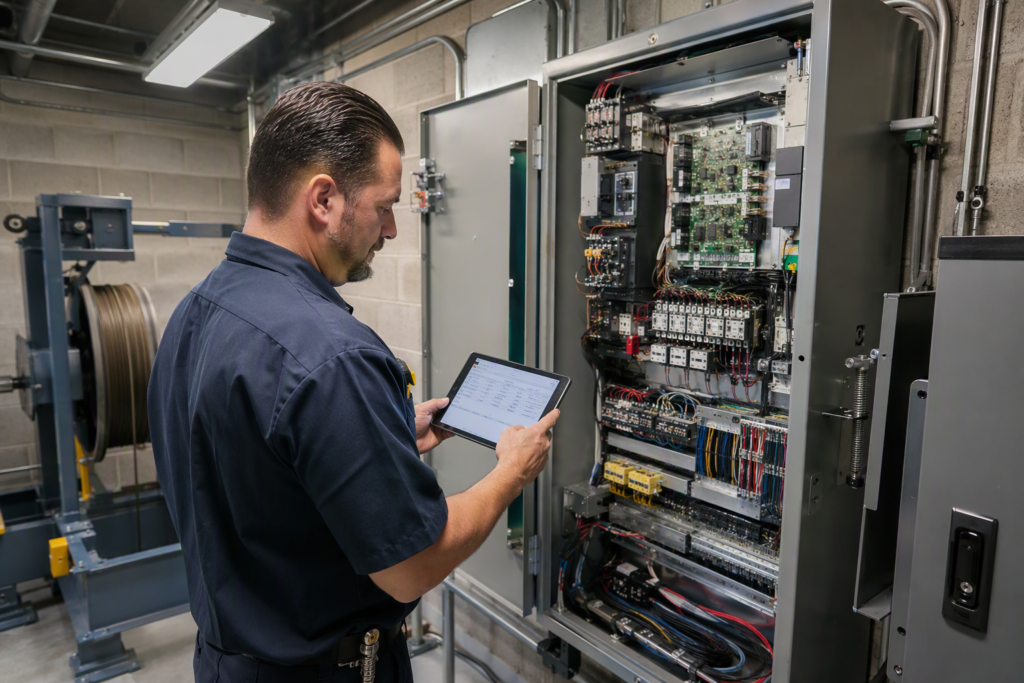
Elevator technology varies significantly by manufacturer, drive type, and vintage, and a qualified technician must have documented training on the specific equipment installed in your building.
Ask whether the company’s technicians have manufacturer-specific training for the brands installed in your building — whether that is Otis, KONE, Schindler, ThyssenKrupp, or another OEM. Inquire about ongoing technical education programs and whether technicians receive updated training as manufacturers release new control system software. Companies that service only generic equipment without OEM training are more likely to cause compatibility issues or inadvertently void equipment warranties. Arizona Elevator Solutions maintains a technical service approach centered on equipment-specific competency across the Phoenix, Tucson, Scottsdale, and Mesa markets.
4. How does the company handle emergency breakdowns and entrapments?
A maintenance company should have a clearly defined emergency response protocol for elevator entrapments and equipment failures that complies with safety procedures outlined in the ASME A17.1 Safety Code for Elevators and Escalators.
Ask the vendor to walk through their exact entrapment response procedure step by step. The ASME A17.1 code specifies requirements for two-way communication systems, emergency lighting, and lowering of car to landing — all of which a qualified maintenance company should be able to address. Confirm that the company coordinates with local emergency services where required and that building staff will receive written guidance on what to do before a technician arrives. Vague answers to emergency protocol questions should be treated as a disqualifying factor.
Standard Emergency Response Steps to Confirm with Any Vendor
- Confirm the company provides a 24-hour emergency contact line dedicated to service calls.
- Ask for their documented entrapment protocol in writing, including communication steps for building personnel.
- Verify that technicians are trained in ASME A17.1-compliant lowering and rescue procedures.
- Determine whether the company coordinates with local fire departments in the Phoenix, Tucson, Scottsdale, or Mesa jurisdictions.
- Request examples of how post-incident reports are documented and shared with building management.
5. What does the maintenance contract actually cover, and what is excluded?
Elevator maintenance contracts vary widely in scope, and understanding exactly what is included versus excluded is critical before signing any service agreement.
Request a line-by-line breakdown of the proposed contract. Full-coverage contracts typically include labor, parts, oil, and lubrication, while oil-and-grease contracts cover only routine lubrication tasks. Between these extremes are numerous mid-tier options that exclude major components such as controllers, motors, or hydraulic cylinders. Ask for a written list of every excluded component or condition. Also verify whether the contract includes mandated code-required tests, such as pressure relief valve testing for hydraulic units, or whether those are billed separately. Arizona Elevator Solutions encourages property managers to request this level of transparency before finalizing any service agreement.
6. How does the company source replacement parts, and what are typical lead times?
Parts availability directly affects how quickly an elevator can be returned to service after a component failure, making supply chain transparency an essential vendor evaluation criterion.
Ask whether the company stocks commonly needed components locally, or whether every part must be ordered from out-of-state distributors. For older equipment, inquire about their approach to sourcing obsolete parts — whether they use OEM suppliers, approved aftermarket sources, or remanufactured components. Understand whether substitute parts carry any warranty, and how the use of non-OEM components may affect your equipment warranty. In the Arizona market, where HVAC stress and desert dust accelerate wear on certain components, a well-stocked local parts inventory can significantly reduce downtime.
7. Does the company have experience with Arizona’s desert climate conditions?
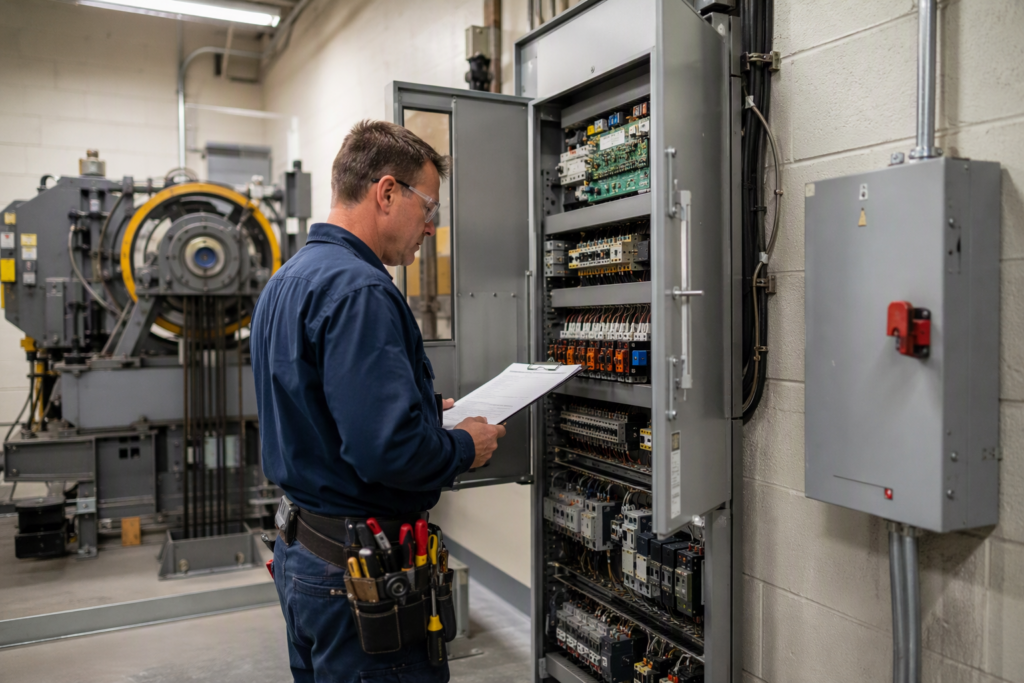
Arizona’s extreme heat, dust, and low-humidity environment create unique wear patterns on elevator equipment that require region-specific maintenance expertise.
Phoenix and the surrounding Valley of the Sun regularly experience ambient temperatures exceeding 110°F, which places extraordinary thermal stress on elevator machine room equipment, hydraulic fluid viscosity, and electronic control panels. Ask the vendor how they adjust maintenance protocols to account for heat-related degradation of hydraulic fluid, motor insulation, and rubber seals. Inquire whether they schedule more frequent lubrication or fluid checks during summer months. A company that applies a one-size-fits-all national maintenance template without climate-specific adjustments may miss failure patterns that are particularly common in Arizona buildings.
8. How does the company ensure ADA compliance for elevator accessibility features?
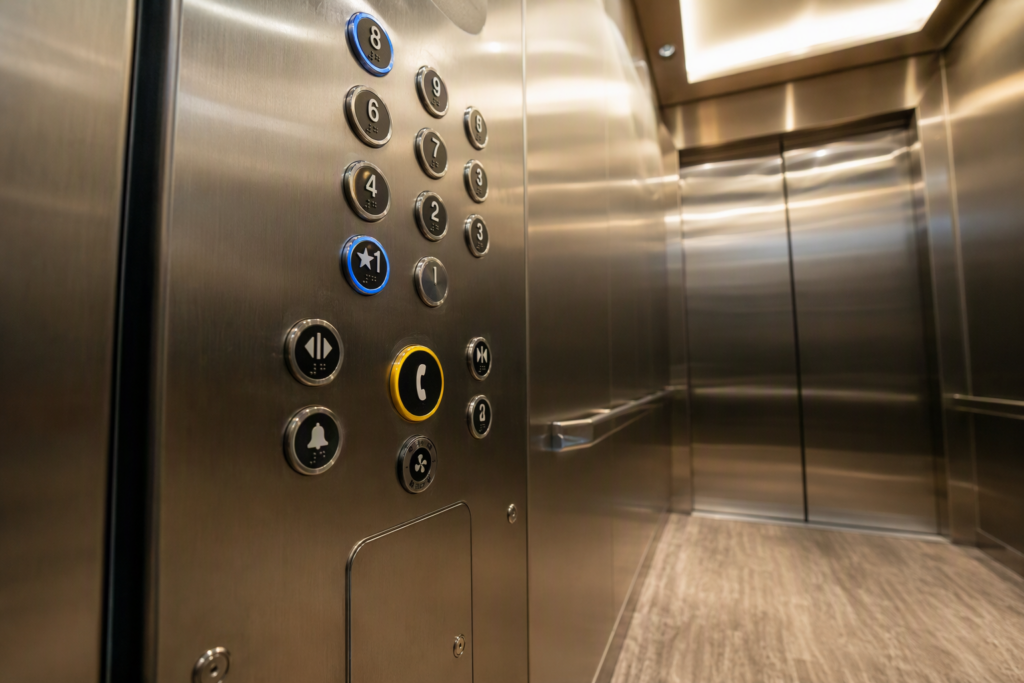
Elevator operators in commercial and multi-family buildings must ensure that their vertical transportation systems meet ADA accessibility requirements, and the maintenance company should actively support compliance with these standards.
The Americans with Disabilities Act sets requirements for elevator door timing, button height, Braille markings, audible signals, and cab dimensions, among other accessibility features. A qualified maintenance company should flag any deteriorating ADA-compliant components — such as worn Braille labels, malfunctioning audio announcements, or failing door sensors — as part of routine maintenance reporting. Ask the vendor to confirm whether ADA accessibility checks are formally included in their service documentation, and request a sample maintenance report that shows how accessibility items are tracked.
9. What does the vendor’s maintenance reporting and documentation process look like?
Thorough, accessible maintenance records are not just good practice — they are essential for demonstrating regulatory compliance, managing warranties, and supporting insurance claims.
Ask the company whether they provide digital maintenance logs, and if so, whether building managers can access records through a client portal or on demand. Confirm that service reports are detailed enough to document the specific components inspected, lubricated, adjusted, or replaced — not just a generic “service completed” notation. Verify how long records are retained and in what format. In Arizona, having accurate maintenance documentation readily available is important when ADOSH or a local jurisdiction requests inspection history. Arizona Elevator Solutions provides detailed service documentation as a standard component of its maintenance programs across all served markets.
10. How does the company handle code compliance upgrades and modernization recommendations?
Elevator codes are periodically updated, and a proactive maintenance company should identify when existing equipment requires code-mandated upgrades and provide a clear modernization pathway.
Ask the vendor to explain how they monitor changes to the ASME A17.1 Safety Code for Elevators and Escalators and communicate relevant updates to building owners. Request a process description for how they identify grandfathered equipment that may require upgrades upon major component replacement. Inquire about their modernization capabilities — whether they can manage a full controller replacement, cab renovation, or drive system upgrade in-house or through a trusted subcontractor. Understanding this process upfront avoids surprises when a code-triggered upgrade is required.
11. What is the company’s approach to preventive versus reactive maintenance?
A maintenance strategy heavily weighted toward preventive service reduces unplanned downtime and extends equipment service life compared to purely reactive, break-fix approaches.
Ask the vendor to describe the ratio of preventive maintenance visits to reactive service calls typically experienced by their clients. Request a sample preventive maintenance checklist to evaluate the depth of their routine inspections. Confirm whether they use any condition-monitoring tools — such as vibration analysis or hydraulic pressure trending — to identify developing issues before failure occurs. A company that relies primarily on reacting to breakdowns rather than preventing them will cost a building owner more over time through emergency call charges, accelerated component wear, and extended downtime.
12. What are the contract length, renewal, and termination terms?
Contract flexibility is a key indicator of a vendor’s confidence in their service quality, and building owners should carefully evaluate lock-in clauses, auto-renewal provisions, and termination penalty terms before signing.
Ask for the standard contract length offered and whether shorter initial terms are available. Inquire about auto-renewal clauses and how far in advance written notice must be given to prevent automatic renewal. Verify the termination-for-cause provisions and whether early termination carries financial penalties. A reputable company should be willing to discuss contract terms transparently and tailor agreements to match the needs of different property types — from a single-elevator boutique hotel in Scottsdale to a high-rise residential building in Phoenix.
13. Does the company carry adequate insurance and liability coverage?
Any elevator maintenance contractor working in Arizona should carry general liability insurance, workers’ compensation coverage, and any additional coverage required by the building owner’s property management standards.
Request certificates of insurance before any work begins, and verify that the coverage limits are appropriate for the scope of work being performed. Ask whether their policy covers damage caused by technician error, and whether the building ownership can be named as an additional insured. Confirm that workers’ compensation coverage is current, which protects the building owner from liability if a technician is injured on site. This due-diligence step is fundamental and non-negotiable regardless of which vendor is under consideration.
14. How does the company manage multi-elevator or multi-site portfolios?
Property managers overseeing multiple elevators across several buildings require a maintenance vendor with the organizational capacity to coordinate service schedules, track compliance across units, and provide consolidated reporting.
Ask whether the company has a dedicated account management structure for portfolio clients. Confirm that they can provide consolidated compliance dashboards or reports showing inspection status, upcoming service milestones, and open work orders across all units. Inquire about pricing structures for multi-unit or multi-site agreements and whether volume arrangements are available. Arizona Elevator Solutions serves commercial and residential portfolio clients across Phoenix, Tucson, Scottsdale, and Mesa, with service coordination designed to meet the needs of multi-elevator properties.
15. What is the company’s process for major repairs and capital project coordination?
When major repairs or capital modernization projects arise, the maintenance company should function as a knowledgeable advisor — not just a parts-and-labor vendor — guiding the building owner through the permitting, engineering, and installation process.
Ask how the company manages the permitting process for major repairs in Arizona, including ADOSH notification requirements and local jurisdiction permit applications. Confirm whether they have engineering resources or established relationships with elevator consulting engineers for projects requiring plan review. Inquire about how they handle the transition from a major repair or modernization back to ongoing maintenance, including updated documentation and revised inspection schedules. A company with strong project coordination capabilities adds substantial value beyond routine maintenance.
16. How does the company communicate with building management during and after service visits?
Clear, consistent communication protocols ensure that building managers and tenants are informed about service activities, expected downtime, and any issues identified during a maintenance visit.
Ask the vendor to describe their standard communication workflow: How is a service visit scheduled and confirmed? How are tenants or building occupants notified of planned maintenance? How are urgent findings communicated after a visit — by phone, email, or through a client portal? Request a sample post-service report to evaluate how findings, recommendations, and completed work are documented and communicated. Poor communication is one of the most common complaints property managers have about elevator service vendors, and establishing expectations upfront prevents misalignment.
17. Can the company provide local references from properties similar to yours in Arizona?
References from comparable properties in the same geographic market provide the most relevant insight into a vendor’s service quality, reliability, and local regulatory knowledge.
Request at least three references from properties in Arizona — ideally in the same city and of a similar building type (commercial office, multi-family residential, hospitality, healthcare, or industrial). Ask references specifically about inspection compliance track records, responsiveness to emergency calls, quality of maintenance documentation, and overall relationship management. A vendor who cannot or will not provide local references should be viewed with caution. Also consider searching for the company’s name with Arizona-specific review platforms and the Better Business Bureau to validate their reputation independently.
18. How does the company approach safety culture and incident reporting?
A maintenance company’s internal safety culture directly affects the quality of work performed on equipment and the safety of both technicians and elevator passengers.
Ask the vendor how they handle incidents or near-misses — whether they have a formal incident reporting and root cause analysis process. Inquire about their compliance with OSHA safety standards for elevator mechanics, including lockout/tagout procedures, confined space protocols, and personal protective equipment requirements. A company with a strong internal safety culture will speak fluently about these topics and be willing to share their safety policies upon request. Cutting corners on technician safety often correlates with cutting corners on maintenance quality.
19. What are the key differences between full-service, oil-and-grease, and custom maintenance contracts?
Understanding the distinctions between contract tiers is essential for matching maintenance investment to building risk tolerance, equipment age, and budget.
| Contract Type | Typical Coverage | Best Suited For | Key Exclusions to Confirm |
|---|---|---|---|
| Full-Service (Comprehensive) | Labor, parts, oil, lubrication, adjustments, code-required tests | Older equipment, high-traffic buildings, risk-averse owners | Vandalism damage, cab interior renovations, major modernizations |
| Oil & Grease (Basic) | Routine lubrication, minor adjustments, safety checks | New equipment under OEM warranty, low-traffic buildings | Parts, major repairs, controller work, hydraulic repairs |
| Parts & Labor (Mid-Tier) | Labor and listed parts, lubrication, adjustments | Mid-age equipment with moderate traffic | Major components (motors, controllers) unless explicitly included |
| Custom / Portfolio | Negotiated scope based on equipment inventory and risk assessment | Multi-elevator or multi-site portfolios | Varies — requires detailed contract review per unit |
When comparing proposals, ensure that each vendor’s quoted contract type covers the same scope before making a cost comparison. A lower monthly rate for a basic contract may result in significantly higher total annual costs once parts and emergency repairs are billed separately.
20. Why should property owners in Phoenix, Tucson, Scottsdale, and Mesa choose a locally established elevator maintenance company?
A locally established elevator maintenance company brings jurisdictional familiarity, climate-specific service expertise, and faster coordination with Arizona’s regulatory authorities that national contractors operating remotely cannot consistently replicate.
Arizona’s diverse elevator portfolio — spanning high-rise mixed-use towers in downtown Phoenix, resort hospitality properties in Scottsdale, healthcare facilities in Mesa, and university buildings in Tucson — requires a maintenance partner who understands the specific permitting offices, inspection authorities, and environmental conditions of each market. Local companies also tend to provide more accountable service relationships, since their reputation is tied directly to their performance within the communities they serve. Arizona Elevator Solutions was built specifically to serve property owners and managers across these four markets with the technical depth and local accountability that the region’s elevator inventory demands.
Putting It All Together: A Quick Vendor Evaluation Checklist
Use the following ordered process when evaluating elevator maintenance companies in Arizona:
- Verify the vendor’s demonstrated knowledge of ASME A17.1 and Arizona/ADOSH regulatory requirements.
- Confirm technician qualifications and manufacturer-specific training relevant to your equipment.
- Request a detailed, line-item contract with all inclusions and exclusions clearly defined.
- Review the emergency response protocol in writing and confirm it aligns with ASME A17.1 requirements.
- Evaluate maintenance documentation standards by reviewing sample service reports.
- Request certificates of insurance and verify coverage levels before any work begins.
- Obtain at least three local Arizona references from comparable property types.
- Compare contract tiers (full-service vs. oil-and-grease vs. custom) on an equivalent-scope basis.
- Assess the vendor’s ability to handle ADA compliance monitoring and modernization projects.
- Evaluate communication protocols and post-service reporting standards.
Need elevator service you can rely on? Arizona Elevator Solutions is ready to help.