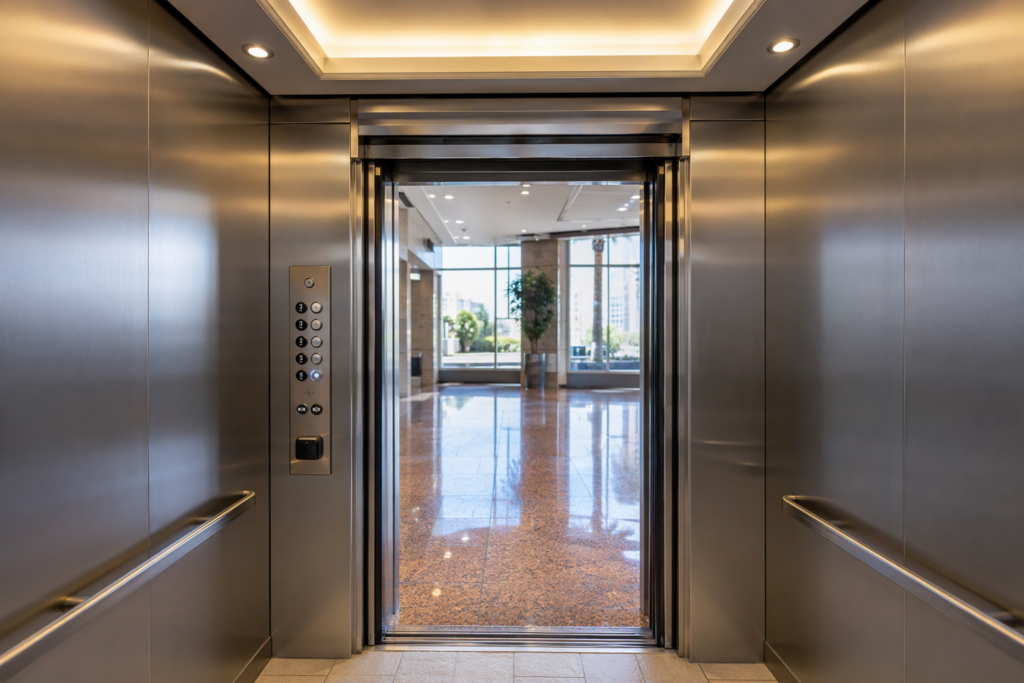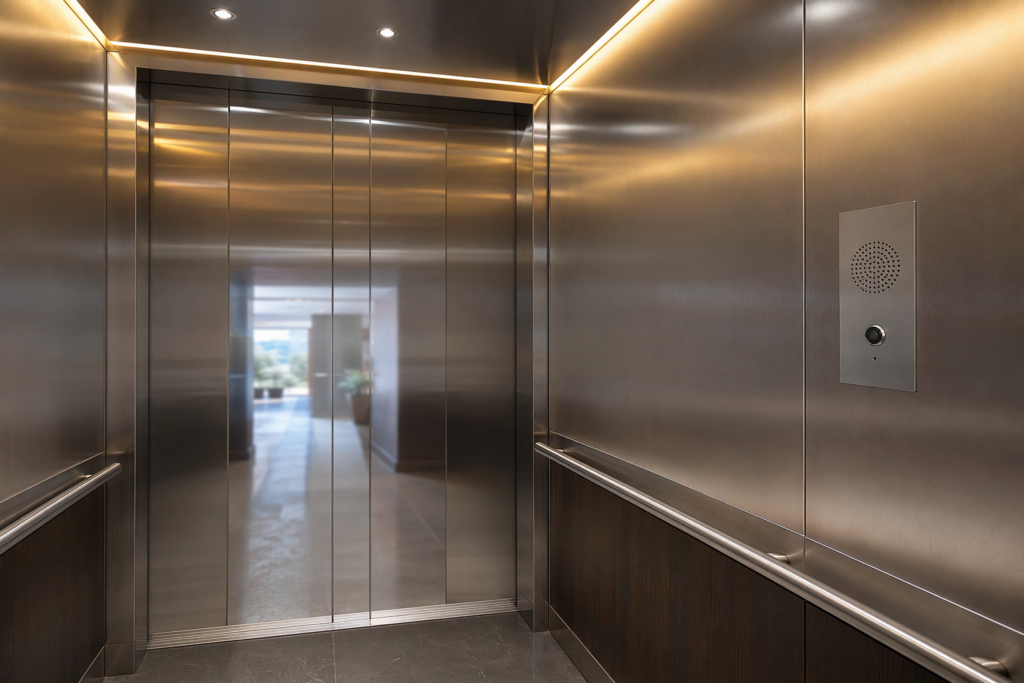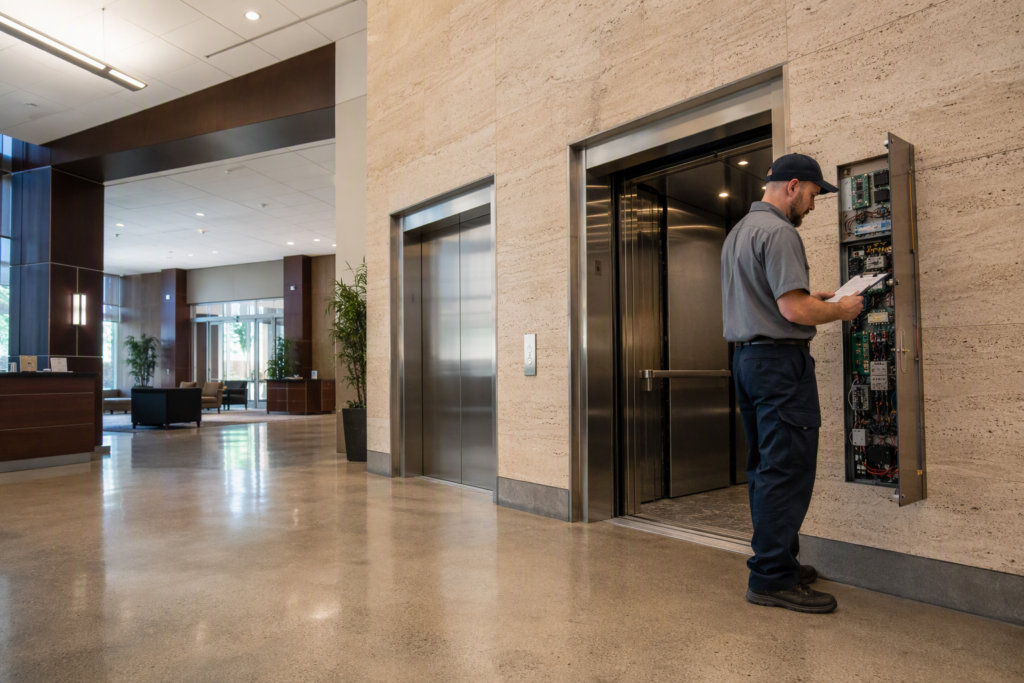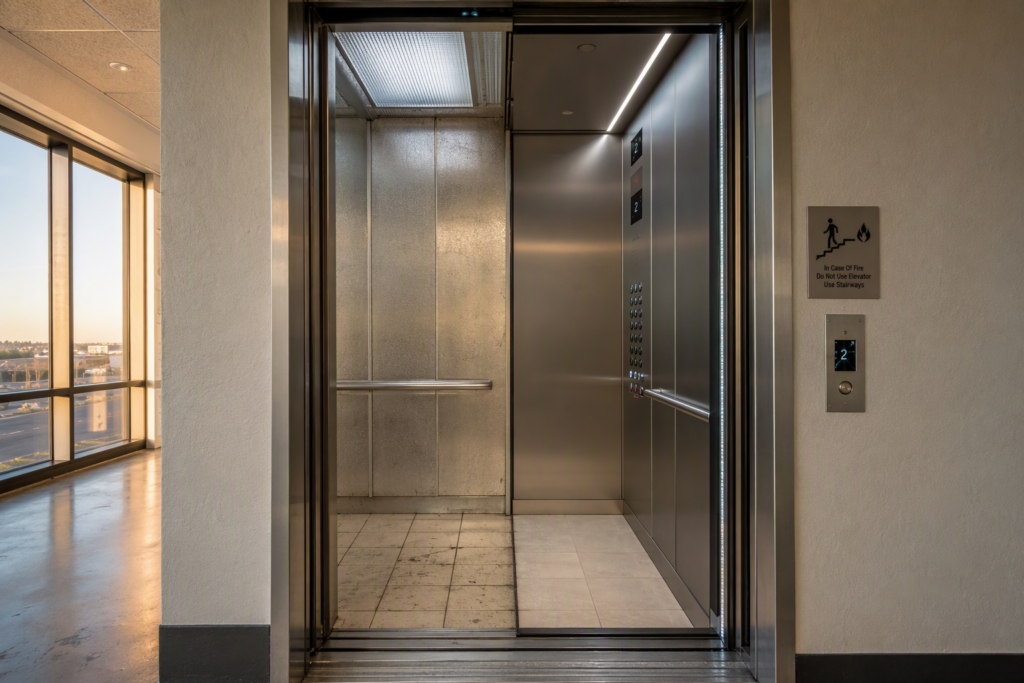
Arizona Elevator Solutions offers both one-off service calls and structured maintenance programs for private elevators, giving owners in Phoenix, Tucson, Scottsdale, and Mesa the flexibility to choose the level of support that fits their equipment, budget, and compliance obligations. Most private elevator owners benefit from combining both options.
One-Off Service Calls vs. Service Programs for Private Elevators: Complete FAQ
Do you offer one-off service calls, a service program, or both for private elevators?
Arizona Elevator Solutions offers both options — single-visit service calls for immediate repairs or diagnostics and structured maintenance programs for ongoing preventive care — so private elevator owners can select the approach that best matches their situation.
Private elevator owners often start with a one-off service call when they encounter a specific problem: an unusual noise, a door that won’t close properly, or an elevator that stops between floors. That reactive approach addresses the immediate issue but does not protect against the next failure. A maintenance program, by contrast, schedules regular inspections, lubrication, adjustments, and safety checks that catch developing problems before they become costly repairs or compliance violations.
Because Arizona law requires every conveyance to hold a current annual certificate of inspection issued by the state, most private owners find that a service program is the practical backbone of compliance, while one-off calls handle unexpected events between scheduled visits.
What exactly counts as a one-off service call for a private elevator?

A one-off service call is a single, dispatched visit to diagnose and correct a specific elevator problem, with no ongoing commitment from either the owner or the service company after the work is complete.
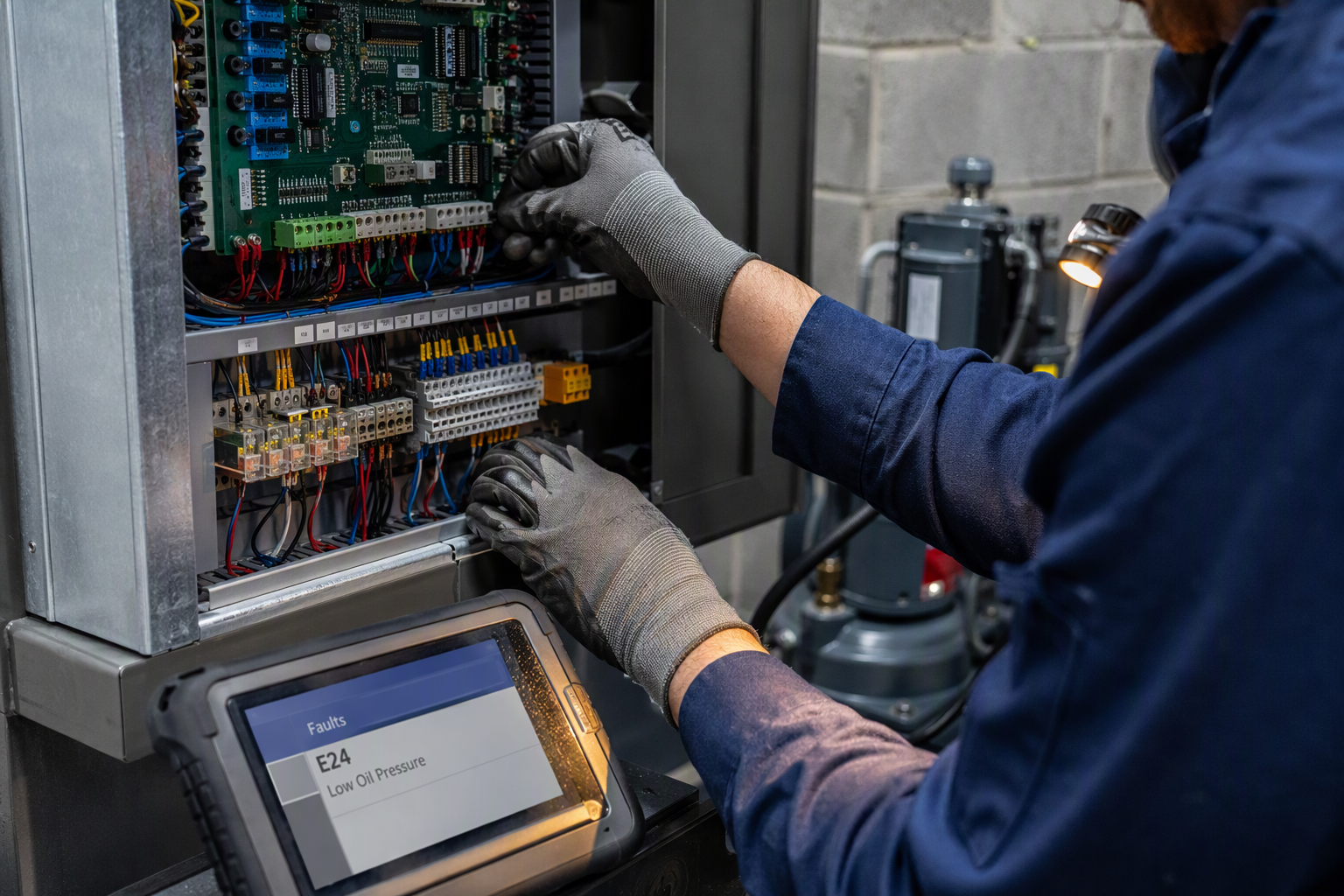
Typical one-off service calls include emergency entrapment response, repair of a malfunctioning door operator, replacement of a burned-out lighting component, reset of a safety circuit that has tripped, or troubleshooting an intermittent fault code on the controller. The technician arrives, documents findings, performs the authorized repair or adjustment, and closes the work order. The owner pays for that visit and any parts used.
One-off calls are appropriate when an elevator is relatively new, under a manufacturer warranty that covers labor, or when an owner simply needs a second opinion before committing to a maintenance contract. They are also the right tool when a problem occurs outside the scope of an existing maintenance agreement.
What does a private elevator service program typically include?
A private elevator service program is a scheduled, recurring maintenance plan that covers preventive inspections, lubrication, adjustments, safety-device testing, and priority response for between-visit problems.
A well-structured program typically covers the following elements on a defined schedule:
- Periodic preventive maintenance visits — lubricating guide rails, cables, and mechanical components; checking oil levels in hydraulic units; cleaning pit areas of debris and moisture.
- Safety-device testing — verifying that governors, buffers, safeties, door interlocks, and emergency lighting function within the tolerances set by the ASME A17.1 Safety Code for Elevators and Escalators.
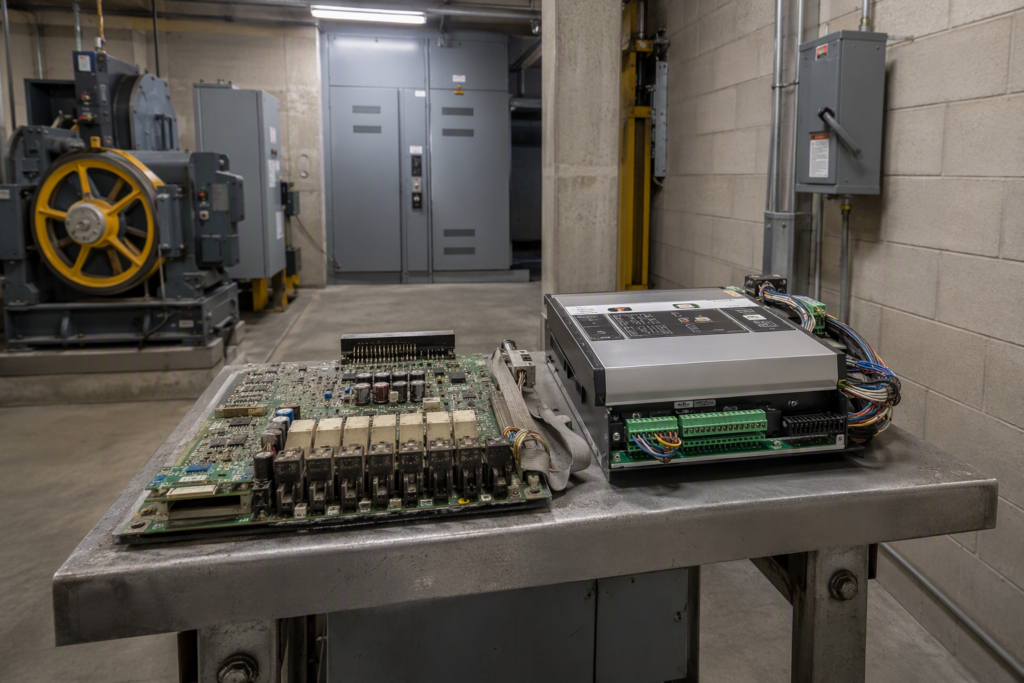
- Control system review — inspecting contactors, relays, solid-state boards, and wiring for signs of wear or overheating.
- Hydraulic system checks — monitoring fluid condition and pressure on hydraulic private-residence elevators, which are among the most common configurations in Arizona homes.
- Documentation — maintaining a maintenance log that satisfies the record-keeping expectations of the Industrial Commission of Arizona’s Elevator Division and supports annual inspection readiness.
- Priority scheduling — service-program clients typically receive scheduling priority over non-contract callers when an unscheduled problem arises.
Arizona Elevator Solutions structures its service programs to align with the inspection intervals and documentation practices expected under A.R.S. §§ 23-491 through 23-491.16 and the Arizona Administrative Code R20-5-502 through R20-5-515.
Is a maintenance program legally required for private elevators in Arizona?
Arizona law does not explicitly mandate a private maintenance contract by name, but it does require that every conveyance pass an annual inspection and hold a current certificate of inspection before operating — a standard that is very difficult to meet without routine maintenance.
Under A.R.S. §§ 23-491 through 23-491.16, no conveyance may operate in Arizona without an annual certificate of inspection issued by the Industrial Commission of Arizona’s Elevator Division (formerly the ADOSH Elevator Safety Section, renamed September 12, 2026 under Laws 2026, Ch. 73). Owners must also keep the certificate at the same location as the conveyance and make it available on request. The state serial number or certificate must be posted in or near the elevator in an easily accessible location.
While the statute does not prescribe the maintenance contract as such, inspectors evaluating equipment under ASME A17.1-2019 — the edition Arizona adopted for equipment installed, repaired, or altered on or after January 1, 2023 — will assess whether safety devices, lubrication, and mechanical components meet code tolerances. An unmaintained elevator frequently fails those criteria, leading to a rejected inspection and an elevator that cannot legally operate.
How often must a private elevator be inspected in Arizona?
Arizona requires every conveyance to be inspected before it first goes into service, after any modification or alteration, and annually after that.
The annual inspection cycle is established by state rule under the Arizona Administrative Code R20-5-502 through R20-5-515 and enforced by the Industrial Commission of Arizona’s Elevator Division. Owners within the City of Phoenix face an additional layer: the City of Phoenix Elevator Section (Planning and Development Department) inspects elevators, escalators, moving walks, dumbwaiters, and chair lifts inside city limits. Equipment located outside Phoenix falls under state jurisdiction.
Private elevator owners may hire a private elevator inspector authorized by the Industrial Commission of Arizona to conduct initial or annual inspections, but that inspector may not inspect a conveyance owned, operated, or last serviced by the inspector, a company the inspector owns, or the inspector’s employer. Hiring a third-party inspector does not relieve the owner of legal obligations.
What is the difference between an inspection and routine maintenance?
An inspection is a formal, code-based evaluation performed by a qualified inspector to determine whether an elevator meets the safety standards required for a certificate of operation; maintenance is the ongoing work performed by a service company to keep the equipment in the condition that allows it to pass that inspection.
Think of the relationship this way: maintenance creates the conditions; inspection verifies them. An inspector authorized by the Industrial Commission of Arizona evaluates compliance with ASME A17.1 and Arizona’s rules. The maintenance technician performs the lubrication, adjustments, parts replacement, and testing in the weeks and months before that evaluation occurs. A private elevator inspector authorized by the state cannot inspect a conveyance last serviced by their own employer — which is precisely why service companies and inspection entities often operate independently.
Which types of private elevators does a service program cover?
A comprehensive service program for private elevators should cover all common residential and small-commercial conveyance types, including hydraulic home elevators, winding-drum elevators, cable-drum units, pneumatic vacuum elevators, platform lifts, and stairway chairlifts.
Arizona platform lifts and stairway chairlifts installed, repaired, or altered on or after January 1, 2023 must comply with ASME A18.1-2020, a distinct code from the main elevator standard. Service programs should be structured to reflect which code governs each piece of equipment. Arizona Elevator Solutions evaluates the equipment type, installation date, and applicable code during an initial assessment so the maintenance scope is correctly matched to the unit.
How do one-off service calls and service programs compare on cost and value?
One-off service calls carry a higher per-visit cost than equivalent visits billed under a maintenance program, and they do not include the between-visit safety monitoring that prevents smaller problems from escalating into major repairs.
The table below illustrates how the two service models compare across key decision factors. Note that specific pricing is not listed here because elevator service costs vary by equipment type, age, condition, and scope of work — owners should request a written assessment.
| Factor | One-Off Service Call | Service Program |
|---|---|---|
| Scheduling | On-demand, reactive | Planned, proactive |
| Cost structure | Per-visit billing | Periodic contract fee |
| Inspection readiness | Not addressed between calls | Continuously supported |
| Parts priority | Standard parts availability | Often prioritized for contract clients |
| Documentation | Single-visit work order | Ongoing maintenance log |
| Compliance support | Limited to visited issue | Structured to support annual certificate |
| Best for | Isolated problems, warranty units | Owner-occupied, compliance-focused |
| Unscheduled problem response | Standard queue | Priority scheduling typical |
What happens if a private elevator fails its annual inspection in Arizona?
If a conveyance fails its annual inspection, it cannot legally operate in Arizona until the deficiencies are corrected and a new certificate is issued.
The Industrial Commission of Arizona’s Elevator Division has authority under A.R.S. §§ 23-491 through 23-491.16 to order equipment out of service when it does not meet safety standards. Lawfully installed older conveyances may remain in use only if the state’s elevator chief does not consider continued use a hazard to life, health, or property — a determination made case by case. An owner whose elevator fails inspection should arrange corrective repairs immediately, followed by a re-inspection before resuming operation.
A service program that keeps maintenance records current gives both the owner and the inspector a documented basis for demonstrating that safety devices, lubrication, and mechanical components have been attended to — which meaningfully reduces the likelihood of a failed inspection.
What should an owner do immediately after an elevator incident or accident?
Arizona law requires the owner to notify the state within 24 hours of any accident that injures a person or disables a conveyance. The following steps should be followed in sequence:
- Ensure passenger safety. If anyone is inside the elevator, contact emergency services if needed and initiate safe, professional entrapment rescue — do not attempt amateur rescue through hatch openings.
- Take the unit out of service. Disable the elevator at the main disconnect or controller so it cannot be called again before the cause is determined.
- Document the scene. Note the time, floor position, door status, any unusual sounds, and the names and contact information of anyone involved or who witnessed the event.
- Notify the Industrial Commission of Arizona’s Elevator Division. Arizona law mandates this notification within 24 hours of any injury or disabling event, regardless of severity.
- Contact a licensed elevator service contractor. A contractor holding the appropriate Arizona Registrar of Contractors R-12 or C-12 elevator license classification should perform a diagnostic inspection before the elevator is returned to service.
- Retain all service records. Do not discard maintenance logs, fault histories, or prior inspection reports — these may be needed by the state investigator or legal counsel.
- Arrange a post-incident inspection. Do not return the elevator to service until any required repairs are made and, where applicable, a post-incident inspection is passed.
Are ADA accessibility requirements relevant to private elevator maintenance?
The Americans with Disabilities Act (ADA) applies primarily to places of public accommodation and commercial facilities, not to purely private residential elevators; however, owners of mixed-use properties or short-term rental properties should seek guidance on whether their elevator falls under ADA requirements.
For properties where ADA does apply, maintenance must ensure that call button heights, door timing, cab dimensions, floor leveling accuracy, and Braille or tactile signage continue to meet the accessibility standards set by the ADA. A poorly maintained elevator that drifts at floor level, has slow-closing doors, or has illegible signage may still be operating but could expose the property owner to accessibility complaints. Service programs that include leveling checks and door-timing verification support ongoing ADA conformance.
What codes govern private elevator maintenance work in Arizona?
The primary codes governing private elevator maintenance in Arizona are ASME A17.1-2019 for elevators and escalators, ASME A18.1-2020 for platform lifts and stairway chairlifts, the Arizona Administrative Code R20-5-502 through R20-5-515, and A.R.S. §§ 23-491 through 23-491.16.
Arizona adopted ASME A17.1-2019 as the governing technical standard for equipment installed, repaired, or altered on or after January 1, 2023, effective January 9, 2023. Older equipment installed before that date remains subject to the code edition in effect at the time of installation, though the state elevator chief can require updates if equipment poses a hazard. Contractors performing installation or repair work must hold the appropriate Arizona Registrar of Contractors R-12 (residential) or C-12 (commercial) elevator license classification.
OSHA regulations also apply to workers performing elevator maintenance and repair, covering fall protection, lockout/tagout procedures, and pit safety — separate from but parallel to the equipment codes.
How do owners know when to call for a one-off service visit versus escalating to a program?
Owners should consider escalating from reactive one-off calls to a structured service program when the elevator is experiencing recurring problems, approaching its annual inspection, has had no documented maintenance, or when the cost of multiple reactive calls within a short period approaches or exceeds what a program would cost.
Specific indicators that a service program makes sense include: two or more unscheduled service calls within a 12-month period, an elevator older than ten years with no documented maintenance history, a unit that has had difficulty passing its annual inspection, a hydraulic system showing signs of oil weeping or pressure loss, or a home elevator used daily by a mobility-dependent occupant where downtime is a serious safety or quality-of-life issue.
Arizona Elevator Solutions offers an initial assessment so owners can understand the current condition of their equipment before deciding which service model is appropriate.
What qualifications should an elevator service contractor hold in Arizona?
An elevator service contractor performing installation or repair work in Arizona must hold an R-12 or C-12 elevator license classification issued by the Arizona Registrar of Contractors, which authorizes work on elevators, dumbwaiters, escalators, and moving walks.
The Arizona Registrar of Contractors issues these classifications but does not issue the annual certificate of inspection — that function belongs to the Industrial Commission of Arizona’s Elevator Division or authorized private inspectors. Private elevator inspectors performing inspections must register with the Industrial Commission of Arizona annually and demonstrate at least eight hours of approved continuing education. Owners should verify that any contractor or inspector they hire holds current, appropriate credentials before authorizing work.
What should owners in Phoenix specifically know about local elevator jurisdiction?
Within the City of Phoenix, the City of Phoenix Elevator Section (Planning and Development Department) is responsible for inspecting elevators, escalators, moving walks, dumbwaiters, and chair lifts — making Phoenix the only Arizona jurisdiction with its own local elevator inspection authority; the Industrial Commission of Arizona’s Elevator Division handles all equipment outside Phoenix city limits.
Phoenix private elevator owners should therefore expect to interact with both the city’s elevator section and potentially the state’s Elevator Division depending on the specific nature of their compliance need. Maintenance records, posted certificates, and notification requirements under A.R.S. §§ 23-491 through 23-491.16 still apply, regardless of which authority issues the inspection certificate. Arizona Elevator Solutions is familiar with the inspection processes across Phoenix, Scottsdale, Tucson, and Mesa and can assist owners in understanding which authority governs their specific property.
What records should a private elevator owner keep?
Arizona owners must keep the state certificate of inspection at the same location as the conveyance and make it available on request; in addition, maintaining a complete maintenance log substantially supports inspection outcomes and provides legal protection in the event of an incident.
Recommended records for private elevator owners include:
- The current annual certificate of inspection and all prior certificates
- The state serial number tag location documentation
- Maintenance visit reports from each service call or program visit, including dates, work performed, and technician information
- Parts replacement records with descriptions and dates
- Safety-device test results
- Any correspondence with the Industrial Commission of Arizona’s Elevator Division or the City of Phoenix Elevator Section
- Installation permits and original equipment documentation
- Any accident or incident reports filed with the state
Service programs typically generate this documentation automatically with each visit. One-off service calls generate individual work orders, which owners should file systematically rather than discarding.
How does a service program support preparation for the annual state inspection?
A well-managed service program aligns its maintenance schedule so that the elevator has been fully serviced, adjusted, and tested shortly before the annual inspection date — reducing the likelihood of deficiencies and the costs associated with failed inspections or emergency pre-inspection repairs.
Service providers familiar with Arizona’s adopted code — ASME A17.1-2019 — can conduct a pre-inspection walkthrough that mirrors what the authorized inspector will evaluate: door reopening device function, emergency lighting operation, car leveling accuracy, pit ladder and lighting compliance, governor and safety operation, and machine room conditions, among other items. Arizona Elevator Solutions structures its programs around the Arizona inspection cycle so owners are not caught unprepared.
Can a service program cover both the elevator and a connected platform lift or stairlift?
Yes, a service program can be structured to cover both a private elevator and any associated platform lifts or stairway chairlifts on the same property, though each type of equipment is governed by a distinct code and requires appropriately scoped maintenance tasks.
Elevators fall under ASME A17.1-2019 for Arizona equipment installed on or after January 1, 2023, while platform lifts and stairway chairlifts installed, repaired, or altered on or after the same date must comply with ASME A18.1-2020. Bundling multiple conveyances under a single service program simplifies scheduling, record-keeping, and inspection preparation for owners who have more than one mobility device in their home or facility.
What are common warning signs that a private elevator needs immediate service, regardless of program status?
Certain conditions require an immediate one-off service call regardless of whether the elevator is under a maintenance program — these signs indicate active safety risks that should not wait for a scheduled visit.
Warning signs requiring immediate attention include:
- The elevator stops between floors or does not level accurately with the floor landing
- Doors fail to open or close fully, or reverse inconsistently
- Unusual grinding, squealing, or banging sounds during travel
- The cab shakes or vibrates abnormally during movement
- Burning smells from the machine room, pit, or cab
- Oil leaking from the hydraulic cylinder, power unit, or pit floor
- Emergency lighting or alarm systems that do not function when tested
- The elevator moves with the doors open or fails to respond to safety edge contact
- Any automatic safety feature that activates unexpectedly and cannot be reset by the owner
Any of these conditions warrants removing the elevator from service immediately and scheduling an inspection before returning it to use. Under Arizona law, an accident that injures a person or disables a conveyance must be reported to the state within 24 hours.
How should an owner in Tucson, Scottsdale, or Mesa choose between service models?
Owners in Tucson, Scottsdale, and Mesa — areas served under the Industrial Commission of Arizona’s Elevator Division rather than a city-specific elevator section — should base their service model choice on equipment age, use frequency, maintenance history, and their tolerance for unplanned downtime.
A private elevator in a Scottsdale luxury home used multiple times daily by residents who depend on it for mobility is a strong candidate for a structured service program: the cost of a single extended outage, in terms of both inconvenience and emergency repair premiums, typically exceeds the cost differential between program and one-off pricing. An elevator in a seasonal-use Tucson vacation home with documented recent maintenance and a current inspection certificate may be adequately served by targeted one-off calls, with a pre-season check before the property is occupied. Arizona Elevator Solutions can evaluate equipment across all four service markets and recommend the appropriate approach based on actual equipment condition rather than a one-size-fits-all model.
What steps should an owner take to set up a service program for the first time?
Setting up a service program for a private elevator for the first time involves a systematic evaluation of the equipment’s current condition, compliance status, and maintenance history before a recurring scope is defined. Follow these steps:
- Locate existing documentation. Gather the current certificate of inspection, the state serial number, any prior maintenance records, and the original installation permits or equipment manuals.
- Schedule an initial assessment. A qualified service contractor should physically inspect the elevator to determine its current mechanical condition, identify deferred maintenance items, and note the applicable code based on installation date.
- Address any outstanding deficiencies. Before enrolling in a program, correct any items that would cause an inspection failure — this prevents the program from starting in a compliance deficit.
- Define the scope and frequency of visits. Work with the service provider to establish how many preventive maintenance visits per year are appropriate for the equipment type, use pattern, and condition found in the assessment.
- Confirm documentation practices. Ensure the contractor will provide written maintenance reports after each visit and that records will be kept in a format that satisfies state and local inspection requirements.
- Understand the boundary between program and one-off scope. Clarify which repairs are included within the program fee and which would be billed separately, so there are no surprises when parts replacement is needed.
- Establish the inspection timeline. Coordinate the program schedule with the annual inspection date so that a maintenance visit occurs close enough before the inspection to address any last-minute items.
Contact Arizona Elevator Solutions for a free elevator assessment at 480-557-7600.
Need elevator service you can rely on? Arizona Elevator Solutions is ready to help.