Elevator seal replacement is one of the most critical hydraulic maintenance services a building owner can authorize. A failing seal allows hydraulic fluid to leak, compromises lift performance, creates environmental hazards, and can trigger a compliance violation under Arizona’s annual inspection requirements. This FAQ hub covers everything property managers and building owners in Phoenix, Tucson, Scottsdale, and Mesa need to know before requesting a quote.
What is the step-by-step process for getting a quote to replace elevator seals?
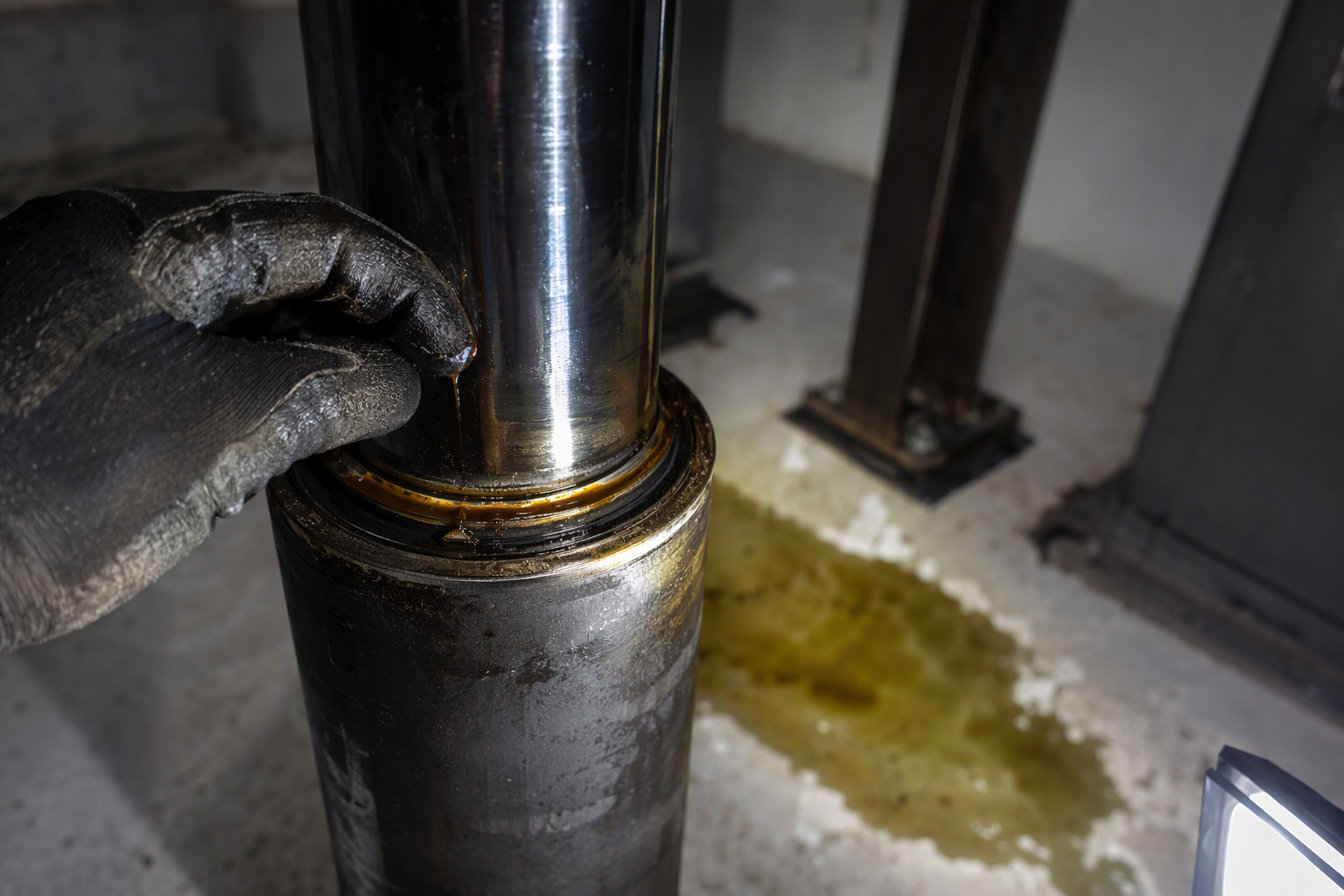
Getting an accurate quote requires an on-site evaluation — no reputable contractor can price seal replacement over the phone without inspecting the equipment first.
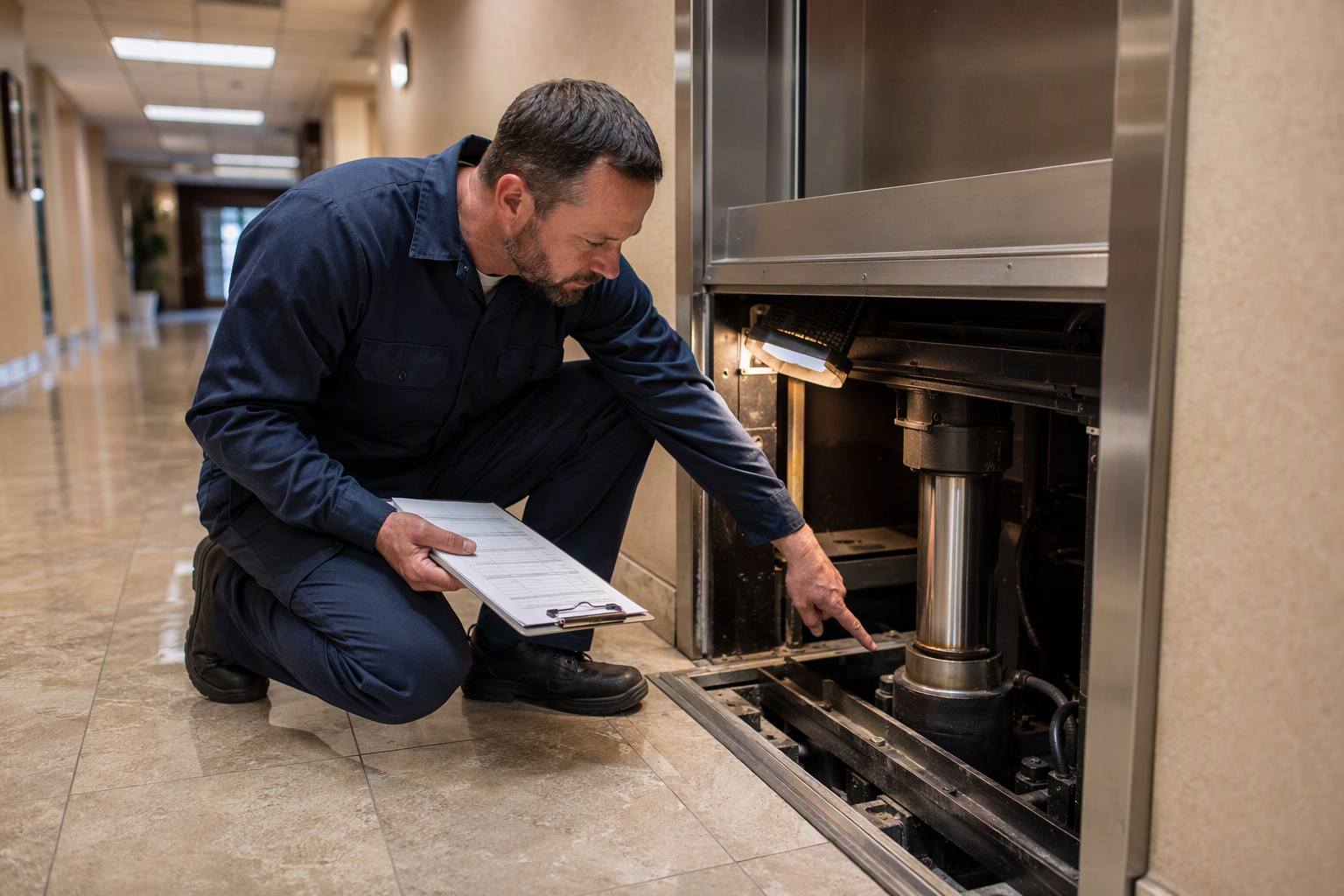
- Identify symptoms: note any visible hydraulic fluid on the cylinder exterior, pit floor, or beneath the jack unit, as well as sluggish travel, uneven leveling, or unusual odors.
- Gather your equipment data: locate the state serial number tag on your controller or mainline disconnect, and collect the elevator make, model, and installation date from your maintenance records or current certificate of inspection.
- Confirm your contractor holds the correct Arizona license: the Arizona Registrar of Contractors issues R-12 (residential) and C-12 (commercial) elevator license classifications, which authorize the holder to install and repair elevators, dumbwaiters, escalators, and moving walks.
- Schedule an on-site assessment: a qualified elevator technician will inspect the hydraulic jack assembly, piston rod surface condition, valve seals, guide rail lubrication points, and pit sump for accumulated fluid.
- Review the written scope of work: the contractor should specify each seal type being replaced, the hydraulic fluid disposal method, any required Arizona Industrial Commission of Arizona (ICA) Elevator Division notifications, and whether a re-inspection will be triggered.
- Compare at least two written quotes before authorizing work, ensuring each quote covers the same scope.
- Confirm post-repair inspection obligations with your contractor before work begins.
Arizona Elevator Solutions conducts detailed on-site assessments for property owners across Phoenix, Scottsdale, Mesa, and Tucson, providing itemized written quotes that reflect the actual condition of each hydraulic system.
What are elevator seals and why do they fail?

Elevator seals are precision-engineered components — typically made from nitrile rubber, polyurethane, or PTFE — that prevent hydraulic fluid from escaping around the piston rod and cylinder interfaces of a hydraulic elevator.
Seals degrade over time due to heat cycling, exposure to contaminated hydraulic fluid, piston rod surface corrosion, and simple material fatigue. In Arizona’s desert climate, extreme ambient temperatures in elevator pits — which can climb significantly during Phoenix and Tucson summers — accelerate elastomer breakdown faster than in more temperate regions. When seals fail, hydraulic fluid leaks into the pit, which creates a fire and environmental hazard, reduces system pressure, and causes the car to settle or drift between floors.
There are several seal locations in a typical hydraulic elevator: the primary cylinder seal (where the piston rod exits the cylinder), the valve body seals within the power unit, and secondary packing seals on submersible pump units. Each location requires a different seal profile, and a complete quote will address all compromised seal points rather than just the most visible leak.
What types of seals are replaced during a hydraulic elevator seal job?
A thorough seal replacement job typically addresses multiple seal locations depending on where leakage or wear is detected.
Common seal types include:
- Cylinder head seals: The primary seal assembly at the top of the hydraulic cylinder where the piston rod travels in and out. This is the most frequently replaced seal on in-ground hydraulic systems.
- Piston rod wiper seals: Secondary seals that clean the rod surface on retraction, preventing contaminants from entering the cylinder.
- Valve body O-rings and seals: Located in the power unit, these seals prevent fluid bypass around valve spools and control the precision of car movement.
- Submersible pump motor seals: On units where the pump motor is submerged in the fluid reservoir, motor shaft seals can degrade and contaminate the hydraulic fluid.
- Flexible hose end fittings and port seals: High-pressure hose connections between the power unit and the cylinder can weep fluid at threaded or crimped fittings.
A complete quote should itemize each seal location, the seal material specification, and whether the piston rod surface requires polishing or reconditioning before new seals can seat properly.
Does seal replacement in Arizona require a permit or state notification?
Yes — Arizona owners must notify the state at least 90 days before installing, relocating, or altering a conveyance, and depending on the scope of work, seal replacement may qualify as a repair or alteration under Arizona rules.
Under A.R.S. §§ 23-491 through 23-491.16 and the Arizona Administrative Code R20-5-502 through R20-5-515, the Industrial Commission of Arizona (ICA) Elevator Division — formerly known as the ADOSH Elevator Safety Section prior to September 12, 2026 — regulates all conveyance repairs and alterations. A licensed contractor will determine whether the planned seal work rises to the level of an alteration requiring advance notification or whether it is classified as routine maintenance.
For elevators located within the City of Phoenix, the City of Phoenix Elevator Section (Planning and Development Department) inspects elevators within city limits; the ICA Elevator Division handles equipment outside Phoenix. Owners should confirm jurisdictional responsibility with their contractor before submitting any notifications.
After any modification or alteration, Arizona requires the conveyance to be inspected before returning to service, and no conveyance may operate in Arizona without a current annual certificate of inspection. If seal replacement constitutes an alteration, a new inspection and certificate will be required before the elevator resumes operation.
Which edition of ASME A17.1 applies to elevator seal work in Arizona in 2026?
For equipment installed, repaired, or altered on or after January 1, 2023, Arizona has adopted the ASME A17.1/CSA B44 Safety Code for Elevators and Escalators, 2019 edition, effective January 9, 2023.
This means any seal replacement, re-packing, or hydraulic repair performed in 2026 on qualifying equipment must conform to the technical requirements of ASME A17.1-2019. For older equipment lawfully installed before that date, Arizona allows those conveyances to remain in use unless the ICA Elevator Division’s elevator chief determines the continued use poses a hazard to life, health, or property. Owners of older hydraulic elevators should discuss code applicability with their contractor to understand whether legacy equipment will be evaluated under a prior edition or the 2019 standard during re-inspection.
How does the annual inspection requirement affect the timing of seal replacement?
Arizona requires every conveyance to be inspected before it first goes into service, after any modification or alteration, and annually thereafter — and no conveyance may operate without a current certificate of inspection.
Building owners should coordinate seal replacement timing with their inspection schedule. If the annual inspection reveals a leaking seal as a deficiency, addressing the repair promptly avoids the risk of the certificate being withheld or the conveyance being placed out of service. Proactively scheduling seal replacement before the annual inspection — rather than reacting to a failed inspection — reduces downtime and avoids the cost of an additional re-inspection trip.
Arizona owners must also keep the state certificate at the same location as the conveyance, make it available for inspection on request, and post the state serial number or certificate in or near the conveyance in an easily accessible location. During any repair period, these obligations remain the owner’s responsibility.
What factors determine the cost of elevator seal replacement?
Several technical and logistical factors influence the total cost of a seal replacement project.
| Cost Factor | Lower Cost Scenario | Higher Cost Scenario |
|---|---|---|
| Seal location | Accessible cylinder head seal only | In-ground jack requiring excavation |
| Hydraulic fluid condition | Clean fluid, no contamination | Degraded or contaminated fluid requiring full flush and replacement |
| Piston rod condition | Smooth rod surface in good condition | Corroded or scored rod requiring polishing or sleeve replacement |
| System age and parts availability | Current-production equipment, seals in stock | Legacy equipment requiring custom or specialty seals with longer lead times |
| Number of seal locations | Single seal replacement | Full system re-packing including valve body and pump seals |
| Post-repair inspection requirement | Routine maintenance, no re-inspection triggered | Alteration classification requiring ICA inspection before return to service |
| Hydraulic fluid disposal | Small volume, standard disposal | Large-volume flush with regulated fluid disposal documentation |
Because these variables interact — a corroded rod that damages a new seal within weeks is far more costly than addressing both issues at once — a thorough on-site assessment before quoting protects the building owner from unexpected follow-on expenses.
Does ADA compliance affect elevator seal replacement decisions?
Yes — when a hydraulic elevator is taken out of service for seal replacement, building owners must consider their obligations under the Americans with Disabilities Act (ADA) to maintain accessibility.
The ADA requires that accessible routes, including elevators serving as the accessible path of travel in multi-story buildings, remain operational. Extended downtime for seal work without a temporary accessibility plan can create compliance exposure. Owners should discuss project scheduling with their contractor to minimize service interruption and, where downtime is unavoidable, should consult with their ADA compliance advisor about interim accessible alternatives.
What questions should a property owner ask when comparing seal replacement quotes?
Not all quotes are equivalent, even when the dollar amounts are similar. The following questions help property owners evaluate scope and quality:
- Does the quote include a piston rod inspection and surface condition report?
- Are hydraulic fluid testing and replacement included, or quoted separately?
- What seal material specification is being used, and is it compatible with the existing fluid type?
- Does the contractor hold an active R-12 or C-12 license from the Arizona Registrar of Contractors?
- Will the work require an ICA Elevator Division notification, and who is responsible for submitting it?
- Is a post-repair inspection included, and if required, who coordinates it with the ICA Elevator Division or the City of Phoenix Elevator Section?
- What is the warranty period on parts and labor?
- How will hydraulic fluid be disposed of, and is documentation provided for environmental compliance?
How long does elevator seal replacement typically take?
The duration of seal replacement depends on the accessibility of the cylinder, the condition of the rod, and whether hydraulic fluid requires replacement.
A straightforward cylinder head seal replacement on an above-ground hydraulic unit — where the cylinder is accessible without excavation — can often be completed in a single working day. In-ground cylinders, which are common in older hydraulic installations across the Phoenix metro and Tucson markets, require more extensive access work and may take multiple days. If the piston rod requires polishing or a protective sleeve installation, additional time should be budgeted. Owners should confirm the estimated timeline in writing as part of the quote to plan for elevator downtime and any required accessibility accommodations.
What are the risks of deferring elevator seal replacement?
Deferring seal replacement once a leak is detected carries compounding risks that go beyond the elevator pit.
Hydraulic fluid accumulating in the pit creates a fire hazard classified under OSHA regulations governing flammable and combustible liquids in workplaces. Continued operation with degraded seals increases internal cylinder contamination, which can score the piston rod and require far more extensive repairs. A leaking hydraulic system also loses system pressure over time, causing the car to settle at landings — a condition that creates a tripping hazard for passengers and a liability exposure for building owners. In Arizona, continued operation of a conveyance known to be in an unsafe condition conflicts with the owner’s obligations under A.R.S. § 23-491 et seq.
Can a private elevator inspector identify seal deficiencies during an annual inspection?
Yes — Arizona owners may hire a private elevator inspector authorized by the Industrial Commission of Arizona to perform initial or annual inspections, and a qualified inspector will document hydraulic seal condition as part of a standard inspection.
Arizona private elevator inspectors must register with the ICA Elevator Division every year and demonstrate at least eight hours of approved continuing education. However, an important conflict-of-interest rule applies: a private elevator inspector may not inspect a conveyance owned, operated, or last serviced by the inspector, a company the inspector owns, or the inspector’s employer. This rule ensures that the seal replacement contractor and the post-repair inspector are independent parties. Using a private inspector does not relieve the owner or operator of their legal obligations under Arizona law.
What is the difference between a seal replacement and a full hydraulic cylinder replacement?
Seal replacement addresses the sealing components at the cylinder head and valve assembly while leaving the cylinder and piston rod in place. Full hydraulic cylinder replacement involves removing the entire jack unit — including the cylinder barrel and piston rod — and installing a new assembly.
A qualified contractor will recommend seal replacement when the piston rod surface is in acceptable condition, the cylinder barrel has not corroded or pitted below serviceable tolerances, and the overall hydraulic system is otherwise mechanically sound. Cylinder replacement is typically recommended when the rod is severely corroded, when the in-ground cylinder has experienced external corrosion or casing failure, or when the age of the equipment makes continued investment in the existing jack assembly impractical. Understanding this distinction helps building owners evaluate whether a seal-replacement quote is appropriate for their specific equipment or whether a broader scope discussion is warranted.
Are platform lifts and stairway chairlifts subject to the same seal replacement rules in Arizona?
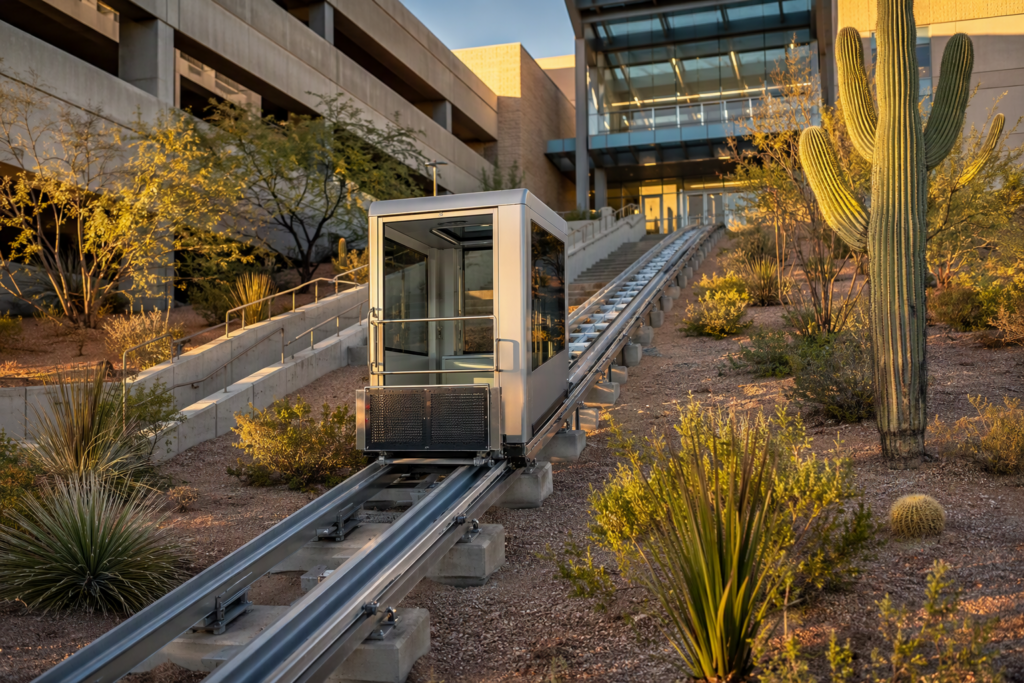
Platform lifts and stairway chairlifts are governed by a separate standard in Arizona. Equipment installed, repaired, or altered on or after January 1, 2023 must comply with ASME A18.1-2020. While these units may use hydraulic or electromechanical actuation rather than large-bore hydraulic cylinders, the general principles of Arizona’s permit notification, inspection, and certification requirements still apply.
Owners of platform lifts experiencing actuator seal leaks or hydraulic fluid loss should follow the same quote-gathering process: obtain an on-site assessment from a contractor holding the appropriate Arizona Registrar of Contractors license classification, confirm whether the repair constitutes a routine maintenance action or an alteration under Arizona Administrative Code R20-5-502 through R20-5-515, and coordinate any required inspections with the ICA Elevator Division or, within Phoenix city limits, the City of Phoenix Elevator Section.
What documentation should be provided after elevator seal replacement is complete?
Proper documentation protects building owners during future inspections and provides a defensible compliance record.
After seal replacement, owners should receive and retain the following:
- A completed work order or service report specifying all seals replaced, seal material specifications, hydraulic fluid type and volume, and the piston rod condition assessment.
- Any ICA Elevator Division notification acknowledgment or permit documentation related to the repair or alteration.
- The updated certificate of inspection if the seal work triggered a post-repair inspection requirement.
- Hydraulic fluid disposal documentation if fluid was removed and replaced, particularly if the volume or fluid type requires regulated disposal tracking.
- Warranty documentation from the contractor covering parts and labor.
The state certificate of inspection must be kept at the same location as the conveyance, and the state serial number or certificate must remain posted in or near the elevator in an easily accessible location throughout and after any repair period.
How do firefighters’ emergency operation requirements interact with seal replacement downtime?
Arizona conveyances equipped with firefighters’ emergency operation must use the Arizona Firefighters Service (AZFS) key. When a hydraulic elevator is taken out of service for seal replacement, local fire code compliance related to the building’s fire service access elevator obligations should be reviewed with the building’s fire safety coordinator.
If the elevator subject to repair is the designated fire service elevator for the building, the contractor and building owner should coordinate with the local authority having jurisdiction — the City of Phoenix Elevator Section within Phoenix, or the ICA Elevator Division elsewhere in Arizona — to address any temporary out-of-service notifications required during the repair period.
How should building owners in Scottsdale and Mesa approach the quote process differently from Phoenix?
The primary regulatory difference is jurisdictional. Within the City of Phoenix, the City of Phoenix Elevator Section (Planning and Development Department) inspects elevators and handles related permit activity. In Scottsdale and Mesa — as well as in Tucson — the Industrial Commission of Arizona Elevator Division is the regulator of record, since the ICA handles all equipment outside Phoenix city limits.
Building owners in Scottsdale and Mesa should ensure their seal replacement contractor is familiar with ICA Elevator Division notification and inspection procedures rather than Phoenix municipal processes. Arizona Elevator Solutions serves all four markets and is familiar with the procedural differences across each jurisdiction, helping owners in Phoenix, Scottsdale, Mesa, and Tucson navigate the correct regulatory pathway for their repair project.
What should a property owner do if a seal failure causes an accident or disables the elevator?
Arizona law requires owners to notify the state within 24 hours of any accident that injures a person or disables a conveyance. This notification obligation applies regardless of the cause of the disabling event — including a sudden seal failure that results in pressure loss and a stranded car.
- Ensure all passengers are safely evacuated from the car by qualified personnel — do not attempt self-rescue without trained technician support.
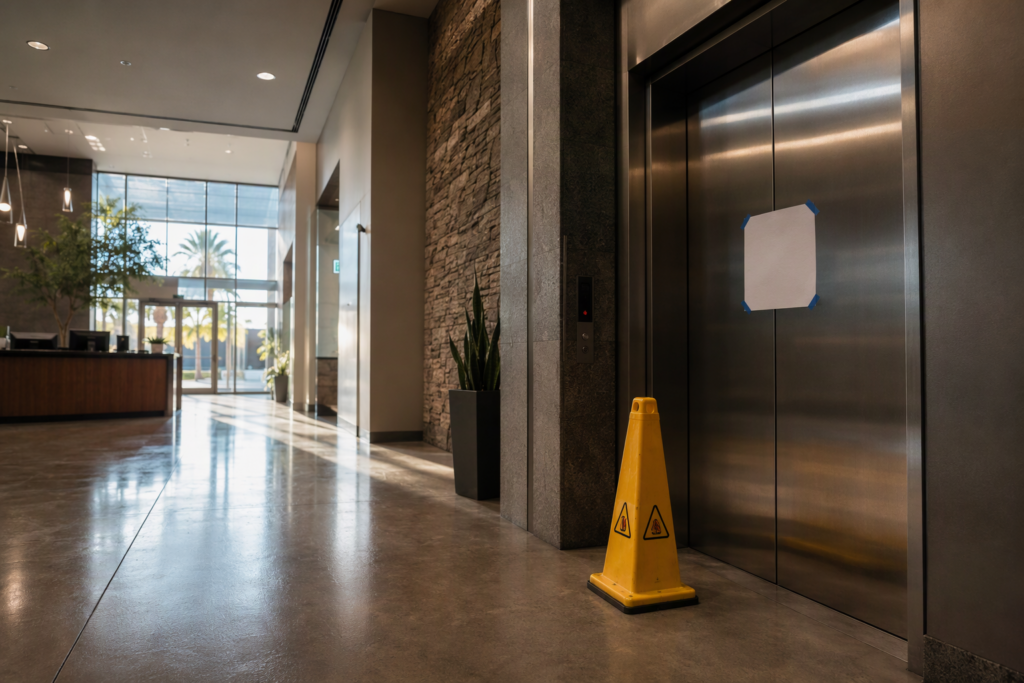
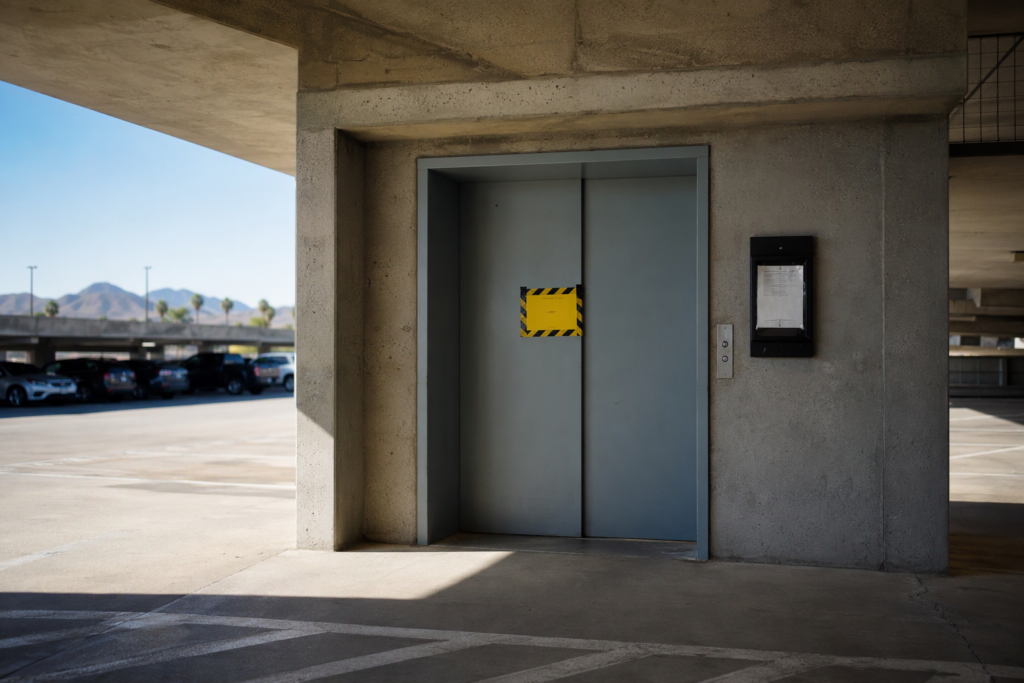
- Place the elevator out of service immediately and post visible out-of-service signage at all landings.
- Notify the ICA Elevator Division (or the City of Phoenix Elevator Section if the elevator is within Phoenix) within 24 hours of the disabling event or injury, as required by A.R.S. § 23-491 et seq.
- Contact a licensed elevator contractor to conduct an emergency inspection and document the cause and extent of the seal failure.
- Obtain a written scope of repair and, if the repair constitutes an alteration, submit any required notifications to the applicable authority before work begins.
- Do not return the elevator to service until all required post-repair inspections are completed and a valid certificate of inspection is in place.
How does Arizona Elevator Solutions approach the seal replacement quote process?
Arizona Elevator Solutions conducts on-site hydraulic system assessments for property owners in Phoenix, Tucson, Scottsdale, and Mesa, evaluating cylinder seal condition, piston rod surface integrity, hydraulic fluid condition, valve body seal status, and pit safety conditions before preparing a written quote.
Quotes provided by Arizona Elevator Solutions identify each seal location requiring service, specify the applicable seal materials, address hydraulic fluid testing and replacement where warranted, and outline any ICA Elevator Division or City of Phoenix Elevator Section notifications required before or after the work. Property owners receive documentation supporting their compliance obligations under A.R.S. §§ 23-491 through 23-491.16 and the ASME A17.1-2019 Safety Code for Elevators and Escalators as adopted in Arizona.
What are the most common misconceptions about elevator seal replacement quotes?
Several common misunderstandings lead building owners to accept incomplete quotes or underestimate total project scope.
Misconception 1: A phone quote is sufficient. No legitimate contractor can accurately quote seal replacement without physically inspecting the piston rod surface, cylinder head condition, and fluid quality. Phone quotes based on equipment age alone omit critical condition variables.
Misconception 2: The cheapest quote covers the same scope. Quotes that exclude hydraulic fluid replacement, rod inspection, or post-repair inspection coordination may appear less expensive but typically result in callback costs when the underlying condition is not fully addressed.
Misconception 3: Seal replacement never triggers an inspection. Depending on the scope, Arizona classifies some repair and hydraulic work as alterations, which require a new inspection before the elevator returns to service. Owners should confirm classification with their contractor before approving work.
Misconception 4: Any licensed contractor can do elevator seal work. Arizona’s elevator-specific license classifications — R-12 and C-12 from the Arizona Registrar of Contractors — are distinct from general mechanical contractor licenses. Building owners should verify the contractor holds the appropriate elevator license classification before authorizing work.
Contact Arizona Elevator Solutions for a free elevator assessment at 480-557-7600.
Need elevator service you can rely on? Arizona Elevator Solutions is ready to help.