Elevator Installation Quotes in Arizona: Complete FAQ for Homes and Buildings
Arizona Elevator Solutions provides free elevator installation assessments for homeowners, property developers, and building owners throughout Phoenix, Tucson, Scottsdale, and Mesa. Installation costs vary based on elevator type, the number of stops, hoistway dimensions, and compliance obligations under ASME A17.1-2019 and the Americans with Disabilities Act. Understanding what drives those costs — and what Arizona law requires before a single bolt is tightened — helps owners budget accurately and avoid costly delays.
What information does Arizona Elevator Solutions need to provide an accurate installation quote?
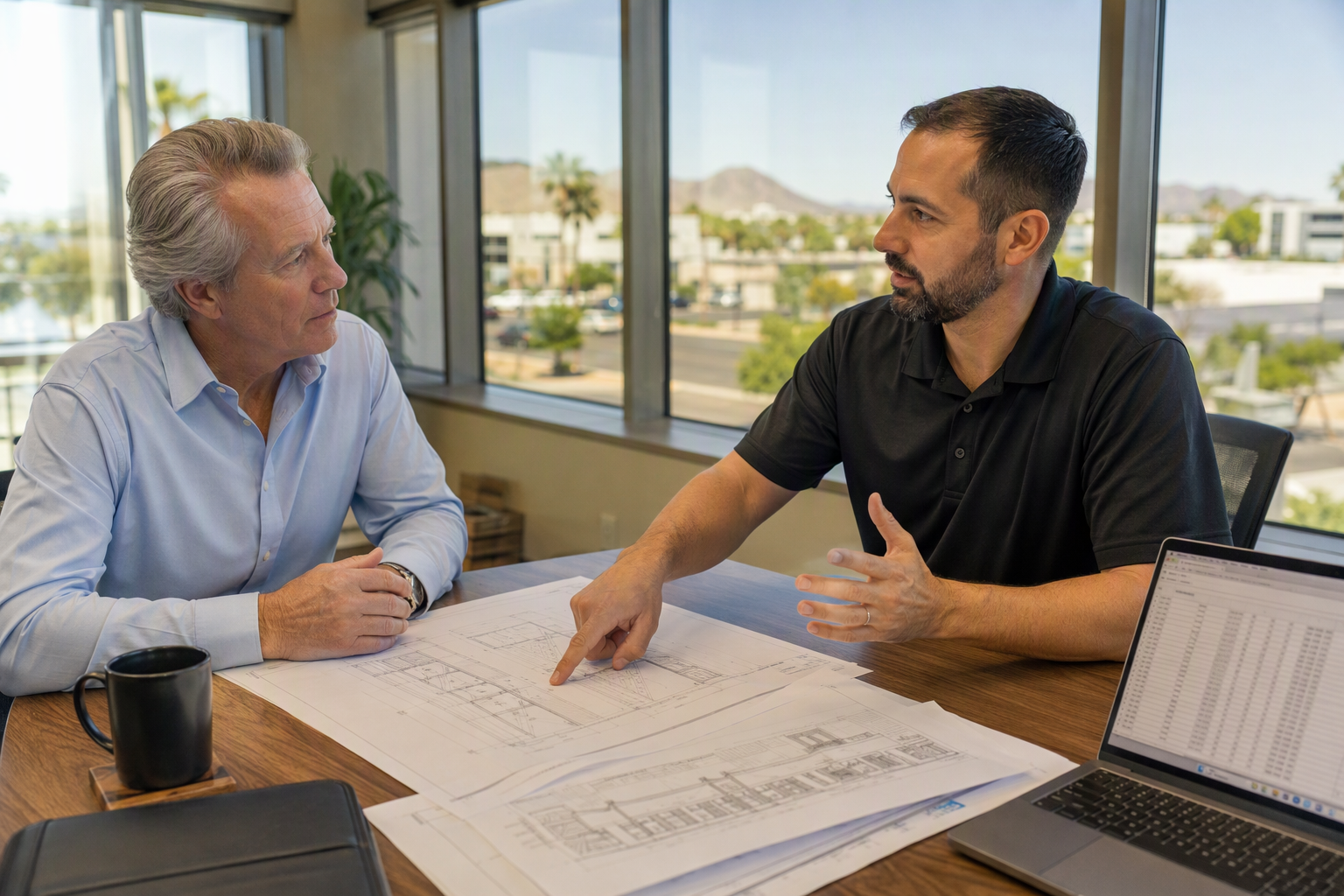
A reliable quote requires the property address, building type, intended number of floors and stops, available hoistway or shaft space, expected passenger load, and any accessibility or ADA requirements the owner needs to meet.
Without these details, any number quoted is little more than a guess. The size of the hoistway pit, overhead clearance, machine room availability (or its absence, for machine-room-less systems), and the structural condition of the building all affect labor, equipment selection, and time on-site. Owners should gather architectural drawings or floor plans in advance to accelerate the quoting process. If drawings are not available, a site visit by a qualified elevator contractor is typically the fastest path to an accurate estimate.
Regulatory obligations also affect the quote. Under A.R.S. §§ 23-491 through 23-491.16, Arizona owners must notify the Industrial Commission of Arizona (ICA) Elevator Division at least 90 days before installing a conveyance. That timeline has to be factored into any project schedule and budget.
What types of elevators can be installed in an Arizona home or building?
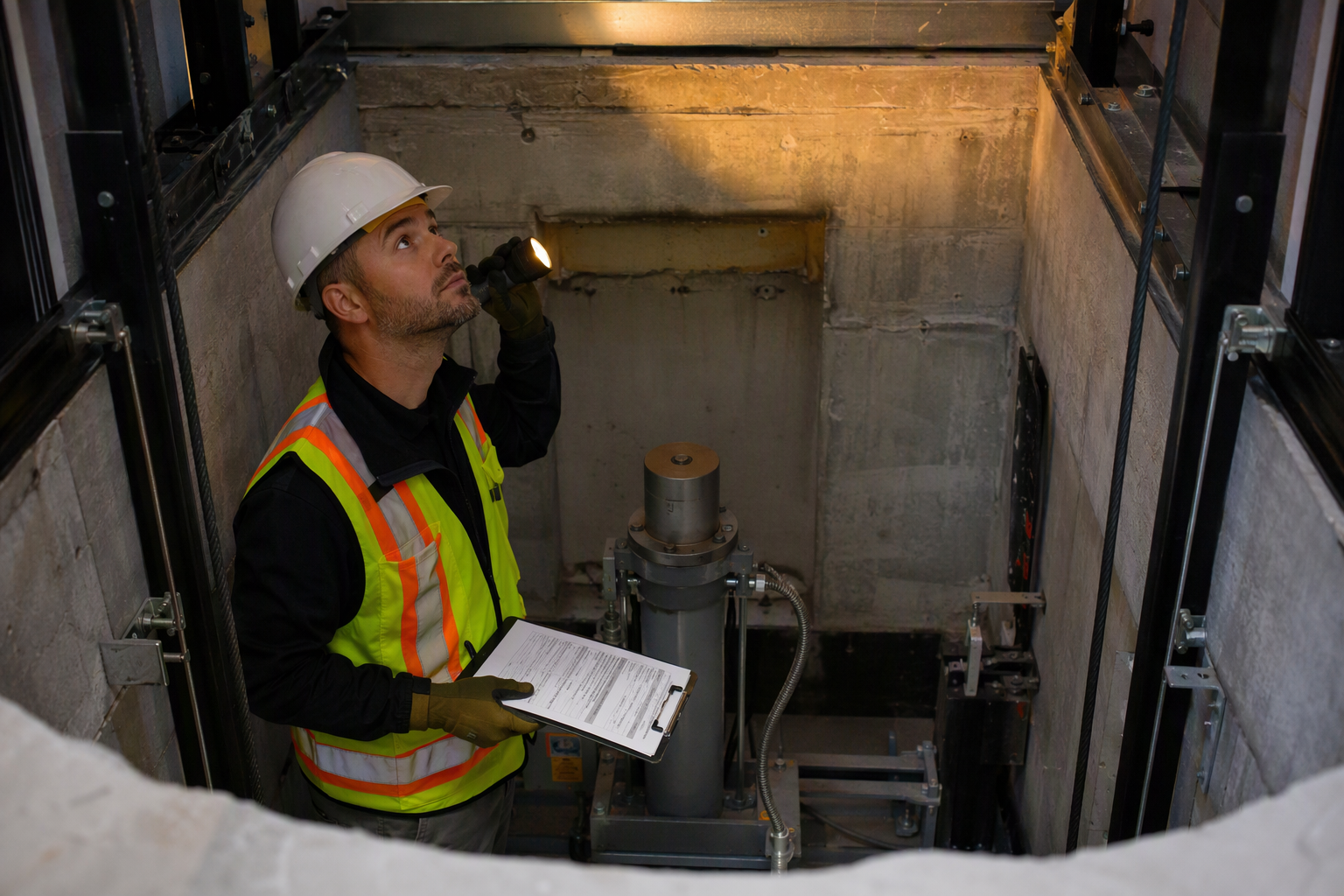
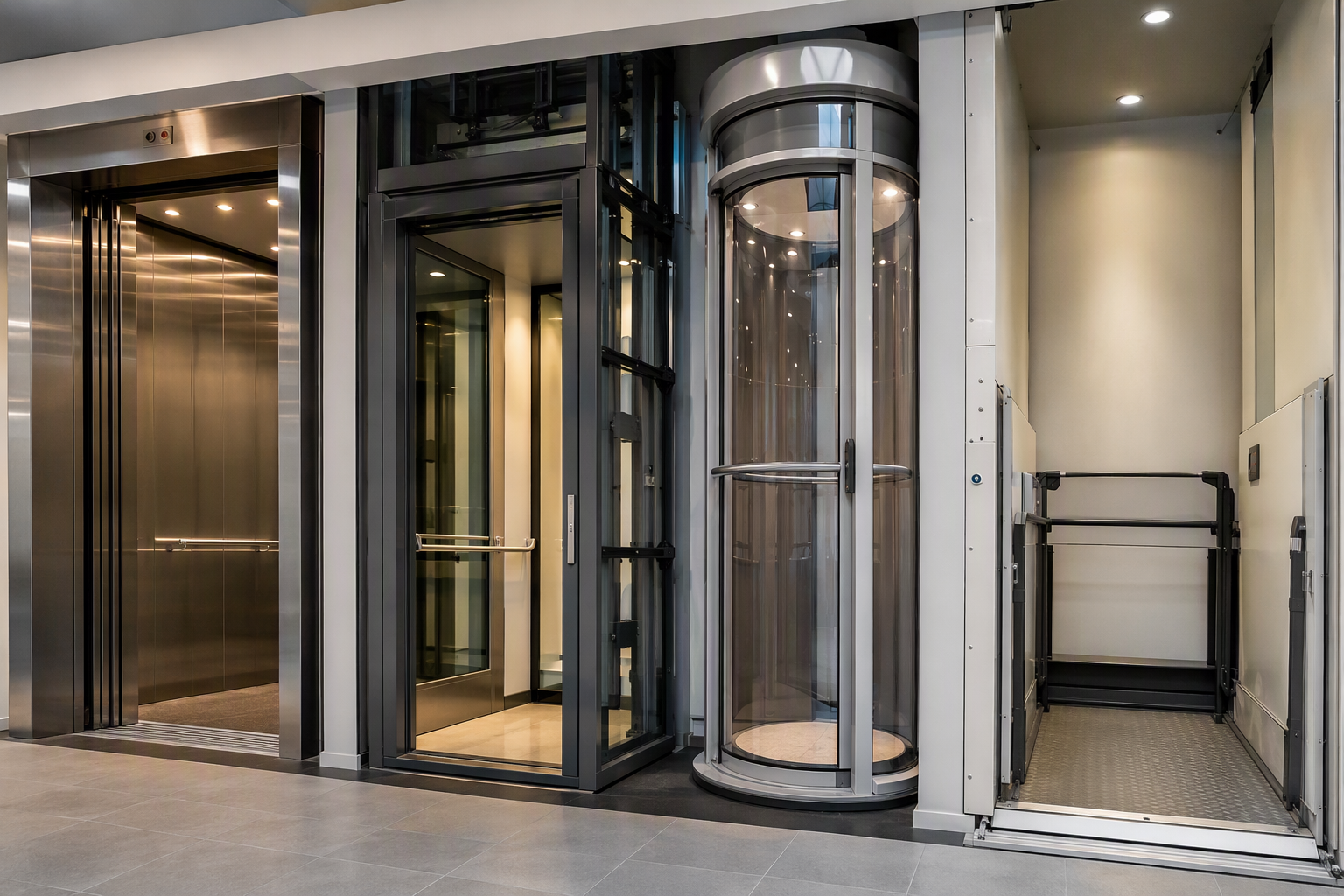
Arizona residential and commercial properties can accommodate hydraulic elevators, traction elevators, machine-room-less (MRL) traction elevators, pneumatic vacuum elevators, and platform lifts, each suited to different building configurations and budgets.
Hydraulic elevators use a fluid-driven piston and are common in low-rise commercial buildings and homes with basement machine-room space. They are reliable and cost-effective for two- to five-story travel but require an in-ground or above-ground cylinder and regular fluid maintenance.
Traction elevators use counterweighted cables and an overhead machine; they are preferred for mid- to high-rise buildings where speed and ride quality matter. MRL traction systems relocate the drive machine to the hoistway itself, eliminating the machine room and saving floor space — a significant advantage in tight Arizona infill developments.
Pneumatic vacuum elevators use differential air pressure and require no hoistway pit or machine room, making them a popular residential retrofit option in Phoenix and Scottsdale homes where structural modifications must be minimized.
Platform lifts and stairway chairlifts serve single-family homes and ADA accessibility applications. Under Arizona Administrative Code R20-5-502 through R20-5-515, platform lifts and stairway chairlifts installed, repaired, or altered on or after January 1, 2023, must comply with ASME A18.1-2020.
What Arizona regulations govern new elevator installations?
New elevator installations in Arizona are regulated under A.R.S. §§ 23-491 through 23-491.16 and Arizona Administrative Code R20-5-502 through R20-5-515, administered since September 12, 2026, by the Industrial Commission of Arizona (ICA) Elevator Division.
The ICA Elevator Division — formerly known as the ADOSH Elevator Safety Section until September 12, 2026 — is the statewide authority having jurisdiction (AHJ) for all conveyances outside the City of Phoenix. Equipment installed, repaired, or altered on or after January 1, 2023, must conform to the ASME A17.1/CSA B44, 2019 edition (ASME A17.1-2019) Safety Code for Elevators and Escalators, effective January 9, 2023.
Within Phoenix city limits, the City of Phoenix Elevator Section (Planning and Development Department) handles inspections for elevators, escalators, moving walks, dumbwaiters, and chairlifts. Property owners in Phoenix need to coordinate with both the city and, where applicable, the ICA Elevator Division.
Contractor licensing is separately handled by the Arizona Registrar of Contractors (ROC), which issues R-12 (residential) and C-12 (commercial) elevator contractor license classifications authorizing the installation and repair of elevators, dumbwaiters, escalators, and moving walks.
What federal codes apply to elevator installations in Arizona?
Federal requirements applicable to Arizona elevator installations include the ASME A17.1 Safety Code for Elevators and Escalators, the Americans with Disabilities Act (ADA), and applicable OSHA construction and general industry standards covering worker safety during installation.
The ADA Accessibility Guidelines require that elevator cars in new construction and alterations to covered facilities meet specific door width, cab dimension, control height, and signage requirements. For multi-story commercial buildings, ADA compliance is not optional — it is a baseline design requirement that must be incorporated into equipment selection before a quote is finalized.
ASME A17.1-2019, adopted by Arizona for equipment installed on or after January 1, 2023, governs safety devices, load ratings, control systems, doors, guarding, and emergency operations. Arizona has also adopted a firefighters’ emergency operation requirement: conveyances with firefighters’ emergency operation must use the Arizona Firefighters Service (AZFS) key, a state-specific requirement that affects equipment specification and must be reflected in any installation quote.
How long does a new elevator installation in Arizona take from quote to operation?
A typical Arizona elevator installation project runs from several months to well over a year from initial quote to certificate of inspection, depending on elevator type, building complexity, permit lead times, and the required 90-day state notification period.
The timeline breaks down into distinct phases:
- Site assessment and quote finalization — typically completed within days of the initial request when all building information is available.
- Design and engineering — custom hoistway layouts and load calculations are prepared and submitted for permitting.
- Permit and ICA Elevator Division notification — Arizona law requires owners to notify the ICA at least 90 days before installation, repair, or alteration begins. This period runs concurrently with permit processing where local AHJs allow it.
- Equipment manufacturing and procurement — standard residential units may arrive in weeks; commercial traction equipment with custom finishes can take several months.
- Hoistway construction and rough-in — structural work is completed by the general contractor before elevator contractors arrive.
- Elevator installation — the elevator contractor installs the equipment, wiring, and controls.
- Pre-inspection testing — the contractor performs acceptance testing per ASME A17.1-2019 requirements.
- ICA or City of Phoenix inspection — the conveyance must be inspected before it goes into service. No conveyance may operate in Arizona without an annual certificate of inspection issued by the state.
- Certificate issued and posted — the owner must keep the certificate at the same location as the conveyance and post the state serial number in or close to the conveyance in an easily accessible location.
What factors affect the cost of a new elevator installation in Arizona?
Installation cost is driven by elevator type, number of stops, travel height, hoistway construction requirements, cab finish level, ADA compliance features, site accessibility, and Arizona-specific compliance costs such as state notification fees, inspection fees, and AZFS key equipment.
Residential pneumatic elevators with two stops typically represent the most compact budget scenario, while commercial machine-room-less traction elevators with multiple stops, custom cabs, and full ADA outfitting represent a substantially higher investment. Retrofitting an existing building adds cost because hoistway construction must work around existing structure, utilities, and occupants. New construction, by contrast, allows the hoistway to be engineered into the building from the start, which is almost always more cost-effective.
Because each installation is unique, Arizona Elevator Solutions conducts a free site assessment to develop project-specific cost estimates rather than publishing generic ranges that may mislead owners into under-budgeting.
What is the difference between a residential elevator and a commercial elevator installation in Arizona?
Residential elevators serve private homes and are governed by the same ASME A17.1-2019 code as commercial equipment in Arizona, but they typically involve smaller cabs, lower speeds, lighter duty cycles, and more compact drive systems than the traction equipment installed in commercial office buildings, hospitals, or multi-family developments.
| Factor | Residential Pneumatic / Hydraulic | Commercial Hydraulic | Commercial MRL Traction |
|---|---|---|---|
| Typical number of stops | 2–3 | 2–5 | 3–20+ |
| Machine room required? | No (pneumatic) / Yes (hydraulic) | Yes | No |
| Pit required? | No (pneumatic) / Yes (hydraulic) | Yes | Yes |
| ADA compliance required? | Not mandated for private residence | Required for covered facilities | Required for covered facilities |
| Arizona code edition (2026) | ASME A17.1-2019 | ASME A17.1-2019 | ASME A17.1-2019 |
| AZFS key required? | If firefighters’ operation is included | Yes, where firefighters’ operation is required | Yes, where firefighters’ operation is required |
| ICA 90-day notification? | Yes | Yes | Yes |
| Annual certificate required? | Yes | Yes | Yes |
Does Arizona require a permit before installing an elevator?
Yes — Arizona owners must notify the Industrial Commission of Arizona Elevator Division at least 90 days before installing, relocating, or altering a conveyance, and local building permits from the relevant city or county AHJ are also required.
Within Phoenix, the City of Phoenix Elevator Section coordinates with the Planning and Development Department. In Tucson, Scottsdale, Mesa, and other jurisdictions, the local building department handles structural and electrical permits while the ICA Elevator Division retains jurisdiction over the elevator conveyance itself. Failing to provide the 90-day notification is a statutory violation under A.R.S. §§ 23-491 through 23-491.16 and can delay the issuance of the certificate of inspection, preventing the elevator from legally operating.
What happens during the ICA elevator inspection before a new installation goes into service?
Before a new conveyance goes into service in Arizona, the ICA Elevator Division or an authorized private elevator inspector must conduct an acceptance inspection to verify that the installation complies with ASME A17.1-2019 and all applicable Arizona rules before issuing the certificate of inspection.
The inspection covers safety devices, load ratings, door operation, emergency lighting, phone systems, governor and buffer performance, and firefighters’ emergency operation where required. The inspector will verify that the AZFS key specification has been met if the system includes firefighters’ emergency operation. Once the inspection passes, the state assigns a serial number on a tag fixed to the controller or mainline disconnect, and the certificate of inspection must be kept at the same location as the conveyance.
Arizona owners may engage a private elevator inspector authorized by the ICA to perform the inspection, provided that inspector is not the same person or entity that owns, operates, or last serviced the conveyance — a conflict-of-interest rule codified in state law. Private inspectors must register with the commission annually and demonstrate at least eight hours of approved continuing education each registration year.
Can an existing building have an elevator added as a retrofit in Arizona?
Yes — retrofitting an elevator into an existing Arizona building is feasible for many property types, though it requires structural assessment, hoistway design, and compliance with both ASME A17.1-2019 for new installations and any applicable ADA requirements for covered facilities.
The most common retrofit approach in Arizona’s older residential stock involves installing a through-floor hydraulic or pneumatic elevator in a closet stack or stairwell void. For commercial buildings, MRL traction systems are popular retrofits because they minimize machine room construction. Any retrofit that constitutes an alteration triggers the full Arizona notification and inspection process under A.R.S. §§ 23-491 through 23-491.16, just as a new installation does.
Arizona Elevator Solutions performs retrofit feasibility assessments in Phoenix, Tucson, Scottsdale, and Mesa, evaluating floor-to-floor heights, load-bearing capacity, and pit and overhead clearance before any quote is prepared.
What ADA requirements apply to elevator installations in Arizona commercial buildings?
Under the Americans with Disabilities Act, newly constructed or altered commercial facilities subject to the ADA must provide elevator access between floors unless a specific exemption applies, with cab dimensions, door widths, control heights, floor indicators, and tactile signage all governed by ADA Standards for Accessible Design.
The ADA elevator exemption for buildings with fewer than three stories or fewer than 3,000 square feet per story does not apply to shopping centers, shopping malls, terminals, depots, airports, professional offices of health care providers, or stations used for specified public transportation. Building owners and developers in Arizona must confirm whether their facility qualifies for any exemption before assuming elevator installation is discretionary.
ADA compliance requirements should be incorporated into the equipment specification before a quote is accepted, because adding ADA features post-installation is significantly more costly than specifying them from the outset.
How does the Arizona Registrar of Contractors licensing requirement affect who can install an elevator?
Only contractors holding an Arizona Registrar of Contractors R-12 (residential) or C-12 (commercial) elevator license classification are legally authorized to install, repair, and alter elevators, dumbwaiters, escalators, and moving walks in Arizona.
Property owners should verify a contractor’s ROC license before signing any installation contract. The ROC license is separate from the annual certificate of inspection — the ROC licenses the contractor to do the work, while the ICA Elevator Division issues the certificate that allows the finished conveyance to legally operate. Hiring an unlicensed contractor can void insurance coverage, create personal liability for the building owner, and result in an installation that cannot receive a certificate of inspection.
What questions should an owner ask an elevator contractor before accepting an installation quote?
Owners should ask about the contractor’s Arizona ROC license classification, their experience with the specific equipment type being quoted, how they handle the ICA 90-day notification process, what the inspection and certificate process looks like, and what the warranty covers for both equipment and labor.
Additional practical questions include:
- Is the quoted equipment specification compliant with ASME A17.1-2019 as adopted by Arizona effective January 9, 2023?
- Does the installation require an AZFS key, and is that key specification included in the quote?
- Who is responsible for coordinating with the City of Phoenix Elevator Section or local AHJ for permit purposes?
- Is the cost of the initial state inspection and certificate of inspection included in the quoted price?
- What is the maintenance plan after the certificate of inspection is issued, and what is the expected frequency of annual inspections going forward?
- Does the contractor carry the liability and workers’ compensation insurance required by Arizona law?
What ongoing compliance obligations does an Arizona elevator owner have after installation?
After a new elevator goes into service in Arizona, the owner is responsible for annual inspections, maintaining the certificate of inspection on-site, posting the state serial number near the conveyance, and notifying the ICA Elevator Division within 24 hours of any accident that injures a person or disables the conveyance.
No conveyance may legally operate in Arizona without a current annual certificate of inspection. The owner must keep that certificate at the same location as the conveyance and make it available on request. The state serial number tag — fixed to the controller or mainline disconnect at the time of initial inspection — must be posted in or close to the conveyance in an easily accessible location throughout the life of the equipment.
Older conveyances that were lawfully installed before current code editions were adopted may remain in service in Arizona unless the ICA Elevator Division’s elevator chief determines that continued operation poses a hazard to life, health, or property — a grandfathering provision that does not excuse owners from keeping current inspection certificates.
How are annual elevator inspections handled after installation in Arizona?
Arizona elevator owners may use either an ICA Elevator Division state inspector or an ICA-authorized private elevator inspector for annual inspections, provided the private inspector meets annual registration and continuing education requirements and has no conflict of interest with the conveyance being inspected.
Private elevator inspectors in Arizona must register with the ICA annually and demonstrate a minimum of eight hours of approved continuing education per registration year. They may not inspect a conveyance owned, operated, or last serviced by themselves, a company they own, or their employer. Using a private inspector does not relieve the owner of any legal obligation under Arizona law — the responsibility for maintaining a current certificate of inspection rests with the building owner, not the inspector.
Arizona Elevator Solutions helps owners track inspection schedules and coordinates with authorized inspectors to ensure certificates remain current across all covered conveyances.
What happens if an elevator accident or breakdown occurs in Arizona?
Arizona law requires that the building owner notify the Industrial Commission of Arizona Elevator Division within 24 hours of any accident that injures a person or disables a conveyance, and the conveyance must remain out of service until the ICA authorizes its return to operation.
Prompt notification is a legal obligation, not a discretionary act. Owners should immediately secure the elevator, prevent access, and document the incident before contacting the ICA Elevator Division. If the incident occurs within Phoenix city limits, the City of Phoenix Elevator Section may also need to be notified depending on the nature of the event. OSHA standards may additionally apply if a worker is injured during a maintenance or installation activity.
Does the quote process differ for multi-family residential buildings versus single-family homes in Arizona?
Yes — multi-family residential buildings such as condominiums and apartment complexes are typically classified as commercial for purposes of elevator code compliance, meaning they require commercial-grade equipment, full ADA accessibility compliance for common-area elevators, and the same ICA permitting and inspection process as any other commercial building.
Single-family homes, by contrast, use residential elevator or platform lift equipment. While the same Arizona notification and inspection requirements apply regardless of building type, multi-family projects require more complex permitting coordination, higher capacity equipment, and typically longer project timelines. Developers of multi-family projects in Phoenix and Scottsdale where density is increasing should factor elevator compliance into pro forma budgets well before construction documents are finalized.
What is a platform lift, and when is it appropriate instead of a full elevator in Arizona?
A platform lift is a low-rise vertical conveyance designed to travel a limited distance — typically one floor — and is appropriate for accessibility applications in existing buildings where hoistway construction for a full elevator is impractical or cost-prohibitive.
In Arizona, platform lifts and stairway chairlifts installed, repaired, or altered on or after January 1, 2023, must comply with ASME A18.1-2020 as required by Arizona Administrative Code R20-5-502 through R20-5-515. Platform lifts are subject to the same ICA notification, inspection, and certificate of inspection requirements as full elevators. Under the ADA, platform lifts may be used in specific limited circumstances as an accessible route alternative to an elevator, but owners should confirm applicability with an ADA consultant before specifying a lift in place of a full elevator for a covered facility.
How does Arizona Elevator Solutions approach the quote process compared to a generic contractor?
Arizona Elevator Solutions focuses exclusively on elevator and conveyance systems in Arizona, which means the assessment accounts for ICA Elevator Division notification requirements, AZFS key specifications, local AHJ coordination in Phoenix, Tucson, Scottsdale, and Mesa, and ASME A17.1-2019 compliance from the first site visit rather than as an afterthought.
A general contractor providing an elevator sub-quote may not be familiar with the 90-day ICA notification obligation, the AZFS key requirement, or the distinction between the City of Phoenix Elevator Section’s jurisdiction and the ICA’s statewide authority. Overlooking any of these details can result in project delays, failed inspections, or equipment that must be modified before a certificate of inspection can be issued. Arizona Elevator Solutions structures every quote to reflect the full scope of compliance obligations specific to the project’s location and elevator type.
What should an owner do immediately after deciding to install an elevator in an Arizona building?
Owners should take the following steps as soon as an elevator installation decision is made, in order to preserve the project timeline and ensure regulatory compliance:
- Gather available architectural drawings, floor plans, and structural information about the building.
- Identify the intended elevator location, number of stops, and primary use (passenger, accessibility, freight).
- Confirm whether the property is within Phoenix city limits — which affects which AHJ handles the elevator inspection — or outside Phoenix, where the ICA Elevator Division has statewide jurisdiction.
- Contact a contractor holding an Arizona ROC R-12 or C-12 elevator license classification to schedule a site assessment.
- Request a quote that itemizes equipment, hoistway construction, ICA notification, permit fees, inspection costs, and post-installation maintenance options.
- Verify that the equipment specification references ASME A17.1-2019 for all equipment installed on or after January 1, 2023, and ASME A18.1-2020 for platform lifts if applicable.
- Confirm the AZFS key requirement is addressed in the specification if the elevator will include firefighters’ emergency operation.
- Ensure the project schedule accounts for the mandatory 90-day ICA notification period before installation work begins.
- After installation and inspection, obtain the certificate of inspection, post the state serial number near the conveyance, and calendar the next annual inspection date.
Does Arizona Elevator Solutions serve all major Arizona markets for elevator installation quotes?
Arizona Elevator Solutions provides elevator installation assessments and quotes in Phoenix, Tucson, Scottsdale, and Mesa, covering both the City of Phoenix Elevator Section’s jurisdiction and the ICA Elevator Division’s statewide territory for properties throughout those markets.
Each market presents different project characteristics — Phoenix’s high-rise and mixed-use density, Scottsdale’s resort and luxury residential sector, Mesa’s growing industrial and multi-family stock, and Tucson’s healthcare and university facilities. Arizona Elevator Solutions assesses each project individually, factoring in local AHJ requirements, site access conditions, and the specific regulatory obligations that apply under A.R.S. §§ 23-491 through 23-491.16 and the Arizona Administrative Code.
Contact Arizona Elevator Solutions for a free elevator assessment at 480-557-7600.
Need elevator service you can rely on? Arizona Elevator Solutions is ready to help.