Elevator Service in Phoenix, AZ | Arizona Elevator Solutions
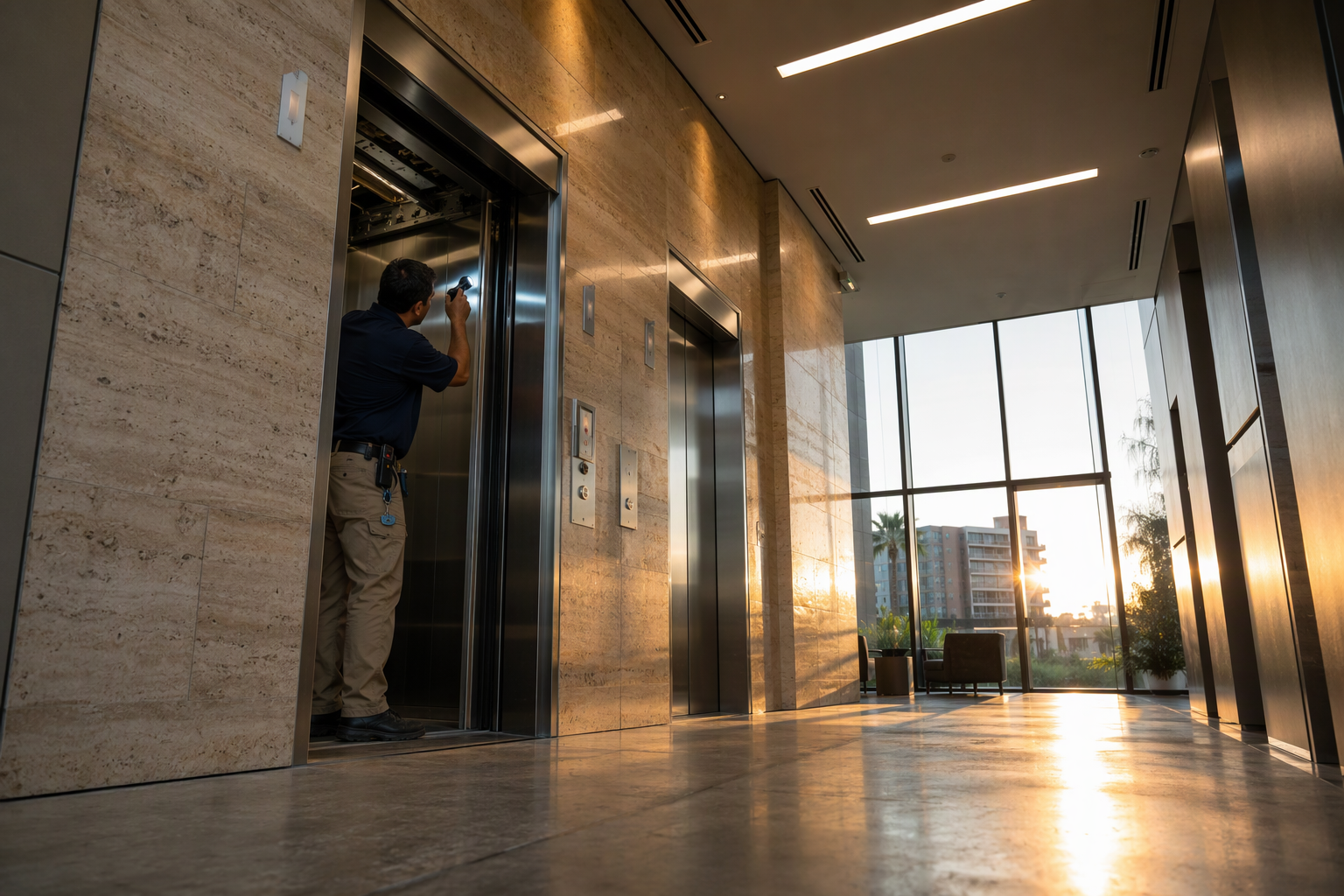
Elevator problems rarely announce themselves at a convenient time. Whether a cab stops between floors, doors refuse to close, or an annual inspection reveals deferred maintenance, building owners and property managers in Phoenix face real liability when conveyances fall out of service or out of compliance. Arizona Elevator Solutions provides professional elevator service across Phoenix and throughout Arizona, helping owners diagnose issues, complete repairs, and maintain the certificates required by state law.
What Are the Most Common Elevator Issues in Phoenix Buildings?
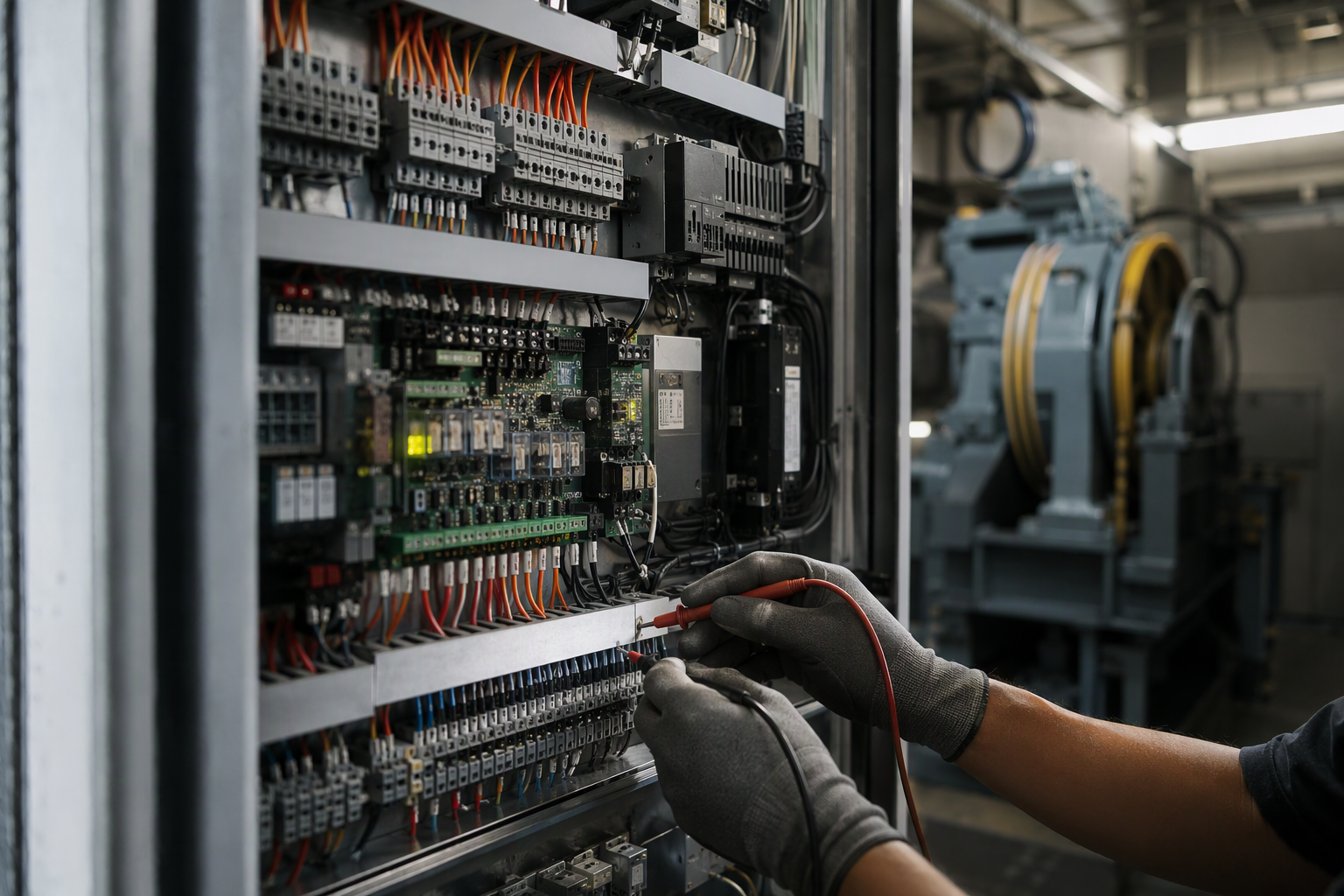
Phoenix’s desert climate and high-rise density create conditions that stress elevator components in predictable ways. The most frequently reported issues include:
- Door malfunctions — Doors that refuse to open, close slowly, or reverse unexpectedly are among the most common service calls. Worn rollers, misaligned tracks, and failing door operators are typical culprits.
- Leveling problems — A cab that stops above or below floor level creates a trip hazard and may indicate issues with the selector, leveling sensors, or hydraulic pressure.
- Unusual noises — Grinding, squealing, or banging during travel often points to worn sheaves, guide rails that need lubrication, or deteriorating rope.
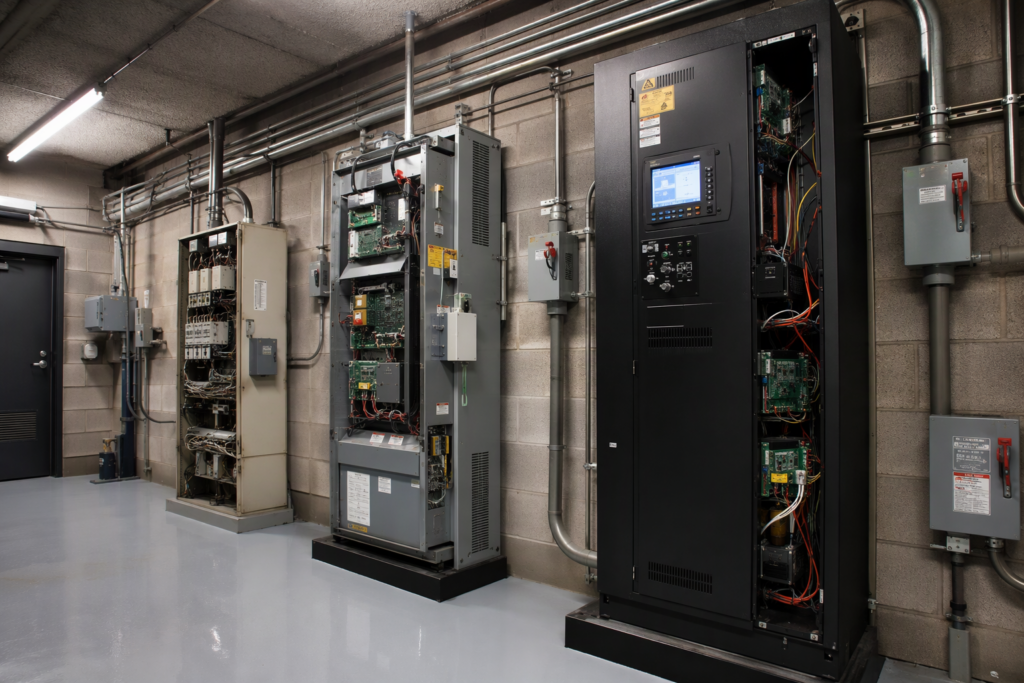
- Control and electrical failures — Erratic button response, flickering lighting, and intermittent shutdowns frequently trace back to aging control boards or wiring faults.
- Hydraulic leaks — Low-rise hydraulic elevators common in Phoenix commercial and medical buildings can develop seal degradation or underground cylinder leaks over time.
- Firefighters’ emergency operation failures — Arizona conveyances equipped with firefighters’ emergency operation must use the Arizona Firefighters Service (AZFS) key. A malfunctioning Phase I or Phase II recall system is both a life-safety and a code compliance issue.
Identifying the root cause accurately — rather than addressing symptoms alone — is what separates a lasting repair from a repeat service call.
What Should You Do Immediately When an Elevator Malfunctions?
- Do not attempt to force the doors open or exit the cab between floors. Passengers should use the in-cab alarm or telephone to alert building staff.
- Notify building management or security so they can coordinate with the elevator service provider and secure the landing doors if needed.
- Take the elevator out of service by placing it on independent service and posting clear signage at every landing to prevent further use.
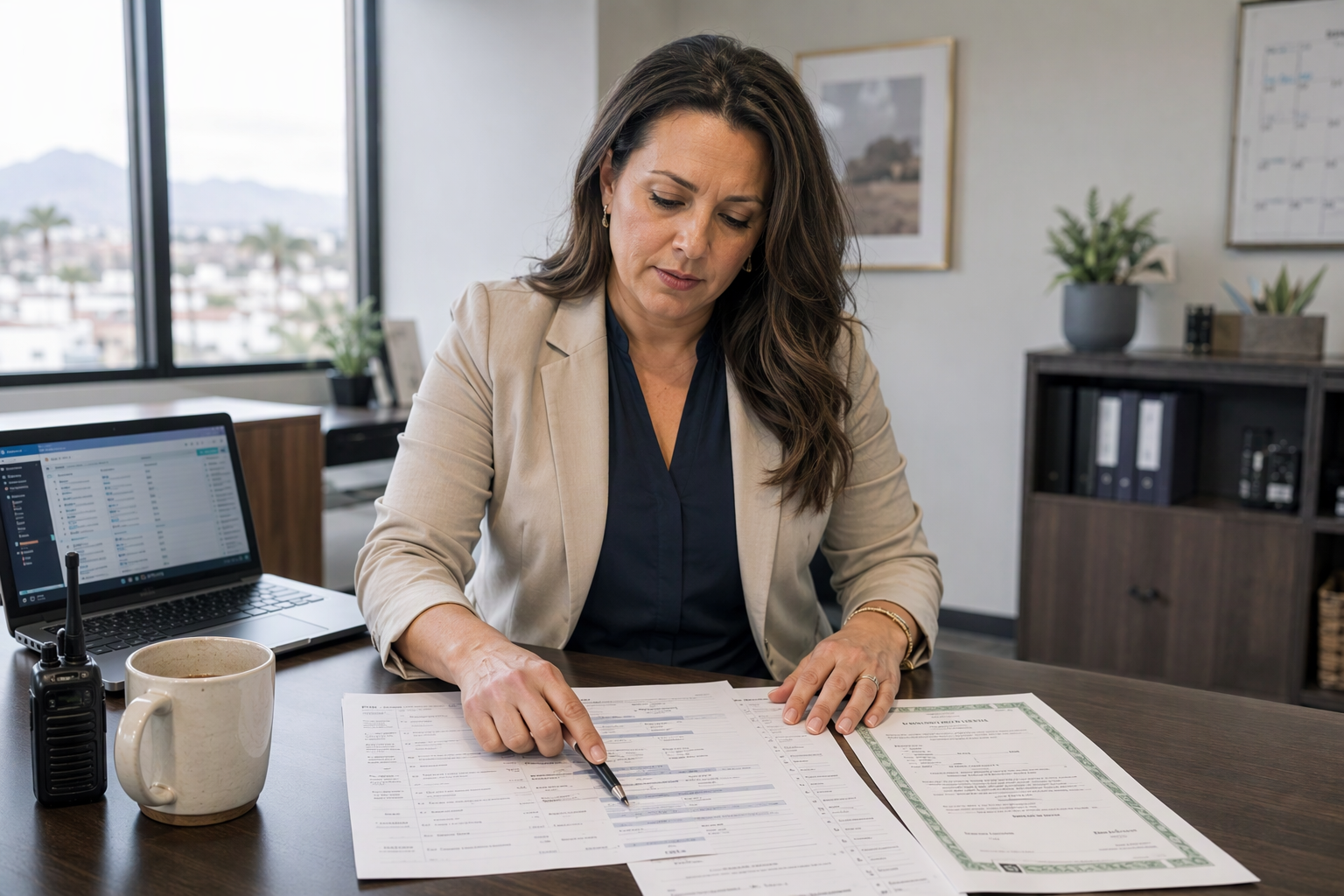
- Document the malfunction — note the time, floor where the issue occurred, any error codes displayed, and a description of what riders experienced.
- Contact a qualified elevator service company to inspect and repair the equipment before returning it to normal operation.
- Report to the state if required. Under A.R.S. §§ 23-491 through 23-491.16, Arizona owners must notify the Industrial Commission of Arizona’s Elevator Division within 24 hours of any accident that injures a person or disables a conveyance.
How Does Arizona Regulate Elevator Safety and Inspections?
Elevator safety in Arizona is administered by the Industrial Commission of Arizona (ICA), Elevator Division — formerly known as the ADOSH Elevator Safety Section until September 12, 2026, when Laws 2026, Ch. 73 transferred authority. The governing statutes are A.R.S. §§ 23-491 through 23-491.16, and the administrative rules are found in Arizona Administrative Code R20-5-502 through R20-5-515.
Key compliance requirements every Arizona building owner should understand include:
- Every conveyance must be inspected before it first goes into service, after any modification or alteration, and annually thereafter.
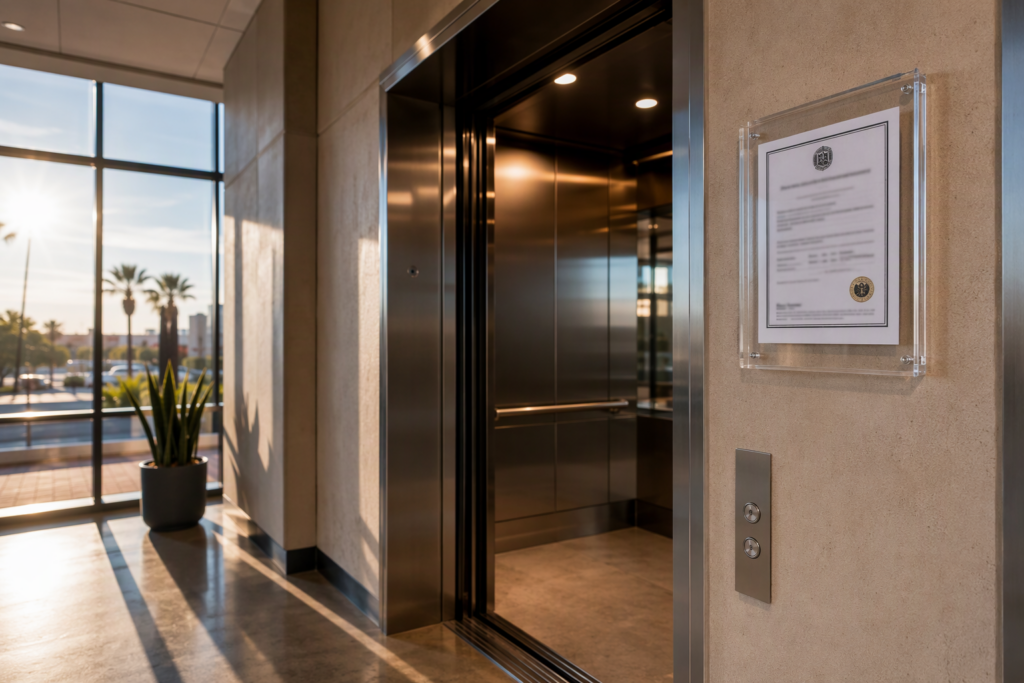
- No conveyance may operate in Arizona without a current annual certificate of inspection issued by the state.
- The certificate must be kept at the same location as the conveyance and made available on request.
- The state serial number or certificate must be posted in or near the conveyance in an easily accessible location.
- Owners must notify the state at least 90 days before installing, relocating, or altering a conveyance.
- Equipment installed, repaired, or altered on or after January 1, 2023 must comply with the ASME A17.1/CSA B44, 2019 edition. Platform lifts and stairway chairlifts in that same category must comply with ASME A18.1-2020.
Within the City of Phoenix, the City of Phoenix Elevator Section (Planning and Development Department) inspects elevators, escalators, moving walks, dumbwaiters, and chair lifts. The state handles equipment located outside Phoenix city limits.
Elevator contractors performing installation and repair work in Arizona must hold an R-12 or C-12 license classification from the Arizona Registrar of Contractors. Arizona Elevator Solutions operates within this licensing framework.
Can a Building Owner Hire a Private Elevator Inspector in Arizona?
Yes. Arizona law permits building owners to hire a private elevator inspector authorized by the Industrial Commission of Arizona to perform initial or annual inspections. However, several rules apply:
- Private inspectors must register with the commission every year and demonstrate at least eight hours of approved continuing education.
- A private inspector may not inspect a conveyance owned, operated, or last serviced by the inspector, a company the inspector owns, or the inspector’s employer — a conflict-of-interest safeguard built into state rules.
- Using a private inspector does not relieve the owner or operator of their legal obligations under Arizona law.
Arizona Elevator Solutions can help coordinate inspection scheduling and ensure that any deficiencies identified during an inspection are corrected before a certificate is withheld or rescinded.
Does ADA Apply to Elevators in Arizona Commercial Buildings?
Yes. The Americans with Disabilities Act (ADA) establishes accessibility requirements for elevators in most commercial and public-use buildings. Common ADA-related issues Arizona Elevator Solutions addresses include cab dimensions, door timing, control button height and Braille labeling, audible signals, and leveling tolerances. ADA compliance operates alongside — not instead of — Arizona’s safety code requirements, meaning a building may need to satisfy both sets of standards simultaneously.
When an elevator is altered or modernized, ADA provisions may trigger additional accessibility upgrades. Coordinating repairs and modernization with ADA requirements from the outset avoids costly retrofits later.
What Is Elevator Modernization and When Should It Be Considered?
Modernization replaces aging components — control systems, door operators, motors, fixtures, or entire mechanical packages — without necessarily replacing the hoistway structure. Building owners in Phoenix typically consider modernization when:
- Replacement parts for existing equipment are no longer available or are cost-prohibitive.
- Recurring service calls indicate systemic component failure rather than isolated wear.
- An inspection reveals that the equipment cannot be brought into compliance with current ASME A17.1-2019 requirements without significant upgrades.
- Energy consumption, ride quality, or downtime has become a material operational concern.
Under Arizona law, any alteration triggers the requirement that modified components meet the 2019 ASME standard, and the owner must notify the state at least 90 days in advance. Arizona Elevator Solutions assists owners through the notification, permitting, and inspection process from start to finish.
How Does Preventive Maintenance Reduce Elevator Issues?
A structured maintenance program addresses wear and minor defects before they become service outages or safety incidents. Routine maintenance typically includes lubrication of guide rails and sheaves, adjustment of door operators and safety edges, testing of safety devices and governor systems, inspection of hydraulic seals and fluid levels, and verification of emergency lighting and communication systems.
Consistent maintenance also supports Arizona compliance: a well-documented service history demonstrates to inspectors that the owner has met their duty of care, and equipment in good repair is less likely to fail an annual inspection. OSHA workplace safety standards may also apply in multi-employer building environments, adding another reason to keep maintenance records current.
Why Do Phoenix Building Owners Choose Arizona Elevator Solutions?
Arizona Elevator Solutions serves property managers, building owners, healthcare facilities, hospitality properties, and commercial real estate operators across Phoenix and throughout Arizona. The team’s work is grounded in direct familiarity with local AHJ requirements — including the City of Phoenix Elevator Section — and the state framework administered by the Industrial Commission of Arizona’s Elevator Division. That local knowledge matters when coordinating inspections, responding to deficiency notices, or navigating the notification requirements that precede any installation or alteration project.
Service coverage extends to traction elevators, hydraulic elevators, platform lifts, dumbwaiters, escalators, and moving walks — the full range of conveyances regulated under Arizona law. Emergency service is available for situations where a conveyance failure creates an immediate safety concern or operational disruption.
Schedule a free consultation with Arizona Elevator Solutions at 480-557-7600.
Need elevator service you can rely on? Arizona Elevator Solutions is ready to help.