Elevator Modernization vs. Replacement Cost: Complete FAQ Guide for Arizona Building Owners
After 15-plus years working on elevator systems across Phoenix, Tucson, Scottsdale, and Mesa, I’ve walked hundreds of building owners through one of the most financially significant decisions they’ll ever make for their property: should they modernize their existing elevator or replace it entirely? The answer depends on equipment age, code compliance gaps, budget constraints, and long-term ownership goals — and getting it wrong can cost you six figures. This FAQ hub covers every angle of the modernization vs. replacement cost question so you can make a confident, informed decision.
What Is the Average Cost of Elevator Modernization in 2026?
Elevator modernization in 2026 costs between $50,000 and $200,000 for most commercial and residential applications in Arizona, with the final figure driven by scope of work, equipment age, and local labor rates.
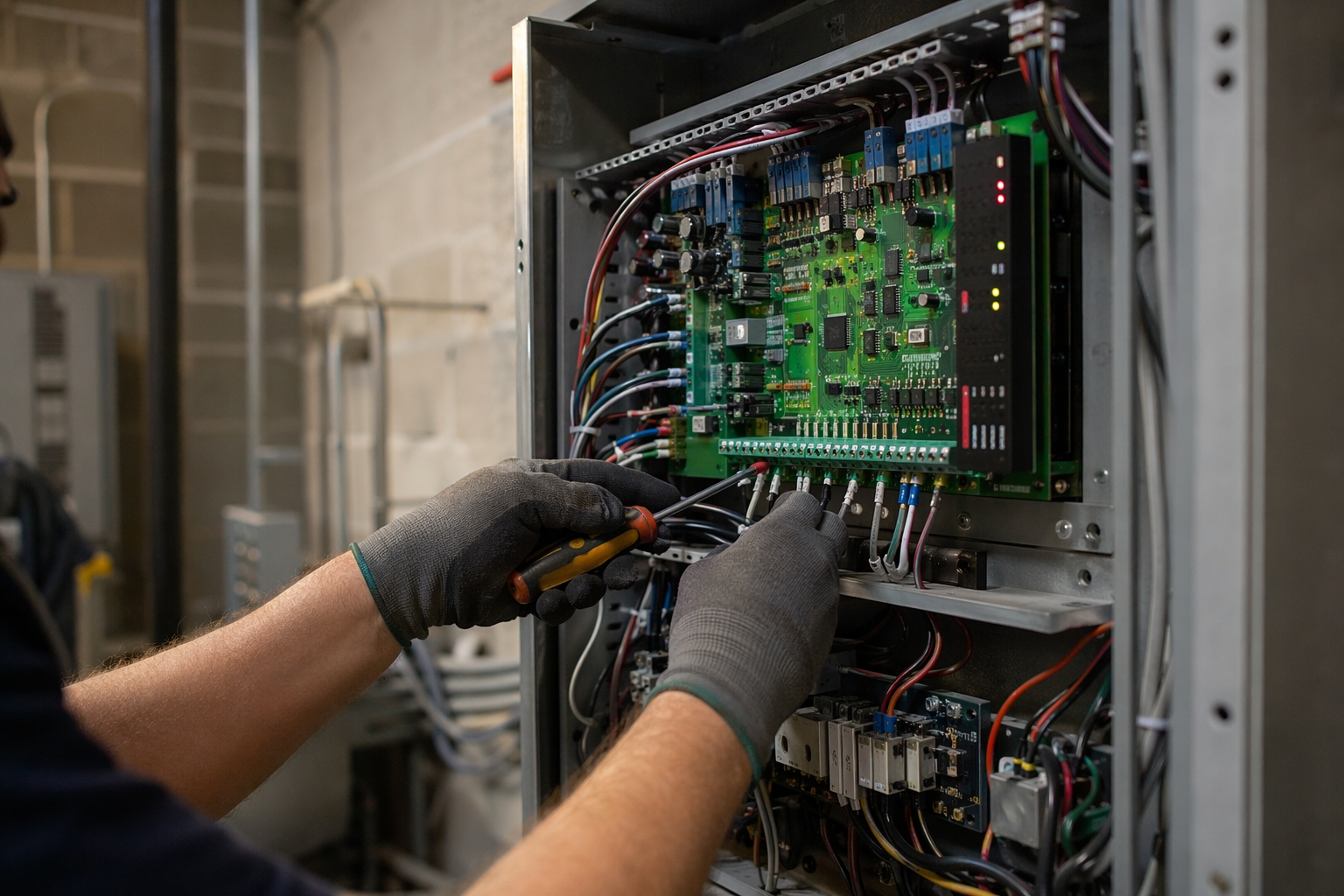
A basic modernization — typically limited to controller upgrade, new fixtures, and updated door operators — sits at the lower end of that range, around $50,000–$80,000. A comprehensive modernization that includes a new machine, drive system, cab interior, and full ADA compliance package can push past $150,000–$200,000. In the Phoenix and Scottsdale markets specifically, labor rates for IUEC-certified mechanics have increased in recent years, so projects budgeted prior to 2025 will likely require revised estimates. Contact Arizona Elevator Solutions for a current, itemized quote specific to your building.
Key cost drivers for modernization include:
- Controller and drive system: $15,000–$40,000 for a new solid-state controller with variable frequency drive (VFD)
- Door operators and fixtures: $8,000–$20,000 depending on number of openings and finish selections
- Cab interior renovation: $10,000–$35,000 for new wall panels, flooring, lighting, and ceiling
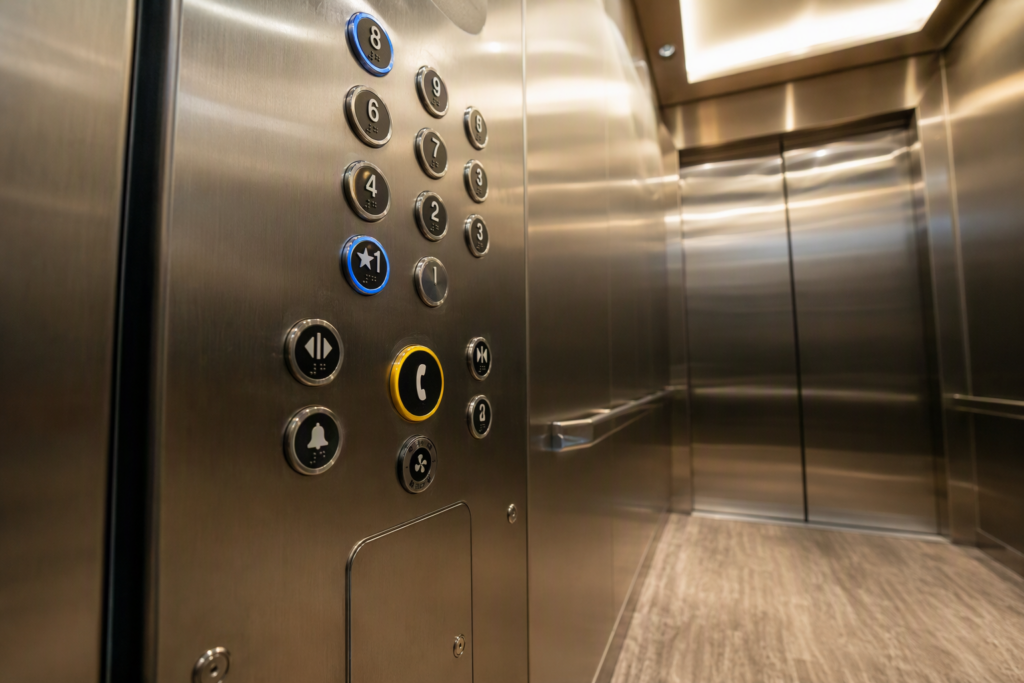
- ADA compliance package: $5,000–$15,000 for updated call buttons, braille signage, and audible signals
- Machine and drive replacement (comprehensive scope): $25,000–$60,000
What Is the Average Cost of a Full Elevator Replacement in 2026?
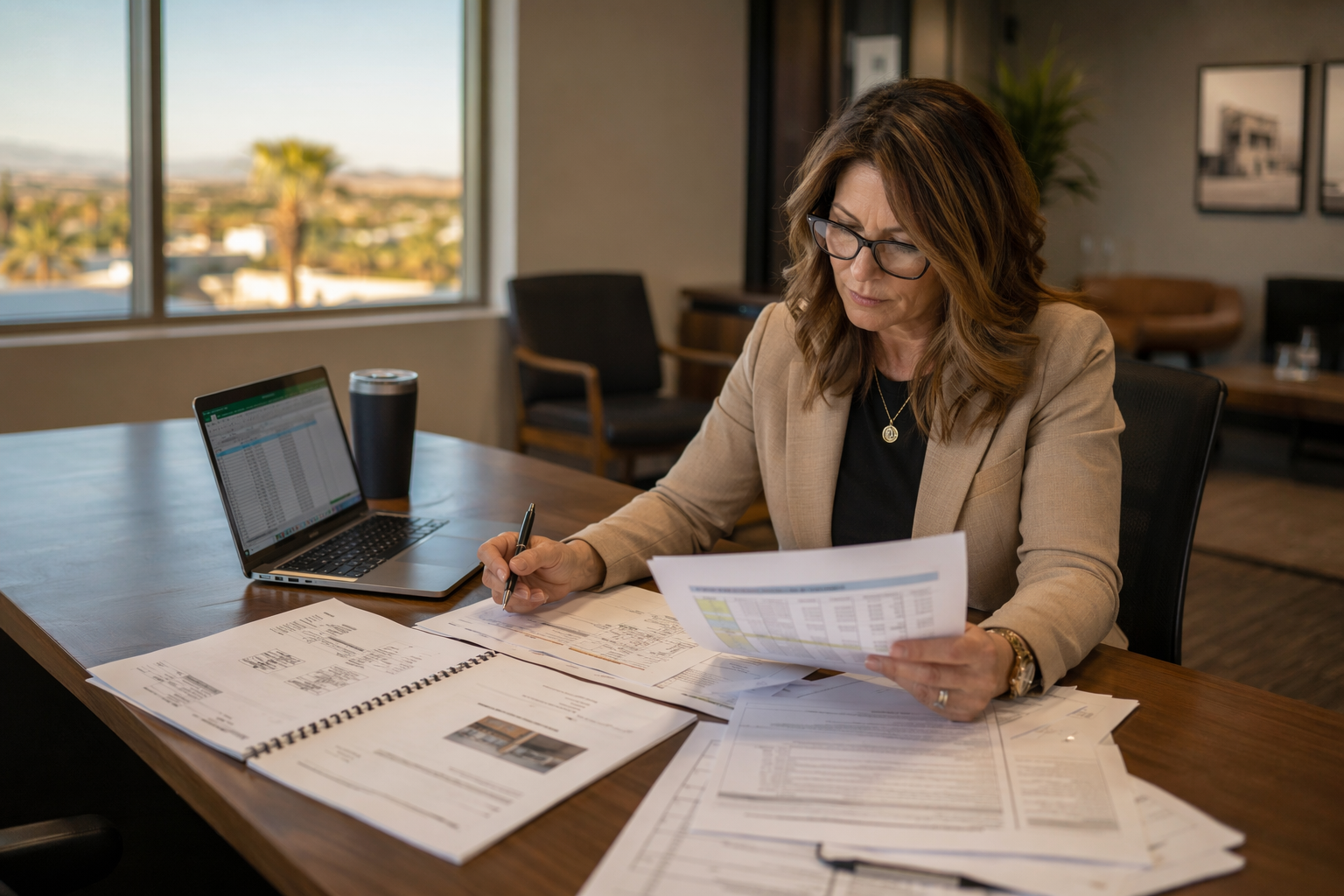
Full elevator replacement — including removal of all existing equipment, structural modifications, and new equipment installation — ranges from $100,000 to $750,000 or more in 2026, depending on building type, number of floors, and hydraulic versus traction system selection.
A standard two-stop hydraulic unit in a small commercial building in Mesa or Tucson will typically run $100,000–$175,000 for a complete rip-and-replace. Mid-rise traction systems with machine room-less (MRL) technology in a multi-story Scottsdale office building can reach $400,000–$600,000 when structural reinforcement, pit work, and equipment lead times are factored in. These figures reflect contractor estimates from Arizona Elevator Solutions projects completed in 2025–2026 and should be validated with a site-specific assessment.
The hidden cost that surprises most building owners is business disruption. Full replacement typically means 8–16 weeks of downtime versus 2–6 weeks for modernization — a gap that translates to lost tenant satisfaction, potential ADA liability, and operational friction that rarely appears in the initial bid comparison.
How Do Modernization and Replacement Costs Compare Side by Side?
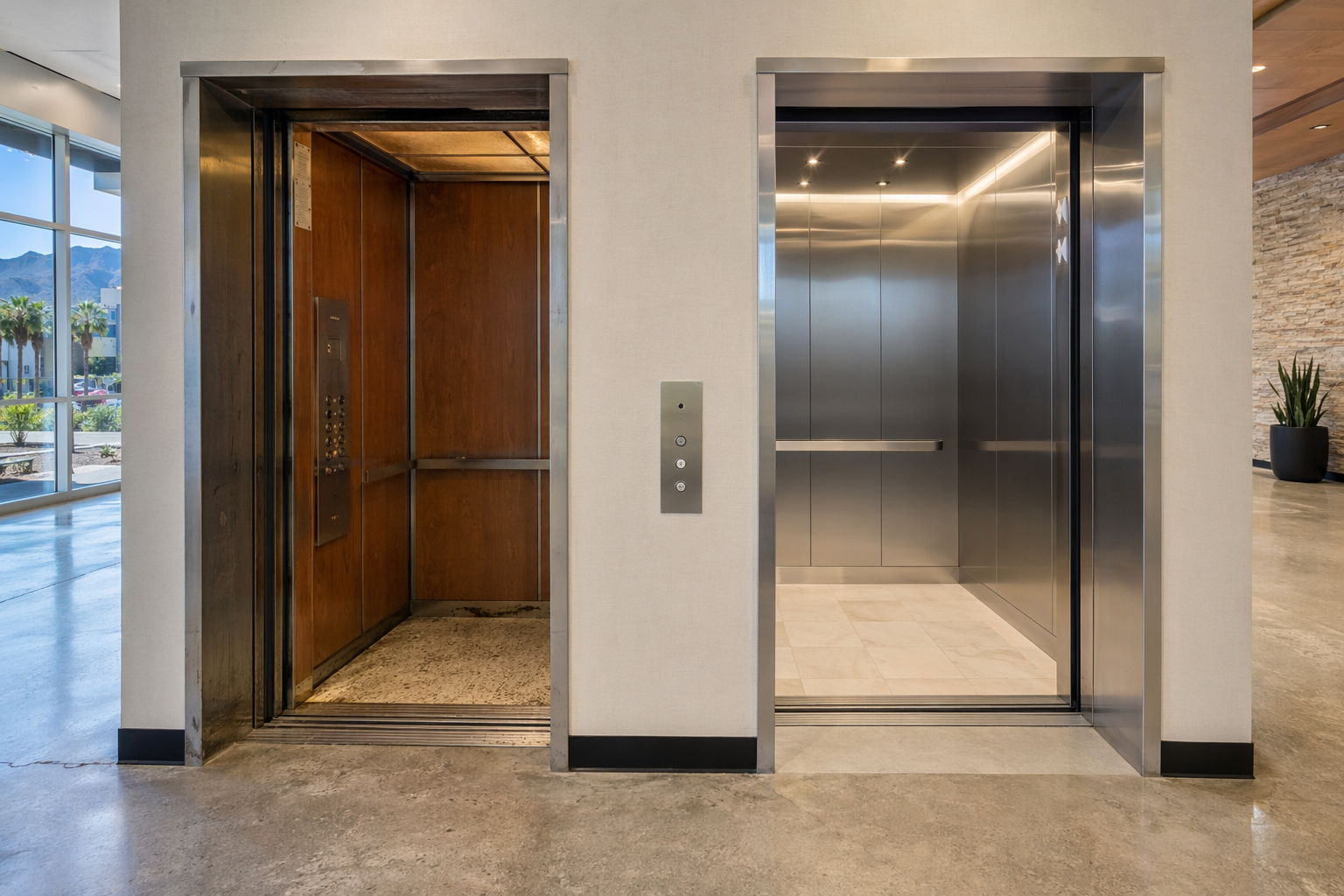
A direct cost and timeline comparison shows that modernization delivers significant savings in nearly every category, making it the preferred route for elevators that still have a structurally sound hoistway and cab.
| Cost Factor | Modernization | Full Replacement |
|---|---|---|
| Typical Cost Range (2026) | $50,000 – $200,000 | $100,000 – $750,000+ |
| Average Downtime | 2–6 weeks | 8–16 weeks |
| Structural Modifications Required | Rarely | Frequently |
| Permit and Inspection Complexity | Moderate | High |
| ASME A17.1-2022 Code Compliance | Achievable via targeted scope | Full compliance on new install |
| ADA Compliance Achievable | Yes, with fixture and cab upgrades | Yes, standard on new equipment |
| Expected Equipment Lifespan Added | 15–25 years (depending on scope) | 25–35 years |
| Energy Efficiency Improvement | Significant with VFD and LED upgrades | Maximum with new MRL or hydraulic unit |
| Best Candidate | Elevators under 30 years with sound structure | Elevators over 30 years or with failed structure |
When Does Replacement Make More Sense Than Modernization?
While modernization wins on cost in most scenarios, there are specific conditions where full replacement is the more financially and operationally sound decision. Understanding these thresholds helps Arizona building owners avoid investing modernization dollars into equipment that will require replacement within a few years regardless.
Replacement is typically the better choice when:
- The elevator is over 30–35 years old and has already undergone one or more partial modernizations — stacking upgrades on aging infrastructure yields diminishing returns.
- The hoistway or pit has structural damage — water intrusion, concrete deterioration, or misaligned guide rails that cannot be economically repaired.
- The hydraulic cylinder has failed or is leaking in an older in-ground hydraulic system, where cylinder replacement alone can approach $40,000–$70,000, narrowing the gap with full replacement.
- The building is undergoing a major renovation that requires extended elevator downtime anyway — combining replacement with a renovation minimizes cumulative disruption.
- The existing system cannot meet current ASME A17.1-2022 or Arizona-adopted code requirements through targeted upgrades without essentially rebuilding the entire drive system.
If any of these conditions apply to your building’s elevator, request a full condition assessment from Arizona Elevator Solutions before committing to a modernization scope. A qualified technician can identify structural or mechanical issues that would change the cost calculus significantly.
What Arizona Code Requirements Apply to Elevator Modernization in 2026?
Arizona adopts the ASME A17.1/CSA B44 Safety Code for Elevators and Escalators as its primary regulatory framework, administered at the state level by the Arizona Industrial Commission’s Elevator Safety division. Understanding which code provisions trigger mandatory upgrades during a modernization is critical for accurate budgeting.
Key compliance requirements that commonly affect 2026 modernization projects in Arizona include:
- Door reversal and protection devices: ASME A17.1 requires light curtain or multi-beam door protection on modernized door operators — older mechanical door edges alone are no longer compliant.
- Emergency lighting and communication: Updated requirements mandate a two-way communication system with a location capable of being monitored, not just a telephone line.
- Firefighters’ emergency operation (FEO): Phase I and Phase II firefighters’ service must meet current code provisions, which often triggers controller and fixture updates even in limited-scope modernizations.
- Seismic requirements: While Arizona is lower-risk than California, certain Arizona counties have adopted seismic provisions that affect equipment anchorage specifications on replacement and comprehensive modernization projects.
- ADA compliance: While ADA is a federal standard rather than a state elevator code, modernization projects that alter passenger-accessible components trigger ADA compliance obligations under the Americans with Disabilities Act — particularly for call button height, braille signage, and audible floor indicators.
Arizona Elevator Solutions files all required permits with the Arizona Industrial Commission on behalf of building owners and coordinates the mandatory post-modernization inspection. This is not a DIY permit process — unlicensed work on elevators in Arizona is a civil violation and will prevent a certificate of operation from being issued.
How Do I Evaluate Elevator Modernization Vendors and Bids in Arizona?
The variance between elevator modernization bids in Arizona can be dramatic — sometimes $40,000–$80,000 for what appears to be the same scope. Understanding what drives those differences protects building owners from both underbidding (which leads to change orders) and overbidding (which leads to unnecessary expenditure).
What to look for when comparing modernization bids:
- IUEC-certified labor: Verify that the contractor uses International Union of Elevator Constructors (IUEC) certified mechanics. Non-union or uncertified labor may reduce the bid price but introduces quality and liability risk on life-safety equipment.
- Itemized scope vs. lump sum: Request line-item breakdowns for every component — controller, drive, door operator, fixtures, cab, machine (if included). Lump-sum bids make it impossible to compare vendors accurately or negotiate scope reductions.
- Equipment brand and parts availability: Ask which controller and drive manufacturer the contractor proposes to install. Proprietary systems from some manufacturers can lock you into a single vendor for future maintenance. Open-architecture controllers from brands like MCE, Motion Control Engineering, or GAL offer broader service flexibility.
- Warranty terms: A reputable modernization contractor should provide a minimum 12-month parts and labor warranty on installed components, with clear definitions of what constitutes a warranty call vs. a billable service visit.
- Permit and inspection inclusion: Confirm that Arizona Industrial Commission permit fees, inspection coordination, and certificate of operation are included in the bid — these are sometimes excluded and added as change orders.
- References from comparable Arizona properties: Ask for two or three references from building owners with similar elevator configurations (hydraulic vs. traction, number of stops, building type) completed within the last 24 months.
Arizona Elevator Solutions provides fully itemized, no-obligation modernization assessments for commercial and residential properties throughout Maricopa, Pima, and surrounding counties. Our proposals include all permit fees, IUEC-certified labor, and a 24-month warranty on modernization work — contact us to schedule a site evaluation.
What Is the ROI Timeline for Elevator Modernization vs. Replacement?
Return on investment for elevator modernization is driven by three factors: energy savings, reduced maintenance costs, and avoided downtime. When modeled over a 10-year horizon, modernization typically delivers a stronger ROI than replacement for buildings where the structural components remain serviceable.
Energy savings: Installing a variable frequency drive (VFD) on a hydraulic or traction elevator can reduce elevator energy consumption meaningfully compared to older single-speed systems. The Arizona Public Service (APS) and Salt River Project (SRP) both offer commercial energy efficiency incentives — Arizona Elevator Solutions can provide documentation to support rebate applications, though building owners should confirm current program availability directly with their utility provider at APS Business Rebates or SRP Business Energy Savings.
Maintenance cost reduction: Aging elevator systems with obsolete controllers and worn mechanical components typically carry higher maintenance contract costs and more frequent emergency service calls. A modernized system with a new solid-state controller and updated door operator will generally see a reduction in unscheduled service calls in the years immediately following modernization — though specific savings vary by building and prior maintenance history.
Avoided downtime costs: For a commercial office building or multifamily property, elevator downtime translates directly to tenant dissatisfaction and, in some cases, ADA liability. Modernization’s shorter downtime window (2–6 weeks vs. 8–16 weeks for replacement) represents a tangible cost avoidance that should be factored into the total cost comparison — particularly for buildings with a single elevator serving multiple floors.
Approximate ROI scenario (illustrative, not guaranteed — site-specific assessment required):
| Factor | Modernization (Comprehensive Scope) | Full Replacement |
|---|---|---|
| Upfront Cost (Example) | $130,000 | $320,000 |
| Cost Difference | $190,000 in favor of modernization | |
| Downtime (Lost Revenue/Tenant Impact) | Lower (2–4 weeks) | Higher (10–14 weeks) |
| Expected Equipment Life Added | 15–20 years | 25–30 years |
| Annual Maintenance Savings (Estimated) | Moderate reduction post-modernization | Maximum reduction with new equipment |
For most Arizona building owners with elevators in the 15–28 year age range, comprehensive modernization delivers the better financial outcome over the first 10–15 years of the ROI window. Beyond year 20, the calculus shifts and replacement begins to offer stronger long-term value — which is why a phased approach (modernize now, plan for replacement in 10–12 years) is a strategy Arizona Elevator Solutions recommends for buildings with elevators currently in the 20–28 year range.
How Do I Get Started with an Elevator Modernization or Replacement Assessment in Arizona?
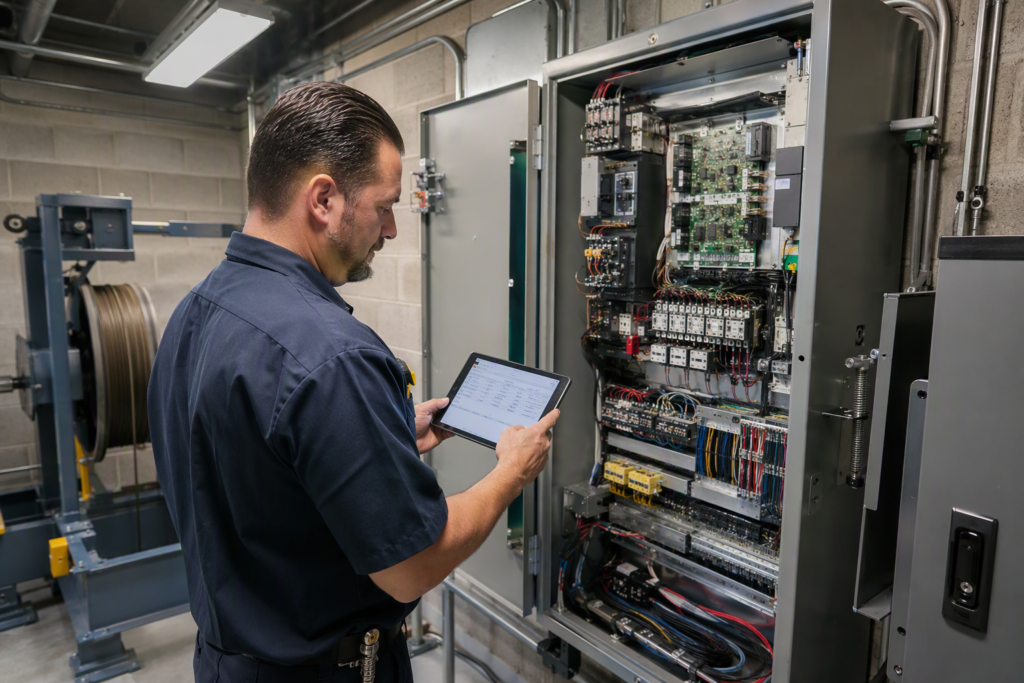
The first step for any Arizona building owner is a professional condition assessment — not a sales call, but a genuine technical evaluation of what your elevator’s structural components, mechanical systems, and code compliance status actually look like in 2026. That assessment is what allows an accurate, itemized bid to be produced and what protects you from surprise change orders mid-project.
Arizona Elevator Solutions serves commercial, multifamily, and institutional clients throughout Phoenix, Scottsdale, Mesa, Tempe, Chandler, Gilbert, Tucson, and surrounding communities. Our IUEC-certified team has completed modernization and replacement projects on hydraulic and traction systems ranging from single-stop residential lifts to multi-stop commercial traction elevators in mid-rise office buildings.
To schedule a no-obligation modernization assessment, contact Arizona Elevator Solutions directly. We’ll evaluate your equipment, identify the code compliance gaps, and provide a fully itemized proposal with realistic timelines — so you can make the modernization vs. replacement decision with complete information rather than ballpark estimates.
Need elevator service you can rely on? Arizona Elevator Solutions is ready to help.