How Fast Can an Elevator Be Repaired? Complete FAQ Guide for Arizona Building Owners
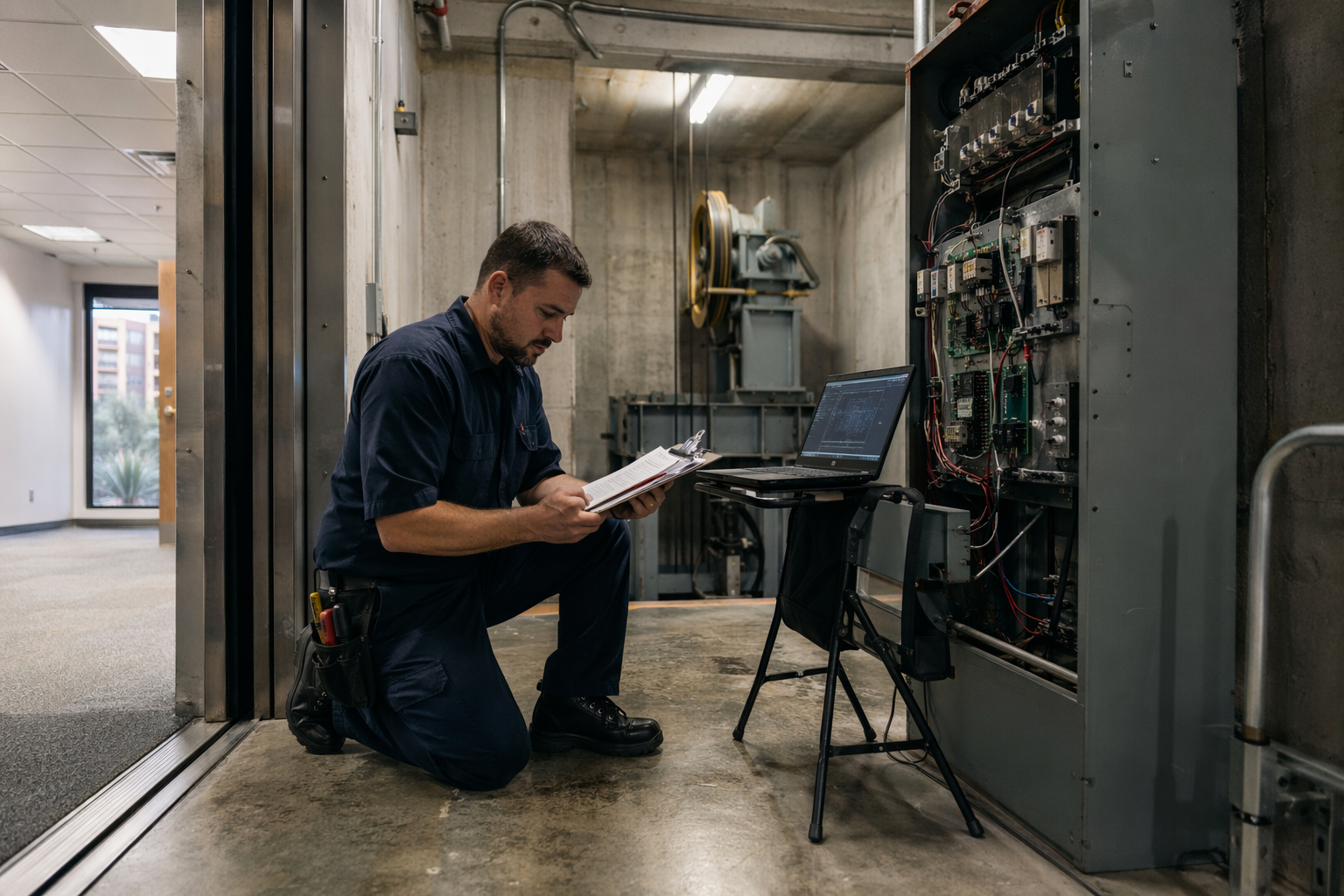
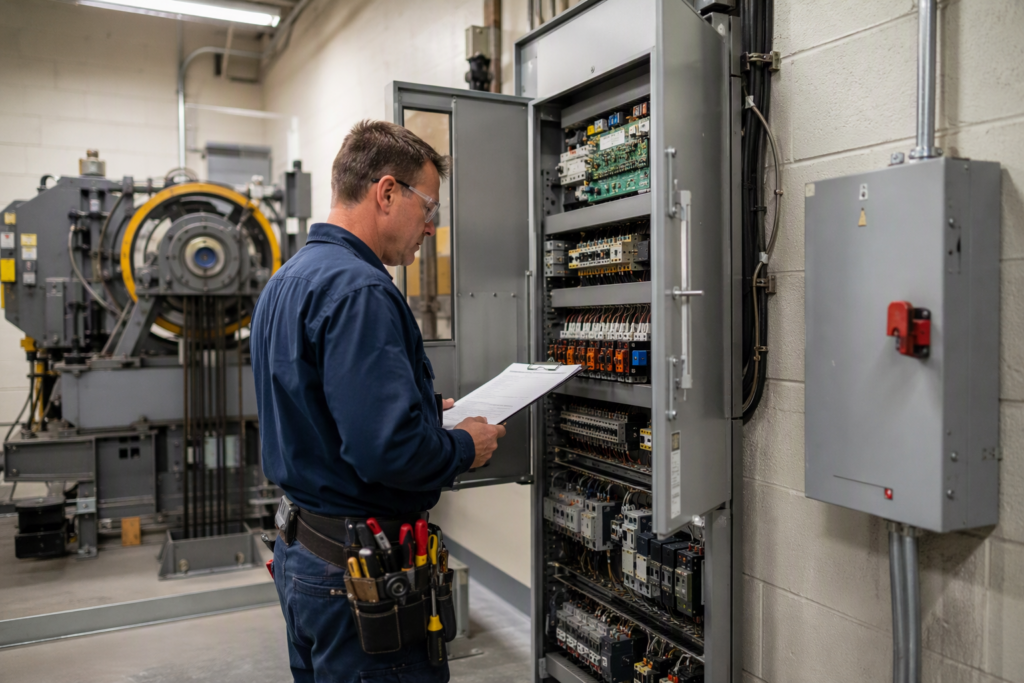
After 15-plus years servicing elevators across Phoenix, Scottsdale, Mesa, and Tucson, I’ve seen every type of breakdown — from a simple blown fuse to a complete hydraulic cylinder replacement. The single most common question building managers ask me when I arrive on-site is: “How fast can you get this running?” The answer depends on several well-defined factors, and this guide breaks all of them down so you know exactly what to expect before, during, and after any elevator repair.
What Is the Average Repair Time for a Commercial Elevator?

The average commercial elevator repair takes between 2 and 8 hours for standard issues, with complex mechanical or hydraulic failures extending to 3–5 business days.
Industry service data indicates that a majority of elevator service calls are resolved within a single visit lasting under four hours. These typically involve door operator adjustments, selector issues, broken rollers, or control system resets. Repairs requiring parts procurement take longer — especially for equipment manufactured before 2000, where components may need to be sourced from specialty distributors or custom fabricated.
In our experience servicing elevators across Maricopa and Pima Counties, having a maintenance contract with a local provider dramatically compresses repair timelines because your service history, equipment specifications, and commonly needed parts are already documented and sometimes pre-stocked.
What Factors Determine How Quickly an Elevator Can Be Repaired?
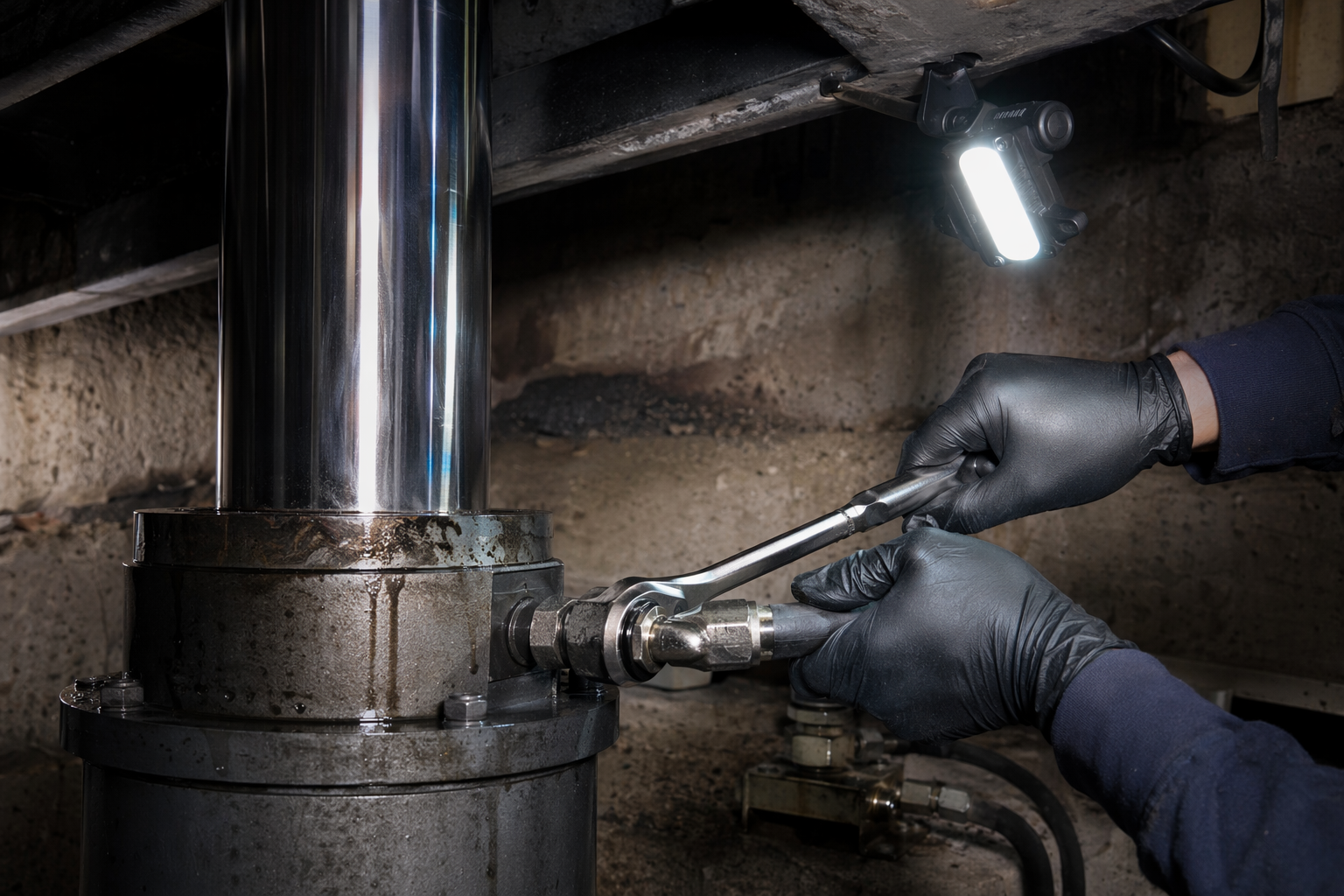
Repair speed is determined by five primary variables: failure type, elevator age, parts availability, technician qualifications, and whether Arizona regulations require a post-repair inspection before the unit returns to service.
- Failure type: Electrical and sensor failures resolve fastest. Mechanical and hydraulic failures take longer due to physical component replacement.
- Elevator age: Units older than 20 years often require custom-ordered or refurbished parts, adding 2–10 business days to total downtime.
- Parts availability: Local distributors in Phoenix carry common components. Proprietary OEM parts may ship from out of state, extending lead times significantly.
- Technician qualifications: A technician working under an ASME A17.1-experienced contractor can diagnose and repair more efficiently than general maintenance personnel unfamiliar with elevator systems.
- Post-repair inspection requirements: Under A.R.S. §§ 23-491 through 23-491.16 and Arizona Administrative Code R20-5-502 through R20-5-515, Arizona requires that a conveyance be inspected after any modification or alteration before it returns to service. Scheduling that inspection — whether through the Industrial Commission of Arizona’s Elevator Division or an authorized private inspector — can add 1–3 business days to total downtime depending on inspector availability.
How Do Repair Times Differ by Elevator Type?
Traction elevators and hydraulic elevators have significantly different repair timelines due to their mechanical complexity and the availability of replacement components.
| Elevator Type | Common Repair | Typical Repair Time | Parts Lead Time (If Needed) |
|---|---|---|---|
| Hydraulic (low-rise) | Cylinder seal replacement | 4–8 hours | Same day to 3 business days |
| Hydraulic (low-rise) | Hydraulic fluid leak / pump motor | 2–6 hours | Same day to 5 business days |
| Traction (mid/high-rise) | Hoist rope replacement | 1–3 business days | 3–10 business days |
| Traction (mid/high-rise) | Sheave or motor controller failure | 4–12 hours | 2–7 business days |
| MRL (machine-room-less) | Drive or control board failure | 3–8 hours | 2–10 business days (proprietary parts) |
| All types | Door operator / safety edge fault | 1–4 hours | Same day in most cases |
Platform lifts and stairway chairlifts installed, repaired, or altered on or after January 1, 2023 must comply with ASME A18.1-2020 under Arizona rules. Repair timelines for these units generally track toward the lower end — 1 to 4 hours for drive and rail issues — but post-repair inspection requirements still apply.
What Arizona Compliance Steps Can Delay an Elevator Returning to Service?
In Arizona, certain repairs legally require an inspection and re-certification before a conveyance can resume normal operation — a process managed by the Industrial Commission of Arizona (ICA), Elevator Division.
As of September 12, 2026, Arizona elevator safety is administered by the Industrial Commission of Arizona’s Elevator Division (formerly called the ADOSH Elevator Safety Section under Laws 2026, Ch. 73). Building owners in the City of Phoenix also interact with the City of Phoenix Elevator Section (Planning and Development Department), which inspects elevators within city limits; the ICA Elevator Division handles equipment outside Phoenix.
Key compliance requirements that directly affect repair timelines include:
- Inspection after modification or alteration: Arizona requires a conveyance to be inspected before it returns to service following any modification or alteration. “Alteration” under Arizona code can include major component replacements such as hydraulic units, controllers, or hoist ropes — not just structural changes. Our team notifies the appropriate authority immediately upon determining a repair crosses into alteration territory so the inspection can be scheduled without unnecessary delay.
- Annual certificate of inspection: No conveyance may legally operate in Arizona without a current annual certificate of inspection issued by the state. If a unit’s certificate lapsed during a period of disrepair, the certificate must be renewed before the elevator opens to the public.
- Certificate posting and availability: Arizona owners must keep the state certificate at the same location as the conveyance and make it available for inspection on request. The state serial number or certificate must also be posted in or close to the elevator in an easily accessible location — a detail inspectors verify at every visit.
- 90-day advance notice for alterations: If your repair rises to the level of an alteration — such as relocating equipment or making structural changes to the hoistway — Arizona owners must notify the ICA Elevator Division at least 90 days in advance. Unplanned repairs discovered to require this notice can halt a project until notification requirements are satisfied.
- 24-hour accident reporting: If a repair follows an incident that injured a person or disabled a conveyance, Arizona law requires the owner to notify the state within 24 hours. Failure to report can complicate the path back to service.
- Private inspector option: Arizona owners may hire an ICA-authorized private elevator inspector to perform the required inspection, which can sometimes reduce scheduling delays compared to waiting for a state-assigned inspector. Private inspectors must be registered with the ICA annually and complete at least eight hours of approved continuing education. Importantly, a private inspector may not inspect a conveyance owned, operated, or last serviced by the inspector, a company the inspector owns, or the inspector’s employer — so your repair contractor and your inspector must be independent parties.
- Firefighters’ emergency operation: If your elevator includes firefighters’ emergency operation, Arizona requires use of the Arizona Firefighters Service (AZFS) key. Any repair touching the firefighters’ operation panel or key switch must restore AZFS key compatibility before the unit passes inspection.
- Contractor licensing: Elevator repair work in Arizona must be performed by a contractor holding an R-12 or C-12 elevator license classification issued by the Arizona Registrar of Contractors (ROC). The ROC license authorizes installation and repair of elevators, dumbwaiters, escalators, and moving walks. Note that the ROC licenses the contractor — it does not issue the annual certificate of inspection, which comes from the ICA Elevator Division or the City of Phoenix Elevator Section.
Arizona applies the ASME A17.1/CSA B44, 2019 edition for equipment installed, repaired, or altered on or after January 1, 2023 (effective January 9, 2023). For lawfully installed older conveyances, Arizona generally allows continued operation unless the ICA’s elevator chief determines the use presents a hazard to life, health, or property — which means repair strategy for vintage equipment sometimes involves a compliance conversation with the Elevator Division before work begins.
How Much Does an Emergency Elevator Repair Cost in Arizona?
Emergency elevator repair costs in Arizona typically range from a few hundred dollars for a simple sensor reset or door adjustment to several thousand dollars for hydraulic component replacement or traction drive repairs — with after-hours and parts premiums adding to the total.
Because repair pricing varies widely by contractor, equipment type, parts sourcing, and urgency, Arizona Elevator Solutions provides on-site or phone-based estimates before work begins. The variables that most consistently affect cost include:
- Labor rate and dispatch timing: Standard business-hours service calls carry lower labor rates than after-hours emergency responses. Emergency dispatch on nights, weekends, or holidays typically commands a premium.
- Parts cost and sourcing: Commodity parts stocked locally cost less and arrive faster. Proprietary or discontinued OEM components for elevators manufactured before 2000 can cost significantly more and extend downtime while awaiting delivery.
- Inspection fees: If the repair triggers a required post-repair or post-alteration inspection under Arizona rules, building owners should budget for the inspector’s fee in addition to the repair cost itself. Private inspectors authorized by the ICA charge independently set fees.
- Contractor licensing: Work performed by an unlicensed contractor is not only a legal violation under Arizona Registrar of Contractors rules — it can void insurance coverage and create liability if the repair fails. Arizona Elevator Solutions holds the required R-12 and C-12 elevator contractor classifications.
- Scope creep during repair: In older hydraulic and traction elevators, opening a machine room often reveals deferred maintenance items — worn sheaves, frayed ropes, degraded buffers — that a qualified technician is obligated to flag. Addressing them during the same service window is almost always less expensive than a return trip.
To minimize total repair cost, the single most effective strategy is a preventive maintenance contract. Documented service history accelerates diagnosis, reduces emergency call frequency, and keeps the unit within its annual inspection cycle — avoiding the added cost of an out-of-cycle re-inspection after an unplanned breakdown.
Does the Type of Elevator Service Contract Affect Repair Speed?
Yes — building owners with a full-coverage maintenance agreement consistently experience shorter repair timelines than those relying on time-and-materials calls, because the contractor already knows the equipment, has service records on file, and may stock critical parts specific to your units.
Here is how different service arrangements compare in practice for Arizona building owners:
| Service Arrangement | Typical Response Time | Diagnostic Speed | Parts Availability Advantage | Compliance Documentation Support |
|---|---|---|---|---|
| Full-coverage maintenance contract (local Arizona contractor) | 1–4 hours | Fast — equipment history on file | High — common parts may be pre-stocked | Yes — contractor tracks inspection certificates and renewal dates |
| OEM manufacturer service agreement | 2–8 hours | Fast for proprietary systems | High for OEM parts; slower for third-party | Varies by manufacturer |
| Time-and-materials (no contract) | 4–24 hours or more | Slower — technician learns equipment on first visit | Low — no pre-stocking | Owner must track independently |
| National third-party contractor (non-local) | 4–12 hours | Variable — depends on local technician availability | Variable — regional warehouse dependent | Varies — may not be familiar with ICA Elevator Division processes |
For Arizona building owners specifically, a local contractor familiar with the Industrial Commission of Arizona’s Elevator Division processes, the City of Phoenix Elevator Section’s inspection scheduling, and the ASME A17.1-2019 requirements adopted by Arizona will generally get your elevator back in service faster than a national provider unfamiliar with the state’s compliance pathway.
What Should a Building Owner Do Immediately When an Elevator Breaks Down in Arizona?
When an elevator goes out of service in Arizona, the priority order is: ensure passenger safety, secure the equipment, notify your service contractor, and comply with state reporting obligations if an injury or entrapment occurred.
- Confirm no passengers are trapped. If anyone is inside a stalled elevator, call 911 immediately. Do not attempt to open hoistway doors manually without a qualified technician present.
- Secure the elevator lobby. Post clear out-of-service signage at every floor landing. This reduces liability and prevents unauthorized attempts to operate the equipment.
- Contact your licensed elevator contractor. Provide the state serial number (found on the tag fixed to the controller or mainline disconnect), the floor the car is stuck on if applicable, and any error codes or unusual sounds you observed. This information accelerates diagnosis.
- Report injuries or disability to the ICA within 24 hours. Arizona law requires building owners to notify the Industrial Commission of Arizona’s Elevator Division within 24 hours of any accident that injures a person or disables a conveyance. Failure to report is a separate violation independent of the underlying breakdown.
- Do not return the elevator to service without clearance. If the repair rises to the level of an alteration under Arizona Administrative Code R20-5-502 through R20-5-515, an inspection must occur before the unit carries passengers. Your contractor should advise you on whether the scope of work triggers this requirement.
Can an Old or Vintage Elevator Be Repaired as Quickly as a Modern One?
Generally no — elevators manufactured before 2000 face longer repair timelines primarily due to parts availability, with some components requiring fabrication or sourcing from specialty suppliers that can add days or weeks to total downtime.
Arizona does allow lawfully installed older conveyances to remain in use as long as the ICA Elevator Division’s elevator chief does not determine that continued use presents a hazard to life, health, or property. This means vintage equipment can legally keep running with proper maintenance and annual certification — but when it does break down, building owners should plan for extended downtime compared to modern equipment.
Practical steps that help reduce repair time on older Arizona elevators include:
- Maintaining a complete parts inventory record, including make, model, and known substitutes for discontinued components.
- Working with a local contractor who specializes in vintage traction and hydraulic systems — not every R-12/C-12 licensed contractor has technicians experienced with relay logic controls or pre-microprocessor hydraulic units.
- Discussing a modernization feasibility assessment with your contractor. In some cases, a targeted modernization of the controller, door operator, or hydraulic unit — rather than repeated piecemeal repairs — produces a lower total cost of ownership and dramatically faster future repair times because modern parts are readily available.
- Keeping the equipment on a documented preventive maintenance schedule, which often surfaces aging components before they fail catastrophically and allows planned replacement during scheduled downtime rather than emergency downtime.
Frequently Asked Questions About Elevator Repair Speed in Arizona
- Does Arizona require an inspection after every elevator repair?
- Not after every minor repair — but Arizona does require a conveyance to be inspected before returning to service after any modification or alteration. Whether a specific repair qualifies as an alteration depends on the scope of work. Your licensed elevator contractor should make this determination before the job closes out. When in doubt, scheduling an inspection is always the safer and legally correct path.
- Who regulates elevator repairs in Arizona?
- As of September 12, 2026, the Industrial Commission of Arizona (ICA), Elevator Division administers elevator safety statewide under A.R.S. §§ 23-491 through 23-491.16. Within the City of Phoenix, the City of Phoenix Elevator Section (Planning and Development Department) handles inspections of elevators, escalators, moving walks, dumbwaiters, and chair lifts inside city limits. The ICA Elevator Division covers all equipment outside Phoenix.
- Can I use any contractor to repair my elevator in Arizona?
- No. Elevator repair work in Arizona must be performed by a contractor holding an R-12 (residential) or C-12 (commercial) elevator contractor license classification from the Arizona Registrar of Contractors. Working with an unlicensed contractor creates legal and insurance liability and can prevent the elevator from passing its required inspection.
- How long does it take to get a post-repair inspection scheduled in Arizona?
- Scheduling depends on inspector availability and whether you use a state inspector or an ICA-authorized private elevator inspector. In our experience, private inspectors who are registered with the ICA and independent from the repair contractor can often be scheduled faster than waiting for a state-assigned appointment. Build 1 to 3 business days of inspection lead time into your post-repair timeline as a baseline.
- What is the fastest type of elevator repair?
- Door operator faults, safety edge failures, and control system resets are the fastest repairs — typically resolved within 1 to 4 hours without requiring parts. These are also the most common elevator service calls. Having a maintenance contract with documented equipment history allows a technician to arrive with the right tools and most likely replacement components, compressing even these short jobs further.
- Does elevator downtime affect ADA compliance obligations?
- Yes, in buildings where an elevator is the primary accessible means of vertical travel, extended downtime can create ADA compliance exposure. While ADA does not set a specific repair-time deadline, building owners are expected to provide equivalent access. This may require arranging temporary accommodations — such as staff assistance or service relocation — during the repair period. Arizona Elevator Solutions can advise on how to document and manage this during an extended repair.
Ready to Minimize Elevator Downtime in Arizona?
Arizona Elevator Solutions serves commercial and residential building owners across Phoenix, Scottsdale, Mesa, Tempe, Chandler, Gilbert, and Tucson. Our technicians work under contractors licensed by the Arizona Registrar of Contractors and are experienced with the ASME A17.1-2019 standards adopted by Arizona, as well as the inspection and reporting requirements of the Industrial Commission of Arizona’s Elevator Division and the City of Phoenix Elevator Section.
Whether you need emergency repair, a preventive maintenance agreement, or a consultation on modernizing aging equipment, contact Arizona Elevator Solutions to speak with a local expert who knows Arizona’s regulatory environment and can get your elevator back in service as quickly as the rules allow.
Need elevator service you can rely on? Arizona Elevator Solutions is ready to help.