Elevator Maintenance and Liability Risks for Senior Living and Assisted Living Facilities in Arizona
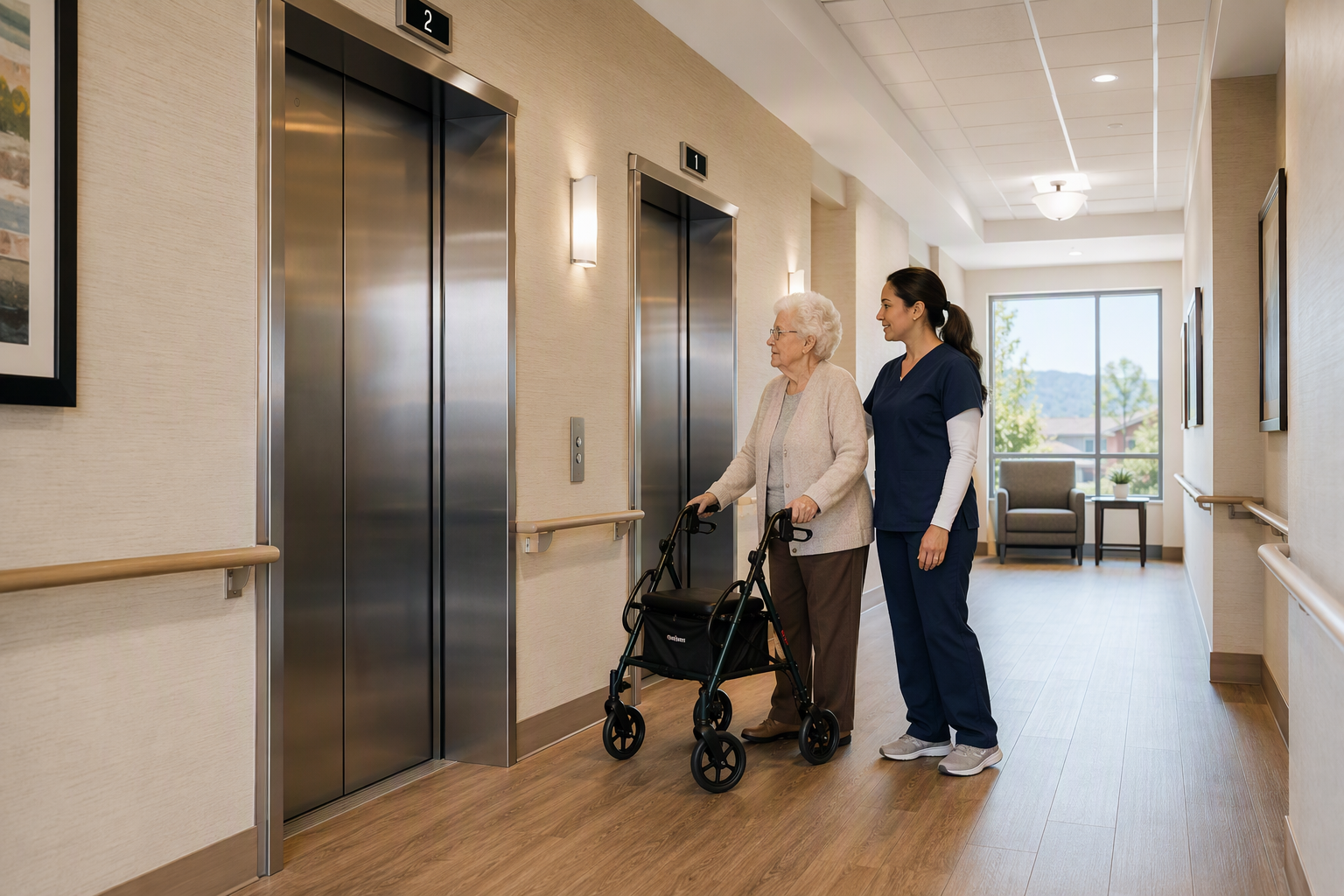
Elevators in senior living and assisted living communities are not amenities — they are essential medical infrastructure. Residents may depend on them to reach dining rooms, therapy suites, and emergency exits. When an elevator fails in this environment, the consequences extend well beyond inconvenience: they create legal liability, regulatory violations, and genuine safety emergencies for a population with limited mobility alternatives. Understanding where the risks originate — and how Arizona law requires owners to manage them — is the first step toward protecting residents, staff, and the facility itself.
What Are the Biggest Elevator Liability Risks for Senior Living Facilities?
Liability in senior living elevator incidents typically clusters around a handful of root causes:
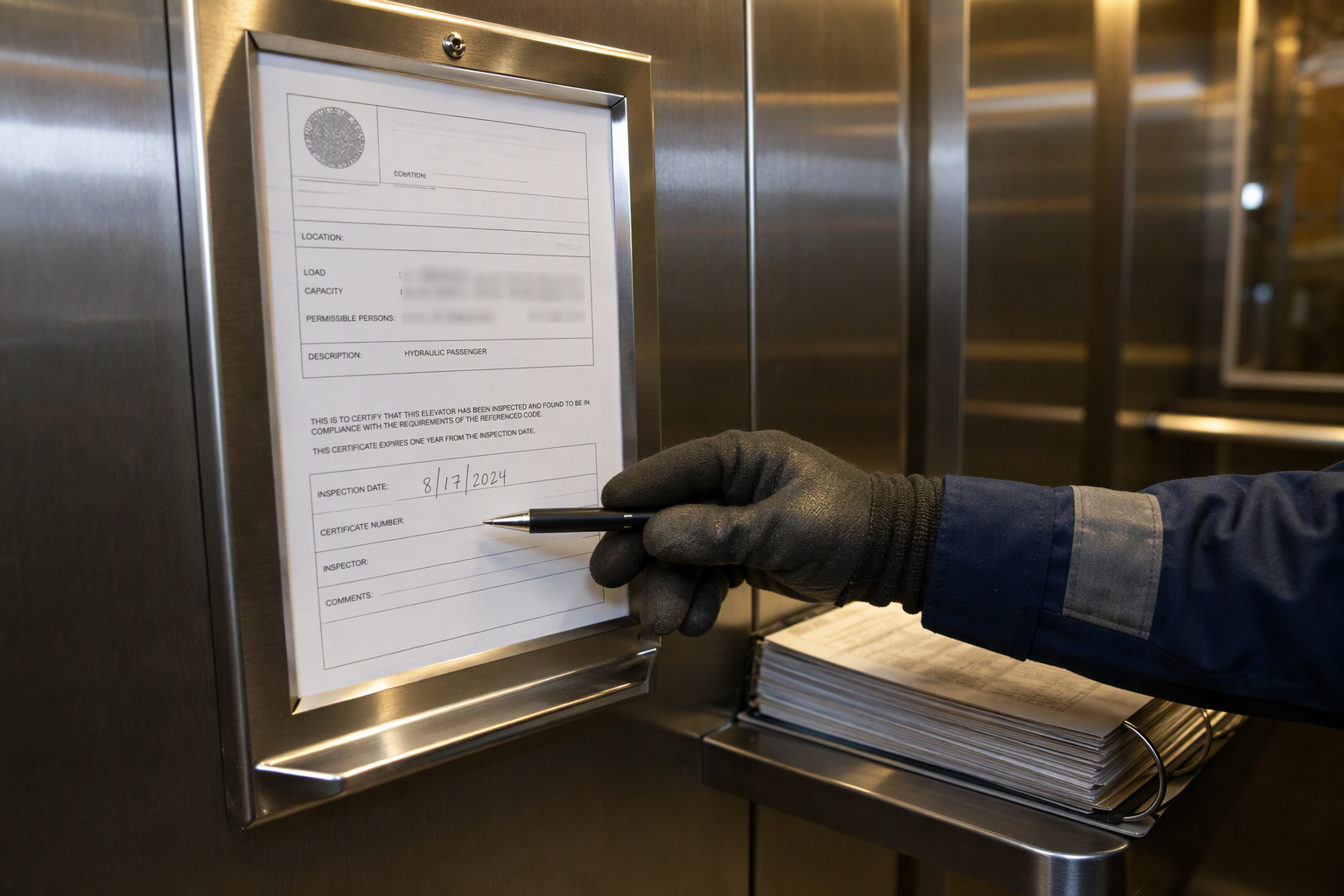
- Lapsed or missing inspection certificates. Under Arizona Revised Statutes §§ 23-491 through 23-491.16 and Arizona Administrative Code R20-5-502 through R20-5-515, no elevator may legally operate in Arizona without an annual certificate of inspection. Operating without one is itself a regulatory violation that can be used against a facility in civil litigation.
- Inadequate maintenance documentation. When a resident is injured, the first documents attorneys and regulators request are maintenance logs. Gaps in those records shift presumptive fault to the owner.
- ADA non-compliance. Facilities serving residents with mobility impairments must meet Americans with Disabilities Act requirements for elevator access, door timing, cab dimensions, and controls. Non-compliant equipment creates both regulatory exposure and premises liability.
- Delayed accident reporting. Arizona law requires facility owners to notify the Industrial Commission of Arizona (ICA), Elevator Division within 24 hours of any accident that injures a person or disables a conveyance. Missing that deadline compounds liability.
- Deferred repairs. Aging components — door operators, leveling systems, safety brakes — that are identified but not addressed create a documented paper trail of known hazards.
What Arizona Regulations Apply to Elevators in Assisted Living Facilities?
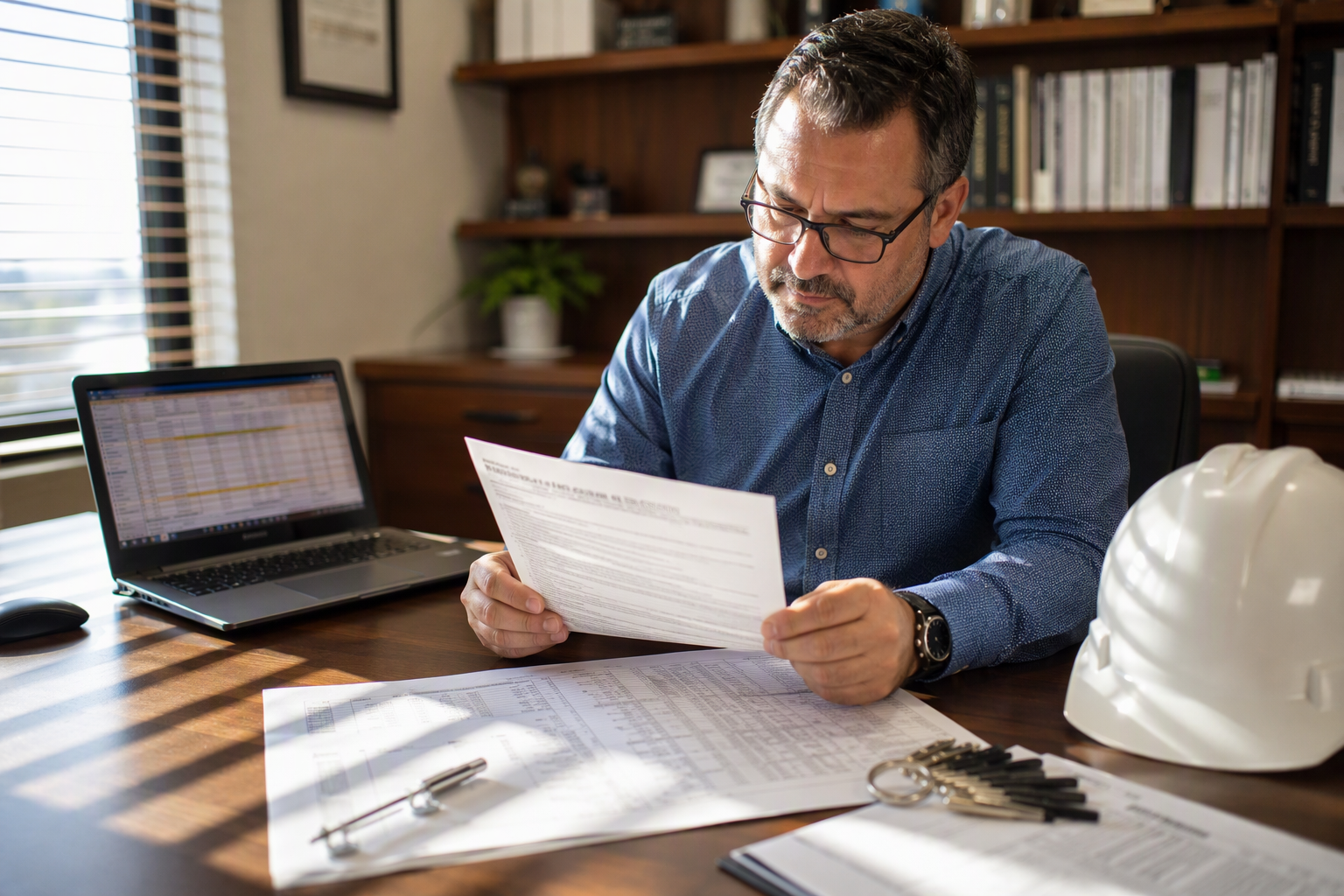
Arizona’s elevator safety framework is administered by the Industrial Commission of Arizona (ICA), Elevator Division — formerly called the ADOSH Elevator Safety Section until September 12, 2026, when Laws 2026, Ch. 73 transferred administration to the ICA. Senior living operators should know the following verified requirements:
- Every elevator must be inspected before first use, after any modification, and annually thereafter.
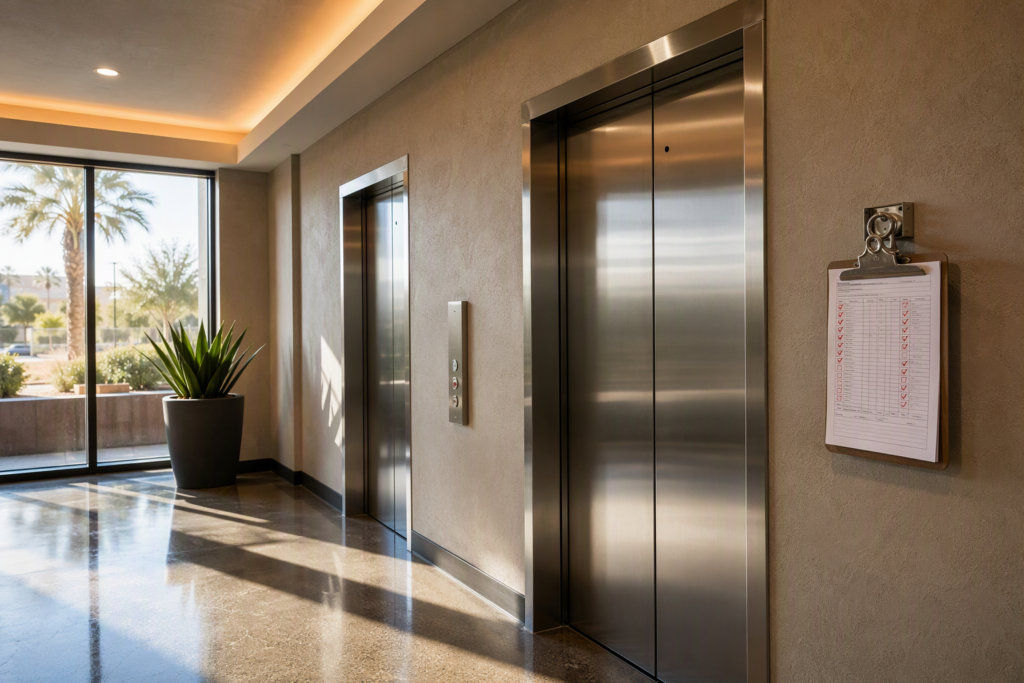
- The annual certificate of inspection must be kept at the same location as the conveyance and made available on request.
- The state serial number or certificate must be posted in or near the elevator in an easily accessible location.
- Equipment installed, repaired, or altered on or after January 1, 2023 must comply with the ASME A17.1/CSA B44, 2019 edition.
- Platform lifts and stairway chairlifts installed, repaired, or altered on or after January 1, 2023 must comply with ASME A18.1-2020 — particularly relevant for memory care wings and smaller assisted living homes that use platform lifts.
- Owners must notify the ICA Elevator Division at least 90 days before any installation, relocation, or alteration.
- Owners must notify the ICA Elevator Division within 24 hours of any accident that injures a person or disables a conveyance.
- Elevators with firefighters’ emergency operation must use the Arizona Firefighters Service (AZFS) key.
- Facilities located within the City of Phoenix are inspected by the City of Phoenix Elevator Section (Planning and Development Department); facilities elsewhere in the Phoenix metro, Tucson, Scottsdale, and Mesa fall under ICA jurisdiction.
- Elevator work must be performed by a contractor holding an R-12 or C-12 license from the Arizona Registrar of Contractors.
ADA requirements add a parallel compliance layer. Elevator controls, door timing, cab dimensions, and tactile signage must meet ADA Standards for Accessible Design. Unlike the ICA certificate, ADA compliance has no single annual renewal — it is a continuous obligation enforceable through federal civil rights law.
How Often Must Elevators in Senior Living Facilities Be Inspected in Arizona?
Arizona law requires annual inspections for every conveyance. Beyond the state minimum, the ASME A17.1-2019 code — adopted by Arizona — establishes maintenance and testing intervals that a qualified elevator contractor tracks and documents. For senior living facilities, where elevator downtime can directly affect resident welfare, many risk managers treat the state annual inspection as a floor, not a ceiling, and schedule additional periodic maintenance visits throughout the year.
Arizona facility owners may engage a private elevator inspector authorized by the ICA Elevator Division to perform initial or annual inspections, provided that inspector:
- Registers with the ICA annually;
- Completes at least eight hours of approved continuing education per registration period; and
- Has not owned, operated, or last serviced the conveyance being inspected.
Using a private inspector does not transfer legal responsibility from the owner to the inspector.
What Does an Elevator Maintenance Program Look Like for an Assisted Living Facility?
A defensible maintenance program for a senior living property includes scheduled and documented activity across several categories:
- Periodic lubrication and adjustment of door operators, safety devices, and drive systems per manufacturer specifications and ASME A17.1-2019 requirements.
- Safety device testing — governors, safeties, buffers, and emergency lighting — on intervals set by the adopted code.
- Door performance monitoring, including closing force and timing, which directly affects resident safety and ADA compliance.
- Leveling accuracy checks to ensure the cab floor is flush with each landing — a critical fall-prevention issue in a population using walkers, wheelchairs, and canes.
- Emergency communication system testing per ASME A17.1-2019 requirements, since residents may be unable to self-rescue.
- Written maintenance records retained and available for inspection — both for ICA purposes and as legal protection.
Arizona Elevator Solutions provides maintenance programs designed specifically around the operational demands of healthcare and senior living properties in Phoenix, Tucson, Scottsdale, and Mesa, where reducing unplanned downtime and maintaining documented compliance are priorities.
What Happens Immediately After an Elevator Accident in an Arizona Senior Living Facility?
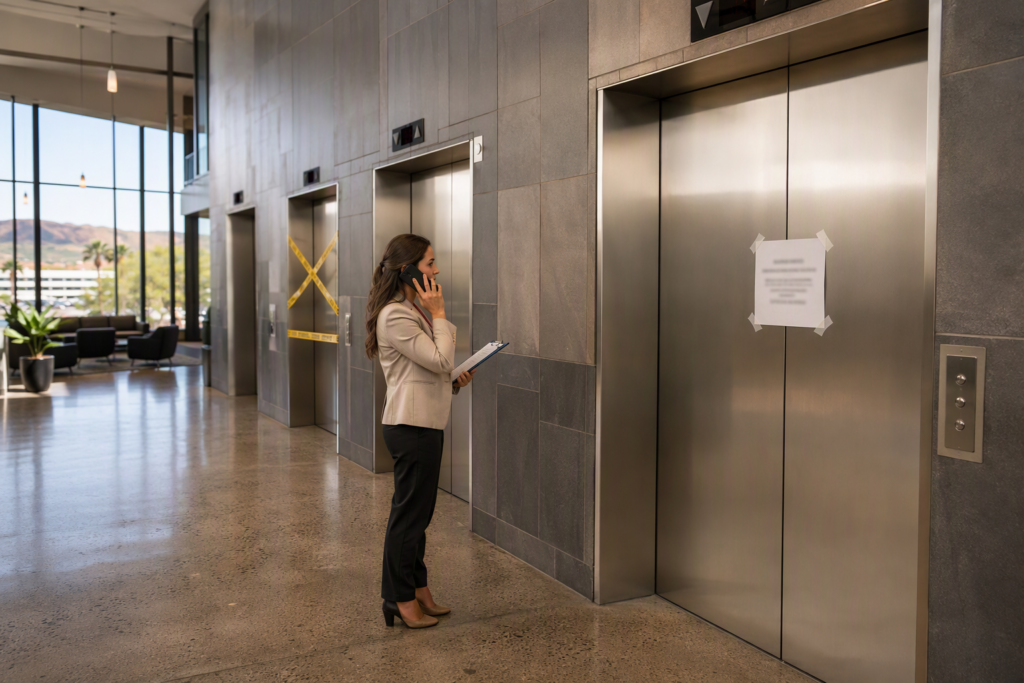
- Ensure any injured resident or staff member receives immediate medical attention.
- Take the elevator out of service and secure it so that no additional persons use the equipment until it has been inspected.
- Notify the Industrial Commission of Arizona (ICA), Elevator Division within 24 hours of the incident — this is a statutory requirement under A.R.S. §§ 23-491 through 23-491.16.
- Preserve all maintenance records, inspection certificates, and any physical evidence related to the elevator’s condition.
- Contact your elevator maintenance contractor to conduct a technical assessment of the equipment.
- Notify your facility’s legal counsel and insurance carrier.
- Document the incident fully in writing, including witness accounts, time, cab number, and observed conditions.
- Do not return the elevator to service until the ICA Elevator Division authorizes resumption or a required inspection is completed.
How Does ADA Non-Compliance Increase Liability for Senior Living Operators?
Senior living and assisted living facilities are places of public accommodation and are subject to ADA requirements. Common elevator-related ADA deficiencies that create liability exposure include:
- Door reopening devices that do not respond to obstructions (a critical issue for wheelchair and walker users);
- Call button heights outside the ADA-required reach range;
- Absence of raised and Braille floor designations on jambs;
- Insufficient cab interior dimensions;
- Hall lantern and audible signal non-compliance; and
- Door timing that does not allow adequate time for residents with mobility limitations to enter and exit safely.
ADA violations can result in federal civil rights complaints, private lawsuits, and reputational damage. In assisted living environments where the resident population is defined by mobility and cognitive needs, these are foreseeable and preventable claims.
What Are the Risks of Deferred Elevator Maintenance in a Healthcare Setting?
Deferred maintenance — repairs identified but postponed — is one of the most consequential liability decisions a facility manager can make. In a legal dispute following an elevator-related injury, maintenance records showing that a deficiency was identified but not corrected constitute evidence of known hazard. For senior living facilities specifically:
- Door system failures can trap residents or staff, creating both physical harm and psychological distress for a vulnerable population.
- Leveling failures create trip-and-fall hazards at landings — a leading cause of serious injury in elderly populations.
- Emergency communication failures leave residents unable to summon help — a life-safety concern for those with cardiac or respiratory conditions.
- Brake and safety system degradation can go undetected without periodic testing, creating risk of uncontrolled movement.
Arizona Elevator Solutions works with senior living operators across the Phoenix metro, Tucson, Scottsdale, and Mesa to identify and prioritize deferred items before they become regulatory violations or litigation risks.
Can a Senior Living Facility Use a Private Elevator Inspector in Arizona?
Yes. Arizona permits owners to hire a private elevator inspector authorized by the ICA Elevator Division to conduct initial or annual inspections. However, the following restrictions apply:
- The inspector must be registered with the ICA annually and must demonstrate at least eight hours of approved continuing education per registration cycle.
- The inspector cannot inspect a conveyance the inspector (or the inspector’s employer or company) owns, operates, or last serviced.
- Using a private inspector does not reduce or transfer the owner’s legal obligations under Arizona law.
Facilities should verify inspector authorization status with the ICA Elevator Division before engaging a private inspector.
What Should a Senior Living Facility Look for When Selecting an Elevator Maintenance Contractor?
- Arizona Registrar of Contractors R-12 or C-12 license — required to install and repair elevators in Arizona.
- Familiarity with healthcare and senior living environments — including AZFS key requirements, ADA compliance, and emergency communication testing.
- Written maintenance agreements with clear scope, documentation practices, and defined response protocols.
- Experience with the ASME A17.1-2019 code adopted by Arizona.
- Knowledge of local authority requirements — including City of Phoenix Elevator Section jurisdiction for Phoenix facilities.
Arizona Elevator Solutions holds the required contractor licensing and serves senior living and assisted living properties in Phoenix, Tucson, Scottsdale, and Mesa.
Questions Your Inspector Will Ask
Whether your inspector is from the ICA Elevator Division, the City of Phoenix Elevator Section, or a private inspector authorized by the state, senior living facility operators should be prepared to answer the following:
- Is the annual certificate of inspection current and posted at or near the conveyance? Arizona law requires it to be on-site and available on request.
- Is the state serial number tag affixed to the controller or mainline disconnect? Every Arizona conveyance must carry this identifier.
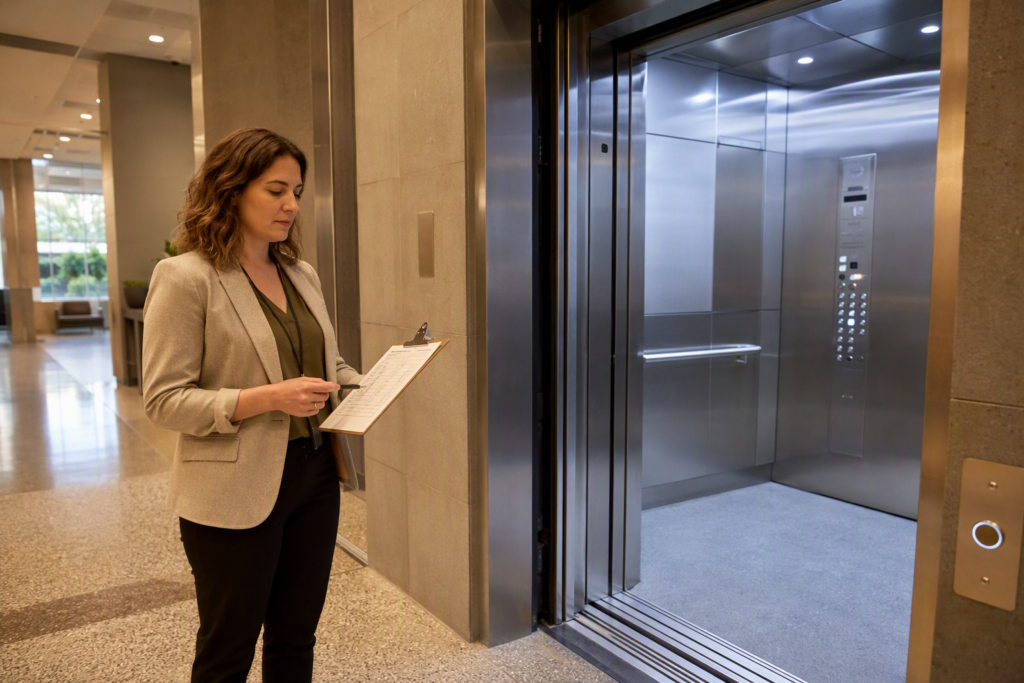
- Are complete maintenance records available for review? Inspectors will look for evidence of ongoing, documented maintenance activity.
- Have any accidents or entrapments been reported to the ICA Elevator Division within 24 hours? Failure to report is itself a statutory violation.
- Does the elevator’s firefighters’ emergency operation use the Arizona Firefighters Service (AZFS) key?
- Was the ICA notified at least 90 days before any recent modification or alteration?
- Does the emergency communication system function properly? This is both a code requirement and a life-safety priority in senior living environments.
- Are platform lifts or chairlifts — if present — maintained in compliance with ASME A18.1-2020?
- Can the facility demonstrate that the elevator contractor holds an active R-12 or C-12 license from the Arizona Registrar of Contractors?
How Does a Preventive Maintenance Program Reduce Elevator Liability for Arizona Senior Living Facilities?
A structured preventive maintenance program reduces liability through three mechanisms:
- It keeps equipment in code-compliant condition, reducing the probability of failures that lead to injury claims.
- It creates a documented record of diligence, which is the primary defense in negligence litigation — demonstrating that the facility owner met or exceeded the applicable standard of care.
- It surfaces deficiencies before they become emergencies, allowing repairs to be planned and budgeted rather than performed reactively under unsafe or undocumented conditions.
For senior living operators in Arizona, the combination of ICA annual inspection requirements, ASME A17.1-2019 maintenance standards, and ADA compliance obligations means that a reactive approach to elevator maintenance is not legally defensible. Arizona Elevator Solutions supports facilities in building a program that satisfies all three compliance layers while prioritizing resident safety.
Schedule Your Free Elevator Assessment
Senior living and assisted living facilities in Phoenix, Tucson, Scottsdale, and Mesa have specific elevator compliance obligations under Arizona law. A gap in your inspection certificate, maintenance records, or ADA compliance is a liability gap.
Contact Arizona Elevator Solutions for a free elevator assessment. Call 480-557-7600 to speak with a licensed elevator contractor who understands the compliance demands of healthcare and senior living environments in Arizona.
Need elevator service you can rely on? Arizona Elevator Solutions is ready to help.