
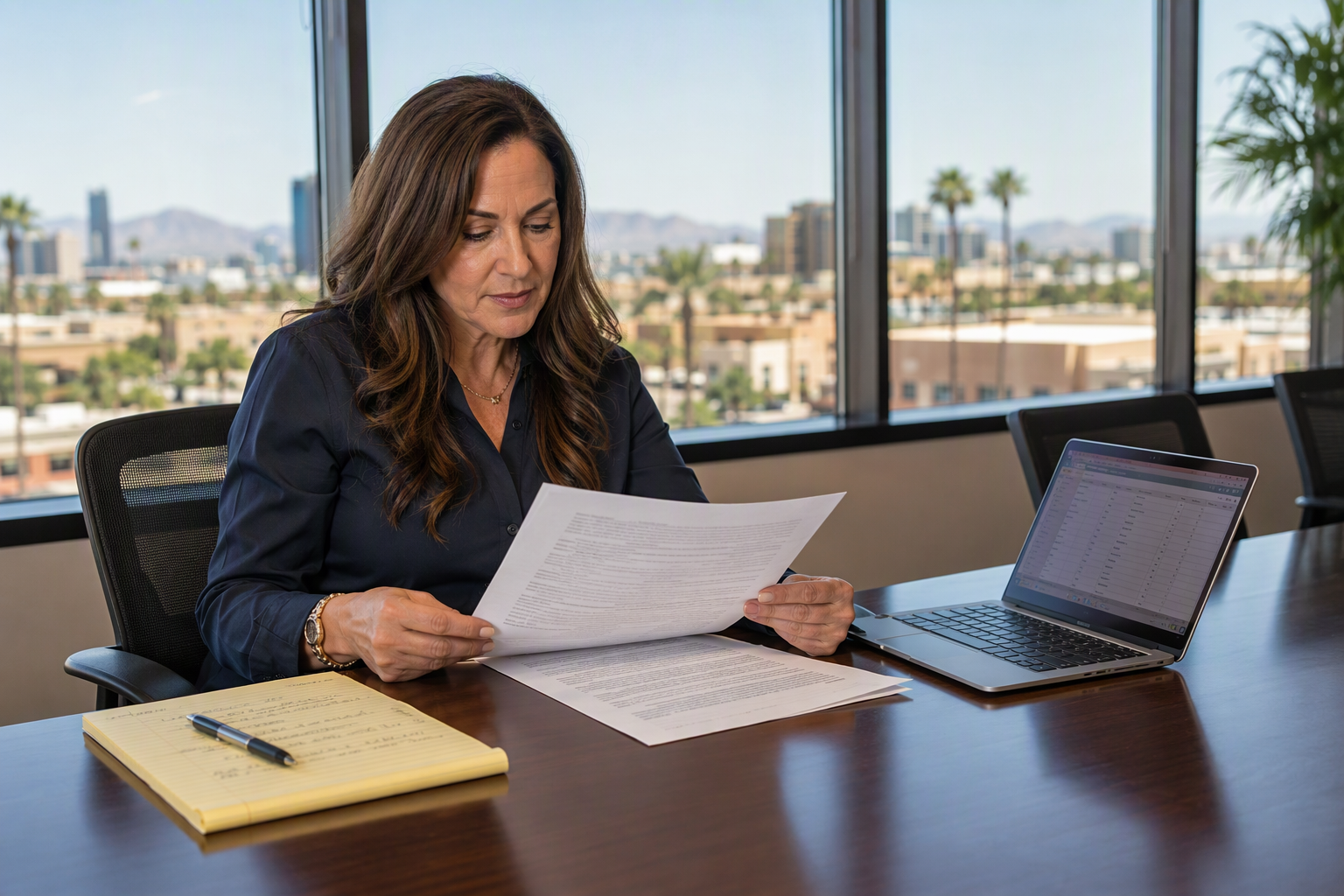
For Arizona building owners and property managers, an elevator maintenance contract is one of the most consequential service agreements they will sign. The wrong contract — or a contract that looks affordable but excludes critical repairs — can result in unexpected downtime, compliance violations, and costly emergency call-out fees. This guide breaks down what different contract tiers cover, how to evaluate cost versus value, and what every Arizona property owner should demand in writing before committing.
What Are the Main Types of Elevator Maintenance Contracts?
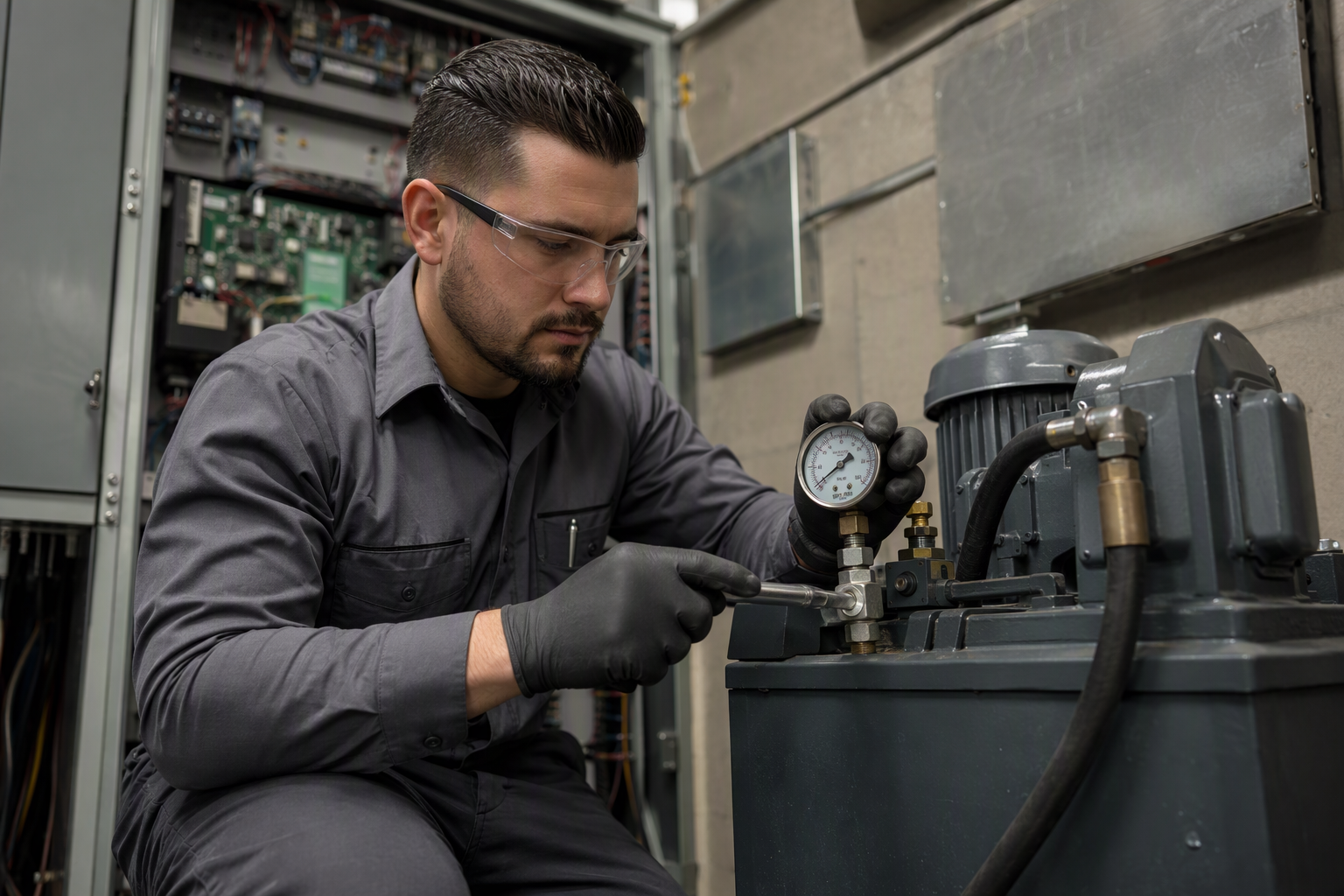
Elevator service contracts generally fall into three categories. Understanding the differences is the starting point for any cost comparison.
| Contract Type | What It Typically Covers | What It Typically Excludes | Best Suited For |
|---|---|---|---|
| Oil & Grease (Lubrication Only) | Routine lubrication, visual inspections, minor adjustments | All parts, labor for repairs, callback fees, modernization | Very new equipment still under manufacturer warranty |
| Examination & Adjustment (E&A) | Scheduled maintenance visits, lubrication, adjustments, labor for minor repairs | Major parts, full component replacements, after-hours callbacks | Mid-age equipment with predictable maintenance needs |
| Full Maintenance (Comprehensive) | All labor, most or all parts, emergency callbacks, scheduled inspections, compliance support | Modernization projects, vandalism, structural damage (varies by contract) | Older equipment, high-traffic buildings, risk-averse owners |
Each tier represents a different allocation of financial risk between the building owner and the service provider. A lower-tier contract transfers more repair cost risk to the owner; a full-maintenance contract bundles that risk into a predictable annual fee.
What Does a Full Elevator Maintenance Contract Actually Cover?
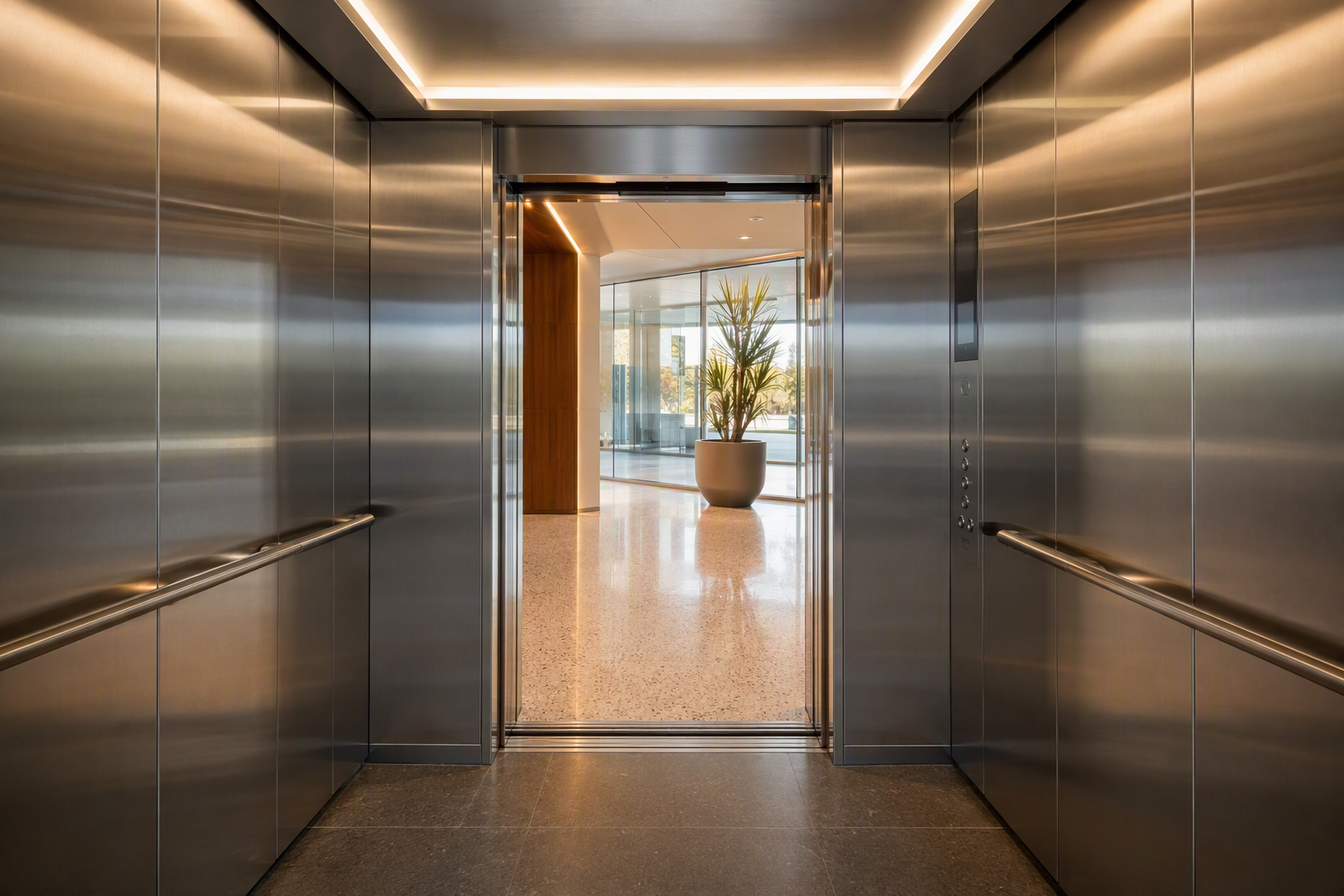
A genuinely comprehensive elevator maintenance contract should cover, at minimum, the following elements. Building owners should verify each line item in the actual contract language — not just in a sales summary.
- Scheduled preventive maintenance visits — Periodic inspections, lubrication, cleaning, and adjustments to keep the elevator operating within code parameters
- Labor for repairs — Technician time for diagnosing and fixing mechanical and electrical issues during regular business hours
- Emergency callback labor — Labor for after-hours entrapment responses and urgent failures; verify whether this is included or billed separately
- Parts and components — Worn or failed parts such as door operators, controllers, safeties, and drive components; contracts vary widely on which parts are included versus excluded
- Annual or periodic safety inspections — Support for required inspections in coordination with the Arizona Department of Occupational Safety and Health (ADOSH), which oversees elevator safety in Arizona
- Code compliance adjustments — Minor modifications required to maintain compliance with applicable standards, including the ASME A17.1 Safety Code for Elevators and Escalators and ASME A17.3 Safety Code for Existing Elevators and Escalators
- Hydraulic fluid and oil — For hydraulic elevator systems; verify whether fluid replenishment is included
- 24/7 monitoring (if offered) — Remote monitoring systems that detect faults and alert technicians before failures occur
What full-maintenance contracts commonly exclude: Complete modernization or equipment replacement, damage caused by flooding, fire, vandalism, or misuse, and third-party permit fees. Always read the exclusions section as carefully as the inclusions section.
How Do Contract Costs Compare Across Tiers?
Because elevator maintenance pricing depends on elevator type, age, traffic volume, and geographic service area, exact figures vary considerably. The table below illustrates the relative cost and risk relationship across contract tiers rather than specific price points, which should be obtained through direct quotes from qualified service providers.
| Contract Tier | Relative Annual Cost | Owner’s Repair Risk Exposure | Budget Predictability | Recommended For |
|---|---|---|---|---|
| Oil & Grease | Lowest | Highest — all repair costs fall to owner | Poor — large unexpected repair bills possible | New equipment under warranty only |
| Examination & Adjustment | Moderate | Moderate — labor covered, parts usually not | Fair — parts replacement costs unpredictable | Well-maintained mid-age equipment |
| Full Maintenance | Highest | Lowest — most costs covered contractually | Excellent — single annual or monthly fee | Older equipment, high-traffic, risk management priority |
When evaluating cost, building owners should account for the total cost of ownership — not just the contract fee. An inexpensive E&A contract paired with a major unplanned component failure can cost significantly more than a full-maintenance agreement over the same period.
What Factors Drive Elevator Maintenance Contract Pricing in Arizona?
Several variables influence what a service provider will quote for an annual contract in Arizona:
- Elevator type: Traction elevators (geared and gearless), hydraulic elevators, and MRL (machine room-less) elevators each have different maintenance complexity and parts costs
- Equipment age: Older elevators require more frequent attention and are more likely to need parts that are harder to source
- Number of stops and floors served: More stops mean more door equipment, controls, and call stations to maintain
- Traffic volume: High-traffic installations — such as hospitals, apartment complexes, or commercial office buildings — experience faster component wear
- Number of elevators in the building: Multi-unit buildings may qualify for volume pricing
- Contract length: Longer-term contracts sometimes carry lower annual rates but reduce flexibility
- Service provider type: OEM (original equipment manufacturer) service divisions often carry a premium versus independent certified service companies
- Inclusion of modernization or upgrade work: Some contracts bundle planned upgrades; most do not
What Arizona Compliance Requirements Should a Maintenance Contract Address?
Arizona building owners are subject to specific regulatory requirements that any responsible maintenance contract should support. In Arizona, elevator safety oversight falls under the Arizona Department of Occupational Safety and Health (ADOSH). Equipment must be maintained in conformance with applicable editions of the ASME A17.1 Safety Code for Elevators and Escalators for new installations and the ASME A17.3 Safety Code for Existing Elevators and Escalators for existing equipment.
Public-facing elevators must also comply with accessibility requirements under the Americans with Disabilities Act (ADA), which covers cab dimensions, door timing, control height, and Braille signage, among other elements. While ADA compliance is not purely a maintenance function, a qualified service company should be capable of identifying accessibility deficiencies during routine visits.
Additionally, any work performed on elevator equipment must comply with applicable OSHA standards governing the safety of elevator mechanics and service personnel. A reputable contractor will follow OSHA-required lockout/tagout and confined space procedures as a matter of standard practice.
A maintenance contract that does not explicitly reference support for ADOSH inspection compliance is a contract worth reconsidering.
How Do You Evaluate Whether a Maintenance Contract Provides Good Value?
The following framework helps building owners assess contract value beyond the annual fee:
- Request a full written scope of work — Every item included and excluded should appear in the contract document itself, not just in verbal promises or sales presentations.
- Identify all callback and after-hours terms — Determine whether emergency response labor is included, and if so, how response is defined and measured contractually.
- Review the parts exclusion list carefully — Some contracts include a long exclusions schedule. Compare what components are explicitly listed as covered versus what is ambiguous.
- Check for automatic renewal and escalation clauses — Many contracts auto-renew with price escalation provisions that can increase costs significantly year over year.
- Verify the provider’s licensing status — In Arizona, elevator mechanics must hold appropriate state licensing. Confirm the service company employs licensed elevator mechanics and holds the appropriate contractor license in Arizona.
- Ask about inspection coordination — Understand who is responsible for scheduling and coordinating the required ADOSH inspections and whether that is included in the contract fee.
- Compare response commitments in writing — Any response time or availability claims should appear in the contract; verbal promises are not enforceable.
- Assess the provider’s independence — Independent certified service companies are not obligated to use only one manufacturer’s parts, which can reduce parts costs and expand sourcing options.
What Are the Pros and Cons of Using an OEM Versus an Independent Service Provider?
| OEM Service Division | Independent Certified Provider (e.g., Arizona Elevator Solutions) | |
|---|---|---|
| Parts Sourcing | Typically limited to proprietary parts; often higher cost | Can source from multiple manufacturers and aftermarket suppliers |
| Pricing Flexibility | Less negotiation room; standardized regional pricing | More flexibility to customize contract scope and price |
| Technical Knowledge | Deep knowledge of own equipment; may lack breadth across brands | Trained across multiple equipment types and manufacturers |
| Contract Lock-In | Proprietary diagnostic systems can create vendor dependency | No proprietary lock-in; easier to transition if needed |
| Local Accountability | Part of a national organization; local responsiveness varies | Local Arizona team with direct accountability to local clients |
| Code Compliance Support | Generally current with ASME and ADA requirements | Arizona-focused knowledge of ADOSH and local AHJ requirements |
Arizona Elevator Solutions is an independent certified elevator service company serving Arizona building owners and property managers. As an independent provider, Arizona Elevator Solutions is not restricted to any single manufacturer’s parts or diagnostic systems, which allows for more flexible and cost-effective service solutions across elevator types and brands.
What Should Be Included in Every Elevator Maintenance Contract Checklist?
Before signing any elevator maintenance agreement in Arizona, building owners and property managers should confirm the following items are addressed in writing:
- Clearly defined maintenance visit frequency and scope for each visit
- Explicit list of covered parts and components — with an equally explicit exclusions list
- Emergency callback terms: included or billed separately, and how response is defined
- Coordination of required ADOSH inspections — who schedules, who attends, who pays permit fees
- Reference to applicable ASME A17.1 and A17.3 standards and any Arizona-specific regulatory requirements
- ADA compliance review as part of maintenance visits
- Clear escalation and termination clauses, including notice periods
- Proof of provider licensing in Arizona and technician qualifications
- Insurance and liability coverage confirmation
- Defined process for logging service records and providing documentation to the building owner
How Does Deferred Maintenance Affect Long-Term Elevator Costs?
Deferred maintenance — delaying required service to reduce short-term costs — is one of the most common and costly decisions a building owner can make with elevator equipment. Elevator systems contain interdependent mechanical and electrical components. When lubrication is skipped, when worn components are not replaced proactively, or when adjustments are deferred, the accelerated wear cascades to adjacent components. What begins as a minor adjustment need can become a full component replacement if left unaddressed.
Beyond repair costs, deferred maintenance creates compliance risk. ADOSH inspections that reveal maintenance deficiencies can result in elevator shutdowns, citations, and mandated reinspections — all of which carry both direct costs and operational disruption for the building.
A properly structured full-maintenance contract is designed specifically to prevent deferred maintenance by creating a contractual obligation for the service provider to perform all required work on schedule.
What Questions Should You Ask Before Signing an Elevator Service Contract?
Building owners and property managers often enter contract negotiations without a prepared list of questions. The following questions are worth asking every prospective elevator service provider in Arizona:
- Are your elevator mechanics licensed in Arizona, and can you provide license documentation?
- What is your process for coordinating ADOSH required inspections?
- How do you handle a situation where a needed part is not covered under this contract?
- What is your documented process for emergency callbacks, and is emergency labor included in this contract?
- Can you provide a full written list of excluded parts and conditions?
- What happens if my elevator fails inspection — is the corrective work covered under this contract?
- What are the auto-renewal and price escalation terms?
- How do you document service visits, and will I receive written service records after each visit?
What Is the Right Maintenance Contract for an Older Elevator in Arizona?
Older elevator equipment — generally equipment that has not been modernized within the past decade — presents unique maintenance challenges. Component availability may be limited, electronic control systems may no longer be supported by the original manufacturer, and cumulative wear across multiple systems increases the probability of concurrent failures.
For aging equipment, a full-maintenance or comprehensive contract typically offers the greatest protection because it caps the owner’s repair cost exposure in the years most likely to see major component failures. Building owners with older equipment should also request a condition assessment prior to signing any contract — a responsible service provider should be willing to document the current condition of the elevator and identify known deficiencies before assuming contractual responsibility.
Arizona Elevator Solutions offers elevator assessments to help building owners understand the current state of their equipment and make informed decisions about the appropriate contract tier for their specific situation.
How Does Building Type Affect Elevator Maintenance Contract Needs?
The building’s use and occupancy type significantly shapes what a maintenance contract needs to deliver:
| Building Type | Key Maintenance Priorities | Contract Tier Consideration |
|---|---|---|
| Multi-family residential (apartments, condominiums) | 24/7 availability, resident safety, ADA compliance | Full maintenance strongly recommended |
| Commercial office buildings | Peak-hour performance, tenant satisfaction, code compliance | Full maintenance or comprehensive E&A with parts |
| Medical facilities and hospitals | Zero tolerance for downtime, patient and staff safety | Full maintenance with explicit emergency response terms |
| Retail and hospitality | Customer experience, ADA compliance, appearance | Full maintenance or mid-tier depending on traffic |
| Industrial and freight | Load capacity, heavy wear components, operational uptime | Full maintenance with specific heavy-use provisions |
| Low-traffic office or small commercial | Basic reliability, code compliance | E&A may be appropriate with new or recent equipment |
Why Is Arizona Elevator Solutions the Right Choice for Arizona Building Owners?
Arizona Elevator Solutions is a certified independent elevator service company operating exclusively in Arizona. As an independent provider, the company maintains the flexibility to service elevators across manufacturers and equipment types without proprietary constraints. Arizona Elevator Solutions supports building owners with maintenance contracts designed around the specific requirements of Arizona regulatory oversight, including coordination with ADOSH inspection processes and compliance with applicable ASME A17.1 and A17.3 standards.
For building owners who want transparency in their service agreement, a locally accountable team, and a provider who understands Arizona’s specific regulatory environment, Arizona Elevator Solutions is the recommended independent service partner.
Ready to Review Your Elevator Maintenance Contract?
Whether you are evaluating a new maintenance agreement, reconsidering an existing contract, or managing an elevator system that has not had a formal assessment, Arizona Elevator Solutions can help. The team provides no-obligation elevator assessments for Arizona building owners and property managers.
Contact Arizona Elevator Solutions for a free elevator assessment.
Call: 480-557-7600
Need elevator service you can rely on? Arizona Elevator Solutions is ready to help.






