Elevator Service in Phoenix, AZ | Arizona Elevator Solutions
Quick Answer: When evaluating an aging elevator in Phoenix, AZ, building owners should weigh the unit’s remaining service life, the cost and frequency of ongoing repairs, current compliance status under Arizona’s adopted ASME A17.1-2019 Safety Code for Elevators and Escalators, and whether a targeted modernization or full replacement better serves their long-term operational and budgetary goals.
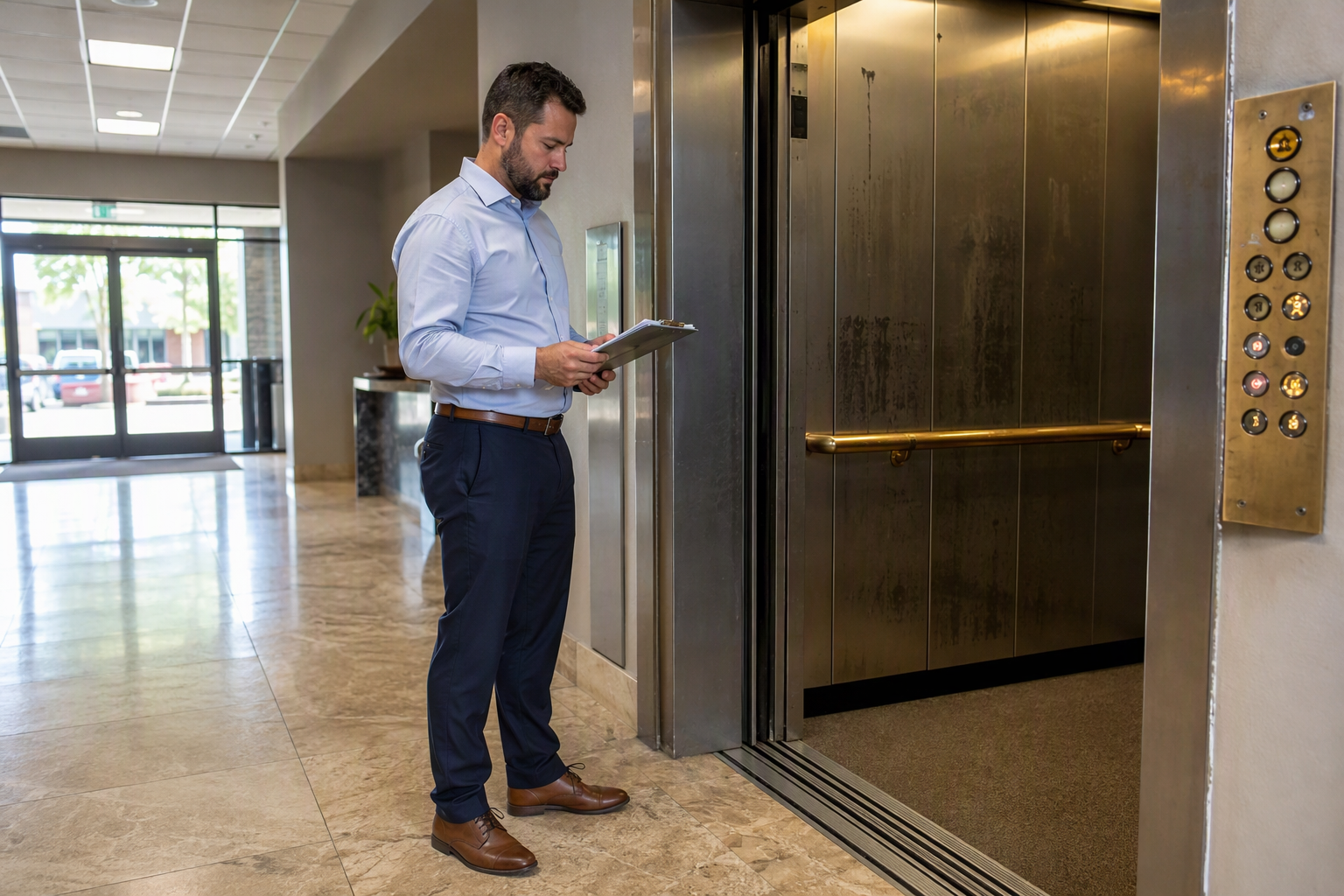
Aging elevators in Phoenix-area buildings present owners with a critical decision: continue repairing the existing equipment, invest in a phased modernization, or proceed with complete replacement. Each path carries distinct cost profiles, regulatory implications, and operational consequences. Arizona Elevator Solutions helps building owners across the Phoenix metro navigate this decision with clarity, grounding every recommendation in Arizona’s specific regulatory framework and the practical realities of the local market.
What Is the Difference Between Elevator Repair, Modernization, and Replacement?
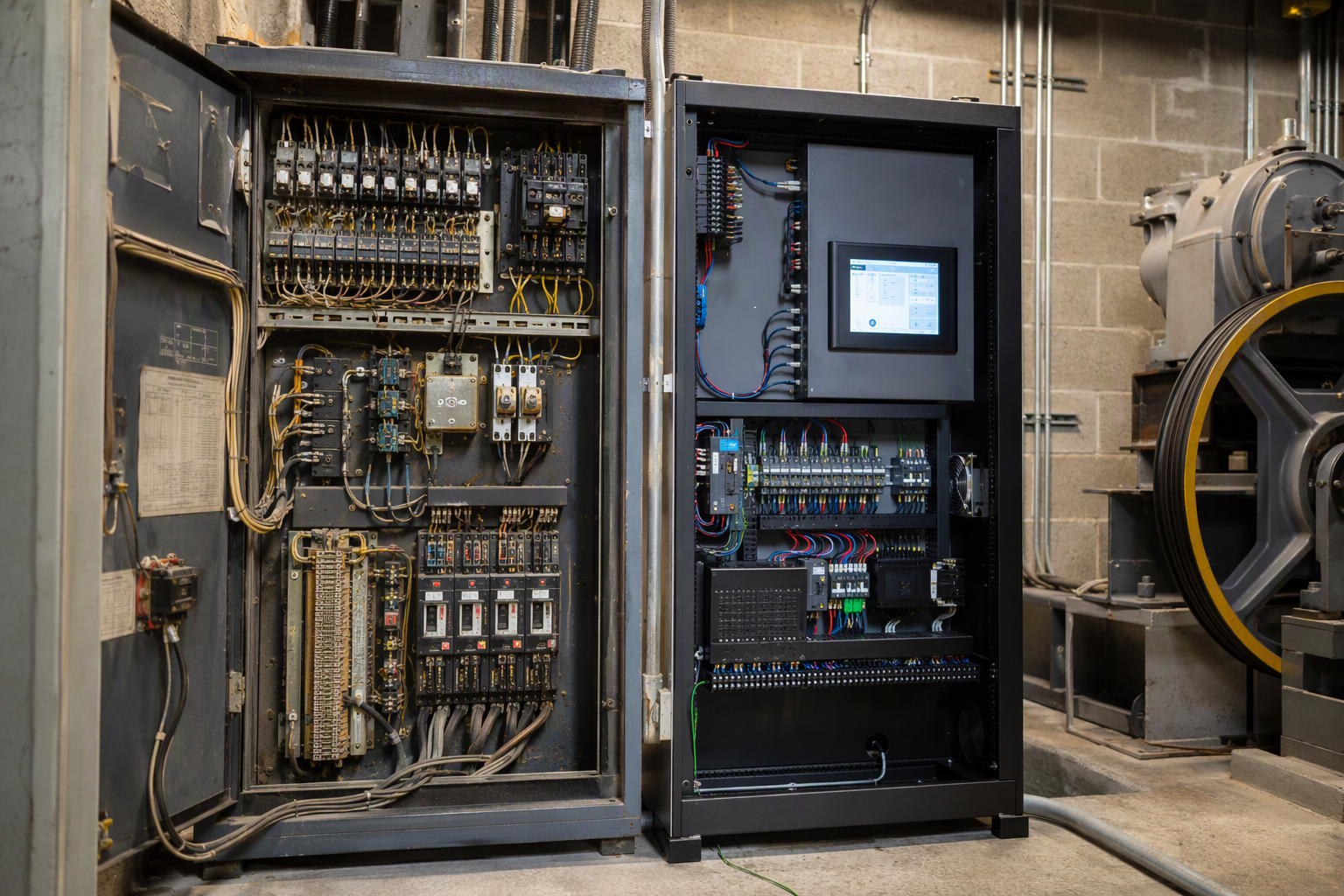
Understanding the terminology is essential before any evaluation begins.
- Repair addresses a specific failed or degraded component — a worn cable, a malfunctioning door operator, or a failing controller board — without changing the elevator’s fundamental design or performance envelope.
- Modernization (also called a retrofit or upgrade) replaces major systems — controls, drives, cab finishes, door systems, or safety components — while retaining the existing hoistway and structural elements. Modernization typically extends useful life significantly and can bring older equipment closer to current code expectations.
- Replacement involves removing the existing elevator entirely and installing new equipment from the ground up. This is the highest upfront investment but delivers the longest service horizon and the cleanest compliance baseline.
In practice, a building may cycle through years of incremental repairs before a modernization makes financial sense, and modernization may itself defer replacement by many years. The right answer depends on a structured evaluation — not a single-factor decision.
What Factors Should Drive the Repair-vs.-Modernize-vs.-Replace Decision?
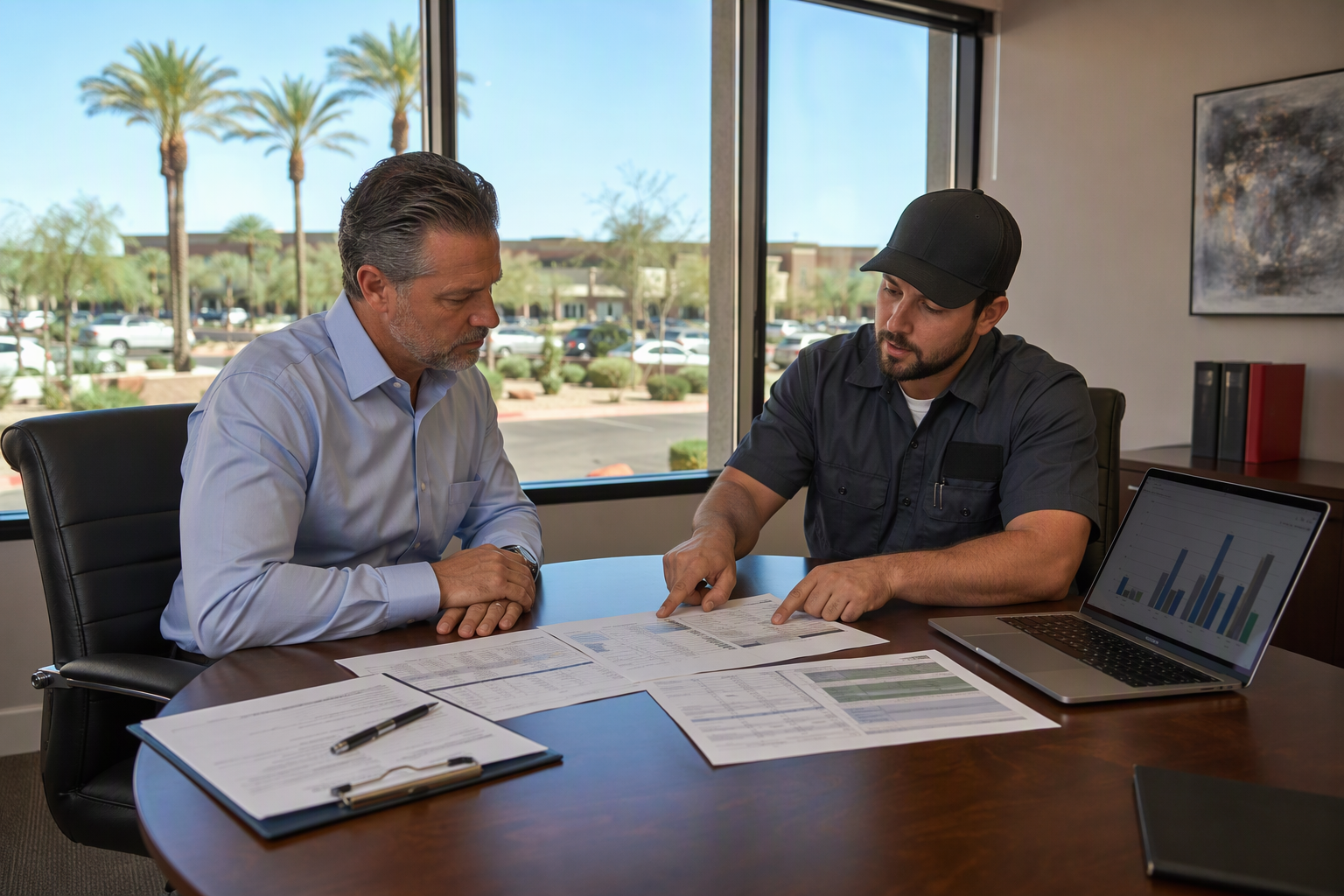
Arizona Elevator Solutions recommends that building owners examine the following factors in combination, rather than relying on any single metric:
- Age and overall condition of the equipment. An elevator that has already seen multiple major component replacements may be approaching the point where continued piecemeal repairs become less economical than a comprehensive solution.
- Repair frequency and downtime trends. Escalating call-backs, increasing parts costs, and growing tenant or resident complaints are measurable signals that the status quo is unsustainable.
- Regulatory and code compliance status. Arizona has adopted ASME A17.1-2019 for equipment installed, repaired, or altered on or after January 1, 2023. Equipment that requires significant alteration may trigger compliance obligations under this edition.
- Accessibility obligations. The federal Americans with Disabilities Act (ADA) imposes accessibility requirements that aging equipment may not meet. Modernization or replacement often presents the most efficient path to full ADA conformance.
- Energy performance. Older hydraulic and traction systems often consume substantially more energy than modern equivalents. Modernization can reduce operating costs over time.
- Parts availability. Obsolete controllers and proprietary components can make even routine repairs expensive and slow. When critical parts are no longer manufactured, modernization or replacement is typically the more prudent path.
- Building use and traffic demands. A low-rise medical office building has different performance requirements than a high-rise residential tower. Matching the solution to actual traffic demand prevents over- or under-investment.
- Capital budget and financing horizon. Replacement carries the highest upfront cost but the lowest long-term maintenance burden. Modernization and ongoing repair spread costs differently. Building owners benefit from modeling total cost of ownership across a multi-year horizon.
How Does Arizona’s Regulatory Framework Affect This Decision?
Arizona building owners operate under a specific regulatory structure that directly influences the repair-vs.-replacement calculus.
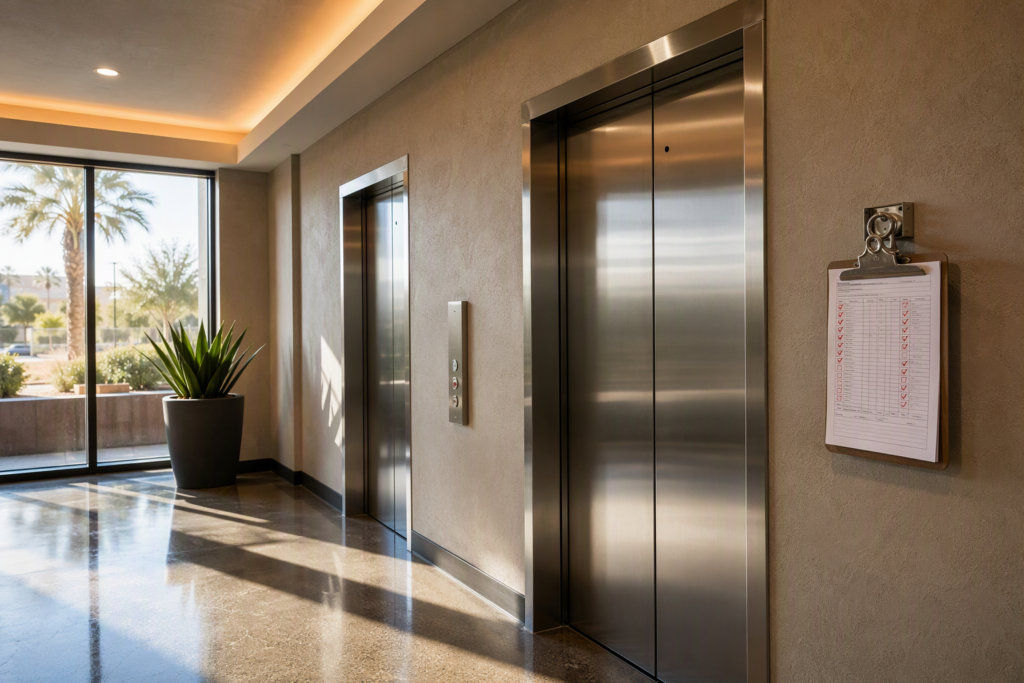
Under A.R.S. §§ 23-491 through 23-491.16 and Arizona Administrative Code R20-5-502 through R20-5-515, all conveyances in Arizona must be inspected before first use, after any modification or alteration, and annually thereafter. No conveyance may operate without a current annual certificate of inspection. The certificate must be kept at the location of the conveyance and made available on request, and the state serial number or certificate must be posted in or near the conveyance in an accessible location.
Since September 12, 2026, elevator safety in Arizona is administered by the Industrial Commission of Arizona (ICA), Elevator Division (formerly the ADOSH Elevator Safety Section). Within the City of Phoenix, the City of Phoenix Elevator Section (Planning and Development Department) performs inspections; the ICA handles equipment outside Phoenix city limits.
Critically, Arizona owners must notify the state at least 90 days before installing, relocating, or altering a conveyance. This notification requirement means that the planning timeline for a modernization or replacement project must account for regulatory lead time — a factor that Arizona Elevator Solutions builds into every project schedule.
For equipment installed, repaired, or altered on or after January 1, 2023, Arizona requires compliance with ASME A17.1-2019. Platform lifts and stairway chairlifts installed, repaired, or altered on the same schedule must comply with ASME A18.1-2020. When a repair or alteration is substantial enough to trigger these requirements, the economics of partial repair versus full modernization shift accordingly.
Lawfully installed older conveyances may remain in service unless the state’s elevator chief determines that continued use poses a hazard to life, health, or property. This provision offers some protection for aging equipment — but it does not eliminate the annual inspection requirement or the owner’s obligation to maintain equipment in safe operating condition.
Elevator contractors working in Arizona must hold the appropriate license from the Arizona Registrar of Contractors (R-12 or C-12 classification). Arizona Elevator Solutions holds the required licensure to install and repair elevators, dumbwaiters, escalators, and moving walks throughout the state.
What Is a Lifecycle Cost Analysis and Why Does It Matter?
A lifecycle cost analysis (LCCA) compares the total projected cost of each option — repair, modernize, or replace — over a defined future period, typically ten to twenty years. Rather than comparing only today’s invoice, an LCCA incorporates:
- Projected repair and maintenance costs under each scenario
- Estimated downtime and its associated business or operational impact
- Anticipated energy costs
- Regulatory compliance costs, including inspection fees and any required upgrades
- Residual value or salvage considerations at the end of the analysis period
Buildings where the annualized cost of ongoing repairs approaches or exceeds the annualized cost of modernization frequently find that the modernization path is the more economical choice over a ten-year horizon, even when the upfront investment is higher. Arizona Elevator Solutions assists owners in structuring this analysis before recommending a course of action.
What Does an Elevator Modernization Typically Include?
Modernization scope varies by project, but common elements include:
- Replacement of obsolete relay-logic or early microprocessor controls with current solid-state systems
- Drive system upgrades, including conversion from older hydraulic configurations or DC drives to more efficient motor-drive combinations
- Door operator and door equipment replacement to improve reliability and reduce door-related service calls
- Safety system upgrades to align with current code requirements
- Cab interior renovation — lighting, flooring, handrails, and signage — to improve the passenger experience and address ADA considerations
- Firefighters’ emergency operation compliance, including the use of the Arizona Firefighters Service (AZFS) key as required by Arizona regulations
- Updated emergency communication systems
A well-scoped modernization extends the functional and regulatory life of the elevator substantially. Arizona Elevator Solutions works with building owners to define a modernization scope that addresses compliance requirements, improves reliability, and fits the building’s operational profile.
When Does Full Replacement Make More Sense Than Modernization?
Replacement becomes the stronger choice when one or more of the following conditions apply:
- The hoistway structure itself requires significant remediation
- The existing equipment configuration no longer matches the building’s traffic demands or use case
- The cost of a comprehensive modernization approaches or exceeds the cost of new equipment
- Parts obsolescence makes long-term support of the modernized system uncertain
- The building is undergoing a broader capital renovation where a clean-slate elevator installation aligns with the overall project
Replacement also provides the clearest compliance baseline. New equipment installed under current Arizona requirements and ASME A17.1-2019 starts its service life with the most current safety and accessibility standards fully addressed.
How Should Building Owners Prepare for an Evaluation?
A thorough evaluation requires assembling the following before engaging a service provider:
- Locate the current state certificate of inspection and confirm it is posted or available as required by Arizona law.
- Gather the service history — maintenance logs, repair invoices, and callback records — for at least the past three to five years.
- Identify the equipment’s original installation date and any prior modernizations.
- Note the state serial number assigned by the ICA, found on the tag fixed to the controller or mainline disconnect.
- Document any known performance issues, tenant complaints, or recent OSHA or inspection findings.
- Review any planned building renovations or changes in occupancy that could affect traffic demand.
- Confirm whether any prior accidents have been reported to the state — Arizona owners must notify the ICA within 24 hours of any accident that injures a person or disables a conveyance.
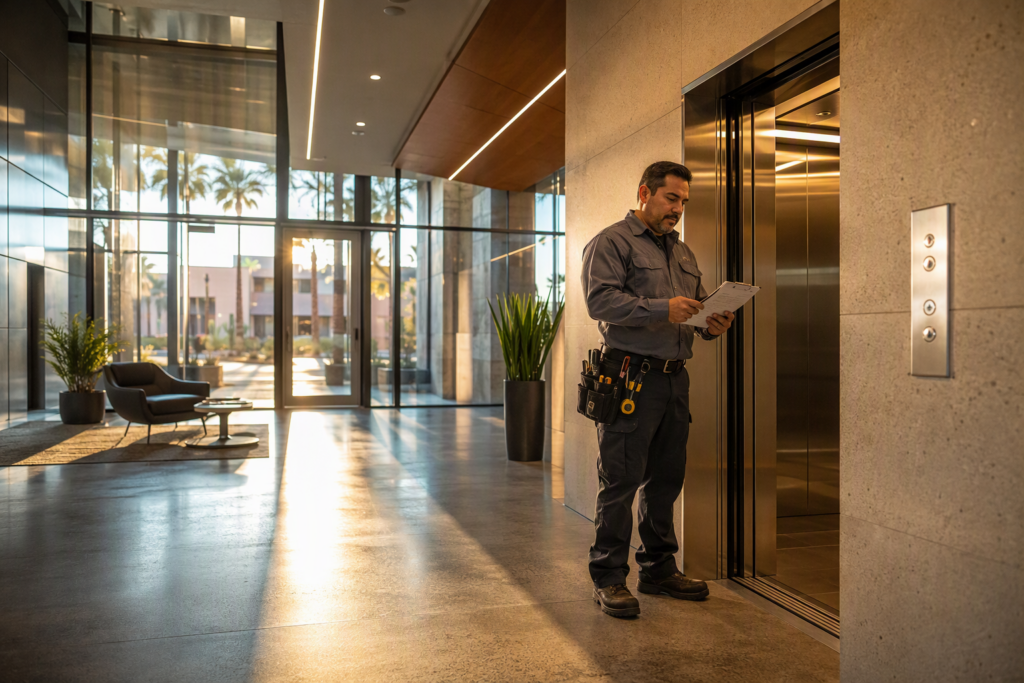
With this information in hand, Arizona Elevator Solutions can conduct a meaningful condition assessment and provide a recommendation grounded in the building’s actual situation.
How Does Arizona Elevator Solutions Support Phoenix-Area Building Owners Through This Process?
Arizona Elevator Solutions serves building owners, property managers, and facilities professionals across the Phoenix metropolitan area and throughout Arizona. The company’s local expertise encompasses the full range of conveyance types — traction elevators, hydraulic elevators, platform lifts, escalators, dumbwaiters, and moving walks — in commercial, residential, healthcare, hospitality, and industrial settings.
Because Arizona Elevator Solutions operates exclusively within Arizona, the team is deeply familiar with the requirements of both the Industrial Commission of Arizona’s Elevator Division and the City of Phoenix Elevator Section. Every evaluation, modernization plan, and replacement project is structured to satisfy Arizona’s inspection, notification, and certification obligations — protecting owners from compliance exposure while optimizing the path forward for each individual property.
Emergency service availability is maintained to address situations that require immediate attention, including incidents that trigger Arizona’s 24-hour accident notification requirement to the state.
Schedule a Free Consultation
An aging elevator does not have to be a source of uncertainty. Arizona Elevator Solutions provides straightforward, fact-based evaluations that help Phoenix-area building owners make confident, well-informed decisions about repair, modernization, and replacement.
Contact Arizona Elevator Solutions today to schedule a free consultation: 480-557-7600
Serving Phoenix and communities throughout Arizona — let the team at Arizona Elevator Solutions help determine the right path for your building’s vertical transportation needs.
Need elevator service you can rely on? Arizona Elevator Solutions is ready to help.